
Nobody fully prepares you for the moment the cramps begin. You’ve done your research, you’ve made your decision, and you’ve taken the pills but when the pain starts, it can feel nothing like what you expected. Some women describe it as a manageable, heavy period kind of discomfort. Others describe hours of intense, wave-like cramping that left them breathless on the bathroom floor. Both experiences are real. Both are valid. And both deserve an honest conversation.
This article does not offer clinical euphemisms. It gives you a genuine, medically grounded account of what the abortion pill actually feels like, the pain levels, the symptoms hour by hour, what’s normal, what isn’t, and how to manage it. Whether you’re preparing to take the pill or already in the middle of the process, you deserve straightforward information.
What the Abortion Pill Actually Does to Your Body
To understand the pain, you first need to understand the process. Medication abortion typically involves two drugs taken in sequence. The first, mifepristone, blocks progesterone the hormone that sustains a pregnancy. On its own, it causes very little physical sensation for most people. The second drug, misoprostol, is taken 24 to 48 hours later. This is where the physical experience begins in earnest.
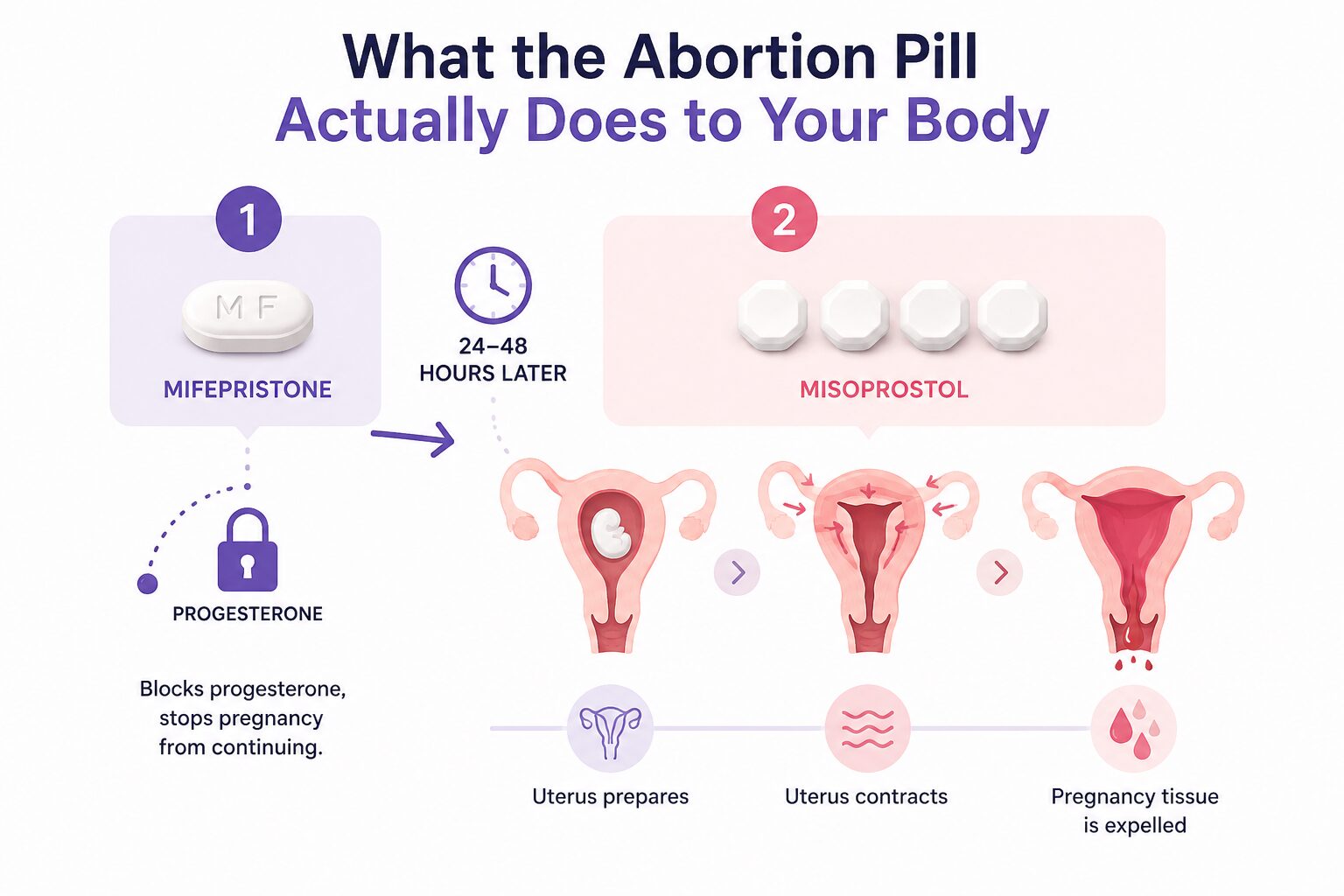
Misoprostol causes the uterus to contract. These contractions are what expel the pregnancy tissue and they are also the source of most of the pain. Biologically, the experience is similar to an early miscarriage, because physiologically, that is essentially what is happening. The uterus is doing intense muscular work, and the pain reflects that effort.
The effectiveness of medication abortion is high over 95 percent when taken within the first ten weeks of pregnancy. However, if you are concerned about the process or timing, you can read more about how the abortion pill works to better prepare. While effectiveness is high, comfort is a separate issue, and the physical process is not gentle.
How Painful Is the Abortion Pill, Really?
This is the question most people are actually asking when they search this topic, and it deserves a direct answer: it varies significantly, but for most people, the pain is real and meaningful. It is not something you push through with a single Tylenol and a Netflix show. For many women, it requires active abortion pain management and a clear, unhurried day at home.
On a scale of one to ten, women consistently report their peak pain landing somewhere between a five and an eight. Some report a three cramping that felt like a heavy period and resolved within a few hours. Others report a nine cramping so intense they were shaking, nauseated, and unable to find a comfortable position. The difference is not random.
Several factors influence how much pain a person experiences. Gestational age matters significantly. At six weeks, the uterus does less work than at ten weeks, and the cramping tends to be shorter and less severe. Pain tolerance and prior experience with menstrual cramping also play a role — people who already experience severe dysmenorrhea often find medication abortion falls within a familiar, if intense, range. People who have never experienced significant cramping sometimes find the sensation more shocking in its intensity.
One thing women commonly say in retrospect is that they wish someone had told them it could feel worse than a bad period. Not necessarily worse than labor but for someone who has never felt labor, the comparison to “bad cramps” can feel grossly inadequate in the middle of the experience.
Abortion Pill Symptoms: An Hour-by-Hour Timeline
Understanding when symptoms peak and when they ease is one of the most practically useful things you can know before going through this process with the abortion pill.
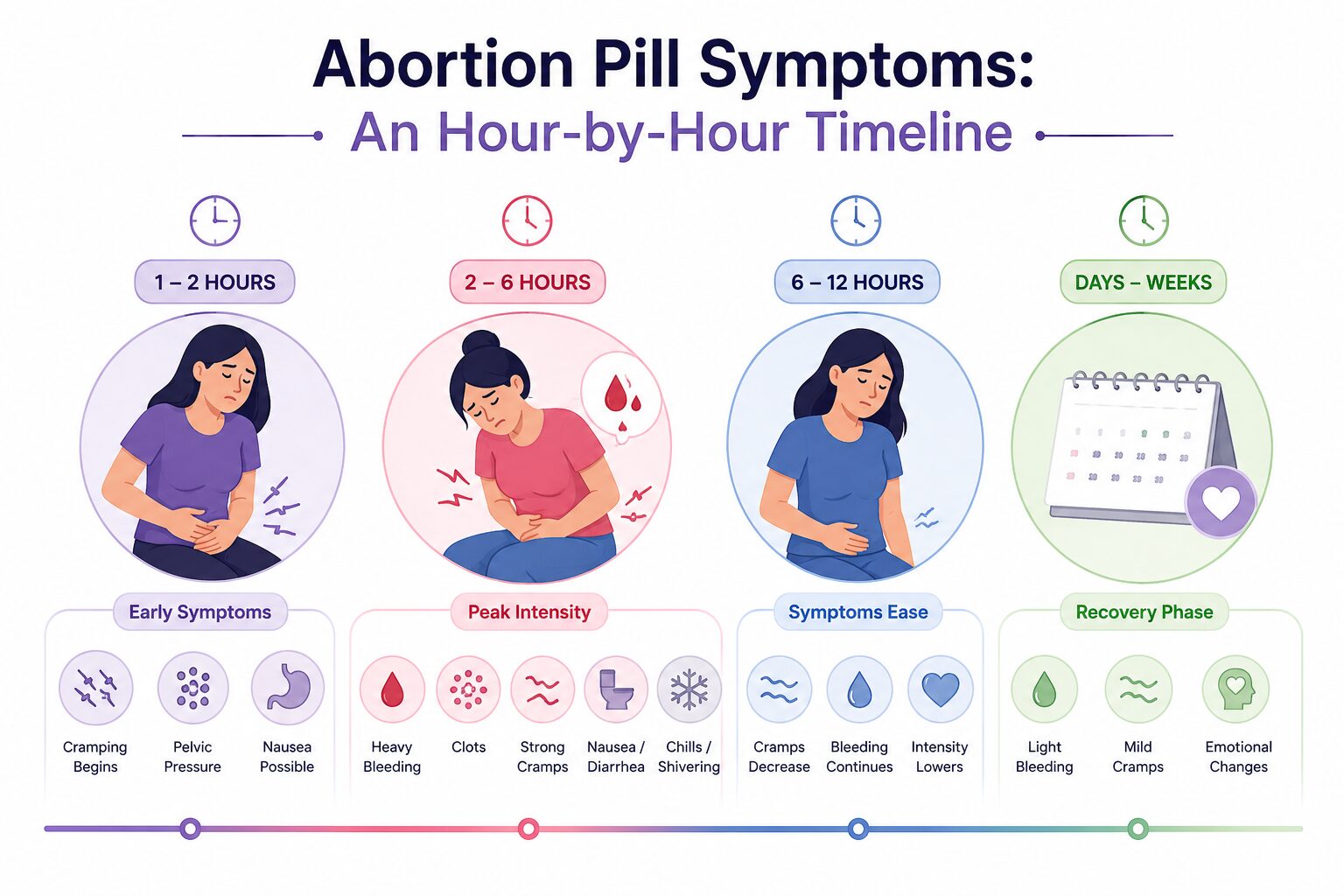
In the first one to two hours after taking misoprostol, most people begin noticing increased pelvic pressure and the start of cramping. Some experience nausea during this window, and chills are common a direct side effect of the prostaglandin in misoprostol, not a sign that anything is wrong.
Between hours two and six, you are typically in the most intense phase. Cramping reaches its peak, often arriving in waves rather than as steady, constant pain. Bleeding begins and can become heavy passing clots is normal and expected during this window. The clots may be larger than you expect. Diarrhea, vomiting, and low-grade fever can also occur and are considered normal responses to the medication. This is the period when pain management matters most.
By hours six to twelve, the intensity typically begins to ease. Cramping becomes lighter for most people. Bleeding continues but often settles into something that resembles a heavier-than-average period. The worst is usually behind you.
Over the following days and weeks, light-to-moderate bleeding continues for most people commonly for one to four weeks. Spotting, mild cramping, and emotional shifts can continue throughout this period. A follow up to confirm how to know if the abortion pill worked is essential.
All the Symptoms: What’s Normal and What’s Not
The range of normal symptoms after taking misoprostol is broader than most people expect, and understanding this range reduces unnecessary panic.
Cramping that comes in waves, even severe cramping, is normal. Passing blood clots the size of a lemon or smaller is normal. Chills, shivering, and low-grade fever up to 100.4°F within the first 24 hours are normal responses to the medication. Loose stools, nausea, and vomiting are common, particularly in the first few hours. Feeling emotionally raw, tearful, or unsettled in the days that follow is also a recognized and legitimate part of the physical recovery, connected to the hormonal shift your body undergoes.
For those who prefer a more clinical setting to manage these symptoms, in-clinic abortion services are an available alternative.
What is not normal — and requires immediate medical attention is a fever above 101°F that persists beyond 24 hours after taking misoprostol. Soaking more than two thick pads per hour for two consecutive hours is a warning sign of hemorrhage. Pain that becomes dramatically worse after initially improving, rather than gradually easing, warrants evaluation. Any foul smelling vaginal discharge or signs of infection in the days following the abortion should prompt a call to a provider.
How to Manage the Pain: What Actually Works
Pain management is not an afterthought; it is a core part of the medication abortion process. If you are obtaining care remotely, telehealth abortion care providers will usually discuss this with you in advance.
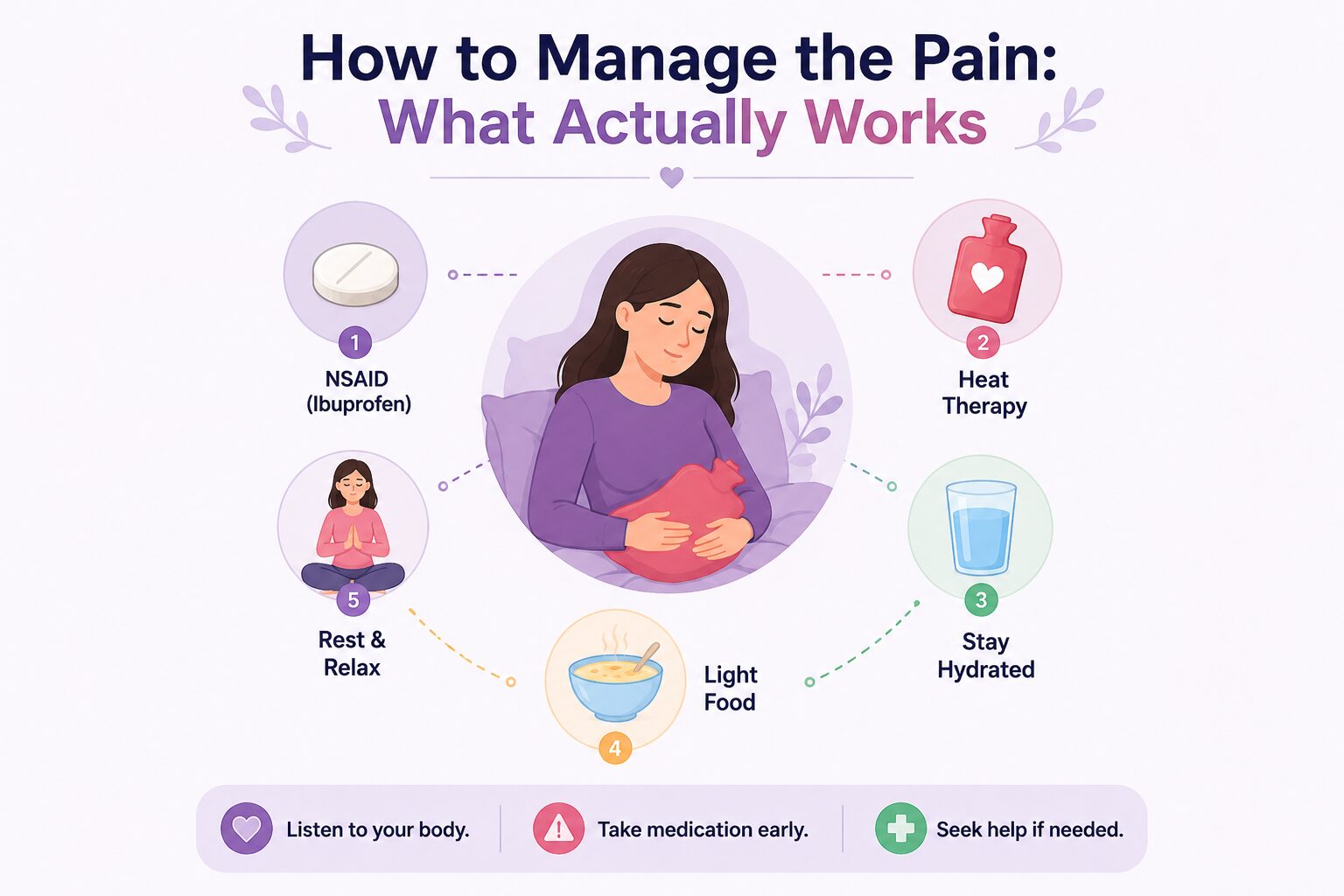
The most evidence-supported approach is preemptive ibuprofen. Taking 600 to 800 milligrams of ibuprofen about one hour before inserting or taking misoprostol significantly reduces the intensity of cramping for many people. Heat is also one of the most consistently helpful non-pharmaceutical tools. A heating pad or hot water bottle placed on the lower abdomen and lower back during the peak cramping phase provides real, measurable relief.
If you have a history of severe menstrual pain or are particularly anxious about the experience, it is entirely appropriate to book an appointment to discuss prescription support before you begin the process.
What Women Say Nobody Told Them
First-person accounts of medication abortion reveal a consistent pattern: the clinical preparation is often inadequate, not because providers are uncaring, but because there is enormous variation in experience. Women who experienced severe symptoms describe feeling unprepared for how incapacitated they felt, and wishing someone had told them to clear a full day.
The emotional experience also surfaces consistently. Some women feel relief immediately; others feel grief or a complex layering of both. This is not a weakness; it is biology.
When to Seek Emergency Care
The vast majority of medication abortions are completed safely without any emergency intervention. However, knowing the warning signs is essential. Go to an emergency room or urgent care if you experience:
1. Soaking more than two full-sized pads per hour for two or more consecutive hours.
2.A sustained fever above 101°F lasting more than 24 hours after taking misoprostol.
3.Pain that continues to intensify rather than gradually improve after the first 24 hours.
If you need emergency care and prefer privacy, you are not required to disclose that you took abortion medication. You can describe your symptoms as heavy bleeding and cramping, and you will receive appropriate care.
Frequently Asked Questions
1. How painful is the abortion pill?
Pain levels vary from person to person. Most women describe the cramps as stronger than a normal period, especially during the first few hours after taking misoprostol.
2.When does the pain usually start?
Cramping usually begins within 1–4 hours after taking misoprostol. The most intense pain commonly happens between hours 2 and 6.
3.How long does abortion pill pain last? Severe cramping typically lasts a few hours during the active phase of the abortion. Mild cramping and bleeding can continue for several days or even a few weeks afterward.
4.Is heavy bleeding normal after taking the abortion pill?
Yes. Heavy bleeding with clots is expected, especially during the first several hours after misoprostol. Bleeding after the abortion pill is a normal part of the process.
5.What symptoms are considered normal?
Common symptoms include: Strong cramps, heavy bleeding, blood clots, chills or shivering, nausea, vomiting, diarrhea, fatigue, and mild fever within the first 24 hours.
6.What symptoms are NOT normal?
You should seek medical attention if you experience: Fever above 101°F lasting longer than 24 hours, soaking more than two pads per hour for two hours, severe pain that keeps worsening, or foul-smelling discharge.
7.Does the abortion pill hurt more than a period?
For many women, yes. The cramps are often described as stronger and more intense than typical menstrual cramps because the uterus is actively contracting to expel pregnancy tissue.

Dr. James Carter is a board-certified physician and lead clinician at Serenity Choice Health, specializing in reproductive health access and medication abortion protocols. With over 20+ years of experience, he combines clinical expertise with patient-centered care to ensure safe, compassionate, and confidential reproductive healthcare.