
Gen Z grew up doing almost everything online. Ordering food, attending school, managing bank accounts, even building careers all from a phone or laptop. So when it comes to healthcare, particularly reproductive healthcare, it should surprise no one that this generation is increasingly turning to virtual options. Telehealth abortion services are one of the most significant and most discussed examples of how younger adults are reshaping what healthcare access looks like in the 21st century.
But what does Gen Z actually think about it? The answer is more layered than a simple thumbs up or thumbs down.
Why Telehealth Abortions Appeal to a Generation Raised on the Internet
To understand how Gen Z views virtual abortion care, you first have to understand how they relate to technology in general. For people born between 1997 and 2012, the internet isn’t a tool they adopted, it’s an environment they grew up in. Searching for health information online, booking appointments through apps, and receiving care via video call feels as natural to them as walking into a clinic felt to previous generations.
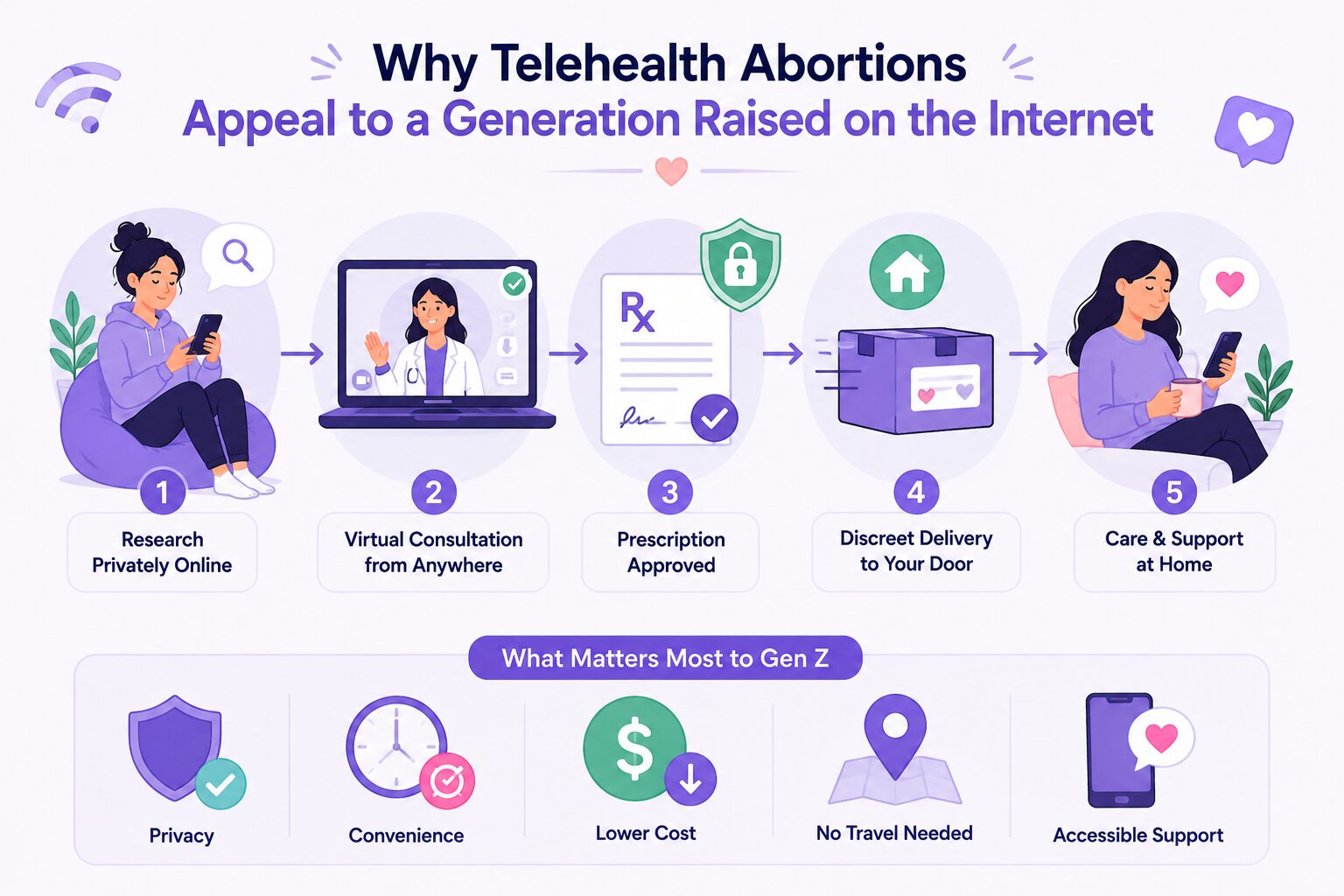
This digital fluency directly shapes their healthcare expectations. Gen Z doesn’t see convenience as a luxury; they see friction as a design flaw. Long wait times, limited clinic hours, and the need to travel significant distances for a single appointment are not just inconveniences, they’re barriers that feel unnecessary in a world where so much else can be handled remotely.
Telehealth abortion care addresses several of these friction points at once. A patient in a rural area who might otherwise need to drive hours to reach a provider can now complete a consultation from home. Someone with a demanding work schedule who can’t take a full day off can access care in the evening. A young person living with unsupportive family members can receive private, confidential care without navigating an uncomfortable in-person visit.
For many in this generation, this isn’t just convenient. It’s the difference between accessing care and not accessing it at all particularly for those in underserved communities where free abortion access in rural areas remains a serious ongoing challenge.
How Gen Z Defines Healthcare Accessibility
“Accessibility” means something specific to younger adults. It’s not just about whether a service technically exists it’s about whether they can realistically use it.
Traditional in-person abortion care can involve a complicated web of barriers: geographic distance from providers, cost of travel, time off work, childcare arrangements, mandatory waiting periods that require multiple visits, and in some states, regulatory requirements that make the process longer and more logistically demanding. For a 22-year-old working an hourly job without paid leave, those barriers aren’t minor. They’re often insurmountable.
Virtual reproductive healthcare collapses many of those barriers. Understanding the full benefits of telehealth helps explain why younger adults don’t just prefer it, they expect it. Consultation costs are often lower. There’s no transportation required. And perhaps most importantly for a generation that came of age during COVID-19 and already normalized virtual medical visits it feels familiar.
Research consistently shows that Gen Z is more likely than older generations to report that cost and convenience are major factors in whether they seek healthcare at all. It’s worth understanding how much abortion pills actually cost and whether insurance covers abortion care two questions younger patients almost always have before moving forward.
Do Younger Adults Trust Telehealth Abortion Services?
Trust is where things get more nuanced. Gen Z may be digital natives, but they’re also skeptical ones. Having grown up with misinformation, data breaches, and algorithmic manipulation as background noise, they approach online services including healthcare with a critical eye.
When it comes to telehealth abortion providers specifically, trust tends to hinge on a few key factors.
Verified credentials matter. Younger patients are more likely to research a provider before engaging with them. They look for licensed medical professionals, state-specific licensing information, and clear descriptions of what the service includes. Understanding whether telemedicine abortion is legal in their state is often the first thing Gen Z patients verify before booking anything. A telehealth platform that’s vague about who is prescribing medication or unclear about follow-up care will lose a Gen Z patient quickly.
Reviews and peer recommendations carry serious weight. This generation trusts lived experience over institutional authority. Word-of-mouth including on social media, Reddit threads, and dedicated healthcare review platforms often plays a bigger role in provider selection than advertising.
Transparency builds confidence. Clear explanations of the process, honest information about what medication abortion involves, realistic timelines, and accessible support channels all signal to younger patients that a provider is legitimate and patient-centered. Knowing how to get safe, verified abortion pills online and what separates a trustworthy provider from a questionable one is information Gen Z actively seeks out.
When these elements are in place, Gen Z tends to trust telehealth abortion services at high rates. When they’re absent, skepticism kicks in fast.
Privacy: Not Just a Preference, But a Priority
If there’s one value that consistently surfaces in discussions of how Gen Z approaches healthcare, it’s privacy. This generation has a complicated relationship with data; they share enormous amounts of it online while simultaneously being more aware than any previous generation of how that data can be used or misused.
When it comes to reproductive healthcare, privacy concerns take on additional weight. For younger patients who may still be on a parent’s insurance plan, or who live in states with restrictive abortion laws, the question of who can see their medical information is not abstract.
A comprehensive abortion privacy guide matters to this generation in a way that would have seemed excessive to earlier generations. Telehealth abortion services that offer confidential consultations, use secure platforms, provide clear data privacy policies, and explain how records are handled speak directly to this concern.
Understanding how online privacy intersects with abortion access including what digital footprints are created and how to minimize them is something younger patients research carefully before moving forward. And knowing how to keep an abortion private from family members, partners, or employers is a real practical concern for many Gen Z individuals navigating this decision.
Privacy is also one reason some Gen Z individuals prefer telehealth over in-person care even when both options are equally available. Avoiding a clinic waiting room in a small town, or not having to give a receptionist their personal information in a place where they might be recognized, matters to them.
How Social Media Shapes the Conversation
It would be impossible to talk about what Gen Z thinks about virtually anything without discussing social media. Platforms like TikTok, Instagram, and Reddit are where this generation encounters health information, processes experiences, and forms opinions including about telehealth abortion access.
On the positive side, social media has allowed for widespread peer-to-peer education about reproductive healthcare options that younger patients might never encounter through traditional channels. Advocates, healthcare providers, and people sharing their own experiences have made virtual reproductive care far more visible and normalized within Gen Z communities.
But the same platforms that democratize information also spread misinformation rapidly. False claims about medication abortion safety, exaggerated risks, and misleading information about legal status circulate alongside accurate content. This is why grounding decisions in medically accurate abortion safety information rather than social media posts alone matters so much. Gen Z patients who pair their social research with verified clinical sources consistently make better-informed decisions.
What Concerns Does Gen Z Have About Virtual Abortion Care?
Enthusiasm for telehealth doesn’t mean Gen Z has no reservations. Younger adults do raise real concerns about virtual reproductive care, and those concerns deserve honest acknowledgment.
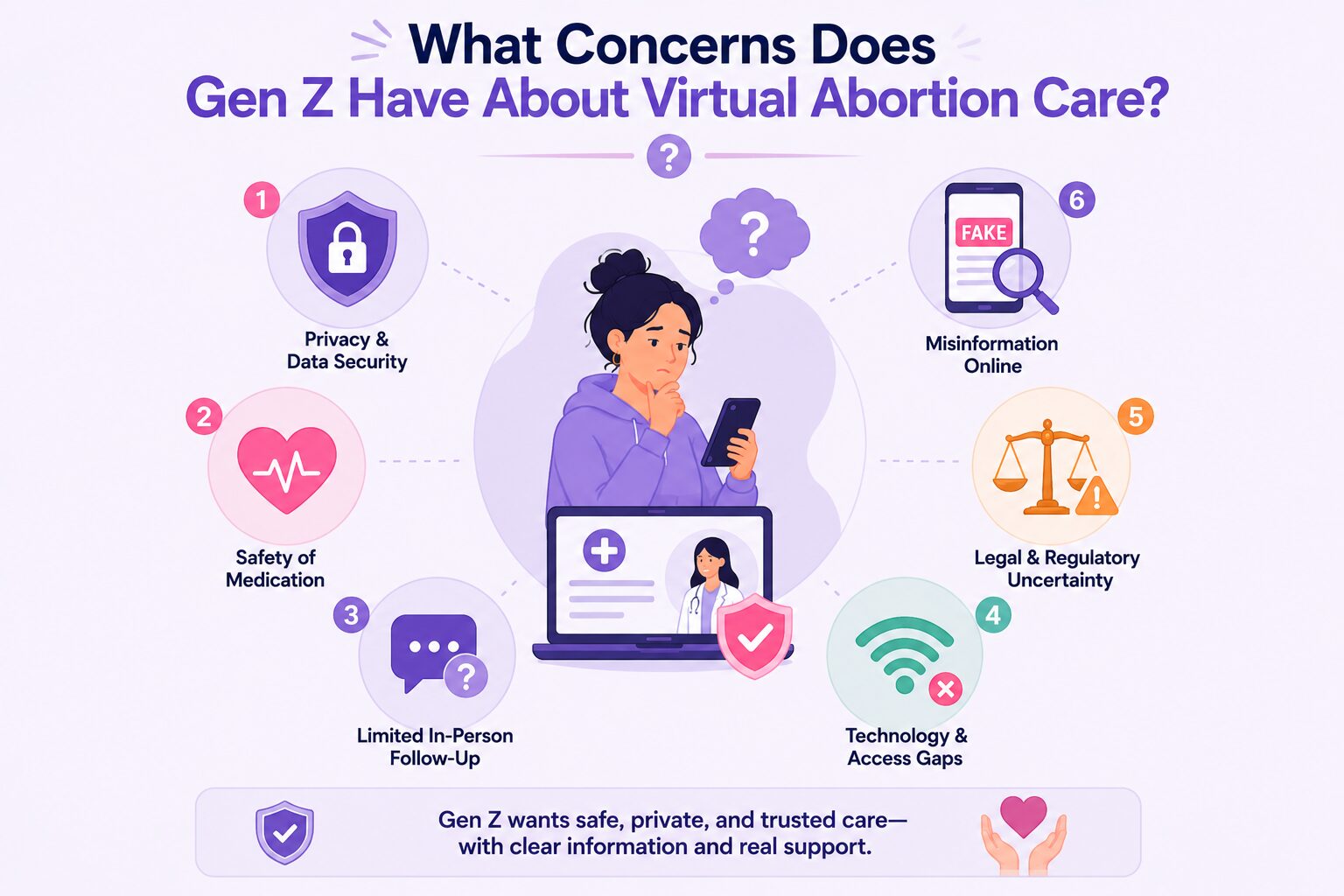
Safety and follow-up care are among the most frequently cited worries. The abortion pill is safe and effective when used correctly, but patients want to know what happens if they have questions after their consultation, or if they experience unexpected symptoms. Telehealth services that offer robust follow-up support address this concern meaningfully. Understanding pain management options during medication abortion and what emotional recovery looks like afterward are two areas Gen Z patients specifically want addressed before they begin.
Technology gaps are a real barrier for some. Not all Gen Z individuals have reliable high-speed internet, a private space for a video consultation, or the kind of tech access that telehealth assumes. For patients in rural communities or lower-income households, these gaps can make virtual care less accessible than it appears on paper.
Information overload and confusion is another concern. With so much contradictory information available online about medication abortion from legal status to medical protocols some younger patients feel overwhelmed rather than empowered. Understanding how effective the abortion pill actually is with clear, evidence-based data helps cut through that noise.
Regulatory uncertainty adds another layer. Laws governing telehealth abortion services vary significantly by state and have been changing rapidly. Navigating which services are available in their jurisdiction adds stress to an already sensitive healthcare decision.
Telehealth vs. In-Person Abortion Care: What Younger Patients Weigh
It’s worth being clear that most Gen Z individuals aren’t ideologically committed to telehealth over in-person care. What they’re committed to is accessing the option that works best for their specific circumstances.
For many patients particularly those seeking care early in a pregnancy where medication abortion is most effective, telehealth is often an ideal fit. It’s private, affordable, and eliminates logistical barriers. For others, in-clinic abortion services may be preferred or medically necessary. A detailed comparison of abortion pills vs. surgical abortion helps younger patients understand which path aligns with their gestational age, health history, and personal circumstances.
| Factor | Telehealth | In-Person |
| Convenience | High | Moderate to Low |
| Privacy | High | Moderate |
| Cost | Often Lower | Often Higher |
| Follow-Up Access | Varies by Provider | Typically Available |
| Geographic Access | Strong in Remote Areas | Limited in Rural Zones |
| Best Suited For | Early Pregnancy, Low-Risk Cases | Later Pregnancy, Complex Cases |
The comparison isn’t about which option is better in the abstract. It’s about which option is accessible, trustworthy, and appropriate for a given patient’s situation. Gen Z thinks in these practical terms rather than treating the two options as ideologically opposed.
What Healthcare Providers Can Learn From Gen Z’s Expectations
The preferences Gen Z brings to telehealth abortion care aren’t unique to reproductive healthcare. They reflect a broader set of expectations this generation has for all healthcare interactions.
They expect clear, jargon-free communication. They expect digital-first experiences. They expect transparency about cost before committing. They expect to be treated as informed adults capable of making their own decisions. And increasingly, they expect their reproductive healthcare provider to offer comprehensive services not just abortion care, but STI and STD testing, birth control and contraceptive consultations, and women’s primary care all in one place, without having to navigate multiple providers.
Healthcare providers who meet these expectations tend to build lasting trust with younger patients. Those who don’t often lose them to providers who do.
The Future of Telehealth Abortion Care Through Gen Z’s Eyes
Gen Z is not the last generation that will grow up digital-first. The expectations they’re bringing to healthcare are becoming baseline expectations for everyone who follows. That means the adaptations healthcare systems make to serve this generation well will ultimately shape reproductive healthcare delivery for decades.
The future younger adults envision is one where geographic location doesn’t determine healthcare access. Where privacy is treated as a right, not an afterthought. Where care is delivered by providers who communicate honestly, support patients through the process, and meet them where they are literally and digitally.
Telehealth abortion care, at its best, is already delivering on parts of that vision. As technology improves, regulations clarify, and more providers build patient-centered virtual services, the gap between that vision and reality will continue to close.
If you’re ready to explore your options, you can schedule a confidential appointment today whether that’s through telehealth abortion care, in-clinic services, or the abortion pill. You deserve care that works around your life, not the other way around.
Frequently Asked Questions
What does Gen Z think about telehealth abortions?
Gen Z largely views telehealth abortion care positively, particularly because it addresses barriers like cost, distance, and privacy. Trust levels are high when providers are transparent, credentialed, and offer follow-up support.
Why do younger adults prefer telehealth healthcare services?
Convenience, cost, and privacy are the three most commonly cited reasons. Gen Z expects healthcare to fit into their lives and telehealth is better aligned with how they already manage other aspects of life digitally.
Do Gen Z patients trust virtual abortion consultations?
Yes, especially when providers demonstrate clear credentials, offer transparent information about the process, and have strong reputations in online communities younger patients already trust.
What benefits of telehealth matter most to younger patients?
Privacy and accessibility consistently rank highest. The ability to access care without traveling, without involving insurance in a visible way, and without navigating a clinic in a potentially unsupportive community context matters deeply to many Gen Z patients.
Are telehealth abortion services considered private and secure?
It depends on the provider. Services that use secure, HIPAA-compliant platforms and offer clear data privacy policies are generally viewed as trustworthy. Gen Z patients tend to research providers carefully before sharing personal health information.

Dr. James Carter is a board-certified physician and lead clinician at Serenity Choice Health, specializing in reproductive health access and medication abortion protocols. With over 20+ years of experience, he combines clinical expertise with patient-centered care to ensure safe, compassionate, and confidential reproductive healthcare.