
For most people, booking an STI test isn’t the hard part. The hard part is not knowing what happens once you get there.
Will there be a physical exam? Will it hurt? What samples will they take? Who sees your results? What if it comes back positive? These questions are completely normal and they’re exactly why so many people put off testing longer than they should, even when they know getting screened is the right thing to do.
This guide walks through the entire STI testing process from start to finish: what to expect before your appointment, what actually happens during testing, and what comes next. The goal is simple by the time you finish reading, there should be nothing left to wonder about.
What Is an STI Test and Why Does It Matter?
An STI test or sexually transmitted infection test is a medical screening used to detect infections that are passed from person to person through sexual contact. Testing can identify infections including chlamydia, gonorrhea, syphilis, HIV, herpes, hepatitis B and C, and others depending on what’s included in your screening.
The difference between STI and STD is mostly terminology. STI (sexually transmitted infection) is the more current clinical term, while STD (sexually transmitted disease) is an older language. They refer to the same conditions you’ll see both used, often interchangeably.
One of the most important things to understand about STI screening is why it matters even when you feel completely fine. The majority of common STIs produce no symptoms at all, or symptoms so mild they’re easy to dismiss. Chlamydia, for example one of the most common STIs, is frequently asymptomatic. Gonorrhea, early HIV, and syphilis can all go undetected without symptoms for weeks, months, or longer.
This is why routine sexual health screening is recommended regardless of whether you feel anything unusual. Catching an infection early means earlier treatment, less risk of long-term complications, and preventing transmission to partners.
Women’s primary care services routinely include sexual health screening as part of comprehensive preventive care it’s a standard part of looking after your overall health, not something reserved for people who think something is wrong.
When Should You Schedule an STI Test?
There’s no single right answer but there are clear situations where testing is strongly recommended.
After unprotected sex. If a condom wasn’t used, or if there was a condom failure, testing is a straightforward next step. Keep in mind that most infections have a window period between exposure and when a test can accurately detect the infection. Depending on the infection, testing too soon after exposure may produce a false negative. Your provider can tell you the right timing for each test based on when exposure occurred.
When starting a new relationship. Getting tested before becoming sexually active with a new partner and encouraging your partner to do the same is one of the most responsible things both people can do. It removes uncertainty and protects everyone involved.
If you have any symptoms. Unusual discharge, sores, burning during urination, pelvic pain, or any other symptom that seems out of the ordinary warrants prompt testing, not a “wait and see” approach.
As routine screening. Sexually active adults particularly those with multiple partners are generally recommended to test at least once a year for common STIs, with more frequent screening depending on individual risk factors. Your provider can help you determine a screening schedule that fits your situation.
The most important thing is not to let the fear of a positive result stop you from finding out. Knowing your status is protective not just for you, but for everyone you’re intimate with.
How to Prepare for Your First STI Test
Good news: preparing for an STI test is simpler than most people expect.
What to bring:
- A valid photo ID
- Your insurance card if you plan to use insurance
- A list of any current medications you’re taking
- Notes on any symptoms you’ve noticed, including when they started
Questions your provider will likely ask: Providers ask about sexual health history not to judge you, but to determine which tests are most appropriate. Expect questions about the number of recent partners, types of sexual activity (vaginal, oral, anal), whether you use protection, and any symptoms you may be experiencing. Answer honestly the more accurate the picture, the more targeted and useful your screening will be.
The urine test question: For urine-based STI tests (commonly used for chlamydia and gonorrhea), many providers ask that you avoid urinating for at least one hour before the appointment. This ensures an adequate urine sample. If you’re unsure whether this applies to your appointment, call ahead and ask.
Managing nerves: It’s completely normal to feel anxious before a first STI test. One of the most effective things you can do is remind yourself that you are doing something responsible and protective for your health. The appointment itself is typically far less uncomfortable physically and emotionally than the anticipation of it.
What Happens During an STI Test? Step by Step
This is the section most people actually need a realistic, honest walkthrough of what the appointment involves.
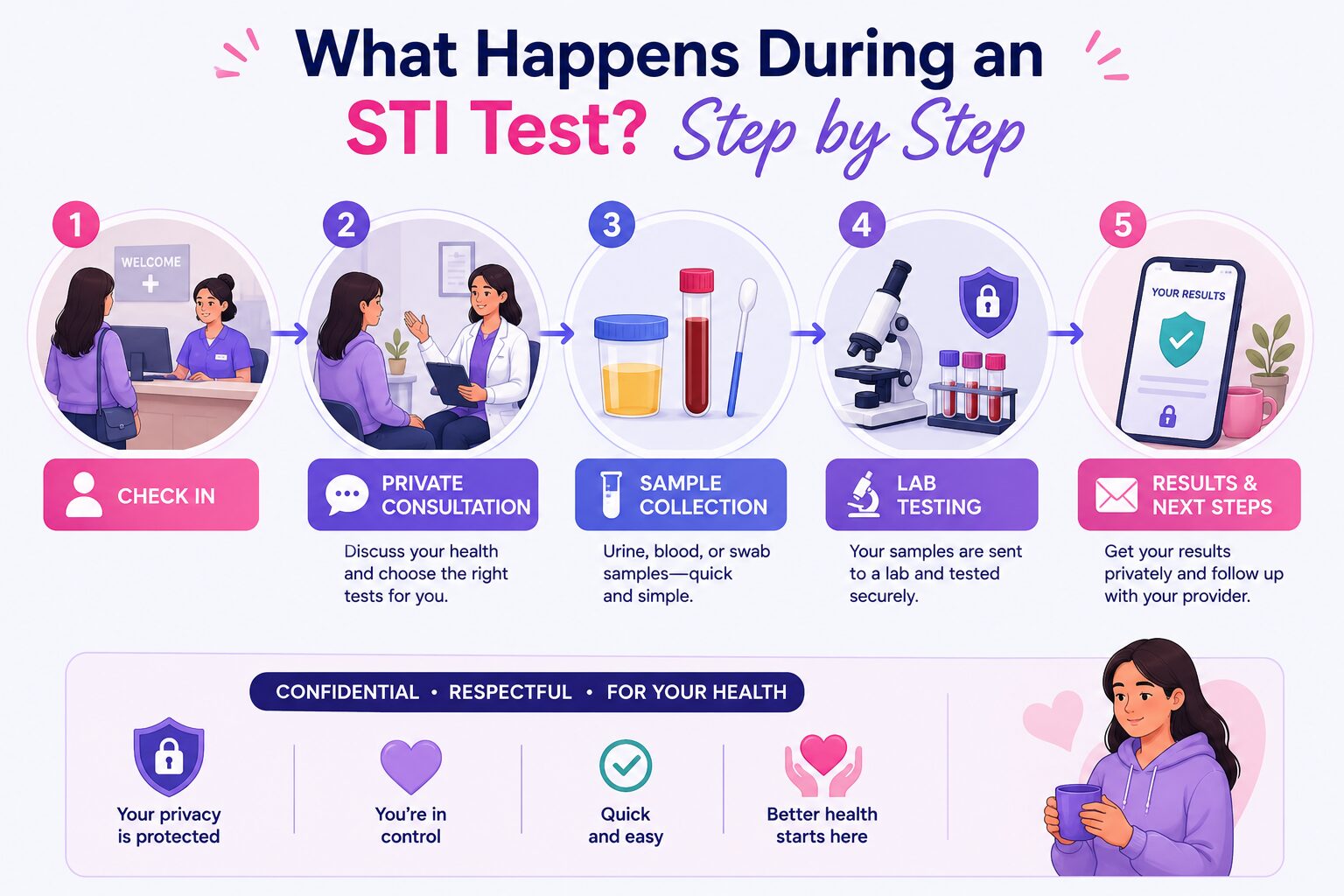
Step 1: Check in. You arrive at the clinic or health center and check in at reception. You’ll typically fill out a brief intake form with basic personal and medical information. This is standard for any medical appointment.
Step 2: Intake conversation with your provider A nurse, physician, or other healthcare provider will meet with you privately. They’ll ask about your sexual health history, any symptoms you’re experiencing, and your reason for testing. This conversation is confidential. Its purpose is to determine which specific tests are needed; not every STI test is the same, and a one-size-fits-all panel may not be what’s most appropriate for your situation.
Step 3: Determining your testing panel Based on your history and risk factors, your provider recommends a set of tests. This might include urine testing, blood draws, swabs, or a combination. You can ask questions at this point what each test is for, how it works, and what the results will tell you.
Step 4: Sample collection This is the part most people are anxious about, so here is what it actually involves:
- Urine sample: You’ll be given a small cup and asked to provide a urine sample in a private bathroom. Simple, quick, no discomfort.
- Blood draw: A small amount of blood is taken from a vein, typically in the arm. It takes less than a minute. There may be a brief pinch from the needle most people find very manageable.
- Swab tests: Depending on the infections being tested for and your sexual activity, swabs may be taken from the throat, cervix, vagina, rectum, or a sore or ulcer if one is present. Vaginal or cervical swabs are quick, some are self-administered. Rectal and throat swabs are brief and typically cause minimal discomfort.
Step 5: Wrapping up Once samples are collected, the appointment is effectively over. Your provider may go over next steps when to expect results, whether any follow-up is needed, and how results will be delivered. Most appointments, start to finish, take between 20 and 45 minutes.
What Types of STI Tests Might Be Performed?
Understanding the different types of tests used helps remove the mystery from sample collection.
Urine tests are used primarily for chlamydia and gonorrhea. They’re non-invasive and are among the most commonly performed STI tests. No discomfort involved.
Blood tests are used to screen for HIV, syphilis, hepatitis B, and hepatitis C. A standard blood draw from the arm. Results typically take a few days depending on the laboratory.
Swab tests vary by location. Vaginal or cervical swabs test for chlamydia, gonorrhea, and sometimes herpes or HPV. Throat swabs test for gonorrhea or chlamydia in people who engage in oral sex. Rectal swabs test for gonorrhea and chlamydia in people who engage in receptive anal sex. Swabs from sores or ulcers can help diagnose herpes or syphilis.
Physical examination may be part of the appointment if you have visible symptoms sores, unusual discharge, rashes, or other physical signs. This allows the provider to visually assess and swab any areas of concern. Not all appointments involve a physical exam; it depends on your symptoms and history.
The combination of tests you receive is personalized based on your conversation with the provider which is exactly why the intake discussion matters.
Does STI Testing Hurt?
Honestly? For most people, no or barely.
The urine test involves no physical contact at all. The blood draw is a brief pinch. Vaginal swabs are quick and feel similar to a routine gynecological exam mildly uncomfortable for a moment, nothing more. Throat swabs may cause a brief gag reflex. Rectal swabs are brief and generally less uncomfortable than most patients anticipate.
The physical experience of STI testing is, for the vast majority of people, far milder than the fear of it. What tends to amplify discomfort is anxiety muscle tension, bracing for something painful that doesn’t come. Taking slow, relaxed breaths during sample collection genuinely helps.
If you have specific concerns about pain or discomfort particularly if you have a history of trauma or anxiety around medical procedures, tell your provider before the appointment begins. They can adjust their approach, explain each step before doing it, and give you control over the pace of the appointment.
How Long Does It Take to Get STI Test Results?
Result timelines vary by test type and laboratory, but here are general expectations:
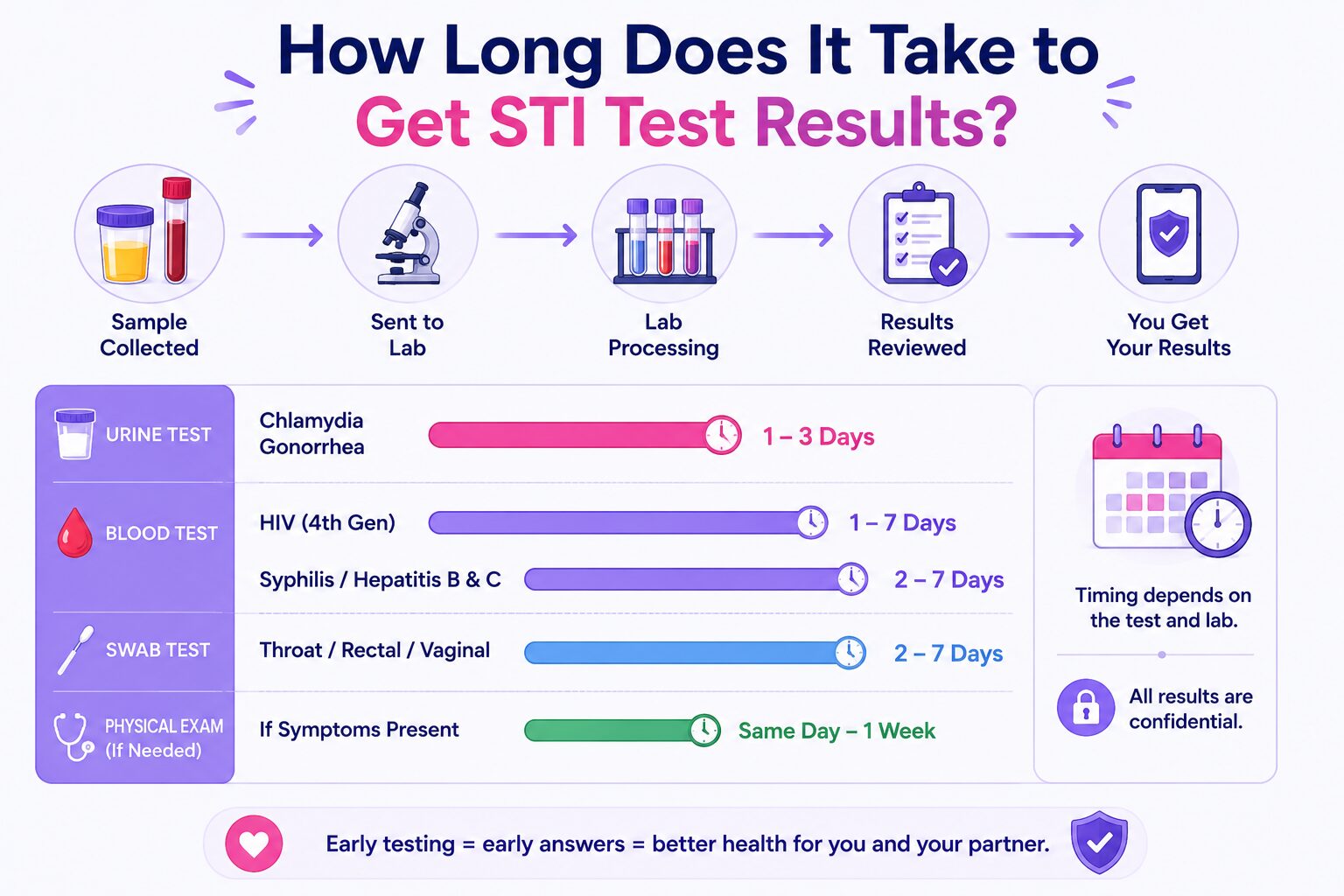
- Rapid HIV tests: Some clinics offer results within 20 minutes
- Urine-based tests (chlamydia, gonorrhea): Typically 1–3 business days
- Blood tests (HIV, syphilis, hepatitis): Typically 2–5 business days
- Swab cultures: Can take up to a week depending on the laboratory
How results are delivered also varies. Some providers call or message through a patient portal. Others have you return for results in person, particularly for positive diagnoses where a provider conversation is appropriate. Ask at your appointment how and when you’ll receive your results so you’re not left wondering.
While you wait, try not to spiral into worst-case thinking. The majority of STI tests come back negative. If yours doesn’t, that is manageable and knowing is infinitely better than not knowing.
What Happens If Your STI Test Is Positive?
A positive result is not a crisis. It is medical information and most STIs are either fully treatable or highly manageable with the right care.
Bacterial STIs — including chlamydia, gonorrhea, and syphilis are treated with antibiotics. When caught early, they resolve completely with treatment.
Viral STIs — including HIV, herpes, and hepatitis are managed rather than cured, but modern treatment options are highly effective. People living with HIV who receive appropriate antiretroviral therapy can live full, healthy lives and reduce transmission risk to effectively zero with undetectable viral loads.
Your provider will walk you through treatment options, what follow-up testing is needed, and how to approach partner notification. Partner notification informing recent sexual partners that they may have been exposed is an important part of responsible sexual health management. Your provider can help you navigate this in a way that feels manageable.
Abortion safety and medical facts is a helpful resource for understanding how reproductive healthcare providers approach patient education. The same principles of honest, evidence-based information apply to STI care.
How Confidential Is STI Testing?
Very and this is worth understanding clearly before any concern about privacy stops you from getting tested.
Your STI test results are protected by HIPAA, the same federal law that protects all medical records. Your provider cannot share your results with anyone including family members, employers, or partners without your explicit consent.
Understanding your full set of privacy rights in healthcare helps clarify what protections exist and how they work in practice. The same protections that apply to other sensitive healthcare information apply to sexual health testing.
Insurance questions: If you use insurance, the test and results may appear on your explanation of benefits and a document your insurance sends summarizing what was billed. If privacy is a concern, ask your provider about self-pay options. Many clinics offer sliding-scale pricing for uninsured or self-pay patients. Understanding how insurance intersects with healthcare costs gives context for how billing privacy works across different types of reproductive care.
Anonymous testing: Some public health clinics and community health centers offer anonymous testing where results are linked to a code rather than your name. If this matters to you, ask about anonymous options when you schedule.
Where Can You Get an STI Test?
Several options exist depending on your location, budget, and privacy preferences.
Reproductive health and sexual health clinics are often the most accessible and patient-centered option. Staff are experienced in sexual health conversations, testing is a core part of what they do, and the environment tends to be non-judgmental.
STI and STD testing through a full-service reproductive health provider means testing happens alongside access to other services such as birth control consultations, women’s primary care, and other preventive services in one visit.
Telehealth options have expanded significantly. For some types of STI testing, virtual consultations can facilitate at-home test kits mailed to your address. The benefits of telehealth are particularly relevant for patients who face barriers to in-person visits distance, time constraints, or privacy concerns.
Primary care providers can also order STI testing, though comfort level with sexual health conversations varies.
Whichever route you choose, the most important thing is that you go. Scheduling a confidential appointment with a provider experienced in sexual health testing is the clearest path to answers and peace of mind.
Common Mistakes First-Time Patients Make
Waiting too long. The longer an untreated STI goes undetected, the more opportunity it has to cause complications including pelvic inflammatory disease, fertility issues, and increased HIV transmission risk. If you think you should get tested, get tested.
Assuming no symptoms means no infection. The absence of symptoms is not a reliable indicator of STI status. Many of the most common infections are completely asymptomatic. Routine screening is the only reliable way to know.
Not being honest with your provider. Your provider is not there to judge you. The more accurate information they have about your sexual history and risk factors, the more appropriate your testing panel will be. Omitting information to avoid embarrassment can result in incomplete testing.
Skipping follow-up testing. Some infections require retesting after treatment to confirm the infection has cleared. Others like HIV benefit from regular monitoring. Follow your provider’s recommendations for follow-up, not just initial testing.
Frequently Asked Questions
What happens during an STI test for the first time?
You’ll have a brief private conversation with a provider about your health history, then provide samples typically urine, blood, or swabs depending on which tests are needed. Most appointments take 20 to 45 minutes.
Does STI testing hurt?
For most people, no. Urine tests involve no discomfort. Blood draws are a brief pinch. Swabs are quick and mildly uncomfortable at most.
How long does an STI test take?
The appointment itself is typically 20–45 minutes. Results take 1–5 business days depending on the test type, though rapid HIV tests can return results in under an hour.
What infections are typically tested for?
A standard panel often includes chlamydia, gonorrhea, syphilis, and HIV. Hepatitis B and C, herpes, and HPV may be added depending on your history and risk factors.
Do I need a physical examination?
Not always. A physical exam is only performed if you have visible symptoms that need to be assessed. Many appointments involve only urine and blood samples.
How long after exposure should I get tested?
It depends on the infection. Ask your provider about the window period for each test testing too soon after exposure may not yet produce an accurate result.
How confidential is STI testing?
Completely, under HIPAA. Your provider cannot share your results without your consent. If insurance privacy is a concern, ask about self-pay or anonymous testing options. Explore confidential healthcare options to understand how privacy-forward care works in practice.

Dr. James Carter is a board-certified physician and lead clinician at Serenity Choice Health, specializing in reproductive health access and medication abortion protocols. With over 20+ years of experience, he combines clinical expertise with patient-centered care to ensure safe, compassionate, and confidential reproductive healthcare.