
You took misoprostol expecting bleeding to begin within a few hours but nothing has happened. Now you are wondering whether this is a normal delay or a sign that the medication did not work as expected.
This uncertainty is one of the most common concerns people have after a medication abortion. Many assume bleeding starts immediately, and when it does not, the anxiety can feel overwhelming. Responses to misoprostol vary more than most people expect. Understanding what is normal and when to reach out to a provider can help you feel more grounded and informed during this process.
What Is Misoprostol Supposed to Do?
Misoprostol is a prostaglandin medication that causes the uterus to contract. In a medication abortion, it is typically taken after mifepristone, which works by blocking the hormone progesterone that supports the pregnancy. Misoprostol then triggers the uterus to cramp and expel the pregnancy tissue a process that usually produces bleeding similar to a heavy period, along with cramping. Learn more about what to expect from misoprostol and how mifepristone works as part of the abortion pill process.
How Misoprostol Causes Uterine Contractions
Once absorbed, misoprostol binds to receptors in the uterine lining and stimulates contractions. These contractions cause the cramping most people feel and drive the expulsion of pregnancy tissue. When used with mifepristone, the combination is effective in approximately 95 to 98 percent of cases within the first ten weeks of pregnancy.
Why Bleeding Is Usually Expected
Because misoprostol is designed to empty the uterus, bleeding is typically how you can tell the process has begun. Most people experience some degree of bleeding, ranging from light spotting to heavy flow with clots, depending on how far along the pregnancy is and how their body responds. Bleeding is not just a side effect it is often the primary sign that the medication is working. Read our full guide on bleeding after the abortion pill to understand what is typical at each stage.
How Long After Misoprostol Does Bleeding Usually Start?
This is one of the most important things to understand: there is no single timeline that applies to everyone.
Typical Bleeding Timeline
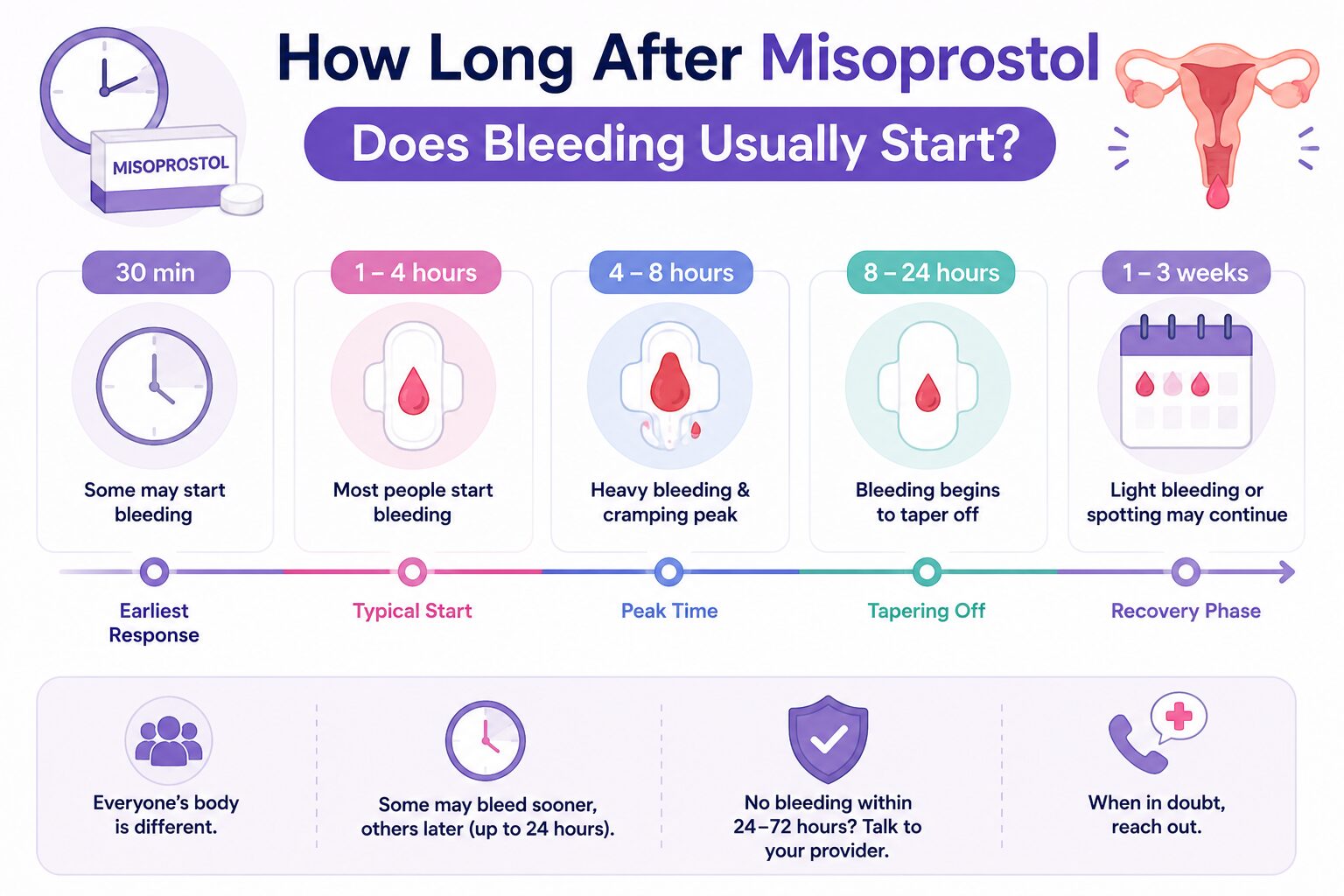
For most people, bleeding begins within one to four hours of taking misoprostol. Heavy bleeding and cramping typically peak in the first few hours and begin to taper off within four to eight hours. After that, lighter bleeding or spotting may continue for one to three weeks as the body continues to clear remaining tissue.
However, these are averages. Some people start bleeding within thirty minutes. Others do not begin bleeding until twelve to twenty-four hours after taking the medication. Both can be within the range of normal.
Why Responses Differ From Person to Person
Several factors influence how quickly misoprostol works. The route of administration matters — misoprostol taken buccally (dissolved in the cheeks) or sublingually (under the tongue) tends to absorb at a different rate than the vaginal route. Individual differences in metabolism, uterine sensitivity, and hormone levels also play a role. Gestational age can affect the intensity and timing of the response. For a full breakdown of how the abortion pill works, including how each medication is absorbed and what affects timing, see our dedicated guide.
What to Expect in the First 24 to 72 Hours
If bleeding has not started within the first few hours, it does not necessarily mean the medication has failed. Some people do not begin bleeding until twelve to twenty-four hours later. If you are within the first twenty-four hours and have not started bleeding, it is generally appropriate to continue waiting. Between twenty-four and seventy-two hours with no bleeding at all is when it becomes more important to contact your provider for guidance.
Is No Bleeding After Misoprostol Ever Normal?
The short answer is: delayed bleeding can be normal, but complete absence of bleeding over an extended period is not something to ignore.
Delayed Bleeding vs. No Bleeding
There is an important distinction between delayed bleeding and no bleeding at all. Delayed bleeding meaning it starts later than the first few hours is relatively common and does not automatically indicate a problem. True absence of any bleeding, even light spotting, beyond twenty-four hours is less typical and warrants a call to your healthcare provider.
Factors That May Affect Timing
If misoprostol was not taken correctly including using an incorrect dose, improper placement, or swallowing tablets that were meant to be dissolved this can affect how well the medication absorbs and works. Eating a heavy meal before taking misoprostol may also delay absorption. In some cases, the pregnancy may be further along than estimated, which can affect how the medication responds.
Pregnancy Stage and Response Differences
Earlier pregnancies tend to respond more quickly and completely. As gestational age increases, the process may take longer or require a higher dose of misoprostol to complete. If there is any uncertainty about how far along the pregnancy was when the medication was taken, this may explain a slower or less visible response. Our guide on medication abortion explained covers how gestational age affects the process in more detail.
What If You Have Cramping but No Bleeding?
Cramping without bleeding is a situation that understandably causes confusion. Contractions are happening so why is there no visible bleeding?
What Cramping May Indicate
Cramping is a sign that misoprostol has been absorbed and that the uterus is responding. In that sense, cramping without bleeding is not the same as no response at all. It suggests the medication is having some effect, but the expulsion process may not yet be complete or visible.
Can Misoprostol Be Working Without Visible Bleeding?
In some cases, cramping precedes bleeding by an hour or two, especially when misoprostol was taken buccally or sublingually. The uterus may begin contracting before tissue begins to pass. However, if cramping is occurring with no bleeding after several hours, or if cramping has stopped without any bleeding following it, this needs to be evaluated.
When Cramping Alone Is Not Enough
Cramping without bleeding that resolves on its own meaning the cramps come and go but no bleeding follows is not a reliable sign that the abortion was successful. Bleeding and tissue passage are what confirm the process is progressing. Cramping alone does not confirm that the pregnancy has ended.
Could No Bleeding Mean Misoprostol Didn’t Work?
Yes, this is a real possibility that needs to be assessed by a healthcare provider. While it is not the only explanation, treatment failure is one reason why bleeding may not occur. Read our dedicated guide on when abortion pills don’t work for a full explanation of what happens in these cases and what your options are.
Failed Medication Abortion Explained
A failed medication abortion means the medication was not effective at ending the pregnancy. This can happen in a small percentage of cases, even when the medication is taken correctly. An ongoing pregnancy meaning the embryo is still developing despite the medication requires medical attention and additional treatment.
Incomplete Abortion vs. Treatment Failure
These are two different outcomes. An incomplete abortion means the medication started working but did not fully clear the uterus some tissue was expelled, but more remains inside. Treatment failure means the medication had little to no effect and the pregnancy is still intact. Both require follow-up care, but they are managed differently.
How Common Is Medication Failure?
When mifepristone and misoprostol are used together within the recommended gestational window, failure rates are low typically between two and five percent. Misoprostol used alone has a somewhat higher failure rate. In either case, follow-up is essential to confirm the outcome. Our abortion safety medical facts guide covers success rates and what the evidence says about medication abortion reliability.
How Can You Tell If the Medication Worked?
Because you cannot always tell from symptoms alone, follow-up confirmation is a standard part of medication abortion care.
Changes in Pregnancy Symptoms
After a successful abortion, pregnancy symptoms such as nausea, breast tenderness, and fatigue typically begin to ease within one to two weeks. Symptoms that persist beyond two weeks or feel unchanged may suggest the pregnancy is still ongoing and should be evaluated.
Bleeding and Tissue Passage
Passing clots or grayish tissue alongside heavy bleeding is typically a sign that the process is working. Not everyone sees clearly identifiable tissue, though, and the absence of visible tissue does not automatically mean failure.
Follow-Up Pregnancy Testing and Ultrasound
A serum blood test or sensitive urine pregnancy test can help confirm success, but timing matters pregnancy hormones can remain elevated for several weeks even after a successful abortion. Your provider will advise when to test, typically three to four weeks after taking the medication. An ultrasound remains the most reliable confirmation that the uterus is empty. Read our full guide on how to know if the abortion pill worked for a step-by-step breakdown of confirmation methods. Many telehealth abortion care providers include follow-up consultations specifically to address these questions.
Warning Signs That Require Medical Attention
Some situations after taking misoprostol are not safe to wait out. Knowing the warning signs can help you act quickly when needed.
No Bleeding After the Expected Timeframe
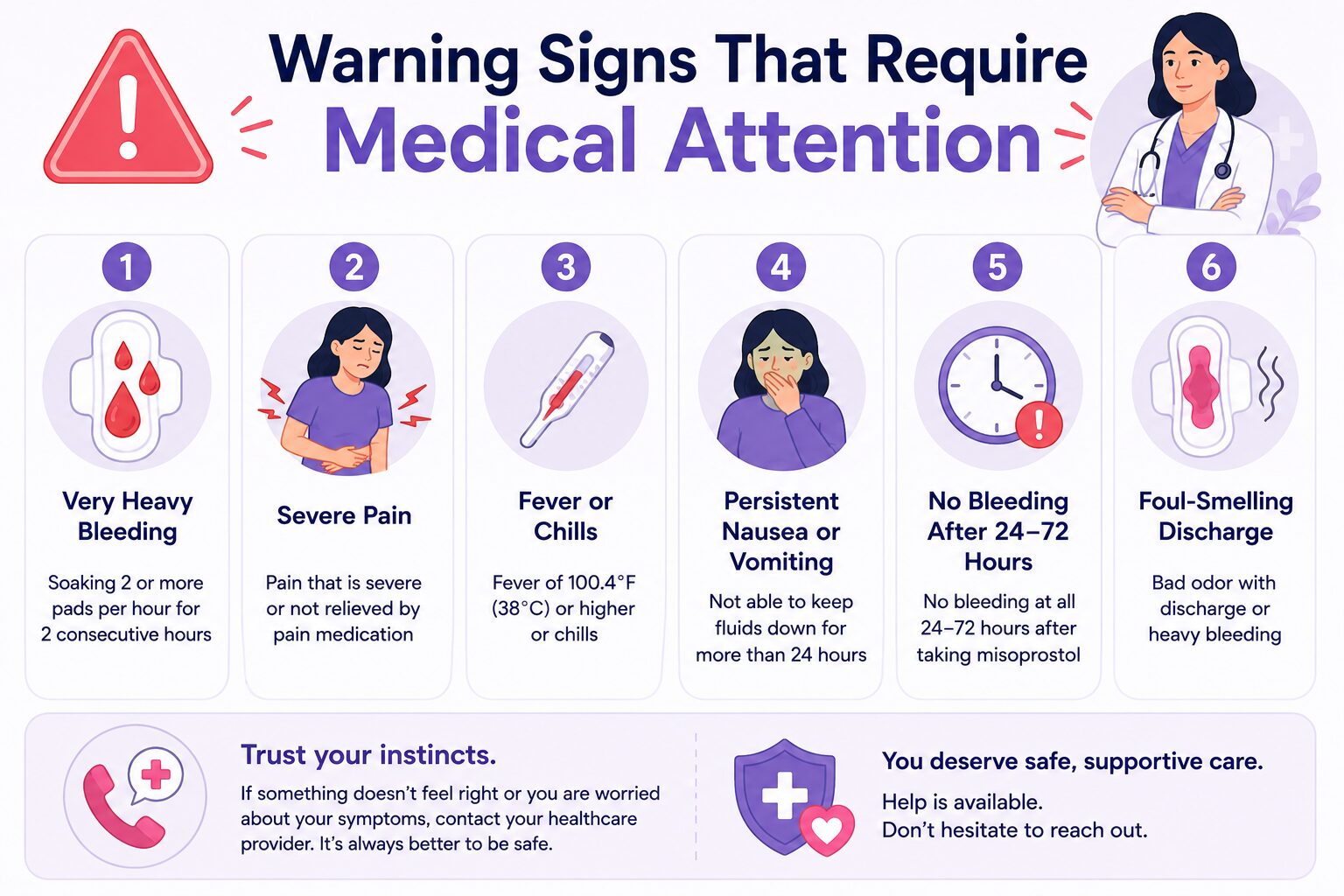
If you have had no bleeding whatsoever not even light spotting within twenty-four hours of taking misoprostol, contact your provider. This does not mean something is definitely wrong, but it does mean you need evaluation to determine what is happening and what the appropriate next steps are.
Severe Pain Without Bleeding
Intense cramping or abdominal pain that continues without any bleeding can be a sign of an ectopic pregnancy, which is a medical emergency. An ectopic pregnancy occurs when the embryo implants outside the uterus, typically in the fallopian tube. Misoprostol will not treat an ectopic pregnancy. If you have severe pain on one side, shoulder tip pain, or feel faint, seek emergency care immediately.
Fever or Signs of Infection
A fever above 101°F (38.3°C) that lasts more than twenty-four hours after taking misoprostol, or any signs of infection such as foul-smelling discharge, chills, or persistent abdominal tenderness, require prompt medical evaluation. Infection after a medication abortion is rare but serious when it occurs.
Persistent Pregnancy Symptoms
Pregnancy symptoms that remain unchanged or worsen two weeks after taking misoprostol may indicate an ongoing pregnancy. This should be evaluated by a provider as soon as possible.
What Should You Do If You Still Haven’t Started Bleeding?
If you have reached the twenty-four-hour mark with no bleeding, the most important step is to contact your healthcare provider rather than wait and hope.
When to Contact a Provider
Reach out if you have had no bleeding after twenty-four hours, if you had only very light spotting with no progression, or if you are experiencing any warning signs described above. A provider can evaluate whether the medication absorbed correctly, whether an additional dose of misoprostol is appropriate, or whether in-person evaluation is needed. Book a confidential appointment with our team for prompt evaluation and guidance. If you need follow-up support beyond telehealth, our in-clinic abortion services are available for cases requiring additional care.
Additional Medication Possibilities
In cases where the first round of misoprostol did not produce the expected response, providers often recommend a second dose. This is a common approach when bleeding has not occurred or when an incomplete abortion is suspected. Your provider will advise on the timing and dosage based on your specific situation. You can also learn more about the full abortion pill process including what happens when a second dose is needed.
Common Misconceptions About Bleeding After Misoprostol
“Bleeding must start immediately. While many people begin bleeding within a couple of hours, delayed bleeding up to twenty-four hours is still within the range of what can occur immediate response is not universal.
No bleeding means automatic failure. Delayed bleeding is not the same as no response at all. The situation needs evaluation, but it does not automatically confirm that the abortion failed.
“Heavy bleeding is always better. The amount of bleeding varies widely and is not a direct measure of whether the abortion is complete. More bleeding does not equal a more successful outcome.
Every person has the same experience. Timing, bleeding amount, cramping intensity, and overall recovery differ significantly between individuals, and that variation is entirely normal.
What to Expect During Follow-Up Care
Follow-up after a medication abortion is not optional it is a standard and important part of the process. Your provider will typically recommend checking in within one to two weeks, which may involve a telehealth consultation, a urine or blood pregnancy test, or an in-person ultrasound if needed. You can schedule a confidential follow-up through our women’s primary care services or your original abortion provider.
Key questions to ask at follow-up include whether your uterus has fully cleared, when your next period is expected, and what warning signs to watch for. Many providers also offer birth control and contraceptive services consultations as part of post-abortion care.
Frequently Asked Questions
Is it normal to have no bleeding after taking misoprostol?
Some people experience delayed bleeding that starts twelve to twenty-four hours after taking misoprostol, which can fall within the range of normal variation. However, if you have had absolutely no bleeding after twenty-four hours, you should contact your healthcare provider to determine whether additional evaluation or a second dose is needed.
How long should I wait before worrying about no bleeding?
Most providers recommend waiting up to twenty-four hours before contacting them if no bleeding has occurred. If you are past that window and still have not started bleeding, reach out rather than continuing to wait — your provider needs to assess whether the medication worked and what the appropriate next step is.
Can misoprostol work without causing bleeding?
In very rare cases, the pregnancy tissue may be absorbed without visible bleeding, but this is uncommon. In most cases, some degree of bleeding is expected as confirmation that the process is progressing. Without bleeding, follow-up evaluation is essential to confirm the outcome.
What if I have cramps but no bleeding?
Cramping without bleeding may indicate that the uterus is beginning to respond, but it is not sufficient on its own to confirm a successful abortion. If cramping occurs without any bleeding following it, contact your provider — you may need additional medication or evaluation.
Does no bleeding mean the abortion failed?
Not necessarily delayed bleeding is possible, and other factors such as incorrect administration can play a role. However, no bleeding is not something to dismiss, and it does require follow-up to determine whether the abortion was successful, incomplete, or whether an additional dose of medication is needed.
When should I contact a healthcare provider?
Contact your provider if you have had no bleeding after twenty-four hours, if you develop a fever above 101°F, if you have severe one-sided pain, or if your pregnancy symptoms remain unchanged after two weeks. These situations all warrant professional evaluation to ensure your health and safety

Dr. James Carter is a board-certified physician and lead clinician at Serenity Choice Health, specializing in reproductive health access and medication abortion protocols. With over 20+ years of experience, he combines clinical expertise with patient-centered care to ensure safe, compassionate, and confidential reproductive healthcare.