
You start birth control expecting pregnancy prevention but suddenly your period is lighter, irregular, or disappears altogether. For many people, this is unexpected, and it can cause real anxiety about whether something is wrong.
The short answer is yes, birth control can and does affect your period, and in most cases the changes you are experiencing are completely normal. Understanding why these changes happen, which ones are expected for your specific method, and when something genuinely warrants medical attention can make a significant difference in how you feel about your contraceptive experience.
How Birth Control Changes Your Menstrual Cycle
How Birth Control Changes Hormone Levels
Hormonal birth control works by introducing synthetic versions of estrogen, progestin, or both into the body. These hormones signal the reproductive system to behave differently than it naturally would, which is what prevents pregnancy and also what changes your menstrual cycle. Our birth control and contraceptive services can help you find the right method for your body and lifestyle.
What Happens to Ovulation on Birth Control?
Most hormonal methods suppress ovulation entirely, meaning your ovaries do not release an egg each month. Without ovulation, the hormonal cycle that drives a natural period does not occur in the same way. What many people experience instead is a response to the rise and fall of the synthetic hormones in their method.
Why Your Uterine Lining Changes
Progestin keeps the uterine lining thin. A thinner lining means less tissue builds up each month, which is why periods on hormonal birth control tend to be lighter there is simply less to shed.
Withdrawal Bleeding vs a Natural Period
The bleeding that occurs during the pill’s placebo week, or during the hormone-free interval of a patch or ring cycle, is not a true menstrual period. It is called withdrawal bleeding, and it happens in response to the drop in synthetic hormones rather than as part of a natural ovulatory cycle. It tends to be lighter and shorter than a regular period.
Why Many People Mistake Normal Changes for Problems
Because many people are not told upfront what to expect, changes like spotting, a much lighter flow, or a missed period are often interpreted as warning signs. In most cases they are simply the body responding to hormonal changes but knowing that in advance makes all the difference.
What Period Changes Are Normal on Birth Control?
Lighter Periods
A noticeably lighter flow is one of the most common effects of hormonal birth control, particularly with combined pills, the patch, the ring, and the hormonal IUD. The thinning of the uterine lining directly reduces the volume of bleeding during each cycle. For many people, this is actually a welcome change rather than a concern.
Shorter Periods
Along with lighter flow, periods on hormonal birth control often become shorter in duration. A period that previously lasted five to seven days may shorten to two to four days without any underlying issue.
Less Cramping
Combined hormonal methods are frequently prescribed specifically because they reduce menstrual cramps. By suppressing ovulation and thinning the uterine lining, they reduce the prostaglandins responsible for cramping, which is why the pill is one of the most common treatments for dysmenorrhea.
Periods That Arrive Earlier or Later
Cycle timing can shift slightly when starting a new hormonal method, especially in the first few months. Periods may arrive a few days earlier or later than you are used to as your body adjusts to a new hormonal pattern.
Why These Changes Often Improve Over Time
Most cycle irregularities that appear in the first one to three months of starting birth control settle down as the body adapts. Spotting decreases, timing becomes more predictable, and flow stabilizes. Giving a new method at least two to three months before evaluating whether it is working for you is a standard recommendation.
Why Am I Spotting or Bleeding Between Periods on Birth Control?
What Is Breakthrough Bleeding?
Breakthrough bleeding refers to unscheduled bleeding or spotting that occurs outside of your expected period window while using hormonal birth control. It is one of the most common reasons people contact their provider after starting a new method, and it is also one of the most frequently misunderstood.
Why Spotting Happens During the First Few Months
When you first start hormonal birth control, your body needs time to adjust to a new hormonal environment. During this adjustment phase, the uterine lining can be unstable, leading to light spotting or irregular bleeding. This is particularly common with progestin-only methods and low-dose pills.
Missed Pills and Irregular Bleeding
Consistency matters with hormonal birth control. Missing pills, taking them at different times each day, or having gaps in use disrupts hormone levels and is one of the most common causes of breakthrough bleeding in pill users. Taking the pill at the same time every day significantly reduces this risk.
Hormonal IUD Spotting Explained
The hormonal IUD is one of the most common causes of irregular spotting in the first three to six months after insertion. The device releases progestin locally, and as the uterus adjusts to its presence, unpredictable light bleeding is very common. This typically resolves considerably by the six-month mark.
When Spotting Becomes a Concern
Spotting that continues beyond three months, becomes heavier over time, is accompanied by pain or unusual discharge, or appears suddenly after a long period of stability on the same method is worth discussing with a healthcare provider. Book a confidential appointment to get your symptoms evaluated.
Can Birth Control Make Your Period Stop Completely?
Is It Normal to Miss a Period on Birth Control?
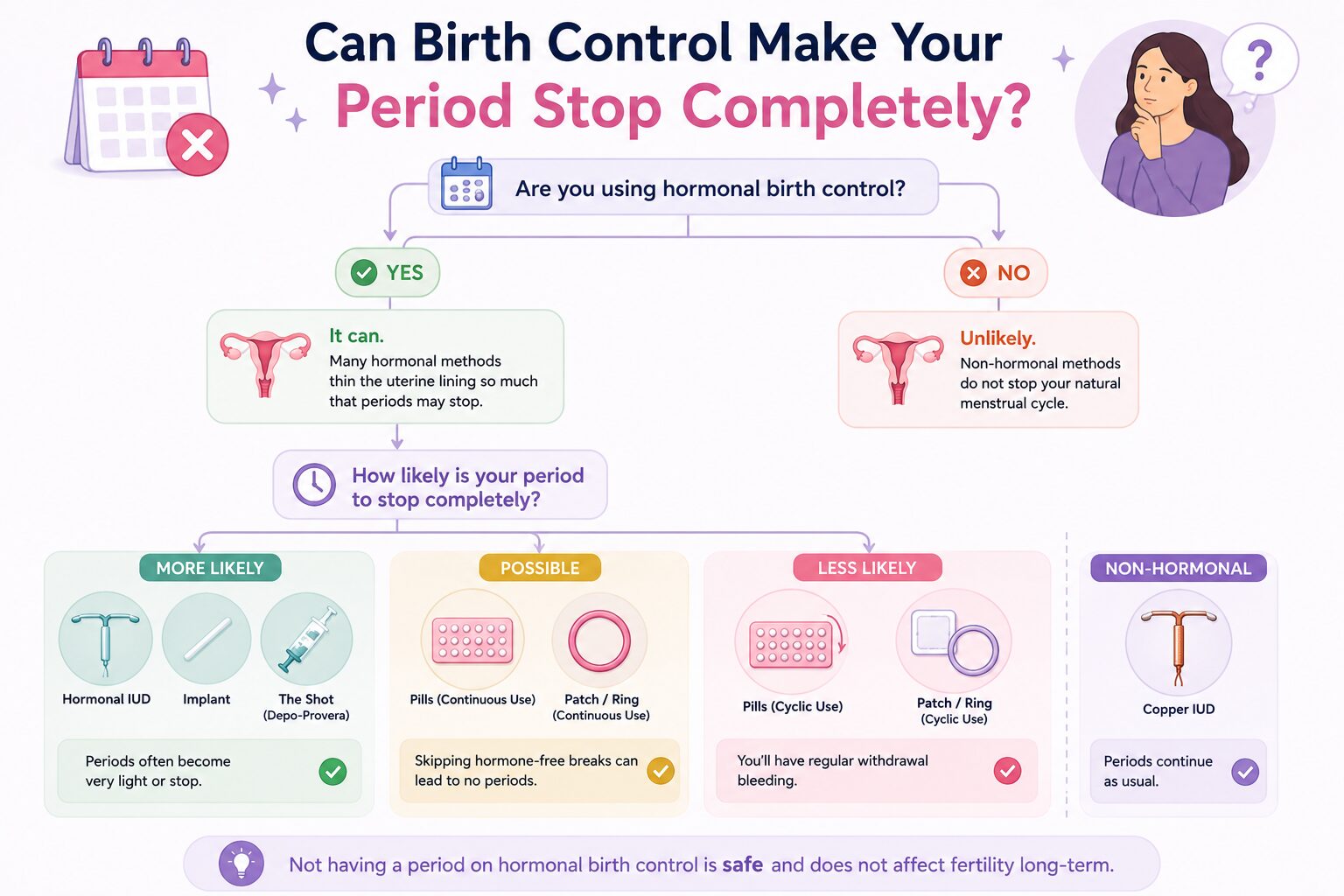
Yes, depending on the method. Many hormonal contraceptives particularly those with higher progestin levels cause periods to become so light that they effectively disappear. This is a known, medically documented effect, not a sign that something is wrong with your reproductive system.
Which Birth Control Methods Commonly Stop Periods?
The hormonal IUD, the birth control implant, and the birth control injection are the three methods most commonly associated with absent periods. With the hormonal IUD, up to 20 percent of users report no period after one year of use. With the implant and injection, irregular or absent periods are among the most commonly reported effects.
Birth Control Pills vs Hormonal IUDs vs Implants
With combined pills, withdrawal bleeding during the placebo week is expected but can be skipped intentionally by running pill packs back to back. With the hormonal IUD and implant, the absence of a period reflects the sustained progestin suppression of the uterine lining over time.
Should You Take a Pregnancy Test?
If you have been using your method inconsistently, have missed doses, or had unprotected sex, a missed period should always prompt a pregnancy test regardless of your contraceptive use. Birth control is highly effective but not infallible. If there is any doubt, testing is the right step. If a pregnancy test comes back positive, read our guide on unplanned pregnancy and your options to understand what steps to take next.
When Missing a Period Requires Medical Advice
If you are on a method where regular withdrawal bleeding is expected such as the combined pill and you miss two or more consecutive periods without a clear explanation, contact your provider. While hormonal suppression is often the cause, it is worth ruling out other factors. Our guide on how pregnant am I can help you understand gestational timing if a pregnancy is confirmed.
Can Birth Control Make Your Period Heavier?
Why Some Methods Increase Bleeding Initially
Heavier bleeding when first starting a hormonal method, particularly the hormonal IUD, is not unusual in the first few weeks after insertion as the uterus responds to the device.
Copper IUD and Heavy Periods
The copper IUD does not contain hormones, which means it does not suppress the uterine lining the way hormonal methods do. Many copper IUD users experience heavier periods and more intense cramping, particularly in the first three to six months. For most people this settles into a new normal, though periods may remain somewhat heavier than they were before insertion.
Signs of Excessive Blood Loss
Soaking through a pad or tampon every hour for two or more consecutive hours, passing clots larger than a quarter, or feeling faint or significantly fatigued during your period are signs of heavy bleeding that deserve prompt medical evaluation. These go beyond the expected adjustment range.
How Long Should Heavy Bleeding Last?
Heavier than usual bleeding in the adjustment period particularly with the copper IUD can last three to six months before stabilizing. If heavy bleeding persists beyond this window or worsens over time rather than improving, contact your healthcare provider to discuss options.
How Different Types of Birth Control Affect Your Period
Combined pills: Typically cause lighter, shorter, more predictable withdrawal bleeding with reduced cramping. Skipping the placebo week eliminates bleeding entirely.
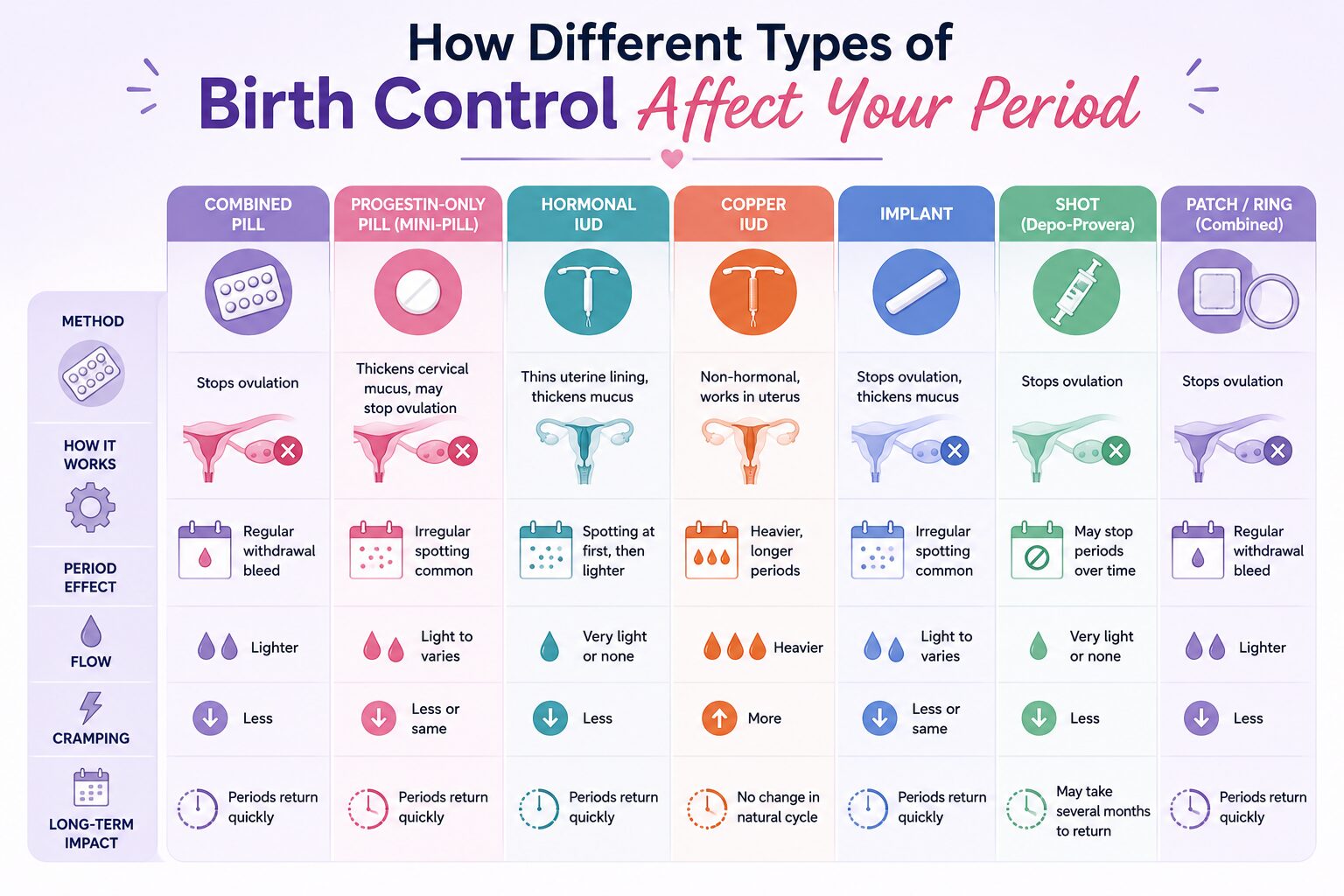
Mini-pill: The progestin-only pill often causes irregular spotting and unpredictable cycle timing, especially early on.
Hormonal IUD: Periods usually become significantly lighter and may stop altogether within six to twelve months. Irregular spotting is common in the first few months after insertion.
Copper IUD: No hormonal effect, but heavier flow and increased cramping are common, particularly in the first few months.
Birth control implant: Highly variable some people have no periods, others have frequent irregular spotting. Unpredictability is the most consistent pattern.
Birth control shot: Irregular bleeding initially, followed by lighter periods or no period at all with continued use. Fertility and regular periods can take six months to over a year to return after stopping.
Patch and vaginal ring: Similar to combined pills lighter, more predictable withdrawal bleeding during the hormone-free interval, with reduced cramping for most users.
How Long Does It Take for Your Period to Adjust to Birth Control?
First Month Expectations
The first month on a new hormonal method is typically the most unpredictable. Spotting, irregular timing, and changes to flow volume are all common and expected during this initial period.
Changes During the First 3 Months
Most providers use the three-month mark as the standard evaluation point. By this stage, the majority of breakthrough bleeding, spotting, and cycle irregularities have resolved or significantly improved as the body adapts to the new hormonal environment.
When Your Cycle Typically Stabilizes
For most methods, cycles stabilize between three and six months after starting. At this point, whatever pattern your body has settled into lighter periods, absent periods, or a predictable withdrawal bleed is likely to continue for as long as you use the same method.
When Adjustment Takes Longer Than Expected
Some people, particularly those using the implant or progestin-only methods, experience irregular bleeding for longer than three months. This does not necessarily mean the method is wrong for you, but it is a good reason to follow up with your provider to discuss whether continuing makes sense. Learn more about the benefits of telehealth and how a virtual consultation can make it easy to discuss these concerns without an in-person visit.
What Happens to Your Period When You Stop Birth Control?
First Period After Stopping Birth Control
The first natural period after stopping hormonal birth control may feel different from what you were used to before, heavier, more crampy, or simply unfamiliar if you started the method at a young age and have not experienced your natural adult cycle.
How Long Until Cycles Return to Normal?
For most methods the pill, patch, ring, implant, and hormonal IUD natural cycles return within one to three months of stopping. The injection is the notable exception, where it can take six months to over a year for regular periods and ovulation to return fully.
Why Some People Experience Delayed Periods
Post-pill amenorrhea a delay in the return of periods after stopping the pill is a recognized but relatively uncommon phenomenon. In most cases it resolves within a few months. If periods have not returned within three months of stopping any hormonal method, a provider visit is warranted.
Fertility and Ovulation Recovery
For most methods other than the injection, fertility returns quickly after stopping sometimes within weeks. This means pregnancy is possible before your first natural period returns if you are not using an alternative form of contraception.
Common Misconceptions About Stopping Birth Control
A common concern is that long-term use of birth control permanently affects fertility or cycle regularity. Current evidence does not support this. Any irregularity after stopping is typically temporary and related to the body recalibrating its own hormone production.
When Should You See a Doctor About Period Changes?
Bleeding That Is Too Heavy
If you are soaking through protection every hour for two or more hours, or if heavy bleeding continues well beyond the expected adjustment window, this warrants evaluation.
Severe Pelvic Pain
Cramping that is significantly worse than your baseline, especially with an IUD, should be assessed by a provider. Severe one-sided pain in particular may indicate IUD displacement or, in rare cases, an ectopic pregnancy.
Persistent Irregular Bleeding
Spotting or irregular bleeding that continues beyond three to six months without improvement, or that returns after a period of stability, is worth discussing with your provider to rule out other causes.
Pregnancy Symptoms While on Birth Control
Nausea, breast tenderness, fatigue, or a missed period alongside pregnancy symptoms should prompt a pregnancy test, even if you have been using your method consistently.
Signs That Your Current Method May Not Be the Right Fit
If period changes are significantly affecting your daily life and have not improved after three months, it may simply be a matter of finding a method that suits your body better. There are many options available, and a birth control consultation can help you identify one that works for your lifestyle and menstrual goals. Our women’s primary care services can walk through your options and tailor a recommendation based on your health history.
Frequently Asked Questions
Can birth control make your period disappear?
Yes, certain methods particularly the hormonal IUD, implant, and injection commonly cause periods to stop over time as progestin keeps the uterine lining too thin to shed. This is a medically recognized and safe effect, not a sign that something is wrong.
Is spotting on birth control normal?
Spotting is very common in the first two to three months of starting a new hormonal method and is generally not a cause for concern. If it continues past the three-month mark, becomes heavier, or is accompanied by pain or unusual discharge, speak with your provider.
Why is my period lighter on birth control?
Hormonal birth control, particularly combined methods and the hormonal IUD, thins the uterine lining over time, which directly reduces the volume of bleeding. A lighter period on birth control is one of the most expected and common effects of these methods.
Can birth control make your period heavier?
Most hormonal methods lighten periods, but the copper IUD is a significant exception. Because it contains no hormones, it does not suppress the uterine lining and is associated with heavier flow and more intense cramping, especially in the first few months after insertion.
How long does breakthrough bleeding last?
For most people, breakthrough bleeding and spotting resolve within the first two to three months of starting a new method as the body adjusts. With the hormonal IUD specifically, irregular spotting can continue for up to six months before stabilizing.
Should I worry if I miss a period on birth control?
If you have been using your method consistently and correctly, a missed period is most likely due to the hormonal suppression of the uterine lining and is not a cause for alarm. If there is any chance of inconsistent use or unprotected sex, take a pregnancy test to be certain.
Suggested External Sources
- Planned Parenthood
- American College of Obstetricians and Gynecologists (ACOG)
- World Health Organization (WHO)
- Mayo Clinic
- National Health Service (NHS)
Here are working links for each suggested source:
| Source | Page | URL |
|---|---|---|
| Planned Parenthood | What to expect after the abortion pill (side effects, warning signs) | https://www.plannedparenthood.org/learn/abortion/the-abortion-pill/what-can-i-expect-after-i-take-the-abortion-pill Planned Parenthood |
| Planned Parenthood | The Abortion Pill overview | https://www.plannedparenthood.org/learn/abortion/the-abortion-pill |
| ACOG | Medication Abortion (patient FAQ) | https://www.acog.org/womens-health/faqs/medication-for-achieving-an-abortion |
| WHO | Abortion care guideline | https://www.who.int/publications/i/item/9789240039483 |
| Mayo Clinic | Medical (drug-induced) abortion overview | https://www.mayoclinic.org/tests-procedures/medical-abortion/about/pac-20394687 |
| NHS | Abortion care / what happens | https://www.nhs.uk/conditions/abortion/ |

Dr. James Carter is a board-certified physician and lead clinician at Serenity Choice Health, specializing in reproductive health access and medication abortion protocols. With over 20+ years of experience, he combines clinical expertise with patient-centered care to ensure safe, compassionate, and confidential reproductive healthcare.