
You take misoprostol and soon develop diarrhea. It’s uncomfortable, unexpected, and can leave you wondering whether something is wrong.
If this is happening to you right now, here’s the short answer before anything else: diarrhea after misoprostol is a common, expected side effect for many people, and on its own, it is not a sign that something has gone wrong. But understanding why it happens, how long it typically lasts, and what crosses the line into something that needs medical attention can make the entire experience far less stressful.
This guide walks through everything the cause, the timeline, what actually helps, and the specific warning signs that mean it’s time to call a provider.
Why Does Misoprostol Cause Diarrhea?
To understand why diarrhea happens, it helps to understand what misoprostol actually does in the body.
How Misoprostol Works in the Body
Misoprostol is a synthetic prostaglandin. Its primary job in medication abortion is to cause the uterus to contract, which helps expel pregnancy tissue. This is the mechanism that produces the cramping and bleeding most people expect from the abortion pill process.
The Role of Prostaglandins in Digestion
Here’s the part that surprises a lot of people: prostaglandins don’t just affect the uterus. They’re signaling molecules that also act on smooth muscle throughout the body including the intestines. When misoprostol triggers prostaglandin activity, it doesn’t stay neatly contained to the reproductive system. The digestive tract responds too, often with increased motility (the muscle contractions that move food and waste through your intestines), which is what produces diarrhea.
Why the Intestines React Alongside the Uterus
The uterus and intestines are both smooth muscle organs, which means they respond to many of the same chemical signals. When misoprostol stimulates contractions in one, it’s common for the other to respond similarly. This is why diarrhea, cramping, and sometimes nausea tend to show up together rather than in isolation they share the same underlying mechanism.
Is Diarrhea a Sign the Medication Is Working?
Not directly b but it’s not a bad sign either. Diarrhea reflects how your digestive system is responding to prostaglandin activity, not how effectively the medication is working on the uterus. You can experience significant diarrhea and have the medication work perfectly well, and you can have minimal digestive symptoms and still have an entirely successful process. The two aren’t directly linked.
Why Some People Experience More GI Symptoms Than Others
Individual sensitivity to prostaglandins varies quite a bit. Some people are simply more prone to digestive side effects from medications that affect smooth muscle. Dosage, route of administration (oral vs. buccal vs. vaginal), and individual metabolism can all play a role in how strongly someone experiences gastrointestinal symptoms.
Is Diarrhea After Misoprostol Normal?
Yes, for most people, it is.
How Common Is Diarrhea After Misoprostol?
Diarrhea is one of the more frequently reported side effects of misoprostol, alongside nausea, cramping, and chills. Clinical studies on medication abortion consistently list gastrointestinal symptoms as common and expected not rare complications. While the exact percentage varies between studies, it’s recognized as one of the standard side effects patients should be prepared for.
Other Common Side Effects That Often Occur Together
Diarrhea rarely shows up alone. It’s commonly accompanied by:
Cramping — the primary intended effect of misoprostol on the uterus. Cramping during this process is expected and is part of how the medication works.
Nausea — another prostaglandin-related effect. Nausea after taking abortion medication is common and typically temporary.
Vomiting — less common than nausea but still within the range of typical responses for some people.
Chills — a temperature regulation response some people experience, often resolving within a day.
What a Normal Recovery Pattern Looks Like
A typical pattern involves symptoms intensifying in the hours immediately following misoprostol, peaking within the first several hours, and then gradually subsiding over the following one to two days. Diarrhea following this same general arc appearing early, being most intense initially, then easing is consistent with a normal recovery.
Common Symptoms That Often Cause Unnecessary Concern
Watery stool, multiple episodes within a short window, and stomach cramping alongside diarrhea are all things that feel alarming in the moment but fall within the range of expected response to misoprostol. The key distinction isn’t whether symptoms are uncomfortable they often are but whether they’re following a pattern that improves over time versus one that’s getting worse or showing signs of complication, which we’ll cover in detail further down.
If you’re experiencing symptoms you’re unsure about, getting personalized guidance from a healthcare professional can provide real reassurance. You can schedule a confidential appointment to discuss what you’re experiencing.
How Long Does Diarrhea Last After Misoprostol?
This is usually the most pressing question, so here’s a clear timeline.
Typical Duration of Diarrhea
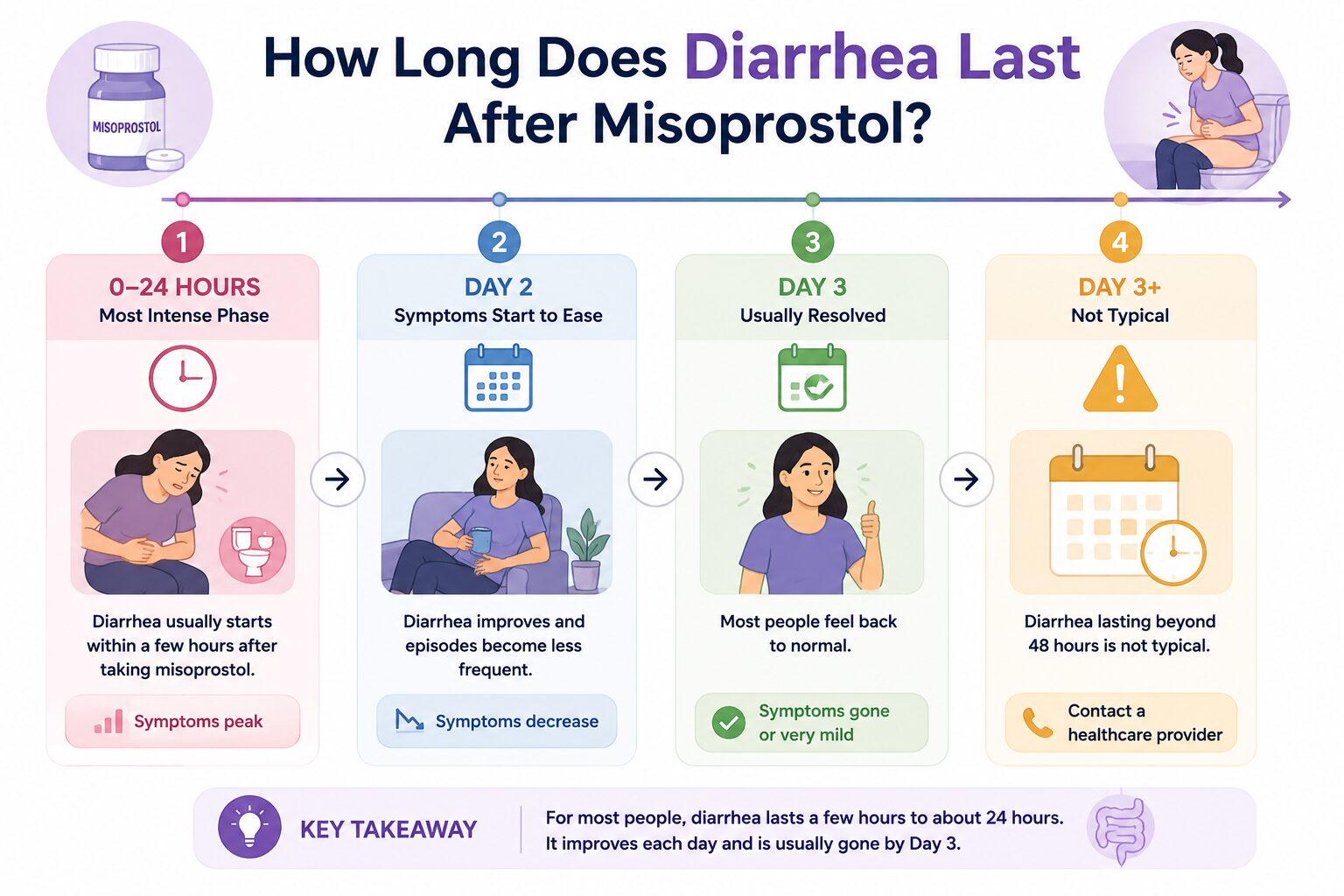
For most people, diarrhea after misoprostol lasts anywhere from a few hours to about 24 hours. Some people experience a shorter window of just a few hours, while others may have intermittent symptoms that persist into the second day. Beyond 48 hours, persistent diarrhea is less typical and worth discussing with a provider.
What to Expect During the First 24 Hours
The first 24 hours tend to be the most symptomatic window overall. Cramping, bleeding, diarrhea, nausea, and sometimes chills can all occur within this period, often clustering within the first several hours after taking misoprostol. This is when prostaglandin activity is at its peak in your system.
Symptoms During Days 2–3
By day two, most people notice gastrointestinal symptoms tapering off significantly. Diarrhea that continues into day two is not necessarily abnormal, but it should be improving in frequency and severity, not worsening. By day three, GI symptoms have typically resolved for the vast majority of people, even as bleeding and lighter cramping may continue for longer.
When Digestive Symptoms Should Improve
The general expectation is steady improvement, not a static or worsening pattern. If diarrhea is roughly the same severity on day two as it was on day one, or appears to be getting worse rather than better, that’s a signal to check in with a provider rather than waiting it out further.
Factors That Can Make Symptoms Last Longer
A few things can extend the duration or intensity of digestive symptoms: higher medication dosing, individual sensitivity to prostaglandins, dehydration (which can itself worsen GI symptoms in a feedback loop), and pre-existing digestive sensitivities or conditions. If you have a history of irritable bowel syndrome or similar conditions, you may find your digestive response to misoprostol is more pronounced than average.
What Helps Relieve Diarrhea After Misoprostol?
There are practical, accessible ways to manage symptoms while your body moves through this temporary side effect.
Best Fluids to Prevent Dehydration
Diarrhea causes fluid loss, and combined with bleeding, this makes hydration a priority. Water is the foundation, but electrolyte-replacement drinks oral rehydration solutions, diluted sports drinks, or coconut water help replace the sodium and potassium that diarrhea depletes. Sipping fluids consistently throughout the day works better than trying to drink large amounts at once, which can sometimes worsen nausea.
Foods That Are Easier on the Stomach
The classic “BRAT” approach bananas, rice, applesauce, toast remains genuinely useful here. These foods are low in fiber, easy to digest, and gentle on a digestive system that’s already working overtime. Plain crackers, broth-based soups, and plain potatoes are also good options. Smaller, more frequent meals tend to be better tolerated than large ones during this window.
Foods and Drinks to Avoid
Dairy products, high-fiber foods, greasy or fried foods, caffeine, and alcohol can all aggravate diarrhea or interact poorly with an already sensitive digestive system. It’s worth avoiding these for the first day or two until symptoms have eased.
Can Over-the-Counter Anti-Diarrheal Medications Help?
This is worth discussing with your provider before taking anything, since some anti-diarrheal medications work by slowing intestinal motility which is generally fine for general diarrhea, but you’ll want confirmation that it won’t interfere with anything else happening during your specific recovery. Don’t self-medicate with anti-diarrheal treatments without checking first; ask during your consultation what’s appropriate for your situation.
Rest and Recovery Tips
Give yourself permission to rest. Your body is doing significant work, and pushing through a full schedule on top of cramping, bleeding, and diarrhea often makes the experience feel more overwhelming than it needs to. Plan to be near a bathroom, keep fluids within reach, and don’t feel obligated to be anywhere or do anything during the most symptomatic window.
Can Diarrhea Affect How Well Misoprostol Works?
This is one of the most common and most reassuring questions to address directly.
Does Diarrhea Reduce Absorption?
Generally, no — at least not in a way that meaningfully affects outcomes for most people. Misoprostol is absorbed quickly, particularly when taken buccally (between the cheek and gum) or vaginally, methods that bypass much of the digestive tract entirely. Even with oral administration, absorption typically occurs before diarrhea would significantly interfere with it. The medication’s mechanism doesn’t depend on a long residence time in the digestive system the way some oral medications do.
Should You Take Another Dose?
Do not take an additional dose of misoprostol on your own because you experienced diarrhea, unless specifically instructed to do so by your provider. Diarrhea alone is not an indication that the medication failed to absorb or work. If you have specific concerns about whether the medication worked as intended, that’s a conversation to have with your provider not a reason to self-administer additional medication.
Common Myths About Misoprostol and Digestive Side Effects
A persistent myth is that vomiting or diarrhea shortly after taking misoprostol means you “lost the dose” and need to take it again. This isn’t generally accurate, particularly for buccal or vaginal administration, where absorption happens through tissue rather than the digestive tract. If you’re concerned about timing or whether you experienced these symptoms close enough to dosing to matter, your provider can address your specific situation.
How to Know the Medication Is Working
The clearest signs the medication is working are the ones related to the uterus, not the digestive system: cramping, bleeding, and the eventual passing of pregnancy tissue. Knowing how to tell if the abortion pill worked involves tracking these specific signs, along with understanding documented effectiveness rates for context. Diarrhea is a side effect of the broader prostaglandin response, not a direct indicator of uterine effectiveness.
Signs of Dehydration After Misoprostol
Because diarrhea and bleeding can both cause fluid loss, dehydration is worth monitoring actively during recovery.
Early Symptoms of Dehydration
Mild dehydration often presents as thirst, dry mouth, slightly reduced urination, and mild fatigue. These are your body’s early signals to increase fluid intake.
Moderate vs Severe Dehydration
Moderate dehydration includes more pronounced symptoms: noticeably reduced urination, dark-colored urine, dizziness when standing, and increased fatigue. Severe dehydration is more serious — symptoms include very little or no urination, rapid heartbeat, significant dizziness or lightheadedness, confusion, and in extreme cases, fainting.
When Fluid Loss Becomes Dangerous
If you notice signs of moderate to severe dehydration particularly significantly reduced urination, persistent dizziness, or rapid heartbeat this warrants prompt medical attention rather than waiting to see if it improves on its own.
How Much Should You Drink?
There’s no single magic number, but a reasonable guideline during active symptoms is to drink fluids steadily throughout the day rather than waiting until you feel thirsty, aiming for clear or pale yellow urine as a general indicator that you’re adequately hydrated.
Electrolyte Replacement Strategies
Oral rehydration solutions are specifically formulated to replace lost electrolytes efficiently and are more effective for this purpose than water alone during active diarrhea. Diluted sports drinks and electrolyte tablets dissolved in water are accessible alternatives if oral rehydration solutions aren’t available.
When Should You Be Concerned About Diarrhea After Misoprostol?
This is the section that matters most for safety, so read it carefully.
How Much Diarrhea Is Too Much?
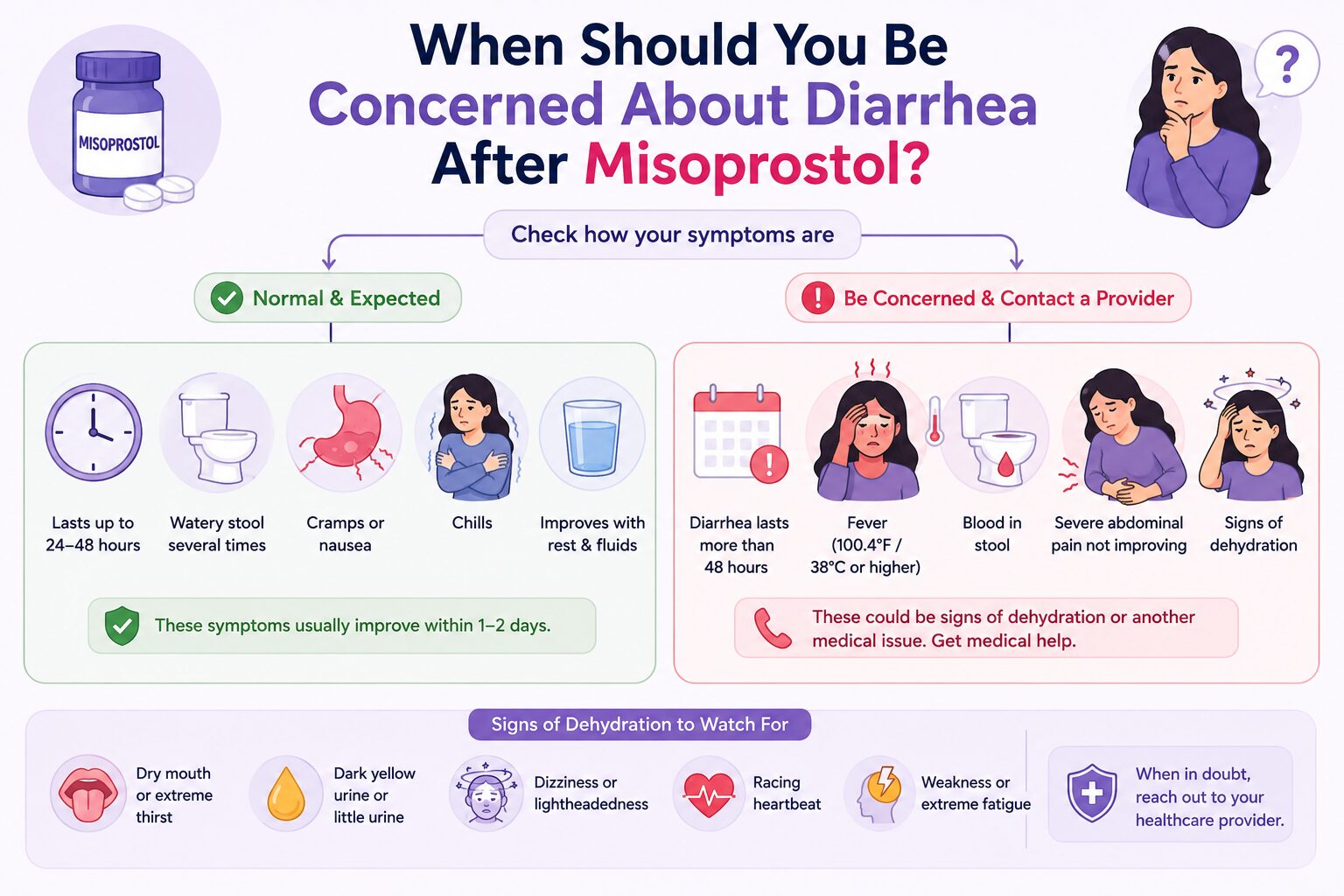
Frequent watery diarrhea that continues for more than 24 to 48 hours without improvement, or that’s accompanied by signs of dehydration, crosses from “expected side effect” into “needs medical evaluation.”
Persistent Symptoms Beyond Expected Recovery
If diarrhea hasn’t started improving by day two or three, or if it’s worsening rather than easing, that’s outside the typical pattern and worth a call to your provider.
Severe Abdominal Pain vs Normal Cramping
Normal cramping from misoprostol is intense but generally manageable, especially with pain relief measures, and tends to ease over time. Severe, unrelenting abdominal pain that isn’t responding to pain medication particularly pain that’s worsening rather than improving is a different pattern that should be evaluated. Understanding general abortion safety and medical facts can help you distinguish expected discomfort from something that needs attention.
Fever and Possible Infection Signs
A low-grade fever in the hours immediately following misoprostol can be a normal temperature-regulation response. A fever above 100.4°F (38°C) that persists beyond 24 hours, or that’s accompanied by foul-smelling discharge, is a different matter and should prompt medical evaluation for possible infection.
When to Contact a Healthcare Provider Immediately
Contact a provider promptly if you experience: signs of moderate to severe dehydration, diarrhea persisting beyond 48 hours without improvement, fever above 100.4°F lasting more than 24 hours, severe abdominal pain not relieved by medication, or any symptom that feels significantly outside what you were told to expect.
Need reassurance or medical advice during this process? Scheduling a confidential follow-up consultation gives you direct access to a provider who can evaluate your specific symptoms.
Common Questions People Have About Misoprostol Side Effects
Can Misoprostol Cause Diarrhea Without Cramping?
It’s less common but possible. Since both effects stem from prostaglandin activity but affect different smooth muscle systems, some people experience digestive symptoms more prominently than uterine symptoms, or vice versa. Individual variation is normal.
Why Does Diarrhea Start So Quickly?
Misoprostol is absorbed relatively quickly, and prostaglandin effects on smooth muscle including the intestines can begin within 30 minutes to a few hours of taking the medication, which is why diarrhea often starts sooner than people expect.
Can I Eat Normally After Taking Misoprostol?
During the most symptomatic window, sticking to bland, easily digestible foods is generally more comfortable. As symptoms ease typically within a day or two returning to your normal diet is generally fine.
Is Watery Diarrhea Normal?
Yes, watery stool is a common presentation of misoprostol-related diarrhea and, on its own, isn’t a red flag. The concern arises when it’s persistent beyond the expected window or accompanied by dehydration signs.
Should I Stay Home After Taking Misoprostol?
Most providers recommend planning to be home, near a bathroom, and able to rest for at least the first several hours after taking misoprostol, given the combination of cramping, bleeding, and potential digestive symptoms. Reviewing what your full experience may look like before, during, and after helps you plan your day appropriately.
A Final Word on Recovery
Diarrhea after misoprostol is uncomfortable, but for the overwhelming majority of people, it’s a temporary, expected part of how the medication interacts with the body not a sign that something has gone wrong. Staying hydrated, eating gently, resting, and tracking your symptoms against the general timeline outlined here will help you move through this part of the process with far less anxiety.
Emotional recovery matters just as much as physical recovery during this time, and giving yourself grace through both is part of taking care of yourself fully.
Have ongoing symptoms after misoprostol, or just want to talk through what you’re experiencing? Connect with a healthcare provider to discuss your recovery and next steps. You can explore telehealth abortion care for a remote consultation, in-clinic abortion services if you’d prefer to be seen in person, or learn more about the abortion pill and what to expect at each stage. Our team also offers women’s primary care services, birth control and contraceptive consultations, and STI/STD testing for comprehensive, ongoing care.
Frequently Asked Questions
Is diarrhea normal after taking misoprostol?
Yes. Diarrhea is a common, expected side effect caused by the same prostaglandin activity that helps the uterus contract. It’s not a sign of a complication on its own.
How long does diarrhea last after misoprostol?
Typically a few hours to 24 hours, with most cases resolving by the second day. Persistent diarrhea beyond 48 hours warrants a check-in with a provider.
What helps stop diarrhea after misoprostol?
Staying hydrated with electrolyte-replacement fluids, eating bland low-fiber foods, avoiding dairy and greasy foods, and resting. Speak with your provider before taking any anti-diarrheal medication.
Can diarrhea affect how well misoprostol works?
No, not meaningfully for most people. Misoprostol is absorbed quickly, particularly with buccal or vaginal administration, and diarrhea doesn’t typically interfere with that absorption.
When should I worry about diarrhea after misoprostol?
If it persists beyond 48 hours without improving, worsens rather than easing, or comes with signs of dehydration, fever above 100.4°F lasting more than a day, or severe abdominal pain.
Can misoprostol cause severe diarrhea?
For some people, yes individual sensitivity to prostaglandins varies. Severe or worsening diarrhea accompanied by dehydration signs should be evaluated by a provider.
Suggested External Sources
- Planned Parenthood
- American College of Obstetricians and Gynecologists (ACOG)
- World Health Organization (WHO)
- Mayo Clinic
- National Health Service (NHS)
Here are working links for each suggested source:
| Source | Page | URL |
|---|---|---|
| Planned Parenthood | What to expect after the abortion pill (side effects, warning signs) | https://www.plannedparenthood.org/learn/abortion/the-abortion-pill/what-can-i-expect-after-i-take-the-abortion-pill Planned Parenthood |
| Planned Parenthood | The Abortion Pill overview | https://www.plannedparenthood.org/learn/abortion/the-abortion-pill |
| ACOG | Medication Abortion (patient FAQ) | https://www.acog.org/womens-health/faqs/medication-for-achieving-an-abortion |
| WHO | Abortion care guideline | https://www.who.int/publications/i/item/9789240039483 |
| Mayo Clinic | Medical (drug-induced) abortion overview | https://www.mayoclinic.org/tests-procedures/medical-abortion/about/pac-20394687 |
| NHS | Abortion care / what happens | https://www.nhs.uk/conditions/abortion/ |

Dr. James Carter is a board-certified physician and lead clinician at Serenity Choice Health, specializing in reproductive health access and medication abortion protocols. With over 20+ years of experience, he combines clinical expertise with patient-centered care to ensure safe, compassionate, and confidential reproductive healthcare.