
A headache after taking the abortion pill is a common experience for many people, and in most cases it is mild and temporary. It is usually linked to hormonal changes, the body’s response to the medication, or factors like dehydration and stress. In rare cases, a severe or persistent headache combined with other symptoms can signal a problem that needs medical attention.
This article explains why headaches happen after medication abortion, what typically helps, and which symptoms mean you should contact your provider.
Why Do Headaches Happen After the Abortion Pill?
Medication abortion typically involves two drugs: mifepristone, which stops the pregnancy from progressing, and misoprostol, which causes the uterus to contract and expel the pregnancy. Both medications can be associated with headaches, though for somewhat different reasons.
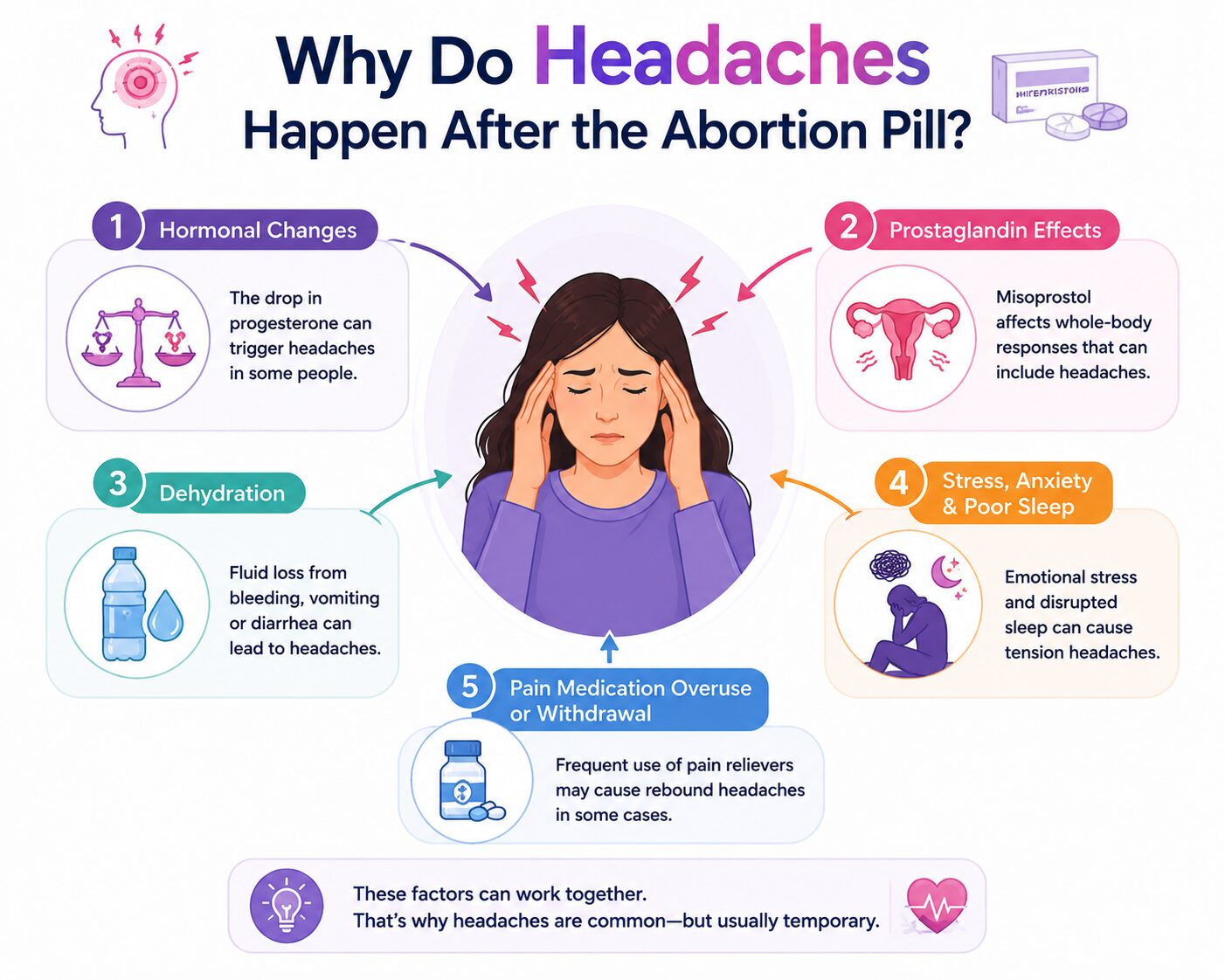
Hormonal Changes
Mifepristone works by blocking progesterone. This sudden hormonal shift can affect different systems in the body, and headaches are a recognized response to rapid hormonal change in many people, similar to hormonal headaches some experience around menstruation or early pregnancy.
Prostaglandin Effects
Misoprostol is a synthetic prostaglandin. Prostaglandins act on smooth muscle throughout the body, which is why they cause uterine cramping, but they can also be associated with headache, chills, and fever in some people as part of a broader systemic response. For a full breakdown of what misoprostol does to your body, read our guide on what to expect when taking misoprostol.
Dehydration
Bleeding, cramping, nausea, vomiting, or diarrhea can all occur during this process. Combined fluid loss from any of these can contribute to dehydration, which is a well-known and common trigger for headaches.
Stress, Anxiety and Poor Sleep
The emotional weight of the experience, combined with physical discomfort that can disrupt rest, may also contribute to tension-type headaches. This does not mean the headache is “just stress,” but stress and poor sleep are real physical contributors that often combine with other causes. If you are navigating difficult emotions during this time, our guide on how having an abortion affects your mental health offers honest, supportive information.
Pain Medication Overuse or Withdrawal
If you are using pain relievers frequently for cramping, in some cases rebound headaches can occur with very frequent use of certain over-the-counter pain medications. This is something to mention to your provider if headaches persist despite regular pain medication use.
Is a Headache After the Abortion Pill Normal?
In most cases, yes. A mild to moderate headache that develops within the first day or two and gradually improves is generally considered part of the expected range of symptoms during medication abortion recovery, similar to cramping, nausea, or fatigue.
What is often considered normal:
- Mild to moderate intensity
- Starts within 24 to 48 hours of taking the medication
- Improves with rest, fluids, and standard pain relief
- Occurs alongside other expected symptoms like cramping or fatigue
What may not be normal:
- A headache that is severe or described as “the worst headache of your life”
- Sudden vision changes, confusion, or difficulty speaking alongside the headache
- A headache that worsens significantly over time instead of improving
- A headache combined with a high fever, severe abdominal pain, or fainting
If you are unsure whether your symptoms fall into the expected range, contacting your provider for guidance is always a reasonable step. You can reach our care team here.
How Long Does a Headache After the Abortion Pill Usually Last?
There is no single timeline that applies to everyone, since individual response to medication varies. In general terms:
- Headaches often appear within the first 24 to 48 hours after taking misoprostol
- Mild headaches frequently resolve within a day or two as hormone levels stabilize and hydration improves
- Headaches that persist beyond several days, or that come back repeatedly without explanation, are worth discussing with a provider
Understanding the broader picture of what to expect during recovery can help you distinguish normal symptoms from ones that need attention. Our complete guide on what to expect before, during, and after your abortion covers the full recovery timeline in detail.
If your headache is lingering longer than you expected, this alone is not necessarily an emergency, but it is a reasonable reason to check in with your care team rather than guessing.
Practical Ways to Find Relief
The following are general comfort measures. Always confirm with your provider what pain relief is appropriate for your specific situation, especially regarding any medication interactions.
Hydration
- Drink water consistently throughout the day rather than large amounts at once
- Consider oral rehydration solutions if you are also experiencing diarrhea or vomiting
Rest
- Try to rest in a quiet, dim room if light or noise worsens the headache
- Avoid pushing through a full schedule during the most symptomatic window
Standard Pain Relief
Many providers advise over-the-counter pain relievers such as ibuprofen or acetaminophen for general discomfort during medication abortion recovery. Follow your provider’s specific guidance on what is safe to take and how often, since this can depend on your individual health history. For broader guidance on managing discomfort during this process, our resource on abortion pain management is a helpful reference.
Cool Compress
A cool, damp cloth on the forehead or back of the neck can offer mild relief for tension-type headaches.
Reducing Screen Time
Bright screens can worsen some headaches; dimming your phone or laptop screen or taking breaks may help.
A Simple Relief Checklist:
- ☐ Drink water steadily through the day
- ☐ Rest in a quiet, low-light space if possible
- ☐ Use pain relief only as approved by your provider
- ☐ Apply a cool compress if helpful
- ☐ Track how the headache changes over 24 to 48 hours
- ☐ Contact your provider if it worsens instead of improving
Red Flags: When a Headache Needs Medical Attention
Most headaches after the abortion pill are uncomfortable but not dangerous. However, certain signs and combinations of symptoms should prompt you to contact your provider promptly or seek urgent care.
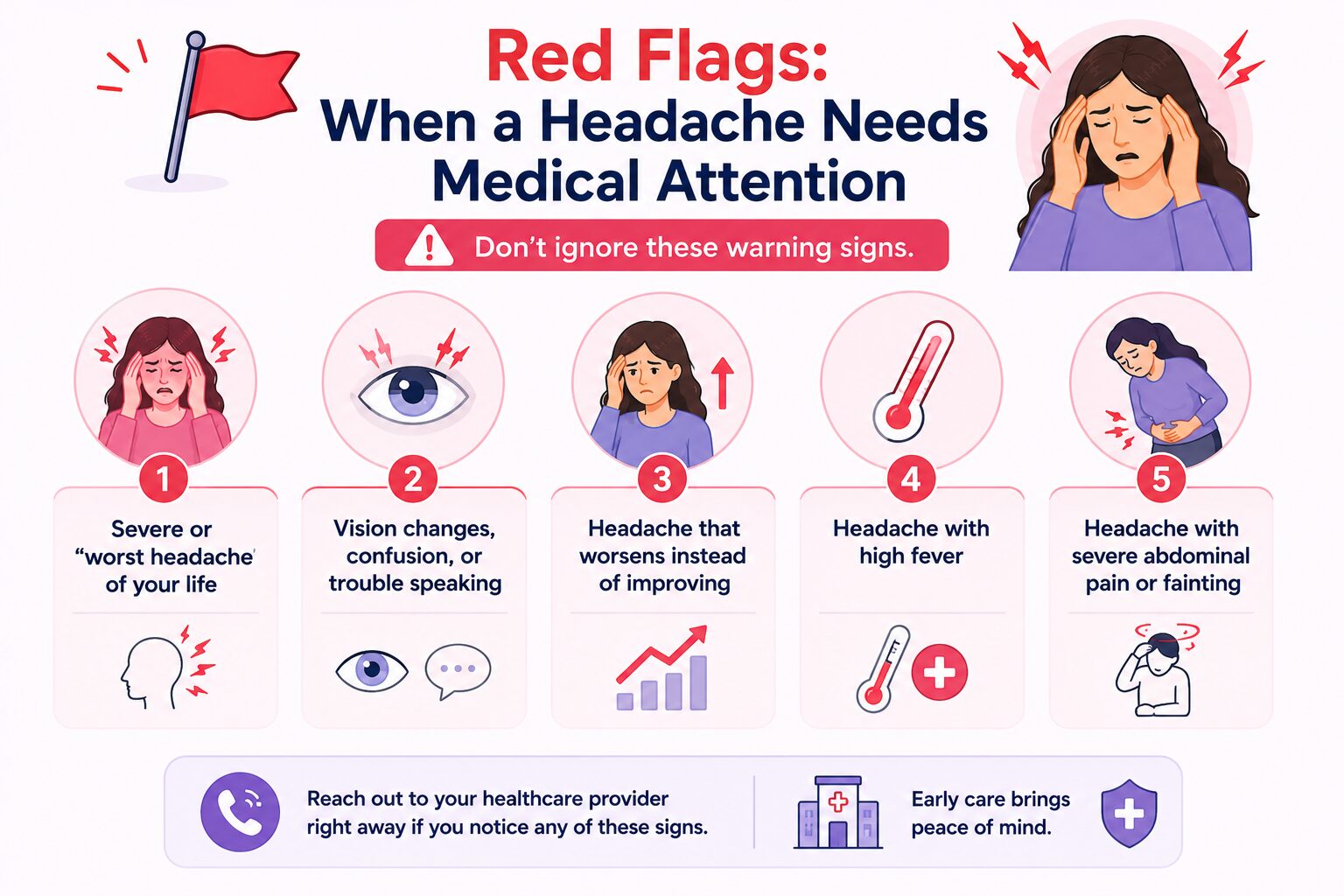
Contact your healthcare provider or seek medical attention if you experience:
- A sudden, severe headache unlike any you have had before
- Headache with vision changes, such as blurred or double vision
- Headache with confusion, difficulty speaking, or weakness on one side of the body
- Headache combined with a fever above 100.4°F (38°C) that lasts more than 24 hours
- Headache combined with severe abdominal pain that is not relieved by medication
- Headache combined with very heavy bleeding, such as soaking more than two pads per hour for two hours
- Fainting or feeling like you might faint
- A headache that continues to worsen instead of improving after a few days
These combinations may indicate something beyond a typical medication side effect, such as infection, severe dehydration, or another medical issue that needs evaluation. When in doubt, it is always safer to contact our care team or seek urgent care than to wait and see.
For a complete overview of when symptoms after the abortion pill require immediate attention, read our guide on when abortion pills don’t work and what to do.
Common Mistakes to Avoid
- Ignoring a worsening headache because you assume all symptoms after the abortion pill are automatically normal
- Overusing pain medication without checking in with your provider, which can sometimes contribute to rebound headaches
- Not tracking symptoms, which makes it harder to describe what is happening if you do need to call your provider
- Skipping hydration while also experiencing bleeding, nausea, or diarrhea, which increases dehydration risk
- Self-diagnosing online instead of contacting your actual care team when something feels off
If nausea alongside your headache is a concern, our dedicated guide on nausea after abortion and what to expect from bleeding after the abortion pill may also be helpful to read together.
Frequently Asked Questions
Is a headache a common side effect of the abortion pill?
Yes, headache is a commonly reported side effect during medication abortion, often related to hormonal changes, prostaglandin effects from misoprostol, or dehydration.
Is it the mifepristone or the misoprostol that causes the headache?
Both medications can be associated with headache, though through somewhat different mechanisms. Mifepristone affects hormone levels, while misoprostol affects prostaglandins more directly. You can read more about how each medication works in our guides on mifepristone and misoprostol.
How long should a headache last after taking the abortion pill?
Many headaches improve within one to two days as the body adjusts and hydration is restored. A headache lasting much longer than this, or worsening over time, is worth discussing with your provider.
Can dehydration from bleeding or diarrhea make a headache worse?
Yes. Fluid loss from bleeding, vomiting, or diarrhea can contribute to or worsen headaches. Staying hydrated is an important part of general comfort during recovery. Our guide on bleeding after the abortion pill explains what level of bleeding is normal and when to be concerned.
What pain relief is safe to take for a headache after the abortion pill?
This depends on your individual health history. Many providers recommend standard over-the-counter pain relievers, but you should confirm with your own provider what is appropriate for you. Book a telehealth consultation if you need personalized guidance.
When should I be worried about a headache after the abortion pill?
You should contact your provider if the headache is severe, comes with vision changes, confusion, high fever, very heavy bleeding, or if it continues to worsen rather than improve.
Can a headache mean the abortion pill did not work?
No. A headache is not an indicator of whether the medication worked. Effectiveness is generally assessed through signs like bleeding, cramping, and follow-up confirmation with your provider. Read our full guide on how to know if the abortion pill worked for a clear explanation of what to look for.
Should I call my doctor for any headache after taking these medications?
Not necessarily for a mild, improving headache. However, if you are ever unsure or anxious about your symptoms, contacting your provider is a reasonable and encouraged step. Our team is available reach us here.
Final Takeaway
A headache after the abortion pill is usually a mild, temporary side effect linked to hormonal shifts, prostaglandin activity, or dehydration. Most headaches improve within a day or two with rest, fluids, and appropriate pain relief. However, a severe headache one accompanied by vision changes, confusion, high fever, or heavy bleeding, or one that worsens instead of improving should prompt a call to your healthcare provider.
If you have ongoing concerns about your recovery, our women’s primary care services are available for follow-up care and general reproductive health support. And if you are considering future pregnancy prevention, our team can walk you through birth control and contraceptive options that fit your health and lifestyle.
When in doubt, reach out to your care team rather than waiting it out alone. Book a confidential appointment here.
Suggested External Sources
- Planned Parenthood
- American College of Obstetricians and Gynecologists (ACOG)
- World Health Organization (WHO)
- Mayo Clinic
- National Health Service (NHS)
Here are working links for each suggested source:
| Source | Page | URL |
|---|---|---|
| Planned Parenthood | What to expect after the abortion pill (side effects, warning signs) | https://www.plannedparenthood.org/learn/abortion/the-abortion-pill/what-can-i-expect-after-i-take-the-abortion-pill Planned Parenthood |
| Planned Parenthood | The Abortion Pill overview | https://www.plannedparenthood.org/learn/abortion/the-abortion-pill |
| ACOG | Medication Abortion (patient FAQ) | https://www.acog.org/womens-health/faqs/medication-for-achieving-an-abortion |
| WHO | Abortion care guideline | https://www.who.int/publications/i/item/9789240039483 |
| Mayo Clinic | Medical (drug-induced) abortion overview | https://www.mayoclinic.org/tests-procedures/medical-abortion/about/pac-20394687 |
| NHS | Abortion care / what happens | https://www.nhs.uk/conditions/abortion/ |

Dr. James Carter is a board-certified physician and lead clinician at Serenity Choice Health, specializing in reproductive health access and medication abortion protocols. With over 20+ years of experience, he combines clinical expertise with patient-centered care to ensure safe, compassionate, and confidential reproductive healthcare.