
Misoprostol is an important medication used in several areas of healthcare, including medication abortion, miscarriage management, cervical preparation, and labor induction. One of the most common questions patients have is whether buccal or vaginal misoprostol is the better option.
The answer depends on the medical situation, the treatment protocol, and your healthcare provider’s instructions. Both administration methods have been extensively studied and can be highly effective when used correctly.
This guide explains the differences between buccal vs vaginal misoprostol, how each method works, their advantages and disadvantages, and why following professional medical guidance is essential.
What Is Misoprostol?
Misoprostol is a medication that causes the uterus to contract and the cervix to soften. Depending on the medical condition being treated, it may be used alone or together with another medication.
Healthcare providers prescribe misoprostol for several approved and evidence-based uses, including:
- Medication abortion
- Management of early pregnancy loss
- Cervical ripening before procedures
- Labor induction
- Prevention and treatment of postpartum hemorrhage in certain settings
For a full overview of how misoprostol fits into the medication abortion process, read our guides on what to expect from misoprostol and how the abortion pill works. For miscarriage management specifically, our miscarriage diagnosis, treatment, and aftercare guide explains how misoprostol is used in that context.
One important aspect of treatment is how the medication is administered, as different routes allow the body to absorb the medication differently.
What Is Buccal Misoprostol?
Buccal misoprostol means placing the tablets between the gums and the inside of the cheek.
Typically, patients place the prescribed tablets inside both cheeks and allow them to dissolve for approximately 30 minutes before swallowing any remaining fragments, following their provider’s instructions.
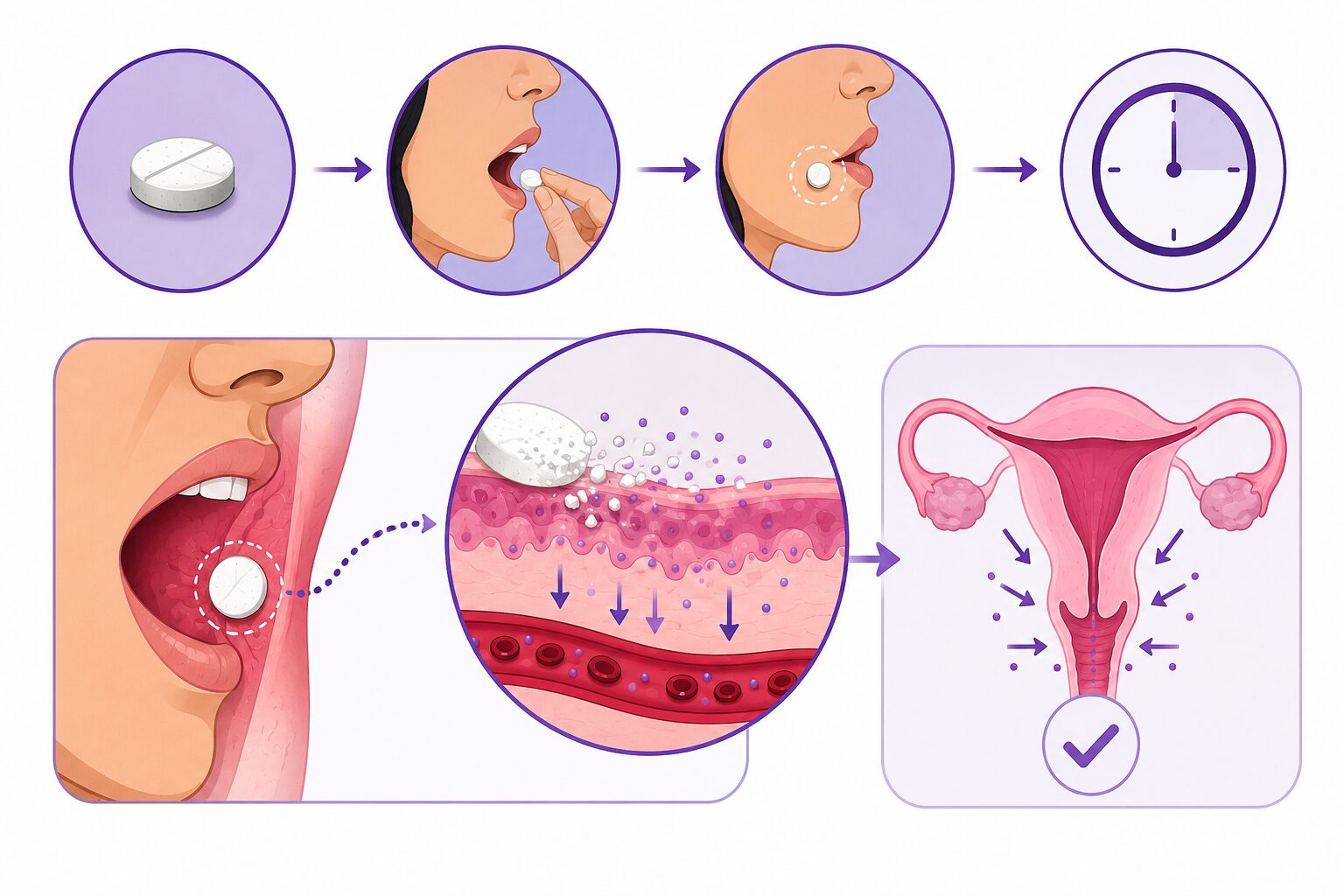
How Buccal Administration Works
The medication is absorbed through the tissues inside the mouth before entering the bloodstream. This route avoids some of the medication being immediately broken down by the digestive system, allowing for effective absorption.
Advantages of Buccal Misoprostol
- Easy to administer
- No vaginal insertion required
- Convenient for many patients
- Often included in medication abortion protocols
- Suitable when vaginal administration is not preferred
Possible Disadvantages
- Temporary unpleasant taste
- Mouth irritation in some people
- Requires holding tablets in place for the recommended time
What Is Vaginal Misoprostol?
Vaginal misoprostol involves placing the tablets high inside the vagina according to medical instructions. The tablets gradually dissolve and are absorbed through vaginal tissues.
How Vaginal Administration Works
Absorption occurs directly through the vaginal lining, allowing medication to enter circulation over time. Many clinical protocols have used this administration method successfully for years.
Advantages of Vaginal Misoprostol
- Direct absorption
- Less medication exposed to stomach acids
- Often associated with fewer gastrointestinal side effects
- Widely studied in medication abortion and miscarriage management
Possible Disadvantages
- Some patients feel uncomfortable with insertion
- Vaginal bleeding may affect tablet retention in some situations
- Not appropriate in every medical circumstance
Buccal vs Vaginal Misoprostol: Side-by-Side Comparison
| Feature | Buccal Misoprostol | Vaginal Misoprostol |
| Administration | Between gums and cheeks | Inserted into vagina |
| Absorption | Through oral tissues | Through vaginal tissues |
| Ease of Use | Simple for many patients | Requires vaginal insertion |
| Privacy | No vaginal insertion | Less convenient for some |
| Gastrointestinal Side Effects | May be slightly more common | May be somewhat less common |
| Clinical Effectiveness | High when used correctly | High when used correctly |
Both methods are supported by medical evidence when used according to established treatment protocols. Read our abortion safety medical facts guide for a broader look at what the evidence says about medication abortion effectiveness and safety.
Is Buccal or Vaginal Misoprostol More Effective?
Research has shown that both buccal and vaginal misoprostol are highly effective when used according to evidence-based medical protocols.
The exact effectiveness depends on factors such as:
- Gestational age
- Medication dosage
- Timing
- Whether another medication is used beforehand
- Individual medical circumstances
Rather than one method being universally “better,” healthcare providers choose the administration route that best matches the patient’s situation. Learn more about medication abortion explained and how mifepristone and misoprostol work together as part of the full process. Our mifepristone guide covers the first medication in the two-drug protocol in more detail.
Side Effects: Are They Different?
The side effects of misoprostol are generally related to the medication itself rather than the administration route.
Common side effects include:
- Cramping
- Vaginal bleeding
- Nausea
- Vomiting
- Diarrhea
- Chills
- Fever
- Fatigue
Some studies suggest vaginal administration may produce slightly fewer gastrointestinal symptoms in certain patients, while buccal administration remains highly effective and widely recommended.
For more detail on specific side effects, read our guides on bleeding after the abortion pill, nausea after abortion, and abortion pain management strategies. You should also be aware of alcohol after misoprostol and why it should be avoided during recovery.
Individual experiences vary.
Advantages and Disadvantages
Buccal Misoprostol
Pros:
- Easy to use
- Comfortable for many patients
- Frequently recommended in telemedicine protocols
- No vaginal insertion
Cons:
- Tablets remain in the mouth for about 30 minutes
- May cause mild mouth discomfort
- Some people dislike the taste
Vaginal Misoprostol
Pros:
- Direct medication absorption
- May reduce stomach-related side effects
- Well established in clinical practice
Cons:
- Requires vaginal insertion
- May feel uncomfortable for some patients
- Not appropriate in every situation
Our telehealth abortion care service commonly uses buccal protocols, allowing patients to manage their care privately from home with full clinician support. For those who need in-person care, our in-clinic abortion services are also available.
Which Method Do Healthcare Providers Recommend?
There is no single administration method that is appropriate for every patient.
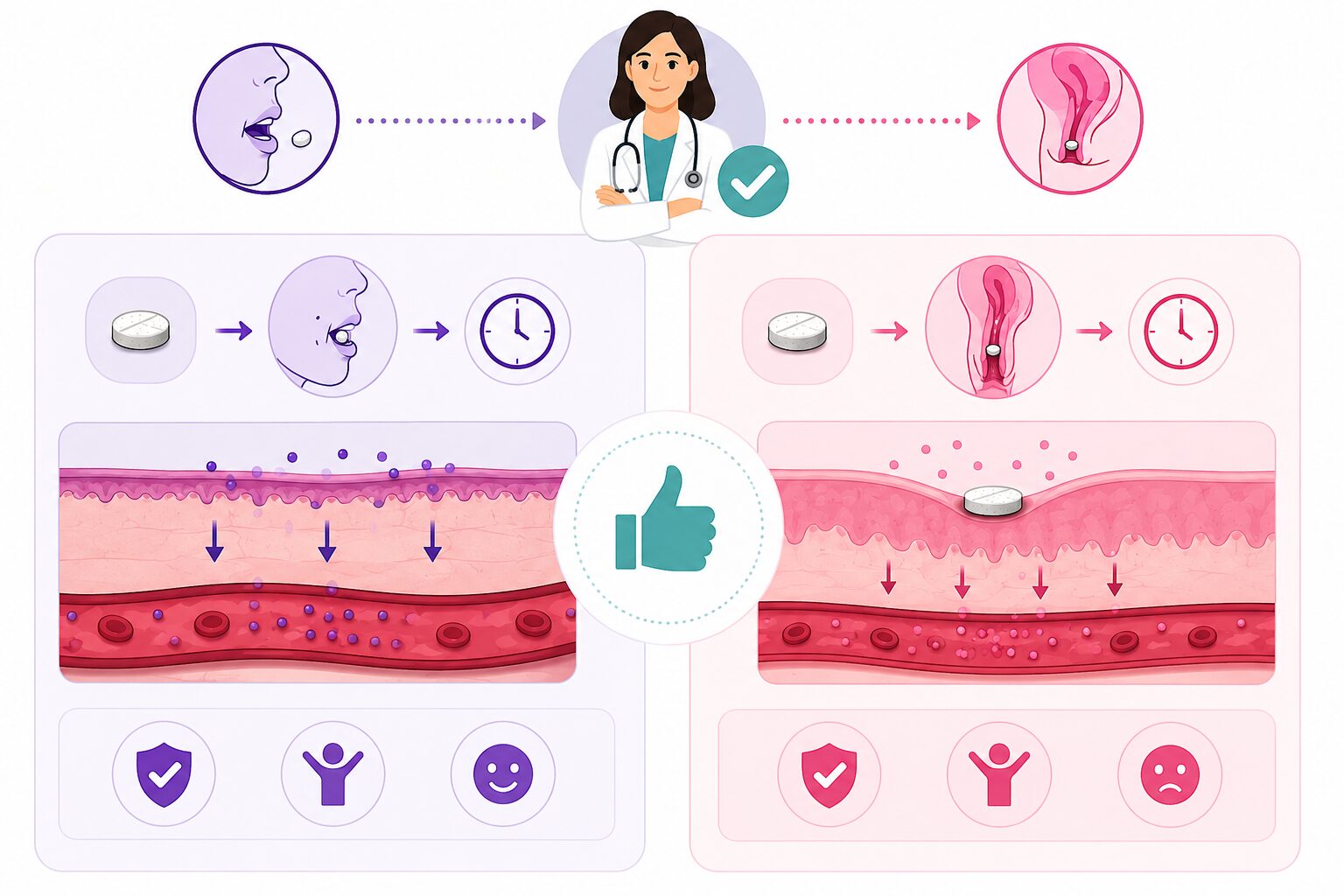
Healthcare providers consider factors such as:
- Medical history
- Pregnancy duration
- Clinical guidelines
- Patient preference
- Risk factors
- Overall treatment plan
The safest approach is always to follow the instructions provided by your prescribing clinician rather than changing the administration route yourself. Changing from buccal to vaginal or vice versa without medical guidance could affect your treatment plan. Visit our abortion pill page for a full overview of how the medication abortion process works and what to expect at each stage.
Why Following Medical Instructions Matters
Misoprostol works best when it is taken exactly as prescribed. Following the recommended administration method helps ensure:
- Appropriate medication absorption
- Expected treatment effectiveness
- Accurate follow-up assessment
- Reduced risk of incorrect dosing
If you are unsure about your instructions, contact your healthcare provider before taking the medication. Our women’s primary care services are available for ongoing support, and you can book a confidential appointment to speak with a provider about your specific treatment plan.
Conclusion
Understanding the difference between buccal vs vaginal misoprostol helps patients feel more confident about their treatment plan.
Both methods are medically accepted, extensively researched, and effective when used correctly. The best option depends on your specific medical situation and your healthcare provider’s recommendations not on which method appears easier or more convenient.
If you have questions about your prescribed treatment, seek guidance from your healthcare provider before making any changes to how you use the medication. Our guide on when abortion pills don’t work can also help you understand what to do if you have concerns about the outcome, and our guide on how to know if the abortion pill worked covers how to confirm the results.
FAQ Section
Is buccal misoprostol as effective as vaginal misoprostol?
Yes. Both methods are considered highly effective when used according to evidence-based medical protocols and healthcare provider instructions.
Which method causes fewer side effects?
Both methods have similar overall side effects. Some patients using vaginal administration may experience fewer gastrointestinal symptoms, but individual experiences differ.
Does buccal misoprostol work faster?
The onset of effects varies among individuals. The timing of symptoms depends on several factors, including the treatment protocol and individual response.
Can I switch from buccal to vaginal misoprostol on my own?
No. You should only use the administration method prescribed by your healthcare provider. Changing methods without medical advice is not recommended.
Why do doctors choose different administration methods?
Healthcare providers consider the medical condition being treated, clinical guidelines, patient preference, and individual circumstances before recommending the most appropriate route.
Which method is easier to use?
Many patients find buccal administration easier because it does not require vaginal insertion, while others may be comfortable with vaginal administration. The best choice is the one recommended by your healthcare provider.

Dr. James Carter is a board-certified physician and lead clinician at Serenity Choice Health, specializing in reproductive health access and medication abortion protocols. With over 20+ years of experience, he combines clinical expertise with patient-centered care to ensure safe, compassionate, and confidential reproductive healthcare.