
If you use health insurance for medical care, you may receive an Explanation of Benefits (EOB) afterward. An EOB can be confusing, especially when the care involves a sensitive service such as abortion.
One common question is: Can an EOB reveal abortion care?
The answer depends on how the claim is processed, what information the health plan places on the EOB, and who receives the statement. An EOB generally identifies healthcare services, the provider, dates of care, claim information, and financial amounts. It is not simply a receipt, and it is not the same thing as your medical record.
If privacy is important to you, understanding how insurance claims and EOBs work can help you make a more informed decision about how to pay for care.
What Is an Explanation of Benefits?
An Explanation of Benefits, commonly called an EOB, is a document or electronic statement from a health insurance plan explaining how a healthcare claim was processed.
An EOB is not a medical bill. Instead, it generally explains the charges submitted by a healthcare provider, what the insurance plan allowed or paid, and what amount may remain your responsibility.
An EOB can include information such as:
- Patient information
- Health plan information
- Healthcare provider information
- Date of service
- Description or category of the service
- Claim or reference number
- Provider charges
- Amount allowed by the plan
- Amount paid by insurance
- Patient responsibility
- Remark or explanation codes
The exact format and level of detail can vary between insurance companies and plans.
If you are trying to understand abortion-related insurance coverage itself, reviewing information about whether insurance covers abortion care can help you separate coverage questions from privacy questions.
What Information Appears on an EOB?
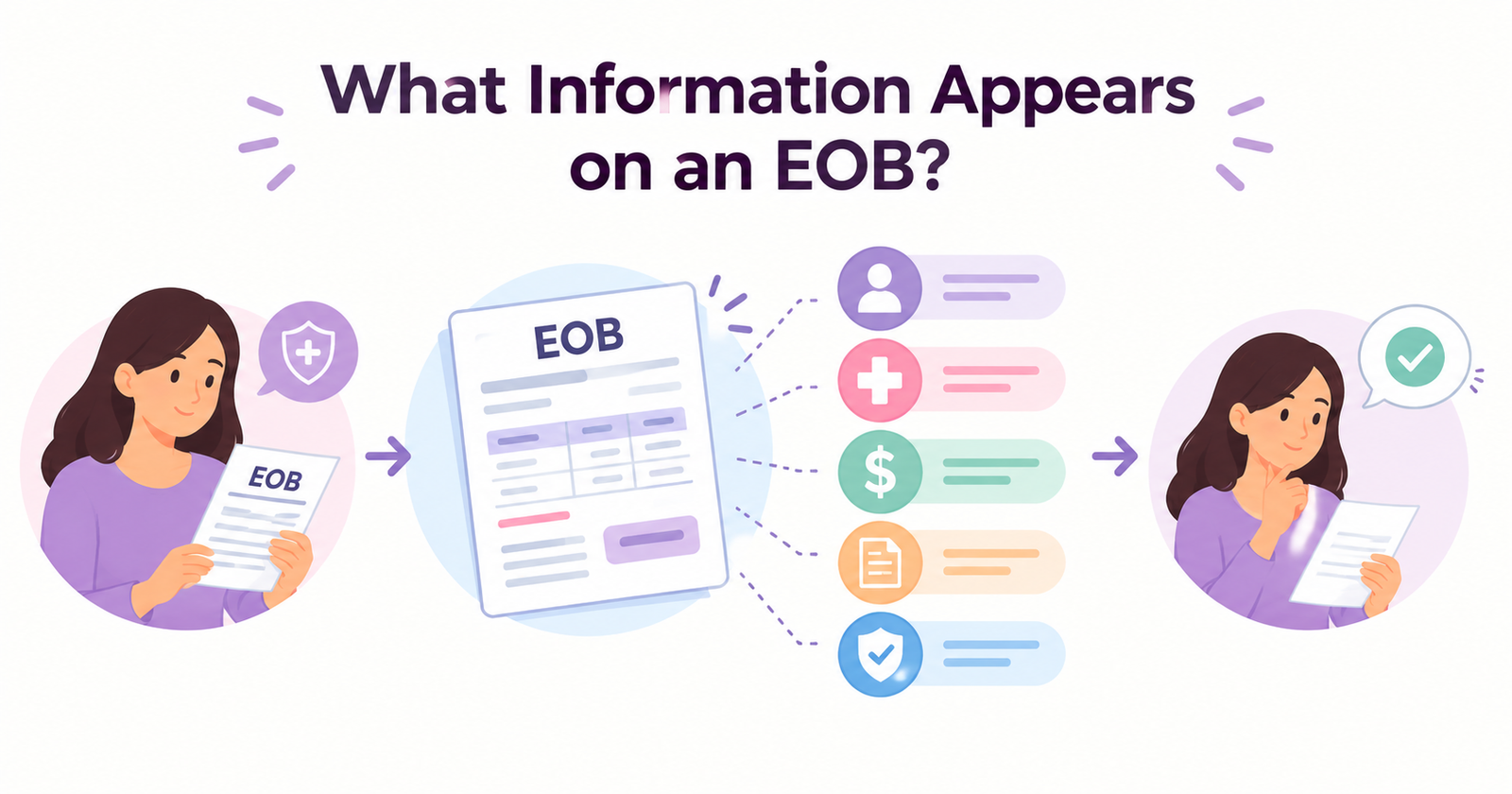
The information on an EOB is primarily designed to explain how your health plan processed a claim.
For example, an EOB may identify:
Who provided the care:
The healthcare provider or facility associated with the claim may be listed.
When the care occurred:
The date or dates of service can appear.
What service was billed:
The EOB can include a service description, claim category, procedure information, or other coding-related information.
How the claim was processed:
The statement may show what the provider charged, what the insurance plan allowed, what the insurer paid, and what you may owe.
Claim information:
A claim or reference number can also appear.
Because an EOB can contain service-related information, it should not automatically be treated as a completely private financial document that reveals nothing about the underlying care.
Can an EOB Reveal Abortion Care?
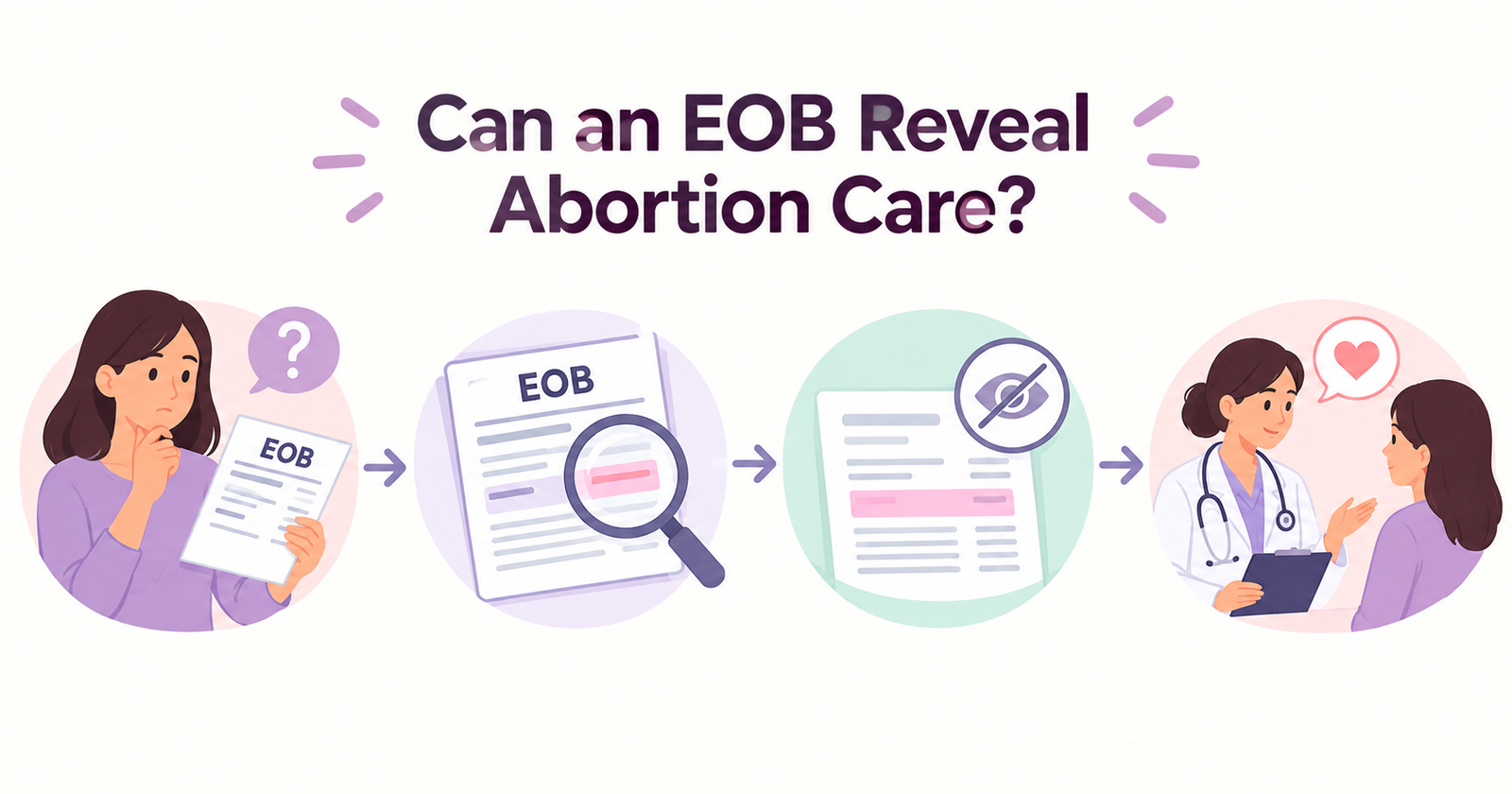
Yes, an EOB can potentially reveal that abortion-related care occurred.
However, that does not necessarily mean the document will always contain the word “abortion.”
The information displayed depends on the claim, the healthcare provider’s billing information, the insurance company’s processing system, and the particular plan.
A claim could contain a description, category, code, provider information, or other details that allow someone reviewing the statement to understand what type of healthcare was received.
In other situations, the information may be more general and may not clearly identify abortion as the specific service.
Therefore, there is no universal EOB format that guarantees either complete disclosure or complete concealment of abortion care.
Will an EOB Actually Say the Word “Abortion”?
Not necessarily.
An EOB may use a service description, billing terminology, procedure information, or other claim-related details rather than simply writing the word “abortion.”
But avoiding the word “abortion” does not necessarily mean the care is impossible to identify.
For example, someone who understands medical billing or has access to additional claim information may be able to determine more from a service description or coding information than a person unfamiliar with insurance documents.
This is why anyone concerned about privacy should ask their insurance company exactly what information is included on EOBs for sensitive services rather than relying on assumptions about what the statement will say.
Who Can Receive an EOB?
The person who receives an EOB depends on the insurance arrangement and plan.
If you have your own insurance policy, you may receive EOBs directly through mail, an online insurance portal, or another communication method selected by the plan.
The privacy concern can become more complicated when you are covered as a dependent under someone else’s health insurance.
For example, a person may be covered under:
- A parent’s insurance plan
- A spouse’s plan
- Another policyholder’s employer-sponsored plan
- Another family member’s coverage
In these situations, the policyholder or subscriber may receive insurance communications concerning claims for people covered under the plan.
That means using someone else’s insurance can create privacy considerations that are separate from the medical confidentiality relationship between you and your healthcare provider.
Can a Parent See Abortion Care on an EOB?
It is possible for a parent or other policyholder to receive insurance communications related to care provided to a dependent.
Whether an EOB specifically identifies abortion care depends on the claim and plan, but an EOB can contain information about healthcare services, dates, providers, and claim processing.
Privacy protections for sensitive services can also vary depending on the state, type of health plan, and circumstances.
For that reason, someone concerned about a parent seeing an insurance statement should not assume that an EOB will be completely anonymous.
Before using a parent’s insurance for sensitive care, contact the insurer and ask what information may be disclosed to the policyholder and how confidential communications are handled.
Can a Spouse See an Abortion-Related EOB?
A similar issue can arise when a person receives healthcare under a spouse’s insurance plan.
The spouse may be the policyholder or subscriber, while the person receiving care is a dependent.
Depending on the plan and applicable privacy protections, insurance communications may contain information associated with healthcare claims.
If keeping abortion care private from a spouse is important, ask the insurance company what information appears on EOBs and who receives claim-related communications.
Do not assume that using insurance automatically means that the service will remain invisible to another person who controls or receives insurance communications.
Is an EOB the Same as a Medical Record?
No.
An EOB and a medical record serve different purposes.
A medical record is maintained by healthcare providers and can contain clinical information such as medical history, examination findings, diagnoses, treatment information, and other healthcare documentation.
An EOB is an insurance document explaining how a claim was processed financially and administratively.
An EOB may contain information related to the healthcare service, but it is not a complete copy of your medical record.
This distinction is important when thinking about abortion privacy. Keeping a medical record private and preventing an insurance claim from appearing in insurance communications are two different privacy questions.
Does an EOB Mean Your Employer Knows About Your Abortion?
Not necessarily.
An employer-sponsored health plan does not mean that your employer automatically receives your personal EOB.
In many employer-sponsored arrangements, the health insurer or plan administrator handles claims and member communications.
However, insurance arrangements can vary, particularly between fully insured and self-funded plans. If you are concerned about who can access claim information, ask your health plan directly rather than assuming that an employer will or will not see a particular service.
Your EOB should also not be confused with a document that is automatically sent to your employer simply because your employer provides the health benefit.
What If You Do Not Want Abortion Care Billed to Insurance?
If avoiding an insurance claim is a major privacy concern, ask your healthcare provider about available payment options before receiving care.
Depending on the provider and circumstances, you may be able to discuss self-pay or other payment arrangements.
Self-pay means paying for the service yourself rather than submitting the service to your health insurance plan.
However, self-pay does not automatically guarantee that no information will exist anywhere. Healthcare providers may still maintain records required for care, documentation, billing, or legal and regulatory purposes.
The key difference is that a service that is not submitted to your health insurance plan generally does not create the same type of insurance claim and EOB associated with an insurance-billed service.
If cost is the reason you are considering insurance, you can also explore available abortion financial assistance and payment resources before making a decision.
What Should You Ask Your Insurance Company About Abortion Privacy?
If you are considering using insurance for abortion care, ask specific questions rather than simply asking whether the service is “confidential.”
Useful questions include:
- Will an EOB be generated for this service?
- Who receives the EOB?
- Can the EOB be sent electronically instead of by mail?
- What information will appear on the EOB?
- Will the service description identify the type of care?
- Can I request confidential communications?
- Can the mailing address or communication method be changed?
- Are there special privacy procedures for sensitive healthcare services?
- Does my particular plan have additional confidentiality rules?
- What information is available to the primary policyholder through the member portal?
Ask for the answer based on your specific plan, because insurance practices can differ.
What Is the Difference Between an EOB and a Medical Bill?
An EOB is an explanation from the insurance plan. A medical bill is a request from the healthcare provider for payment.
For example:
EOB:
Your insurance company explains the submitted charge, the amount allowed, what insurance paid, and what the plan says you may owe.
Medical bill:
The healthcare provider sends you a bill for the amount you are responsible for paying.
The two documents can contain overlapping information, but they are not the same document.
If you receive both, compare them carefully and contact the provider or insurer if the amounts or services do not appear consistent.
Can Abortion Care Appear Without an EOB?
Yes, depending on how the care is paid for and how the healthcare provider handles billing.
For example, a person who pays directly rather than submitting a claim to insurance may not receive an EOB for that service because an insurance claim was not processed.
On the other hand, using insurance can result in a claim being submitted and processed by the health plan, which may generate an EOB.
This is why payment method should be considered when privacy is a major concern.
How Can You Protect Your Privacy Before Using Insurance?
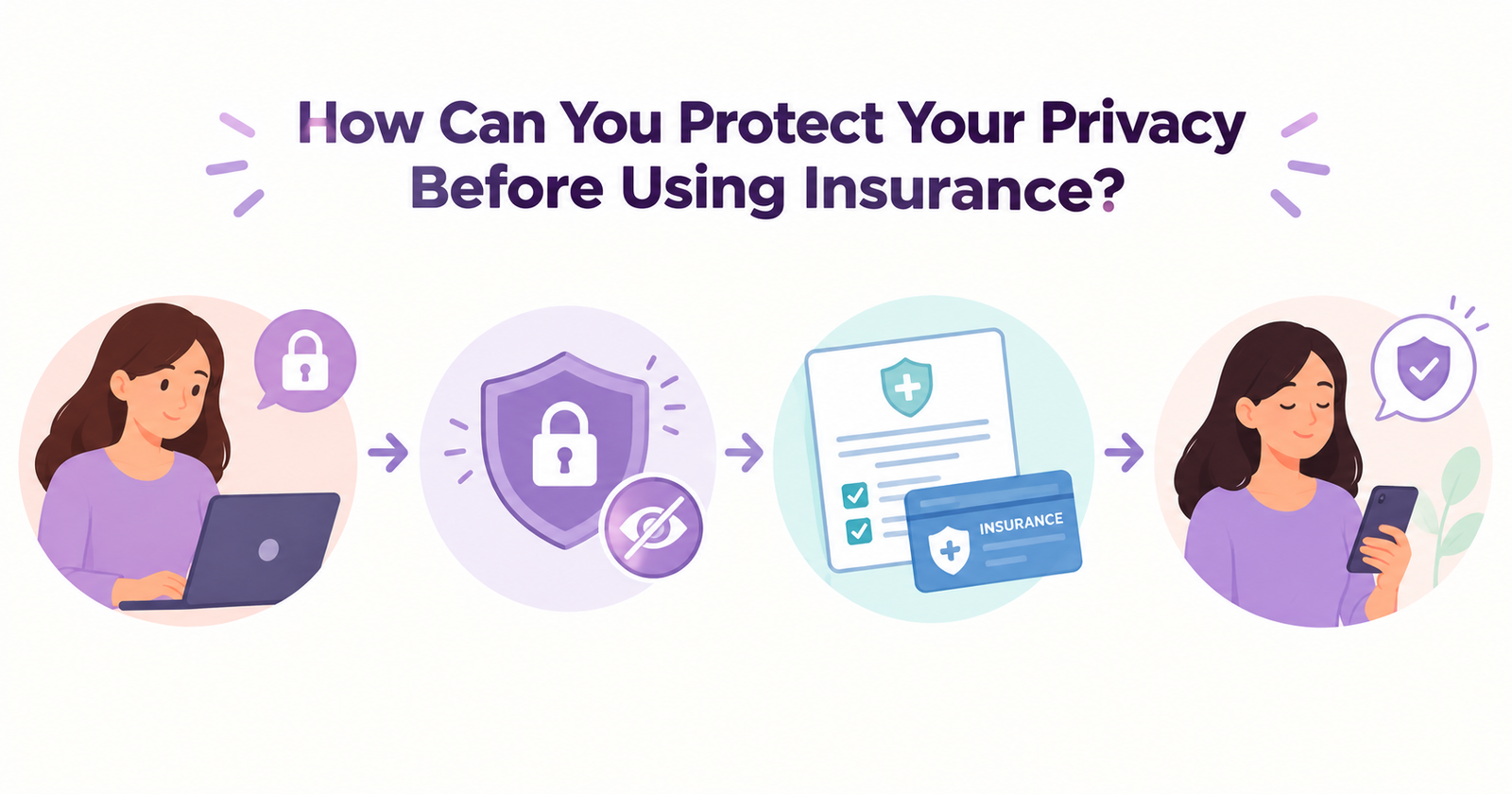
Before scheduling or receiving abortion care, consider taking a few practical steps.
Ask the Provider How Billing Works
Ask whether the provider bills insurance directly and what information may be submitted with the claim.
Contact Your Insurance Plan
Ask your insurer what will appear on an EOB and who can access claim information.
Review Your Member Portal
If your insurer provides an online account, review who has access to it and what claim information can be viewed there.
Ask About Confidential Communications
Some insurance plans and jurisdictions may provide mechanisms for requesting confidential communications for sensitive healthcare services. Ask your insurer what options apply to your plan.
Consider Self-Pay
If avoiding an insurance claim is important to you, ask the provider whether self-pay is available and what the total cost would be before receiving care.
For people comparing payment options, understanding abortion costs in Illinois may also be useful when planning care.
Does Using Insurance Affect Abortion Privacy?
It can.
Insurance provides financial assistance for covered healthcare services, but submitting a claim also means information about the service must be communicated through the insurance system.
The amount of information disclosed can vary.
That does not mean every person using insurance will have their abortion clearly identified on an EOB. It means that people with specific privacy concerns should understand how their particular insurance plan handles claims and communications before using coverage.
For some people, the cost savings of insurance may be important. For others, privacy considerations may influence how they choose to pay for care.
There is no single payment method that is appropriate for everyone.
What If You Are Worried About an Existing EOB?
If an EOB has already been generated, start by reviewing the document carefully.
Look for:
- The service description
- Provider or facility name
- Date of service
- Claim information
- Procedure or service terminology
- Remark codes
- Who the statement was addressed to
- Whether the information is available through an online insurance portal
If you do not understand what a particular line means, contact the insurance company using the member-services number on the EOB.
You can also ask the provider’s billing department to explain what information was submitted with the claim.
How Does This Relate to Abortion Medical Records?
Insurance privacy and medical-record privacy are related but separate issues.
A provider may maintain documentation about your care regardless of whether you use insurance.
If your primary concern is whether abortion care becomes part of your medical record, that is a different question from whether it appears on an EOB.
For more information about this distinction, you can review whether abortion appears on medical records and how abortion records may be handled.
Can You Get Abortion Care Without Using Insurance?
Depending on the provider and your circumstances, self-pay may be an option.
Some patients choose not to use insurance because of privacy concerns, while others may do so because their plan does not cover the service or because they prefer another payment arrangement.
If you are exploring abortion care, ask the provider about:
- Self-pay pricing
- Insurance billing
- Available financial assistance
- Payment methods
- Whether an EOB will be generated
- What information is submitted to insurance
- Confidential communication options
For readers looking into affordability, resources such as financial help for abortion care and free abortion services in Illinois may be relevant.
How Serenity Choice Health Can Help
Serenity Choice Health understands that people may have questions about more than the medical aspects of abortion care. Cost, insurance, billing, and privacy can also be important parts of planning care.
Before your appointment, you can ask questions about available payment options, insurance use, and what to expect from the billing process.
If you are considering medication abortion, you can also learn more about medication abortion and how it works before deciding what questions to discuss with your healthcare provider.
The goal is to help you understand your options clearly so you can make decisions based on your healthcare needs, financial circumstances, and privacy concerns.
Key Takeaway
An Explanation of Benefits can potentially reveal information about abortion care, but the exact level of detail varies by insurance plan, claim, provider billing information, and how the EOB is presented.
An EOB may contain the provider, date of service, service description, claim information, and financial details. It does not necessarily use the word “abortion,” but other information could potentially make the type of care identifiable.
If abortion privacy is important to you, ask your insurance company exactly what information will appear on an EOB, who can receive it, and what confidential communication options are available. You can also ask your healthcare provider about self-pay and other payment arrangements before care is provided.
The most important step is to make the privacy question specific to your insurance plan and circumstances rather than relying on a general assumption about how all EOBs work.
FAQ Section
Can an EOB show that I had an abortion?
An EOB can contain information about a healthcare claim, including the provider, date of service, service description, and payment information. Depending on how the claim is processed, these details may potentially reveal that abortion-related care occurred.
Will the word “abortion” appear on my EOB?
Not necessarily. An EOB may use a service description, billing terminology, or other claim information instead. However, the absence of the word “abortion” does not guarantee that the service cannot be identified from other information.
Can my parent see an abortion on my insurance?
If you are covered as a dependent under a parent’s insurance plan, the policyholder may receive certain insurance communications about claims. What information is disclosed depends on the plan and applicable privacy protections.
Is an EOB the same as a medical record?
No. An EOB is an insurance document explaining how a claim was processed. A medical record is maintained by your healthcare provider and contains clinical documentation about your care.
Can I get abortion care without using insurance?
Depending on the provider and your circumstances, self-pay may be available. Ask the provider about self-pay pricing, financial assistance, and whether avoiding an insurance claim is possible before receiving care.
What should I ask my insurance company about abortion privacy?
Ask whether an EOB will be generated, who receives it, what information it will contain, whether claim details are available through an online portal, and whether confidential communications are available for sensitive healthcare services.

Dr. James Carter is a board-certified physician and lead clinician at Serenity Choice Health, specializing in reproductive health access and medication abortion protocols. With over 20+ years of experience, he combines clinical expertise with patient-centered care to ensure safe, compassionate, and confidential reproductive healthcare.