
If you need an abortion but do not want to use your health insurance, you may be able to arrange care through private pay or self-pay. This means you pay the provider directly instead of submitting the abortion-related charges to your insurance plan.
People may choose self-pay for different reasons. Some want to avoid using their insurance, while others have a plan that does not cover abortion or simply prefer to handle the expense themselves. Whatever your reason, understanding the total cost and available assistance can make the process easier to plan.
The amount you pay can vary considerably depending on the type of abortion, how far along the pregnancy is, where you receive care, and what services are included. Providers may also have financial-assistance or sliding-scale options for eligible patients.
What Does It Mean to Pay for an Abortion Privately?
Paying privately, often called self-pay, generally means you do not bill your health insurance for the care. Instead, you pay the provider directly according to the provider’s self-pay pricing.
Self-pay is not necessarily the same thing as having no insurance.
For example, you may have health insurance but decide not to use it for your abortion. In that situation, you can ask the provider whether self-pay is available and what the cash price would be.
Before scheduling, ask:
- What is the total self-pay price?
- What services are included?
- Are medications included?
- Are consultation or screening fees separate?
- Are follow-up services included?
- Are there additional laboratory, ultrasound, facility, or shipping charges?
- What payment methods are accepted?
Getting these answers before your appointment can help you avoid unexpected expenses.
How Much Does an Abortion Cost Without Insurance?
There is no single price for abortion care without insurance.
The total amount can depend on:
- The type of abortion care
- How far along the pregnancy is
- The provider and location
- Whether care is provided through telehealth or in person
- Whether testing or additional appointments are needed
- Whether medication or other services are included
- Whether you qualify for financial assistance
For example, Planned Parenthood currently reports that its average first-trimester in-clinic abortion cost is about $600, while medication abortion averages about $580 at its centers, although actual prices vary by location and individual circumstances.
These figures should not be treated as a universal price. The most useful number for your situation is the provider’s current self-pay estimate.
You can also review a more detailed explanation of abortion costs without insurance before contacting a provider.
What Expenses Should You Include in Your Budget?

When planning to pay for abortion privately, think beyond the advertised procedure or medication price.
Your total expenses could potentially include:
Medical Care
Depending on the type of care, this may include the consultation, pregnancy assessment, medication, procedure, laboratory testing, or follow-up care.
Transportation
If you need to travel to another clinic or city, include gas, public transportation, rideshare costs, parking, or airfare.
Lodging
Some patients may need overnight accommodation when traveling for care. Whether lodging is necessary depends on the provider, appointment schedule, location, and individual circumstances.
Childcare
If you care for children, childcare may become part of the total cost of accessing an appointment.
Time Away From Work
Consider whether you will lose wages because of appointments, travel, recovery, or other time commitments.
Shipping or Other Service Fees
For eligible telehealth services, ask whether medication delivery or other services are included in the quoted price.
Planning for these expenses gives you a more realistic picture of what you actually need to pay.
Ways to Pay for an Abortion Without Using Insurance
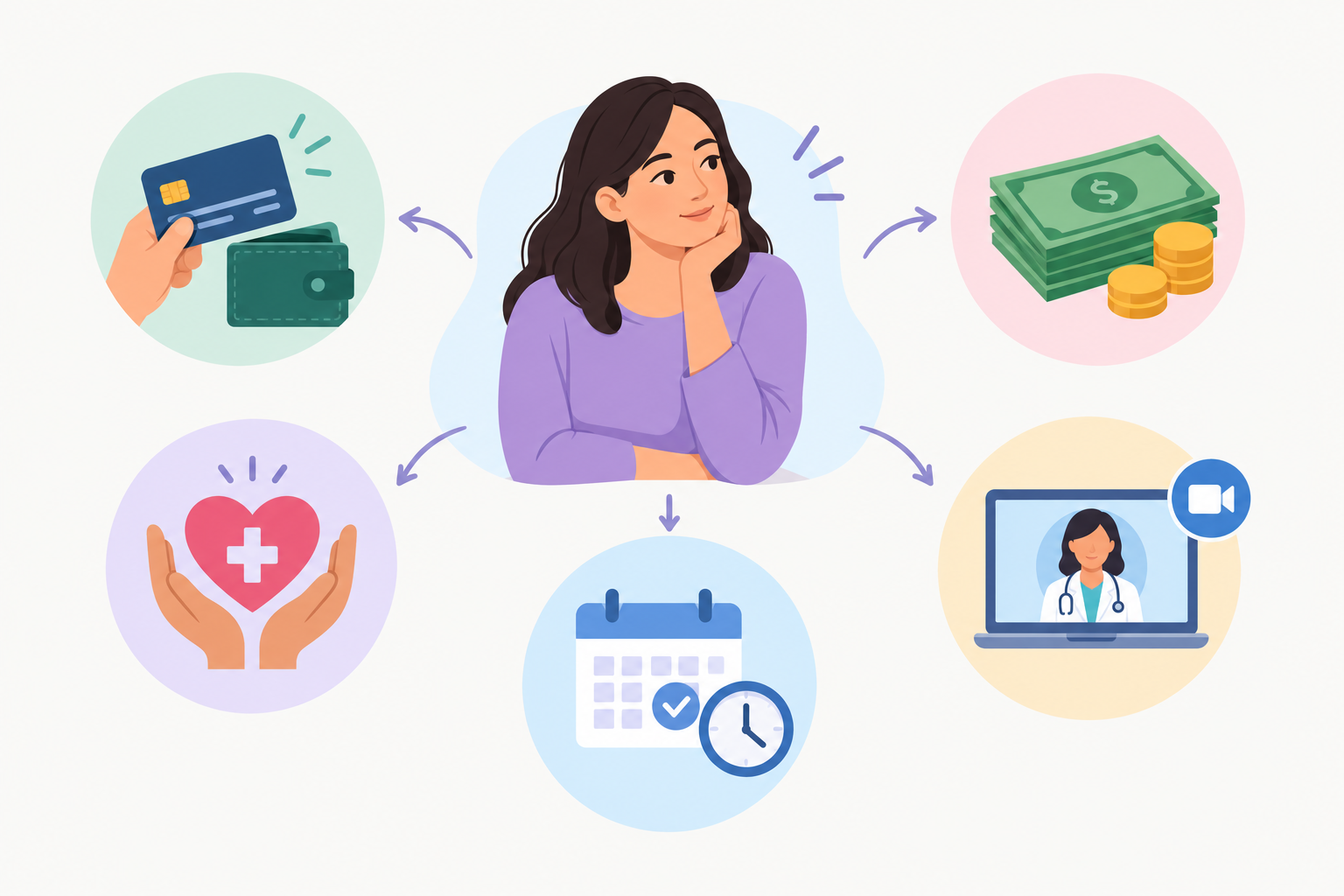
If you want to pay privately, several options may be available depending on the provider and your circumstances.
1. Pay the Provider Directly
The simplest self-pay arrangement is paying the provider directly for your care.
Before making an appointment, ask for the current self-pay price and request a breakdown of what is included. A provider may have different prices depending on the type of care and pregnancy stage.
Do not assume that a quoted starting price represents your complete cost.
2. Ask About Sliding-Scale Pricing
Some health centers offer reduced prices based on income or financial circumstances. Planned Parenthood, for example, notes that some health centers offer sliding-scale fees and other assistance to patients who need help paying for care.
If money is a concern, ask about sliding-scale pricing before your appointment.
You can simply say:
“I’m planning to self-pay. Do you offer a sliding-scale price based on income?”
The provider can explain whether this option is available and what documentation, if any, is required.
3. Ask About Abortion Financial Assistance
Some providers work with organizations that help eligible patients reduce the cost of abortion care.
Assistance may cover part or, depending on the program and circumstances, a larger portion of the medical cost. Availability and eligibility vary.
Serenity Choice Health also provides information about financial help for abortion care and travel and connects eligible patients with financial-assistance resources.
4. Contact an Abortion Fund
Abortion funds are organizations that may provide financial or practical assistance to people seeking abortion care.
Depending on the organization, assistance can potentially include:
- Abortion costs
- Transportation
- Lodging
- Childcare
- Other expenses associated with accessing care
The National Network of Abortion Funds connects patients with organizations that may provide financial and logistical support.
Eligibility and available funding vary by organization, and funding may not cover the entire cost.
5. Ask Whether the Provider Has Payment Options
Some providers may have specific payment arrangements or financing policies, while others may require payment before or at the time of care.
Ask directly about:
- Accepted payment methods
- Deposits
- Payment timing
- Installment options, if available
- Financial-assistance applications
- Refund policies
Never assume a payment arrangement exists. Ask the provider before relying on it.
Can You Pay Privately Even If You Have Insurance?
In some situations, a person with health insurance may still choose to self-pay rather than submit the abortion-related charges to their insurance.
The provider’s billing policies determine how self-pay is handled, so ask specifically:
“I have insurance, but I want to pay privately and not bill my insurance. Is self-pay available for this service?”
You can also ask for the provider’s self-pay price before giving your insurance information for billing.
If privacy is one of your reasons for considering self-pay, ask the provider how billing, payment records, and communications are handled.
Does Paying Privately Keep an Abortion Off Insurance?
Self-pay can mean that the provider does not submit the service to your health insurance, but you should not assume that paying privately makes all medical information completely invisible.
Healthcare providers and health plans have privacy obligations under HIPAA, but privacy rules have exceptions and do not mean that every aspect of healthcare information is automatically hidden from every person or organization. HHS explains that HIPAA establishes requirements for the use and disclosure of protected health information by covered entities and certain business associates.
If privacy is important to you, ask the provider specifically:
- Will you bill my insurance?
- What information will appear on my receipt?
- How will my payment be recorded?
- Who can access my medical information?
- How are appointment reminders and communications sent?
For additional privacy planning, see this guide to keeping abortion care private.
How to Ask a Provider for a Private-Pay Quote
You do not need to know every financial detail before making the call.
A simple request can help you get started:
“I’m looking for abortion care and plan to pay privately without using insurance. Could you tell me the total self-pay cost and what is included?”
Then ask whether the quoted amount includes:
- The initial consultation
- Required screening or testing
- Medication or the procedure
- Follow-up care
- Additional appointments
- Shipping, if applicable
- Other required fees
Writing down the answers can make it easier to compare the total cost between providers.
How to Use Financial Assistance With Self-Pay

If you cannot comfortably pay the full amount yourself, do not wait until the day of your appointment to ask about assistance.
A practical process is:
Step 1: Get the Provider’s Cost Estimate
Ask for the current self-pay price and determine what is included.
Step 2: Ask About Provider Assistance
Ask whether the clinic offers sliding-scale pricing, discounts, financial assistance, or other programs.
Step 3: Ask About Outside Abortion Funds
If the provider cannot reduce the price enough, ask whether they work with abortion funds or other assistance organizations.
Step 4: Calculate Your Remaining Amount
If assistance is approved for only part of the cost, determine how much you still need to pay.
Step 5: Confirm Payment Before Your Appointment
Make sure you understand when payment is due and which payment methods the provider accepts.
Financial-assistance availability can change, and programs may have eligibility requirements or limited funds. Planned Parenthood recommends contacting a provider directly to learn what financial help may be available.
Can Telehealth Reduce the Cost of Paying Privately?
For patients who are medically and legally eligible, telehealth may reduce some expenses associated with accessing abortion care.
Because a telehealth visit may eliminate or reduce the need for travel to a clinic, patients may save on transportation, parking, lodging, and time away from work.
However, telehealth is not available for every patient or in every location. Eligibility depends on factors such as where you are located, pregnancy duration, medical circumstances, and applicable laws.
Serenity Choice Health provides information about telehealth abortion care and private-pay and financial-assistance options for eligible patients.
What to Check Before Paying Privately
Before you send money or attend an appointment, verify the following:
Confirm the Provider
Make sure you are dealing with a legitimate healthcare provider and understand what medical services are actually being offered.
Confirm the Total Price
Ask whether the quoted amount is the complete self-pay cost or only a starting price.
Ask About Additional Fees
Find out whether testing, medication, follow-up care, shipping, or other services are billed separately.
Ask About Financial Assistance First
If the price is difficult to afford, ask about available assistance before paying the entire amount yourself.
Confirm the Payment Method
Ask whether the provider accepts debit cards, credit cards, cash, or other payment methods.
Keep Your Payment Information
Keep receipts, invoices, and confirmation messages so you have a record of what you paid and what services were included.
Common Mistakes When Paying for an Abortion Without Insurance
Waiting to Ask About Financial Assistance
Some assistance programs have limited funding or eligibility requirements. Asking early gives you more time to understand your options.
Focusing Only on the Procedure Price
A low advertised price may not include every service you need. Ask for the total expected cost.
Assuming You Must Pay Everything Yourself
Being willing to self-pay does not necessarily mean you cannot qualify for financial assistance. Some providers and abortion funds may help eligible patients with part of the cost.
Forgetting Travel and Other Practical Expenses
Transportation, lodging, childcare, parking, and missed work can increase the actual amount needed to access care.
A Simple Private-Pay Abortion Budget Checklist
Before scheduling, write down:
- Self-pay medical cost
- Consultation or screening fees
- Medication or procedure cost
- Follow-up costs
- Transportation
- Parking
- Lodging, if necessary
- Childcare
- Time away from work
- Financial assistance available
- Amount you will need to pay yourself
- Payment deadline
This gives you a clearer picture of the actual financial commitment instead of relying on a single advertised price.
Paying for Abortion Privately With Serenity Choice Health
If you are considering self-pay abortion care, Serenity Choice Health can help you understand the cost of eligible services and explore available affordability options.
Serenity Choice Health’s current pricing information explains that the practice offers upfront cost information and financial-assistance options for eligible patients, including sliding-scale pricing and connections to financial-assistance organizations.
If you are concerned about affordability, discuss the cost before your appointment. Understanding your expected expenses in advance can help you determine whether self-pay, reduced-cost care, or financial assistance is appropriate for your situation.
Conclusion
Paying for an abortion privately without using insurance is possible for many patients, but the process starts with understanding the complete self-pay cost rather than focusing on a single advertised price.
Ask the provider for a detailed quote, find out what services are included, and ask about sliding-scale pricing or financial assistance if you need it. Abortion funds may also provide financial or logistical support to eligible patients.
If privacy is part of your decision to self-pay, ask specific questions about insurance billing, payment records, and communication practices instead of making assumptions.
For eligible patients seeking affordable abortion care, Serenity Choice Health can help explain available care and financial-assistance options before you move forward.
Frequently Asked Questions
Can I pay for an abortion without using my health insurance?
In many cases, yes. You can ask an abortion provider whether self-pay is available and request the current private-pay price. The provider can explain what is included and when payment is due.
How much does an abortion cost without insurance?
There is no universal price. Cost can vary based on the type of abortion, pregnancy stage, provider, location, and additional services. Planned Parenthood currently reports average costs of about $580 for medication abortion and about $600 for a first-trimester in-clinic abortion at its health centers, but prices vary by location.
Can I get financial assistance if I choose to self-pay?
Potentially. Some providers offer sliding-scale pricing or financial assistance, and abortion funds may help eligible patients with abortion and related expenses. Availability and eligibility vary.
Can an abortion fund help if I do not have insurance?
Yes, some abortion funds provide assistance to uninsured or underinsured patients. Depending on the organization, assistance may also include transportation, lodging, childcare, or other access-related expenses.
Is self-pay the same as being uninsured?
No. Self-pay describes how you pay for care. Someone can have health insurance but still ask a provider whether they can pay privately instead of using their insurance for the service.
Can paying privately make an abortion completely private?
Self-pay may prevent the provider from billing your health insurance, but it does not mean that no medical record or payment record exists. Healthcare privacy is governed by applicable laws and provider policies. If privacy matters to you, ask the provider how your information and payment are handled.

Dr. James Carter is a board-certified physician and lead clinician at Serenity Choice Health, specializing in reproductive health access and medication abortion protocols. With over 20+ years of experience, he combines clinical expertise with patient-centered care to ensure safe, compassionate, and confidential reproductive healthcare.