
Overview of Abortion Access for Medicaid Members in Protective States
Access to reproductive health care should be equitable regardless of what state you live in, and access to abortion for Medicaid members in “protective states” is one way to ensure that happens. Many of these states have state policies (or federal/state policies) that aim to expand access to abortion services beyond federal limits; however, whether or not someone has access to abortion in the real world is limited to a combination of financial, logistic, and systemic barriers.
Most of the time, women in protective states receive abortion services and are able to access the funding they need from the state so they can afford it. But there are instances in which women undergoing abortions do not have immediate access, or are detoured from receiving these services, due to delays, limited providers, or other costs related to the procedure.
Serenity Health Choice provides accurate and reliable resources for women so they can learn about how they can (and cannot) obtain assistance from Medicaid in order to break through barriers to receiving health care. Patients in Illinois can also learn more about free abortion care through Illinois Medicaid and what that coverage includes.
What Are Protective States in Abortion Access?
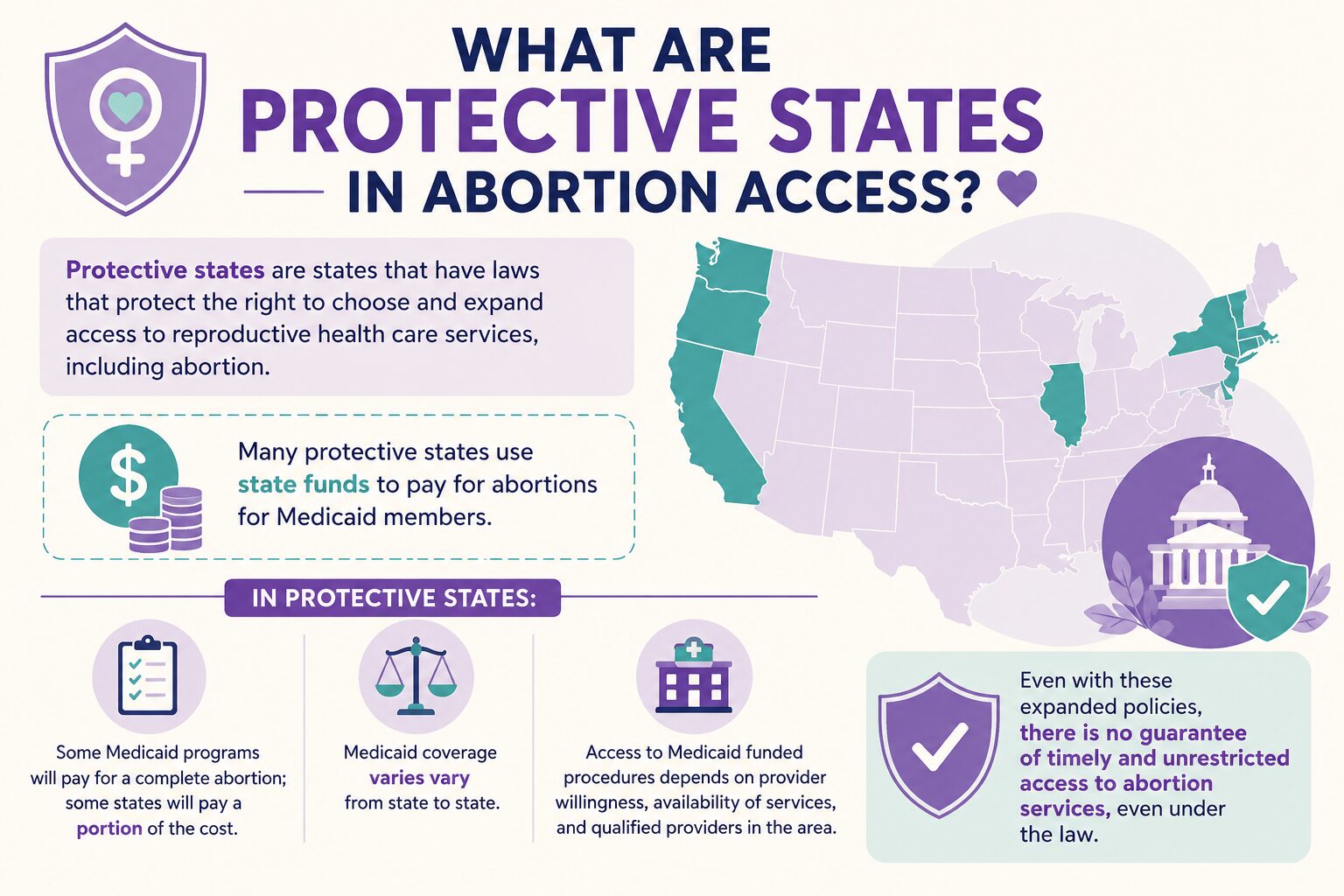
Abortion is legal in protective states and these states have laws that not only protect the right to choose (the decision to have an abortion) but also expand access to reproductive health care services.
Additionally, many protective states use state funds to pay for abortions (Medicaid). For instance, since the Hyde Amendment places severe restrictions on the use of federal Medicaid funds to pay for abortions, many protective states are providing their own funds to cover abortions for Medicaid users.
In protective states:
- Some Medicaid programs will pay for a complete abortion; some states will pay a portion of the cost
- Medicaid coverage policies vary from state to state
- Access to Medicaid funded procedures are based upon provider willingness to accept Medicaid patients, availability of health care services, and availability of qualified providers in the area
Even with these expanded policies, Serenity Health Choice wants to remind everyone that there is no guarantee of timely and unrestricted access to abortion services, even under the law.
Medicaid Coverage for Abortion Services
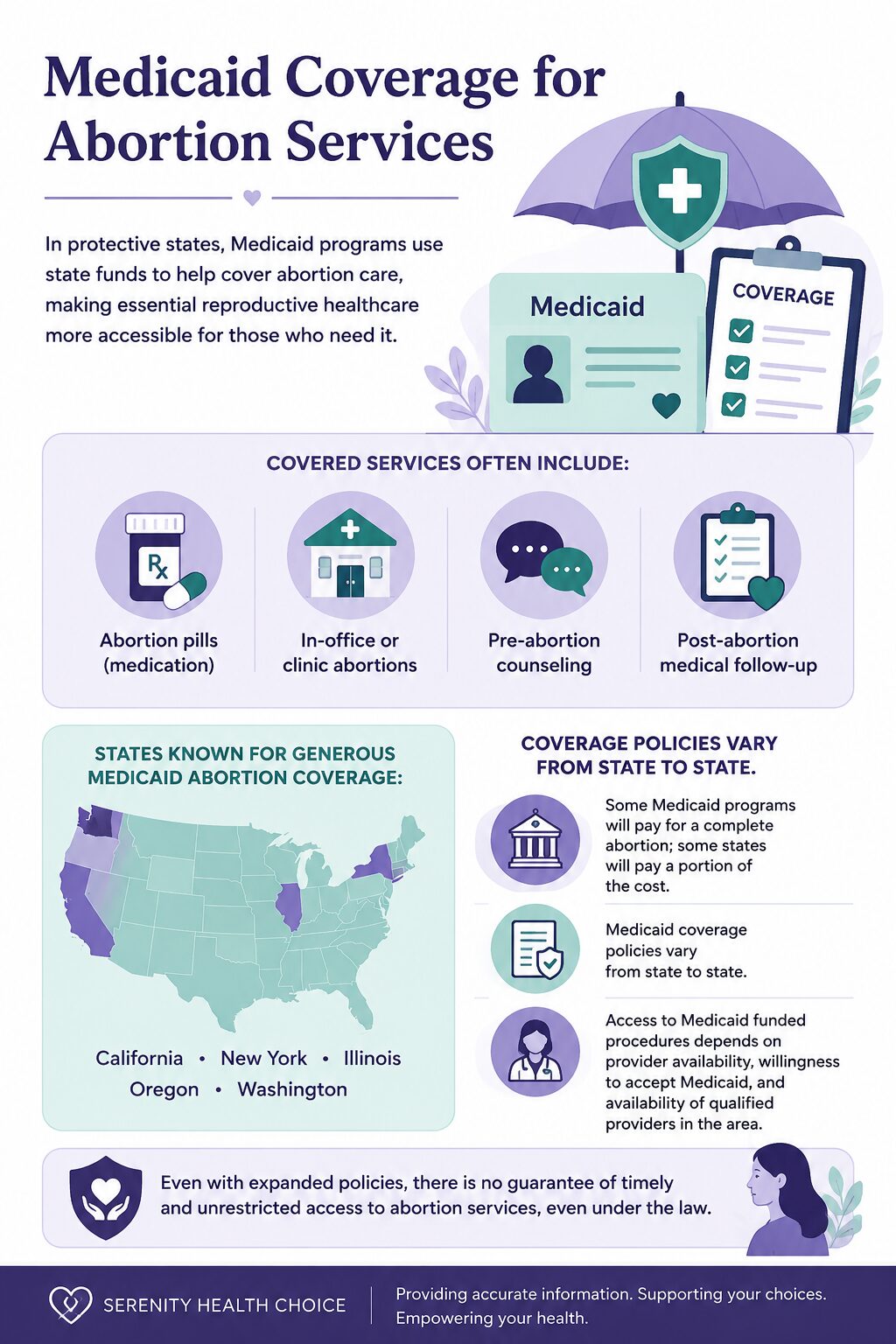
Depending on the state of residence and provider availability, Medicaid in protected states may include the following types of abortion/abortions.
Covered services often include:
- Abortion pills (medication)
- In-office or clinic abortions
- Pre-abortion counseling
- Post-abortion medical follow-up
States like California, New York, Illinois, Oregon and Washington are known for their generous Medicaid programs providing numerous far-reaching services.
There remain numerous barriers faced by individuals seeking abortion through the Medicaid system. These barriers include:
- Limited access to Medicaid approved abortionists
- Administrative delays in processing requests for Medicaid authorization
- Extremely high demand for appointments resulting in significant backlogs for patients
Despite people being able to access much reduced cost of care through the use of Medicaid, there are still many access issues. Serenity Health Choice provides assistance to individuals in navigating through these systems.
Key Barriers to Abortion Access for Medicaid Members
Even though there are supportive policies in place for Medicaid beneficiaries located in protective states, members from protective states, as they are referred to, are still presented with barriers to accessing health care services on an ongoing basis.
1. Appointment Delays
Long wait times may occur due to the influx of individuals traveling from punitive states and the high demand for abortion care at facilities that provide abortion services (particularly in protective states).
2. Limited Provider Availability
There are not enough facilities or providers that will accept Medicaid beneficiaries for abortion services. Consequently, individuals needing to access abortion care have fewer choices than if they were to have access to private-pay providers.
3. Travel and Distance Challenges
Patients who reside in rural or underserved areas may have to travel great distances from their home to receive abortion care. Patients planning to travel for care can find helpful guidance in our article on traveling for an abortion.
4. Misinformation and Fake Clinics
Unregulated clinics may provide patients with false information about how to gain access to legitimate health care services, including abortion care.
5. Uncovered Expenses
Medicaid will typically only cover direct medical costs; therefore, transportation, lodging, childcare or lost wages are not covered under a state Medicaid program.
Based on the barriers outlined above, Serenity Health Choice states the combination of these barriers may have a major impact on delays in accessing abortion care, particularly for vulnerable populations.
The Role of Telemedicine in Expanding Access
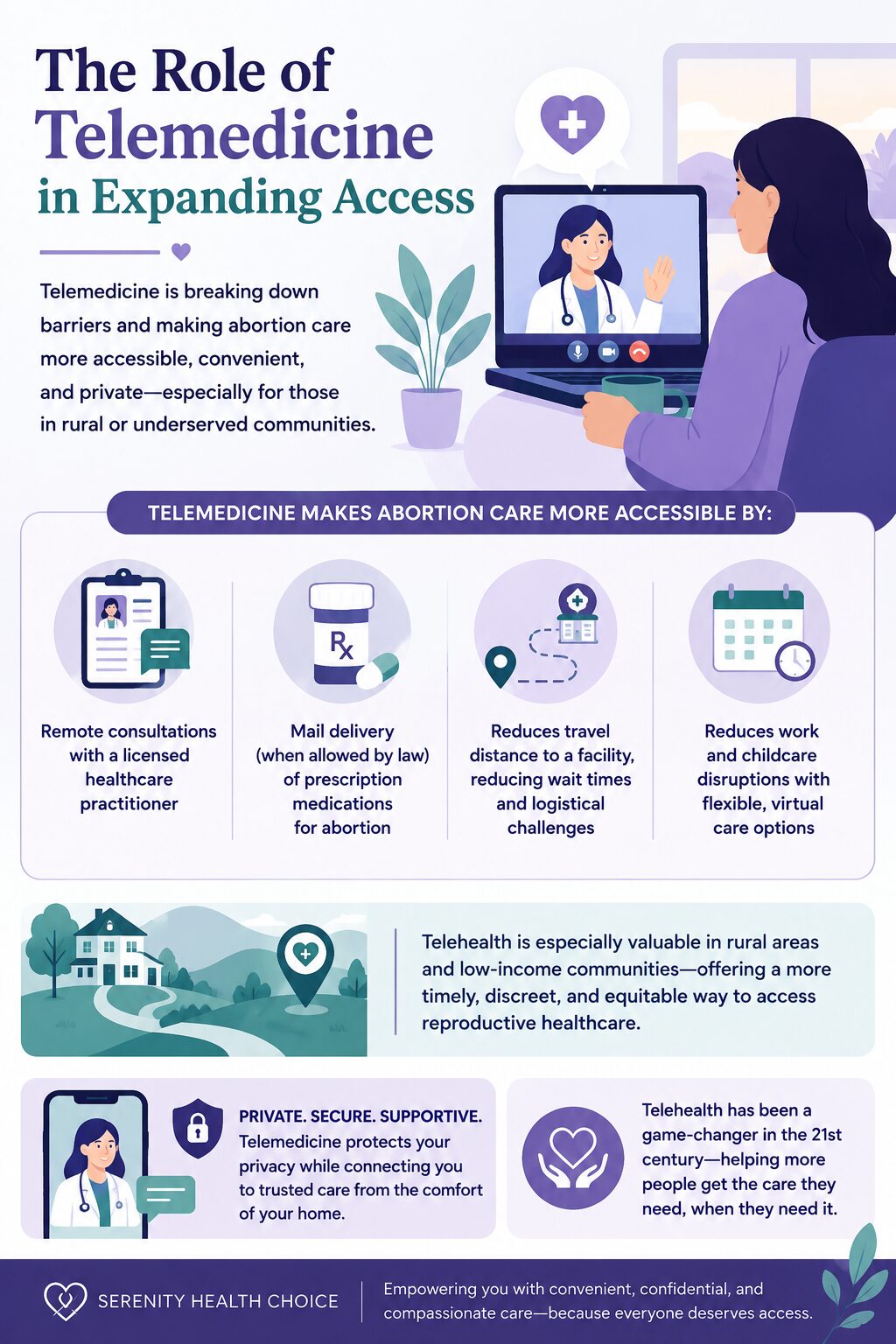
Abortion access has been greatly expanded through the use of telemedicine as a means of improving coverage for Medicaid enrollees who live in states where the services are being limited by state law.
Abortion services are made available to patients via the use of telemedicine in the following ways:
- Remote consultations with a licensed healthcare practitioner
- Mail delivery (when allowed by law) of prescription medications for an abortion
- The ability to reduce the travel distance to a facility where the abortion can be performed and thus reduce wait times
- Reduced work and child care disruptions due to the use of telehealth
Telehealth is especially useful in rural areas and/or low income communities to reduce many of the logistical challenges people face and to provide a more timely and more discreet option for obtaining reproductive healthcare. Patients in Illinois can explore telehealth abortion care in Illinois as a convenient and confidential option for accessing care from home.
Serenity Health Choice strongly acknowledges that telehealth has been an extraordinary improvement in the access to reproductive healthcare in the 21st century.
Financial Support Beyond Medicaid Coverage
Even though Medicaid may pay for the procedure itself, it doesn’t cover other associated costs. This is where abortion funds provide a much-needed resource.
Abortion funds may help cover:
- Transportation (bus/train/gas/flights)
- Stay overnight if necessary because of the procedure
- Child care expense incurred while having the procedure done
- Loss of wages from taking time off of work during the procedure
- Any remaining cost of the abortion procedure after insurance claims have been processed
Abortion funds are a type of non-profit organization that helps ensure that financial constraints don’t keep people from getting the care they need. Patients can also explore abortion financial aid options and free abortion care without Medicaid for additional ways to reduce costs.
Serenity Health Choice highly recommends combining Medicaid coverage with an abortion fund to help minimize overall out-of-pocket expenses and lessen delays in accessing services.
How Medicaid Members Can Access Abortion Care
To access abortion services in your state through Medicaid if you are a client of Medicaid, you will generally follow these steps:
1. Verify Medicaid Coverage
Please confirm whether your state has services/tool for abortion, and what restrictions or requirements there may be for accessing those service(s)/tool(s) for abortion in those state.
2. Find an Approved Provider
Find clinics or telehealth providers that accept Medicaid. Patients can find trusted in-clinic abortion services at our Matteson, IL location serving Illinois, Indiana, and New York.
3. Schedule Early
Call to make an appointment as soon as possible to avoid needing to wait for an appointment due to the amount of time it might take for you to secure approval or authorization for coverage under Medicaid. Patients can schedule an appointment with Serenity Choice Health directly to get started.
4. Explore Additional Support
Check with provider(s) for assistance with financial support through abortion funds or other types of logistical support programs. Patients can also explore healthcare financing through Hello Rates as a flexible payment option.
5. Prepare Required Documentation
Verify eligibility or prior authorization depending upon your state’s requirements.
It is advised to begin the process as soon as possible to allow for as much time available to have access to care.
Why Demand Remains High in Protective States
Demand for abortion services is becoming increasingly high regardless of pre-existing strong state reproductive protections because of:
- Patients traveling from states with abortion restrictions
- Limited number of clinics and abortion providers available in the areas that receive most of the patients
- Rising healthcare costs
- Where medical services are provided unevenly across geographical areas
These situations further increase the demands placed on state Medicaid systems and highlight the need for greater resources and support systems.
Serenity Health Choice continues to raise public awareness of these barriers to long-term access, and healthcare equity. Patients can learn more about how to access abortion care in Illinois as a leading protective state with strong Medicaid coverage and provider availability.
Who Benefits Most from Medicaid Abortion Coverage?
States that protect abortion coverage through Medicaid are significant for:
- Low-income individuals
- Uninsured/underinsured individuals
- Individuals from rural communities that have limited access to healthcare services
- Marginalized individuals who face systemic barriers
- Individuals who travel to obtain care from states with restrictions on abortion services
Medicaid is an important resource in expanding access to essential reproductive healthcare services by reducing financial barriers and improving access to resources. Patients who need medication abortion can also ask their provider about Medicaid coverage for this option at Serenity Choice Health.
Frequently Asked Questions (FAQs)
1. Does Medicaid cover abortion in protective states?
Many states with protective laws use state funding to provide Medicaid coverage for abortion services. State policies do vary, however.
2. Does Medicaid cover all abortion-related costs?
Although Medicaid does pay for the actual abortion procedure itself, anything else (i.e., transportation, lodging, time lost from work) will likely not be reimbursed through Medicaid coverage.
3. Can Medicaid patients also use abortion funds?
Yes, individuals eligible for Medicaid can apply for financial assistance from an abortion fund to help with expenses not covered by Medicaid (i.e., transportation, child care).
4. Are telemedicine abortions covered by Medicaid?
Each state has different rules regarding telemedicine. Some states allow telehealth for abortion services if it is provided by a licensed healthcare provider outside the abortion clinic, and therefore Medicaid would cover that provider’s services.
5. What if Medicaid does not fully cover abortion costs?
If there are costs associated with obtaining an abortion, the individual can seek out assistance through abortion funds and/or nonprofit organizations that assist in removing financial barriers to accessing abortion care.
Final Thoughts
Access to abortion for those eligible for Medicaid in states with restrictive laws is influenced by factors which are not determined solely by the legal protections afforded to abortion. Though Medicaid provides a substantial increase in the affordability of an abortion, access to that care in practice has many additional barriers related to, but not limited to, the location of providers, resources available to obtain care (such as transportation), and time it takes to get care.
Combining Medicaid eligibility with telehealth services and financial assistance from abortion funds can help individuals alleviate many of the barriers to accessing timely and safe abortion care.
At Serenity Health Choice, we are committed to providing accurate and accessible information in order to assist individuals who need assist navigating the process of accessing abortions. We provide trusted resources to assist you in making decisions around abortion care.

Dr. James Carter is a board-certified physician and lead clinician at Serenity Choice Health, specializing in reproductive health access and medication abortion protocols. With over 20+ years of experience, he combines clinical expertise with patient-centered care to ensure safe, compassionate, and confidential reproductive healthcare.