
If you take an antidepressant and are considering a medication abortion, it is reasonable to wonder whether the two treatments can be used together.
The short answer is that taking an antidepressant does not automatically mean you cannot have a medication abortion. However, the exact antidepressant and your complete medication list matter. Mifepristone has specific drug-interaction considerations involving the CYP3A4 enzyme system, while misoprostol has a comparatively limited documented interaction profile.
A medication abortion commonly uses mifepristone followed by misoprostol. Mifepristone blocks progesterone, while misoprostol causes uterine contractions and bleeding that help empty the uterus.
If you take medication for depression, anxiety, or another mental-health condition, tell your abortion provider exactly what you take, including prescription medications, over-the-counter medicines, supplements, and herbal products. This allows the provider to check your individual medication combination rather than relying on a general answer.
Can You Take Antidepressants While Taking Abortion Pills?
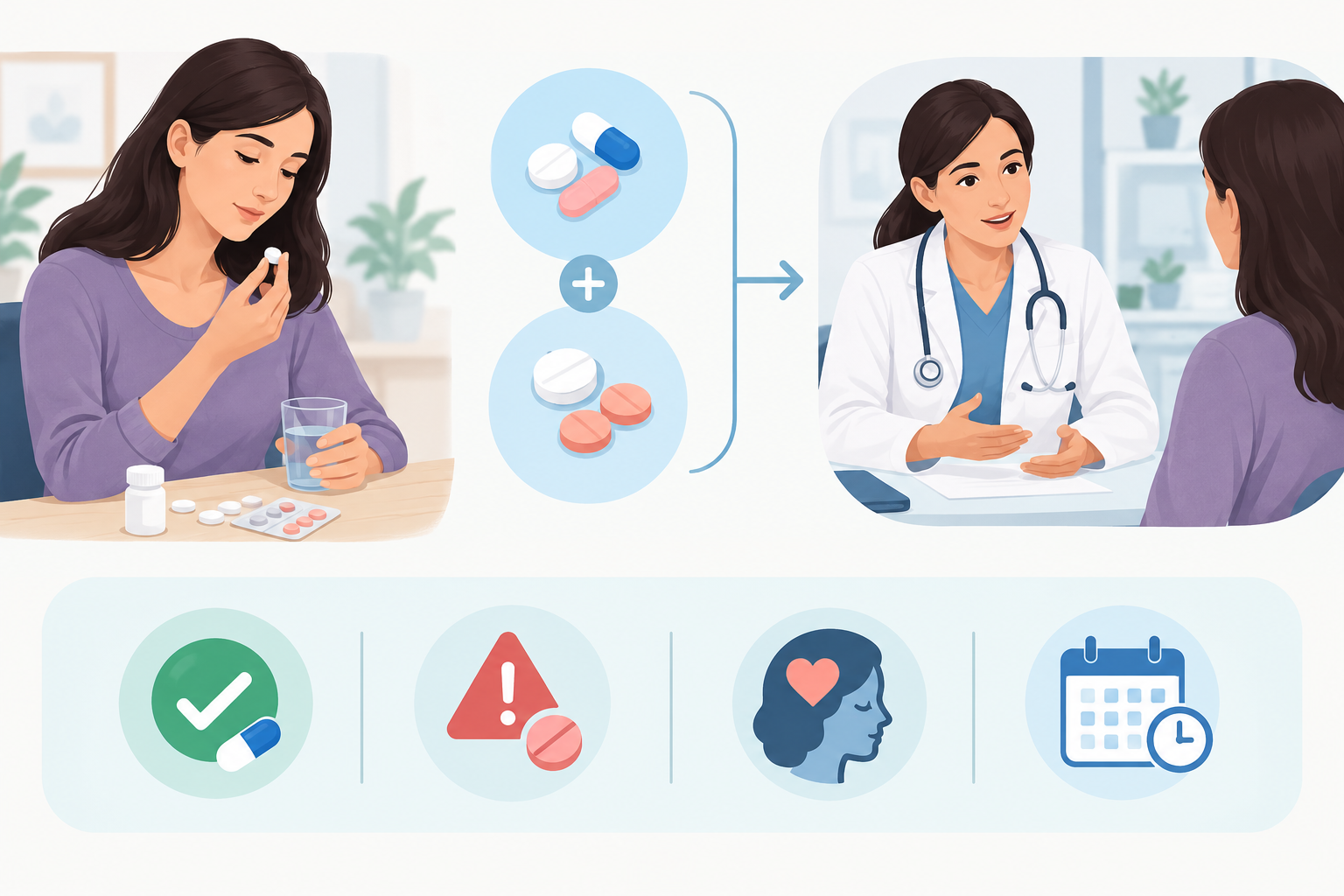
For many people, an antidepressant can be continued during a medication abortion, but the answer depends on the particular medication and the rest of the patient’s medical history.
The FDA-approved labeling for mifepristone identifies several interaction pathways involving CYP3A4. CYP3A4 inducers can reduce mifepristone concentrations, while CYP3A4 inhibitors can increase them. Mifepristone can also increase concentrations of certain CYP3A4-substrate medications, particularly those with a narrow therapeutic range.
This does not mean that every antidepressant interacts with mifepristone.
Antidepressants belong to several different drug classes and are processed by different metabolic pathways. For example, venlafaxine is primarily metabolized through CYP2D6, with CYP3A4 playing a smaller role, while bupropion has important CYP2D6 effects of its own.
Because of these differences, the safest approach is to have your specific antidepressant reviewed before starting the abortion-pill regimen.
For general information about how medication abortion works, see how medication abortion works and what to expect.
How Do Mifepristone and Misoprostol Differ When It Comes to Drug Interactions?
It is useful to consider the two abortion medicines separately.
Mifepristone
Mifepristone is the first medicine in the commonly used two-medication regimen. It works by blocking progesterone, a hormone needed to maintain pregnancy.
The current U.S. labeling identifies CYP3A4 as the primary metabolic pathway for mifepristone and specifically addresses CYP3A4 inducers, inhibitors, and substrates.
That means the medication review is particularly important when someone takes several prescription drugs or a medication with a narrow therapeutic range.
Misoprostol
Misoprostol works differently. It causes uterine contractions and bleeding as part of the medication-abortion process.
Its prescribing information describes relatively few clinically significant drug interactions. Studies have found no clinically important effects on the kinetics of several medicines, including ibuprofen and diclofenac. Misoprostol also does not appear to affect the hepatic cytochrome P450 system in the way that creates many classic metabolic drug interactions.
Therefore, when someone asks about misoprostol and antidepressants, the medication review is generally different from the CYP3A4-focused interaction questions surrounding mifepristone.
Do SSRIs Interact With Abortion Pills?
Selective serotonin reuptake inhibitors, or SSRIs, are among the most commonly prescribed antidepressants.
Examples include:
- Sertraline
- Fluoxetine
- Escitalopram
- Paroxetine
- Citalopram
An SSRI is not automatically a reason to avoid medication abortion. However, the exact medicine should still be included in the medication review.
One additional consideration is bleeding. SSRI medications can increase bleeding risk because serotonin plays a role in platelet function. FDA-approved labeling for medicines such as sertraline, escitalopram, fluoxetine, and paroxetine warns about increased bleeding risk, particularly when they are combined with NSAIDs, aspirin, anticoagulants, or other medicines that affect clotting.
This is important because bleeding is an expected part of a medication abortion.
However, the existence of an SSRI-associated bleeding warning does not mean that someone taking an SSRI will automatically experience dangerous abortion-related bleeding. It means the complete medication profile and individual risk factors should be considered.
What About SNRIs and Abortion Pills?
Serotonin-norepinephrine reuptake inhibitors, or SNRIs, include medicines such as:
- Venlafaxine
- Duloxetine
Like SSRIs, SNRIs can be associated with an increased risk of bleeding, particularly when combined with NSAIDs, aspirin, warfarin, or other medicines affecting coagulation.
Venlafaxine also has a different metabolic profile from many medications. Its labeling notes that CYP3A4 is a minor metabolic pathway compared with CYP2D6, and the potential for a clinically significant interaction from CYP3A4 inhibition alone is considered small.
This illustrates why simply labeling all antidepressants as either “safe” or “unsafe” with abortion pills is not medically appropriate.
The exact antidepressant, dosage, other medications, and individual circumstances should be considered together.
Can You Take Bupropion With Abortion Pills?
Bupropion is another commonly used antidepressant, but it works differently from SSRIs and SNRIs.
Its prescribing information identifies bupropion as an inhibitor of CYP2D6 and notes that it can increase concentrations of several medicines metabolized through that pathway.
The primary mifepristone interaction concerns described in its current labeling involve CYP3A4 rather than CYP2D6.
That does not mean a medication review is unnecessary. Someone taking bupropion may also take other prescription medications, and those combinations can change the interaction picture.
If you take bupropion, provide your complete medication list to your abortion provider rather than stopping or changing the medication on your own.
Can Antidepressants Make Abortion Pills Less Effective?
There is no general rule that antidepressants make medication abortion ineffective.
Medication abortion commonly uses mifepristone and misoprostol, and the effectiveness of the regimen depends on factors such as the medication regimen, pregnancy dating, and appropriate clinical follow-up.
The concern with drug interactions is more specific.
Certain medicines can affect mifepristone exposure. For example, the mifepristone label identifies CYP3A4 inducers such as rifampin, dexamethasone, St. John’s Wort, and certain anticonvulsants as medicines that may lower mifepristone concentrations. The label states that the effect of such exposure changes on regimen efficacy is uncertain and emphasizes follow-up assessment.
Most antidepressants are not listed in the mifepristone label as a class that automatically prevents medication abortion.
Still, because individual drugs have different metabolic properties, your specific medication should be checked.
For more information about what can happen when the medication-abortion regimen does not completely end a pregnancy, see what to do if abortion pills don’t work.
Can Antidepressants Increase Bleeding During a Medication Abortion?
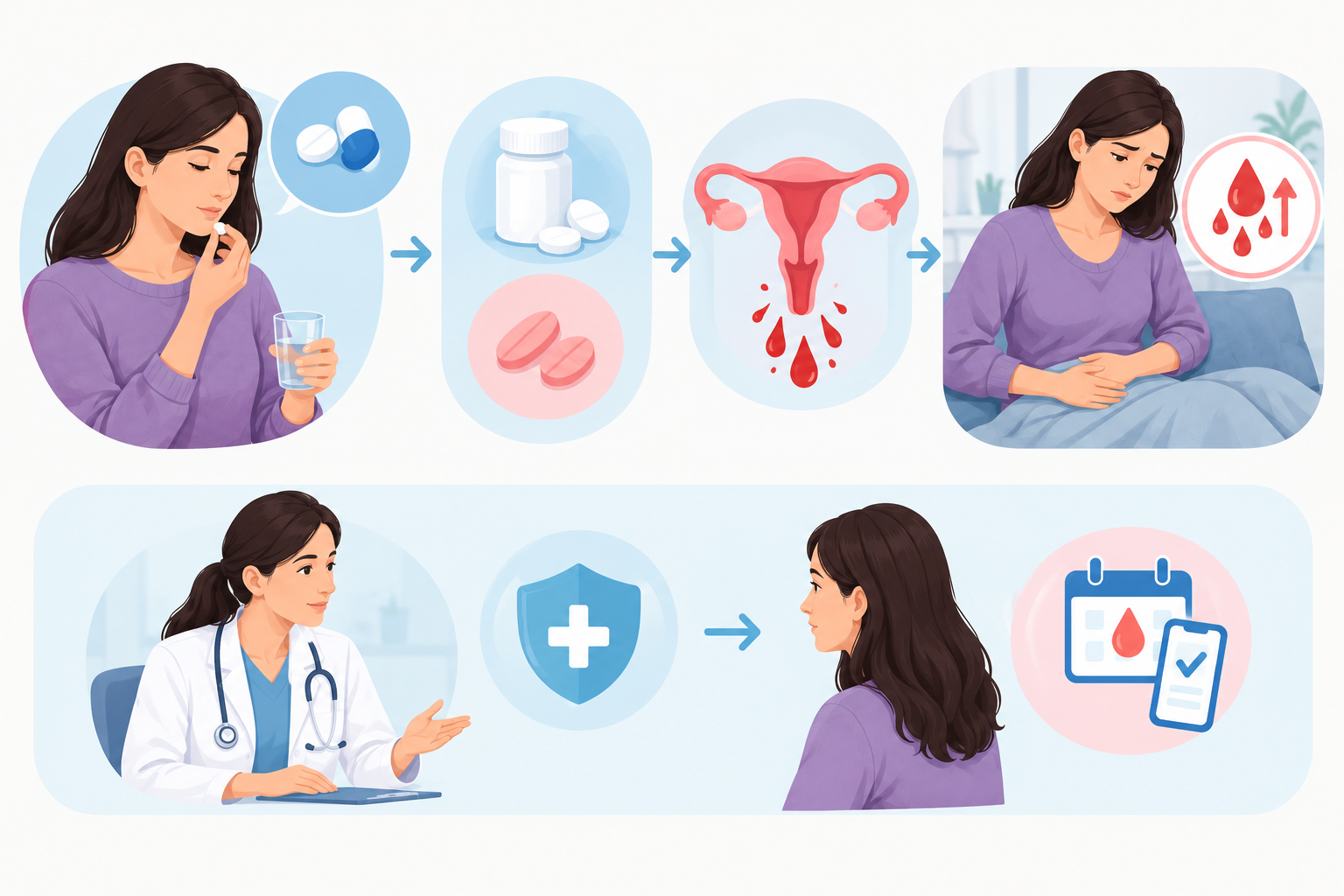
Some antidepressants, especially SSRIs and SNRIs, can increase bleeding risk.
That matters because bleeding and cramping are expected effects of misoprostol during a medication abortion.
The important point is that an antidepressant-associated bleeding warning is not the same thing as a documented dangerous interaction between that antidepressant and abortion pills.
Risk may be more relevant when several factors are present, such as:
- An SSRI or SNRI
- Aspirin use
- Regular NSAID use
- An anticoagulant such as warfarin
- Another medication affecting platelet function or coagulation
- A history of abnormal bleeding
- A bleeding disorder
For example, the prescribing information for sertraline and escitalopram warns that combining these medications with NSAIDs, aspirin, warfarin, or other anticoagulants can increase bleeding risk.
If you take an antidepressant and another medicine that affects bleeding, tell your abortion provider before taking the medication-abortion medicines.
You can also review information about bleeding after abortion pills and what is expected.
Can Antidepressants Make Nausea or Other Side Effects Worse?
Some antidepressants can cause symptoms such as nausea, dizziness, headache, or changes in appetite.
Medication abortion can also cause temporary symptoms such as nausea, vomiting, diarrhea, headache, dizziness, chills, and cramping.
When two treatments can cause similar symptoms, it may be difficult to determine which medication is responsible for a particular symptom.
This does not necessarily indicate a dangerous interaction.
It is more useful to consider:
- Which medication was taken?
- When was it taken?
- What symptoms developed?
- How severe are the symptoms?
- Are other medications involved?
- Are there signs of a complication requiring medical evaluation?
If vomiting becomes a concern after taking an abortion pill, contact the provider who prescribed the medication for specific instructions rather than automatically repeating a dose.
For additional information, you can review what to know about nausea after an abortion.
Should You Stop Your Antidepressant Before Taking Abortion Pills?
Do not stop an antidepressant on your own simply because you are having a medication abortion.
Stopping certain antidepressants suddenly can cause discontinuation symptoms, and abruptly changing psychiatric treatment may also cause the condition being treated to return or worsen.
Whether an antidepressant should be continued, adjusted, or temporarily changed is an individualized medical decision.
Before taking mifepristone, give your provider a complete list of:
- Antidepressants
- Anti-anxiety medications
- Sleep medications
- Antipsychotic medications
- Mood stabilizers
- Pain medicines
- Blood thinners
- Over-the-counter medications
- Vitamins and supplements
- Herbal products
Do not assume that a medication is irrelevant because it is taken only occasionally.
Which Antidepressants Should You Tell Your Abortion Provider About?
You should report all antidepressants rather than trying to determine which ones are important yourself.
Examples include:
SSRIs
- Sertraline
- Fluoxetine
- Escitalopram
- Citalopram
- Paroxetine
- Fluvoxamine
SNRIs
- Venlafaxine
- Duloxetine
- Desvenlafaxine
Other antidepressants
- Bupropion
- Mirtazapine
- Trazodone
- Tricyclic antidepressants
- MAO inhibitors
The name and dose are useful because two medications in the same broad category can have different pharmacokinetic properties.
The provider should also know about nonprescription products. This is particularly important because some supplements can affect drug metabolism.
For example, the mifepristone label specifically identifies St. John’s Wort as a CYP3A4 inducer that may lower mifepristone concentrations.
What Should You Tell Your Provider Before Taking Abortion Pills?
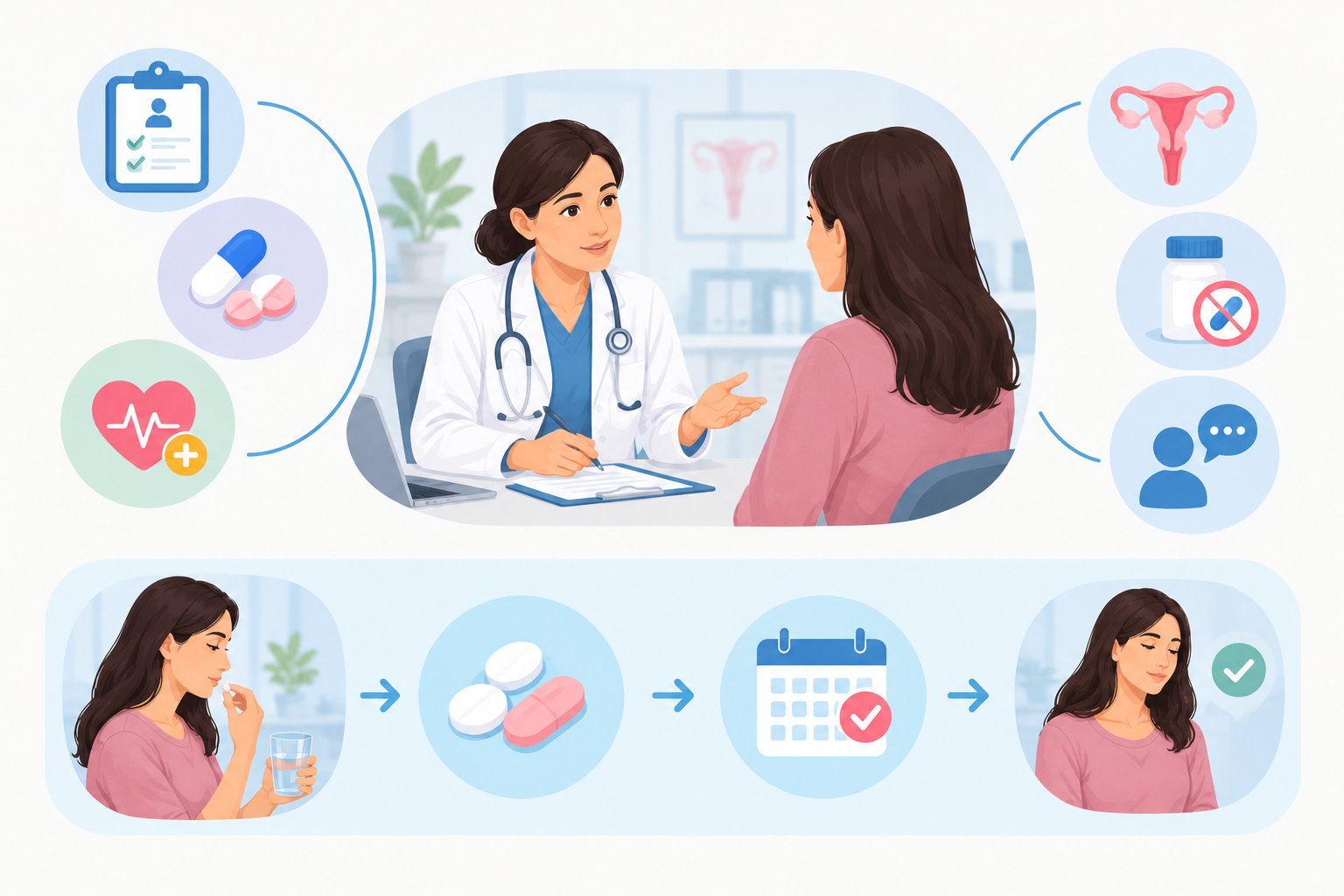
A medication review does not have to be complicated.
Have the following information available:
1. The exact antidepressant name
If possible, provide the generic and brand name.
2. Your current dose
Include how much you take and how often you take it.
3. When you last took it
This can matter when evaluating potential interactions.
4. Other prescription medications
Include medications taken for anxiety, pain, seizures, blood pressure, sleep, or other conditions.
5. Over-the-counter medications
Mention aspirin, NSAIDs, antihistamines, and other regularly used products.
6. Supplements and herbal products
Do not leave these off your medication list.
7. Any history of abnormal bleeding
This may be particularly relevant if you take an SSRI, SNRI, anticoagulant, or another medicine that affects clotting.
Providing this information helps the clinician assess the medication combination rather than relying on assumptions.
When Is a Medication Interaction Review Especially Important?
A more detailed medication review is particularly important if you:
- Take several prescription medicines
- Take an anticoagulant or antiplatelet medicine
- Take an SSRI or SNRI and regularly use NSAIDs or aspirin
- Take seizure medications
- Take corticosteroids
- Use St. John’s Wort
- Take medicines known to affect CYP3A4
- Have a history of significant bleeding
- Have a condition that affects medication metabolism
- Have questions about changing or skipping a prescription
The mifepristone labeling specifically identifies CYP3A4 inducers and inhibitors as interaction considerations and recommends caution with certain CYP3A4 substrates.
What If You Take Antidepressants and Already Took Mifepristone?
If you already took mifepristone and are worried because you also take an antidepressant, do not panic or automatically discontinue your regular medication.
Contact the clinician or service that provided the abortion medication and give them:
- The name of your antidepressant
- The dose
- The time you took the antidepressant
- The time you took mifepristone
- Any other medications or supplements you use
- Any symptoms you are experiencing
A provider can determine whether your particular medication combination requires additional monitoring.
If you have already started the medication-abortion process, follow the instructions provided with your treatment rather than changing the regimen based on information from an online article.
What If You Are Taking Antidepressants for Depression or Anxiety?
Taking medication for depression or anxiety does not by itself mean that medication abortion is inappropriate.
Mental-health treatment can be an important part of your overall healthcare. The goal is to make sure the abortion-care team knows about your treatment so potential medication issues can be considered.
You may also want to discuss emotional support if you are concerned about how you will feel before or after an abortion. Information about abortion and mental health can help explain the relationship between abortion care and mental well-being without assuming that every person will have the same emotional response.
If you are currently receiving treatment for a mental-health condition, continue communicating with the healthcare professional who manages that treatment.
When Should You Seek Medical Help After Taking Abortion Pills?
Some bleeding and cramping are expected during a medication abortion. However, certain symptoms require prompt medical evaluation.
Seek urgent medical attention for symptoms such as:
- Very heavy bleeding
- Severe or worsening abdominal pain
- Fainting or significant weakness
- Persistent severe illness
- Sustained fever
- Symptoms that concern you or do not improve as expected
The FDA-approved mifepristone labeling instructs patients to know whom to contact for sustained fever, severe abdominal pain, prolonged heavy bleeding, or syncope, and to seek appropriate evaluation for concerning symptoms.
Do not assume that a serious symptom is simply an antidepressant side effect.
If you are unsure whether a symptom is expected, contact your abortion provider or seek urgent medical care.
How Can You Prepare for a Medication-Abortion Appointment if You Take Antidepressants?
A few simple steps can make the medication review easier.
Bring or list every medication
A photo of your medication bottles, an electronic medication list, or a written list can be useful.
Include supplements
Herbal products can affect drug metabolism, so they should be included in the discussion.
Do not hide psychiatric medications
There is no medical benefit to leaving an antidepressant off your medication list. Your provider needs accurate information to assess your care.
Ask about your specific medicine
Instead of asking only, “Can antidepressants interact with abortion pills?” ask:
“I take [medication name] at [dose]. Does this medication affect the mifepristone and misoprostol regimen?”
This gives the clinician information needed for a more specific answer.
Can a Telehealth Abortion Provider Review Antidepressants?
When telehealth medication abortion is legally available and clinically appropriate, a healthcare provider can review your medical history and medications as part of the consultation.
Telehealth may be useful for people who prefer discussing sensitive healthcare questions from a private location. The exact process depends on the provider, location, medical history, and applicable requirements.
You can learn more about telehealth abortion care and its potential benefits.
If privacy is an important concern, discuss the communication method you prefer with your healthcare provider.
How Serenity Choice Health Can Help
If you are considering medication abortion and take an antidepressant, Serenity Choice Health can help you discuss your medication list and abortion-care questions with a healthcare professional.
Before your appointment, have the names and doses of your medications available. This allows the provider to consider potential interactions and determine whether additional information or follow-up is appropriate.
Serenity Choice Health provides abortion-care information and support designed around individual patient needs. If you are unsure whether your current medications are compatible with medication abortion, a private consultation can help you get a more individualized answer.
For general information about the medicines used in medication abortion, you can also review mifepristone and its role in medication abortion and what to expect from misoprostol.
Key Takeaway
Antidepressants do not automatically prevent someone from using abortion pills, but the specific medication matters.
Mifepristone has documented CYP3A4-related drug-interaction considerations, while misoprostol has a relatively limited documented interaction profile.
SSRIs and SNRIs can also affect bleeding risk, particularly when combined with medicines such as NSAIDs, aspirin, or anticoagulants.
The safest approach is not to stop your antidepressant or change your abortion-pill regimen on your own. Instead, provide your abortion provider with a complete and accurate medication list so your individual combination can be reviewed.
FAQ Section
Can I take antidepressants with abortion pills?
Many people can continue their antidepressant while using medication abortion, but the answer depends on the specific antidepressant and other medications being taken. Mifepristone has CYP3A4-related interaction considerations, so your complete medication list should be reviewed before treatment.
Can sertraline interact with mifepristone?
Sertraline should be included in your medication review. Sertraline itself carries a warning about increased bleeding risk, especially when combined with NSAIDs, aspirin, anticoagulants, or other medicines that affect clotting. The appropriate decision about continuing it during medication abortion should be based on your individual medication profile.
Can I take fluoxetine while using abortion pills?
Fluoxetine should be reported to your abortion provider before taking medication abortion. Fluoxetine can affect bleeding risk, particularly when combined with medicines that affect coagulation. Your provider can assess the complete combination of medications you take.
Should I stop my antidepressant before taking mifepristone?
Do not stop an antidepressant on your own unless the clinician managing your medication specifically tells you to do so. Some antidepressants can cause discontinuation symptoms when stopped suddenly. Your abortion provider and prescribing clinician can determine whether any medication change is necessary.
Does misoprostol interact with antidepressants?
Misoprostol has a relatively limited documented drug-interaction profile. Its prescribing information does not identify a broad antidepressant interaction and describes no clinically significant effect on several tested medications. Even so, provide your complete medication list before treatment.
Can antidepressants make abortion bleeding worse?
Some SSRIs and SNRIs can increase bleeding risk. This does not mean that everyone taking an antidepressant will experience excessive bleeding during medication abortion. The concern becomes more important when other medicines that affect clotting, such as aspirin, NSAIDs, or anticoagulants, are also being used.

Dr. James Carter is a board-certified physician and lead clinician at Serenity Choice Health, specializing in reproductive health access and medication abortion protocols. With over 20+ years of experience, he combines clinical expertise with patient-centered care to ensure safe, compassionate, and confidential reproductive healthcare.