
If you take medication for anxiety and are considering a medication abortion, it is reasonable to wonder whether the two can be used together. Many people take anxiety medicine every day, while others use medication only when symptoms become difficult to manage.
The important point is that anxiety medications are not all the same. Whether there is a meaningful interaction with abortion pills depends on the specific medication, dose, timing, other medicines you take, and your individual medical history.
Medication abortion generally uses mifepristone followed by misoprostol. Mifepristone has several clinically important drug-interaction considerations because it is metabolized by CYP3A4 and can also affect the levels of some other CYP3A4-metabolized medicines.
That does not mean that people taking anxiety medication cannot have a medication abortion. It means your healthcare provider should know exactly what you are taking before recommending the appropriate regimen.
Can You Take Anxiety Medication With Abortion Pills?

In many cases, a person who takes anxiety medication can still receive medication abortion care. However, there is no single interaction rule for every anxiety medicine.
Some anxiety medications are metabolized through pathways that can be affected by mifepristone. For example, alprazolam is primarily metabolized by CYP3A4, and mifepristone can affect CYP3A4-mediated drug metabolism.
Other medications have different metabolic pathways and interaction profiles.
For this reason, do not assume that your anxiety medicine is automatically safe or automatically unsafe with abortion pills. Instead, give your abortion provider the exact medication name, strength, dose, and how often you take it.
The provider can then determine whether any adjustment, monitoring, or additional precautions are appropriate.
Why the Exact Anxiety Medication Matters
“Anxiety medication” is a broad term. Different medicines work in different ways and are processed by the body differently.
Common categories include:
- SSRIs, such as sertraline and escitalopram, which are commonly used as daily medications for anxiety and depression
- SNRIs, such as venlafaxine or duloxetine
- Benzodiazepines, such as alprazolam or lorazepam, which may be prescribed for short-term or acute anxiety
- Buspirone, a non-benzodiazepine medication used for anxiety
- Hydroxyzine, which may be used for anxiety and can cause drowsiness
- Other medicines that may be prescribed for anxiety depending on the person’s symptoms and medical history
These medicines do not have identical interaction profiles.
For example, buspirone is metabolized by CYP3A4, while alprazolam is also primarily metabolized through CYP3A4.
That is one reason a medication list is more useful to a provider than simply saying, “I take anxiety medicine.”
How Do Mifepristone and Misoprostol Differ When It Comes to Drug Interactions?
Medication abortion commonly involves two medicines with different roles: mifepristone and misoprostol.
Mifepristone blocks progesterone activity and is followed by misoprostol, which causes uterine contractions and helps empty the uterus.
From a drug-interaction perspective, mifepristone deserves particular attention because its prescribing information identifies interactions involving CYP3A4. CYP3A4 inducers can lower mifepristone exposure, while CYP3A4 inhibitors can increase exposure. Mifepristone can also increase concentrations of certain CYP3A4 substrates.
This is why your provider may ask detailed questions about your prescription medicines, supplements, and other substances.
The interaction question is not simply “Does anxiety medication interact with abortion pills?” It is more accurately:
“Does this specific anxiety medication create a clinically important interaction with this medication-abortion regimen?”
Can SSRIs Be Taken With Abortion Pills?
SSRIs include medicines such as sertraline, fluoxetine, escitalopram, and paroxetine.
An SSRI should not automatically be stopped simply because you are having a medication abortion. Whether any special consideration is necessary depends on the specific medicine and the rest of your medication list.
For example, current sertraline prescribing information indicates that sertraline does not meaningfully increase concentrations of certain CYP3A4 substrates in studied interactions.
That information does not mean every SSRI is interchangeable or that every patient has the same risk. Your provider should still review your exact medication.
If you are taking an SSRI every day, ask your abortion provider whether you should continue your normal schedule rather than making a medication change on your own.
What About Benzodiazepines and Abortion Pills?
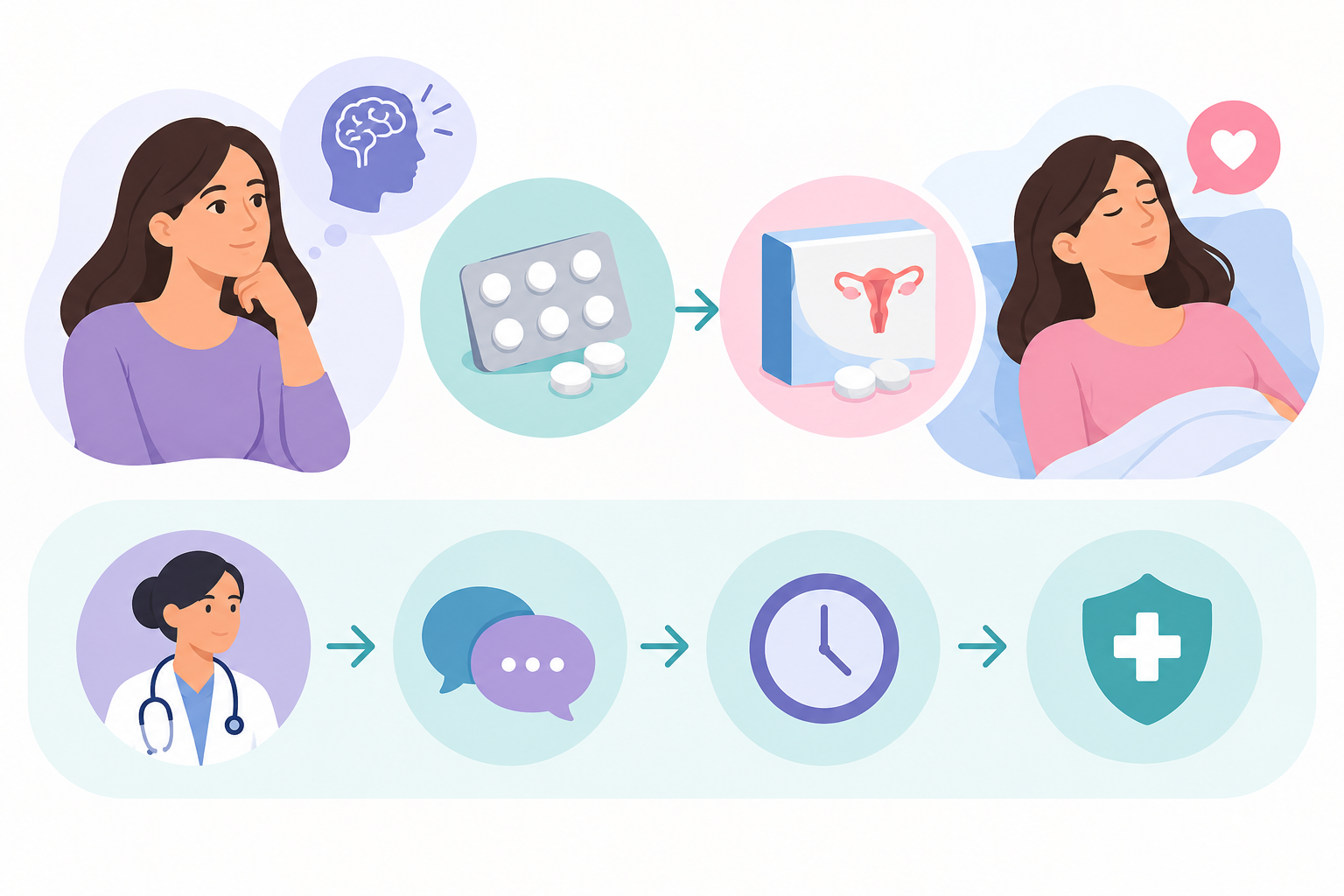
Benzodiazepines include medicines such as alprazolam, clonazepam, lorazepam, and diazepam.
This category deserves particular attention because different benzodiazepines are metabolized differently.
For example, alprazolam is extensively metabolized by CYP3A4. Mifepristone can inhibit CYP3A4 and potentially increase concentrations of medicines that rely heavily on that pathway.
This does not mean that someone taking alprazolam automatically has to stop it. It means the provider should know about it before treatment.
If you take a benzodiazepine, provide:
- The exact name
- Your dose
- How often you take it
- When you last took it
- Whether it is taken every day or only as needed
- Any other sedating medicines you use
Do not change a long-term prescription without advice from the clinician who manages it.
Can Buspirone Interact With Abortion Pills?
Buspirone is another medication used to treat anxiety.
Its prescribing information states that buspirone is metabolized by CYP3A4. Because mifepristone can affect CYP3A4-mediated drug metabolism, your provider should know if you take buspirone.
The presence of a potential metabolic interaction does not automatically mean that buspirone must be discontinued. The appropriate decision depends on the specific clinical situation and other medications involved.
This is a good example of why patients should provide a complete medication list rather than trying to determine safety from the medication category alone.
What About Hydroxyzine and Anxiety During Medication Abortion?
Hydroxyzine is sometimes used for anxiety and can cause drowsiness.
Its prescribing information includes warnings about sedation and interactions with other central nervous system depressants. It also carries precautions concerning QT prolongation in people with certain risk factors or when combined with other medicines that can prolong the QT interval.
Medication abortion can itself involve symptoms such as nausea, vomiting, dizziness, headache, chills, and other temporary effects, particularly after misoprostol.
Therefore, if hydroxyzine is part of your anxiety treatment, your provider may want to consider the complete medication picture and your individual risk factors.
Can Anxiety Medication Make Abortion Pills Less Effective?
There is no general rule that taking anxiety medication makes medication abortion ineffective.
However, the effect of a particular medicine depends on its pharmacology and the specific abortion regimen.
The current mifepristone prescribing information identifies certain CYP3A4 inducers that can lower mifepristone concentrations and states that the effect on treatment efficacy is uncertain. It also identifies CYP3A4 inhibitors and CYP3A4-substrate interactions that may require caution.
This is different from saying that all anxiety medicines interfere with abortion pills.
If you take an anxiety medicine that could potentially interact with mifepristone, your provider can assess the combination and determine the safest approach.
Should You Stop Your Anxiety Medication Before Taking Abortion Pills?
Do not stop a prescribed anxiety medication on your own just because you are taking abortion pills.
Stopping certain psychiatric medicines suddenly can cause problems, including withdrawal symptoms or a return or worsening of anxiety symptoms.
Instead, tell your abortion provider what you take before starting the medication-abortion process. If a medication adjustment is actually necessary, the appropriate clinician can tell you how to make that change safely.
This is especially important if you take your anxiety medicine every day or have previously experienced symptoms after missing doses.
What Should You Tell Your Abortion Provider?

Before taking abortion pills, provide a complete and accurate medication list.
Include:
- Prescription anxiety medications
- Antidepressants used for anxiety
- Benzodiazepines
- Sleep medications
- Over-the-counter medicines
- Vitamins and supplements
- Herbal products
- Other prescription medications
- Recreational substances, if relevant to your medical care
Also tell the provider about medication allergies and any significant medical conditions.
You can make the medication review easier by taking a photo of your prescription labels or keeping a current list on your phone.
For people seeking medication abortion, understanding the medication-abortion process can also make it easier to prepare questions before the appointment.
What If You Already Took Your Anxiety Medication?
If you already took your usual anxiety medication and are now planning to take abortion pills, do not assume that you have to cancel your care.
Contact your abortion provider and tell them:
- The exact anxiety medication
- The dose
- The time you took it
- The time you expect to take mifepristone
- Any other medications or supplements you use
The provider can determine whether the timing or medication combination requires any change.
If you have already taken mifepristone, give the provider the same information rather than taking additional doses or changing your prescriptions without guidance.
Mifepristone’s interaction effects can persist because of its relatively slow elimination, so medication review can remain relevant after the initial dose.
Can Anxiety Affect the Abortion Experience?
Anxiety can make it harder to process physical symptoms and uncertainty during a medication abortion.
Cramping, bleeding, nausea, chills, and other temporary effects can occur during medication abortion, particularly after misoprostol.
Having a clear plan can make the experience easier to manage.
Before treatment, ask your provider:
- What symptoms should I expect?
- When should I take each medication?
- Can I continue my normal anxiety medication?
- What should I do if I feel unusually dizzy or sedated?
- Who should I contact if I have questions?
- Which symptoms require urgent medical attention?
- What follow-up is recommended?
Clear instructions can be particularly helpful if anxiety makes it difficult to remember information during an appointment.
When Is an Anxiety-Medication Interaction Review Especially Important?
A more detailed medication review may be particularly important if:
- You take several prescription medications
- You use a benzodiazepine such as alprazolam
- You take buspirone
- You use medicines that affect CYP3A4
- You take medications with a narrow therapeutic range
- You use sedating medicines
- You take supplements or herbal products
- You have significant liver disease
- You have a history of medication reactions
- You are unsure of the names or doses of your medicines
The current mifepristone prescribing information specifically highlights CYP3A4 inhibitors, CYP3A4 inducers, and certain CYP3A4 substrates as interaction considerations.
That makes a complete medication review an important part of preparation.
When Should You Seek Medical Help After Taking Abortion Pills?
Anxiety symptoms should not be assumed to explain away potentially serious physical symptoms after medication abortion.
Seek medical help if you experience concerning symptoms such as:
- Very heavy bleeding
- Severe or worsening abdominal or pelvic pain
- Fainting or severe weakness
- Trouble breathing
- Signs of a serious allergic reaction
- Persistent severe illness
- Symptoms that make you concerned something is not right
ACOG guidance advises patients to contact their clinician for heavy bleeding such as soaking more than two maxi pads per hour for two consecutive hours.
If you are experiencing an emergency, seek urgent medical care rather than waiting for an online response.
For additional information about warning symptoms, you can review guidance on when to go to the ER after abortion pills.
How Can You Prepare for a Medication-Abortion Appointment if You Take Anxiety Medication?
A little preparation can make the medication review much easier.
1. Make a medication list
Write down every prescription, over-the-counter medication, supplement, and herbal product you currently use.
2. Record your doses
Include the strength and how often you take each medicine.
3. Note your last dose
If you take an anxiety medicine as needed, tell your provider when you last used it.
4. Tell the provider about allergies
Medication allergies and previous adverse reactions can affect treatment decisions.
5. Ask before changing anything
Do not skip, double, stop, or restart medication based only on something you read online.
You can also review what to keep at home before taking abortion pills so you can prepare for the practical side of medication abortion.
Can a Telehealth Abortion Provider Review Anxiety Medication?
A telehealth abortion consultation can provide an opportunity to discuss your medications, medical history, symptoms, and questions before treatment when telehealth is appropriate for your situation.
During a consultation, be prepared to provide an accurate list of your anxiety medications and any other medicines or supplements you take.
If you are considering remote care, learning about the benefits of telehealth abortion care can help you understand what a telehealth appointment may involve.
Whether telehealth is appropriate depends on individual medical circumstances and the requirements of the provider and applicable regulations.
How Serenity Choice Health Can Help
If you take anxiety medication and are considering abortion pills, you do not have to figure out potential medication interactions by yourself.
Serenity Choice Health can help you discuss your medication-abortion questions, provide information about the process, and review the medications and health information you provide as part of your care.
When contacting a provider, have your medication names and doses available. This allows the healthcare team to identify possible interaction concerns and determine whether any additional review is needed.
If you are considering safe and verified abortion pills online, use a legitimate healthcare pathway rather than relying on unidentified or unverified medications.
Key Takeaway
Taking anxiety medication does not automatically mean you cannot have a medication abortion.
The most important issue is the specific medication you take. Mifepristone has clinically important drug-interaction considerations involving CYP3A4, while different anxiety medicines use different metabolic pathways.
Do not stop or change a prescribed anxiety medication on your own. Instead, give your abortion provider a complete list of your medications, doses, and recent use.
A medication review can help your provider determine whether any special precautions are needed and help you approach medication abortion with clearer expectations.
FAQ Section
Can I take anxiety medication with abortion pills?
Often, people taking anxiety medication can still receive medication abortion care, but the answer depends on the specific medicine. Tell your provider the exact name, dose, and frequency of every medication you take.
Can I take Xanax with abortion pills?
Xanax (alprazolam) is primarily metabolized through CYP3A4. Because mifepristone can affect CYP3A4-mediated drug metabolism, anyone taking alprazolam should tell the abortion provider before taking mifepristone.
Can I take an SSRI during a medication abortion?
An SSRI should not automatically be stopped before medication abortion. The specific SSRI and your complete medication profile should be reviewed by your healthcare provider.
Can buspirone interact with mifepristone?
Buspirone is metabolized by CYP3A4, so your provider should know if you take it. The appropriate plan depends on your medication dose, other medicines, and individual circumstances.
Should I stop my anxiety medication before taking abortion pills?
Do not stop a prescribed anxiety medication without medical advice. Abruptly changing some psychiatric medicines can cause problems. Ask your prescribing clinician or abortion provider how you should manage your medication.
What if I already took my anxiety medicine before an abortion?
Tell your abortion provider exactly what you took, how much you took, and when you took it. Do not automatically repeat a dose, skip future doses, or cancel treatment without speaking with a healthcare professional.

Dr. James Carter is a board-certified physician and lead clinician at Serenity Choice Health, specializing in reproductive health access and medication abortion protocols. With over 20+ years of experience, he combines clinical expertise with patient-centered care to ensure safe, compassionate, and confidential reproductive healthcare.