
After an abortion, many people want reassurance that the pregnancy has ended successfully. One of the most common questions is whether an at-home pregnancy test is enough or whether a blood pregnancy test provides a more reliable answer.
The answer depends largely on when you’re testing, your individual recovery, and whether you’re experiencing any symptoms that suggest additional follow-up may be needed.
Understanding how pregnancy hormones change after an abortion can help you choose the right test and avoid unnecessary worry. Our abortion safety medical facts guide provides a broader overview of what normal recovery looks like and what the evidence says about medication and surgical abortion outcomes.
Why Pregnancy Tests Can Stay Positive After an Abortion
Both home pregnancy tests and blood tests detect human chorionic gonadotropin (hCG), the hormone produced during pregnancy.
Even after a successful abortion, your body does not remove hCG immediately. Instead, hormone levels gradually decline over days or weeks.
This means a pregnancy test may remain positive even though the pregnancy has ended normally.
The speed of this decline varies based on factors such as:
- How far along the pregnancy was
- Your individual hormone metabolism
- Your starting hCG level
- Whether all pregnancy tissue passed successfully
A positive result shortly after an abortion is often expected and does not necessarily indicate an ongoing pregnancy. Read our your abortion experience before, during, and after care guide for a complete walkthrough of what to expect at each stage of recovery.
Understanding hCG After Abortion
hCG levels begin decreasing once the pregnancy ends.
In general:
- Blood hCG decreases gradually over time
- Home pregnancy tests only become negative after hormone levels fall below their detection threshold
- Some people test negative within two weeks
- Others may continue testing positive for several weeks
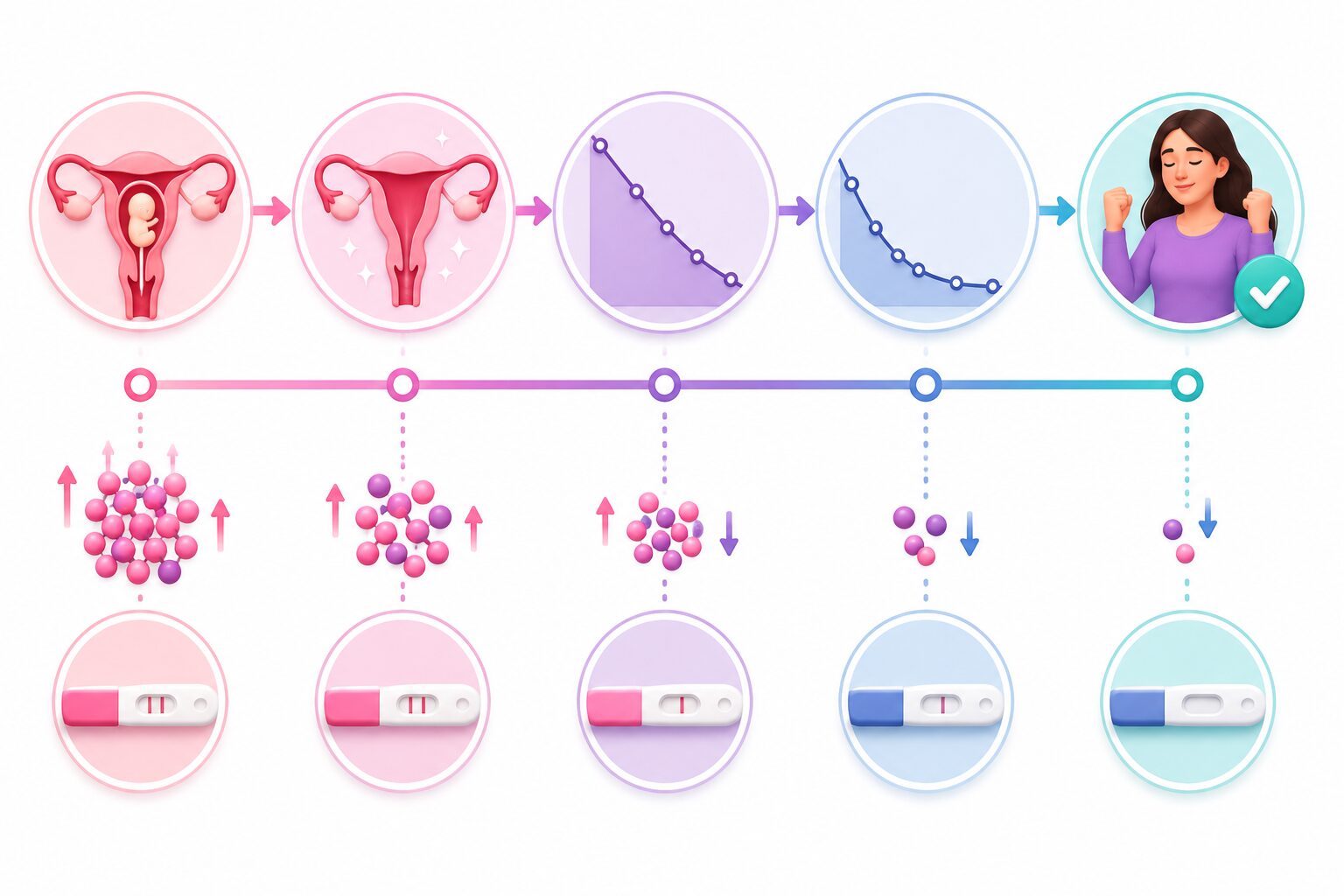
This is why timing matters more than the type of test alone. For a full explanation of how to confirm your abortion was successful, read our guide on how to know if the abortion pill worked.
What Is an At-Home Pregnancy Test?
An at-home pregnancy test checks your urine for hCG.
These tests are:
- Convenient
- Affordable
- Available without a prescription
- Easy to perform at home
Most home tests are designed to detect hCG once it reaches a certain concentration. However, because they provide only a positive or negative result, they cannot show whether hormone levels are increasing or decreasing.
Benefits of Home Pregnancy Tests
- Private testing at home
- Quick results in minutes
- Widely available
- Simple instructions
- Useful for routine follow-up when used at the recommended time
Limitations
Home pregnancy tests may remain positive because they detect even small amounts of remaining hCG.
They also cannot determine:
- Whether hormone levels are falling appropriately
- Whether pregnancy tissue remains
- Whether a new pregnancy has occurred
- Whether additional follow-up is needed
What Is a Blood Pregnancy Test?
A blood pregnancy test measures hCG directly from a blood sample.
Healthcare providers may order:
Qualitative Blood Test
Simply reports positive or negative.
Quantitative Blood Test
Also called a beta hCG test, this measures the exact amount of pregnancy hormone in the bloodstream. Instead of simply saying “positive,” it reports the actual hCG level. This allows providers to monitor whether hormone levels are falling normally, remaining unchanged, or increasing unexpectedly.
Read our guide on whether ultrasounds and bloodwork are needed for an abortion for more context on when blood tests are used as part of the follow-up evaluation process.
At-Home Pregnancy Test vs Blood Test After Abortion
| Feature | Home Pregnancy Test | Blood Pregnancy Test |
|---|---|---|
| Sample | Urine | Blood |
| Accuracy | Very accurate when used correctly | Highly accurate |
| Measures Exact hCG? | No | Yes (quantitative test) |
| Detects Small Amounts of hCG | Limited | Yes |
| Tracks Hormone Changes | No | Yes |
| Best For | Routine follow-up | Medical evaluation |
| Requires Clinic Visit | No | Usually yes |
Which Test Is Better After an Abortion?
Neither test is universally “better.” Each serves a different purpose.
A home pregnancy test is often appropriate when:
- You’re following your provider’s instructions
- You’re testing at the recommended time
- You’re recovering normally
- You have no concerning symptoms
A blood test may be recommended if:
- Your home pregnancy test stays positive longer than expected
- Your provider wants to monitor hCG decline
- There is concern about retained pregnancy tissue
- An ongoing pregnancy needs to be ruled out
- You develop new symptoms that require evaluation
Our guide on when abortion pills don’t work explains what an incomplete or failed medication abortion involves and how blood tests help clarify the situation. For a full overview of the medication abortion process, read our medication abortion explained guide.
When Should You Take a Pregnancy Test After an Abortion?
Testing too early can produce confusing results because hCG is still leaving the body.
Many healthcare providers recommend waiting until the follow-up time they advise before taking a home pregnancy test.
Following your provider’s instructions is more reliable than testing repeatedly every few days. Our telehealth abortion care service includes follow-up consultations so you can check in with a provider from home and get personalized guidance on when to test.
What Does a Positive Pregnancy Test Mean?
A positive result does not automatically mean the abortion was unsuccessful.
Possible explanations include:
- Remaining hCG is still clearing from your body
- Testing occurred too soon
- Hormone levels have not yet dropped below the test’s detection limit
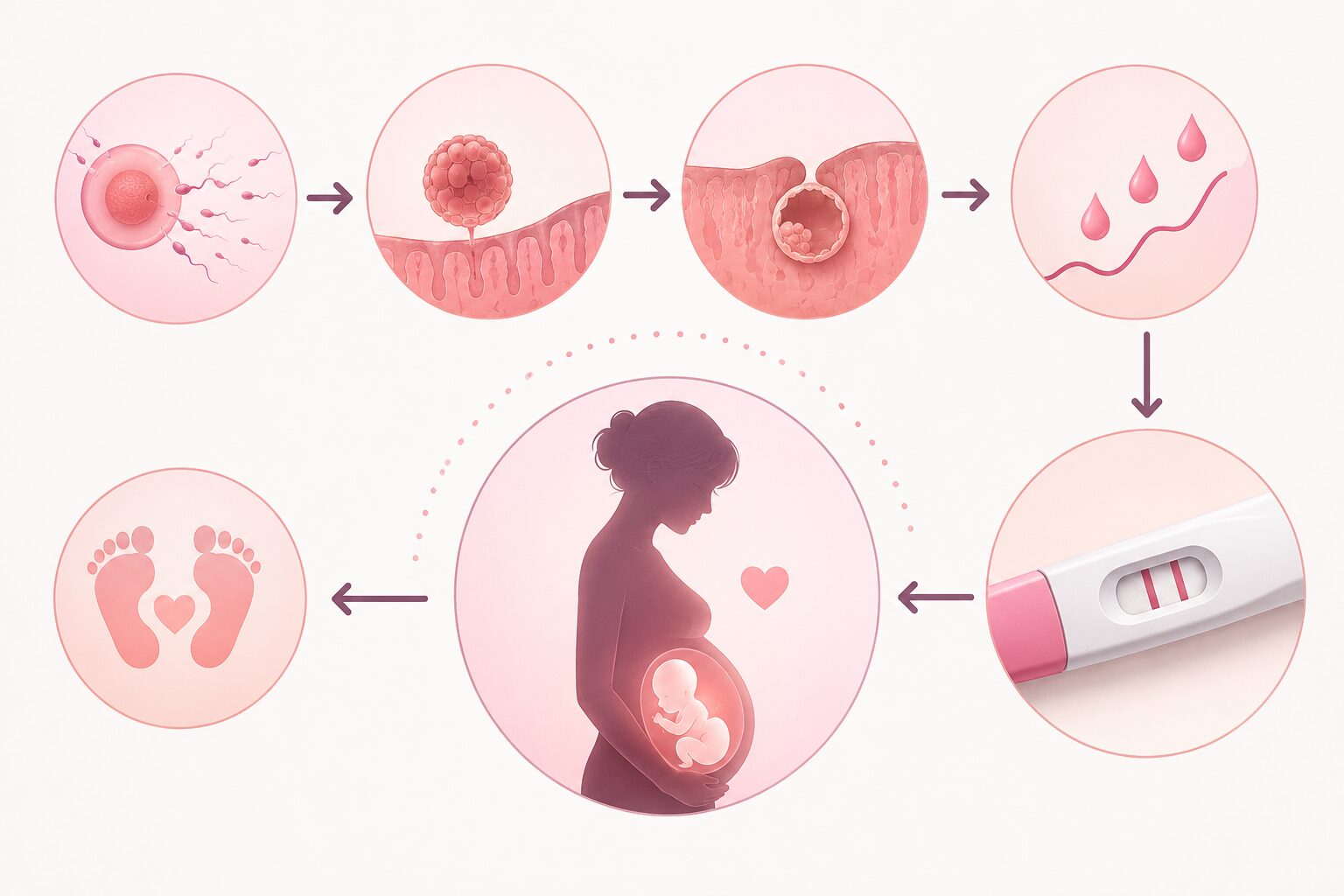
However, persistent positive results especially when accompanied by ongoing pregnancy symptoms, heavy bleeding, severe pain, or other concerning symptoms — should be discussed with your healthcare provider. Read our guides on bleeding after the abortion pill and abortion pain management to understand what is and isn’t normal during recovery. For other lingering symptoms, see our guide on nausea after abortion.
When Should You Contact Your Healthcare Provider?
Reach out to your healthcare provider if:
- Pregnancy tests remain positive beyond the expected follow-up period
- Pregnancy symptoms continue or worsen
- You develop severe abdominal pain
- Heavy bleeding continues unexpectedly
- You experience fever or signs of infection
- You have questions about your recovery or test results
A healthcare professional can determine whether additional testing, including a quantitative blood test or ultrasound, is appropriate. Book a confidential appointment with our team for prompt, personalized evaluation. Our in-clinic abortion services are available if in-person evaluation or additional care becomes necessary.
Key Takeaways
Both home pregnancy tests and blood pregnancy tests are valuable after an abortion, but they answer different questions.
A home pregnancy test provides a convenient way to check whether hCG has fallen below the detection threshold.
A quantitative blood test provides much more detailed information by measuring the exact hormone level over time, making it especially useful when additional follow-up is needed.
If you’re unsure which test is right for your situation, following your healthcare provider’s recommendations is the best approach. Once your recovery is confirmed, read our guides on how fertile you are after an abortion and whether you can get pregnant after an abortion to understand what to expect for your reproductive health going forward.
Need Guidance After an Abortion?
At Serenity Choice Health, we understand that recovery often comes with questions. Whether you’re unsure about your pregnancy test results or need follow-up care, our experienced team provides compassionate, confidential support tailored to your needs.
Our abortion pill page covers the complete medication abortion process and recovery. Our women’s primary care services provide ongoing post-abortion follow-up and reproductive health support. If you have questions about the emotional side of recovery, read our guide on how to recover emotionally after an abortion.
Contact us to schedule a follow-up appointment or speak with a healthcare professional if you have concerns about your recovery.
FAQ Section
Is a blood pregnancy test more accurate than a home pregnancy test after abortion?
A quantitative blood test measures the exact amount of hCG in your bloodstream, making it more useful for monitoring hormone changes over time. Home pregnancy tests remain highly accurate for detecting pregnancy hormones but cannot show whether hCG is rising or falling.
Why is my home pregnancy test still positive after an abortion?
A positive result often means that hCG is still leaving your body. This is common after abortion and does not necessarily indicate an ongoing pregnancy.
How long does hCG stay in the body after an abortion?
The time varies from person to person. Factors such as gestational age and starting hormone levels influence how quickly hCG declines.
When should I get a blood test after an abortion?
A healthcare provider may recommend a blood test if your home pregnancy test remains positive longer than expected or if your recovery raises concerns that require closer monitoring.
Should I keep taking home pregnancy tests every few days?
Repeated testing too early can cause unnecessary anxiety because hCG declines gradually. It’s best to follow your healthcare provider’s recommended testing timeline.
What if my pregnancy test becomes darker instead of lighter?
A darker result does not always mean something is wrong, but it should be discussed with your healthcare provider, particularly if accompanied by ongoing pregnancy symptoms or other concerning signs.

Dr. James Carter is a board-certified physician and lead clinician at Serenity Choice Health, specializing in reproductive health access and medication abortion protocols. With over 20+ years of experience, he combines clinical expertise with patient-centered care to ensure safe, compassionate, and confidential reproductive healthcare.