
Back pain after the abortion pill is a common experience. It usually happens because the medications cause the uterus to contract strongly, and that contraction pain often radiates into the lower back, not just the abdomen. For most people, this discomfort is temporary and improves within a week to ten days.
This article explains why back pain happens, how long it typically lasts, what helps relieve it, and which symptoms mean you should contact a healthcare provider.
A note before you continue: This article is for general information only. It is not medical advice and does not replace guidance from your doctor or clinic. Always follow the specific instructions given by your healthcare provider, since they know your individual situation. This article should be reviewed by a qualified professional before publishing.
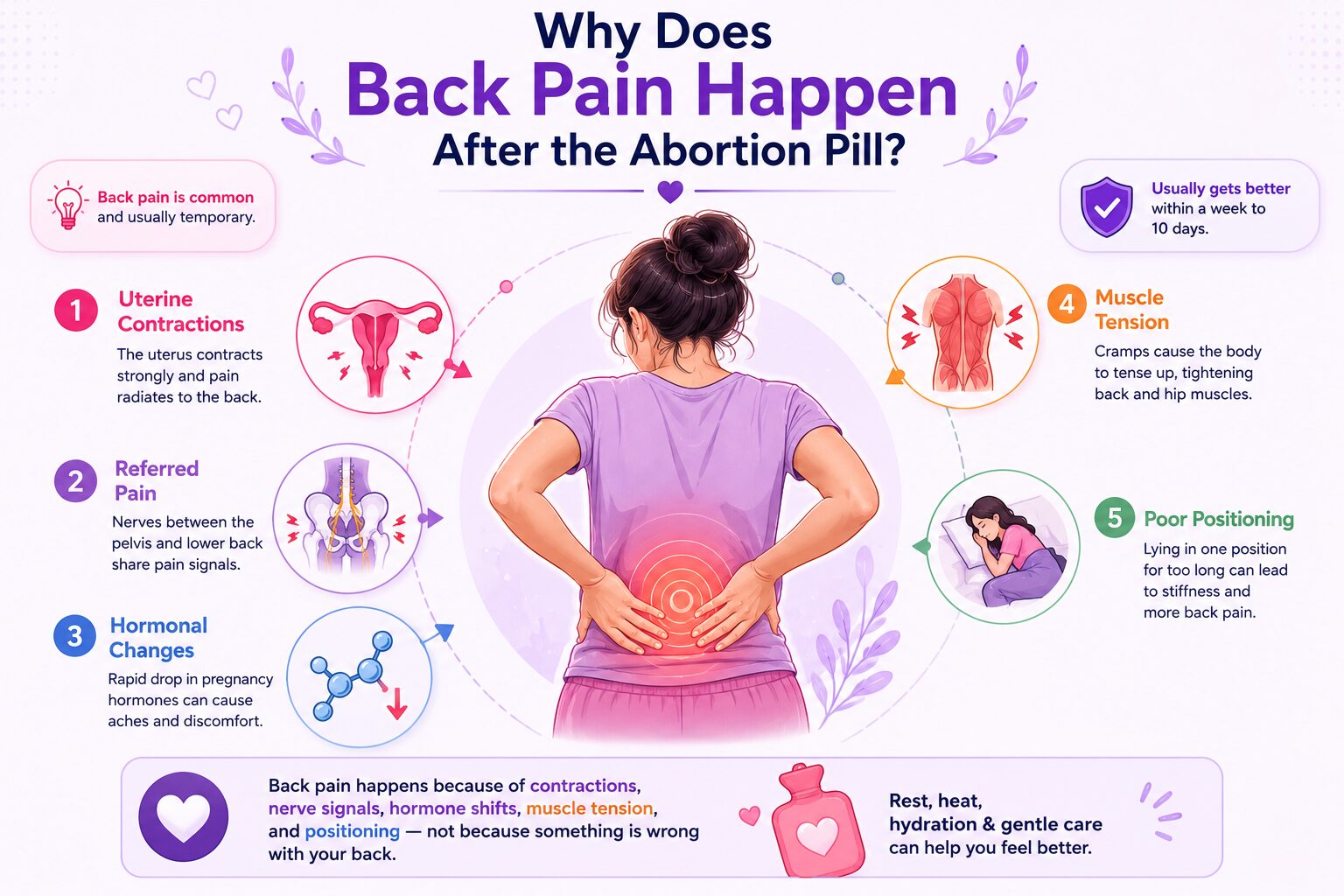
A medical abortion typically uses two medications: mifepristone, which stops the pregnancy from continuing, and misoprostol, which causes the uterus to contract and empty. These contractions are the main source of pain during the process. Learn more about how mifepristone works and what to expect from misoprostol as part of the full process.
Uterine Contractions Radiate to the Back
The uterus is a muscle. When it contracts to expel its contents, the pain is rarely limited to the front of the abdomen. Many people describe it as a deep ache or pressure that wraps around to the lower back, similar to intense menstrual cramps.
Referred Pain From the Pelvis
The uterus and lower back share overlapping nerve pathways. This means pain that starts in the uterus can be felt, or “referred,” in the lower back even though nothing is wrong with the spine or back muscles themselves.
Hormonal Changes
Pregnancy hormone levels drop quickly during a medical abortion. This rapid shift can contribute to body aches, fatigue, and lower back discomfort, in a similar way to how some people feel before or during a period.
Muscle Tension From Cramping
When the body tenses up in response to strong cramps, the muscles around the lower back and hips can tighten as well. This added muscle tension can make back pain feel worse than the uterine contractions alone.
Prolonged Lying Down or Poor Positioning
Spending long periods lying in one position, especially curled up to manage cramps, can lead to stiffness. This is a smaller factor but can add to overall discomfort over a day or two.
How Long Does Back Pain Usually Last?
Recovery experiences vary, but a general pattern often looks like this:
| Timeframe | What You May Notice |
|---|---|
| First 24 to 48 hours | Strongest cramping and back pain, often right after misoprostol |
| Day 3 to 4 | Pain gradually easing, bleeding still present |
| Day 5 to 7 | Mild cramping or occasional back twinges |
| Day 8 to 10+ | Little to no pain, light spotting may continue |
This table is a general guide, not a guarantee. Some people recover faster, and others take a bit longer. What matters most is that symptoms trend toward improvement, not worse. For a fuller picture of bleeding patterns alongside this timeline, see our guide on bleeding after the abortion pill.
Relief Tips for Back Pain After the Abortion Pill
These are general comfort measures commonly suggested during medical abortion recovery. Always check with your provider before combining methods or medications. Our abortion pain management guide covers additional comfort strategies in more depth.
Use Heat
A heating pad or warm water bottle on the lower back or abdomen can relax tense muscles and ease cramping. Use it in 15 to 20 minute sessions rather than continuously, and avoid placing it directly on bare skin for long periods.
Take Pain Relief as Directed
Many providers recommend an NSAID such as ibuprofen for cramping and back pain, since it can also help reduce uterine contractions. Follow the exact dosing instructions given by your provider or clinic rather than general guidelines found online.
Move Gently
Short, gentle walks can ease stiffness and improve circulation, which may reduce back tension. Avoid intense exercise or heavy lifting until your provider confirms it is safe to resume normal activity.
Adjust Your Position
Lying on your side with a pillow between your knees can reduce strain on the lower back. Changing positions every so often, instead of staying still for hours, helps prevent stiffness from building up.
Stay Hydrated and Rest
Dehydration can make cramping and muscle tension feel more intense. Drinking water regularly and prioritizing rest, especially in the first two days, supports recovery.
Try Gentle Stretching or Massage
A light lower back massage or simple stretches, such as a seated forward bend, may help loosen tight muscles once the sharpest cramping has passed. Avoid deep or vigorous massage while pain is severe. If you are also experiencing discomfort in other areas, our guide on anal or rectal pain after abortion covers related symptoms some people experience during recovery.
Real-Life Example: What a Typical Recovery Might Look Like
Consider a common scenario: someone takes misoprostol in the morning. By early afternoon, cramping intensifies and spreads into the lower back. They use a heating pad, take pain relief as directed by their provider, and rest for the remainder of the day.
By the next morning, cramping is noticeably milder, though some lower back ache remains, especially when standing for long periods. Over the following four to five days, the back pain fades gradually, alongside lighter bleeding. By day ten, only occasional, mild discomfort remains.
This is one example, not a fixed timeline. Pain intensity and duration can vary based on individual factors, including how far along the pregnancy was. You may also experience other common side effects during this window — read more in our guide on nausea after abortion.
Common Mistakes to Avoid
Assuming all pain is automatically normal. Mild, gradually improving pain is expected. Pain that keeps getting worse is not something to dismiss.
Using heat constantly without breaks. Continuous heat exposure can irritate the skin without improving pain relief.
Skipping water intake. Focusing only on pain medication while ignoring hydration can make cramping feel worse.
Returning to strenuous activity too soon. This can increase bleeding and prolong discomfort, including back pain.
Not tracking symptoms. Without a rough sense of how pain and bleeding are changing day to day, it is harder to know if something needs medical attention.
Hesitating to call the clinic. Many people worry about “bothering” their provider. Clinics expect aftercare questions and would rather hear from you than have you guess.
Warning Signs That Need Medical Attention
Most back pain after the abortion pill is a normal part of the uterus contracting and returning to its pre-pregnancy state. However, some symptoms are not typical and need prompt evaluation.
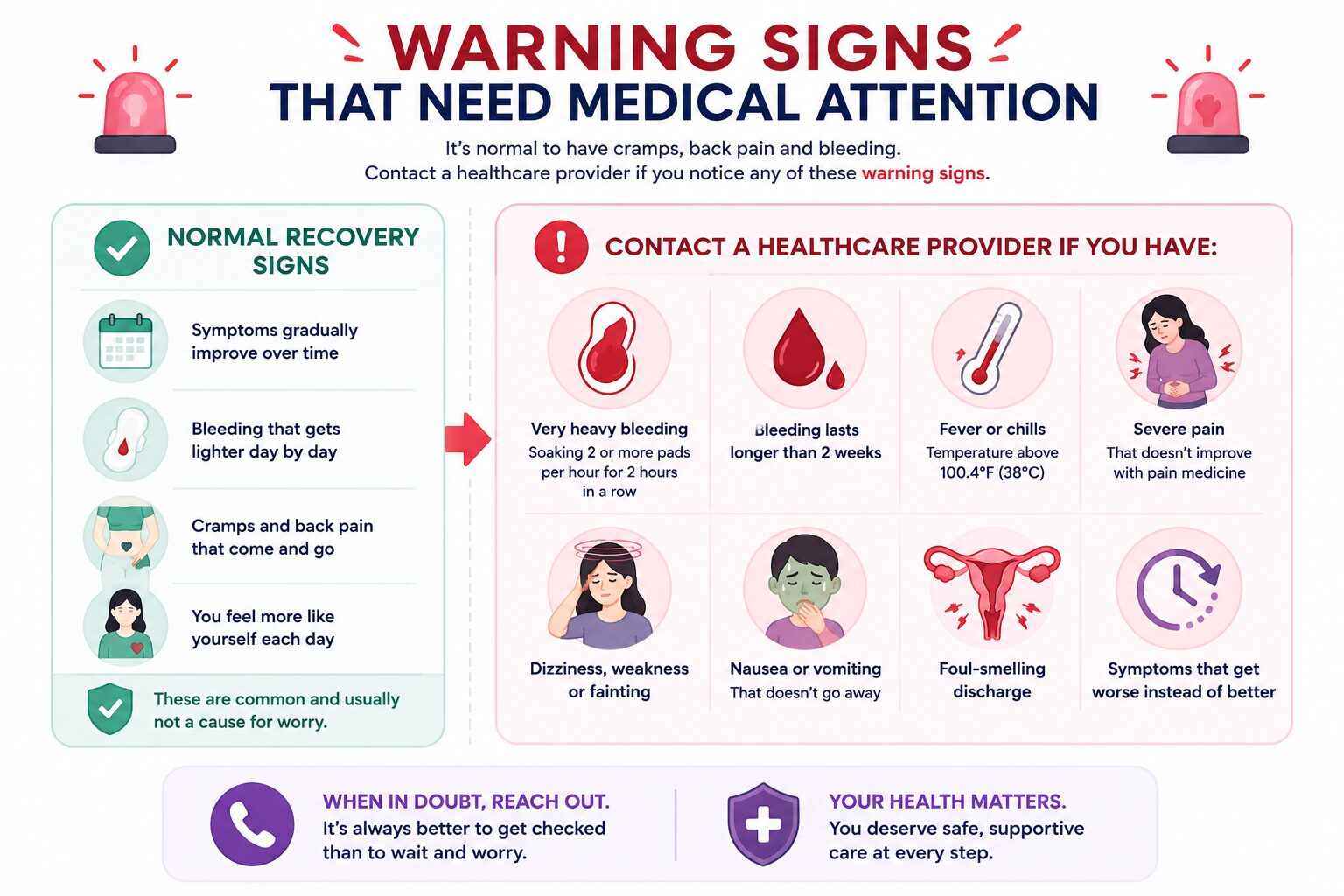
Contact your healthcare provider or seek urgent care if you experience:
- Severe back or abdominal pain that does not improve with recommended pain relief
- Fever
- Bleeding that soaks through more than two pads per hour for two hours in a row
- Foul-smelling vaginal discharge
- Pain that gets worse over time instead of gradually easing
- Chills, dizziness, or feeling generally unwell
- No bleeding at all after taking the medication
These symptoms can sometimes point to infection or an incomplete abortion, both of which require medical evaluation rather than home management. Read more about when abortion pills don’t work to understand the signs of an incomplete or failed medication abortion. Our in-clinic abortion services are available if in-person evaluation or additional treatment is needed.
Helpful Checklist for Managing Back Pain at Home
- Use a heating pad in short sessions
- Take pain relief exactly as your provider directs
- Drink water regularly throughout the day
- Rest, especially during the first 48 hours
- Take short walks once pain allows
- Track bleeding and pain levels day by day
- Avoid heavy lifting or intense exercise
- Know the warning signs above
- Attend your follow-up appointment
Important Considerations and Limitations
Pain tolerance and recovery experiences differ from person to person, so comparing your symptoms exactly to someone else’s experience is not always helpful. This article describes general patterns, not a diagnosis of your specific situation.
If you are unsure whether your symptoms fall within a normal range, it is always reasonable to contact your provider rather than wait it out. Clinics and providers who supervise medical abortions expect and welcome these check-ins. Our telehealth abortion care includes follow-up support so you can check in with a provider without needing to travel. You can also book a confidential appointment directly if you’d like an in-person evaluation.
FAQs
Is back pain normal after taking the abortion pill?
Yes, mild to moderate back pain is a common part of the uterus contracting during a medical abortion. It often improves over several days.
How is this different from regular period back pain?
The sensation is often similar, since both involve uterine contractions. Pain after the abortion pill, particularly after misoprostol, can feel more intense in the first day or two.
Can I take ibuprofen for back pain after the abortion pill?
Many providers recommend an NSAID such as ibuprofen for cramping. Follow the specific dosing instructions your provider gives you.
When should I be concerned about back pain after a medical abortion?
Contact your provider if pain is severe, not relieved by medication, worsening instead of improving, or paired with fever, heavy bleeding, or foul-smelling discharge.
How long does back pain typically last?
For most people, pain is strongest in the first one to two days and gradually fades over the following week, though mild discomfort can sometimes linger a bit longer.
Can stress or anxiety make the back pain feel worse?
Emotional stress can heighten how pain is perceived for some people, which is normal. This does not mean the pain itself is not physical, just that managing stress alongside physical symptoms may help comfort.
Final Takeaway
Back pain after the abortion pill is usually a normal response to the uterus contracting and emptying, and it tends to ease steadily within a week to ten days. Heat, rest, hydration, gentle movement, and appropriate pain relief can make recovery more comfortable.
That said, pain that is severe, worsening, or accompanied by fever, heavy bleeding, or foul-smelling discharge should not be managed at home. Contact your healthcare provider promptly in those situations, and always follow their specific aftercare instructions over general information found online. Our women’s primary care services can support your full recovery and follow-up needs beyond the immediate post-abortion period. If you’d like to confirm your recovery is on track, learn more about how to know if the abortion pill worked, or review our abortion safety medical facts guide for more on what a typical, safe recovery looks like. For information on the full medication process, visit our abortion pill page.
Suggested External Sources
- Planned Parenthood
- American College of Obstetricians and Gynecologists (ACOG)
- World Health Organization (WHO)
- Mayo Clinic
- National Health Service (NHS)
Here are working links for each suggested source:
| Source | Page | URL |
|---|---|---|
| Planned Parenthood | What to expect after the abortion pill (side effects, warning signs) | https://www.plannedparenthood.org/learn/abortion/the-abortion-pill/what-can-i-expect-after-i-take-the-abortion-pill Planned Parenthood |
| Planned Parenthood | The Abortion Pill overview | https://www.plannedparenthood.org/learn/abortion/the-abortion-pill |
| ACOG | Medication Abortion (patient FAQ) | https://www.acog.org/womens-health/faqs/medication-for-achieving-an-abortion |
| WHO | Abortion care guideline | https://www.who.int/publications/i/item/9789240039483 |
| Mayo Clinic | Medical (drug-induced) abortion overview | https://www.mayoclinic.org/tests-procedures/medical-abortion/about/pac-20394687 |
| NHS | Abortion care / what happens | https://www.nhs.uk/conditions/abortion/ |

Dr. James Carter is a board-certified physician and lead clinician at Serenity Choice Health, specializing in reproductive health access and medication abortion protocols. With over 20+ years of experience, he combines clinical expertise with patient-centered care to ensure safe, compassionate, and confidential reproductive healthcare.