

Burning during urination, medically known as dysuria, is most often caused by a urinary tract infection, but it can also be a sign of a sexually transmitted infection or another condition entirely. The two cannot be reliably told apart by symptoms alone, which is exactly why testing matters more than guessing.
This guide walks through the differences between UTIs and STIs that cause this symptom, what other conditions can be responsible, and how to figure out your next step with confidence.
What Causes Burning During Urination?
Burning when you pee happens when the urethra, bladder, or surrounding tissue becomes irritated or inflamed. Several different conditions can cause this irritation, and they are not always related to infection at all.
The Most Common Causes
The most frequent causes of burning urination include urinary tract infections, certain sexually transmitted infections, vaginal yeast infections, bacterial vaginosis, irritation from soaps or hygiene products, and in some cases, dehydration concentrating the urine.
Why Symptoms Alone Are Not Enough
UTIs and several STIs can produce nearly identical symptoms. Burning, urgency, and frequent urination can appear with a bladder infection, chlamydia, gonorrhea, or trichomoniasis. Without testing, it is genuinely difficult, even for experienced clinicians, to confirm the cause from symptoms alone. Our STI and STD testing services can help determine the actual cause so you get the right treatment the first time.
Could It Be a UTI?
What a UTI Is
A urinary tract infection occurs when bacteria, most commonly E. coli from the digestive tract, enter the urethra and travel into the bladder. Women are significantly more prone to UTIs than men due to having a shorter urethra, which gives bacteria a shorter distance to travel.
Typical UTI Symptoms
A UTI commonly causes a burning sensation during urination, a frequent and urgent need to urinate even when little comes out, cloudy or strong-smelling urine, mild pelvic pressure or discomfort, and sometimes a small amount of blood in the urine. Fever is uncommon with a simple bladder infection and may indicate the infection has spread to the kidneys.
What Increases UTI Risk
Sexual activity, especially with a new partner, can introduce bacteria into the urethra and increase UTI risk. Other contributing factors include not urinating after sex, dehydration, certain forms of contraception such as diaphragms, and holding urine for long periods. Our birth control and contraceptive services can help you find a method that fits your health needs, including UTI risk considerations.
Could It Be an STI?
Which STIs Cause Burning Urination?
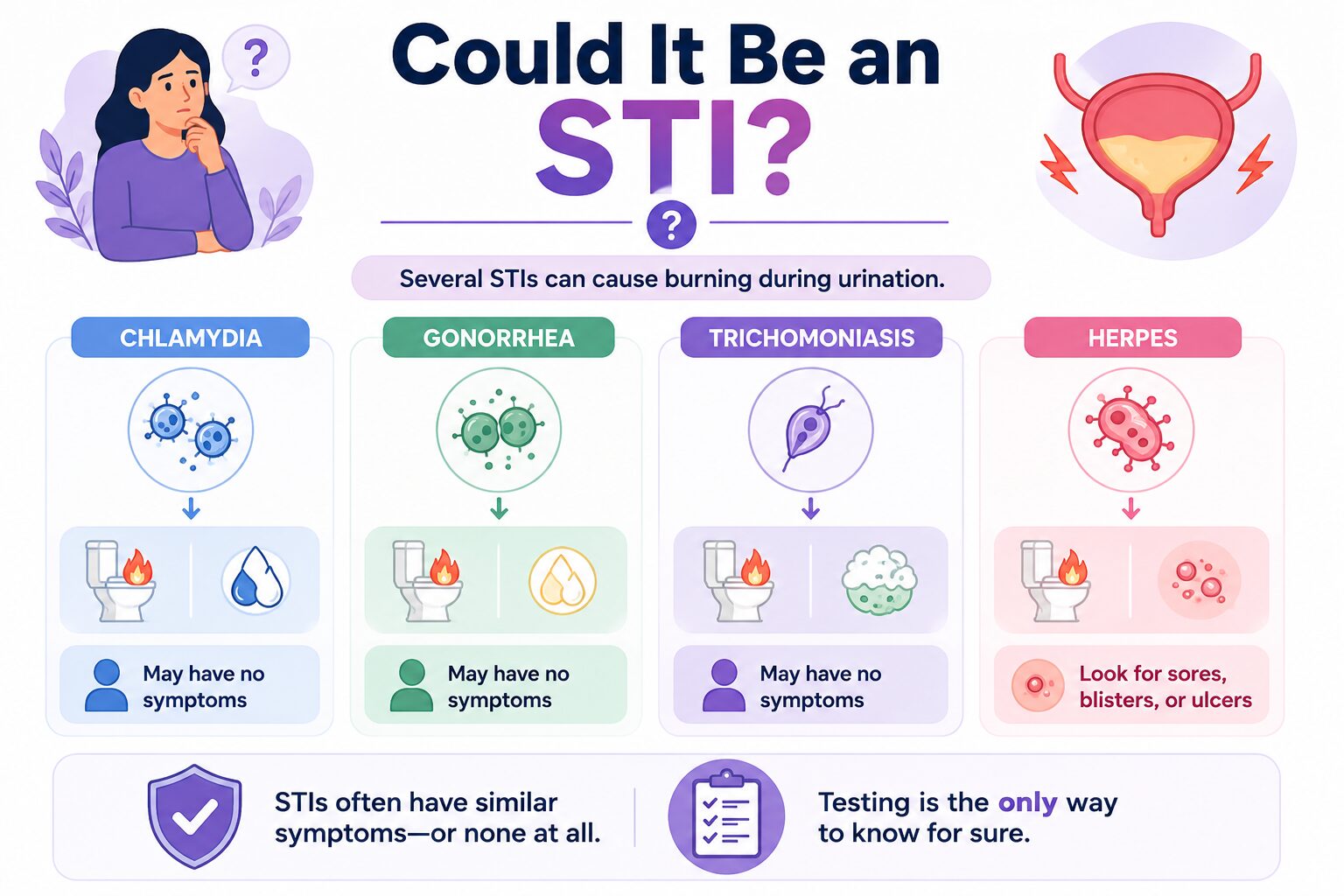
Several sexually transmitted infections can cause burning during urination, most notably chlamydia, gonorrhea, and trichomoniasis. Herpes can also cause burning, particularly if sores are present near the urethral opening, as urine passing over the sores causes pain.
Chlamydia and Gonorrhea
Both of these bacterial infections can inflame the urethra, producing a burning sensation similar to a UTI. Unlike a typical UTI, these infections may also come with unusual vaginal or penile discharge, pelvic pain, or bleeding between periods in women. Importantly, both infections frequently cause no symptoms at all, meaning the absence of additional signs does not rule them out.
Trichomoniasis
This parasitic infection can cause burning during urination along with itching, irritation, and a frothy, unusual-smelling discharge. Like chlamydia and gonorrhea, it often causes no symptoms in many people who have it.
Herpes
If burning occurs alongside visible sores, blisters, or ulcers near the genital or urethral area, herpes is a possibility worth discussing with a provider. The burning in this case usually comes from urine contacting an open sore rather than from infection within the urinary tract itself.
UTI vs STI: A Side-by-Side Comparison
| Feature | UTI | STI (Chlamydia, Gonorrhea, Trich) |
| Burning during urination | Common | Common |
| Urinary urgency/frequency | Very common | Less prominent |
| Unusual discharge | Uncommon | Common, but not always present |
| Pelvic or lower abdominal pain | Mild, if present | Can be more pronounced |
| Fever | Uncommon (without kidney involvement) | Uncommon unless advanced |
| Blood in urine | Possible | Less typical |
| Recent new sexual partner | Not required | Relevant risk factor |
| Symptoms without infection visible | Rare | Very common |
This comparison is a general guide, not a diagnostic tool. Overlap between these conditions is significant, and testing remains the only reliable way to know for certain.
Other Possible Causes Worth Knowing About
Yeast Infections
A vaginal yeast infection can cause burning, particularly when urine touches irritated, inflamed tissue around the vaginal opening. This is usually accompanied by itching and a thick, white discharge, distinguishing it from a true urinary tract infection.
Bacterial Vaginosis
Bacterial vaginosis can cause irritation that leads to burning during urination, along with a thin discharge that often has a distinct odor, particularly after sex.
Irritants and Allergic Reactions
Scented soaps, bubble baths, douches, certain laundry detergents, and spermicide can irritate sensitive tissue and cause burning unrelated to any infection. If symptoms started after introducing a new product, this is worth considering before assuming infection.
Dehydration
Concentrated urine from inadequate fluid intake can cause mild burning on its own, without any infection present. This typically resolves with increased water intake.
When Burning During Urination Needs Same-Day Medical Attention
Some accompanying symptoms indicate the need for prompt evaluation rather than waiting:
- Fever or chills alongside burning urination, which may indicate a kidney infection
- Back or flank pain, particularly on one side
- Visible blood in the urine
- Significant pelvic or abdominal pain
- Nausea or vomiting alongside urinary symptoms
- Sores, blisters, or ulcers near the genitals
- Symptoms that worsen rapidly rather than staying mild
A kidney infection, which can develop from an untreated UTI, is a more serious condition that requires prompt antibiotic treatment. Book a confidential appointment to get evaluated promptly if you notice any of these symptoms.
What to Expect When You See a Provider
For Suspected UTIs
Diagnosis typically involves a urine sample tested with a dipstick test in-office, often followed by a urine culture sent to a lab to confirm the specific bacteria and the most effective antibiotic. Results from a dipstick test are usually available the same visit, while culture results may take one to two days.

For Suspected STIs
Testing depends on the specific infection suspected. Chlamydia and gonorrhea are typically diagnosed through a urine sample or vaginal/urethral swab. Trichomoniasis is diagnosed through a vaginal swab or urine test. Herpes is diagnosed through a swab of an active sore. Our STI and STD testing services can often be performed at the same visit if your symptoms or history suggest it is appropriate.
Can You Be Tested for Both at Once?
Yes. If your symptoms could reasonably indicate either a UTI or an STI, many providers will run tests for both simultaneously, particularly if you have risk factors for an STI such as a new sexual partner or inconsistent condom use. This avoids unnecessary delays in getting an accurate diagnosis. Learn more about the benefits of telehealth and how virtual care can help you get evaluated quickly without needing to leave home.
Practical Tips While You Wait for Care
- Drink plenty of water, which can help dilute urine and ease mild burning
- Avoid caffeine, alcohol, and spicy foods temporarily, as these can irritate the bladder further
- Avoid scented soaps or hygiene products in the genital area until symptoms resolve
- Do not have sex until you have been evaluated, particularly if an STI is a possibility
- Keep track of when symptoms started and any other changes, such as discharge or fever, to report accurately
- Do not start antibiotics left over from a previous illness, since the wrong medication will not treat the actual cause and can complicate diagnosis
Common Mistakes to Avoid
Assuming it is always a UTI. Burning during urination is commonly assumed to be a UTI by default, which can delay STI testing when that is actually the cause.
Self-treating with home remedies indefinitely. Cranberry juice and increased water intake may offer mild relief but will not treat a bacterial infection or an STI. Symptoms that do not improve within a day or two need evaluation.
Using leftover antibiotics. Taking medication prescribed for a previous infection is not appropriate for a new episode, since it may not target the actual bacteria or infection causing your current symptoms and can contribute to antibiotic resistance.
Avoiding testing out of embarrassment. Burning urination is an extremely common reason for medical visits. Providers see this symptom regularly and are focused on helping you, not judging you.
Ignoring symptoms that suggest a kidney infection. Fever, back pain, and nausea alongside urinary symptoms should not be managed at home. These require prompt evaluation.
Frequently Asked Questions
How can I tell if burning when I pee is a UTI or an STI?
Symptoms alone are not reliable for telling the two apart, since both can cause burning, discomfort, and urinary changes. The only accurate way to know is through testing, which a healthcare provider can usually perform at the same visit if your symptoms suggest either could be the cause.
Can a UTI go away on its own without antibiotics?
Mild UTIs occasionally resolve without treatment, but this is not reliable and untreated infections can worsen or spread to the kidneys. Antibiotic treatment is the standard and recommended approach once a UTI is confirmed.
Is burning when I pee always a sign of infection?
No. Irritation from soaps, dehydration, or sensitivity to certain products can also cause burning without any infection present. If symptoms persist beyond a day or two, evaluation is still recommended to rule out infection.
Can chlamydia or gonorrhea cause burning without other symptoms?
Yes. Many people with chlamydia or gonorrhea experience only burning during urination, or no symptoms at all. The absence of discharge or other signs does not rule out an STI, which is why testing is important even with mild or isolated symptoms.
Should I see a doctor or just wait it out?
If symptoms are mild and just started, drinking more water and monitoring for a day may be reasonable. If symptoms persist beyond one to two days, worsen, or are accompanied by fever, back pain, or discharge, seek evaluation rather than waiting.
Can men experience burning during urination from a UTI or STI?
Yes, though UTIs are less common in men due to anatomical differences. Burning urination in men is more frequently associated with STIs such as chlamydia or gonorrhea and should be evaluated by a provider.
Is it normal to have burning during urination with no other symptoms?
It can happen with both UTIs and certain STIs, particularly chlamydia and gonorrhea, which are often described as silent infections. Isolated burning without other symptoms still warrants testing rather than assumption.
Can I test for a UTI and an STI at the same appointment?
Yes, this is common practice when symptoms could reasonably indicate either condition, especially if you have recent new sexual activity. Your provider can collect a urine sample and any necessary swabs during the same visit.
Final Takeaway
Burning during urination is a symptom with several possible causes, and a UTI and an STI can look remarkably similar from the inside. The only reliable way to know which one you are dealing with is testing, not guessing based on symptoms alone.
If your symptoms persist beyond a day or two, are accompanied by fever, back pain, or discharge, or follow a new sexual encounter, seeing a provider promptly is the right move. Most causes of burning urination are straightforward to diagnose and treat once identified.
Our STI and STD testing services are available for anyone experiencing symptoms that could indicate an infection, and testing for both a UTI and an STI can often be done during the same visit. Our women’s primary care services can evaluate your full symptom picture and coordinate any necessary treatment. If you would like to speak with a provider quickly, scheduling an appointment is the fastest way to get an accurate diagnosis and start treatment.
Suggested External Sources
- CDC — Sexually Transmitted Infections Treatment Guidelines
https://www.cdc.gov/std/treatment-guidelines/default.htm - American College of Obstetricians and Gynecologists (ACOG) — Urinary Tract Infections
https://www.acog.org/womens-health/faqs/urinary-tract-infections - National Institute of Diabetes and Digestive and Kidney Diseases (NIDDK) — Urinary Tract Infections in Adults
https://www.niddk.nih.gov/health-information/urologic-diseases/bladder-infection-uti-in-adults - Mayo Clinic — Urinary Tract Infection (UTI) Overview
https://www.mayoclinic.org/diseases-conditions/urinary-tract-infection/symptoms-causes/syc-20353447 - CDC — STI Symptoms and Testing Overview
https://www.cdc.gov/std/general/default.htm

Dr. James Carter is a board-certified physician and lead clinician at Serenity Choice Health, specializing in reproductive health access and medication abortion protocols. With over 20+ years of experience, he combines clinical expertise with patient-centered care to ensure safe, compassionate, and confidential reproductive healthcare.