
If you are preparing for a medication abortion and use cannabis, you may wonder whether marijuana, THC, or CBD can interfere with abortion pills.
This is a reasonable question because medication abortion involves medicines that need to work as intended, and cannabis can affect how you feel physically and mentally.
The available information does not show that cannabis directly prevents mifepristone or misoprostol from working. Planned Parenthood specifically states that marijuana does not affect the way these two medicines work during medication abortion. However, research specifically examining cannabis use during medication abortion is limited, so there is still uncertainty around some situations.
The more immediate concern may be whether cannabis makes it harder to monitor your symptoms, recognize warning signs, stay alert, or communicate with a healthcare professional if you need help.
Medication abortion commonly uses mifepristone followed by misoprostol. Mifepristone blocks progesterone, while misoprostol causes uterine contractions and bleeding that help empty the uterus.
If you use cannabis regularly or have questions about THC, CBD, or other products, telling your abortion provider gives them a better picture of your medications and overall health.
For a general explanation of the process, you can review medication abortion and how it works.
Can You Use Cannabis During a Medication Abortion?
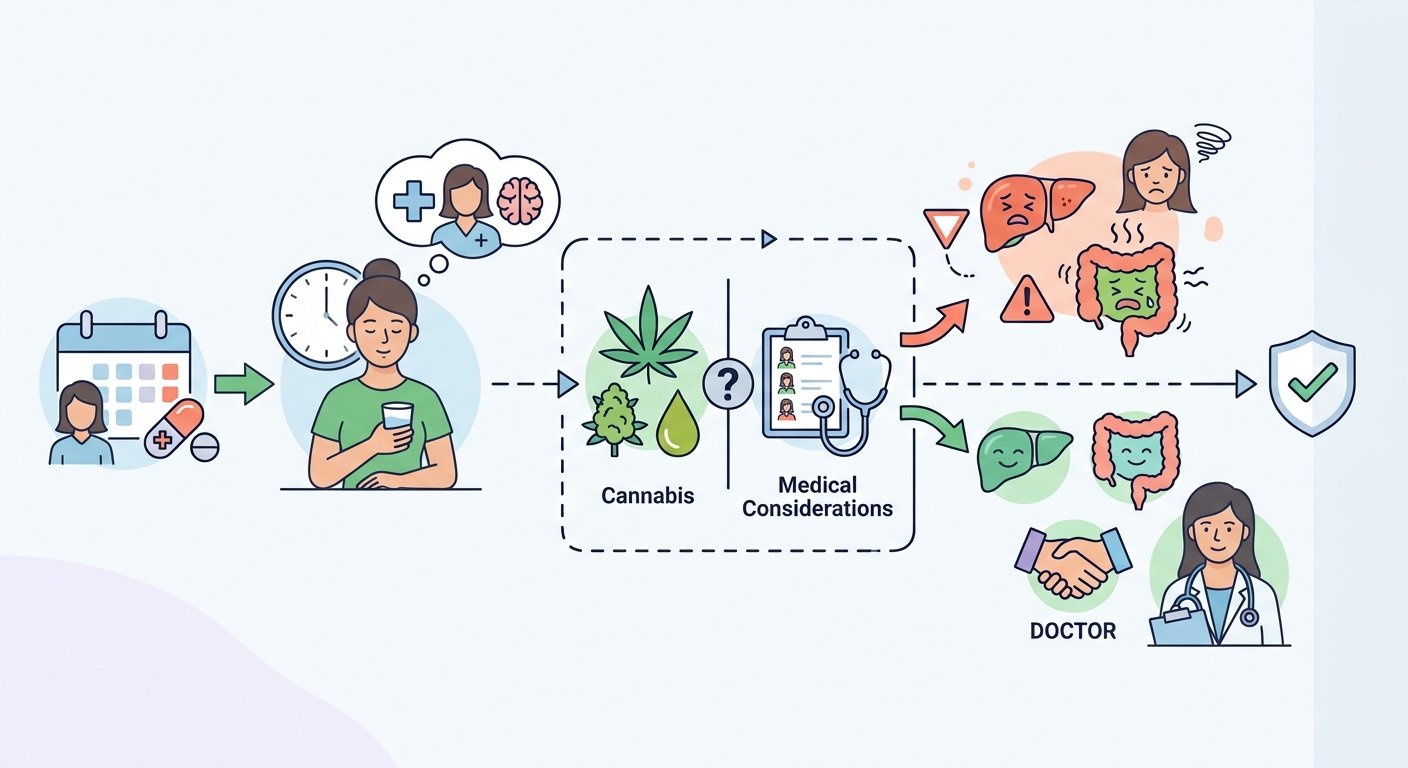
Available evidence does not show that cannabis directly stops mifepristone and misoprostol from working.
Planned Parenthood’s current guidance specifically addresses this question and states that marijuana can be used during medication abortion without affecting how mifepristone and misoprostol work. At the same time, it recommends being careful about how much cannabis is used because it is important to remain aware of bleeding, fever, and other symptoms that could require medical attention.
That distinction is important.
There is a difference between:
- Cannabis directly interfering with the abortion medicines
- Cannabis changing how you feel during the abortion
- Cannabis making it harder to recognize or respond to concerning symptoms
The first concern has not been established based on current available information. The second and third concerns are more practical reasons to be cautious.
If you are already using cannabis and want individualized guidance, a healthcare provider can consider your medical history, other medicines, cannabis product, and symptoms.
Does Cannabis Affect How Mifepristone Works?
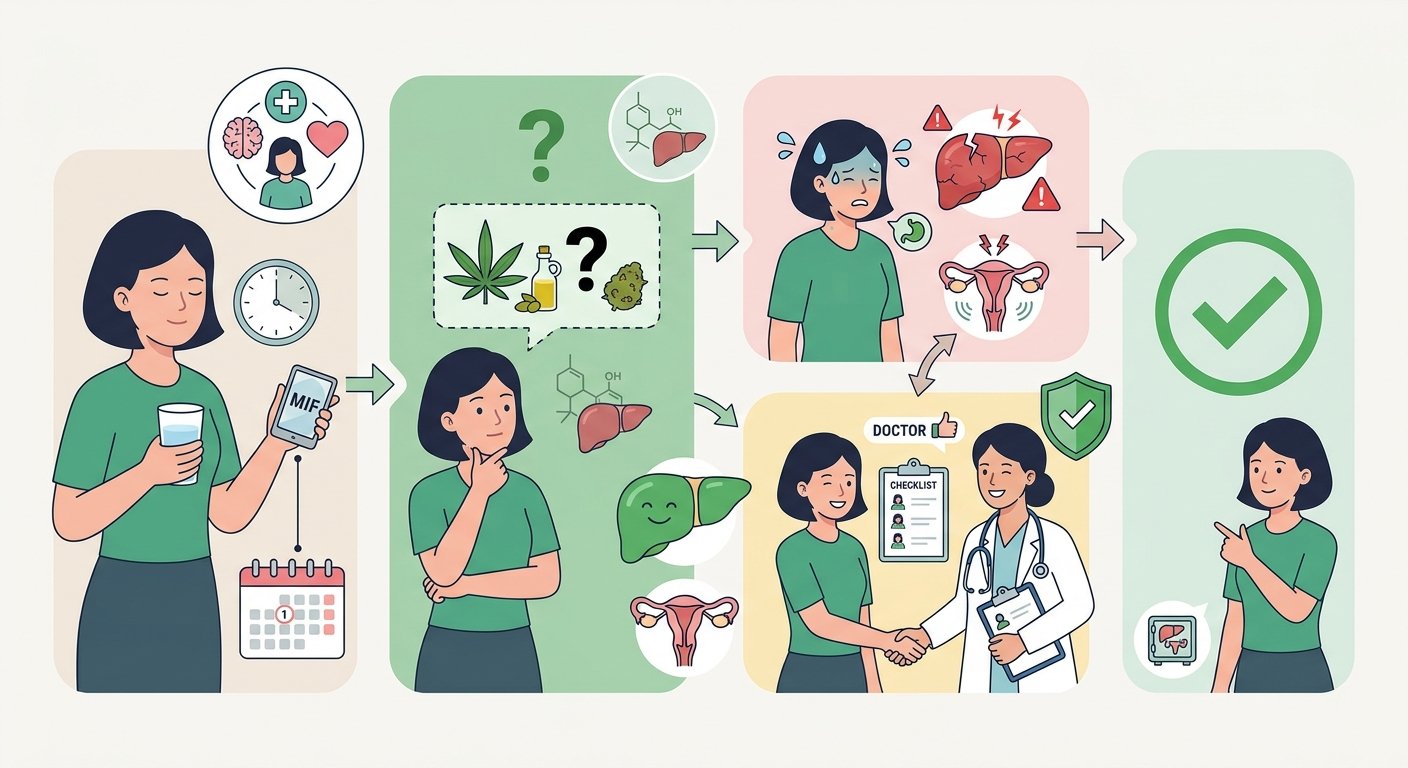
There is currently no established evidence that cannabis directly prevents mifepristone from working during a medication abortion.
Mifepristone is the first medicine in the commonly used two-drug regimen. It blocks progesterone, a hormone needed to maintain the pregnancy. Misoprostol is then used according to the provider’s instructions to cause uterine contractions and bleeding.
The official mifepristone labeling does identify important medication interactions, particularly involving CYP3A4 enzymes. Certain medicines can change mifepristone concentrations, so providers should know about prescription drugs, over-the-counter medicines, supplements, and other substances a patient uses.
However, that does not mean cannabis has been established as a clinically significant interaction with mifepristone in the abortion regimen.
If you take other medications in addition to cannabis, it becomes especially important to tell your provider about the complete list.
Does Cannabis Affect How Misoprostol Works?
There is no established evidence that cannabis prevents misoprostol from doing its intended job during medication abortion.
Misoprostol causes uterine contractions and bleeding. These effects are an expected part of the medication-abortion process.
The more relevant concern with cannabis may be how it affects your ability to assess symptoms.
For example, if you become very intoxicated while experiencing:
- Strong cramps
- Bleeding
- Nausea
- Dizziness
- Weakness
- Fever
- Vomiting
it may become harder to determine how severe your symptoms are or whether they are changing.
That is why being able to monitor yourself remains important throughout the process.
For additional information about misoprostol, see what to expect after misoprostol.
Can Marijuana Make Abortion Pills Less Effective?
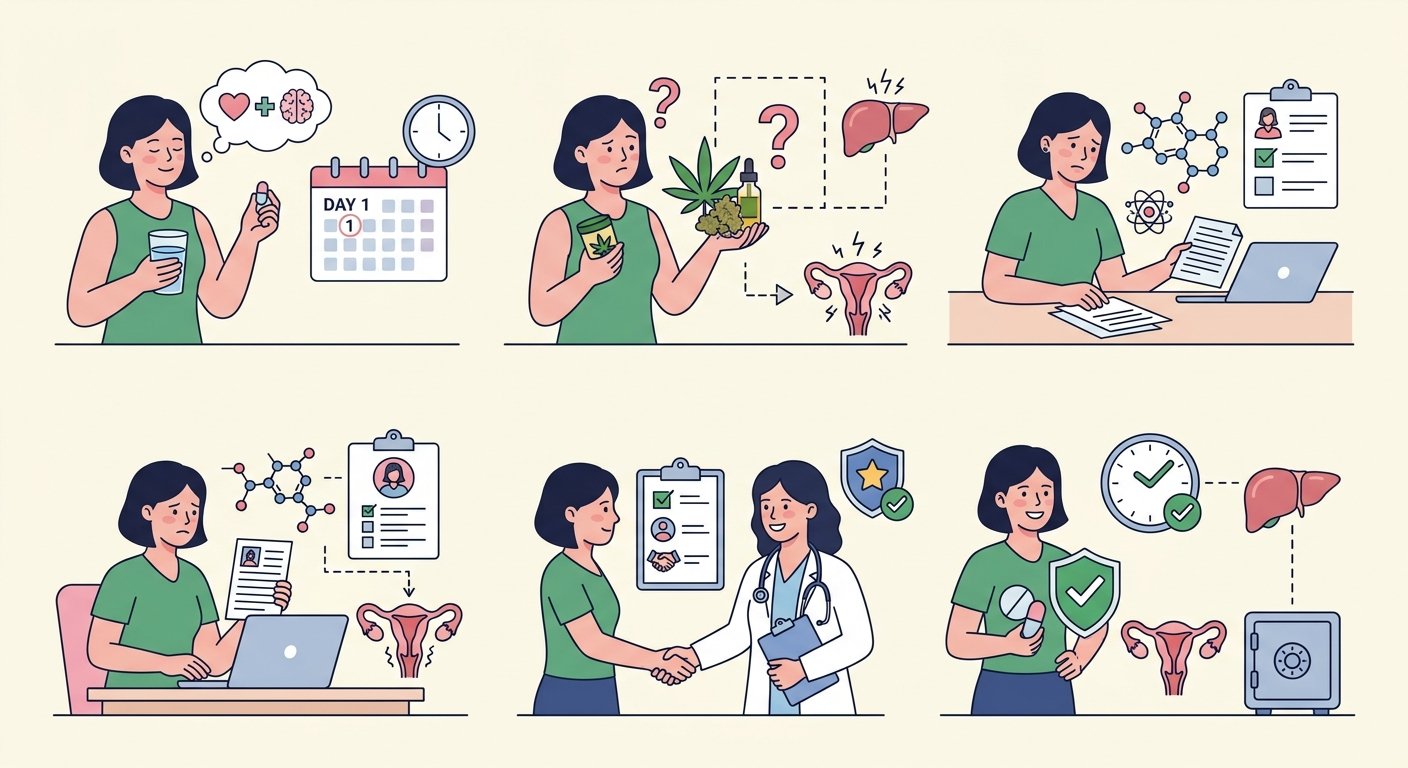
Current available information does not establish that marijuana makes mifepristone and misoprostol less effective.
Planned Parenthood specifically states that marijuana does not affect how these two medicines work during medication abortion.
However, it is important not to confuse a lack of evidence for a cannabis interaction with proof that every cannabis product or every pattern of use has been extensively studied.
Research specifically focused on cannabis use during medication abortion remains limited.
If you are concerned that the abortion pills did not work, cannabis use should not automatically be assumed to be the reason.
Instead, follow the follow-up instructions provided by your healthcare professional and look for the expected signs that the abortion is progressing.
You can also learn about how to know if abortion pills worked.
Can Cannabis Make Abortion Side Effects Feel Different?
It can potentially change how you experience symptoms, even if it does not interfere with the medicines themselves.
Cannabis can affect perception, alertness, coordination, mood, and how a person experiences discomfort. During a medication abortion, those effects may matter because you need to pay attention to your body.
Medication abortion can already involve:
- Cramping
- Bleeding
- Nausea
- Vomiting
- Diarrhea
- Chills
- Fatigue
- Headache
- Dizziness
Adding cannabis may make it harder for some people to judge whether a symptom is expected or unusually severe.
This does not mean cannabis will necessarily make symptoms worse for everyone. Individual responses vary depending on the product, THC concentration, amount used, tolerance, and other factors.
What About THC During a Medication Abortion?
THC is the main psychoactive component of cannabis.
Unlike CBD, THC can produce noticeable effects on perception, coordination, alertness, and mood.
If you use a THC-containing product during medication abortion, the most practical concern is maintaining enough awareness to monitor your condition.
You should be able to recognize changes such as:
- Increasingly severe pain
- Heavy bleeding
- Fainting or significant weakness
- Persistent vomiting
- Fever or other concerning symptoms
- Symptoms that are rapidly worsening
If you become too intoxicated to recognize or respond to these symptoms, that can create a safety problem even if THC itself does not interfere with the abortion medicines.
What About CBD During a Medication Abortion?
CBD is different from THC because it is not typically intoxicating in the same way, but that does not automatically mean every CBD product is risk-free.
ACOG notes that CBD products are not FDA-regulated in the same way as approved medications and that CBD itself can cause liver problems and harmful interactions with other medications. ACOG recommends avoiding CBD during pregnancy.
This is particularly relevant if there is any possibility that the pregnancy could continue.
If you use CBD regularly, tell your abortion provider what product you use, how often you use it, and whether it contains THC or other ingredients.
Do not assume that a product labeled “CBD” contains only CBD.
Does Smoking Cannabis Create Different Concerns Than Edibles?
The route of cannabis use can change how quickly effects begin and how long they last.
Smoking or vaping can produce effects relatively quickly, while edible products may take longer to produce noticeable effects and can last longer.
For someone going through medication abortion, this difference can matter because the goal is to remain able to monitor symptoms and make decisions about medical care.
Edibles may also make it harder for someone to judge how much they have consumed because effects can take time to appear.
Regardless of the form, the key issue is not simply whether cannabis enters the body. It is whether you remain alert enough to monitor yourself and follow your healthcare provider’s instructions.
Should You Tell Your Abortion Provider That You Use Cannabis?
Yes.
You should give your healthcare provider an honest list of medicines, supplements, and substances you use.
This does not mean that cannabis use automatically prevents you from having a medication abortion.
Instead, the information helps your provider understand your overall situation and identify any potential concerns involving other medications or health conditions.
You can tell your provider:
- Whether you use cannabis
- Whether the product contains THC, CBD, or both
- Whether you smoke, vape, or use edibles
- How frequently you use it
- When you last used it
- Any prescription or over-the-counter medicines you take
- Any supplements or herbal products you use
A complete medication and substance history is especially important because mifepristone has established interactions with certain medications.
What If You Used Cannabis Before Taking Abortion Pills?
If you already used cannabis before your medication abortion, do not automatically assume that the abortion pills will fail.
Current available guidance does not show that marijuana directly interferes with mifepristone or misoprostol.
However, consider how you feel before taking medication.
If you are very intoxicated, vomiting, extremely dizzy, confused, or otherwise unwell, contact your healthcare provider for guidance rather than making changes to your treatment on your own.
Do not take extra mifepristone or misoprostol because you used cannabis.
Follow the prescribed medication schedule unless your healthcare professional tells you otherwise.
What If You Used Cannabis After Taking Mifepristone?
Using cannabis after mifepristone does not automatically mean that the medication abortion will fail.
There is no established evidence that marijuana neutralizes mifepristone’s effect during medication abortion.
However, it is still important to remain aware of your physical condition.
If you use cannabis, avoid becoming so intoxicated that you cannot:
- Monitor bleeding
- Recognize severe pain
- Stay aware of significant symptoms
- Drink fluids if needed
- Contact your provider
- Seek emergency care if necessary
If you are worried about something you have already taken, speak with your healthcare provider instead of taking additional abortion medication on your own.
What If You Use Cannabis While Taking Misoprostol?
If you use cannabis around the time of misoprostol, the main practical concern is symptom monitoring.
Misoprostol commonly causes cramping and bleeding. Cannabis can alter perception and alertness, so heavy intoxication could make it more difficult to determine whether your symptoms are within the expected range.
This does not mean that cannabis has been shown to cancel out misoprostol.
Rather, the safest approach is to make sure you remain capable of monitoring your condition and getting help if necessary.
If you experience severe symptoms, do not assume they are simply caused by cannabis or misoprostol.
Can Cannabis Help With Abortion Pain or Nausea?
Some people use cannabis because they believe it helps with pain, cramping, nausea, anxiety, or other symptoms.
Planned Parenthood notes that some people report using marijuana for these reasons, but also emphasizes that research specifically examining its use during medication abortion is limited.
Cannabis should not replace medications or medical guidance provided by your healthcare professional.
If you need help managing discomfort, ask your provider what pain or nausea treatments are appropriate for you.
You can also review abortion pain-management options.
Can Cannabis Affect Your Ability to Recognize Warning Signs?
This is one of the most important practical issues.
During a medication abortion, you need to be able to notice changes in bleeding, pain, temperature, weakness, vomiting, and other symptoms.
If you are heavily intoxicated, it may be harder to judge how you feel or communicate accurately with a healthcare professional.
For example, someone experiencing significant dizziness may have difficulty determining whether it is related to:
- Cannabis
- Dehydration
- Pain
- Blood loss
- Medication side effects
- Another medical problem
For this reason, remaining sufficiently alert to monitor yourself is important.
If you develop symptoms that concern you, seek medical advice rather than assuming cannabis is responsible.
For urgent warning signs, see when to seek emergency care after abortion pills.
Is Cannabis Safe if the Pregnancy Does Not End?
This is a separate and important issue.
If a medication abortion does not completely end the pregnancy, cannabis exposure should not be considered the same situation as cannabis use after a completed abortion.
ACOG recommends avoiding cannabis during pregnancy because research has associated prenatal cannabis exposure with adverse pregnancy and newborn outcomes.
If you think the pregnancy may still be continuing after taking abortion medication, contact your healthcare provider for follow-up.
Do not assume that cannabis caused or prevented the outcome.
If you are concerned about an unsuccessful medication abortion, you can review what it can mean when abortion pills don’t work.
Does Cannabis Interact With Other Medicines Used During an Abortion?
This question can be more complicated than cannabis and the abortion pills themselves.
Mifepristone has clinically important drug interactions. The current labeling identifies CYP3A4 inducers and inhibitors among the interactions that healthcare professionals need to consider.
You may also use other medicines during a medication abortion, such as medication for:
- Pain
- Nausea
- Anxiety
- Seizures
- Other medical conditions
Cannabis may also interact with some medications or increase certain side effects.
Therefore, do not judge safety only by asking whether cannabis interacts with mifepristone.
Your provider should have the complete list of substances and medications you use.
Is Telehealth Medication Abortion Possible if You Use Cannabis?
Cannabis use by itself does not automatically mean that telehealth medication abortion is inappropriate.
Medication abortion can be provided through telehealth when clinically appropriate and where permitted by applicable laws and regulations. ACOG notes that medication abortion can be provided safely and effectively through telemedicine.
During a telehealth consultation, tell the provider about cannabis use just as you would during an in-person appointment.
A provider may ask about:
- Current medications
- Medical conditions
- Cannabis or other substance use
- Pregnancy timing
- Symptoms
- Potential ectopic-pregnancy concerns
- Follow-up plans
You can learn more about the potential benefits of telehealth abortion care.
When Should You Contact a Healthcare Provider?
Contact your healthcare provider if you are uncertain about cannabis use, other medications, or symptoms during the abortion process.
Seek urgent medical care for serious symptoms such as:
- Very heavy bleeding
- Fainting or loss of consciousness
- Severe or worsening abdominal pain
- Severe weakness
- Persistent vomiting that prevents you from keeping fluids down
- Symptoms that are rapidly worsening
- Other emergency symptoms listed in your provider’s instructions
ACOG recommends that patients undergoing medication abortion receive clear instructions about when heavy bleeding or other concerning symptoms require urgent evaluation.
If you are unsure whether something is normal, it is safer to contact a healthcare professional than to assume cannabis or the abortion medicine explains the symptom.
What Should You Tell Your Abortion Provider About Cannabis?
You do not need to provide a complicated explanation.
A straightforward medical history can include:
What you use:
Cannabis, marijuana, THC, CBD, or a specific product.
How you use it:
Smoking, vaping, edibles, tinctures, or another method.
How often you use it:
Occasionally, regularly, or daily.
When you last used it:
Give an approximate time if you remember.
What else you take:
Include prescription medicines, over-the-counter drugs, supplements, and herbal products.
This information allows your provider to assess the situation more completely.
What Do We Actually Know About Cannabis and Abortion Pills?
The most accurate answer is that we know more about the abortion medicines themselves than we know about cannabis specifically during medication abortion.
Current guidance from Planned Parenthood says marijuana does not affect how mifepristone and misoprostol work.
At the same time, research specifically focused on cannabis use during medication abortion is limited.
So the evidence supports several practical conclusions:
- Cannabis has not been established as a reason that mifepristone or misoprostol will stop working.
- Heavy intoxication can make symptom monitoring more difficult.
- THC and CBD are not identical and should not automatically be treated as interchangeable.
- CBD products can have their own medication and safety considerations.
- Your provider should know about cannabis and other substances you use.
- If pregnancy continues, cannabis exposure becomes a separate pregnancy-safety concern.
- Concerning symptoms should be evaluated rather than automatically attributed to cannabis.
The Bottom Line
If you use cannabis and are considering medication abortion, current evidence does not show that marijuana directly cancels the effects of mifepristone or misoprostol.
The bigger practical concern is remaining alert enough to monitor your symptoms and respond appropriately if something does not seem right.
Because research on cannabis specifically during medication abortion is limited, discuss your cannabis use with your healthcare provider. This is particularly important if you also take prescription medicines, supplements, or other substances.
Serenity Choice Health can help patients discuss medication abortion questions and review relevant health information before treatment.
FAQ Section
Can I use marijuana while taking abortion pills?
Current guidance from Planned Parenthood says marijuana does not affect how mifepristone and misoprostol work. However, heavy intoxication may make it harder to monitor symptoms or recognize warning signs.
Does cannabis make abortion pills less effective?
There is currently no established evidence that cannabis makes mifepristone and misoprostol less effective. Research specifically examining cannabis during medication abortion is still limited.
Can I smoke marijuana after taking mifepristone?
Available guidance does not show that marijuana directly interferes with mifepristone. However, you should remain alert enough to monitor bleeding, pain, and other symptoms and seek help if needed.
Can I use edibles during a medication abortion?
Edibles have not been shown to make abortion pills stop working, but their effects can last longer and may be harder to predict. Avoid becoming so intoxicated that you cannot monitor your symptoms or seek medical care if necessary.
Should I tell my abortion provider that I use cannabis?
Yes. Tell your provider about cannabis, THC, CBD, prescription medicines, over-the-counter drugs, and supplements you use. This gives them a more complete picture when reviewing your care.
What if I used cannabis before taking abortion pills?
Do not automatically assume the medication abortion will fail. Current guidance does not show that marijuana directly interferes with mifepristone or misoprostol. If you are very intoxicated or feel unwell, contact your healthcare provider before proceeding.

Dr. James Carter is a board-certified physician and lead clinician at Serenity Choice Health, specializing in reproductive health access and medication abortion protocols. With over 20+ years of experience, he combines clinical expertise with patient-centered care to ensure safe, compassionate, and confidential reproductive healthcare.