
Birth control is one of the most widely used categories of medication in the world and like any medication, it can cause side effects. Most are mild and temporary. Some improve after the first few months. Others are worth discussing with a provider sooner rather than later.
This article covers what side effects are commonly associated with different types of birth control, what’s generally considered normal, what symptoms deserve medical attention, and how to have a productive conversation with your provider if something doesn’t feel right.
Medical Disclaimer: This article is for general informational purposes only. It does not constitute medical advice and should not replace guidance from a licensed healthcare provider. If you are experiencing symptoms, contact your doctor, clinic, or pharmacist. This article should be reviewed by a qualified professional before publishing.
Why Birth Control Side Effects Happen
Most birth control side effects are related to how hormonal contraceptives interact with your body’s natural hormone levels. Hormonal methods the pill, patch, ring, injection, hormonal IUD, and implant — introduce synthetic versions of estrogen, progestin, or both. Your body takes time to adjust, and that adjustment period is where most side effects occur.
Non-hormonal methods the copper IUD and barrier methods have their own set of potential side effects that are unrelated to hormone changes.
Not everyone experiences side effects. Some people tolerate birth control with no noticeable changes. Others experience several in the first few months that gradually resolve. A smaller group finds that a particular method genuinely doesn’t suit them and needs to try a different one. Our birth control and contraceptive services can help you find the right method for your body and health history.
Most Common Side Effects of Hormonal Birth Control
Nausea
Nausea is one of the most frequently reported side effects, particularly with combined oral contraceptives (the combined pill). It tends to be most noticeable in the first few weeks of starting the pill and often improves after 1 to 3 months.
Taking the pill with food or at bedtime can help reduce nausea for many people.
Headaches
Hormonal fluctuations whether from starting birth control or from the hormone-free interval during placebo days on the pill can trigger headaches in some people. These often improve as the body adjusts.
People who experience migraines with aura should discuss this specifically with their provider before using combined hormonal contraceptives, as there are important safety considerations involved.
Spotting or Irregular Bleeding
Spotting between periods sometimes called breakthrough bleeding is common in the first 3 to 6 months of starting a new hormonal method. It’s also particularly common with:
- Low-dose combined pills
- Progestin-only pills (the mini-pill)
- Hormonal IUDs in the first few months
- The contraceptive implant
For many people, spotting resolves on its own. For others, especially those using a hormonal IUD or implant, irregular light bleeding or spotting may continue long-term.
Breast Tenderness
Some people notice breast tenderness or sensitivity, particularly in the first few months of hormonal birth control use. This typically improves over time.
Mood Changes
The relationship between hormonal birth control and mood is one of the most discussed and least definitively resolved questions in contraceptive medicine. Some people report mood changes including low mood, irritability, or reduced emotional resilience after starting hormonal contraceptives. Others report no change, and some find their mood actually improves.
Research on this topic is ongoing and inconclusive in many respects. If you notice significant mood changes after starting birth control, this is worth discussing with your provider rather than dismissing. There are many contraceptive options, and switching methods sometimes resolves mood-related concerns.
Decreased Libido
Some people report a reduction in sexual desire while using hormonal contraceptives. This is thought to be related to the effect of synthetic hormones on testosterone levels and on a protein called sex hormone-binding globulin (SHBG). Not everyone experiences this, and for those who do, it doesn’t always persist.
Weight Changes
Weight gain is frequently cited as a concern with birth control, though the evidence is more nuanced than the concern suggests. Most research does not show a significant average weight gain with combined hormonal contraceptives or the hormonal IUD.
The injectable contraceptive (the shot, such as Depo-Provera) has more consistent evidence of modest weight gain in some users.
Fluid retention which can cause a feeling of bloating or slight increase in weight in the first few months is more commonly reported than actual fat gain.
Skin Changes
Combined hormonal contraceptives that contain estrogen and certain types of progestin are often prescribed specifically because they can improve acne. However, progestin-only methods including the mini-pill, implant, and hormonal IUD may worsen acne in some people because of the androgenic activity of certain progestins.
Side Effects Specific to Different Methods
Combined Oral Contraceptive Pill
- Nausea (common in first weeks)
- Breast tenderness
- Headaches
- Spotting (early months)
- Mood changes
- Decreased libido
Progestin-Only Pill (Mini-Pill)
- Irregular bleeding or spotting
- Acne (in some users)
- Breast tenderness
- Headaches
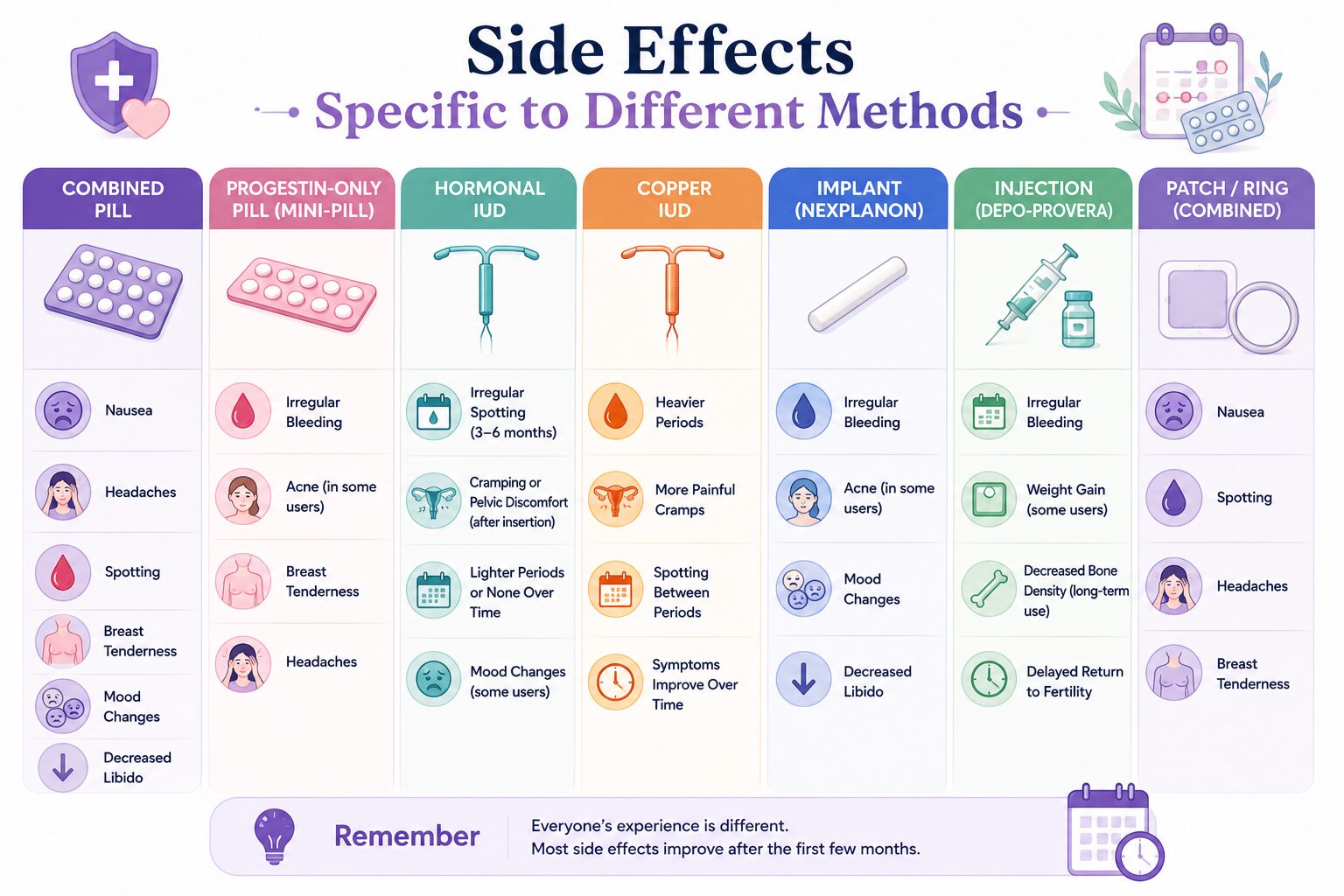
Hormonal IUD (Mirena, Kyleena, Liletta, Skyla)
- Irregular bleeding and spotting in first 3 to 6 months
- Cramping or pelvic discomfort after insertion
- Periods may become lighter or stop altogether over time (considered a benefit by many users)
- Mood changes (reported by some users, though research is limited)
Copper IUD (Non-Hormonal)
- Heavier periods, particularly in the first few months
- More painful cramping during menstruation
- Spotting between periods
The copper IUD has no hormonal side effects because it contains no hormones. However, the increase in menstrual flow and cramping is significant enough that it leads some people to have it removed.
Contraceptive Implant
- Irregular bleeding (the most common reason for removal)
- Headaches
- Acne
- Breast tenderness
- Mood changes (reported by some users)
Injectable Contraceptive
- Irregular bleeding or no periods
- Potential for modest weight gain in some users
- Delayed return to fertility after stopping (can take several months to over a year for regular cycles to return)
- Bone density considerations with long-term use (discuss with your provider if you have osteoporosis risk factors)
Patch and Vaginal Ring
Side effect profiles are broadly similar to the combined pill, since all three deliver estrogen and progestin. Some people find the patch causes skin irritation at the application site. The ring occasionally causes vaginal irritation or increased discharge in some users.
What Side Effects Are Normal vs What Needs Attention
| Side Effect | Generally Normal? | When to Contact a Provider |
| Light spotting in first 3 months | Yes | If heavy or prolonged |
| Mild nausea in first weeks | Yes | If severe or persistent |
| Breast tenderness (early months) | Yes | If significant or with lumps |
| Mild headaches | Yes | If severe, sudden, or new |
| Mood changes | Worth monitoring | If significantly affecting daily life |
| Irregular periods (IUD/implant) | Often yes | If no period + pregnancy concern |
| Heavy painful periods (copper IUD) | Common early on | If severe or worsening |
Symptoms That Require Urgent Medical Attention
Some symptoms associated with hormonal birth control particularly combined methods containing estrogen are rare but serious and require immediate medical evaluation:
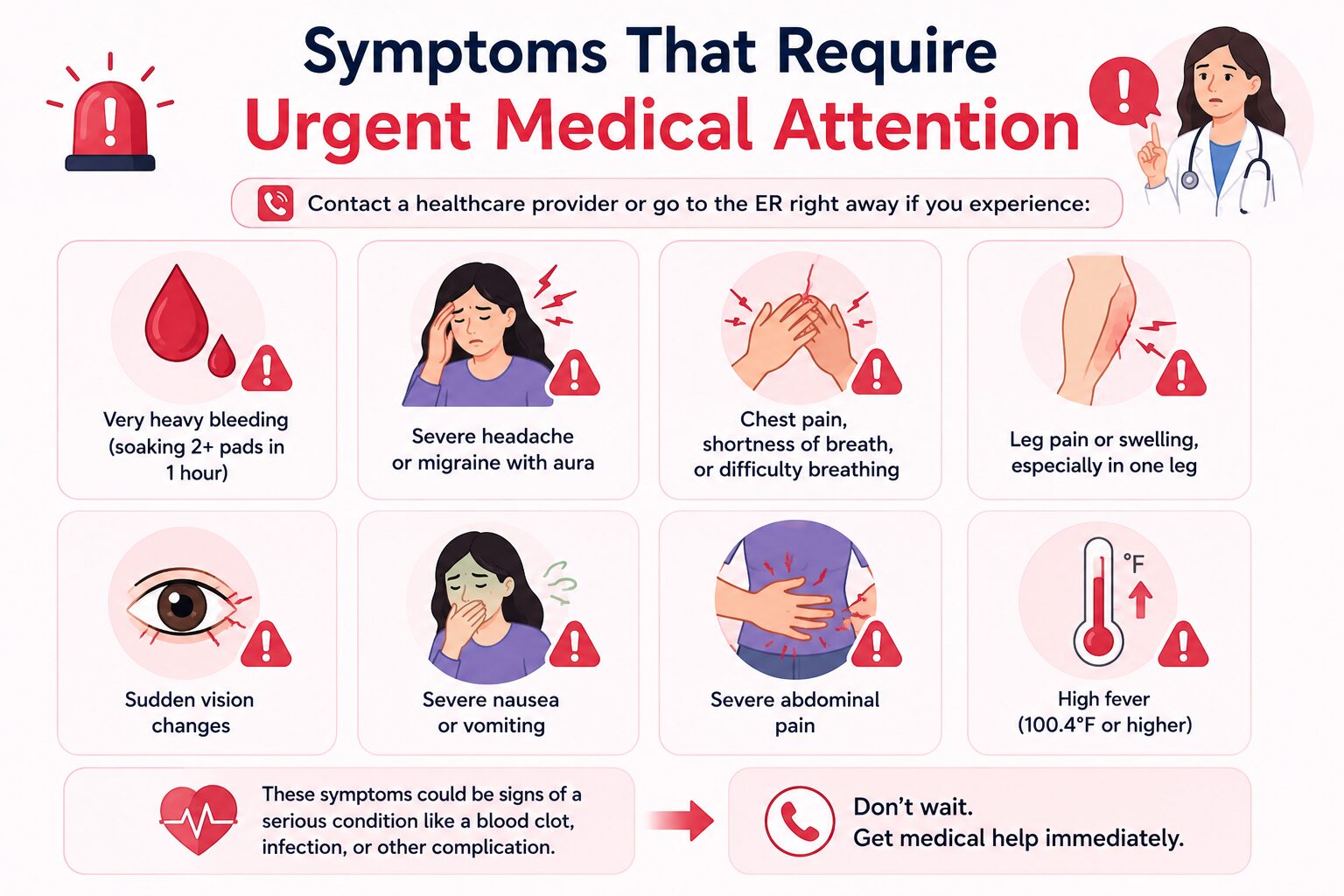
- Sudden severe headache unlike any you’ve had before
- Vision changes, blurred vision, or loss of vision
- Severe abdominal pain
- Chest pain or shortness of breath
- Leg pain, swelling, or redness (particularly in the calf a potential sign of deep vein thrombosis)
- Yellowing of the skin or eyes (jaundice)
These symptoms may be unrelated to your birth control, but they require prompt evaluation regardless of cause. Do not wait to see if they resolve on their own. Book a confidential appointment or seek urgent care immediately if you experience any of these.
How Long Do Side Effects Last?
For most hormonal methods, the first 1 to 3 months involve the most noticeable adjustment period. Many people find that side effects like nausea, spotting, and breast tenderness improve significantly or resolve entirely after this period.
If side effects are severe or significantly affecting your quality of life within the first few months, it’s reasonable to contact your provider you don’t need to wait out a full three months if you’re struggling. Learn more about the benefits of telehealth and how a virtual consultation makes it easy to discuss side effects with a provider without needing an in-person visit.
Some side effects, like irregular bleeding with the implant or hormonal IUD, may persist beyond three months for a subset of users.
What Happens When You Stop Birth Control
Stopping hormonal contraceptives can itself involve a period of adjustment. Some common experiences after stopping include:
- Irregular periods while the natural cycle re-establishes
- Temporary return of symptoms that birth control was managing (such as acne or painful periods)
- Mood changes as hormone levels shift back
- For injectable contraceptive users, a delay in fertility returning that can last several months
Most people’s cycles return to their baseline within 1 to 3 months of stopping, though this varies.
Practical Tips for Managing Birth Control Side Effects
Taking the pill at the same time each day ideally with a meal reduces nausea and improves effectiveness for time-sensitive methods.
Give a new method at least 2 to 3 months before concluding that side effects are intolerable, unless they are severe or medically concerning.
Keep a simple symptom diary for the first few months. Noting patterns in mood, bleeding, and physical symptoms gives your provider useful information and helps you distinguish what’s changing over time.
If a particular side effect is significantly affecting your wellbeing mood changes that affect relationships, bleeding that disrupts daily life, pain that isn’t improving tell your provider. There are many contraceptive options, and finding one that suits you is a reasonable and achievable goal. Our women’s primary care services include contraceptive counseling to help you navigate these decisions.
Don’t stop a method abruptly without a plan for contraception during the transition if pregnancy prevention is important to you.
Common Mistakes to Avoid
Stopping the method without a conversation first. Side effects in the first few weeks are often temporary. Stopping immediately and then restarting can make the adjustment period feel longer overall.
Assuming side effects mean the method is wrong for you. Some side effects resolve. Others are worth discussing with a provider who may suggest a different formulation rather than a completely different method.
Self-medicating symptoms without guidance. Some medications, including certain antibiotics and anticonvulsants, interact with hormonal contraceptives. Always tell your prescriber what birth control you’re using.
Ignoring serious symptoms because you assume they’re birth control-related. Some symptoms require evaluation regardless of your contraceptive use. Don’t dismiss sudden, severe, or unusual symptoms.
FAQ
Is it normal to have no period on birth control?
With some methods particularly the hormonal IUD, implant, and injectable periods may become very light or stop altogether. This is a recognized effect of these methods, not necessarily a cause for concern. If you have missed periods while on the combined pill and are concerned about pregnancy, a test can confirm. If the result is positive, read our guide on unplanned pregnancy and your options to understand your next steps.
Can birth control cause depression?
Some research suggests an association between hormonal contraceptives and depression in some users, though the evidence is not uniform across all studies or all methods. If you notice a significant change in mood after starting birth control, discuss it with your provider — mood is a valid reason to consider switching methods.
Does birth control cause permanent infertility?
No. Most contraceptive methods are reversible, and fertility typically returns within a few months of stopping. The injectable contraceptive has the longest average return to fertility, sometimes several months to over a year but this is a delay, not permanent infertility.
Can you get side effects from non-hormonal birth control?
Yes. The copper IUD commonly causes heavier periods and more painful cramping, particularly in the first few months. Barrier methods like condoms can occasionally cause irritation if you or your partner has a latex sensitivity.
When should I see a doctor about birth control side effects?
Contact your provider if side effects are severe, persistent beyond 3 months, significantly affecting your quality of life, or if you experience any of the serious warning symptoms listed above. You should also reach out if you’re not sure whether what you’re experiencing is normal. If you have missed a period and are unsure whether it is due to your birth control or a pregnancy, our guide on how pregnant am I can help clarify your situation.
Does the brand of pill make a difference for side effects?
Yes, in some cases. Different combined pills contain different types and doses of progestin, which can affect acne, mood, and other side effects differently. If one formulation isn’t working well for you, switching to a different pill brand or type is a reasonable option worth discussing with your provider.
Can birth control affect how other medications work?
Some medications can reduce the effectiveness of hormonal contraceptives, including certain epilepsy medications (like rifampin and carbamazepine) and the herbal supplement St. John’s Wort. Always disclose your birth control method when prescribed new medications.
Final Takeaway
Most birth control side effects are mild, temporary, and manageable. The adjustment period in the first 1 to 3 months accounts for most of what people experience. Many side effects resolve on their own as your body adapts.
What’s worth remembering is that birth control is not one-size-fits-all. If a particular method is causing side effects that significantly affect your quality of life, that’s useful information not a reason to simply endure discomfort. There are many options, and working with a provider to find a method that suits you is a reasonable goal. Our birth control and contraceptive services and women’s primary care services are here to support you through that process.
Knowing the difference between expected side effects, side effects worth discussing with a provider, and symptoms that require urgent attention is the most practical thing you can take from this article.
Suggested External Sources
- Planned Parenthood
- American College of Obstetricians and Gynecologists (ACOG)
- World Health Organization (WHO)
- Mayo Clinic
- National Health Service (NHS)
Here are working links for each suggested source:
| Source | Page | URL |
|---|---|---|
| Planned Parenthood | What to expect after the abortion pill (side effects, warning signs) | https://www.plannedparenthood.org/learn/abortion/the-abortion-pill/what-can-i-expect-after-i-take-the-abortion-pill Planned Parenthood |
| Planned Parenthood | The Abortion Pill overview | https://www.plannedparenthood.org/learn/abortion/the-abortion-pill |
| ACOG | Medication Abortion (patient FAQ) | https://www.acog.org/womens-health/faqs/medication-for-achieving-an-abortion |
| WHO | Abortion care guideline | https://www.who.int/publications/i/item/9789240039483 |
| Mayo Clinic | Medical (drug-induced) abortion overview | https://www.mayoclinic.org/tests-procedures/medical-abortion/about/pac-20394687 |
| NHS | Abortion care / what happens | https://www.nhs.uk/conditions/abortion/ |

Dr. James Carter is a board-certified physician and lead clinician at Serenity Choice Health, specializing in reproductive health access and medication abortion protocols. With over 20+ years of experience, he combines clinical expertise with patient-centered care to ensure safe, compassionate, and confidential reproductive healthcare.