
Feeling dizzy after taking the abortion pill is one of the more common experiences people report during medication abortion recovery. For most people it is temporary, mild, and directly linked to how the medications affect the body. But because dizziness can sometimes signal something that needs attention, knowing the difference between a normal response and a warning sign matters.
This article explains why dizziness happens, what it typically feels like, how long it tends to last, and exactly when you should contact your provider.
Why Does Dizziness Happen After the Abortion Pill?
Medication abortion involves two medications taken in sequence mifepristone and misoprostol. Both can contribute to dizziness, though through different mechanisms.
Mifepristone and Hormonal Shift
Mifepristone works by blocking progesterone, the hormone that supports the pregnancy. This sudden hormonal change can affect how the body feels overall. Hormonal fluctuations are a well-recognized cause of lightheadedness in many contexts including the dizziness some people experience around their menstrual period or in early pregnancy itself.
Misoprostol and Systemic Effects
Misoprostol is a prostaglandin that causes the uterus to contract. It also acts on smooth muscle throughout the body and can cause a broader systemic response including chills, fever, nausea, vomiting, and diarrhea. Any of these effects can contribute directly to dizziness through fluid loss, low blood pressure, or the physical stress of cramping.
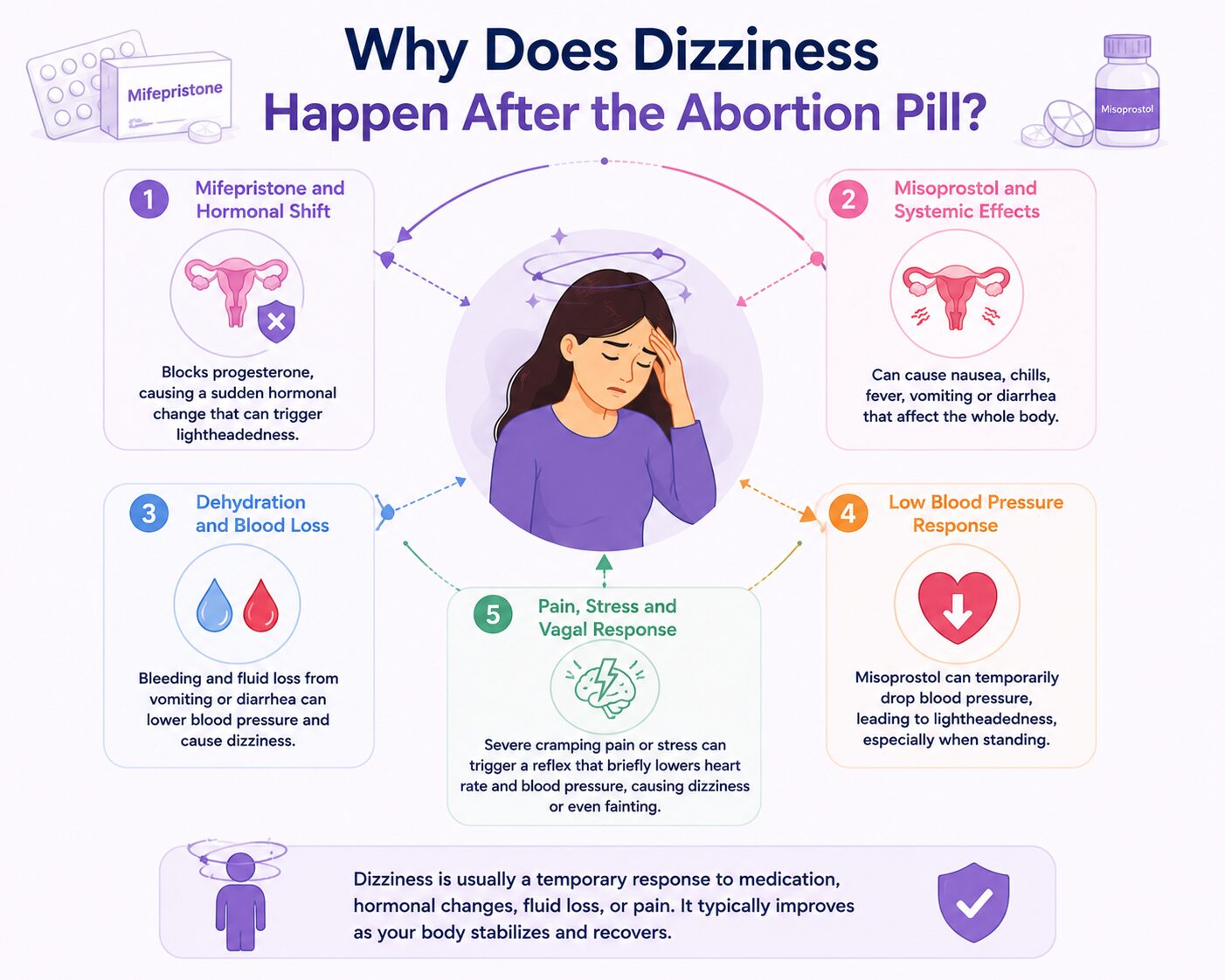
Dehydration and Blood Loss
Bleeding is a normal and expected part of the medication abortion process. Combined with vomiting or diarrhea that misoprostol can cause, fluid loss can become significant enough to lower blood pressure and trigger lightheadedness or dizziness particularly when standing up quickly.
Low Blood Pressure Response
Misoprostol can cause a temporary drop in blood pressure in some people. This vasodilatory effect can make you feel lightheaded, especially in the hours immediately following the dose. This is one reason providers often advise resting and avoiding sudden movements during the most active phase of the process.
Pain, Stress, and the Vagal Response
Significant cramping pain can trigger a vasovagal response in some people a reflex reaction where the body responds to pain or stress by briefly lowering heart rate and blood pressure, causing lightheadedness or even fainting. This is not dangerous in most cases but can be alarming if you are not expecting it.
What Does Normal Dizziness After the Abortion Pill Feel Like?
Normal dizziness in this context is typically described as:
- Mild to moderate lightheadedness
- A floating or unsteady feeling when standing or moving
- Brief episodes rather than continuous spinning
- Dizziness that improves when lying down or resting
- Symptoms that come alongside other expected effects like cramping, nausea, or chills
Most people notice dizziness most strongly in the hours after taking misoprostol, when cramping and other physical effects are at their peak. As the body stabilizes, the dizziness typically settles.
For a full picture of what the recovery process involves, our guide on what to expect before, during, and after your abortion covers the complete timeline in detail.
How Long Does Dizziness Last After the Abortion Pill?
There is no fixed timeline that applies to everyone. Individual response to medication varies. In general:
| Timeframe | What Is Typically Expected |
| First 1 to 4 hours after misoprostol | Dizziness most likely peak medication effects |
| 4 to 24 hours | Gradual improvement as cramping and bleeding settle |
| 1 to 2 days | Most people feel significantly better |
| Beyond 2 to 3 days | Persistent dizziness warrants a call to your provider |
If your dizziness is improving steadily and you have no other concerning symptoms, this is generally a reassuring sign that your body is responding as expected.
When Dizziness After the Abortion Pill Is Not Normal
While mild, improving dizziness is expected, certain patterns or combinations of symptoms indicate that something may need medical evaluation.
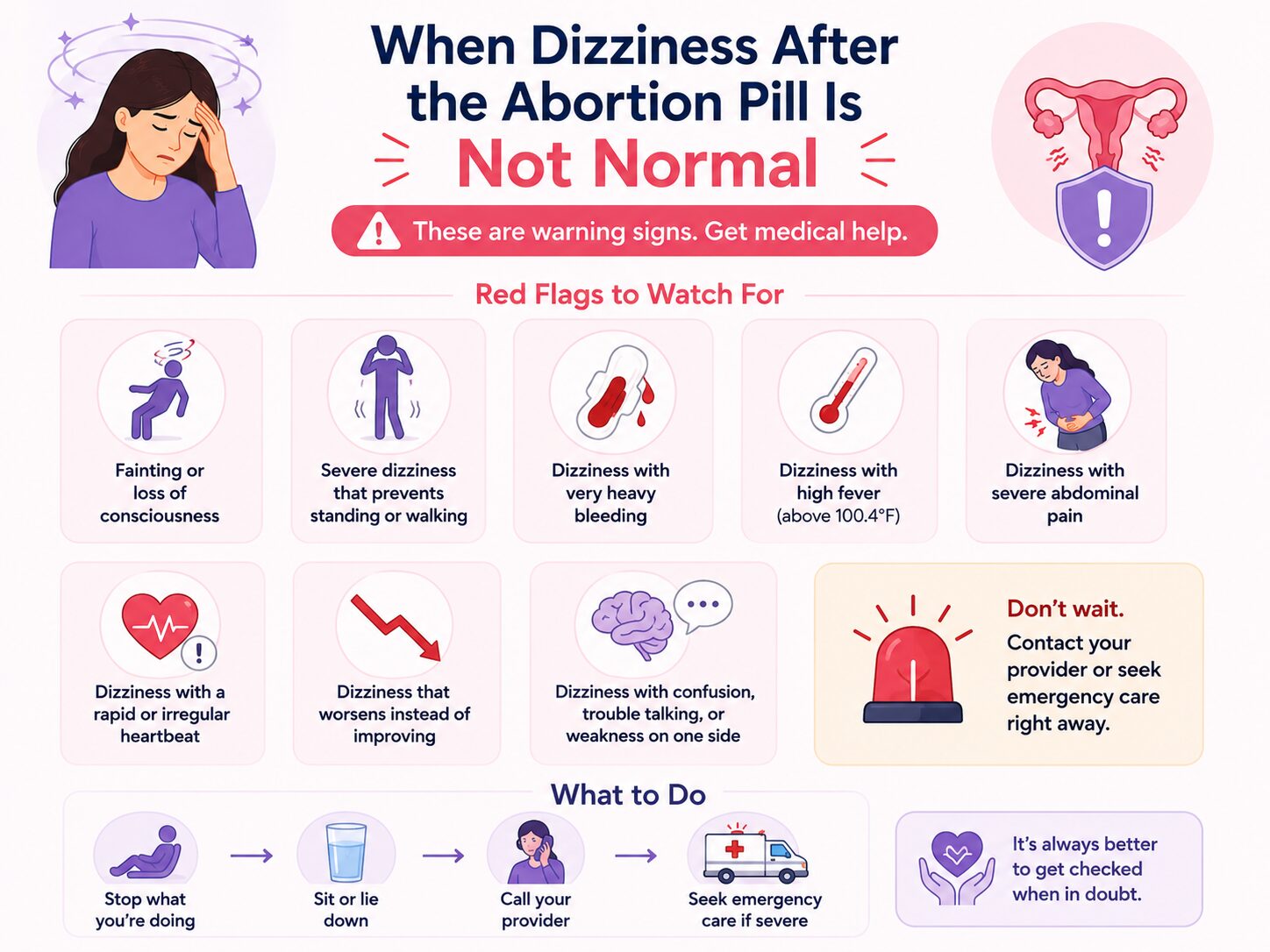
Red Flags to Watch For
Contact your healthcare provider or seek urgent care if you experience:
- Fainting or loss of consciousness even briefly
- Severe dizziness that prevents you from standing or walking
- Dizziness combined with very heavy bleeding soaking more than two pads per hour for two consecutive hours
- Dizziness with a high fever above 100.4°F (38°C) lasting more than 24 hours
- Dizziness with severe abdominal pain that is not relieved by pain medication
- Dizziness with a rapid or irregular heartbeat
- Dizziness that worsens instead of improving after the first 24 hours
- Dizziness alongside confusion, difficulty speaking, or weakness on one side of the body
These combinations can indicate significant blood loss, infection, or another complication that requires prompt evaluation. When any of these are present, do not wait contact our care team or seek emergency medical attention immediately.
Dizziness vs. Fainting: Understanding the Difference
Many people use dizziness and fainting interchangeably, but they are different experiences with different implications during medication abortion recovery.
Dizziness refers to a feeling of lightheadedness, unsteadiness, or the sensation that your surroundings are moving. It is common and usually manageable.
Fainting (syncope) means a brief, actual loss of consciousness. A single fainting episode during the most intense phase of cramping particularly if it resolves quickly and you feel alert afterward — can be a vasovagal response to pain. However, fainting should always be reported to your provider, especially if it is accompanied by heavy bleeding or does not resolve quickly.
If someone you are with faints and does not regain consciousness within a minute or two, call emergency services immediately.
Practical Ways to Manage Dizziness During Recovery
These are general comfort measures. Always follow your provider’s specific instructions first.
Stay Horizontal During Peak Effects
Lying down during the most intense cramping phase reduces the risk of lightheadedness from positional blood pressure changes. Avoid standing up suddenly, especially in the first few hours after taking misoprostol.
Move Slowly When Getting Up
If you need to get up, do it gradually. Sit at the edge of the bed for a moment before standing. This gives your blood pressure time to adjust and reduces the risk of a dizzy spell.
Stay Hydrated
Fluid loss from bleeding, vomiting, or diarrhea contributes significantly to dizziness. Drink water steadily throughout the day. Oral rehydration solutions can be helpful if you have been vomiting or have diarrhea. Our guide on what to expect when taking misoprostol includes practical guidance on managing the physical effects of the medication.
Eat Something Light
An empty stomach can worsen nausea and lightheadedness. A light snack before or alongside taking medication if your provider has not advised otherwise can help stabilize how you feel. Avoid heavy, greasy, or rich foods during the most active phase.
Have Someone With You
Having a trusted person present during the most active phase of medication abortion is strongly recommended. If you do experience significant dizziness or feel faint, having someone nearby means you are not managing it alone. For guidance on how a support person can help, our resource on how to support a loved one during abortion is a helpful read.
Avoid Driving or Operating Machinery
Do not drive or operate any machinery during the period when dizziness is possible typically the first 24 hours after taking misoprostol. This is a safety precaution worth taking seriously.
Recovery Checklist: Managing Dizziness Safely
- ☐ Lie down during peak cramping and medication effects
- ☐ Rise slowly from lying or sitting positions
- ☐ Drink fluids consistently water or oral rehydration solutions
- ☐ Have a light snack if your stomach allows
- ☐ Have a trusted person with you during the most active phase
- ☐ Avoid driving for at least 24 hours
- ☐ Track whether dizziness is improving or worsening over time
- ☐ Contact your provider if dizziness persists beyond 48 hours or combines with other red flag symptoms
Common Mistakes to Avoid
Pushing through severe dizziness without rest
If you feel significantly dizzy, stop what you are doing and lie down. Trying to stay upright or active during intense dizziness increases the risk of falling.
Assuming all dizziness is normal without monitoring it
Mild dizziness that improves is expected. Dizziness that worsens, persists beyond two days, or combines with other symptoms is not something to dismiss. Track how your symptoms change over time.
Not drinking enough fluids
Dehydration is one of the most preventable contributors to dizziness during recovery. Consistent hydration throughout the process makes a real difference. If nausea is making it hard to drink, our guide on nausea after abortion covers strategies for managing this specifically.
Mistaking vasovagal dizziness for something more serious or vice versa
A brief dizzy spell from cramping pain is usually not dangerous. But fainting, severe ongoing dizziness, or dizziness combined with heavy bleeding is a different matter. Do not dismiss either extreme.
Not having a support person present
Managing significant physical symptoms alone is harder and riskier than having someone with you. Plan for the company during the most active phase if at all possible.
Important Warnings
- Dizziness combined with soaking more than two pads per hour for two hours is a potential sign of excessive blood loss and requires immediate medical evaluation
- Fever above 100.4°F lasting more than 24 hours alongside dizziness can indicate infection do not wait to contact your provider
- If you have a pre-existing condition affecting blood pressure, circulation, or inner ear function, discuss how medication abortion may interact with your health before proceeding
- Dizziness alone is not a reliable indicator of whether the abortion pill worked effectiveness is confirmed through bleeding patterns and follow-up with your provider
- Always contact your provider rather than relying on online information when symptoms concern you
To understand how to confirm the medication worked, read our guide on how to know if the abortion pill worked.
Frequently Asked Questions
Is dizziness normal after taking the abortion pill?
Yes, mild to moderate dizziness is a commonly reported side effect during medication abortion recovery. It is most often linked to hormonal changes, prostaglandin effects from misoprostol, dehydration, or the body’s response to cramping and blood loss. Most dizziness improves within 24 to 48 hours.
Which medication causes dizziness, mifepristone or misoprostol?
Both can contribute. Mifepristone causes a rapid hormonal shift that some people experience as lightheadedness. Misoprostol has broader systemic effects including nausea, vomiting, and a temporary drop in blood pressure all of which can cause or worsen dizziness. Misoprostol is more commonly associated with the stronger physical effects.
How long will I feel dizzy after the abortion pill?
For most people, dizziness is strongest in the first few hours after taking misoprostol and improves significantly within 24 hours. If dizziness persists beyond two to three days or worsens over time, contact your provider.
Can dizziness after the abortion pill cause me to faint?
In some cases, yes. Significant cramping can trigger a vasovagal response, a reflex that briefly lowers heart rate and blood pressure which can cause fainting. A single brief fainting episode during intense cramping is not always an emergency, but it should always be reported to your provider. Fainting combined with heavy bleeding requires immediate medical attention.
Can I be alone when I take the abortion pill if I am worried about dizziness?
It is strongly recommended to have a trusted person with you during the most active phase of the process, particularly after taking misoprostol. If dizziness or fainting occurs, having someone present significantly improves safety.
Does dizziness mean I am losing too much blood?
Not necessarily on its own. Mild dizziness from fluid loss or the medication’s effects is common. However, dizziness combined with soaking more than two pads per hour for two consecutive hours is a potential sign of excessive bleeding and requires urgent medical evaluation.
Will drinking water help with dizziness after the abortion pill?
Yes, staying well hydrated can significantly reduce dizziness related to dehydration. Fluid loss from bleeding, vomiting, or diarrhea is a common and preventable contributor to lightheadedness during recovery.
Does dizziness mean the abortion pill is not working?
No. Dizziness is not an indicator of whether the medication is effective. Signs that the process is working include bleeding and cramping. Read our guide on how to know if the abortion pill worked for a full explanation of what to look for.
Final Takeaway
Dizziness after the abortion pill is a common, usually temporary side effect connected to hormonal changes, prostaglandin effects, fluid loss, and the body’s response to cramping. For most people it is mild, improves within 24 hours, and is manageable with rest, hydration, and careful movement.
What matters is knowing when dizziness crosses from expected into something that needs attention particularly when it combines with heavy bleeding, persistent fever, fainting, or worsening symptoms over time.
If you have questions about your recovery, are unsure whether what you are experiencing is normal, or want to speak with a provider directly, our team is here to help. You can also explore our telehealth abortion care for follow-up support or schedule a confidential appointment with our care team today.
Suggested External Sources
- U.S. Food and Drug Administration (FDA) — Mifepristone medication guide and approved usage: https://www.fda.gov/drugs/postmarket-drug-safety-information-patients-and-providers/mifepristone-information
- MedlinePlus (U.S. National Library of Medicine) — Mifepristone and misoprostol patient information: https://medlineplus.gov/druginfo/meds/a600042.html
- World Health Organization (WHO) — Medical management of abortion clinical guidelines: https://www.who.int/reproductivehealth
- American College of Obstetricians and Gynecologists (ACOG) — Medication abortion clinical guidance: https://www.acog.org
- Planned Parenthood — Plain-language abortion pill information and side effects: https://www.plannedparenthood.org/learn/abortion/the-abortion-pill

Dr. James Carter is a board-certified physician and lead clinician at Serenity Choice Health, specializing in reproductive health access and medication abortion protocols. With over 20+ years of experience, he combines clinical expertise with patient-centered care to ensure safe, compassionate, and confidential reproductive healthcare.