
If you are considering a medication abortion and have a higher or lower body weight, you may wonder whether your size changes how well abortion pills work.
For standard first-trimester medication abortion, current evidence does not show that having a higher BMI automatically makes mifepristone and misoprostol ineffective. A published study comparing medical-abortion outcomes found similar rates of surgical intervention among women with BMI below 30 and those with BMI above 30.
BMI also is not listed by the FDA as a contraindication to the approved mifepristone-and-misoprostol regimen. The FDA’s contraindications include conditions such as suspected or confirmed ectopic pregnancy, adrenal problems, long-term corticosteroid therapy, certain bleeding disorders, allergy to the medications, inherited porphyria, and an IUD that has not been removed.
However, research specifically involving people with very high BMI is more limited. That means it is important not to overstate what is known. A higher BMI does not automatically mean abortion pills will fail, but your healthcare provider may consider your overall medical history, pregnancy duration, and other factors when determining the appropriate care.
Does Being Overweight Make Abortion Pills Less Effective?
Being overweight does not automatically mean that medication abortion will be less effective.
One study of 1,202 medication abortions using mifepristone and misoprostol compared people with BMI below 30 with people whose BMI was above 30. Surgical intervention occurred in 5% of the lower-BMI group and 6% of the higher-BMI group, a difference that was not statistically significant.
This supports the general conclusion that higher body weight alone should not be treated as a reason to assume that medication abortion will fail.
At the same time, individual outcomes can vary. Medication abortion effectiveness depends on several factors, including pregnancy duration, correct use of the medications, whether the pregnancy is located inside the uterus, and whether the pregnancy has completely passed.
If you want to understand the medications and process in more detail, see this guide to medication abortion and how the process works.
Does BMI Affect Mifepristone?
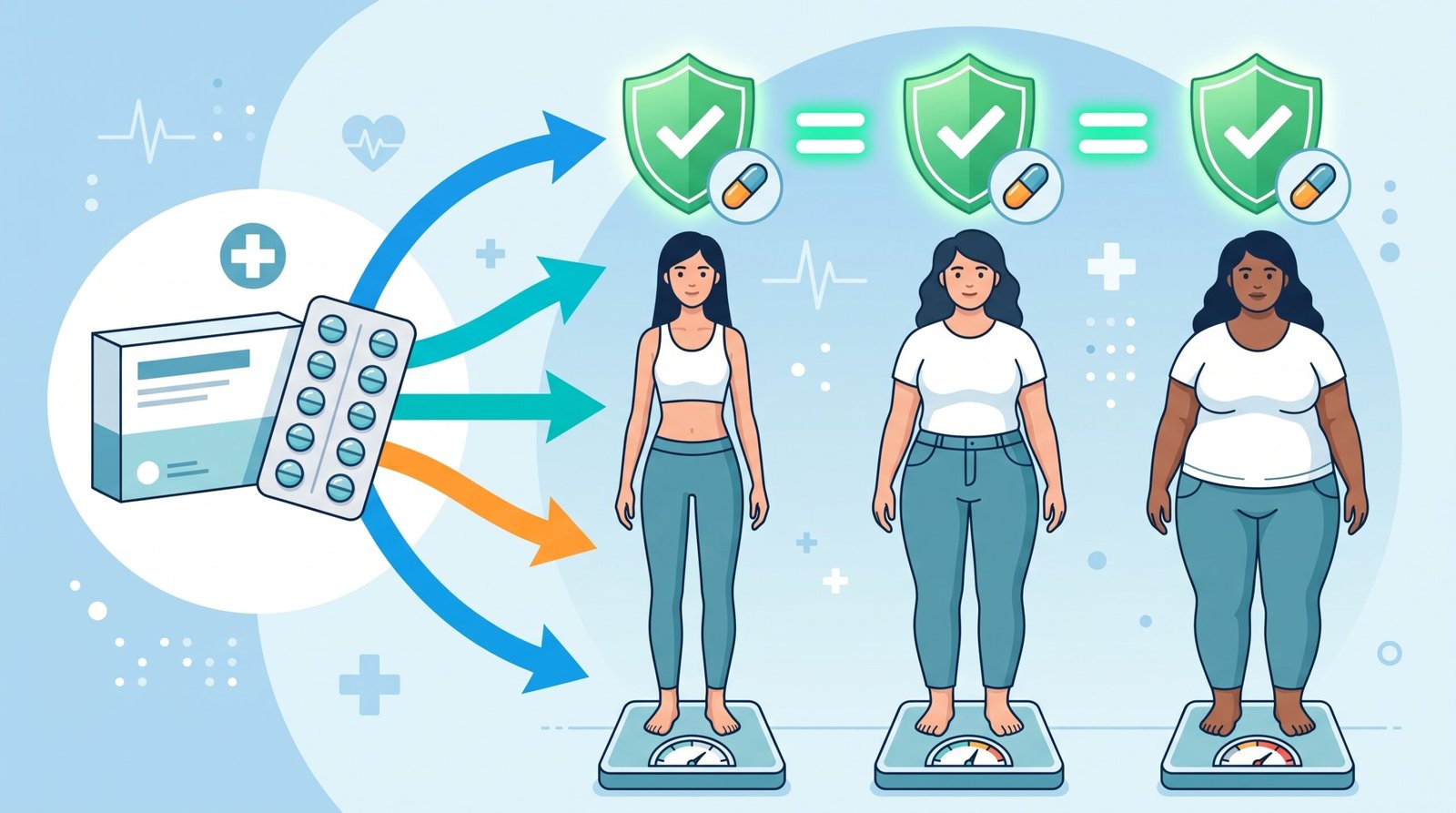
Mifepristone is used with misoprostol for medication abortion.
The FDA-approved regimen for ending an intrauterine pregnancy through 70 days uses 200 mg of mifepristone, followed by misoprostol according to the approved regimen. The FDA does not provide a separate higher mifepristone dose simply because someone has a higher BMI.
This is important because people sometimes assume that medication doses must automatically increase with body weight.
That is not how this medication-abortion regimen is generally prescribed. You should not increase the amount of mifepristone on your own because of your weight.
Your provider should determine whether the standard regimen is appropriate based on your pregnancy and medical history.
Does BMI Affect Misoprostol?
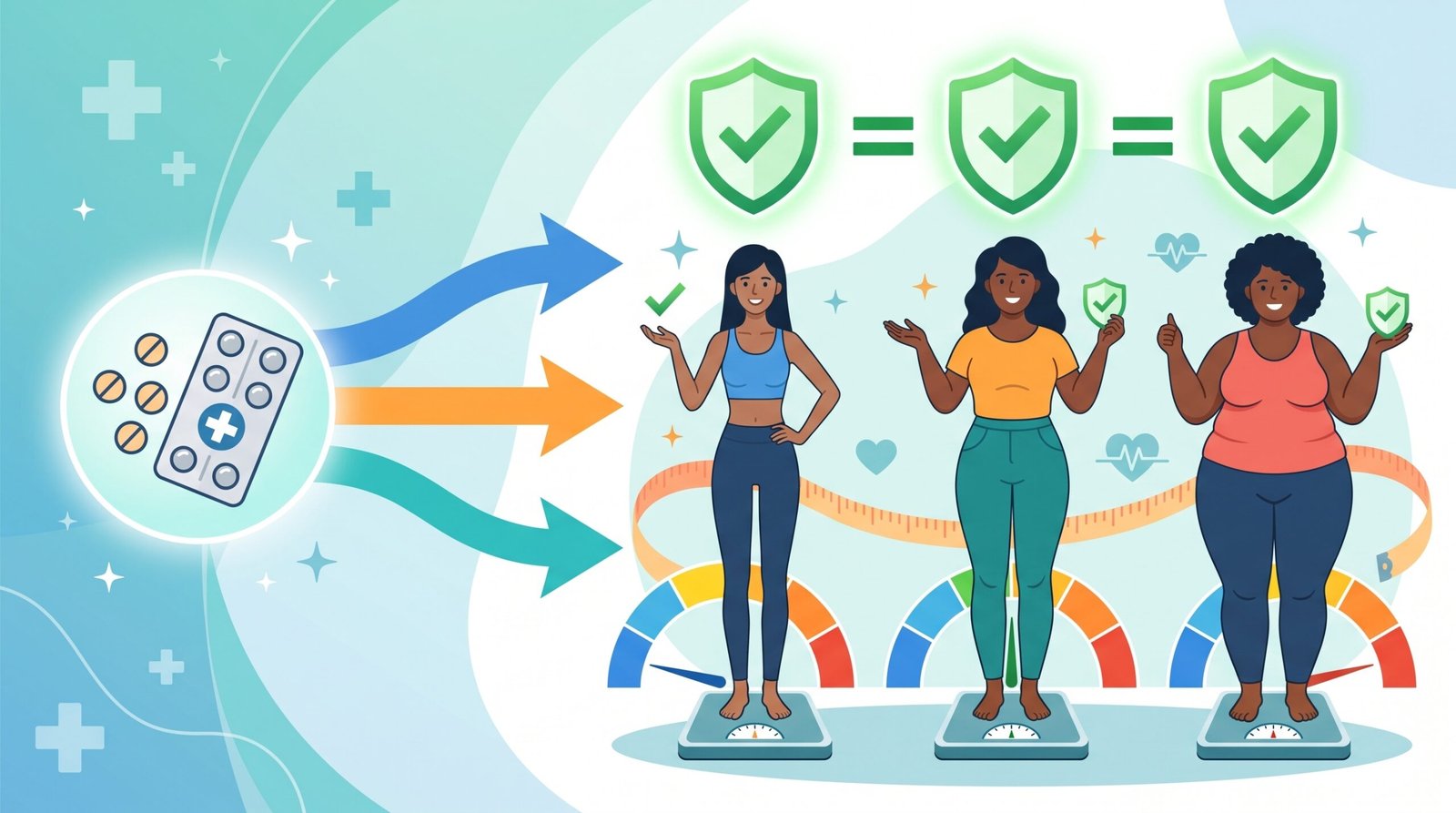
Misoprostol is the second medication used in the standard mifepristone-and-misoprostol regimen.
Available evidence does not establish that people with higher BMI routinely need a different first-trimester misoprostol dose simply because of their weight.
However, the research is not equally strong for every body size or every type of medication-abortion situation.
Some studies in different clinical settings have reported differences in how quickly medication abortion occurs among people with obesity. For example, research involving misoprostol treatment for first-trimester missed abortion found longer time to uterine evacuation and lower success in the obese group. However, that study involved a different clinical situation and misoprostol regimen from the standard FDA-approved mifepristone-plus-misoprostol regimen used for medication abortion.
This distinction matters. Results from one type of medical-abortion or miscarriage-treatment protocol should not automatically be applied to every medication-abortion regimen.
Is There a Maximum Weight for Abortion Pills?
There is no general FDA-listed maximum body weight that automatically prevents someone from using the approved mifepristone-and-misoprostol regimen through 70 days of pregnancy.
The FDA’s eligibility criteria focus on factors such as gestational age, pregnancy location, certain medical conditions, medications, allergies, and other contraindications rather than establishing a maximum weight.
However, a person with a very high BMI may have other health conditions that are relevant to medication-abortion care.
For example, your provider may need to consider other medications, significant medical conditions, pregnancy dating, or symptoms that could suggest an ectopic pregnancy.
That is why BMI should be considered as one part of the overall health picture, rather than used as a simple yes-or-no test for whether abortion pills can work.
What About a Very High BMI?
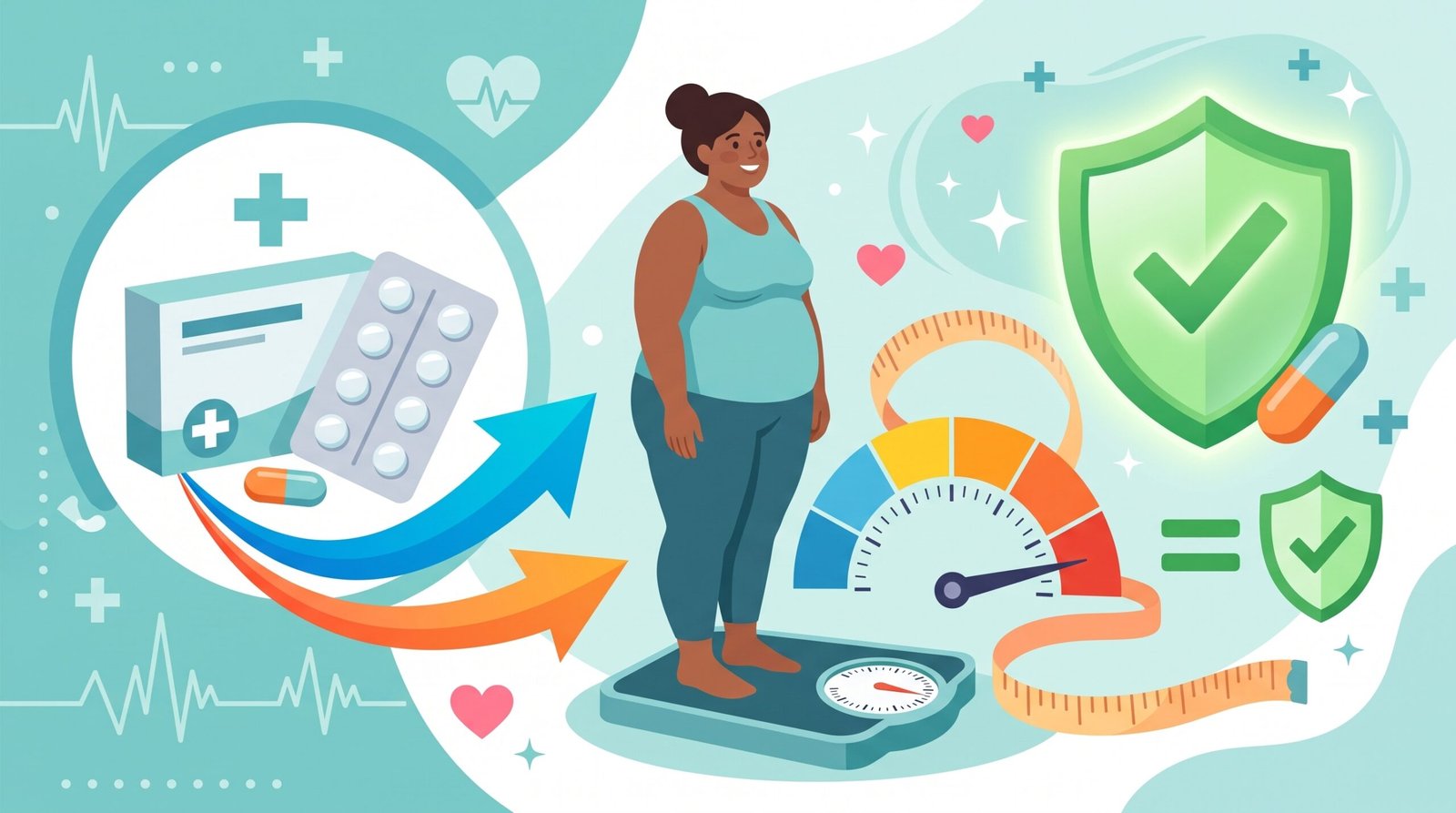
People with class III obesity or a very high BMI may have additional questions because the amount of research available is smaller.
A recently published case report described medication-abortion failure in a patient with a BMI of 53 and a twin pregnancy. However, a single case cannot establish that a BMI of 53 causes medication-abortion failure. The pregnancy involved twins, and the authors specifically emphasized the limited clinical data available for class III obesity and the need for additional research.
This is an important example of why medical information should not be reduced to a single BMI number.
A very high BMI does not automatically mean that medication abortion will not work. Instead, it may be a reason for a clinician to review the person’s individual circumstances carefully.
Do You Need More Abortion Pills If You Have a Higher BMI?
Do not take extra abortion pills based only on your weight unless your healthcare provider specifically instructs you to do so.
The standard medication-abortion regimen is not generally calculated by simply multiplying the dose according to body weight.
Taking additional medication without medical guidance could expose you to unnecessary side effects and may not improve the outcome.
If you are concerned that your body size could affect the treatment, discuss that concern with your abortion provider before changing the prescribed regimen.
Does Body Weight Affect How Fast the Abortion Happens?
Body weight may be associated with differences in how quickly medication abortion occurs in some circumstances, but the evidence depends heavily on the type of abortion being studied.
For example, research involving medication abortion after 13 weeks found that people with BMI of 30 or higher had longer median times to fetal expulsion than people with BMI below 25.
That finding should not be used to tell someone having an early medication abortion that a higher BMI means the pills will fail.
The FDA-approved mifepristone regimen discussed in this article is for an intrauterine pregnancy through 70 days.
Different gestational ages use different clinical protocols, so timing and treatment should always be interpreted in the correct context.
What Factors Matter More Than BMI for Medication-Abortion Effectiveness?
BMI is only one possible consideration.
Your provider may be more concerned with factors such as:
- How far along the pregnancy is
- Whether the pregnancy is located inside the uterus
- Whether you have a condition that makes mifepristone unsafe
- Whether you take medications that can interact with mifepristone
- Whether the prescribed medication regimen was followed correctly
- Whether the pregnancy has completely passed
- Whether symptoms suggest an ectopic pregnancy or another complication
The FDA specifically states that mifepristone should not be used for medication abortion when an ectopic pregnancy is confirmed or suspected.
This is why an individualized medical assessment is more useful than relying on BMI alone.
Can People With Obesity Use Medication Abortion?
In general, obesity alone does not automatically prevent someone from using medication abortion.
Clinical guidance for medication abortion specifically lists obesity as a population in which no change in effectiveness is expected, although evidence quality and applicability can vary across clinical circumstances.
A previous clinical study also found comparable rates of surgical intervention between people above and below a BMI of 30 when using mifepristone and misoprostol.
Therefore, having obesity should not by itself be treated as evidence that abortion pills will not work.
If you have obesity along with another medical condition, however, that additional condition may affect whether medication abortion is appropriate.
What If You Are Underweight?
People sometimes worry about being too thin for abortion pills to work.
There is no FDA-listed minimum body weight that automatically prevents use of the standard mifepristone-and-misoprostol regimen.
The important question is not simply whether someone is below a particular BMI number. A provider may instead consider overall health, nutritional status when relevant, pregnancy duration, medications, and other medical conditions.
Do not change your medication dose because you are underweight unless your healthcare professional specifically advises you to do so.
What If You Have a High BMI and Are Worried the Abortion Pills Did Not Work?
Do not judge effectiveness solely by your body weight.
If you are concerned that the pregnancy may still be continuing, follow the follow-up plan provided by your healthcare professional.
Follow-up may involve symptom assessment, pregnancy testing, blood testing, ultrasound, or another method depending on your circumstances and your provider’s instructions.
You can also review how to know whether the abortion pill worked for more information about signs of treatment success and follow-up.
If medication abortion does not completely end the pregnancy, additional treatment may sometimes be necessary. Learn more about what can happen when abortion pills do not work completely.
Does BMI Change Abortion-Pill Side Effects?
There is not enough evidence to say that a particular BMI reliably causes stronger or weaker medication-abortion side effects.
Common effects of misoprostol can include cramping, bleeding, nausea, vomiting, diarrhea, chills, and temporary fever.
How strongly someone experiences these symptoms can vary from person to person.
Rather than predicting side effects based on BMI alone, it is more useful to know what symptoms are expected and which ones require medical attention.
For example, information about expected bleeding can help you distinguish normal medication effects from potentially concerning symptoms. See what to expect from bleeding after abortion pills for additional guidance.
Does BMI Mean You Need a Surgical Abortion Instead?
Not necessarily.
A higher BMI by itself does not mean that someone must have a surgical abortion instead of medication abortion.
The appropriate method depends on the individual’s pregnancy, medical history, preferences, gestational age, availability of care, and clinical circumstances.
The older study of 1,202 medication abortions found similar rates of surgical intervention between women with BMI below 30 and those above 30, supporting the conclusion that obesity alone should not automatically rule out medication abortion.
If you are comparing medication abortion with an in-clinic procedure, you can review the differences between abortion pills and surgical abortion.
Should You Tell Your Abortion Provider Your Weight or BMI?
Yes.
Your healthcare provider may ask about your weight, height, BMI, medical history, medications, and other health factors.
You should answer these questions honestly because they help your provider evaluate your overall health.
However, you do not need to be embarrassed about your weight.
The purpose of discussing BMI is not to judge your body. It is to help your healthcare professional determine whether there are any health factors that need additional attention.
When Should You Contact a Healthcare Provider?
Contact your abortion provider if you are concerned that the medication did not work, your symptoms are not following the expected course, or you have questions about your individual treatment.
Seek urgent medical care if you develop severe or concerning symptoms such as:
- Severe or worsening abdominal or pelvic pain
- Very heavy bleeding
- Fainting or significant weakness
- Persistent or concerning fever
- Severe illness or symptoms that are rapidly worsening
- Symptoms that could indicate an ectopic pregnancy
The FDA emphasizes that mifepristone used for medication abortion is contraindicated when an ectopic pregnancy is confirmed or suspected.
For urgent situations, you can also review when to seek emergency care after abortion pills.
What Is the Bottom Line About BMI and Abortion Pills?
For most people seeking an early medication abortion, body weight or BMI alone does not determine whether abortion pills will work.
Available evidence does not show that obesity automatically makes the standard mifepristone-and-misoprostol regimen ineffective, and BMI is not listed by the FDA as a contraindication to the approved regimen.
At the same time, research involving very high BMI is more limited, and some studies in different abortion settings have reported differences in the timing or success of medication treatment. These findings should be interpreted in the context of the specific regimen and pregnancy duration rather than generalized to every early medication abortion.
Most importantly, do not increase or change your abortion-pill dose based on your weight without medical guidance.
If you are concerned about BMI, weight, or whether medication abortion is appropriate for you, a qualified healthcare provider can review your individual circumstances and explain your options.
Serenity Choice Health can help patients understand medication-abortion care, discuss health-history questions, and determine what information should be reviewed before treatment.
FAQ Section
Does being overweight make abortion pills less effective?
Current evidence does not show that being overweight or having obesity automatically makes the standard mifepristone-and-misoprostol regimen ineffective. BMI alone is not an FDA-listed contraindication to medication abortion.
Is there a maximum weight for taking abortion pills?
The FDA does not list a maximum body weight as a contraindication to the approved mifepristone-and-misoprostol regimen through 70 days of pregnancy. Other health conditions and pregnancy factors may still affect eligibility.
Do you need more abortion pills if you have a high BMI?
Not simply because of your weight. Do not increase the dose of mifepristone or misoprostol on your own. If you have a very high BMI or other medical concerns, discuss them with your healthcare provider.
Does BMI affect mifepristone?
There is no standard recommendation to increase the FDA-approved mifepristone dose based solely on BMI. The approved regimen uses 200 mg of mifepristone for medication abortion through 70 days.
Can someone with obesity have a medication abortion?
Yes. Obesity alone does not automatically prevent someone from having a medication abortion. Clinical guidance indicates that no change in effectiveness is expected solely because of obesity, although evidence is more limited at very high BMI levels.
What if I am worried that the abortion pills did not work because of my weight?
Do not assume treatment failure based on BMI alone. Follow your provider’s recommended follow-up process and contact them if you have concerns about ongoing pregnancy, symptoms, or the need for additional care.

Dr. James Carter is a board-certified physician and lead clinician at Serenity Choice Health, specializing in reproductive health access and medication abortion protocols. With over 20+ years of experience, he combines clinical expertise with patient-centered care to ensure safe, compassionate, and confidential reproductive healthcare.