
Bleeding after taking the abortion pill is one of the most common sources of anxiety for women going through the process. Not because it is unexpected you know bleeding will happen but because nobody tells you exactly what it will look like, how long it will last, or at what point you should start worrying. One hour you’re passing heavy clots, the next day the bleeding has almost stopped, and two weeks later it starts up again as light spotting. Is that normal? Is something wrong?
The honest answer is that bleeding after medication abortion follows a recognizable pattern, but with real variation from person to person. This guide gives you that pattern in clear, practical detail, a day-by-day timeline, a straightforward explanation of what’s normal versus what requires medical attention, and the information you need to move through this process feeling informed rather than frightened.
Why Does Bleeding Happen After the Abortion Pill?
Before getting into the timeline, it helps to understand why the bleeding happens at all, because understanding the cause makes the experience feel far less alarming.
Medication abortion involves two drugs taken in sequence. Mifepristone is taken first. It works by blocking progesterone, the hormone that sustains a pregnancy, effectively stopping fetal development. Most people feel very little physically after this first pill. The bleeding has not started yet.
Misoprostol is taken 24 to 48 hours later, and this is when everything changes. Misoprostol causes the uterus to contract rhythmically and expel the pregnancy tissue. The bleeding you experience is your body doing exactly what the medication instructs it to do, emptying the uterus in a process that is physiologically very similar to an early miscarriage. The intensity and duration of that bleeding reflects how much work the uterus is doing, which in turn depends on how far along the pregnancy was and how your individual body responds to the medication.
If you want a deeper understanding of how both medications work together from start to finish, our guide on how the abortion pill works walks through the complete process in plain language. Both the World Health Organization and the American College of Obstetricians and Gynecologists recognize medication abortion as safe and effective, with bleeding being an expected and necessary part of the process. Understanding that the bleeding is purposeful not a malfunction is the first step toward experiencing it with less fear.
How Long Will the Bleeding Last?
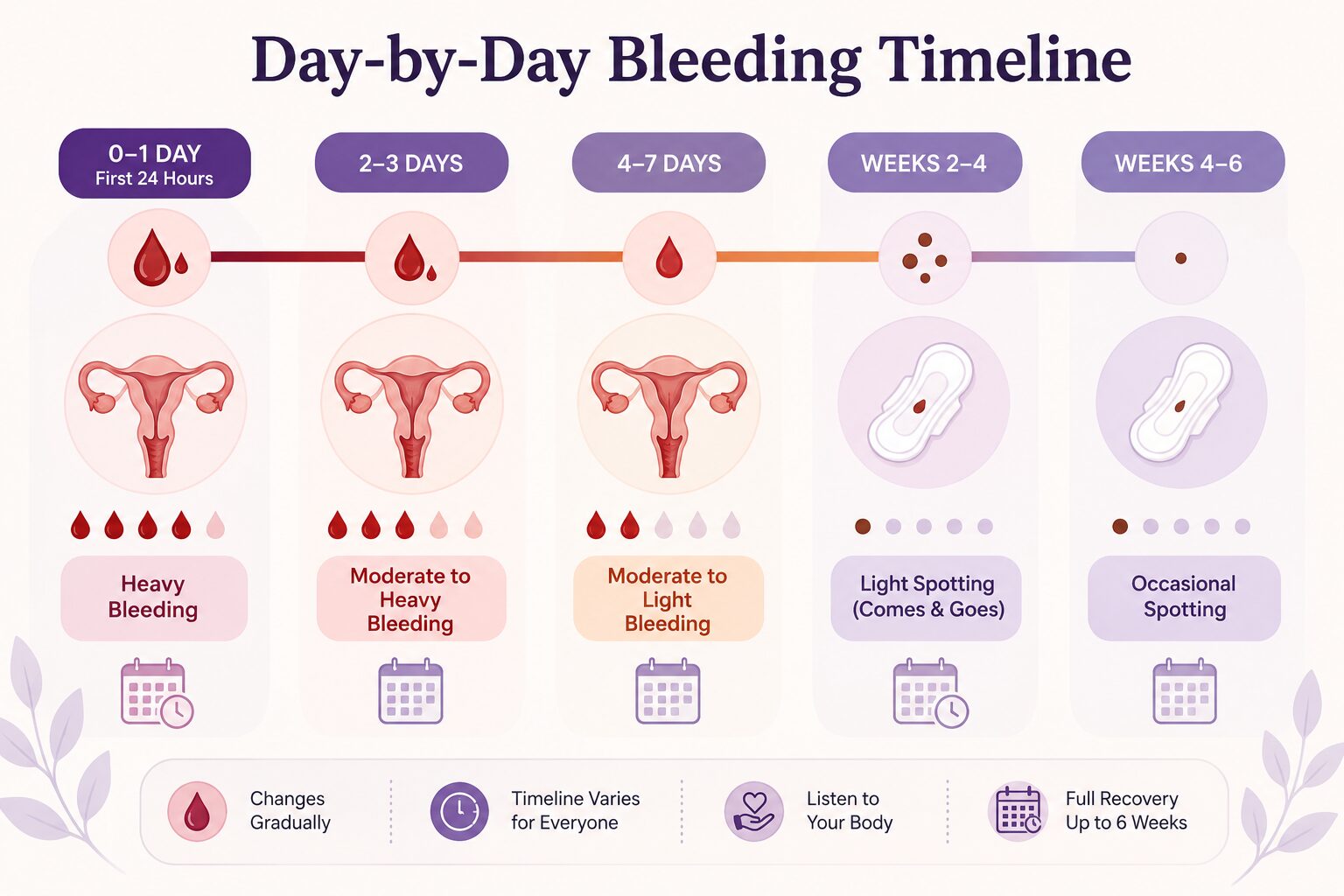
The most direct answer: for most people, significant bleeding lasts one to two weeks, with lighter spotting continuing for up to four to six weeks. The entire process from first heavy bleed to final spot of discharge can span anywhere from two to six weeks depending on the individual.
The breakdown looks like this. Heavy bleeding typically occurs in the first four to twenty-four hours after taking misoprostol. Moderate bleeding then continues for roughly three to seven days. After that, bleeding gradually lightens and transitions into spotting that can come and go for several weeks before stopping completely.
That range two weeks to six weeks feels wide, and it is. The variation is real and it is normal. What matters more than matching a specific timeline is understanding what the bleeding should look and feel like at each stage.
Day-by-Day Bleeding Timeline
The First 24 Hours After Misoprostol
This is the most intense phase of the entire process, and it is important to go into it prepared. Bleeding typically begins within one to four hours of taking misoprostol. Within that first day, the bleeding will likely be heavier than your heaviest period day. Passing blood clots is expected and normal during this window. Clots can be surprisingly large, and seeing them can feel alarming if you are not prepared for it.
The cramping and bleeding peak together during this phase. Your body is doing significant muscular work, and the bleeding reflects that. This is the phase where having maxi pads on hand, pain medication ready, and ideally someone present with you matters most. Heavy bleeding at this stage is not a warning sign, it is the medication working.
Days Two Through Three
By the second and third day, the bleeding remains moderate to heavy for many people but begins to ease from its peak intensity. Clots may still pass but tend to become smaller and less frequent. Cramping also starts to reduce during this window, though it may not disappear entirely. Most women describe this phase as feeling like a heavy period that is gradually getting lighter rather than the intense, wave-like cramping of day one.
Days Four Through Seven
During the first full week after misoprostol, bleeding typically transitions from heavy to moderate and then toward lighter flow. By the end of the first week, most women find the bleeding comparable to the lighter days of a regular period. Energy levels begin returning. The physical intensity of the experience is largely behind you by this point, though the body continues its recovery.
Weeks Two Through Four
This is the spotting phase, and it is the phase that confuses and worries many women most. Light bleeding or spotting that comes and goes throughout weeks two, three, and sometimes four is completely normal. The discharge during this period is often brown or dark in color rather than bright red this is older blood leaving the uterus and is not a sign of complication. It is simply the tail end of the body’s clearing process.
Weeks Four Through Six
By week four, most women have moved into occasional spotting that grows further apart before stopping. This is also when the menstrual cycle begins resetting. Your next period will typically arrive four to eight weeks after the abortion was completed. That first period may be heavier or lighter than usual, and slightly irregular timing is common. This is normal hormonal adjustment.
Why Bleeding Duration Varies From Person to Person
If you compare your experience to someone else’s and find they differ significantly, it does not mean one of you is experiencing something wrong. Several factors genuinely shape how long and how heavily you bleed.
Gestational age at the time of the abortion has one of the strongest influences. A pregnancy terminated at six weeks involves far less tissue than one at ten weeks, and the body’s job is correspondingly smaller. Earlier abortions tend to produce shorter, lighter bleeding overall. Later abortions within the medication abortion window up to ten or eleven weeks depending on the protocol tend to produce heavier, longer bleeding with larger clots. If you are still in the decision-making stage and want to understand how gestational age shapes your options more broadly, our overview of abortion by gestational weeks covers this in full detail.
Individual hormonal variation also plays a role. Estrogen and progesterone levels differ between people, and these differences affect how the uterus responds to misoprostol. Uterine sensitivity, overall health, and whether the medication was taken correctly all contribute to the pattern of bleeding. None of these variables make your experience more or less valid they simply explain why two women taking the same medication at the same gestational age can have meaningfully different experiences.
Normal Bleeding vs. Warning Signs
Knowing what falls within the range of normal is genuinely reassuring during this process. Bleeding that is heavier than your usual period during the first twenty-four hours is normal. Passing clots, even large ones, is normal. Bleeding that stops and then starts again days later is normal. Spotting that continues for several weeks, sometimes with brown or dark discharge, is normal.
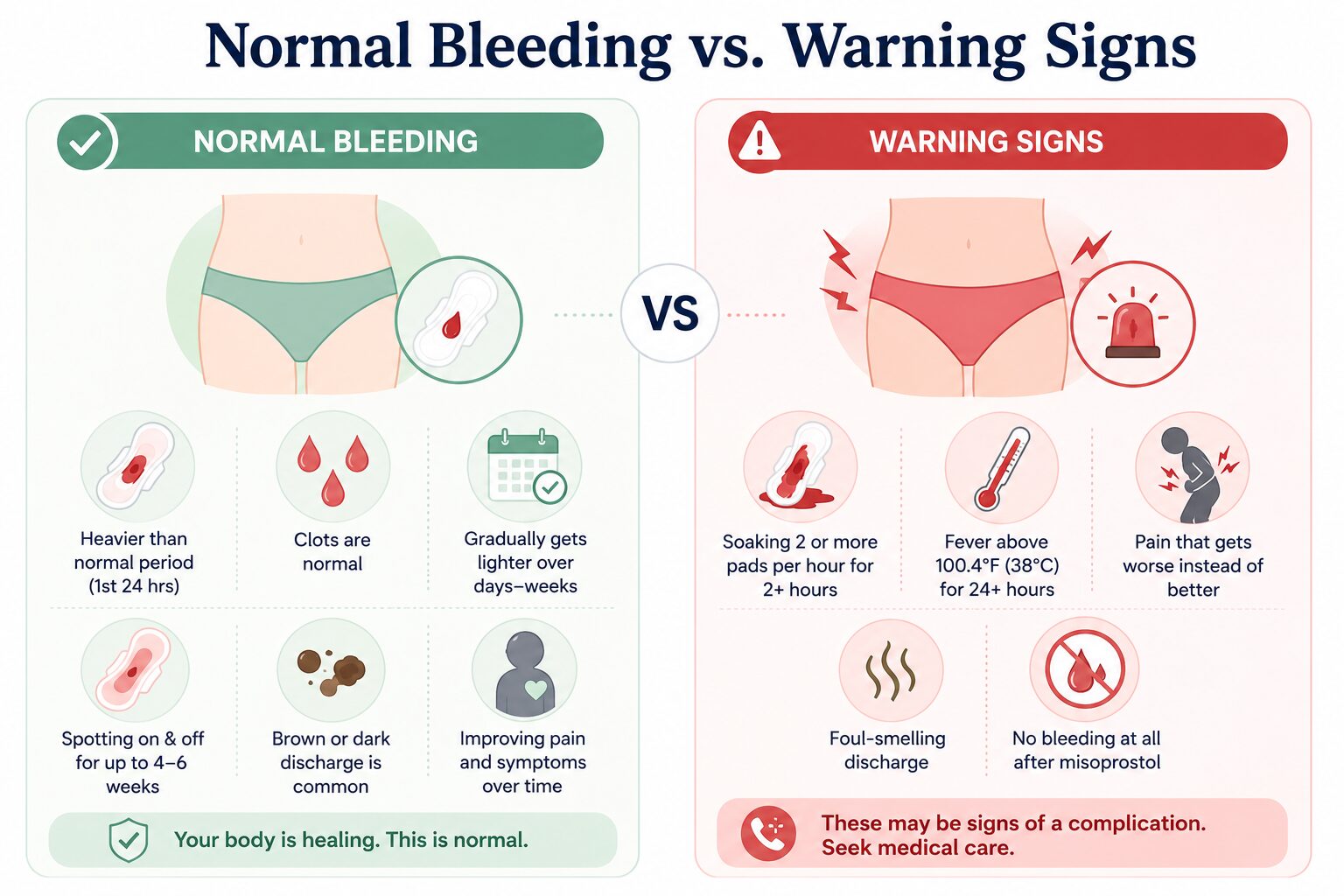
What is not normal and what requires prompt medical attention is a specific and recognizable set of symptoms. If you are soaking through two full-sized pads per hour for two consecutive hours, that level of bleeding is beyond normal range and constitutes a medical emergency. A fever above 38 degrees Celsius, or 100.4 Fahrenheit, that persists for more than 24 hours after taking misoprostol is a warning sign of potential infection. Pain that becomes dramatically worse after initially improving, rather than gradually easing, deserves evaluation. Foul-smelling discharge in the days following the abortion is another sign of possible infection that requires prompt care.
One additional warning sign that is less discussed but equally important: no bleeding at all after taking misoprostol. If you have taken the medication correctly and experienced no bleeding whatsoever, this may indicate the medication did not work as intended. Our detailed guide on when abortion pills don’t work explains what happens in that situation and what your next steps should be. Contact your provider promptly if this applies to you. An incomplete abortion requires follow-up care.
Can Bleeding Stop and Start Again?
Yes and this is one of the most commonly reported sources of confusion and unnecessary panic. It is entirely possible to experience heavy bleeding for the first day or two, have it taper to almost nothing, and then notice spotting return several days later. This pattern is a normal part of how the uterus completes its clearing process. It does not indicate a complication. It does not mean the abortion was unsuccessful. It means your body is working through the process on its own timeline.
If the returning bleeding is accompanied by the warning signs listed above fever, worsening pain, or foul-smelling discharge then it warrants attention. Spotting or light bleeding on its own, returning after a quieter period, does not.
Signs the Abortion Was Successful
Heavy bleeding within 24 hours of taking misoprostol is one of the clearest early signs that the medication is working. Passing tissue or clots confirms the process is underway. A gradual reduction in pregnancy symptoms nausea easing, breast tenderness fading over the days that follow is another positive indicator.
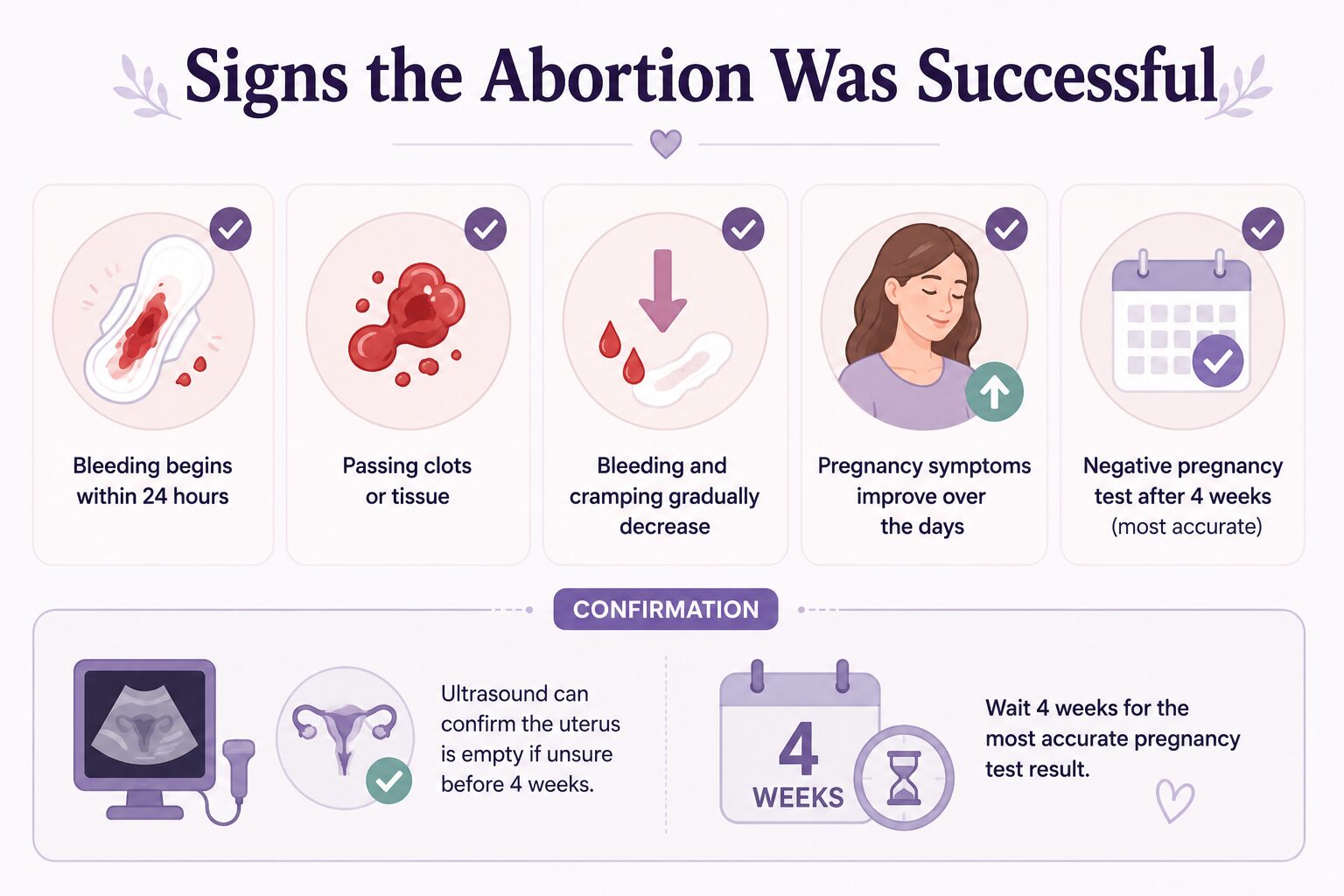
Formal confirmation comes from a follow up pregnancy test taken four weeks after the abortion. Waiting the full four weeks is important because pregnancy hormones remain detectable in the body for several weeks even after a successful abortion, and an earlier test may produce a misleading positive result. If you have any concerns before the four-week mark, an ultrasound can provide confirmation that the uterus has fully emptied. For a complete breakdown of all the signs to look for, our guide on how to know if the abortion pill worked covers every indicator in thorough detail.
Physical and Emotional Recovery Together
Bleeding is the most visible part of recovery, but it is not the only part. Fatigue is common in the first week, a reflection of both the physical exertion the body has been through and the hormonal shift following the abortion. Mood changes including tearfulness, emotional rawness, or a complex mix of relief and grief are legitimate physiological responses, not signs of weakness or instability. The hormone withdrawal that follows a medication abortion is real, and it affects mood in the same way that any significant hormonal change does.
Rest, hydration, and patience with yourself are not optional extras during recovery. They are part of the process. Using pads rather than tampons during the first week allows you to monitor the bleeding accurately and reduces infection risk. Avoiding intense physical exertion during heavy bleeding is practical common sense. Giving yourself permission to feel whatever you feel without judgment is equally important.
If you are uncertain about any symptom at any point during recovery, the right step is to speak with a qualified provider who can give you personalized guidance. You can schedule an appointment with our care team at any point before, during, or after your abortion process. We provide confidential, compassionate support with no judgment. Whether you are considering your options, currently managing symptoms, or need follow-up care, reaching out is not overreacting. It is taking your health seriously.
Frequently Asked Questions
Is it normal to bleed for two weeks after the abortion pill?
Yes, completely. Most women experience meaningful bleeding for one to two weeks following medication abortion, and lighter spotting that continues beyond that is also within the normal range. The two-week mark is not a deadline by which bleeding should have stopped it is simply the point at which heavy flow typically gives way to spotting. If you are still seeing light or intermittent spotting at two weeks, there is no cause for alarm provided you are not also experiencing fever, worsening pain, or foul-smelling discharge.
How do I know if I am bleeding too much?
The clearest clinical measure is pad saturation. If you are soaking through two full-sized maxi pads per hour for two consecutive hours, that is too much bleeding and you need emergency medical care. Single episodes of very heavy flow that settle down are less concerning than sustained saturation at that rate. If you are unsure whether your bleeding crosses this threshold, it is always safer to seek evaluation than to wait and monitor at home.
Why am I still spotting three weeks after taking the abortion pill?
Spotting at three weeks is well within the normal range. The uterus can take four to six weeks to complete its full clearing process, and light, intermittent spotting during this time is expected. The color of the discharge during this phase is often brown or dark rather than bright red, which reflects older blood that has been slowly clearing from the uterus rather than fresh bleeding. Unless the spotting is accompanied by pain, fever, or odor, it does not require medical attention.
What if I have no bleeding after taking misoprostol?
No bleeding after misoprostol is a warning sign that the medication may not have worked as intended. While it is possible for bleeding to begin slightly later than expected in some cases, the complete absence of any bleeding or cramping after taking misoprostol warrants a call to your healthcare provider. An incomplete or failed medication abortion requires follow-up care, which may include a repeat dose of misoprostol or an in-clinic abortion procedure to complete the process safely.
Can I use tampons while I am bleeding after the abortion pill?
It is recommended to avoid tampons during at least the first few days following the abortion. Using pads during this period serves two important purposes it allows you to accurately monitor the amount and character of your bleeding, which is important for identifying any warning signs, and it reduces the risk of introducing bacteria into the uterus while it is still in the process of clearing and healing. Once the heavy bleeding has resolved and you have moved into the lighter spotting phase, many providers consider tampon use acceptable, but checking with your own provider for personalized guidance is always advisable.
When will my period return after the abortion pill?
For most women, the first period after a medication abortion arrives four to eight weeks after the procedure was completed. The exact timing depends on when your body’s hormonal cycle resets following the abortion. That first period may feel different from your usual cycle it can be heavier or lighter than normal, and the timing may be slightly irregular. This is expected. By the second or third cycle following the abortion, most women find their periods have returned to their individual baseline pattern.
Is passing large clots after the abortion pill dangerous?
Passing clots during the first twenty-four to forty-eight hours after taking misoprostol is a normal and expected part of the process. Clots can range from small to surprisingly large during this peak phase, and their presence typically indicates the medication is working effectively. What distinguishes normal clotting from a concerning situation is the rate of bleeding rather than the clot size alone. If you are passing large clots continuously while also soaking pads at a rate of two or more per hour, that warrants emergency evaluation. Occasional large clots during the peak phase, without that sustained heavy saturation, fall within the normal range.
Can I take anything to stop or reduce the bleeding faster?
There is no safe way to significantly accelerate or stop the bleeding after the abortion pill, and attempting to do so is not recommended. The bleeding is the mechanism by which the body clears the uterus, and interrupting or suppressing it could interfere with the completion of the process. Rest, adequate hydration, and following your provider’s aftercare instructions are the most appropriate ways to support your body during this period. If the bleeding is unusually prolonged or heavy beyond the expected window, that is a reason to contact your provider not to attempt home remedies that aim to stop it.
When should I take a pregnancy test to confirm the abortion worked?
Wait at least four weeks after taking misoprostol before taking a home pregnancy test. This waiting period is not arbitrary; pregnancy hormones, specifically human chorionic gonadotropin, remain in the body for several weeks after a successful abortion and can produce a positive test result even when the pregnancy has ended. A test taken too early may show a positive result that has nothing to do with ongoing pregnancy, which creates unnecessary confusion and anxiety. At the four-week mark, a negative test is a reliable indicator that the abortion was successful. If the test remains positive for four weeks, contact your provider for follow-up evaluation.
Is it normal to feel emotional during recovery, even if I feel confident in my decision?
Yes, entirely. Emotional responses during recovery from a medication abortion are not a measure of whether your decision was right or wrong. They are largely physiological. The hormone shift that follows the end of a pregnancy regardless of how it ends is real and significant, and it can produce mood changes, tearfulness, fatigue, and emotional sensitivity that have more to do with biology than with regret or doubt. Many women also experience relief as a primary emotion, sometimes alongside sadness or a sense of grief that does not contradict the relief. All of these responses are valid. If you find that emotional difficulty persists beyond the first few weeks, our resource on how to recover emotionally after an abortion offers compassionate, practical guidance for that part of the journey as well.
Is the abortion pill right for me, or should I consider another option?
The abortion pill is most appropriate for pregnancies up to ten or eleven weeks from the last menstrual period, depending on the protocol used. For pregnancies beyond that window, or for people who prefer or require a procedural option, in-clinic abortion services provide a safe and effective alternative. For those who prefer to manage their care from home without traveling to a clinic, telehealth abortion care allows you to consult with a licensed provider remotely, receive the abortion pill by mail, and get aftercare support all confidentially. If you are weighing your options and want guidance specific to your situation, scheduling an appointment with our team is the clearest next step.

Dr. James Carter is a board-certified physician and lead clinician at Serenity Choice Health, specializing in reproductive health access and medication abortion protocols. With over 20+ years of experience, he combines clinical expertise with patient-centered care to ensure safe, compassionate, and confidential reproductive healthcare.