

If you’re preparing for a medication abortion, following your healthcare provider’s instructions carefully is one of the most important steps in the process. One common concern many women have is what happens if you take misoprostol too early or too late.
The timing of misoprostol plays an important role in helping the medication work as intended. Taking it significantly earlier or later than recommended may affect how well the treatment works or increase the chance that additional medical evaluation is needed.
This guide explains why timing matters, what may happen if the medication is taken outside the recommended schedule, and when you should contact your healthcare provider.
What Is Misoprostol?
Misoprostol is one of the medications commonly used in a medication abortion. It works by causing the uterus to contract and expel the pregnancy tissue.
When used together with another medication as directed by your healthcare provider, misoprostol is an effective part of early pregnancy termination. Because treatment plans can vary based on your medical history, pregnancy duration, and current clinical guidelines, always follow the instructions provided by your healthcare team rather than relying on general timelines found online.
Why Does Timing Matter?
The timing of misoprostol is important because it is intended to be taken after the first medication has begun preparing the pregnancy tissue and cervix for the next step.
Following the prescribed schedule helps maximize effectiveness while reducing the chance of an incomplete abortion that may require additional treatment.
Although timing is important, small variations do not always mean the treatment has failed. Your healthcare provider can advise you based on your specific situation.
What Happens If You Take Misoprostol Too Early?
Taking misoprostol earlier than instructed may reduce the effectiveness of the medication regimen because the body may not yet be fully prepared for the medication to work as intended.
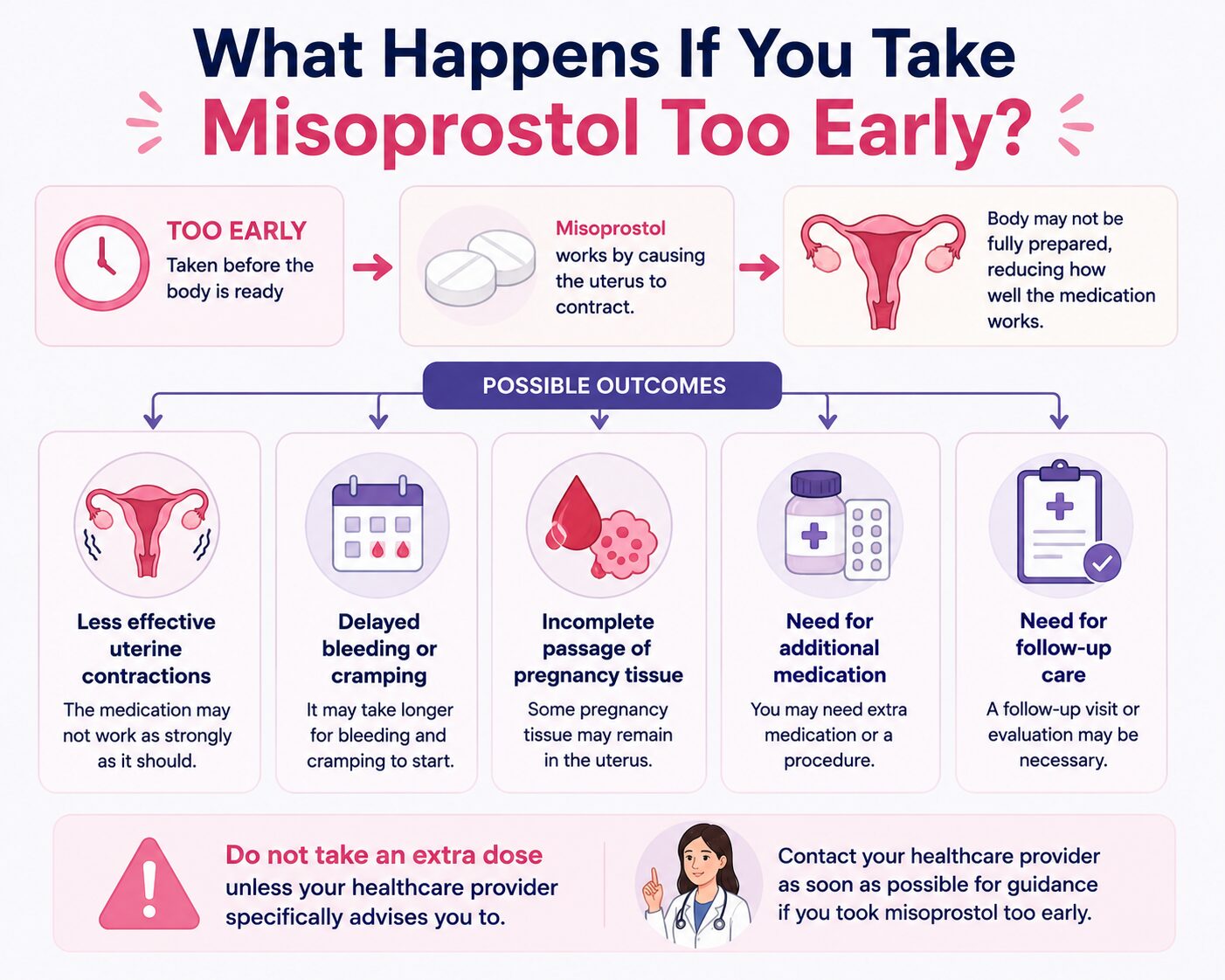
Possible outcomes include:
- Less effective uterine contractions
- Delayed bleeding or cramping
- Incomplete passage of pregnancy tissue
- Need for additional medication or follow-up care
The exact effect depends on how early the medication was taken and the treatment plan prescribed by your healthcare provider.
Do not take an extra dose unless your provider specifically advises you to do so.
What Happens If You Take Misoprostol Too Late?
Many patients worry after realizing they took misoprostol later than planned.
In many cases, taking it somewhat later than instructed may still be effective. However, delaying the medication for an extended period could affect the overall treatment plan depending on your individual circumstances.
Possible effects may include:
- A delay in the abortion process
- Anxiety due to uncertainty
- The need for follow-up evaluation
- Possible adjustments to your treatment plan
If you’ve delayed taking misoprostol, contact your healthcare provider for guidance rather than making changes on your own.
Does Timing Affect How Well Misoprostol Works?
Yes, timing can influence how effective the medication regimen is.
Healthcare providers recommend specific timing based on clinical evidence designed to achieve the highest success rates while minimizing complications.
However, taking misoprostol outside the recommended window does not automatically mean the medication abortion will fail.
Several factors influence effectiveness, including:
- Gestational age
- Individual response to medication
- Overall treatment plan
- Whether the medications were taken as prescribed
Your provider can determine whether any additional evaluation or treatment is necessary.
What Should You Do If You Didn’t Follow the Schedule?
If you realize that you took misoprostol earlier or later than instructed, avoid making assumptions or taking additional medication without medical advice.
Instead:
- Review the instructions provided by your healthcare provider.
- Note the exact time you took each medication.
- Monitor your symptoms.
- Contact your healthcare provider as soon as possible.
- Attend any recommended follow-up appointments.
Your provider can advise whether your treatment is still progressing as expected or whether additional care is recommended.
What Symptoms Should You Expect?
After taking misoprostol, many women experience symptoms that are expected during a medication abortion.
Common symptoms include:
- Cramping
- Vaginal bleeding
- Passing blood clots
- Nausea
- Chills
- Mild fever for a short period
- Fatigue
Your healthcare provider should explain which symptoms are expected and which require medical attention.
When Should You Contact a Healthcare Provider?
Seek medical advice promptly if you experience:
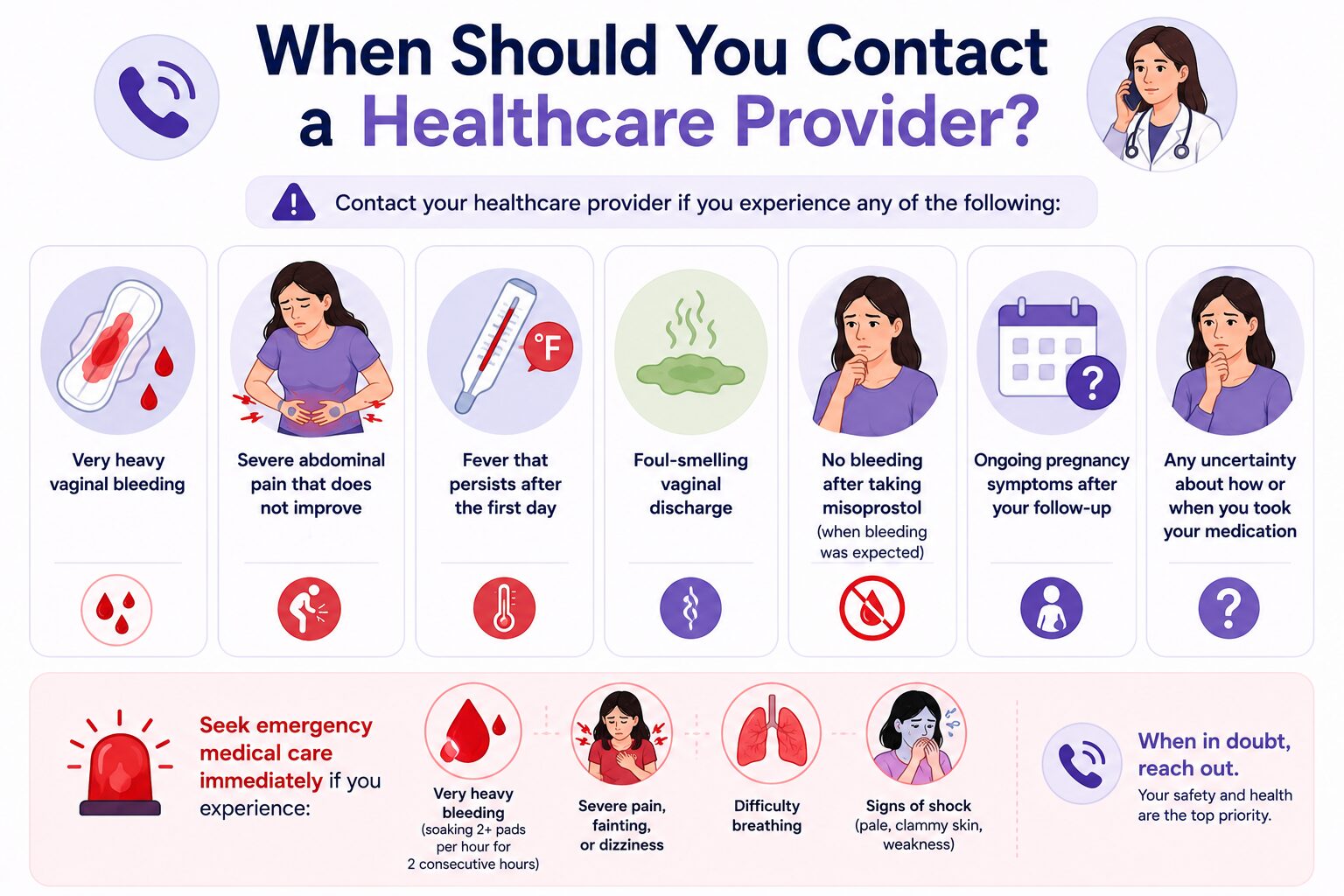
- Very heavy vaginal bleeding
- Severe abdominal pain that does not improve
- Fever that persists after the first day
- Foul-smelling vaginal discharge
- No bleeding after taking misoprostol when your provider expected bleeding to occur
- Ongoing pregnancy symptoms after your scheduled follow-up
- Any uncertainty about how or when you took your medication
If you experience severe symptoms such as difficulty breathing, fainting, or signs of a medical emergency, seek emergency medical care immediately.
Why Following Your Provider’s Instructions Matters
Medication abortion instructions are personalized.
Your provider considers several factors before recommending when to take misoprostol, including:
- Pregnancy duration
- Medical history
- Current medications
- Individual health needs
- Evidence-based clinical guidelines
For this reason, advice found on forums or social media should never replace guidance from a qualified healthcare professional.
How Serenity Choice Health Supports Patients
At Serenity Choice Health, we understand that medication abortion can raise many questions, especially about medication timing.
Our experienced healthcare team provides clear instructions before treatment and ongoing support afterward. If you’re unsure whether you took misoprostol at the correct time or have concerns about your symptoms, we’re here to answer your questions, assess your situation, and help you determine the appropriate next steps.
Your health, safety, and peace of mind are our priorities throughout your care.
Conclusion
Understanding what happens if you take misoprostol too early or too late can help reduce unnecessary worry and ensure you know when to seek medical advice.
While following the prescribed schedule gives the medication the best chance to work as intended, taking misoprostol outside the recommended timeframe does not always mean the treatment has failed. The safest approach is to avoid taking additional medication on your own and contact your healthcare provider if you’re unsure about your timing or symptoms.
If you have questions before, during, or after your medication abortion, the experienced team at Serenity Choice Health is here to provide compassionate, confidential, evidence-based care every step of the way.
FAQ Section
Can I take misoprostol earlier than my healthcare provider instructed?
You should follow the timing recommended by your healthcare provider. Taking it significantly earlier than instructed may reduce the effectiveness of the medication regimen.
Is taking misoprostol a few hours late a problem?
A short delay may not necessarily affect the outcome, but you should contact your healthcare provider for guidance based on your individual treatment plan.
Will my medication abortion still work if I took misoprostol late?
It may still be effective in many cases, but the outcome depends on factors such as timing, gestational age, and your prescribed treatment plan. Your provider can advise you after reviewing your situation.
Should I take another dose if I made a mistake?
No. Do not take additional medication unless your healthcare provider specifically instructs you to do so.
What should I do if I forgot when I took my medication?
Write down the approximate time if possible and contact your healthcare provider. They can help determine whether any additional steps are needed.
When should I seek emergency medical care?
Seek emergency care immediately if you experience very heavy bleeding, severe abdominal pain, fainting, difficulty breathing, or other symptoms your provider identified as emergencies.

Dr. James Carter is a board-certified physician and lead clinician at Serenity Choice Health, specializing in reproductive health access and medication abortion protocols. With over 20+ years of experience, he combines clinical expertise with patient-centered care to ensure safe, compassionate, and confidential reproductive healthcare.