
A private abortion consultation online allows you to speak with a qualified healthcare professional remotely instead of beginning with an in-person appointment. Depending on your location, healthcare provider, medical history, and the type of abortion care being considered, an online visit may be used for screening, counseling, eligibility assessment, medication-abortion care, follow-up, or part of the overall care process.
For many people, the biggest question is simple: What actually happens during the appointment?
An online consultation generally involves reviewing your health and pregnancy information, discussing your options, answering questions, determining whether telehealth is appropriate, and explaining what happens next. The exact process varies between providers.
If you are considering remote care, understanding the appointment beforehand can make the experience feel more predictable and help you prepare the information you may need.
What Is a Private Abortion Consultation Online?
A private abortion consultation online is a healthcare appointment conducted remotely through a secure communication method, such as video, telephone, or an approved patient portal.
During the visit, a healthcare professional may review your medical history, ask about your pregnancy, discuss abortion options, determine whether medication abortion may be appropriate, and explain available next steps.
Telehealth can be used for different parts of abortion care. The World Health Organization recognizes telemedicine as an option for delivering medical-abortion services, including eligibility assessment, counseling, instructions, and follow-up, depending on the circumstances and applicable local requirements.
The exact process should therefore be viewed as a clinical consultation, not simply an online form.
For background, you can also review this complete medication abortion explanation to understand where an online consultation can fit into the broader care process.
What Happens Before Your Online Abortion Consultation?
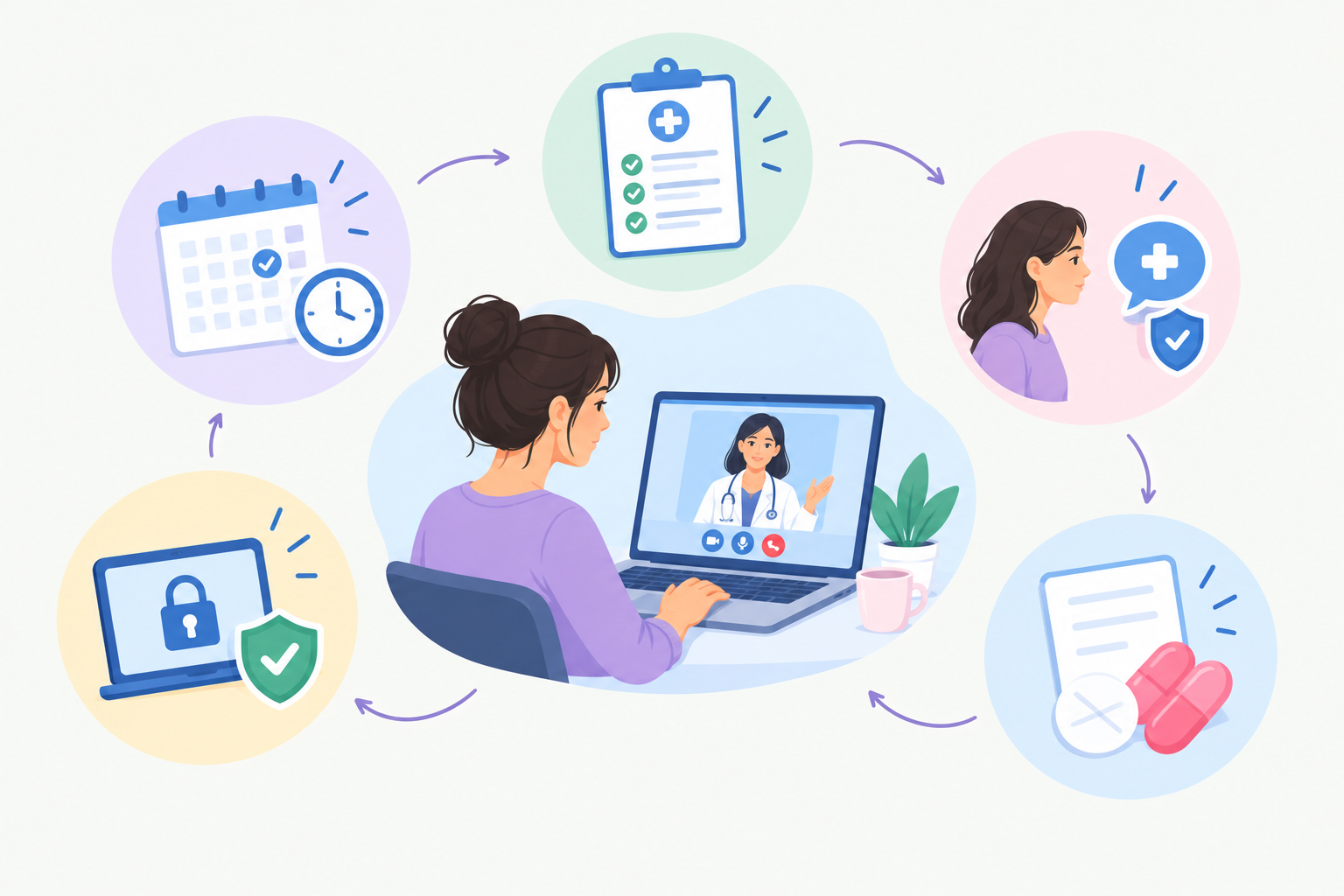
The first step is usually scheduling the appointment and completing any information the provider requests.
You may be asked to provide:
- Your name and contact information
- The first day of your last menstrual period
- Your age
- Relevant medical history
- Current medications
- Allergies
- Previous pregnancies or medical conditions
- Information about symptoms or concerns
- Information needed to determine whether telehealth is appropriate
Some providers use an online questionnaire before the appointment. Others collect the information during a telephone or video visit.
If you are unsure about the date of your last period, do not guess. Tell the provider that you are uncertain. They can determine what additional information or evaluation may be appropriate.
You can also learn more about how early abortion care can be provided and what factors may affect the timing of care.
How Should You Prepare for a Private Online Abortion Consultation?
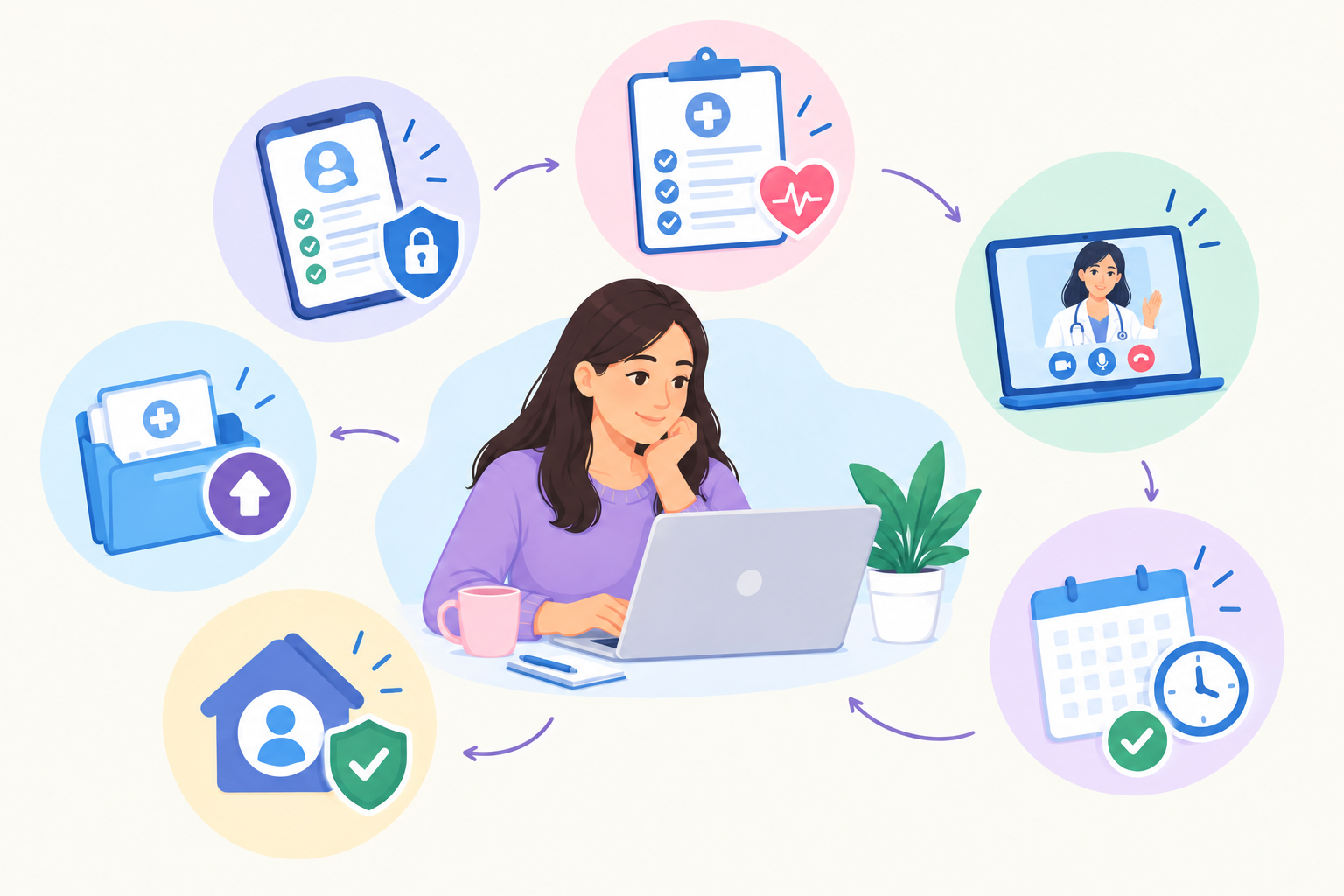
Preparation does not have to be complicated.
Before the appointment, consider having:
- A private place where you can speak freely
- A charged phone, tablet, or computer
- A reliable internet connection if video is being used
- Your current medications available for reference
- Your medical history if you have relevant records
- The date of your last menstrual period if known
- A list of questions you want to ask
- Any information the provider requested before the appointment
Privacy is also part of preparation.
HHS recommends that telehealth patients use a private location when possible, avoid situations where other people can hear the visit, use headphones when appropriate, and secure the device being used. HHS also recommends enabling multifactor authentication when available.
For broader privacy guidance, you can read this abortion privacy protection guide.
Can the Consultation Be Done From Home?
In many circumstances, telehealth appointments can be completed from home.
However, being at home does not automatically make the appointment private.
Think about:
- Who else is in the room
- Whether someone can hear your conversation
- Whether your screen can be seen
- Whether your device is shared
- Whether notifications could appear during the appointment
- Whether another person is signed into your device or email account
If you cannot find a completely private room, headphones can help reduce the chance that another person will hear the conversation.
You can also position your screen so other people cannot easily see it.
For additional information about the advantages and practical considerations of remote care, see the benefits of telehealth abortion care.
What Happens When the Online Appointment Starts?
The beginning of the consultation may involve confirming your identity and reviewing the reason for your appointment.
The healthcare professional may confirm information such as:
- Your name
- Date of birth or another identifying detail
- Contact information
- Your location
- The reason for the appointment
The provider may also explain how the telehealth appointment works and how you can contact them if you experience technical problems.
A provider may ask you to confirm that you are in a location where you can safely participate in the appointment.
This initial conversation is generally followed by the medical portion of the consultation.
What Medical Questions Will the Provider Ask?
The provider may ask questions about your general health and pregnancy.
The purpose is to understand whether the type of care being considered is medically appropriate and whether you need additional evaluation.
Questions may cover:
Pregnancy Information
You may be asked:
- When your last menstrual period began
- Whether you have taken a pregnancy test
- Whether you know approximately how far along the pregnancy may be
- Whether you have experienced pregnancy-related symptoms
- Whether you have had a previous pregnancy or abortion
Medical History
You may also be asked about:
- Current medications
- Medication allergies
- Important medical conditions
- Previous surgeries
- Certain bleeding or clotting conditions
- Relevant reproductive-health history
- Other factors that could affect your care
Answer as accurately as you can. If you are unsure about something, tell the provider rather than trying to provide an answer you are not certain about.
Will the Provider Confirm How Far Along the Pregnancy Is?
Determining pregnancy duration is an important part of deciding which abortion options may be appropriate.
The provider may use the date of your last menstrual period and information from your medical history to estimate gestational age.
In some situations, additional evaluation may be appropriate.
ACOG notes that for certain patients considering medication abortion, a clinical examination or ultrasound is not necessarily required before treatment when the pregnancy history is reliable and there are no signs, symptoms, or risk factors suggesting an ectopic pregnancy. However, clinical circumstances vary, and some patients may need additional evaluation.
This is one reason an online consultation should be individualized rather than treated as a one-size-fits-all process.
You can learn more about whether ultrasounds or bloodwork are needed for abortion care.
Do You Need an Ultrasound During an Online Abortion Consultation?
Not necessarily.
Whether an ultrasound is recommended depends on factors such as pregnancy dating, symptoms, medical history, and the provider’s clinical assessment.
Some telehealth abortion programs do not require an ultrasound for every patient. Other situations may require an ultrasound or additional testing before the provider can determine the appropriate care pathway.
For example, symptoms or medical history that raise concern about an ectopic pregnancy may require further evaluation.
This is why it is important not to assume that an ultrasound is either always required or never required.
If additional evaluation is necessary, the provider can explain what is needed and where it can be completed.
Will You Have a Pelvic Exam During the Online Consultation?
A pelvic examination cannot be performed through an ordinary video or telephone consultation.
Whether you need an in-person examination depends on your individual circumstances and the type of care being considered.
For some medication-abortion patients, an in-person pelvic examination is not routinely necessary. Other clinical situations may require an in-person assessment.
Your provider should explain if an in-person examination becomes appropriate.
Will the Provider Discuss Abortion Options?
Yes. An important part of an abortion consultation is understanding which options may be available and appropriate for you.
Depending on your pregnancy duration, health history, location, and the provider’s services, the discussion may include medication abortion or an in-clinic procedure.
The purpose of the consultation is not simply to determine whether you can receive care. It is also an opportunity to understand what the available pathway involves.
You can compare the general approaches in this guide to medication versus surgical abortion.
The provider can explain which options are relevant to your situation and answer questions about what happens next.
Can an Online Consultation Lead to Medication Abortion?
In some circumstances, yes.
Depending on applicable requirements and the provider’s clinical assessment, an online consultation may be used to determine eligibility for medication abortion and arrange the next steps.
ACOG states that, depending on where a patient lives, abortion medication may be requested from a healthcare professional during a telehealth visit.
The exact process differs by provider and location. A consultation does not automatically mean medication will be prescribed.
The healthcare professional must determine whether the care is appropriate based on your circumstances.
For more information about the medication process itself, see how the abortion pill works.
What Questions Should You Ask During the Consultation?
An online appointment is also your opportunity to ask questions.
Consider asking:
- What abortion options are available to me?
- Is medication abortion appropriate in my situation?
- Do I need an ultrasound?
- Do I need an in-person appointment?
- What should I expect after the consultation?
- How will I receive instructions?
- How can I contact the provider if I have questions afterward?
- What follow-up is recommended?
- What should I do if I have a medical concern?
- What communication method should I use for private questions?
You do not need to remember every question. Writing them down before the appointment can help.
What Happens If the Provider Needs More Information?
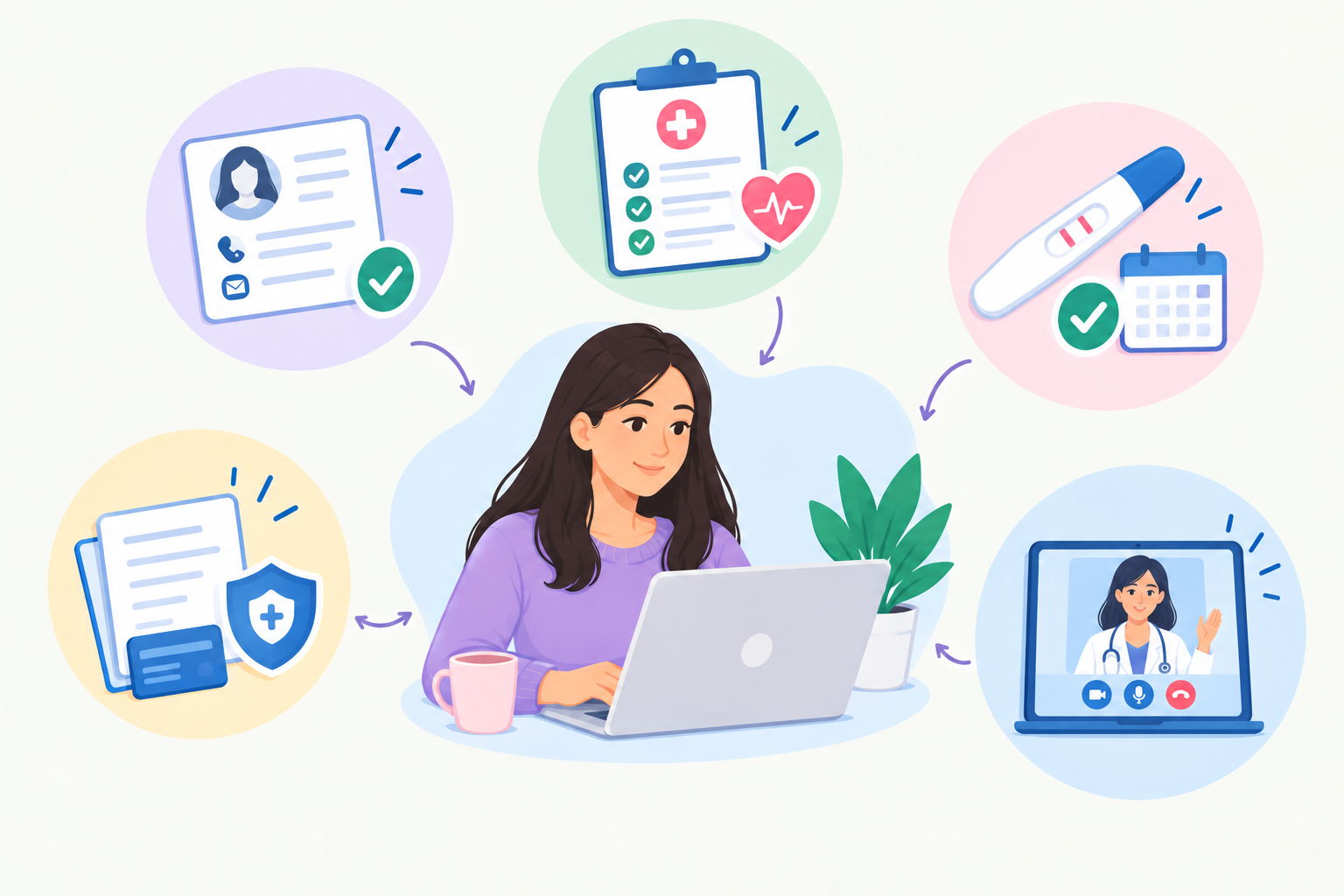
An online consultation does not always end with an immediate treatment decision.
If the provider needs additional information, they may recommend another step.
That could include:
- An ultrasound
- Laboratory testing
- An in-person examination
- Additional medical records
- Clarification about your medical history
- Another telehealth appointment
- A referral to an appropriate healthcare facility
This does not necessarily mean something is wrong. It may simply mean the provider needs additional information to determine the safest and most appropriate care pathway.
What Happens After the Online Abortion Consultation?
The next step depends on what was discussed during the appointment.
If the provider determines that telehealth is appropriate, you may receive instructions about the next stage of care.
Depending on the service, this could involve:
- Receiving medication
- Receiving prescriptions
- Scheduling an in-person visit
- Receiving additional instructions
- Arranging follow-up
- Receiving contact information for questions or urgent concerns
The World Health Organization describes telemedicine abortion care as potentially including eligibility assessment, counseling, medication-related instruction, and follow-up, depending on the service model and context.
The provider should explain what you need to do next and how to contact them if you have questions.
Is an Online Abortion Consultation Private?
Telehealth providers use technologies and procedures designed to protect health information, but privacy also depends on the patient’s surroundings and device.
HHS recommends using a private setting, securing your device, using available encryption and authentication features, and avoiding shared devices when possible.
You can improve your privacy by:
- Using your own device
- Using a private room
- Wearing headphones
- Locking your phone or computer
- Keeping your operating system and apps updated
- Avoiding public Wi-Fi when sharing sensitive health information
- Checking that you are using the provider’s legitimate website or application
- Asking the provider how they will communicate with you
For additional digital privacy information, see online privacy and abortion access.
How Can You Keep the Consultation Private From Other People?
Privacy can sometimes be a practical issue rather than a technology issue.
If you share your home, phone, computer, or email account with someone else, consider what information could be visible.
Before your appointment:
- Choose a private room if possible.
- Use headphones.
- Turn off speakerphone.
- Close unrelated applications.
- Check your notification settings.
- Lock your device when you are finished.
- Avoid leaving appointment links visible on a shared screen.
- Use a personal account rather than someone else’s device or account.
- Ask the provider what communication method they recommend.
If you need broader guidance, you can review how to keep abortion information private.
What If You Are Worried About Medical Records?
A telehealth consultation is still healthcare, so information discussed during care may be documented according to the provider’s recordkeeping practices.
An online appointment should not be assumed to leave no healthcare record simply because it happened remotely.
If medical-record privacy is one of your concerns, review information about whether abortion can appear on medical records and whether abortion goes on your health record.
You can also ask the provider directly what information will be documented and how you can access your health records.
Can Insurance Affect Privacy?
Insurance is a separate privacy consideration from the telehealth appointment itself.
If you use insurance, the insurer may have its own communications, claims, or Explanation of Benefits processes.
Before using insurance for abortion care, consider asking:
- What communications will the insurance plan send?
- Where will those communications be delivered?
- Can I request confidential communications?
- What information may appear in an Explanation of Benefits?
- Are there self-pay options?
You can learn more about whether insurance covers abortion and whether an EOB can reveal abortion care.
If paying without insurance is something you are considering, review private payment options for abortion care.
What If You Need an In-Person Visit?
An online consultation does not always replace in-person healthcare.
If the provider determines that an examination, ultrasound, testing, procedure, or another service is needed, you may be directed to an appropriate facility.
An in-person visit may also be necessary if the provider cannot safely determine eligibility through telehealth alone.
The important point is that the consultation can help determine what comes next rather than guaranteeing that every part of care will happen remotely.
What Should You Expect From a Good Online Consultation?
A useful consultation should give you an opportunity to understand your care rather than leave you with unanswered questions.
You should have an opportunity to:
- Provide relevant medical information
- Discuss your pregnancy
- Ask questions
- Understand available options
- Learn whether additional evaluation is needed
- Understand the next step
- Know how to contact the provider afterward
- Discuss reasonable privacy concerns
Clear communication is especially important when healthcare is delivered remotely.
HHS recommends that patients understand the technology being used and know how to verify communications or links they receive from their healthcare provider.
How Serenity Choice Health Can Help With Online Abortion Consultations
Serenity Choice Health provides abortion care with options that may include telehealth, depending on the patient’s circumstances and available services.
If you are considering an online consultation, you can ask the care team about the appointment process, what information you should prepare, what communication method will be used, and whether additional in-person evaluation may be needed.
You can also review what is included in Serenity Choice Health abortion care before scheduling.
If you are specifically considering telehealth, you can also read whether telehealth abortion is right for you.
For appointment timing, see how quickly you can get an abortion appointment.
Key Takeaway
A private abortion consultation online generally begins with scheduling and basic information, followed by a confidential conversation about your health, pregnancy, medical history, and available care options.
The provider may determine whether telehealth is appropriate, whether additional testing or an in-person evaluation is needed, and what the next step should be.
The exact process varies by provider and individual circumstances. Preparing your medical information, finding a private location, securing your device, and writing down your questions can help you make the most of the appointment.
If privacy is important to you, ask the provider about secure communication, appointment notifications, medical records, and any available alternatives before sharing sensitive information.
FAQ Section
Is a private abortion consultation online confidential?
Telehealth providers use privacy and security measures to protect health information, but your own surroundings and device also matter. Using a private location, securing your device, and following the provider’s communication instructions can help reduce privacy risks.
What questions will I be asked during an online abortion consultation?
You may be asked about your last menstrual period, pregnancy information, medical history, medications, allergies, symptoms, and other factors relevant to determining appropriate care.
Do I need an ultrasound for an online abortion consultation?
Not necessarily. Whether an ultrasound or other testing is appropriate depends on your medical history, pregnancy information, symptoms, and the provider’s clinical assessment. Some patients may need additional evaluation.
Can I get abortion pills after an online consultation?
Depending on your location, provider, medical circumstances, and applicable requirements, an online consultation may be used to assess eligibility for medication abortion and arrange the next steps. The provider determines whether medication abortion is appropriate.
Can I have an online abortion consultation from home?
In many telehealth models, the consultation can be completed remotely. Choose a private location where other people cannot hear the conversation, and use a device that you can secure.
What happens if the provider says I need an in-person visit?
The provider may recommend an in-person appointment if additional examination, testing, ultrasound, or another service is needed. An online consultation can help determine the appropriate next step rather than guaranteeing that every part of care will occur remotely.

Dr. James Carter is a board-certified physician and lead clinician at Serenity Choice Health, specializing in reproductive health access and medication abortion protocols. With over 20+ years of experience, he combines clinical expertise with patient-centered care to ensure safe, compassionate, and confidential reproductive healthcare.