
Understanding Your Abortion Journey
There are a number of emotions that people face during their time dealing with an abortion. You may feel fear, you may feel relief, or perhaps you are uncertain about what will happen to your body or how you are able to cope after the fact. This guide will give you all the information that you will need to have a safe and supportive, full experience through the abortion process, from start to finish.
Before the Abortion: Preparation and Awareness
Confirming Your Pregnancy
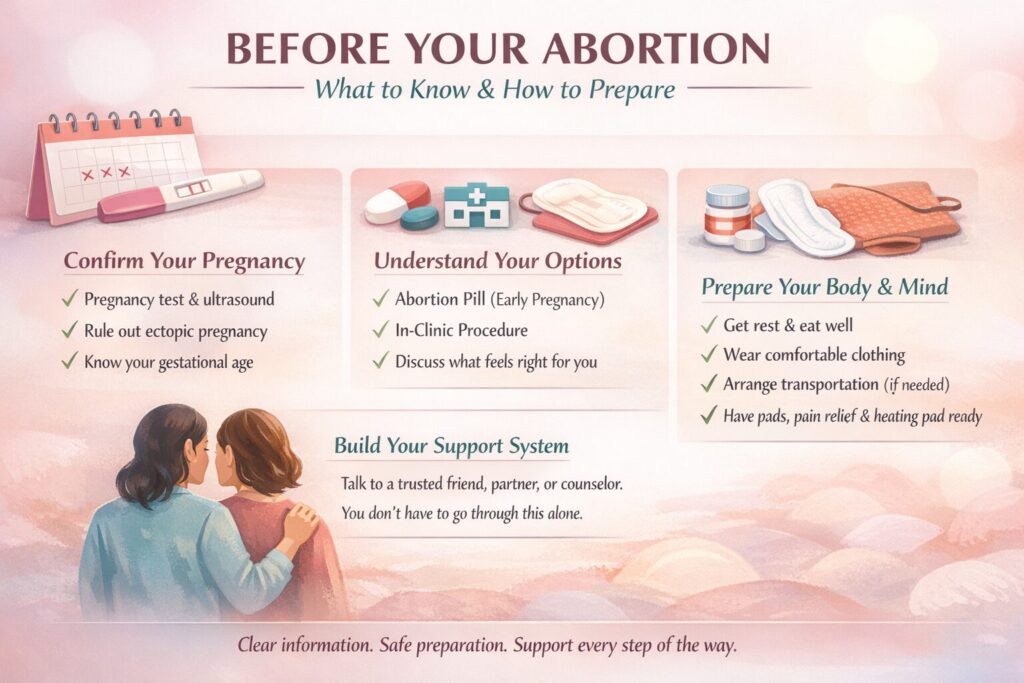
The very first step is to make sure that you are pregnant and that you are understanding of the various options you have available to you. A medical professional will administer tests which will confirm your pregnancy, while also examining you to rule out things such as having an ectopic pregnancy (in which case the embryo attaches to something other than the uterus). Having an accurate gestational age allows you to receive information on the safest types of abortions available.
Understanding Your Options
You have a various options when it comes to abortions:
Medical Abortion (Abortion Pill)
A medical abortion (referred to as an abortion pill) can typically be completed within the first 10 weeks of pregnancy. This type of abortion will require you to take two different medications. The first medication will stop your pregnancy hormone from causing further pregnancy growth and the second will induce contractions to expel (remove) the pregnancy. Medical abortions can often be taken at home, as long as you are following a proper medical professional’s instructions.
Surgical Abortion
A Surgical Abortion is provided by an OBGYN in an outpatient clinical environment. This type of abortion is performed quickly and often the entire process can be completed in one day. Surgical abortions are preferred by many individuals as they would like their medical professionals to complete the entire procedure for them, that day, within the same visit.
How the Abortion Pill Works in Detail?
Numerous individuals desire a clear picture of what is occurring inside of their body.
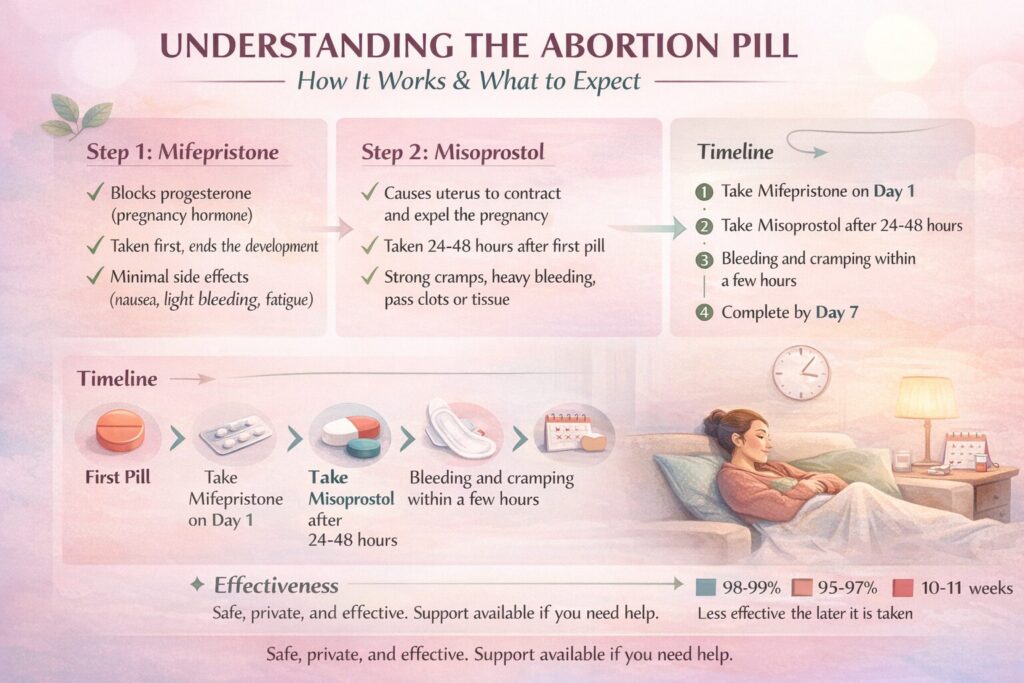
The medication abortion employs two FDA-approved drugs that, when combined, end early pregnancy through a safe and effective process.
What Is Mifepristone?
Mifepristone is an anti-progesterone hormone medication that works by blocking the hormone needed to sustain pregnancy (progesterone).
Once progesterone has been eliminated, the following occurs:
- The endometrium gives way to gestation.
- The fetus ceases to develop.
- The cervix begins to soften.
Most people will not experience much after taking mifepristone, though mild nausea and/or light spotting may occur.
What Is Misoprostol?
Misoprostol causes the uterus to contract and expel its contents.
As a result, contractions are:
- painful/causing cramps.
- producing vaginal blood loss.
- moving/carrying out the contents of the uterus.
The strength of your pain associated with contracting may be very strong for approximately four hours; this is expected.
How Effective Is the Abortion Pill?
The success rate declines due to the timing of use of the medication.
- If used before 8 weeks: 98 to 99%.
- If used between 8 to 10: 95 to 97%.
- If used between 10 to 11 weeks, the above percentages will be slightly lower yet still successful.
In addition, if the medicated abortion is deemed incomplete, the provider may recommend either additional medication or a very simple in-office procedure (e.g. aspiration).
Preparing Mentally and Physically
Preparation can help you feel comfortable and safe:
- Get plenty of sleep and eat well prior to your appointment.
- Wear loose fitting and comfortable clothing.
- Have transportation arranged in advance if you will be having sedation.
- Stock up on the items you need at home; pain relief, sanitary pads, heating pad, and snacks with a lot of fluid.
- Talk to a close friend, relative, or therapist beforehand to receive emotional support.
During the Abortion: What to Expect
Medical Abortion Experience
Medical abortions are typically completed in two steps:
- The first step involves taking a medication that blocks progesterone which is required to maintain pregnancy.
- Within one to two days after taking the first medication a second medication will cause uterine contractions (cramping) and bleeding (to expel the pregnancy).
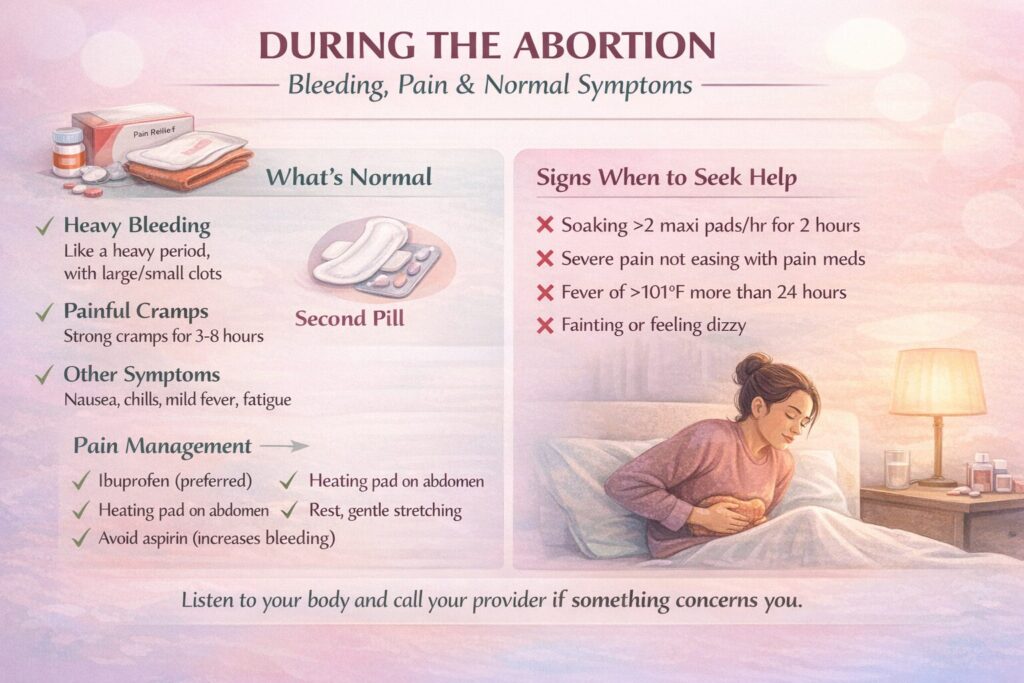
An experience may vary but generally people will have heavy bleeding (like that of a very heavy period), cramping, and passing blood clots.
Since these experiences can be quite intrusive, many women seek rest, sanitary pads, and close observation of their discomfort following the abortion. Remember that this process can be closely tied to your emotions so having someone to support you during the healing process can greatly facilitate your well-being.
How to Know If the Abortion Pill Worked?
One of the most common concerns is:
How do I know it worked?
Below are signs that the abortion pill has worked:
Signs It Was Successful
Heavy bleeding after taking misoprostol
- Passage of clots or tissue
- Cramping occurred
- Symptoms of pregnancy (nausea, breast tenderness, etc.) resolve within 3 – 7 days
- The pregnancy test is negative at 4 weeks (after the first pill).
It is common not to see recognizable tissue after taking the abortion pill.
If you did NOT have:
- Any bleeding for 24 hours after misoprostol
- Symptoms of pregnancy are still present after 4 weeks
- A positive pregnancy test at 4 weeks post-treatment
Then seek medical advice from your provider immediately.
Checkout Our Full Guide About : How to Know If the Abortion Pill Worked ?
Abortion Pill Bleeding: What’s Normal & What’s Not?
Bleeding can be alarming, but it is also one of the clearest indicators that the medication is working properly.
What Normal Bleeding Looks Like
Heavy bleeding for several hours (may or may not occur after misoprostol)
- Red blood
- Large or small clots
- Will decrease in amount over several days
While some people bleed heavily for a continuous 6 to 12 hours, others will experience intermittent bleeding.
What’s NOT Normal
If you experience any of the following , seek immediate medical assistance (> 1 maxi pad/hr x 2 hours; light headedness or fainting; severe abdominal pain not relieved with pain medication; fever >101F for >24 hours).
Abortion Pain: What to Expect & How to Relieve It
Abortion-related pain is unique to each person.
Pain can be described in a variety of ways:
- Severe menstrual-like cramps
- Contraction-type cramping
- Pressure in the area between the lower back and rectum
Most intense cramps happen for 3 – 8 hours.
Pain Relief Options
- Ibuprofen (highly recommended)
- Use a heating pad on your abdomen.
- Gentle movements or stretching exercises
- Rest in a comfortable position.
- Anti-nausea medications.
Do not take aspirin due to its potential to increase the amount of blood loss.
Anal or Rectal Pain After Abortion: Is It Normal?
It will likely surprise some people when they experience discomfort in their rectal region following their abortion. This is expected for two reasons:
- The nerves that serve the rectum and uterus are also the same nerves that coordinate the contraction of the two organs.
- Strong contractions occurring in the uterus transmit pain to the rectum through the same nerve pathways.
- Pelvic floor muscle spasms will also contribute to the discomfort felt in the rectal area.
The discomfort is likely to improve and disappear within 1 – 2 days following your abortion procedure.
Ways To Alleviate Discomfort:
- Use a heating pad.
- Gentle stretching.
- Bath in warm/hot water.
- Ibuprofen.
Surgical Abortion Experience
Surgical abortion is fast and usually performed under local anesthesia with the option of sedation. Pregnancy tissue will be removed through aspirational suction. After surgery, you will generally experience minor cramping and some bleeding. Additionally, you will typically be able to return to normal activities within one day but are advised to take it easy and rest as needed.
After the Abortion: Recovery and Care
Recovery is an evolving process and looks different for everyone, as every person is unique. Your body starts to heal as soon as you have the abortion procedure, but it is important to take care of yourself during this process.
Normal Physical Changes
Bleeding can last from several days to weeks after having an abortion. Initially, bleeding is heavier and slowly reduces to spotting until the next time you have your period.
It is common to have mild cramps and tenderness in the abdominal area during the first few days after an abortion. These physical changes may differ for everybody; however, if you have some discomfort or pain, it is a normal part of the healing process.
Abortion Pill Side Effects: Nausea, Fever & Chills
Common Temporary Side Effects of Taking the Abortion Pill Include:
Common Side Effects
- Nausea
- Vomiting
- Diarrhea
- Headache
- Chills
- Low-grade fever
Chills and Fever Are Usually Experienced a Few Hours After Taking Misoprostol and Typically Resolve Within 24 Hours.
If You Experience Fever for More Than 24 Hours or Severe Vomiting That Prevents You from Hydrating, Please Contact Your Provider.
Miscarriage vs Abortion: What’s the Difference?
- Medically, a Miscarriage Is Referred to as a Spontaneous Abortion, Therefore, the Symptoms Experienced by Both Women Will Be Similar, Such as:
- Bleeding
- Cramping
- Passing Tissue
- Treatment Options for Both May Include:
- Expectant Management (Waiting)
- Medication (Misoprostol/Abortion Pill)
- In Clinic Procedure (D&C, Surgical Abortion)
Emotional Responses
Different people react emotionally in different ways after an abortion. You may feel relieved, sad, anxious, guilty, or calm; however, it is important to realize that these feelings are valid. Preparing yourself for the plethora of emotions you may feel and having a good support system to support you is important for your mental health.
What are Self-Care Recommendations
Pain Management
- Pain medication can assist with relieving cramps/ discomfort.
- A heating pad applied to the lower abdomen may provide some relief.
Activity Guidelines
- Gradually resume regular daily activities.
- Sexual intercourse, tampons, and swimming should be avoided until bleeding stops to decrease your risk for infection.
Notify your doctor immediately if you have:
- Bleeding that is more than what you would normally soak down multiple pads in 1 hour
- Severe cramping/ discomfort that is not alleviated by your medication
- Fever, chills or have bad-smelling discharge
- Signs that suggest the abortion was not completed, such as continued signs and symptoms of pregnancy
A follow-up visit is not always necessary; however, it may help to ease your mind and can also help to address any questions you may still have.
Birth Control After Abortion
After having an abortion, your body can start ovulating again before you have your first period, which means that you could potentially get pregnant again very quickly. As soon as possible, speak with your provider about different birth control methods so you will not have an unintentional pregnancy. There are many different methods you can use, such as pills, implants, IUDs, and condoms. Your provider will help determine which birth control method is appropriate for you based on your health and your preference.
When Can You Have Sex After an Abortion?
After having an abortion, you may ovulate again as soon as 2–3 weeks later, which means that you could become pregnant quickly after you’ve had an abortion.
Here are some general recommendations:
- Wait until your bleeding has stopped
- If you wish to avoid getting pregnant
- Use birth control
- Be aware of how you are feeling in your body;
While many people feel emotionally ready to move forward shortly after having an abortion, some people will take longer than others and both are normal.
Emotional Support and Well-Being
Having emotional support from family and friends is also important. You can use the following strategies to get emotional support before, during, and after your abortion:
- If you are having trouble controlling your emotions, talk to a licensed counselor or therapist.
- Talk to trusted family members and/or friends about how you are feeling.
- Get involved in support groups or online communities to find others who are also experiencing similar feelings.
- Take care of yourself, and practice self-care activities like reading a personal diary, practicing meditation, or light exercise
Mental Health After Abortion: What Research Shows
- Most people will experience relief after having an abortion.
- Long-term mental health does not show any negative effects related to abortion.
- The majority of emotional distress resulting from abortion occurs due to others’ judgment or lack of support.
If you are feeling overwhelmed emotionally:
- Be sure to speak with a mental health professional (therapist).
- Connect with a qualified support group or organization of women who have had similar experiences and can provide support.
- Reach out to trustworthy friends or family members to discuss how you are feeling.
- It takes strength to seek help.
Abortion Safety & Medical Facts
Overall, the recommendations of numerous leading physician organizations related to:
The safety of abortion / having a baby: Abortion is safer than having a baby.
- Less than 1% of women have serious complications after an induced abortion up to 13 weeks.
- Medication abortions have been safely performed for decades all over the world.
- As more individuals become aware of and recognize the safety data from evidence regarding induced abortions.
They will be less fearful of having misinformation regarding induced abortions.
Ready for Safe, Supportive Abortion Care?
If you’re considering an abortion or need guidance about your next step, Serenity Choice Health is here to support you with confidential, medically supervised care. From understanding your options to recovery and follow-up, our team provides clear instructions, trusted medications, and compassionate support every step of the way. You don’t have to navigate this alone — reach out today to explore safe abortion care tailored to your needs.
What’s Included in an Abortion Care Package?
If receiving care through Serenity Choice Health, your kit may include:
- Mifepristone
- Misoprostol
- Anti-nausea medication
- Pain relief medication
- Clear step-by-step instructions
- Access to medical support
Having structured guidance significantly reduces anxiety and improves confidence during the process.
Frequently Asked Questions (FAQs)
Will an abortion affect future fertility?
NO! As long as the procedure was done correctly by a qualified healthcare provider, you should not have any issues conceiving in the future.
How soon will my period return?
The first period after your abortion should return 4-6 weeks from the date you had your abortion.
Can I get pregnant immediately after an abortion?
YES! Depending on your fertility (ovulation), it is possible for you to become pregnant before your first menstrual period. Therefore, it is crucial that you utilize birth control as soon as possible after your abortion.
Is it normal to feel emotional after an abortion?
YES! It is common to experience a variety of emotions such as relief, sadness, and anger after your abortion.
Do I need a follow-up appointment?
You should return to your doctor for a follow-up appointment only if you experience complications or if you have questions or concerns regarding your abortion.
How long does an abortion take from start to finish?
The process takes about 1-2 days after taking the medication; for about 2 weeks after that, there will be lighter bleeding.
Can you shower after taking abortion pills?
Yes, it’s safe to shower, and it may actually make you feel better.
Can I travel after an abortion?
Once your heavy bleeding has stopped and you feel stable, long-distance travel is usually safe as well.
Can abortion cause long-term health problems?
There is no evidence that a safe, legal abortion causes long-term health problems.
Is it normal to still test positive after 2 weeks?
Yes, hormones from pregnancy can remain alongside your body fluids for up to four weeks.
Conclusion
Abortion is a personal journey and preparation, attentiveness and support are important components of taking good care of yourself. Understanding the abortion process can reduce your stress level and increase your chances of recovering physically and emotionally. Caring for your body and mind, seeking help from others and remaining up-to-date with current information can improve the quality of your vaginal abortion experience.

Dr. James Carter is a board-certified physician and lead clinician at Serenity Choice Health, specializing in reproductive health access and medication abortion protocols. With over 20+ years of experience, he combines clinical expertise with patient-centered care to ensure safe, compassionate, and confidential reproductive healthcare.