
Overview of Abortion Statistics in the United States
According to statistics for the United States; an estimated (1.1 million) abortions are completed each year, which have steadily increased over the last couple of years. Of all abortions, 60%+ are considered medication or “medical” abortions, and around 1 in 4 of all abortions utilize telehealth options as a new form of delivering care. The majority of abortions (over 90%) occur during the first trimester (12 weeks) of a pregnancy.
Analyzing and understanding the abortion statistics in the United States will give you a broader perspective of the availability of reproductive health care, trends related to reproductive health; and how to identify and address the growing gap in care. For example, the data shows us that the rapidly changing landscape of the abortion statistics has affected the way individuals are accessing reproductive health services due to legal changes, availability, and evolving technology (ie telehealth) providing the ability to provide care outside of traditional clinic or office settings.
Although there are differences in regulations from state to state, the total number of abortions remains high, which speaks to the continued need for accurate and accessible healthcare services. At Serenity Health Choice, we have a range of information to help individuals understand current trends in reproductive health (via accurate, reliable, and data-based), so they can make more informed decisions.
Total Number of Abortions in the U.S
The most recent research indicates that abortion rates are steady following major changes in state and federal law during 2022. If we compare overall abortion counts to pre-2020 numbers, we can see there is a rise in the number of abortions.
- 2025: Estimates indicate approximately 1.1 million abortions
- 2024: Estimated between 1.12 million and 1.14 million abortions
- 2020: Estimated at about 930,000 abortions
This shows over a 20% increase from the 2020 abortion volume and reflects current trends in abortion access, education, and service provision.
While there have been states that have passed laws to limit abortions, there have also been states that have passed laws to expand access to abortion. As such, the increase in abortions is a result of an even distribution rather than a net reduction in abortion numbers.
Abortion Rate and Population Trends
Abortion rates are commonly estimated in terms of 1,000 women aged 15 to 44; recent historical trends show that the abortion rate has grown slowly and steadily since 1989 after declining for several years.
- 2025 estimated abortion rate: 16 – 17 abortions per 1,000 women.
While access to the ability to get an abortion differs by geographic area, the demand for abortion will stay the same across the United States.
Changes in population, economic conditions, and differences in healthcare access can all affect the number of abortions performed annually.
Types of Abortion: Medication vs. In-Clinic Procedures
When it comes to abortion care many times trending change has occurred with the most substantial being the transition to medication-based procedures.
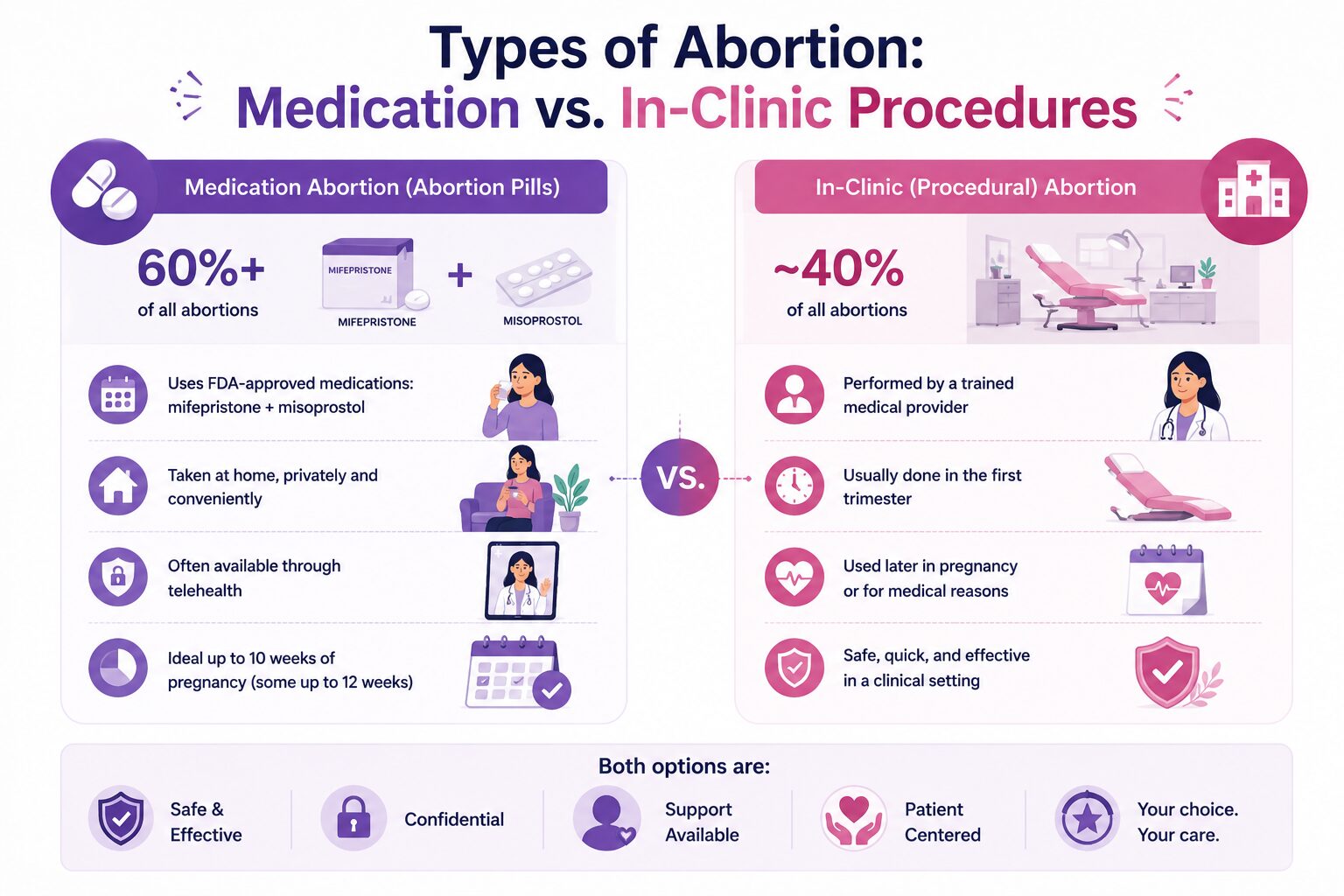
Medication Abortion (Abortion Pills)
- Represents more than 60% of abortions
- Utilizes medicines that are FDA approved such as mifepristone
- A “blocking” agent against progesterone, and misoprostol, a drug that softens the cervix
In-Clinic (Procedural) Abortion
- Most generally used in the first trimester
- Procedural or in-clinic abortion
- Although it is a smaller percentage of total abortions, this method is still a significant proportion
- Usually utilized in later gestational periods or upon request due to medical necessity
The increasing popularity of medication abortion has been attributed to the following factors:
- Convenience
- Privacy
- Greater accessibility through telehealth devices
The Rise of Telehealth Abortion Services
Telemedicine has altered how abortion care is received in the United States.
- Around 25% of abortions done today involve telehealth services.
- Patients have access to licensed providers without having to visit the clinic in person.
- Patients can receive medication directly at home from an approved pharmacy in states that allow abortion services via telemedicine abortion.
- Telehealth has been and continues to be particularly beneficial to individuals living in rural areas or areas where there is limited access to abortion service clinics.
Serenity Health Choice views the use of telemedicine as a major advancement to providing safe and timely access to reproductive healthcare.
Interstate Travel for Abortion Care
Many people have traveled across state boundaries to access abortion services because of different state laws.
- In 2025, over 140,000 patients traveled out of state for abortion services
- Approximately 1 in 7 abortion patients receive abortions out-of-state
- Common reasons for traveling out-of-state include:
- State level restrictions or bans
- Limited local providers
- Long wait times for appointments
Increased demand on clinics in states that provide protection increases the logistical and financial burden of obtaining abortion services and the strain on resources.
Availability of Abortion Providers and Clinics
The availability of abortion services is directly related to the availability of abortion providers.
- There are approximately 750 clinics providing abortion services in the United States.
- Approximately 13 states have no clinics providing abortion services due to state bans.
- The number of operating clinics has been declining over time.
The declining availability of abortion clinics has led to:
- Longer wait times
- Higher patient volumes at the remaining providers and clinics
- Increased reliance on telehealth solutions
Gestational Age and Timing of Abortions
The majority of abortions in the United States occur during the first trimester.
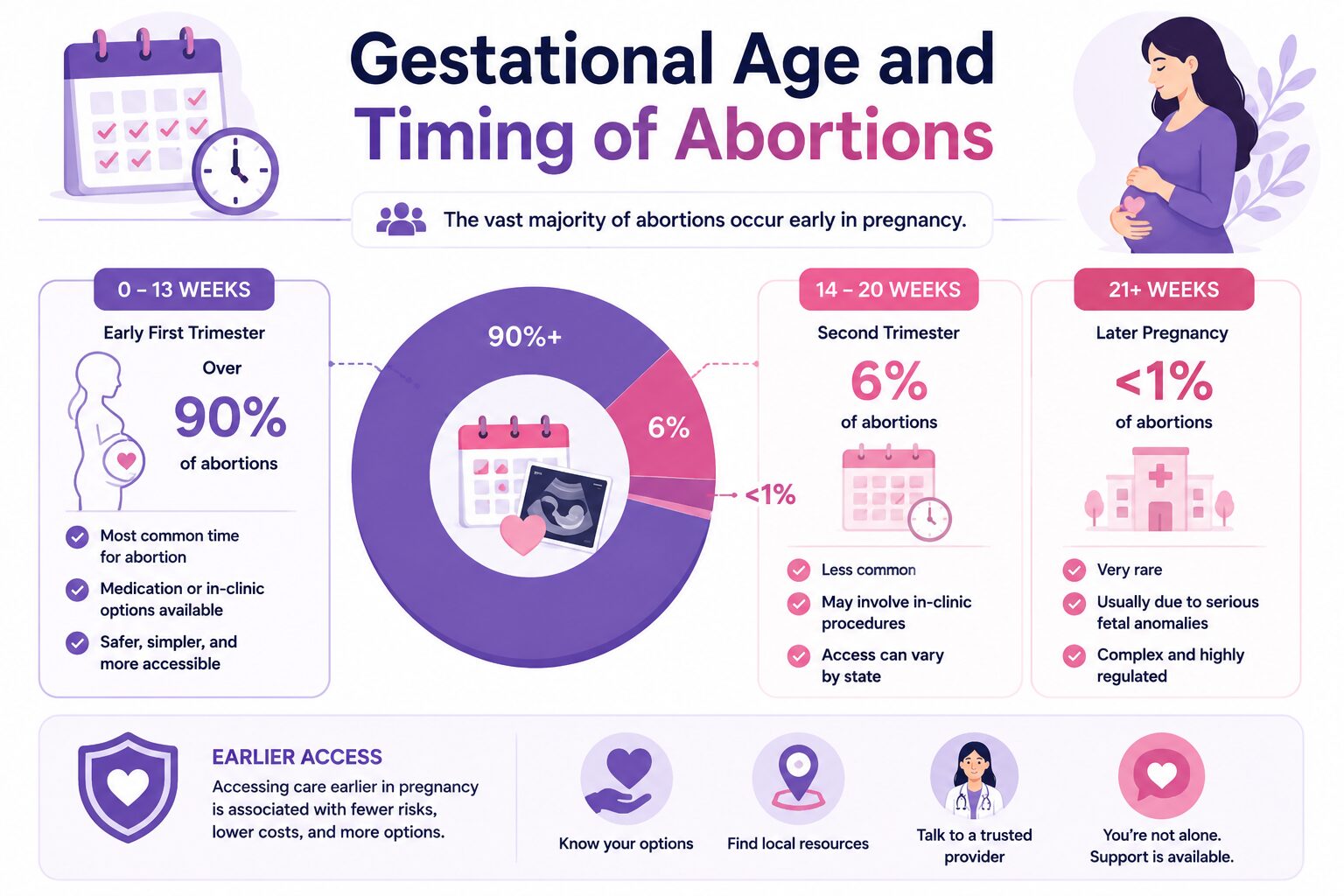
- Over 90% of abortions performed within the first 13 weeks of gestation.
- Approximately 6% of abortions are performed between 14 and 20 weeks.
- Less than 1% of abortions are performed after 21 weeks — learn more about what late-term abortions involve.
Being able to access care in the first trimester is very important because once you wait past the first trimester, the cost and complexity of obtaining an abortion increases significantly.
Demographics and Who Is Most Affected
Abortion Rates by Demographic Groups: Certain groups may experience more barriers to accessing abortion services than others.
Key Demographic Insights:
- Most of these patients are in their 20’s
- Lower income population has the highest incidence
- More severe effects are seen in persons who do not have insurance or are under-insured
- Marginalized communities face experience/affect from some of these same issues at higher rates than the overall population
Economic disparity and the inability to access health care are significant factors that contribute to the outcome.
Key Factors Influencing Abortion Trends
Abortion data in the United States is influenced by a variety of factors:
-
1. State-Level Policies
Laws do differ, which creates variations in access and services across different areas.
2. Healthcare Infrastructure
Access is controlled by provider availability and the capacity of clinics. Hospitals also play a role in access.
3. Financial Barriers
The financial burden of reproductive procedures, traveling to a provider, and taking leave from work continues to be an obstacle.
4. Technological Advancements
With the expansion of telemedicine, it has become much easier to have access, particularly if one resides in an area that is medically underserved.
5. Public Awareness and Education
Public access to appropriate, unbiased and timely information influences an individual’s ability to make informed decisions regarding reproductive health options.
Serenity Health Choice is dedicated to reducing these barriers by providing relevant information, access to funding sources, and navigation services.
Serenity Health Choice is dedicated to reducing these barriers by providing relevant information, access to funding sources, and navigation services.
The Role of Financial and Support Resources
While statistics have the ability to show trends in abortion, they also indicate the need for support systems that will help reduce barriers to accessing reproductive care.
Support systems include:
- Abortion Funding Programs that provide financial assistance for abortion procedures;
- Transportation and lodging assistance;
- Telehealth Services that allow patients to go to their providers from their home;
- Educational Resources that provide patients with accurate information.
These support systems are essential in helping individuals have equitable access to the reproductive healthcare services they need, regardless of where they live or how much money they have.
Why Understanding Abortion Statistics Matters
Abortion stats tell a lot more than just how many abortions are occurring — they also give information about:
- Access to health care
- Disparities in social and economic status
- How well public policies work
- Where people are in need of more support
When we look at the trend data, health providers, policymakers, and other organizations can find ways to improve access and outcomes.
How Serenity Health Choice Supports Informed Decisions
At Serenity Health Choice, we aim to provide the most current and accurate information possible regarding all relevant topics surrounding reproductive health care. This includes abortion stats and information about access.
We are committed to:
- Distilling complex data into accessible formats
- Raising awareness of the barriers to obtaining reproductive health care
- Connecting people with trusted resources
- Helping individuals make informed and confident decisions
By providing quality information, we enable individuals to have a better understanding of the many options available, and to navigate the health care system successfully.
Conclusion
Abortion statistics in the United States show a more complex and constantly changing landscape for healthcare. The overall number of abortions is stabilizing, but there are many differences in how easy it is to access abortion care depending on where someone lives, the amount of money they have available, and the type of healthcare system they are a part of.
The following points summarize what we see as the major findings:
- Over 1.1 million abortions are performed in the U.S. every year
- There is an increasing use of medication and telemedicine for abortions
- People are traveling longer distances across state lines to get abortions
- There are continuing barriers to accessing abortions for low-income and marginalized persons
Addressing these types of issues will require a combination of better public policy decisions, more available healthcare services, and better support systems that are accessible.
Serenity Health Choice continues to provide information and resources to help people make informed choices regarding their reproductive healthcare choices.
Frequently Asked Questions (FAQs)
How many abortions are performed in the U.S. each year?
Estimates indicate approximately 1.1 million abortions are performed annually in the United States as of 2025, reflecting a 20%+ increase compared to 2020 figures.
What percentage of abortions are medication abortions?
Over 60% of all abortions in the United States are now medication abortions, making it the most commonly used method of abortion care.
How common is telehealth for abortion services?
Around 25% of abortions today involve telehealth services, with patients able to consult licensed providers and receive medication at home in states where it is legally permitted.
At what stage of pregnancy do most abortions occur?
Over 90% of abortions in the United States occur within the first 13 weeks of pregnancy. Less than 1% occur after 21 weeks.
How many people travel out of state for abortion care?
In 2025, over 140,000 patients traveled out of state for abortion services, representing approximately 1 in 7 abortion patients nationally.
Who is most affected by barriers to abortion access?
People in their 20s, those with lower incomes, uninsured or underinsured individuals, and marginalized communities face the greatest barriers to accessing abortion services.
How many abortion clinics are currently operating in the U.S.?
There are approximately 750 clinics providing abortion services across the United States, with around 13 states having no operating clinics due to state-level bans.
What are the biggest barriers to abortion access in the U.S.?
The key barriers include state-level policy restrictions, limited provider availability, financial costs, geographic distance to providers, and lack of awareness about available support resources.

Dr. James Carter is a board-certified physician and lead clinician at Serenity Choice Health, specializing in reproductive health access and medication abortion protocols. With over 20+ years of experience, he combines clinical expertise with patient-centered care to ensure safe, compassionate, and confidential reproductive healthcare.