

Many STIs cause no symptoms at all. A woman can carry chlamydia, gonorrhea, or even HIV for months sometimes years without any sign that something is wrong. By the time symptoms do appear, silent infections can have already caused serious damage to reproductive health, including pelvic inflammatory disease, fallopian tube scarring, and fertility complications.
Knowing how often to get tested, which infections to screen for, and when your personal risk level calls for more frequent checkups is one of the most practical things you can do for your long-term health. This guide breaks all of it down clearly, by age, by risk factor, and by situation.
How Often Should Women Get STI Testing Based on Their Lifestyle?
There is no single answer that applies to every woman. Testing frequency depends on your age, sexual behavior, number of partners, and whether you have any known risk factors. That said, there are some widely accepted baselines to work from.
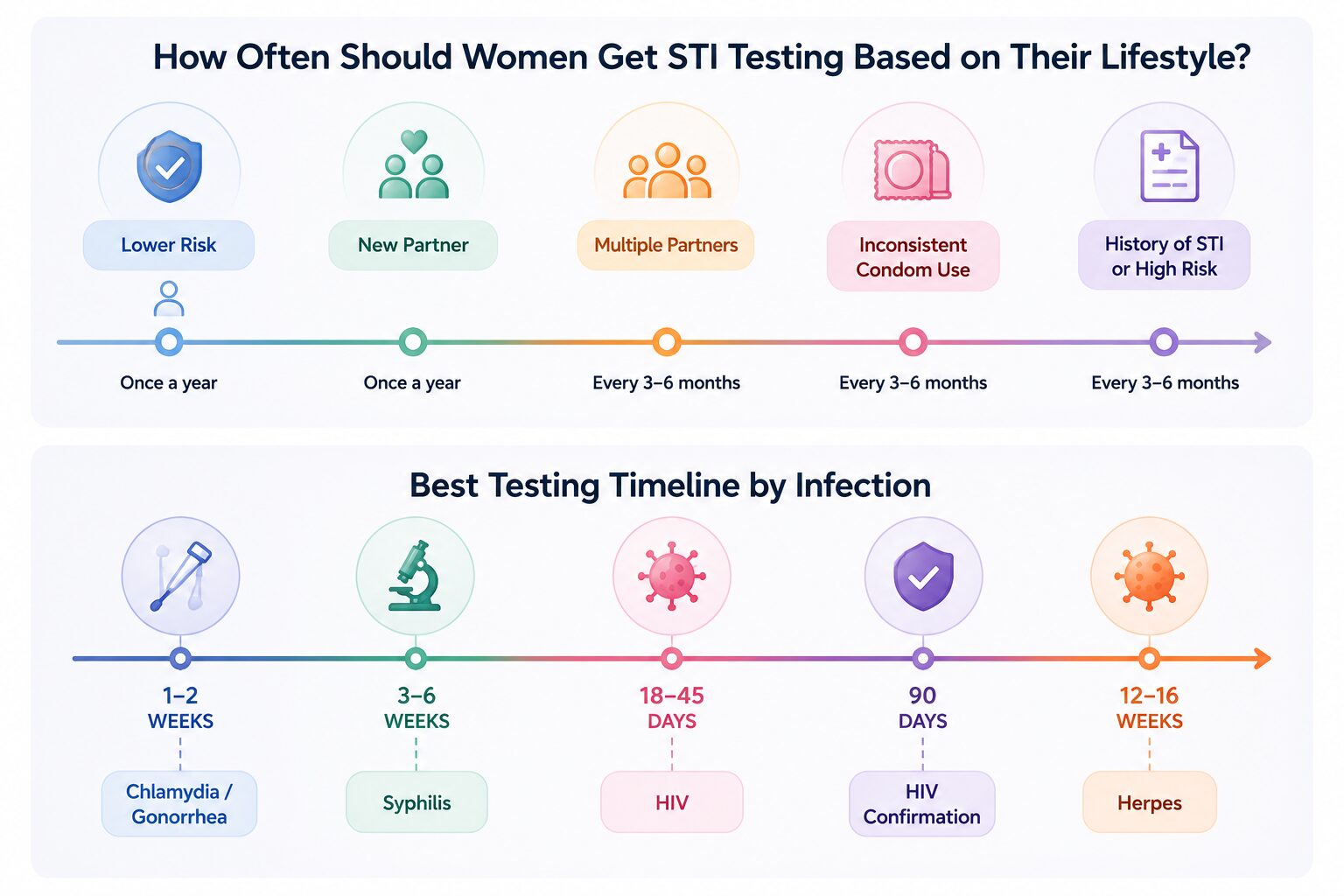
Annual STI Testing Recommendations for Sexually Active Women
The CDC recommends that all sexually active women under 25 get tested for chlamydia and gonorrhea at least once a year. For women 25 and older, annual screening for these infections is recommended if they have new or multiple sexual partners. HIV testing is recommended at least once for all adults between the ages of 15 and 65, with more frequent testing for those at higher risk.
Annual testing is a reasonable minimum for most sexually active women. It is not a ceiling it is a floor.
When Testing Every 3 to 6 Months May Be Necessary
Some women benefit from more frequent screening. If you have multiple sexual partners, engage in unprotected sex regularly, have a history of prior STIs, or have a partner whose sexual history is unknown, testing every three to six months gives you a much more accurate picture of your sexual health status. Our STI and STD testing services are designed to make frequent, confidential screening straightforward and accessible.
Why “No Symptoms” Doesn’t Mean “No STI”
This is one of the most important points in sexual health education. Chlamydia shows no symptoms in approximately 70 percent of women who have it. Gonorrhea, syphilis, herpes, and HIV can all be completely silent in the early stages. Waiting until something feels wrong is not a reliable strategy routine testing is.
How Sexual Behavior Affects Testing Frequency
The number and type of sexual partners you have, whether you use barrier contraception consistently, and whether your partners have been recently tested all influence how often you should be screened. More partners and less consistent condom use generally translate to more frequent testing being the responsible choice.
STI Testing Guidelines by Age Group for Women
STI Screening Recommendations for Women Under 25
Women in this age group face the highest rates of chlamydia and gonorrhea of any demographic. Annual testing for both infections is strongly recommended for all sexually active women under 25, regardless of symptoms or perceived risk. HIV testing should also be done at least once, with repeat testing based on behavior. Cervical screening with a Pap smear begins at age 21.
Testing Guidance for Women Ages 25 to 45
Annual chlamydia and gonorrhea testing continues for women in this group who have new or multiple partners. Syphilis and HIV screening are recommended based on risk. Pap smears are typically done every three years, or every five years when combined with HPV co-testing from age 30 onward.
STI Testing for Women Over 45
STI risk does not disappear with age. Postmenopausal women who are sexually active can still contract and transmit STIs. Testing recommendations remain risk-based in this group. One important note is that vaginal changes after menopause including reduced lubrication and thinner tissue can actually increase susceptibility to certain infections, making barrier protection and routine screening more important, not less.
How Menopause Affects STI Risk
Because pregnancy is no longer a concern, some postmenopausal women stop using condoms, which increases STI exposure risk. Declining estrogen also affects vaginal tissue integrity. Women in this life stage should continue having open conversations with their providers about sexual health screening. Our women’s primary care services provide ongoing, age-appropriate reproductive health support at every stage of life.
Which STIs Should Women Be Tested for Regularly?
Chlamydia and Gonorrhea Screening Frequency
These two bacterial infections are the most commonly reported STIs in the United States and are frequently tested together. Annual testing is recommended for all sexually active women under 25 and for older women with risk factors. Both are detectable through a urine sample or vaginal swab and are highly treatable with antibiotics when caught early.
HIV Testing Recommendations
Routine HIV testing is recommended at least once for all adults. Women with higher risk factors including multiple partners, inconsistent condom use, or a partner of unknown status — should be tested more frequently, typically once a year or every six months. Early HIV diagnosis dramatically improves health outcomes and prevents transmission.
Syphilis Screening Guidelines
Syphilis cases have risen significantly among women in recent years. Blood testing for syphilis is recommended for pregnant women and for anyone at elevated risk. When detected in its early stages, syphilis is easily treated with antibiotics. Left undetected, it can cause serious cardiovascular and neurological complications over time.
HPV Testing and Pap Smears: What’s the Difference?
HPV is not screened through a standard STI panel it is managed through cervical cancer screening. A Pap smear checks for abnormal cervical cells. An HPV test checks for the presence of high-risk HPV strains that can lead to those abnormalities. From age 30, co-testing with both Pap and HPV every five years is the recommended standard. Many women confuse cervical screening with STI testing they are separate processes.
Herpes Testing: When Is It Recommended?
Herpes is not typically included in routine STI panels. Blood testing for HSV can produce false positives and does not always change clinical management. Herpes testing is generally recommended when visible symptoms are present or when a patient specifically requests it and understands the limitations of available tests.
When Should Women Get Tested After Unprotected Sex?
STI Incubation Periods Explained
Different infections have different window periods the time between exposure and when a test can reliably detect the infection. Testing too soon after exposure can produce a false negative even when an infection is present.
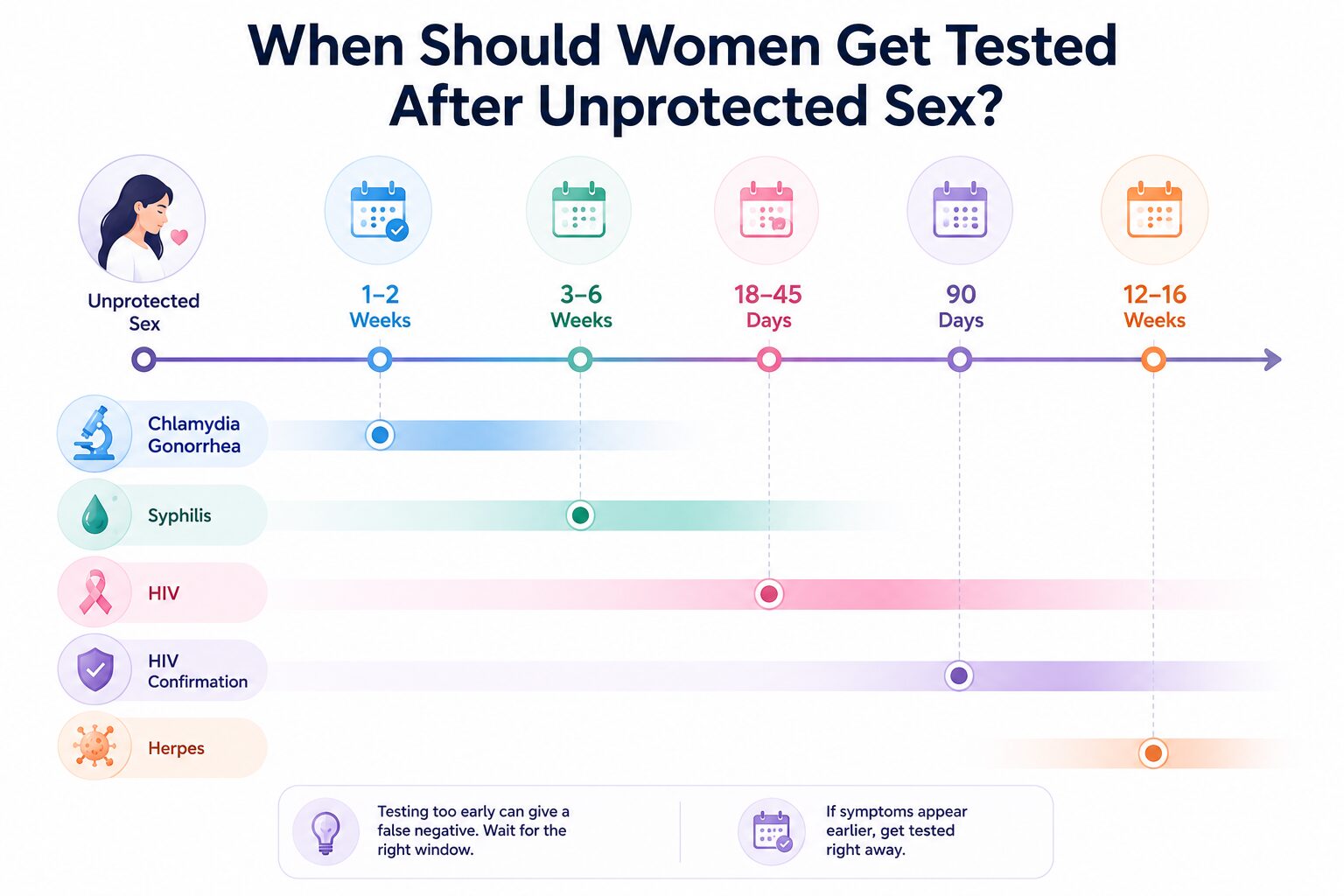
Best Testing Timeline by Infection
Chlamydia and gonorrhea can typically be detected within one to two weeks of exposure. Syphilis has a window period of three to six weeks. HIV antigen and antibody tests are most reliable at eighteen to forty-five days, with confirmatory testing recommended at ninety days if an earlier test is negative. Herpes can be tested when sores are present, or via blood test after twelve to sixteen weeks.
Should You Retest After an Initial Negative Result?
Yes, in many cases. If you tested within the window period of a particular infection and received a negative result, retesting after the full window has passed gives you a more accurate answer. Your provider can help you decide which infections warrant follow-up testing based on your exposure type and timing.
Do Women Need STI Testing If They Have No Symptoms?
Common STIs That Often Show No Symptoms
Chlamydia is asymptomatic in roughly 70 percent of women. Gonorrhea frequently causes no noticeable symptoms either. HIV, syphilis, trichomoniasis, hepatitis B, and hepatitis C can all be present without producing any visible signs in the early stages. The absence of symptoms is not reassurance it is exactly why routine testing exists.
Hidden Risks of Untreated Infections
Untreated chlamydia and gonorrhea are the leading causes of pelvic inflammatory disease, which can cause permanent scarring of the fallopian tubes and significantly reduce fertility. Untreated syphilis progresses through stages that can eventually affect the heart and nervous system. Untreated HIV weakens the immune system over years. Routine screening catches these infections before they have time to cause damage.
Why Routine Screening Matters
Screening is a preventive healthcare tool, not just a diagnostic one. It is not about whether you think you have been exposed it is about maintaining awareness of your health status on a regular basis, the same way you would with blood pressure or cholesterol. STI screening belongs in the category of routine self-care.
Women Who May Need STI Testing More Frequently
Women With Multiple Partners
Having more than one sexual partner or having a partner who has other partners increases the statistical probability of exposure. Women in this situation benefit from testing every three to six months rather than once a year.
Women Starting a New Relationship
Testing before becoming sexually active with a new partner is a practical step that many healthcare providers recommend. Both partners testing before beginning a relationship without barrier protection gives both people accurate, current information about their health status. Book a confidential appointment to get tested before or after starting a new relationship.
LGBTQ+ Women and STI Screening
Women who have sex with women are sometimes incorrectly told they face no STI risk. In reality, several infections including herpes, HPV, bacterial vaginosis, and trichomoniasis can be transmitted between women. LGBTQ+ women should receive the same risk-based screening as anyone else and should feel comfortable discussing their sexual practices openly with their provider.
Women With a History of STIs
Having had an STI previously increases the risk of reinfection, particularly if the same risk behaviors are present. Women with prior STI diagnoses often benefit from more frequent testing typically every three to six months and should discuss an individualized screening schedule with their provider.
Women Living With HIV
Women living with HIV require regular monitoring of their own health alongside awareness of their partners’ status. Regular STI screening is part of comprehensive HIV care, as certain co-infections can complicate HIV management and increase transmission risk.
STI Testing During Pregnancy: How Often Is It Recommended?
Which STI Tests Are Routine in Pregnancy?
Prenatal STI screening is a standard part of pregnancy care. At the first prenatal visit, most providers test for chlamydia, gonorrhea, syphilis, HIV, and hepatitis B. Some also screen for hepatitis C and bacterial vaginosis. These tests are recommended because several STIs can be transmitted from mother to baby during pregnancy or delivery, with potentially serious consequences.
Retesting During the Third Trimester
For women with risk factors including new or multiple partners, a history of STIs, or known exposure during pregnancy retesting in the third trimester is often recommended. This is especially true for syphilis, gonorrhea, chlamydia, and HIV. An infection acquired after the first prenatal visit could otherwise go undetected until delivery.
Risks of Untreated STIs During Pregnancy
Untreated STIs during pregnancy can cause miscarriage, premature labor, low birth weight, and transmission of infection to the newborn. Congenital syphilis, neonatal herpes, and HIV transmission are all preventable with early screening and treatment. Prenatal STI testing is not optional it is one of the most impactful preventive steps in maternal healthcare.
At Home STI Tests vs Clinic Testing: Which Is Better for Women?
At-home STI testing has improved significantly and is now a genuinely useful option for many women. Most kits test for chlamydia, gonorrhea, HIV, and syphilis using urine, swab, or finger-prick blood samples mailed to a certified lab. Accuracy for these infections is comparable to clinic testing when samples are collected correctly. Learn more about the benefits of telehealth and how virtual care can support your sexual health screening needs.
The main limitations of at-home testing are that comprehensive panels may not include every infection, some positive results require clinic confirmation, and treatment still requires a provider. At-home testing is best suited for routine monitoring or screening after low-risk exposure when access to a clinic is limited.
In-person clinic testing remains the better option when you have symptoms, need a full panel, require immediate treatment, or want to discuss your results and risk profile with a provider directly. STI and STD testing through a dedicated women’s health clinic typically includes counseling and personalized screening recommendations alongside your results.
Common Mistakes Women Make With STI Testing
Waiting for symptoms to appear. As covered throughout this guide, most STIs produce no symptoms in the early stages. By the time symptoms develop, an infection may have been present for months and may have already caused complications.
Testing too early after exposure. Testing before the window period ends can produce a false negative that provides false reassurance. Knowing the appropriate testing timeline for each infection matters.
Skipping retesting after treatment. After treatment for an STI, follow-up testing confirms the infection has cleared. Some infections, such as chlamydia and gonorrhea, have high reinfection rates, making retesting three months after treatment a standard recommendation.
Assuming one negative test covers everything. A negative result only applies to what was actually tested. If your panel did not include herpes, hepatitis, or trichomoniasis, you do not have results for those infections. Always ask your provider exactly which infections were screened.
Where Can Women Get Confidential STI Testing?
Women have several options for confidential STI testing, including primary care providers, OB-GYN offices, sexual health clinics, community health centers, urgent care clinics, and telehealth services. Many of these options allow testing without a partner’s knowledge and without results appearing on shared insurance plans in some circumstances. Read our guide on protecting your health privacy and whether medical records are shared to understand your confidentiality rights.
Our women’s primary care services can coordinate STI screening alongside routine wellness visits, making it easy to incorporate testing into regular healthcare without a separate appointment. Telehealth options have also expanded access significantly, allowing women to consult with a provider, receive a testing kit, and get results and prescriptions without visiting a clinic in person.
When scheduling an STI appointment, expect to answer questions about your sexual history and risk factors. This information helps your provider order the right tests and is kept confidential under healthcare privacy protections. Our birth control and contraceptive services can also be incorporated into your screening visit as part of a complete reproductive health plan.
Frequently Asked Questions
How often should sexually active women get tested for STIs?
Women under 25 who are sexually active should be tested for chlamydia and gonorrhea at least once a year, at minimum. Women 25 and older with new or multiple partners should follow the same annual schedule, with more frequent testing every three to six months recommended for those with higher risk factors.
Do women need STI testing every year?
Annual testing is the baseline recommendation for sexually active women, but it is not a maximum. Depending on your number of partners, contraception use, and sexual history, more frequent testing may be the more appropriate and protective choice for your health.
Can women have STIs without symptoms?
Yes, and this is extremely common. Chlamydia shows no symptoms in approximately 70 percent of women, and many other infections including gonorrhea, HIV, syphilis, and hepatitis can be completely silent in their early stages. Routine screening is the only reliable way to know your status.
When should I get tested after unprotected sex?
The timing depends on the specific infection you are concerned about. Most bacterial infections like chlamydia and gonorrhea can be detected within one to two weeks, while HIV testing is most accurate at 18 to 45 days. When in doubt, consult a provider who can advise the right timeline based on your exposure.
What STI tests should women get regularly?
At a minimum, sexually active women should be regularly screened for chlamydia, gonorrhea, and HIV. Syphilis, hepatitis B, hepatitis C, and trichomoniasis testing are added based on risk factors. Cervical screening for HPV is handled separately through Pap smears and is not part of a standard STI panel.
How often should pregnant women get STI screening?
Pregnant women are typically screened for chlamydia, gonorrhea, syphilis, HIV, and hepatitis B at their first prenatal visit. Women with ongoing risk factors or known exposure during pregnancy should be retested in the third trimester to ensure no new infections have occurred that could affect the birth or the baby.

Dr. James Carter is a board-certified physician and lead clinician at Serenity Choice Health, specializing in reproductive health access and medication abortion protocols. With over 20+ years of experience, he combines clinical expertise with patient-centered care to ensure safe, compassionate, and confidential reproductive healthcare.