
Many people expect pregnancy symptoms to disappear immediately after an abortion. When nausea, breast tenderness, fatigue, or bloating continue for several days—or even weeks—it can be confusing and sometimes stressful.
The good news is that pregnancy symptoms after abortion usually fade gradually rather than overnight. Your body needs time to adjust as pregnancy hormones decrease and the uterus returns to its non-pregnant state.
Understanding what is normal during recovery can help ease anxiety while also helping you recognize when it’s important to contact a healthcare provider.
Why You May Still Feel Pregnant After an Abortion
The main reason pregnancy symptoms continue after abortion is that pregnancy hormones do not disappear instantly.
During pregnancy, your body produces large amounts of human chorionic gonadotropin (hCG), progesterone, and estrogen. These hormones are responsible for many early pregnancy symptoms.
After an abortion, hormone levels begin falling, but this process takes time.
Because these hormones remain in your bloodstream for days or weeks, you may continue experiencing symptoms even though the pregnancy has ended.
This is a normal part of recovery for many patients.
Understanding How hCG Levels Decline
hCG is the hormone detected by pregnancy tests.
After an abortion:
- hCG levels begin decreasing almost immediately.
- The amount of time needed for hCG to return to non-pregnant levels varies.
- Higher hormone levels at the time of abortion generally take longer to decline.
- Pregnancy tests may remain positive for several weeks because small amounts of hCG are still present.
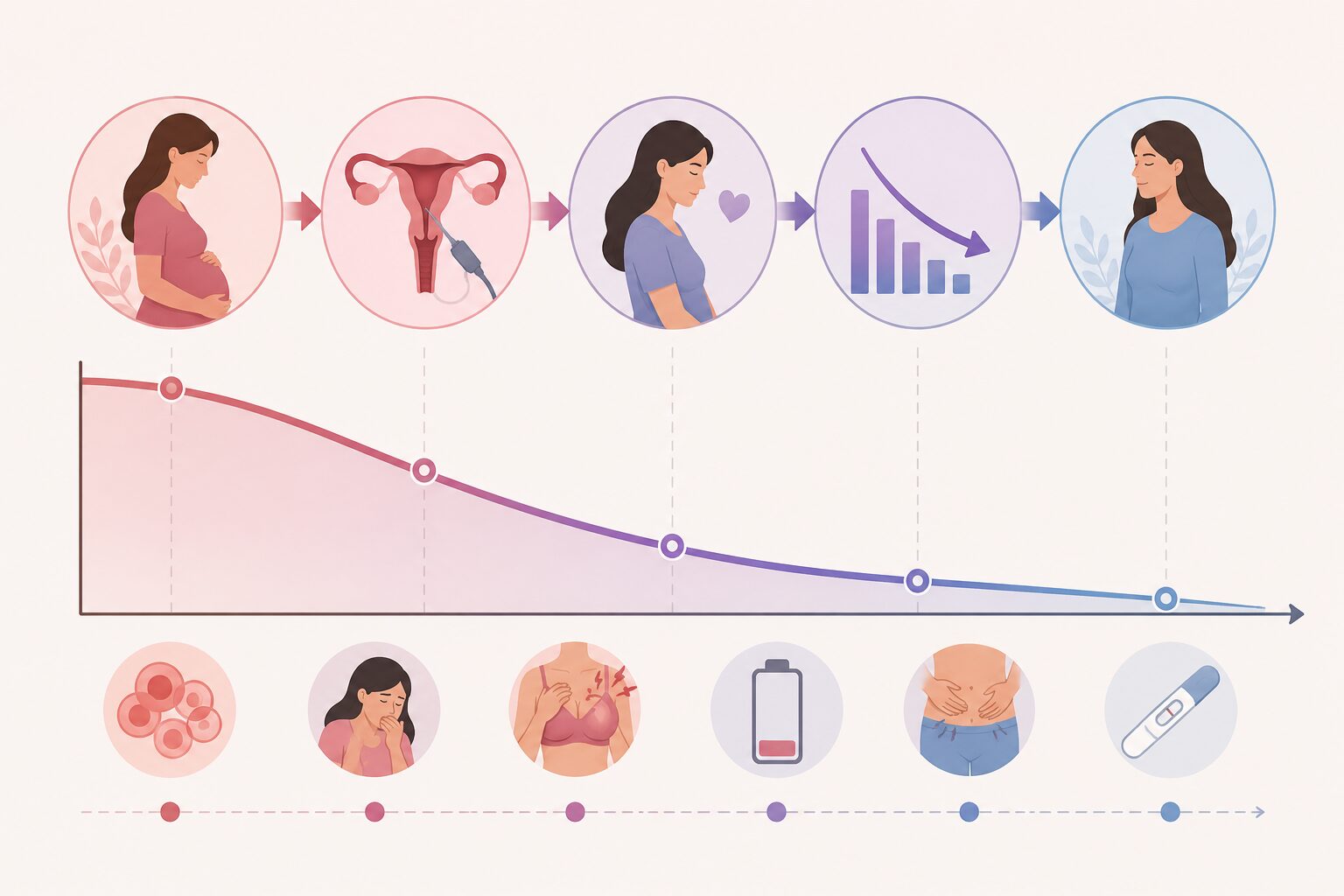
This explains why someone may still feel pregnant or receive a positive pregnancy test even when the abortion was successful.
Which Pregnancy Symptoms Usually Last the Longest?
Some symptoms improve within a few days, while others may take longer.
Breast Tenderness
Breast soreness often takes one to two weeks to improve because hormone levels decrease gradually.
Some people notice tenderness disappearing within days, while others experience gradual improvement over several weeks.
Nausea
Nausea often improves fairly quickly after pregnancy hormone levels begin falling.
Many patients notice improvement within several days, although some mild nausea may continue temporarily.
Fatigue
Your body is recovering physically while hormone levels are changing.
Feeling tired for several days after abortion is common.
Rest, hydration, and balanced nutrition often help energy return gradually.
Bloating
Hormonal changes and temporary uterine cramping can contribute to bloating.
This generally improves over the first week or two.
Increased Urination
Frequent urination usually resolves as pregnancy hormones decline.
If urinary symptoms become painful or are accompanied by fever, they should be evaluated separately.
Medication Abortion vs. Procedural Abortion
Recovery timelines are similar because hormone changes occur regardless of the abortion method.
After Medication Abortion
Symptoms often improve after the pregnancy tissue passes.
Bleeding and cramping are expected parts of the process, while pregnancy symptoms gradually fade over the following days or weeks.
After Procedural Abortion
Hormone levels also begin decreasing immediately after the procedure.
Many people notice pregnancy symptoms improving relatively quickly, although breast tenderness and fatigue may persist for a short period.
How Long Do Pregnancy Symptoms Last After Abortion?
Every person’s recovery is unique. In general:
| Symptom | Typical Improvement |
| Nausea | Several days |
| Breast tenderness | One to two weeks |
| Fatigue | Several days to two weeks |
| Bloating | About one week |
| Positive pregnancy test | Several weeks |
Recovery may be faster or slower depending on:
- Gestational age
- Individual hormone levels
- Overall health
- Type of abortion
- Personal recovery differences
When Pregnancy Symptoms May Need Medical Evaluation
Although gradual improvement is expected, persistent or worsening symptoms deserve attention.
Contact your healthcare provider if:
- Pregnancy symptoms become stronger instead of improving.
- You continue having severe nausea.
- Breast tenderness becomes significantly worse.
- Pregnancy symptoms remain unchanged for an extended period.
- You have little or no bleeding after a medication abortion when bleeding was expected.
- A pregnancy test remains positive several weeks after your provider advised testing.
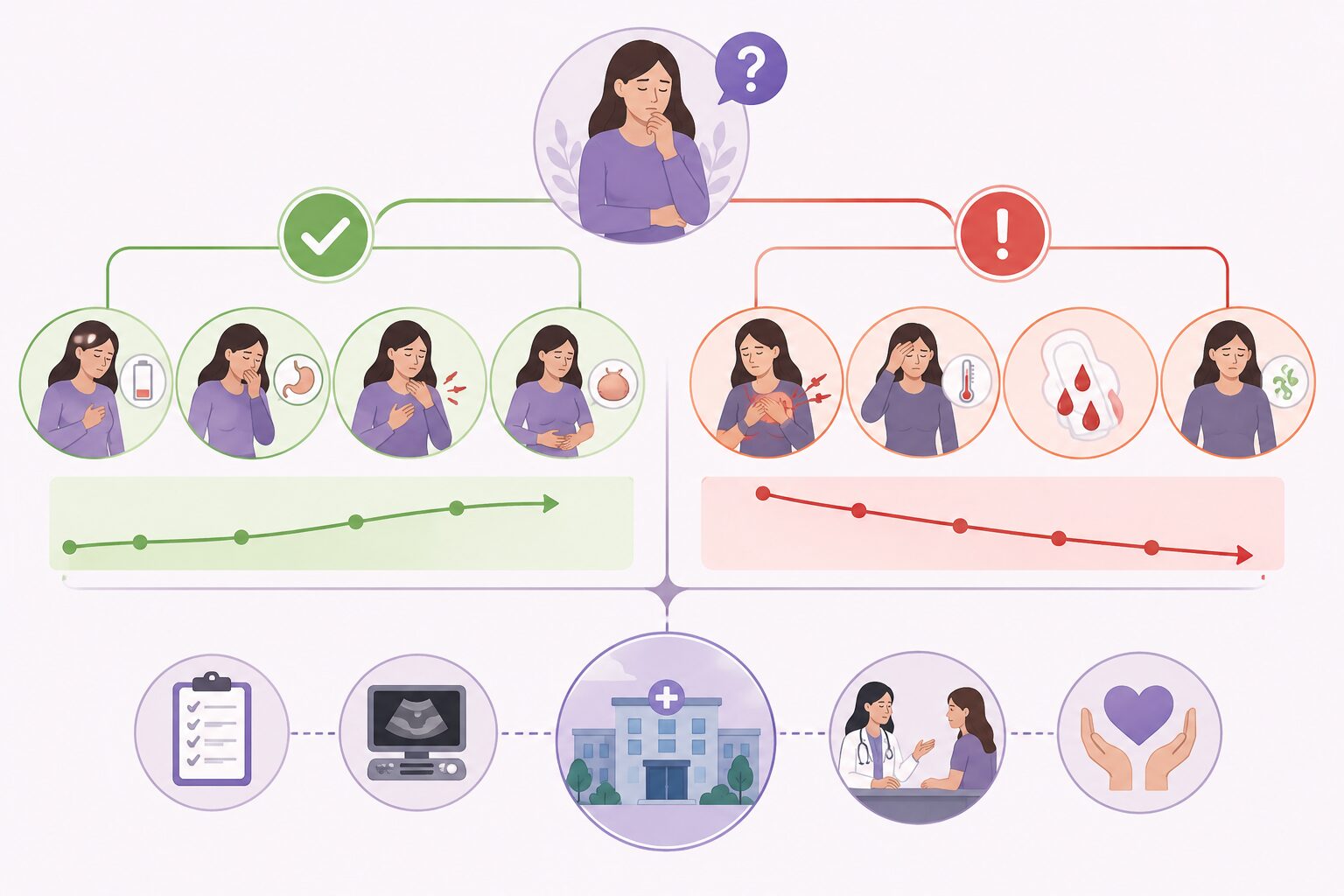
These situations do not automatically mean something is wrong, but they may require follow-up evaluation.
Warning Signs That Need Prompt Medical Care
Seek medical attention if you experience:
- Heavy bleeding that soaks multiple pads per hour for several consecutive hours
- Severe abdominal pain that is not improving
- Fever
- Chills
- Foul-smelling vaginal discharge
- Severe dizziness or fainting
These symptoms may indicate complications that require prompt evaluation.
Why Follow-Up Care Matters
Follow-up care helps confirm that recovery is progressing normally.
Depending on your situation, your provider may recommend:
- A follow-up appointment
- Home pregnancy testing at the recommended time
- Ultrasound when clinically indicated
- Additional evaluation if symptoms continue
Following your provider’s instructions helps ensure complete recovery and provides reassurance if you have ongoing concerns.
Tips for a Comfortable Recovery
While waiting for pregnancy symptoms to resolve:
- Stay hydrated.
- Get plenty of rest.
- Eat nutritious meals.
- Take medications exactly as instructed.
- Monitor how your symptoms change over time.
- Attend any scheduled follow-up appointments.
- Contact your provider if something doesn’t feel right.
Recovery is different for everyone, and gradual improvement is usually a positive sign.
When Should You Contact Serenity Choice Health?
If you’re unsure whether your pregnancy symptoms after abortion are part of normal healing, professional guidance can provide reassurance.
At Serenity Choice Health, our experienced healthcare team offers confidential follow-up care, answers recovery questions, and helps determine whether additional evaluation is needed.
Whether you had a medication abortion or a procedural abortion, we’re here to support your recovery with compassionate, evidence-based care.
Conclusion
Continuing pregnancy symptoms after abortion can feel worrying, but in most cases they are simply a reflection of normal hormonal changes. Because hCG and other pregnancy hormones decline gradually, symptoms such as nausea, breast tenderness, fatigue, and bloating may take days or weeks to fully disappear.
The key is to watch for steady improvement. If symptoms persist without improving, become worse, or are accompanied by heavy bleeding, severe pain, fever, or other concerning signs, contact a qualified healthcare provider promptly.
Understanding what to expect during recovery can help you feel more confident and supported as your body heals.
FAQ Section
Is it normal to still feel pregnant after an abortion?
Yes. Pregnancy hormones remain in your body for a period of time after an abortion, so symptoms often improve gradually rather than immediately.
How long do pregnancy symptoms last after abortion?
Many symptoms begin improving within several days, while breast tenderness and positive pregnancy tests may take several weeks to fully resolve.
Why is my pregnancy test still positive?
Pregnancy tests detect hCG, which decreases gradually after an abortion. A positive result shortly after the procedure does not necessarily mean the abortion was unsuccessful.
Should breast tenderness continue after abortion?
Yes. Breast tenderness commonly lasts one to two weeks while hormone levels return to normal.
When should I call my healthcare provider?
Contact your provider if symptoms worsen instead of improving, you develop severe pain, heavy bleeding, fever, foul-smelling discharge, or if pregnancy symptoms persist longer than expected.
Can nausea continue after an abortion?
Yes. Mild nausea may continue for several days while pregnancy hormones decrease, but it should gradually improve over time.

Dr. James Carter is a board-certified physician and lead clinician at Serenity Choice Health, specializing in reproductive health access and medication abortion protocols. With over 20+ years of experience, he combines clinical expertise with patient-centered care to ensure safe, compassionate, and confidential reproductive healthcare.