
If you use corticosteroids regularly, it is important to tell your healthcare provider before taking mifepristone for a medication abortion. This is not simply a matter of checking whether two medicines cause common side effects together.
For medication abortion, current U.S. prescribing information for mifepristone 200 mg lists concurrent long-term corticosteroid therapy as a contraindication. The reason is that mifepristone has antiglucocorticoid activity, meaning it can interfere with the effects of glucocorticoid medicines.
That does not mean every person who has ever used a steroid automatically cannot receive abortion care. The type of steroid, reason for treatment, dose, duration, route of administration, and whether treatment is still ongoing all matter.
Most importantly, do not stop a long-term steroid medication on your own just because you are considering mifepristone. Long-term glucocorticoid treatment can suppress the body’s normal adrenal response, and stopping it abruptly can cause withdrawal or adrenal insufficiency.
What Does Long-Term Steroid Use Mean?
In this context, “steroids” generally refers to corticosteroids or glucocorticoids, medicines that mimic or affect the body’s natural hormone cortisol.
Examples include medicines such as prednisone, prednisolone, dexamethasone, and hydrocortisone. Corticosteroids may be prescribed for conditions involving inflammation, immune-system activity, asthma, allergies, adrenal problems, or other medical conditions.
The important issue is not simply whether a person has a steroid medication somewhere in their medical history. A provider needs to know whether the medication is being used currently, how it is being taken, and how long treatment has continued.
Long-term glucocorticoid treatment can affect the body’s hypothalamic-pituitary-adrenal system. The 2024 joint Endocrine Society and European Society of Endocrinology guideline explains that chronic glucocorticoid exposure can suppress the body’s normal adrenal function, with risk depending on factors such as dose, duration, potency, route, and individual susceptibility.
That is why a medication history is especially important before taking mifepristone.
Why Does Long-Term Steroid Use Matter Before Mifepristone?
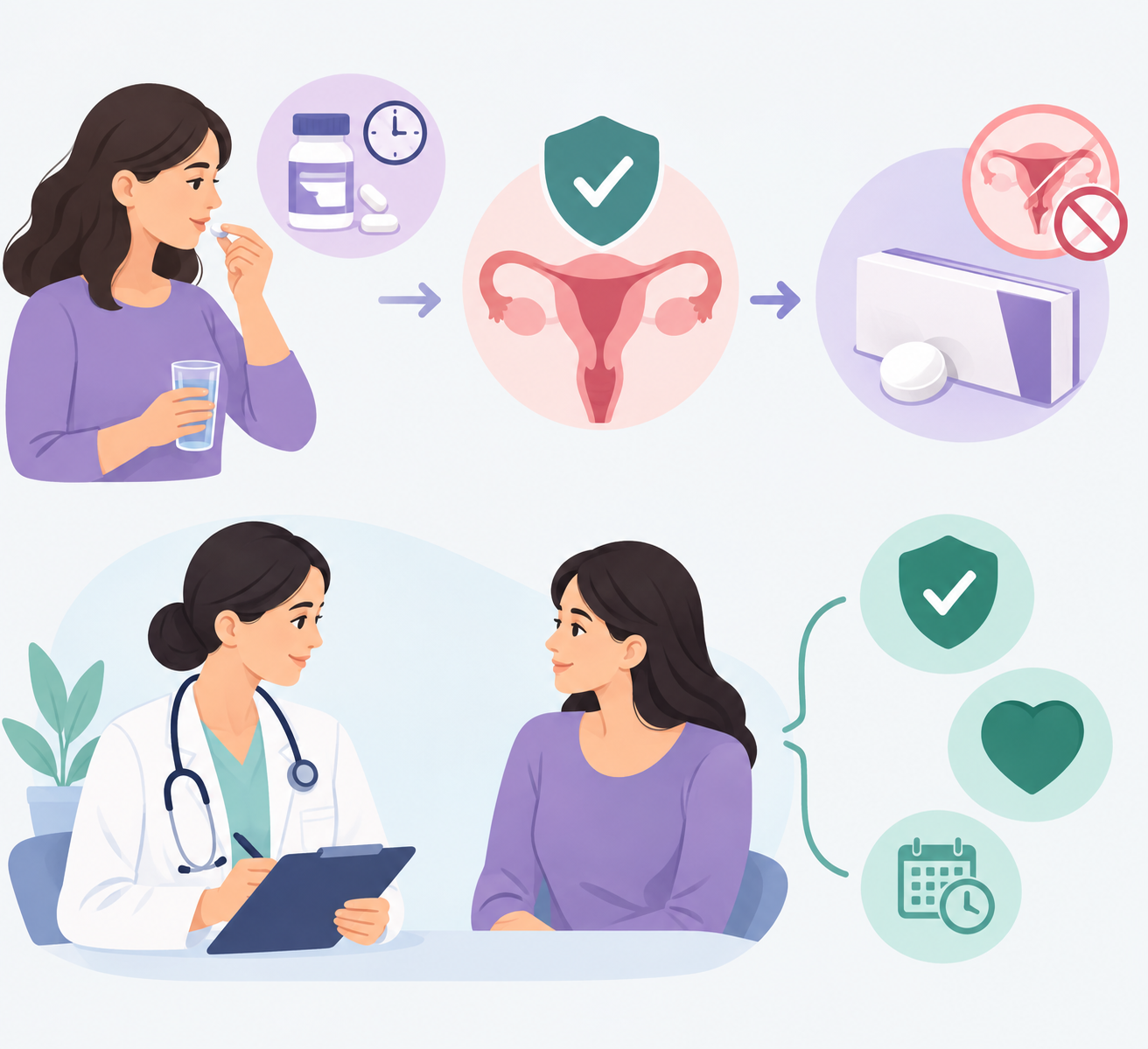
Mifepristone works primarily by blocking progesterone receptors to help end an intrauterine pregnancy. However, mifepristone also has antiglucocorticoid activity.
Glucocorticoids are steroid hormones or medicines that act through glucocorticoid receptors. When mifepristone blocks those receptors, it can reduce the expected effect of glucocorticoid therapy.
For the medication-abortion regimen, this creates an important safety concern. The FDA’s current patient information says that people currently receiving long-term corticosteroid therapy should not take mifepristone with misoprostol for medical termination of pregnancy.
The current prescribing information for 200-mg mifepristone likewise lists concurrent long-term corticosteroid therapy as a contraindication because of the risk of acute adrenal insufficiency.
This is why steroid use should be discussed before the medication is prescribed rather than after treatment has started.
How Does Mifepristone Affect Corticosteroid Activity?
Mifepristone has more than one pharmacologic effect.
For medication abortion, its primary role is to block progesterone, which helps prepare the uterus for the effects of misoprostol. But mifepristone can also antagonize glucocorticoid activity.
In someone who depends on corticosteroid therapy, blocking glucocorticoid receptors can interfere with the effect the steroid is intended to provide.
The concern becomes particularly important when corticosteroids are being used continuously or when the person relies on them to maintain adequate glucocorticoid activity.
This is different from simply saying that mifepristone and steroids are “incompatible.” The clinical concern is specifically related to mifepristone’s antiglucocorticoid effect and the patient’s dependence on corticosteroid therapy.
Is Long-Term Corticosteroid Therapy a Contraindication to Mifepristone?
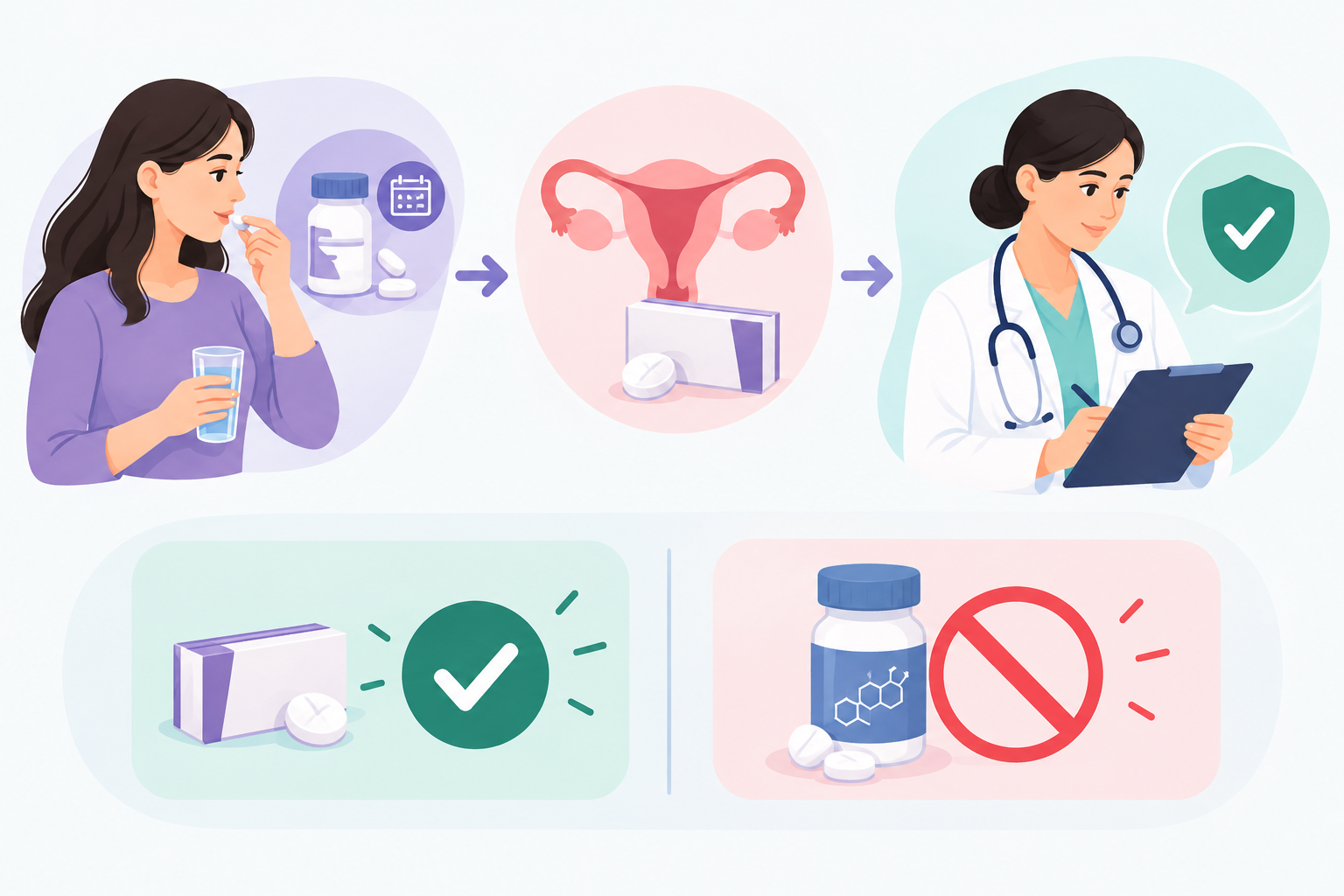
Yes. For the FDA-approved 200-mg mifepristone regimen used with misoprostol for medication abortion, concurrent long-term corticosteroid therapy is listed as a contraindication.
The FDA also specifically lists current long-term corticosteroid treatment among the situations in which mifepristone should not be used for medical termination of pregnancy.
This does not mean that every past steroid prescription has the same significance.
For example, someone who completed a short course of corticosteroids in the past is different from someone who currently depends on daily corticosteroid therapy. The exact situation should be reviewed by a qualified healthcare professional rather than determined from the medication name alone.
If you currently use a corticosteroid, provide the medication name, dose, frequency, route, and how long you have been taking it.
Which Steroid Medications Should You Tell Your Provider About?
Tell your provider about all current corticosteroid treatment, not just medications that you think are directly related to reproductive care.
This may include corticosteroids taken by mouth, injections, or other forms of steroid treatment. Depending on the medication and how it is used, some non-oral corticosteroid exposure can also contribute to adrenal suppression. The Endocrine Society guideline specifically recommends awareness of possible glucocorticoid-induced adrenal insufficiency in people using certain high-dose inhaled or topical corticosteroids and in some people using these therapies for prolonged periods.
Your medication list should include information such as:
- Medication name
- Strength or dose
- How often you take it
- How you take it
- How long you have been using it
- Whether you recently changed the dose
- Whether you are currently tapering it
- Why it was prescribed
- Whether you have ever been diagnosed with adrenal insufficiency
Do not assume that a medication is unimportant because it is inhaled, injected, applied to the skin, or taken only at certain times. Your provider can determine whether the particular treatment is clinically relevant.
Can You Take Mifepristone With Prednisone?
Prednisone is a corticosteroid, so it should be disclosed before taking mifepristone.
The important question is not simply whether prednisone has the same name as another steroid. The relevant issue is whether the person is currently receiving corticosteroid therapy and whether it is considered long-term treatment.
If you take prednisone regularly, do not stop it yourself to make mifepristone possible. Long-term glucocorticoid therapy can suppress the body’s normal adrenal response, and discontinuation may require a medically supervised taper.
Your abortion provider and the clinician managing your steroid treatment may need to coordinate before determining an appropriate plan.
What About Dexamethasone or Hydrocortisone?
Dexamethasone and hydrocortisone are also corticosteroids, so they should be included in your medication history.
Hydrocortisone can be used as steroid replacement when the body does not produce enough cortisol. In that situation, stopping treatment without medical supervision can be dangerous.
This is especially important because mifepristone’s glucocorticoid-receptor antagonism can create a concern for adrenal insufficiency in patients receiving long-term corticosteroids.
If you take hydrocortisone for adrenal insufficiency or another condition requiring steroid replacement, make sure the provider knows why you take it, not just the name of the medication.
Does a Short Course of Steroids Create the Same Concern?
Not necessarily.
The FDA labeling specifically identifies concurrent long-term corticosteroid therapy as a contraindication for the medication-abortion regimen. It does not say that every person who has taken any corticosteroid at any point must avoid mifepristone.
However, the distinction between short-term and long-term treatment should not be guessed by the patient.
Whether someone has meaningful adrenal suppression can depend on factors such as the medication, dose, duration, route, and individual circumstances. The Endocrine Society notes that the risk of glucocorticoid-induced adrenal insufficiency varies according to these factors.
If you recently finished a steroid course or are tapering your dose, tell your provider exactly when the treatment started and ended.
Should You Stop Your Steroid Before Taking Mifepristone?
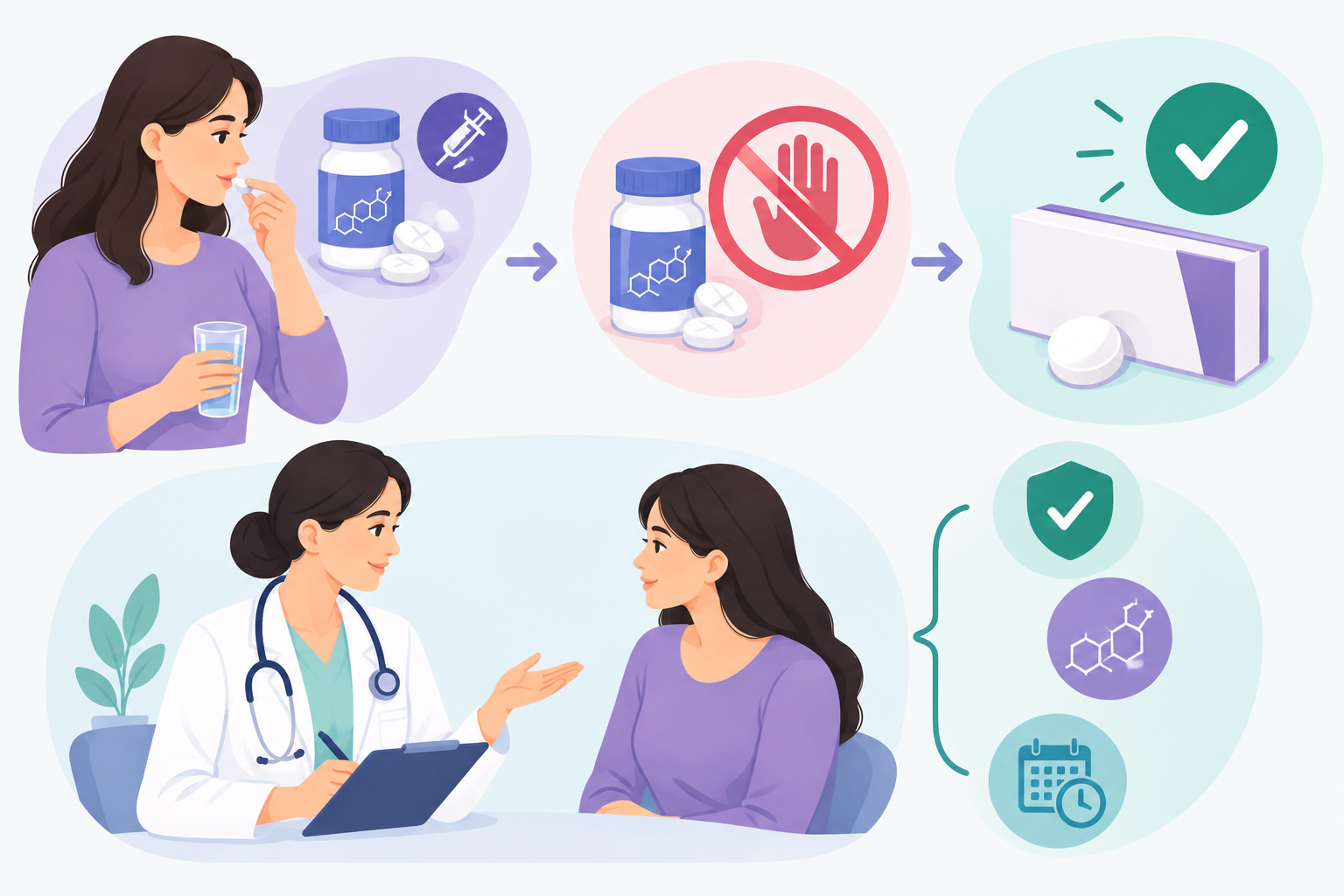
No. Do not stop long-term corticosteroids on your own.
This is one of the most important safety points for anyone researching mifepristone and steroid use.
Long-term glucocorticoid treatment can suppress the body’s normal adrenal function. The Endocrine Society recommends that tapering long-term glucocorticoids be approached carefully and based on the patient’s underlying condition and clinical situation.
Suddenly stopping certain long-term steroid medicines can result in glucocorticoid withdrawal or adrenal insufficiency.
Instead of changing your steroid schedule yourself:
- Tell your abortion provider that you use a corticosteroid.
- Provide the exact medication and dose.
- Explain how long you have been taking it.
- Tell the provider why it was prescribed.
- Follow the medication plan provided by your healthcare professionals.
Your steroid treatment should not be changed simply to make you eligible for mifepristone without appropriate medical guidance.
What Should You Tell Your Abortion Provider?
A complete medication history can help your provider identify important safety concerns before treatment.
Before discussing mifepristone, tell the provider if you:
- Currently take a corticosteroid
- Recently completed a long steroid course
- Are tapering a steroid
- Take steroid replacement therapy
- Have adrenal insufficiency
- Have previously had an adrenal crisis
- Use more than one corticosteroid product
- Have recently received a steroid injection
- Use a high-dose inhaled or topical corticosteroid
- Take other prescription or over-the-counter medicines
You can also bring a current medication list or the labels of your medications if you are unsure about their names or doses.
A detailed medication review is particularly important when treatment involves medications that can affect the adrenal system.
For general information about the medication-abortion process, readers can also review Serenity Choice Health’s guide to medication abortion and what to expect.
What If You Already Took Mifepristone While Using a Steroid?
If you already took mifepristone and then realized that you are using a corticosteroid, contact your healthcare provider promptly and explain exactly what happened.
Do not independently stop a long-term steroid medication.
Your provider may need to review:
- The corticosteroid you take
- Your dose
- How long you have taken it
- The reason you need it
- When you last took it
- When you took mifepristone
- Whether you have any symptoms that require assessment
The current mifepristone labeling identifies adrenal insufficiency as a serious concern in the context of glucocorticoid antagonism and provides specific warnings regarding patients receiving corticosteroids.
If you have already taken mifepristone, do not try to manage the medication interaction by making an unsupervised change to your steroid treatment.
What If You Need Steroids for Adrenal Insufficiency?
This situation deserves particularly careful medical review.
Hydrocortisone and other glucocorticoids may be essential for people whose bodies cannot produce enough cortisol. Abruptly withholding replacement steroid treatment can create a serious medical problem.
The current mifepristone labeling specifically lists chronic adrenal failure as a contraindication for medication abortion with mifepristone and misoprostol.
If you take steroid replacement therapy because of adrenal insufficiency, tell the abortion provider before taking mifepristone. Do not skip or discontinue your replacement medication without instructions from the clinician responsible for your care.
Can a Telehealth Abortion Provider Review Long-Term Steroid Use?
Medication history can be an important part of a telehealth abortion evaluation when telehealth is clinically and legally appropriate.
A provider may ask about your current medications, medical conditions, allergies, pregnancy history, and other factors relevant to medication abortion.
However, long-term corticosteroid therapy requires particular attention because it is specifically listed as a contraindication to the FDA-approved mifepristone regimen.
If you are considering telehealth, you can learn more about telehealth abortion care and how it works.
The important point is that a telehealth consultation should not be treated as a reason to leave out medications. Give the provider the same complete medication information you would provide during an in-person visit.
What Happens During a Medication Review?
A medication review is designed to identify conditions or medicines that could affect whether mifepristone is appropriate.
For someone using corticosteroids, the provider may need to clarify:
Your Current Steroid
The exact medication matters because different corticosteroids have different potencies, durations of action, and clinical uses.
Your Treatment Duration
Someone who used a steroid briefly in the past may have a different situation from someone receiving long-term therapy.
Your Reason for Treatment
Steroids may be used for inflammatory conditions, immune-related conditions, adrenal replacement, and many other reasons. The underlying condition may also influence the treatment plan.
Your Current Dose and Taper
A person who is actively tapering a long-term steroid may have different considerations from someone taking a stable maintenance dose.
Your Adrenal History
A history of adrenal insufficiency or steroid-related adrenal suppression is especially important to disclose.
This information helps the healthcare team make a safer, individualized decision.
Why Medication Safety Matters Before Taking Abortion Pills
Mifepristone is one part of a medication-abortion regimen that also uses misoprostol. Current U.S. labeling indicates mifepristone with misoprostol for termination of an intrauterine pregnancy through 70 days of gestation.
Because mifepristone has glucocorticoid-receptor activity in addition to its progesterone-receptor effects, medication history is not just a routine administrative step.
Patients should tell their provider about medications that may affect eligibility or safety before treatment begins.
If you are researching how the two medicines are used together, Serenity Choice Health also provides information about how mifepristone and misoprostol are taken together.
When Should You Seek Medical Help?
Anyone undergoing medication abortion should know how to contact their healthcare provider and what symptoms require urgent assessment.
Current mifepristone labeling instructs patients to know what to do if they experience sustained fever, severe abdominal pain, prolonged heavy bleeding, or fainting. It also advises medical evaluation for abdominal pain or discomfort or general malaise lasting more than 24 hours after misoprostol.
People using or recently using long-term corticosteroids should also be alert to symptoms that could indicate adrenal insufficiency, particularly if steroid treatment has been interrupted.
If you are experiencing a severe or rapidly worsening symptom, seek urgent medical care rather than waiting for an online response.
For additional guidance about serious symptoms after medication abortion, see when emergency care may be needed after abortion pills.
How to Prepare Before Asking About Mifepristone
If you use steroids and are considering medication abortion, preparation can make your consultation more useful.
Before your appointment, write down:
- The exact name of every steroid you take
- Your current dose
- How often you take it
- How you take it
- When you started using it
- Whether you are tapering the dose
- The reason it was prescribed
- Any history of adrenal insufficiency
- Other prescription medications
- Over-the-counter medications and supplements
You may also want to bring your medication containers or a current medication list.
For additional questions to discuss before medication abortion, see Serenity Choice Health’s questions women commonly ask before taking abortion pills.
How Serenity Choice Health Can Help
Serenity Choice Health provides information and abortion-care support for people who have questions about medication abortion and their individual circumstances.
If you take corticosteroids, make sure the healthcare professional evaluating your abortion care knows about them before you take mifepristone. The goal is not to make a medication decision based on a general internet list of “safe” or “unsafe” drugs. Your current medication, duration of treatment, underlying condition, and adrenal history all matter.
Serenity Choice Health can help patients understand their care options, prepare questions, and discuss medication information with a qualified healthcare professional.
For information about obtaining abortion medications through a legitimate healthcare pathway, review the guidance on safe and verified abortion pills.
Key Takeaway
Long-term steroid use matters before taking mifepristone because mifepristone can antagonize glucocorticoid activity. Current U.S. labeling for mifepristone 200 mg used with misoprostol lists concurrent long-term corticosteroid therapy as a contraindication for medication abortion.
If you take a corticosteroid regularly, do not stop it on your own. Instead, tell your abortion provider exactly what you take, how much you take, how long you have taken it, and why you need it.
A careful medication review can help determine the safest next step for your individual situation.
FAQ Section
Can I take mifepristone if I use steroids?
If you are currently receiving long-term corticosteroid therapy, the FDA-approved mifepristone 200 mg medication-abortion regimen is contraindicated. Tell your healthcare provider about your steroid treatment before taking mifepristone.
Can prednisone interact with mifepristone?
Prednisone is a corticosteroid. If you currently take prednisone, particularly as long-term therapy, tell your abortion provider before taking mifepristone. Do not stop prednisone without medical guidance.
Should I stop my steroid before taking mifepristone?
No. Do not stop long-term corticosteroid therapy on your own. Long-term glucocorticoid treatment can suppress normal adrenal function, and stopping it abruptly may cause adrenal insufficiency or withdrawal problems.
What if I already took mifepristone while using a steroid?
Contact your healthcare provider promptly and provide the exact steroid name, dose, duration, and timing. Do not independently stop your steroid medication.
Does a short steroid course have the same risk?
Not necessarily. The FDA contraindication specifically refers to concurrent long-term corticosteroid therapy. Your provider should determine whether your particular steroid treatment, duration, dose, and medical history are relevant.
Can a telehealth abortion provider review my steroid medication?
A qualified provider can review your medication history as part of an abortion-care evaluation when telehealth is appropriate. Be sure to provide complete information about any current or recent corticosteroid treatment.

Dr. James Carter is a board-certified physician and lead clinician at Serenity Choice Health, specializing in reproductive health access and medication abortion protocols. With over 20+ years of experience, he combines clinical expertise with patient-centered care to ensure safe, compassionate, and confidential reproductive healthcare.