
If you take medication to prevent or control seizures and are considering a medication abortion, you may wonder whether your seizure medicine can be taken with abortion pills.
This is an important question because not all seizure medications interact with abortion medicines in the same way.
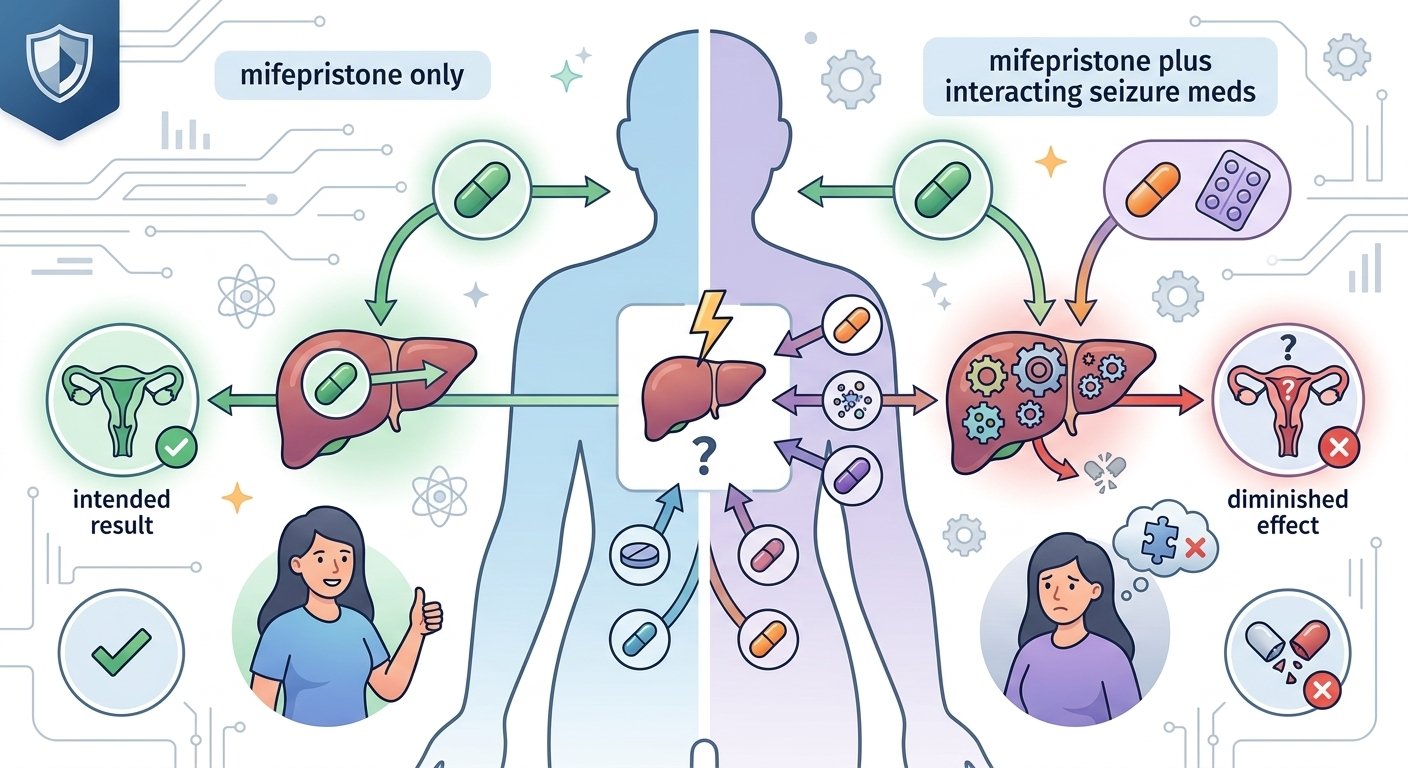
Medication abortion generally uses mifepristone followed by misoprostol. Mifepristone is metabolized primarily through CYP3A4, and current prescribing information identifies certain anticonvulsants—including phenytoin, phenobarbital, and carbamazepine—as CYP3A4 inducers that may lower mifepristone concentrations. The labeling states that it is not known whether this reduction affects the effectiveness of the medication-abortion regimen and recommends follow-up assessment to confirm treatment success.
This does not mean that everyone who takes seizure medication cannot have a medication abortion. It means the specific medication needs to be reviewed by a qualified healthcare provider before treatment.
If you are taking an antiseizure medicine, do not stop or change it on your own. Seizure control remains important, and your abortion provider needs to know exactly what you are taking.
Can You Take Seizure Medication With Abortion Pills?

Sometimes, but the answer depends on the specific antiseizure medication.
Some seizure medicines can affect liver enzymes that process other medications. This can change how much mifepristone remains in the body.
The current U.S. prescribing information for mifepristone specifically identifies certain anticonvulsants as CYP3A4 inducers. These include:
- Phenytoin
- Phenobarbital
- Carbamazepine
These medicines may increase the metabolism of mifepristone and lower its concentration. The manufacturer labeling states that the effect of this interaction on the effectiveness of the medication-abortion regimen is unknown, which is why follow-up assessment is important.
Other seizure medicines have different pharmacologic properties and should not automatically be placed in the same category.
That is why the safest approach is to give your provider your exact medication name, dose, schedule, and recent dosing information.
Why Does Mifepristone Matter When You Take Seizure Medication?
Mifepristone is the first medicine used in the standard medication-abortion regimen.
It works by blocking progesterone activity, helping the pregnancy separate from the uterine lining. Misoprostol is then used to cause uterine contractions and help the uterus empty.
From a drug-interaction standpoint, mifepristone is particularly important because CYP3A4 is primarily responsible for its metabolism.
CYP3A4 inducers can increase the breakdown of mifepristone, potentially lowering the amount of the drug in the bloodstream. Current mifepristone labeling specifically lists certain anticonvulsants among these inducers.
The labeling does not say that every person taking one of these medicines will have an unsuccessful abortion. Instead, it identifies a potential interaction and recommends appropriate clinical assessment and follow-up.
You can learn more about the overall process in this guide to medication abortion and the abortion-pill process.
Which Seizure Medications Can Interact With Mifepristone?
Phenytoin
Phenytoin is an antiseizure medicine and a known enzyme inducer.
The current mifepristone prescribing information identifies phenytoin among anticonvulsants that may induce CYP3A4 and lower mifepristone concentrations.
If you take phenytoin, make sure your abortion provider knows before you take mifepristone.
Phenobarbital
Phenobarbital is another anticonvulsant identified in the mifepristone labeling as a CYP3A4 inducer.
Because it can increase the metabolism of certain medications, including mifepristone, it deserves specific medication review before a medication abortion.
Carbamazepine
Carbamazepine is also a CYP3A4 inducer. Its own prescribing information describes it as a potent hepatic CYP3A4 inducer.
Because of this enzyme-inducing effect, people taking carbamazepine should tell their abortion provider before taking mifepristone.
Other antiseizure medications
There are many other medicines used to prevent seizures, and their interaction profiles vary.
Examples include:
- Levetiracetam
- Lamotrigine
- Valproate
- Topiramate
- Oxcarbazepine
- Lacosamide
- Zonisamide
- Gabapentin
- Pregabalin
These medicines should not all be assumed to have the same interaction with mifepristone.
Your provider may need to consider the exact medication, dose, other medicines you take, seizure history, and other health factors before determining the appropriate abortion-care plan.
Do Seizure Medications Interact With Misoprostol?
Mifepristone and misoprostol have different pharmacologic profiles.
Current misoprostol labeling does not identify the same CYP3A4 interaction mechanism that is highlighted for mifepristone. The labeling describes several interaction studies and notes no clinically significant effect on the kinetics of certain medicines, including ibuprofen and diclofenac.
That does not mean every possible combination has been studied.
Instead, it means that the interaction concern with seizure medications is often more focused on mifepristone and the metabolic effect of certain anticonvulsants.
Your provider should still review the complete medication list before you begin treatment.
For information about what to expect from the second medicine, you can also review what to expect with misoprostol.
Can Seizure Medication Make Abortion Pills Less Effective?
Certain anticonvulsants may lower mifepristone concentrations, but this should not be interpreted as proof that the abortion will fail.
The current mifepristone labeling specifically states that CYP3A4 inducers such as phenytoin, phenobarbital, and carbamazepine may lower mifepristone concentrations. It also states that whether this affects the efficacy of the medication-abortion regimen is unknown.
This is an important distinction.
A potential drug interaction does not automatically mean that treatment will not work. Instead, it means the provider may need to consider the interaction and make sure appropriate follow-up occurs.
Patients should not compensate by taking extra mifepristone or changing the regimen themselves.
If you are concerned about whether your medication abortion worked, follow the instructions given by your healthcare provider. You can also read about how to know if the abortion pill worked.
Should You Stop Your Seizure Medication Before Taking Abortion Pills?
Do not stop an antiseizure medication on your own.
For someone with epilepsy or another seizure disorder, abruptly stopping medication can potentially increase the risk of breakthrough seizures.
The interaction between an anticonvulsant and mifepristone needs to be considered by a healthcare professional rather than managed by simply skipping your regular seizure medicine.
Tell your abortion provider:
- The exact name of your seizure medication
- The dose
- How often you take it
- When you last took it
- Whether you take more than one antiseizure medication
- Any other prescription medicines
- Any vitamins, supplements, or herbal products
If your neurologist, primary-care clinician, or other prescriber manages your seizure treatment, you may also need to coordinate medication decisions with that clinician.
What Should You Tell Your Abortion Provider?
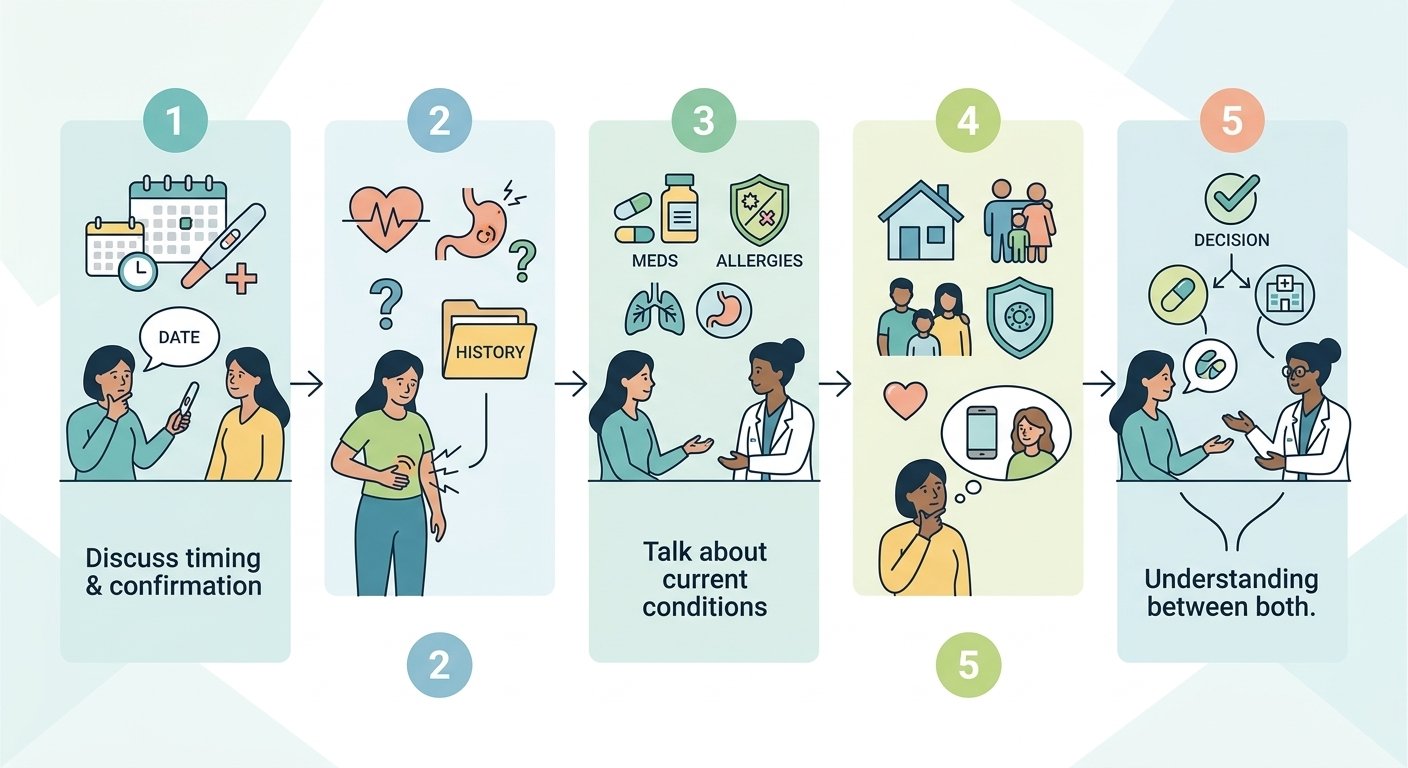
A complete medication list is one of the most useful things you can bring to an abortion consultation.
Tell your provider about:
Your seizure medication
Give the exact drug name rather than simply saying “epilepsy medicine.”
Your dosage
Include the strength and how frequently you take it.
Your last dose
If timing could matter, tell the provider when you most recently took your medication.
Your seizure history
Let the provider know about your seizure diagnosis and any recent seizures, medication changes, or breakthrough symptoms.
Other medications
Include antidepressants, anxiety medicines, pain medicines, sleep medicines, steroids, supplements, and other prescription or nonprescription products.
A complete medication review can help the provider identify possible interaction concerns before you begin.
What If You Already Took Your Seizure Medication?
If you already took your usual seizure medication, do not automatically skip your next dose or cancel your abortion appointment.
Instead, contact your healthcare provider and explain:
- The exact seizure medication
- The dose
- The time you took it
- When you plan to take or already took mifepristone
- Any other medications you use
If you already took mifepristone, tell the provider that as well.
Do not take an additional dose of mifepristone or change your antiseizure medication schedule unless your healthcare professional specifically instructs you to do so.
Because mifepristone can have prolonged interaction effects due to its slow elimination, medication review can remain relevant after the initial dose.
Can You Have a Medication Abortion If You Have Epilepsy?
Having epilepsy does not automatically answer whether medication abortion is appropriate for you.
The more important questions include:
- What seizure medication do you take?
- Is your seizure disorder currently controlled?
- Are you taking one or multiple anticonvulsants?
- Do any of your medicines affect CYP3A4?
- Do you have other medical conditions?
- Are there other medications that could affect the abortion regimen?
The goal is to consider both effective abortion care and continued seizure control.
This is why people taking antiseizure medications should disclose their full medical and medication history rather than relying on a general statement that “seizure medicines interact with abortion pills.”
What If You Take More Than One Seizure Medication?
Some people need multiple medications to control seizures.
If this applies to you, provide the complete list to your abortion provider.
A combination of medicines can create a different interaction profile than one medication alone. Some medicines can also affect the metabolism of other medications.
Do not leave out a medication simply because it is taken only once or twice a day or because you have taken it for years.
If you have a written medication list, bring it to your appointment. If you do not, prescription labels or a current pharmacy medication record can help you provide accurate information.
Is a Medication Review Especially Important With Carbamazepine, Phenytoin, or Phenobarbital?
Yes.
These three anticonvulsants are specifically identified in current mifepristone prescribing information as CYP3A4 inducers that may lower mifepristone concentrations.
That does not mean you should stop them.
Instead, it means your provider should know about them before treatment so the potential interaction can be considered and appropriate follow-up can be arranged.
This is one of the clearest examples of why the question should be approached medication-by-medication rather than by assuming all seizure medicines work the same way.
What About Seizure Risk During a Medication Abortion?
People with a seizure disorder may have additional concerns about the physical experience of medication abortion.
Medication abortion can involve cramping, bleeding, nausea, vomiting, chills, diarrhea, headache, dizziness, and other temporary symptoms.
If you have epilepsy, it can be useful to discuss your seizure history and current level of seizure control with your healthcare provider before treatment.
Ask what you should do if you cannot keep your regular medication down because of vomiting and what symptoms should prompt medical attention.
Do not make changes to your antiseizure regimen based solely on expected abortion symptoms.
For general preparation, you can review what to keep at home before taking abortion pills.
When Should You Contact Your Healthcare Provider?
Contact your healthcare provider if you are unsure whether your seizure medication can be taken with the abortion regimen or if you have questions about timing.
You should also seek medical advice if:
- You have a seizure or significant change in seizure pattern
- You cannot keep important medication down
- You develop severe or concerning symptoms
- You are unsure whether you should take your next seizure-medication dose
- You were taking an anticonvulsant that your provider did not know about
- You are worried that a medication interaction may have affected treatment
For urgent or potentially life-threatening symptoms, seek emergency medical care.
For information about serious symptoms after medication abortion, see when to go to the ER after abortion pills.
How Can You Prepare for an Abortion-Pill Appointment if You Take Seizure Medication?
A medication review does not have to be complicated.
1. Make a current medication list
Include every prescription and nonprescription medicine you use.
2. Include exact doses
Write down the strength and number of doses taken each day.
3. Record recent doses
This is especially useful if you take medication at different times of day.
4. Include supplements
Tell your provider about vitamins, herbal products, and other supplements.
5. Bring your seizure history
Be ready to discuss your diagnosis, seizure frequency, recent seizures, and any recent medication changes.
6. Ask about follow-up
If you take a medication that could affect mifepristone metabolism, ask how your provider plans to confirm that the abortion was successful.
You can also learn more about questions women ask before taking abortion pills.
Can a Telehealth Abortion Provider Review Seizure Medications?
Depending on your medical circumstances and applicable requirements, a telehealth abortion consultation may allow a provider to review your medical history and medication list before treatment.
If you use telehealth, have your medication bottles, prescription list, or pharmacy information available during the appointment.
Be especially clear about any anticonvulsant you take regularly.
Telehealth may be convenient, but it does not eliminate the need for an accurate medication review. You can learn more about the benefits of telehealth abortion care before deciding whether this type of appointment is appropriate for you.
How Serenity Choice Health Can Help
If you take seizure medication and are considering abortion pills, Serenity Choice Health can help you discuss questions about medication abortion and provide guidance on what medication information your healthcare team needs.
Before an appointment, have your complete medication list available, including your antiseizure medicine, dosage, other prescriptions, and supplements.
If you are looking for information about obtaining abortion medication through a legitimate healthcare pathway, you can also review this guide to safe and verified abortion pills online.
The most important step is to make sure your healthcare provider knows about your seizure medication before you begin treatment.
Key Takeaway
Some seizure medications can interact with mifepristone.
Current mifepristone prescribing information specifically identifies phenytoin, phenobarbital, and carbamazepine as CYP3A4-inducing anticonvulsants that may lower mifepristone concentrations. Whether that reduction affects the effectiveness of the medication-abortion regimen is not known, so appropriate follow-up is important.
Misoprostol has a different interaction profile, and its current labeling does not identify the same CYP3A4 mechanism highlighted for mifepristone.
If you take seizure medication, do not stop it or change your dose on your own. Give your abortion provider the exact medication name, dose, timing, and complete medication history.
A careful medication review allows your healthcare team to consider potential interactions while also protecting your ongoing seizure control.
FAQ Section
Can I take seizure medication with abortion pills?
It depends on the specific seizure medication. Some anticonvulsants can affect mifepristone metabolism, so your healthcare provider should review your medication before treatment.
Can carbamazepine interact with mifepristone?
Yes. Carbamazepine is a CYP3A4 inducer, and current mifepristone labeling identifies carbamazepine among anticonvulsants that may lower mifepristone concentrations.
Can I take phenytoin with abortion pills?
Phenytoin is specifically identified in mifepristone prescribing information as a CYP3A4 inducer that may lower mifepristone concentrations. Tell your abortion provider that you take phenytoin before starting treatment.
Does misoprostol interact with seizure medication?
Misoprostol has a different drug-interaction profile from mifepristone. Its current labeling does not identify the same CYP3A4 interaction concern highlighted for mifepristone, but your complete medication list should still be reviewed by your provider.
Should I stop my seizure medication before taking abortion pills?
No. Do not stop or change an antiseizure medication without medical advice. Stopping seizure medication can affect seizure control, so medication decisions should be coordinated with an appropriate healthcare professional.
What if I already took my seizure medicine before mifepristone?
Tell your abortion provider the exact medication, dose, and time you took it. Do not take an extra dose of mifepristone or change your seizure medication schedule on your own.

Dr. James Carter is a board-certified physician and lead clinician at Serenity Choice Health, specializing in reproductive health access and medication abortion protocols. With over 20+ years of experience, he combines clinical expertise with patient-centered care to ensure safe, compassionate, and confidential reproductive healthcare.