
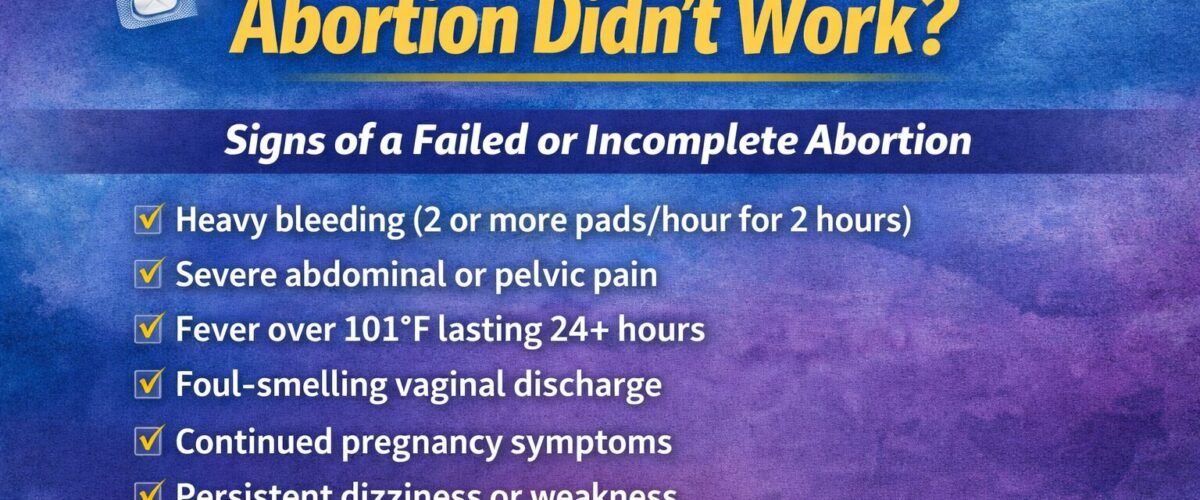
You cannot confirm a complete medication abortion based on symptoms alone. While heavy bleeding, cramping, and passage of tissue are expected signs that the process is occurring, they do not guarantee that the uterus has fully emptied.
A medication abortion can appear successful and still result in:
- An incomplete abortion (retained pregnancy tissue)
- A failed abortion (continuing pregnancy)
The only way to confirm completion with certainty is through follow-up evaluation, typically with ultrasound or blood hCG testing.
Understanding the Difference: Failed Abortion vs. Incomplete Abortion
In over 20 years of practice, I have found that patients often use these terms interchangeably but they describe two clinically distinct outcomes that require different responses:
A Failed Abortion occurs when the abortion pill does not terminate the pregnancy and the pregnancy continues to develop. The embryo remains viable, and without intervention, the pregnancy advances. This requires immediate clinical evaluation and a clear discussion of next steps, which may include a repeated medication protocol or an in-person procedural abortion. An ultrasound is required to confirm this outcome no amount of symptom tracking can rule it out definitively.
An Incomplete Abortion occurs when the pregnancy has been terminated but pregnancy tissue part of the gestational sac, placental tissue, or embryonic material remains inside the uterus rather than being fully expelled. Incomplete abortion can cause serious infection, prolonged bleeding, and uterine complications if not identified and treated promptly. It is one of the most common complications of medication abortion, particularly at later gestational stages.
Both outcomes are more common than most patients realize before they take the abortion pill. Understanding which one may be occurring and acting quickly is what protects your long-term health.
Signs That the Abortion Pill Didn’t Work
Continued or Returning Pregnancy Symptoms Beyond Two Weeks Nausea, breast tenderness, fatigue, and frequent urination are driven by human chorionic gonadotropin the pregnancy hormone. In a successful medication abortion, hCG levels decline progressively and pregnancy symptoms resolve within one to two weeks. If you are still experiencing strong pregnancy symptoms at two weeks post-procedure, or if symptoms that briefly resolved have returned, this is one of the clearest signs that your abortion pill didn’t work as expected. It may indicate a failed abortion where the pregnancy is continuing, or an incomplete abortion where residual tissue is still producing hormones.
Little or No Bleeding After Misoprostol Misoprostol triggers uterine contractions that expel the pregnancy, producing heavy bleeding typically beginning within one to four hours of administration. If you took misoprostol and nothing happened no significant bleeding, no cramping, no tissue passage this is a serious clinical concern. The medication may not have been absorbed effectively, or the pregnancy may be implanted in a location that prevents normal expulsion. I took misoprostol and nothing happened is one of the most alarming reports a patient can share with their provider, and it requires same-day clinical contact.
Positive Pregnancy Test Four or More Weeks After the Procedure Home pregnancy tests detect hCG and can remain positive for several weeks after a completed abortion as hormone levels gradually decline. A faintly positive test at two to three weeks post-procedure is not necessarily alarming. However, a strongly positive pregnancy test at four or more weeks after medication abortion particularly one that appears to be getting darker rather than lighter is a significant indicator of either failed abortion or incomplete abortion requiring evaluation. This is how many patients first discover their abortion pill didn’t work.
Fever Persisting Beyond 24 Hours A temperature exceeding 101°F lasting more than 24 hours after misoprostol is a potential sign of uterine infection one of the most serious complications of incomplete abortion. In my clinical experience, patients who experience persistent fever alongside ongoing pelvic pain and continued bleeding are presenting with signs of incomplete abortion with secondary infection. This requires same-day emergency care, not monitoring at home.
Severe or Worsening Pelvic Pain After the Initial Cramping Phase The cramping associated with misoprostol peaks within one to three hours of administration and progressively subsides as the uterus empties. Pain that intensifies after this initial phase has passed particularly sharp, one-sided pelvic pain is not a normal part of the medication abortion recovery process. This pattern of pain is one of the key signs of incomplete abortion or, critically, an ectopic pregnancy. A pregnancy that has implanted in the fallopian tube rather than the uterus cannot be treated with abortion pills and is a medical emergency. Sharp, one-sided pain at any point during or after medication abortion requires immediate emergency evaluation.
Soaking More Than Two Pads Per Hour for Two or More Consecutive Hours Some degree of heavy bleeding is expected and normal with medication abortion, particularly in the hours following misoprostol. However, hemorrhagic bleeding soaking through more than two thick full-size sanitary pads per hour for two consecutive hours is a clinical emergency. This level of blood loss indicates either a complication of incomplete abortion or another uterine condition requiring immediate intervention. Do not wait to see if it slows down. Go to an emergency room immediately.
Abnormal or Foul-Smelling Vaginal Discharge Odorous vaginal discharge appearing in the days or weeks following medication abortion is a hallmark sign of uterine infection secondary to retained pregnancy tissue. In clinical practice, patients presenting with this symptom alongside fever, pelvic tenderness, and ongoing bleeding are typically diagnosed with endometritis uterine infection requiring antibiotic treatment and often uterine evacuation.
What Happens If the Abortion Pill Doesn’t Work?
If the abortion pill fails or produces an incomplete abortion, you have safe and effective treatment options but time matters. The longer incomplete abortion or failed abortion goes unaddressed, the higher the risk of serious infection, hemorrhage, and the need for more complex intervention.
For Incomplete Abortion: Treatment depends on clinical severity. In many cases, an additional dose of misoprostol can complete the expulsion of retained tissue non-surgically. In more significant cases or where infection has developed an in-office aspiration procedure safely removes the remaining tissue. This is a minor procedure, not a major surgery, and it resolves the complication definitively.
For Failed Abortion: If the pregnancy is confirmed to be continuing by ultrasound, the clinical pathway forward depends on gestational age. Options may include a repeated medication abortion protocol if still within the appropriate gestational window, or an in-person procedural abortion. This is a situation where acting quickly preserves your access to the widest range of options.
The most important thing I tell patients in this situation: your body gave you signs. You recognized them. Now act on them immediately because prompt treatment protects your health and your future fertility.
How Do You Know If the Abortion Pill Worked?
Heavy bleeding with clots beginning within one to four hours of misoprostol is the most reliable real-time indicator that the process is actively occurring. Passage of recognizable pregnancy tissue including the gestational sac during the heaviest phase of bleeding indicates that the uterus is successfully expelling the pregnancy. Gradual decrease in bleeding over the following one to two weeks, with light spotting transitioning to cessation, indicates the uterus is returning to its non-pregnant state. Decreasing and then negative pregnancy test at four to six weeks post-procedure confirms declining hCG levels. Complete resolution of pregnancy symptoms within one to two weeks indicates that pregnancy hormones are no longer being produced.
None of these signs, individually or together, replace clinical confirmation. A serum hCG blood test or ultrasound at one to two weeks post-procedure is the only way to clinically confirm complete abortion.
The Clinical Risk of Assuming Everything Worked
Incomplete abortion does not always produce escalating symptoms in the days immediately following the procedure. Some patients feel progressively better, bleed less, and experience resolution of the most intense cramping while residual tissue remains in the uterus quietly creating conditions for infection. The absence of worsening symptoms is not confirmation that everything is fine.
This is the clinical case for follow-up that I make to every single patient: the cost of a follow-up appointment whether through telehealth or in person is trivial compared to the cost of an undetected incomplete abortion that progresses to sepsis, hospitalization, or long-term reproductive complications.
Serenity Choice Health: Clinical Support Before, During, and After Medication Abortion
At Serenity Choice Health, we provide comprehensive, evidence-based reproductive healthcare delivered with the clinical rigor and compassionate patient-centered approach that medication abortion deserves. We specialize exclusively in medication abortion, telehealth abortion, and in-person abortion services and our care does not end when the prescription is filled or the procedure is complete.
Our post-procedure follow-up protocol includes structured hCG level monitoring and clinical symptom review to confirm your abortion is complete, identify signs of incomplete abortion before they become serious complications, and ensure your recovery is proceeding as expected. Whether you had your procedure with us or elsewhere and are now concerned that your abortion pill didn’t work, our clinical team can evaluate your situation and guide you toward the right next step.
If you are currently experiencing signs of incomplete abortion persistent pregnancy symptoms, concerning bleeding patterns, fever, or a positive pregnancy test at four or more weeks post-procedure do not wait. Contact us today.
If You Suspect Your Abortion Didn’t Work, Act Now
Incomplete abortion and failed abortion are treatable conditions with excellent outcomes when addressed promptly. The risk is in delay.
Do not guess when you can know for certain. Book your confidential consultation at Serenity Choice Health today. Telehealth and in-person appointments are available so you can get the clinical evaluation, follow-up confirmation, and expert guidance you need quickly, privately, and from a team that has been supporting patients through medication abortion with integrity and compassion for over two decades.

Dr. James Carter is a board-certified physician and lead clinician at Serenity Choice Health, specializing in reproductive health access and medication abortion protocols. With over 20+ years of experience, he combines clinical expertise with patient-centered care to ensure safe, compassionate, and confidential reproductive healthcare.