
The most important thing you can do before taking misoprostol is not finding the right pad or the right show to watch. It is having a real pain management plan. The difference between going in prepared and going in unprepared is not small it genuinely changes the entire experience. Abortion cramping is real, it can be intense, but it is also manageable with the right approach. This guide gives you specific, evidence-based methods not vague reassurances so you know exactly what to do before, during, and after the peak phase.
If you want prescription-strength pain or anti-nausea options before you start, our telehealth abortion care providers can help you put together a complete plan.
Why Abortion Pain Happens And Why Preparation Changes Everything
Understanding the mechanism behind abortion cramping is itself a form of pain management. When you know why something is happening, it becomes less frightening and documented research shows that less fear means less perceived pain intensity.
Misoprostol works by triggering the release of prostaglandins, the same compounds responsible for painful period cramps, only in a more sustained and purposeful quantity. These prostaglandins cause the uterus to contract repeatedly and strongly, softening the cervix and expelling the pregnancy tissue. The cramping is intense because it is meant to be effective, not because something is going wrong.
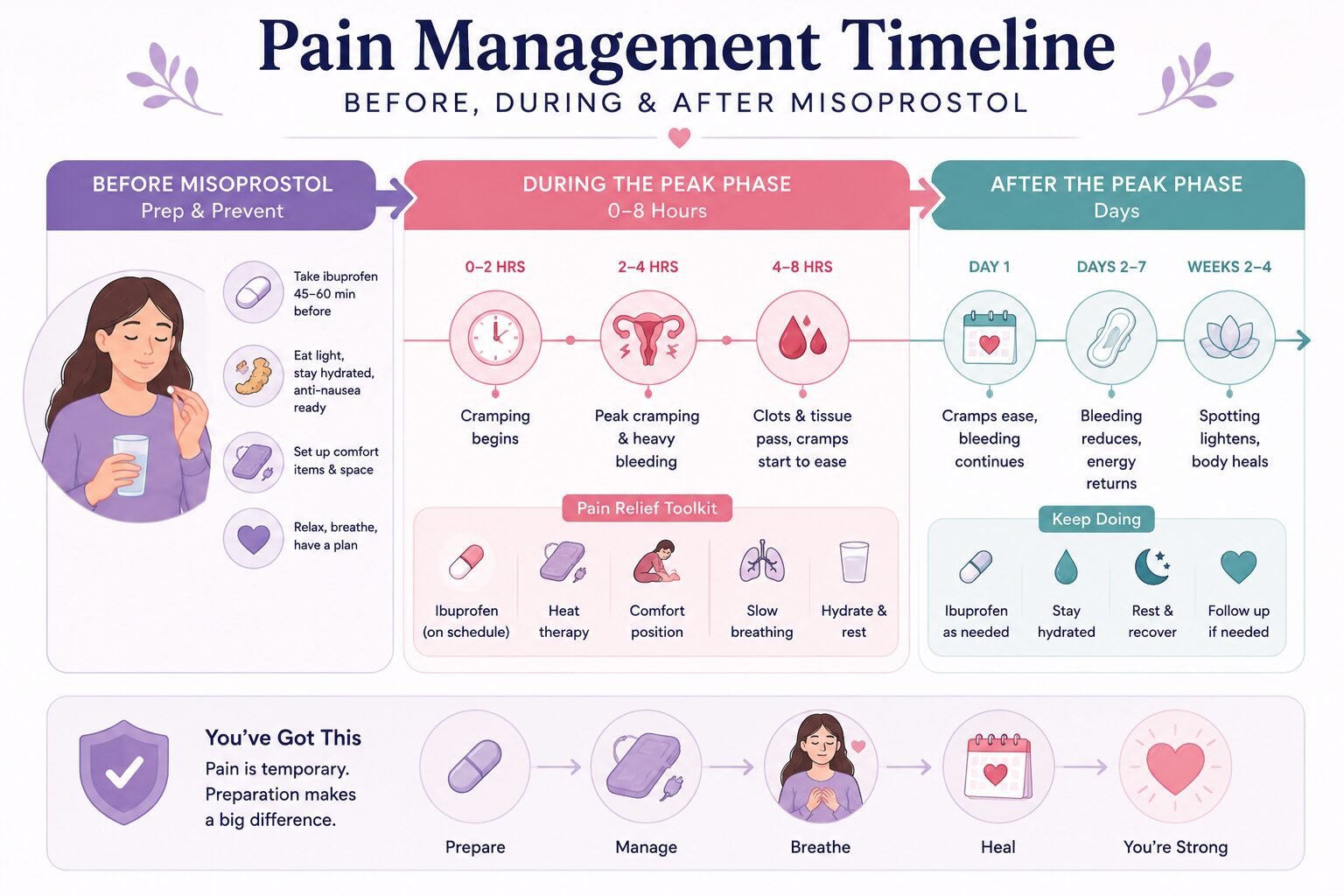
There are also two distinct types of pain involved that need different approaches. The first is acute peak pain the intense cramping that occurs in the first one to four hours after misoprostol. This is the phase that requires proactive pharmacological management. The second is residual soreness that follows over the next several days, which responds well to comfort measures and rest. Treating both the same either ignoring the peak or over-medicating the residual phase leads to a worse overall experience.
For a full picture of what to expect physically from start to finish, our complete abortion experience guide covers the before, during, and after in detail.
07 Proven Methods That Actually Work
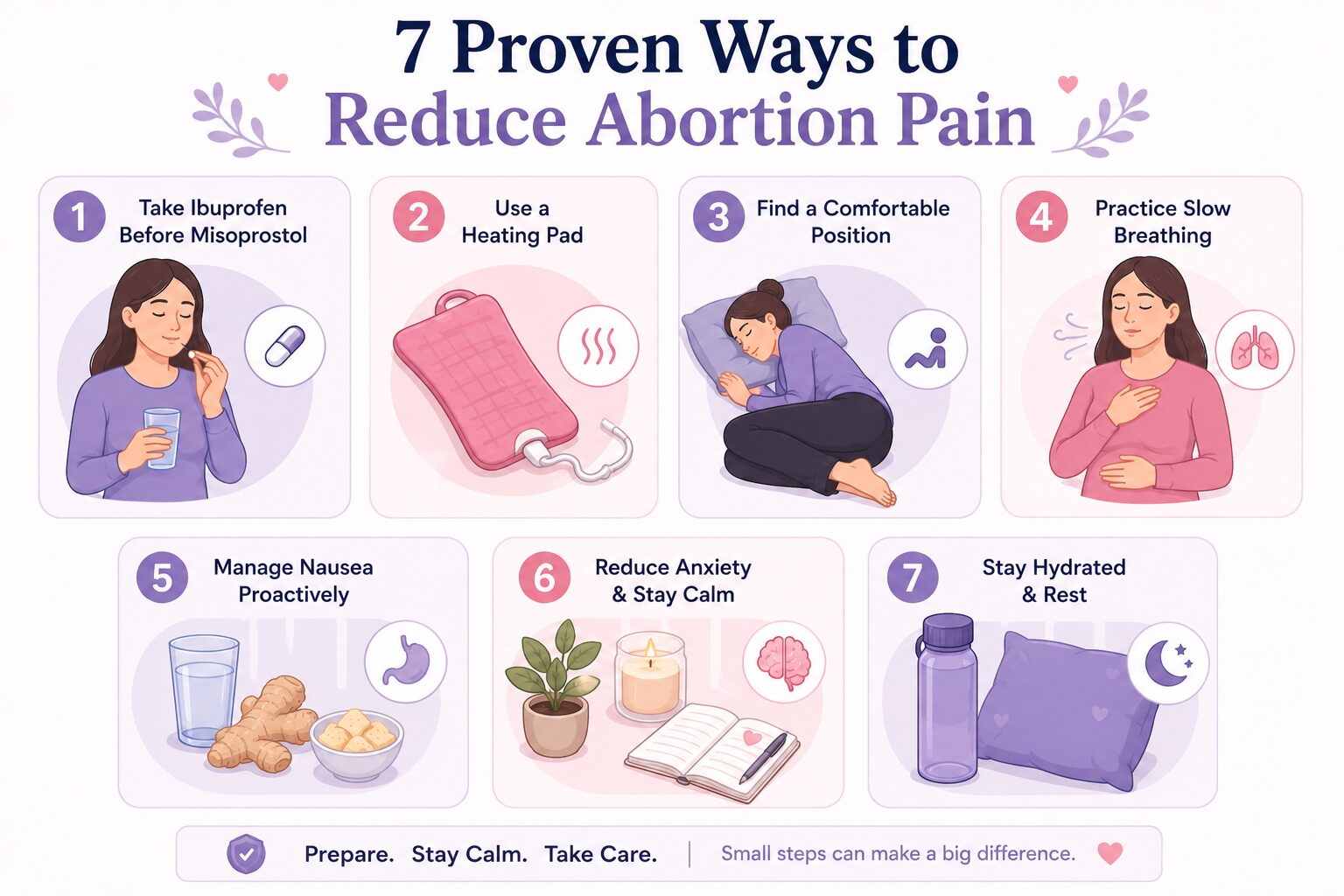
1. Take Ibuprofen Before Misoprostol Not After
This is the single most impactful pain management decision most people make wrong, and getting it right makes a measurable difference.
Ibuprofen is the most effective over-the-counter option for abortion cramping because it is both analgesic and anti-inflammatory. More importantly, it specifically targets prostaglandins — the exact compounds causing the cramping. Unlike acetaminophen, which only addresses pain sensation, ibuprofen interrupts the pain mechanism at its source.
The critical rule: take 600–800mg of ibuprofen 45 to 60 minutes before misoprostol — not when cramps start. Ibuprofen needs time to reach peak concentration in your bloodstream. By the time the first contraction hits, the medication should already be working. Taking it reactively after pain has started means the prostaglandins have had a head start, and you will spend the next hour trying to catch up to pain that is already established.
Continue taking ibuprofen on a schedule every six to eight hours during the first 24 hours, with a maximum of 3,200mg in a 24-hour period. Always take it with food. This is especially important given that misoprostol commonly causes nausea.
Avoid acetaminophen as your primary option — it does not target prostaglandins and has limited effectiveness for cramp-based pain specifically. Aspirin should be avoided entirely as it increases bleeding risk. If you have a history of painful periods, are taking the medication at 8 to 10 weeks, or OTC options have not been sufficient for you in the past, ask your provider about prescription-strength alternatives before you start.
2.Use a Heating Pad It Is More Effective Than Most People Expect
Heat therapy has clinical evidence supporting its use for uterine cramping, and it is one of the most underused tools in abortion pain management. Heat relaxes smooth muscle and the uterus is smooth muscle. It also increases local blood flow, which reduces the ischemic component of cramping pain.
For abortion cramping specifically, heat works best as a complement to ibuprofen, not a replacement for it. During the peak phase, apply a heating pad to your lower abdomen where cramping is most intense. If pain radiates into your lower back which is common with uterine contractions apply heat there instead, or alternate between both.
Keep a cloth barrier between the heating pad and your skin, and avoid excessively high temperatures the risk of minor burns is higher during the peak phase when your attention is elsewhere. If you do not have a heating pad, a warm water bottle works well. A warm shower with water hitting the lower back is also an effective alternative during cramping waves.
Heat remains useful through the residual soreness phase in the days following lower intensity, shorter sessions as pain gradually resolves.
3.Position Your Body Strategically During Peak Cramping
Where you put your body during the peak phase matters more than most people realize. The fetal position lying on your side with knees drawn toward your chest is instinctively what most people move toward, and for good reason. It reduces tension on the abdominal muscles and limits pelvic stretching during contractions.
A less commonly known but highly effective alternative is the hands-and-knees position, which removes the weight of the uterus from pressing on the pelvic floor. This is particularly useful when pain radiates into the lower back. Some people find gentle rocking in this position significantly reduces pressure sensation similar to techniques used in labor pain management.
What to avoid during peak cramping: sitting upright for extended periods increases pelvic pressure, and lying completely flat on your back can worsen cramping for some people. Light walking between cramping waves not during the most intense moments can help support the expulsion process and reduce gas buildup from misoprostol.
4.Master One Breathing Technique Before You Need It
Slow, controlled breathing activates the parasympathetic nervous system, which counteracts the stress response that amplifies pain. This is not a soft suggestion; it is the same mechanism used in labor pain management and is clinically documented to reduce perceived pain intensity.
The pattern is straightforward: inhale for four counts through your nose, exhale for six counts through your mouth. The longer exhale is what matters; it signals the nervous system to downshift. Practice this before taking misoprostol so it becomes automatic when cramping is at its peak and focused thinking is harder.
Combined with your heating pad and ibuprofen, this breathing pattern gives you something active to do during contractions rather than tensing against them which, physiologically, makes the pain worse.
5.Manage Nausea Proactively It Affects Everything Else
Nausea is one of the most disruptive misoprostol side effects because it directly undermines your ability to manage pain. If you vomit ibuprofen within 30 minutes of taking it, you have lost your primary pain management tool. This makes anti-nausea preparation as important as pain preparation.
Eat a light meal one to two hours before misoprostol, not immediately before, and not on an empty stomach. Plain crackers, toast, banana, or light soup are good choices. Avoid dairy, fatty foods, and anything spicy, all of which increase nausea risk. Being well-hydrated before you start also meaningfully reduces the severity of medication side effects.
For OTC options, dimenhydrinate (Dramamine) and ginger-based products ginger tea, ginger chews have evidence supporting their use for nausea. Peppermint tea and acupressure wristbands are lower-evidence but low-risk additions.
If you have a history of severe nausea, morning sickness, or motion sickness, ask your provider about prescription ondansetron (Zofran) before you start. Our telehealth abortion care team can prescribe anti-nausea medication as part of your preparation plan. For more on managing this specific side effect, see our guide on nausea after abortion.
6.Reduce Anxiety It Is a Legitimate Pain Management Tool
This is the most overlooked element of abortion pain management, and it has the strongest evidence behind it relative to how rarely it is discussed. Anxiety directly increases perceived pain intensity. Cortisol and adrenaline both released in response to fear sensitize pain receptors throughout the body, making every cramping wave feel more acute than it would otherwise.
This means that reading this article, understanding what is coming, and going in prepared is not just emotionally helpful, it is physiologically reducing your pain threshold before you take a single pill.
Having a support person present has been shown to reduce reported pain scores during abortion. What they should provide is a calm presence and practical help water, a heating pad, someone to sit with. What does not help is expressed distress or emotional weight added to yours. If no one can be physically present, a phone call or telehealth check-in from your provider serves a similar stabilizing function.
Distraction during the peak phase is also clinically effective. Prepare something genuinely engaging before you take misoprostol a show or film that requires enough attention to occupy your mind. Passively scrolling or trying to make decisions mid-cramp does not serve the same purpose. For the emotional dimension of this experience, our guide on recovering emotionally after abortion addresses what comes after the physical process.
7.Know What NOT to Take or Do
Avoiding common mistakes is as important as the positive steps.
Do not take aspirin; it increases bleeding risk and should be avoided completely during medical abortion. Do not drink alcohol it thins the blood, worsens nausea, and impairs your ability to accurately assess whether symptoms require medical attention. These are not precautionary suggestions, they are clear contraindications.
Do not wait until pain starts to take ibuprofen. This is the most common mistake, and as covered above, it meaningfully reduces how effective the medication can be.
Do not take ibuprofen on an empty stomach, particularly given that misoprostol already causes nausea. The combination of an empty stomach and ibuprofen significantly worsens GI side effects.
Finally, do not try to push through peak pain without any management in place. Suffering through the worst phase without ibuprofen, heat, and positioning support is unnecessary and does not benefit the process in any way. Being prepared is not a weakness it is the medically sound approach.
For a full breakdown of what to expect from misoprostol specifically, our guide on what misoprostol does and what to expect covers the complete side effect and symptom profile
Pain Management for Surgical Abortion A Different Profile
Surgical abortion pain is meaningfully different from medication abortion pain and deserves its own mention. The acute phase of pain for a surgical procedure occurs in-clinic and is managed through local anesthesia, conscious sedation, or general anesthesia depending on your provider and preference. The procedure itself takes minutes, and most people leave the clinic within one to two hours.
Post-procedure soreness at home is typically milder than the peak cramping of a medication abortion more like moderate period pain than the intense contractions of misoprostol. Ibuprofen and a heating pad remain the first-line approach for home recovery, and most people return to normal activity within 24 hours.
For a full breakdown of what in-clinic procedures involve, see our guide to surgical abortion procedures and anesthesia options for surgical abortion. If you are considering which type of abortion is right for your situation, our in-clinic abortion services page covers what to expect from start to finish.
Your Pre-Abortion Pain Prep Checklist
Have the following ready before you take misoprostol:
Medications: Ibuprofen 600–800mg (OTC), anti-nausea medication (OTC or prescription), any prescription pain relief requested through your provider in advance.
Comfort items: Heating pad plugged in and positioned, extra maxi pads (more than you think you will need), comfortable dark-colored clothing, extra blankets and pillows, water bottle within reach, light snacks for before and between cramping waves.
Environment: Bathroom access close by, phone fully charged, your provider’s aftercare line number saved, entertainment ready before you start.
Follow-up: A reminder to take a pregnancy test at four weeks, and a follow-up appointment scheduled if your provider recommends one. For what to watch for in terms of bleeding, our guide on bleeding after the abortion pill covers the complete normal versus warning sign timeline.
When to Seek Help
The following are not normal pain and require contacting your provider or seeking medical evaluation: soaking two or more pads per hour for two consecutive hours, fever above 38°C (100.4°F) lasting more than 24 hours, severe abdominal pain that worsens rather than eases after the peak phase, foul-smelling discharge, or no bleeding at all after taking misoprostol.
These are specific, clear criteria. Everything outside of them, heavy bleeding, intense cramping in the first several hours, clots, back pain, nausea is part of the expected process.
Conclusion
Abortion pain is real, and preparation is the single most effective tool you have. Taking ibuprofen before misoprostol — not after — is the most impactful decision most people overlook. Adding heat therapy, strategic positioning, breathing technique, and anti-nausea preparation turns an overwhelming experience into a manageable one.
You deserve to go into this informed and supported. If you want to discuss prescription pain or anti-nausea options, or simply have your questions answered before you start, schedule a confidential consultation with our team. Being prepared is not just comfort — it is care.
FAQs
Q1: What is the most effective way to reduce abortion pill pain?
The single most effective evidence-based strategy is taking 600–800mg of ibuprofen 45 to 60 minutes before misoprostol, not after cramps start. Combining this with a heating pad on the lower abdomen during the peak phase, and having anti-nausea medication ready, significantly reduces the overall pain experience. People who pre-medicate consistently report lower pain scores than those who take medication reactively.
Q2: Should I take ibuprofen before or after misoprostol?
Especially 45 to 60 minutes before. This allows ibuprofen to reach peak blood concentration by the time cramping begins. Ibuprofen works by blocking prostaglandins, which are the exact compounds that cause abortion cramping. Taking it after cramps have already started means the prostaglandins have already had a head start, making relief slower and less complete.
Q3: Does a heating pad actually help with abortion cramps?
Yes, heat therapy has clinical evidence supporting its use for uterine cramping. Heat relaxes smooth muscle, increases blood flow to the area, and can reduce cramping intensity comparably to low-dose ibuprofen for mild pain. For abortion cramping, heat works best as a complement to ibuprofen rather than a replacement, particularly during the peak phase. Apply to the lower abdomen or lower back depending on where pain is most intense.
Q4: Can I get prescription pain medication for my abortion?
Yes and more people should ask about this. Through a telehealth consultation, providers can prescribe stronger anti-nausea medication such as ondansetron (Zofran), and in some cases stronger pain relief for those with high pain sensitivity, a history of painful periods, or who are further along in pregnancy. The key is asking before you start, not during the worst cramping.
Q5: What is the best position to be in during abortion pill cramping
Most people find the fetal position lying on your side with knees drawn toward your chest most relieving during peak cramping. This reduces tension on the abdominal muscles and limits pelvic stretching during contractions. The hands-and-knees position is an underused alternative that removes uterine weight from the pelvic floor and works particularly well for back pain radiation. Avoid sitting upright for extended periods during the peak phase.
Q6: What should I absolutely NOT take for abortion pain?
Avoid aspirin entirely; it thins the blood and increases bleeding risk. Avoid alcohol for the same reason and because it impairs your ability to accurately assess symptoms. Do not take prescription opioids unless specifically prescribed by your provider. Avoid taking ibuprofen on an empty stomach as this significantly worsens nausea from misoprostol.

Dr. James Carter is a board-certified physician and lead clinician at Serenity Choice Health, specializing in reproductive health access and medication abortion protocols. With over 20+ years of experience, he combines clinical expertise with patient-centered care to ensure safe, compassionate, and confidential reproductive healthcare.