
You should see a women’s primary care provider for annual wellness visits, reproductive health screenings, new or ongoing symptoms, contraception management, and any health concern specific to your body that you are not sure where else to take.
Many women are uncertain about when a visit is truly necessary, or they delay care because they are not sure whether their concern is serious enough. The reality is that women’s primary care covers a much broader range of needs than most people realize from routine prevention to managing chronic conditions to coordinating specialist referrals.
What Is a Women’s Primary Care Provider?
A women’s primary care provider is a healthcare professional who serves as your main point of contact for health management. This role can be filled by an OB-GYN, a women’s health nurse practitioner, a certified nurse midwife, or a family medicine provider with a focus on women’s health.
How It Differs From a General Primary Care Provider
While a general primary care provider handles health concerns across all populations, a women’s primary care provider specializes in conditions, screenings, and health transitions that are specific to women including menstrual health, reproductive care, hormonal changes, pregnancy, and menopause.
How It Differs From a Specialist
A women’s primary care provider handles a wide range of concerns under one roof, while a specialist focuses on a narrow area. Your primary care provider is often the person who identifies when you need a specialist and coordinates that referral.
Routine Reasons to See a Women’s Primary Care Provider
Annual Wellness Visit
An annual wellness visit is the foundation of preventive women’s healthcare. Even when you feel completely well, this visit serves several important purposes establishing a health baseline, catching silent conditions early, updating vaccinations, reviewing medications, and ordering age-appropriate screenings.
Most providers recommend scheduling this once a year regardless of symptoms. Our women’s primary care services make it easy to schedule a comprehensive annual visit with a provider who specializes in your health needs.
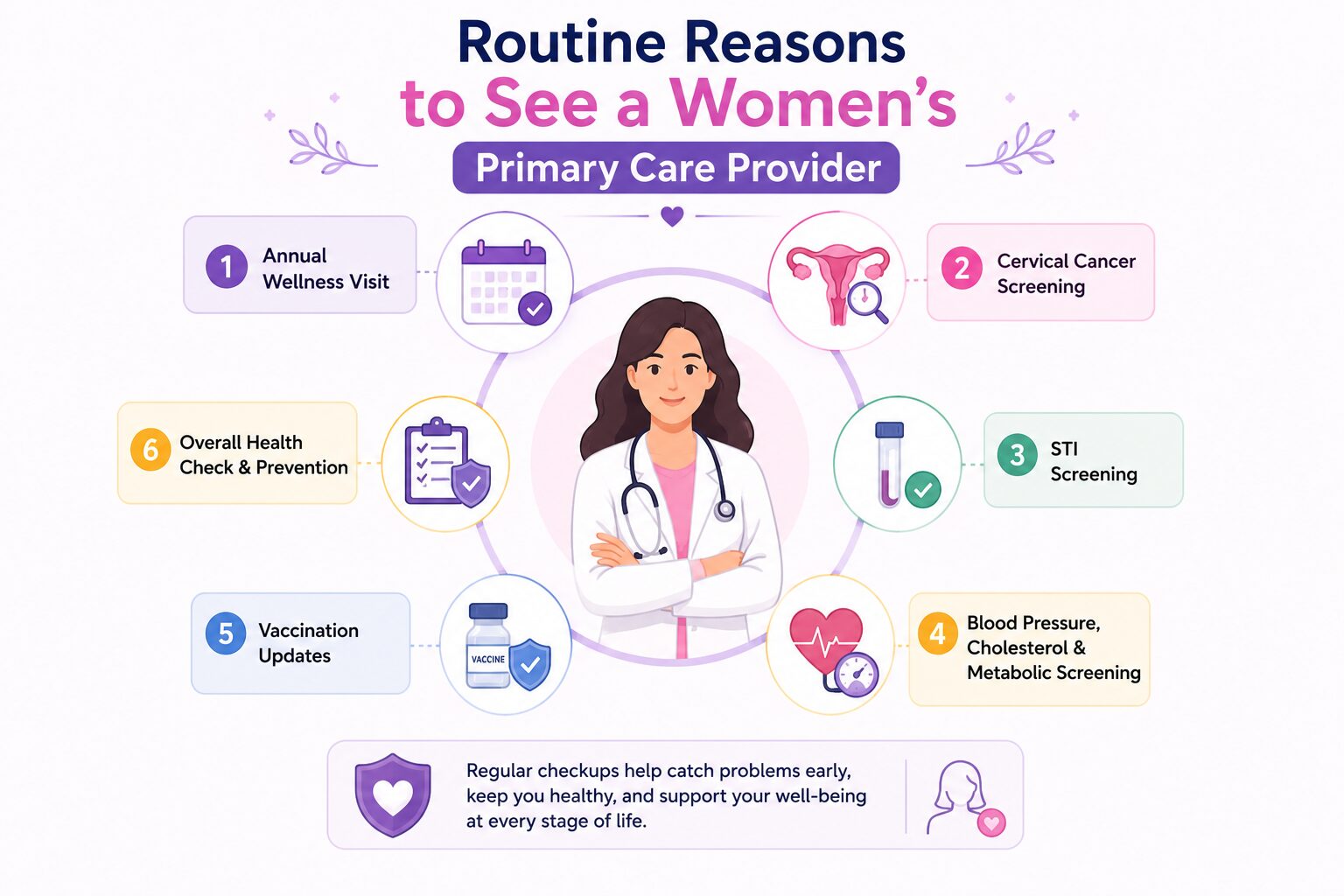
Cervical Cancer Screening
Pap smears are recommended starting at age 21. From age 21 to 29, a Pap smear every three years is standard. From age 30, co-testing with both a Pap smear and an HPV test every five years is the commonly recommended approach. These screenings are typically performed during a routine wellness visit and should not be skipped simply because you feel well.
STI Screening
Routine STI screening is recommended for all sexually active women, with annual testing for chlamydia and gonorrhea strongly recommended for women under 25. Many women are unaware that STI testing is not automatically included in a Pap smear and must be specifically requested. Your primary care provider can order the appropriate panel based on your age, sexual history, and risk factors. Our STI and STD testing services are a core part of what comprehensive women’s primary care covers.
Blood Pressure, Cholesterol, and Metabolic Screening
Cardiovascular disease is a leading cause of death in women, yet it is often underdiagnosed because symptoms in women can present differently than in men. Routine blood pressure checks, cholesterol screening, and blood sugar testing are all standard components of women’s preventive care that can identify risk factors well before symptoms develop.
Vaccination Updates
Certain vaccines are particularly relevant for women, including the HPV vaccine (recommended through age 45 in some cases), the flu vaccine annually, and others based on age and health history. Your primary care provider reviews your vaccination status and recommends updates at routine visits.
Reproductive Health Reasons to See a Provider
Contraception Consultation
Whether you are starting birth control for the first time, switching methods, or reconsidering your current approach, a women’s primary care provider can walk through all available options and help you find the best fit for your health, lifestyle, and reproductive goals. Our birth control and contraceptive services are a central part of women’s primary care.
Irregular or Painful Periods
Periods that are significantly heavier than usual, consistently irregular, very painful, or that have changed noticeably from your baseline are all reasons to seek evaluation. These changes can reflect treatable conditions including polycystic ovary syndrome, endometriosis, fibroids, or thyroid dysfunction.
Symptoms of Perimenopause or Menopause
Hot flashes, night sweats, irregular cycles, mood changes, vaginal dryness, and disrupted sleep are all common symptoms of perimenopause and menopause. A women’s primary care provider can confirm what is happening hormonally, discuss management options, and help you navigate this transition with accurate information.
Pregnancy Planning
If you are thinking about becoming pregnant, a preconception visit helps you prepare. Your provider can review your current medications, recommend folic acid supplementation, update any needed vaccinations, screen for conditions that could affect pregnancy, and discuss what to expect in the months ahead. Our guide on unplanned pregnancy and your options is also available if your situation changes unexpectedly.
Fertility Concerns
If you have been trying to conceive without success, a primary care provider is typically the first point of contact before a referral to a reproductive endocrinologist. They can order initial bloodwork and evaluate both partners’ health before determining what further evaluation is needed. If you have experienced a pregnancy loss, our guide on miscarriage diagnosis, treatment, and aftercare covers what to expect from that process.
Symptom Based Reasons to Make an Appointment
Pelvic Pain
Pelvic pain that is new, persistent, or severe warrants evaluation. It can have many causes including ovarian cysts, pelvic inflammatory disease, endometriosis, urinary tract infection, or digestive issues and distinguishing between them requires examination and testing.
Unusual Vaginal Discharge or Odor
Changes in vaginal discharge including color, texture, volume, or odor can indicate a yeast infection, bacterial vaginosis, trichomoniasis, or other STIs. Many of these conditions are easily treatable but require an accurate diagnosis first.
Breast Changes
Any new lump, skin change, nipple discharge, or breast pain that is new or unexplained should be evaluated promptly. Most breast changes are not cancer, but early evaluation provides the most options and the most peace of mind.
Urinary Symptoms
Burning during urination, increased frequency, urgency, or pelvic pressure may indicate a urinary tract infection, which is very common in women and easily treated when caught early. Recurring UTIs or symptoms that do not resolve with initial treatment warrant further investigation.
Unexplained Fatigue or Weight Changes
Significant, unexplained fatigue or weight changes, particularly weight gain or loss that you have not intentionally caused can reflect thyroid dysfunction, anemia, diabetes, or other conditions that are commonly managed through women’s primary care.
Mood Changes and Mental Health
Anxiety, depression, persistent low mood, and mood swings related to hormonal changes are all within the scope of women’s primary care. Providers can screen for depression and anxiety, discuss treatment options, and refer to mental health specialists when appropriate.
Age-Specific Reasons to See a Provider
Teens and Young Adults (Ages 13 to 24)
A first gynecological visit is recommended around age 13 to 15, though a pelvic exam is not typically performed at this stage. These early visits focus on building a relationship with a provider, discussing puberty and menstrual health, and establishing a space for confidential questions. STI screening becomes relevant once sexual activity begins. Learn more about protecting your health privacy when seeking reproductive healthcare as a young person.
Adults Ages 25 to 45
This is typically the most active period for reproductive health visits, contraception, STI screening, preconception care, pregnancy, and postpartum follow-up all fall in this range. Annual wellness visits with cervical screening and STI testing form the backbone of care during these years.
Adults Ages 45 and Beyond
Perimenopause and menopause management, cardiovascular risk screening, bone density assessment, and breast cancer screening with mammography become increasingly important during this life stage. Annual visits remain just as valuable after 45 as before.
Urgent Symptoms That Need Prompt Attention
Some symptoms should not wait for a routine appointment. Contact a provider promptly or seek urgent care for:
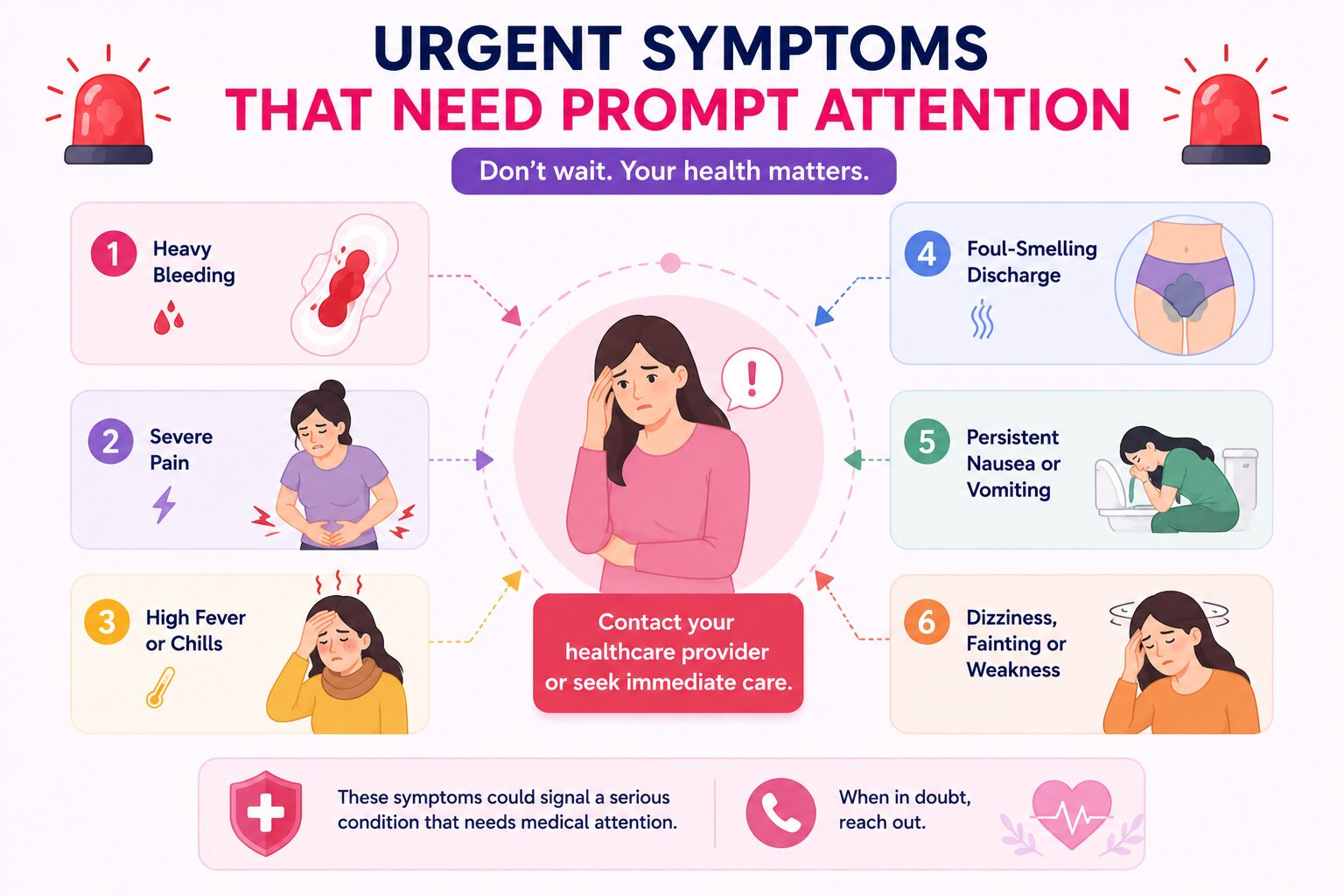
- Sudden, severe pelvic or abdominal pain
- Heavy vaginal bleeding that soaks through a pad or tampon every hour for two or more consecutive hours
- Fever alongside pelvic pain or unusual discharge
- Signs of a possible ectopic pregnancy, including sharp one-sided pain, shoulder tip pain, or dizziness with bleeding
- A missed period with a positive pregnancy test and no prenatal care arranged
- Breast changes that appeared suddenly or feel different from anything you have noticed before
- Symptoms of a severe UTI including back pain, fever, and chills alongside urinary symptoms
If symptoms are severe or rapidly worsening, seek emergency care rather than waiting for an appointment. Learn more about the benefits of telehealth and how virtual care can provide fast access to a provider for concerns that need prompt attention without requiring an in-person visit.
What to Expect at a Women’s Primary Care Appointment
Your Health History Review
Your provider will ask about your medical history, family history, current medications, menstrual cycle, sexual health, and any symptoms or concerns you want to address. Being as open and accurate as possible helps your provider give you the most appropriate care. Read our guide on whether health information shows up on medical records to understand how your healthcare visits are documented and what stays private.
Physical Examination
Depending on the purpose of your visit, your appointment may include a general physical exam, blood pressure measurement, breast exam, pelvic exam, or Pap smear. Not every visit includes every element your provider will explain what is being done and why.
Lab Work and Screenings
Blood tests, urine tests, swabs, and other screenings are ordered based on your age, health history, and risk factors. Your provider will explain what each test is checking for and when to expect results.
Time for Your Questions
One of the most underused parts of a primary care visit is the opportunity to ask questions. Bring a list if it helps. There are no questions that are too minor or too embarrassing your provider has heard them all and is there to help.
Common Mistakes Women Make About Primary Care Visits
Waiting until something is wrong. Preventive care catches problems before they become serious. Annual visits are valuable even when you feel entirely well.
Assuming the Pap smear covers everything. A Pap smear checks cervical cells for abnormal changes it does not test for most STIs. STI testing requires a separate order.
Skipping visits after menopause. Women’s health needs do not end at menopause. Cardiovascular health, bone density, and cancer screening remain important throughout later life.
Not mentioning mental health symptoms. Mood changes, anxiety, and depression are health concerns that belong in a primary care conversation, not something to manage silently on your own.
Postponing care because of cost concerns. Many women’s preventive services are covered under insurance with no out-of-pocket cost. Asking about coverage before your visit can reduce financial uncertainty.
Helpful Checklist: What to Bring to Your Appointment
- List of current medications and supplements
- Date of your last period
- Notes on any symptoms you have been experiencing, including when they started
- Family medical history if you have not shared it previously
- List of questions you want to ask
- Insurance information
- Records from any recent lab work or imaging if you are a new patient
Frequently Asked Questions
How often should women see a primary care provider?
At minimum, an annual wellness visit is recommended for most women regardless of age or symptoms. Women with ongoing health conditions, reproductive health concerns, or specific risk factors may need to be seen more frequently based on their provider’s recommendation.
Is a women’s primary care provider the same as a gynecologist?
Not always, though there is significant overlap. An OB-GYN is a specialist in obstetrics and gynecology who can also serve as a primary care provider for many women. A women’s health nurse practitioner or family medicine provider with a women’s health focus can also fill this role depending on the scope of your needs.
Do I need a referral to see a women’s primary care provider?
This depends on your insurance plan. Many plans allow direct access to OB-GYNs and women’s health providers without a referral. It is worth checking with your insurer before scheduling to avoid unexpected billing issues.
What is the difference between a wellness visit and a sick visit?
A wellness visit is a scheduled preventive care appointment focused on screenings, health maintenance, and prevention. A sick visit is scheduled in response to a specific symptom or concern. Some providers handle both in the same appointment, while others prefer to separate them ask when you schedule.
Should I see a women’s primary care provider if I am not sexually active?
Yes. Many aspects of women’s primary care are not related to sexual activity including cardiovascular screening, thyroid assessment, mental health evaluation, breast exams, and general wellness. Sexual activity is one factor in care planning, but it is not the only reason to have a primary care relationship.
When should I start seeing a women’s primary care provider?
The first visit is recommended around ages 13 to 15, even before any sexual activity begins, to establish a relationship with a provider and to discuss normal puberty and menstrual health. Pelvic exams and Pap smears are not typically performed until age 21.
Can a women’s primary care provider manage chronic conditions?
Yes, in many cases. Conditions such as thyroid disease, anemia, diabetes, hypertension, depression, and anxiety are all commonly managed through women’s primary care. When a condition requires specialist involvement, your provider coordinates that referral.
Final Takeaway
Seeing a women’s primary care provider is not just something you do when something is wrong, it is how you stay ahead of problems, manage your reproductive health, and build a relationship with someone who knows your history and can advocate for your care over time.
Annual visits, STI screening, cervical cancer screening, contraception management, and symptom evaluation are all central to what this type of care offers. The right time to go is before you feel you have to.
If you are looking for comprehensive, confidential women’s primary care that covers everything from routine screenings to reproductive health support, our women’s primary care services are available to help you build a proactive, personalized healthcare plan. If you are unsure about your pregnancy status, our guide on how pregnant am I can help clarify next steps. You can also book an appointment to get started with a provider who specializes in your health needs.
Suggested External Sources
- Planned Parenthood
- American College of Obstetricians and Gynecologists (ACOG)
- World Health Organization (WHO)
- Mayo Clinic
- National Health Service (NHS)
Here are working links for each suggested source:
| Source | Page | URL |
|---|---|---|
| Planned Parenthood | What to expect after the abortion pill (side effects, warning signs) | https://www.plannedparenthood.org/learn/abortion/the-abortion-pill/what-can-i-expect-after-i-take-the-abortion-pill Planned Parenthood |
| Planned Parenthood | The Abortion Pill overview | https://www.plannedparenthood.org/learn/abortion/the-abortion-pill |
| ACOG | Medication Abortion (patient FAQ) | https://www.acog.org/womens-health/faqs/medication-for-achieving-an-abortion |
| WHO | Abortion care guideline | https://www.who.int/publications/i/item/9789240039483 |
| Mayo Clinic | Medical (drug-induced) abortion overview | https://www.mayoclinic.org/tests-procedures/medical-abortion/about/pac-20394687 |
| NHS | Abortion care / what happens | https://www.nhs.uk/conditions/abortion/ |

Dr. James Carter is a board-certified physician and lead clinician at Serenity Choice Health, specializing in reproductive health access and medication abortion protocols. With over 20+ years of experience, he combines clinical expertise with patient-centered care to ensure safe, compassionate, and confidential reproductive healthcare.