
Feeling shoulder pain after an abortion can be confusing and frightening, especially when nothing about the procedure seemed to involve your shoulder at all. While mild, generalized discomfort is common during recovery, shoulder pain specifically is not a typical part of abortion aftercare, and in some cases it can point to a complication that needs prompt medical attention.
This article explains what shoulder pain after abortion can mean, why it happens, and how to tell the difference between something that can wait for a routine follow-up and something that needs emergency care.
Why Shoulder Pain Deserves Attention
The shoulder is far from the abdomen and pelvis, so pain there after a gynecological procedure often catches people off guard. That disconnect is exactly why this symptom matters: when pain shows up somewhere the body wouldn’t obviously expect, it’s frequently the body’s way of signaling irritation somewhere else internally. Medical professionals refer to this as referred pain, and understanding it can help you respond appropriately rather than dismiss the symptom. Our abortion safety medical facts guide covers the full range of what is and isn’t expected during recovery.
What Is Referred Pain, and Why the Shoulder?
Referred pain happens when a nerve signal from one part of the body is interpreted by the brain as coming from a different location. The shoulder is a classic site for this because of a nerve called the phrenic nerve, which supplies the diaphragm — the muscle separating your chest from your abdomen. The phrenic nerve originates from the same spinal segments (C3–C5) that also supply sensation to the shoulder area.
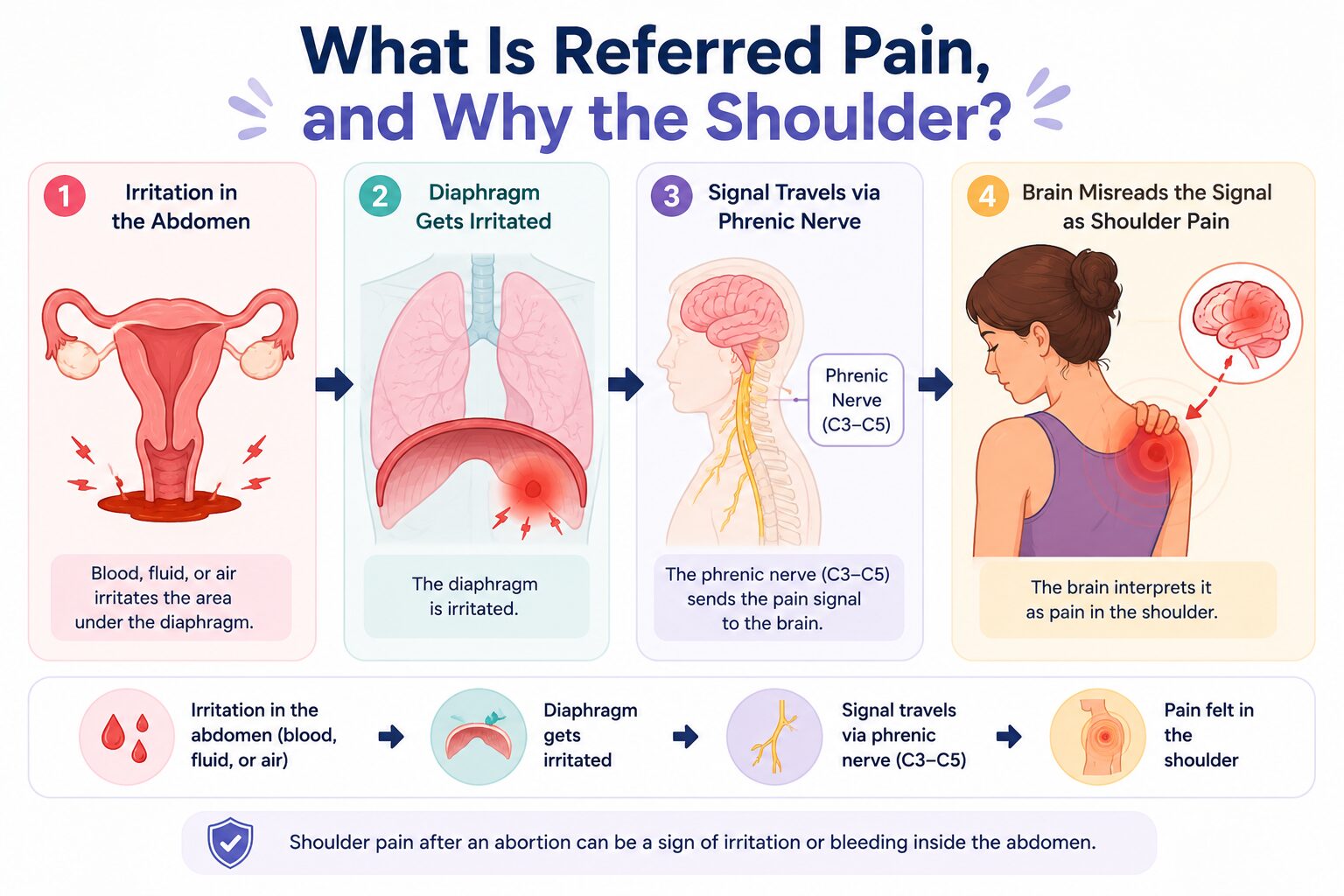
When something irritates the underside of the diaphragm — such as blood, fluid, or air in the abdominal cavity — the brain can misread that irritation as shoulder pain instead of abdominal pain. This phenomenon is well recognized in medicine and is sometimes called Kehr’s sign, most commonly associated with bleeding inside the abdomen.
In the context of abortion, this type of referred shoulder pain is most concerning when it follows a procedure that involved entering the uterus, because it can indicate that blood or fluid has irritated the diaphragm from below. For a full overview of what happens during a surgical procedure, see our guide on what happens during a surgical abortion.
Possible Causes of Shoulder Pain After Abortion
Not every case of shoulder pain after an abortion points to a serious complication, but it’s important to understand the range of possibilities.
-
Internal Bleeding
One of the more serious potential causes is bleeding inside the abdominal cavity, which can occur if the uterus was injured during a surgical procedure (a rare complication known as uterine perforation) or from other internal bleeding. As blood pools near the diaphragm, it can trigger referred pain felt in the shoulder, often on one side.
-
Retained Tissue or Infection
Incomplete removal of pregnancy tissue can lead to infection or inflammation that, in some cases, contributes to abdominal irritation extending to referred pain. This is usually accompanied by other symptoms such as fever, unusual discharge, or worsening pelvic pain.
-
Gas or Air Introduced During the Procedure
In some procedures, small amounts of air can enter the abdominal cavity. This can cause temporary diaphragmatic irritation and referred shoulder discomfort that tends to resolve on its own, though it should still be evaluated if it’s new or unexplained.
-
Muscle Strain or Positioning
Less commonly, shoulder discomfort may simply relate to positioning during the procedure or unrelated musculoskeletal strain. This is the least likely explanation when the pain is new, one-sided, and paired with abdominal or pelvic symptoms.
Because the causes range from minor to medically urgent, shoulder pain after an abortion should never be self-diagnosed. A healthcare provider can determine the actual cause through examination and, if needed, imaging.
Warning Signs That Should Not Be Ignored
Shoulder pain becomes more concerning when it appears alongside other symptoms. Seek prompt medical evaluation if you experience shoulder pain along with any of the following:
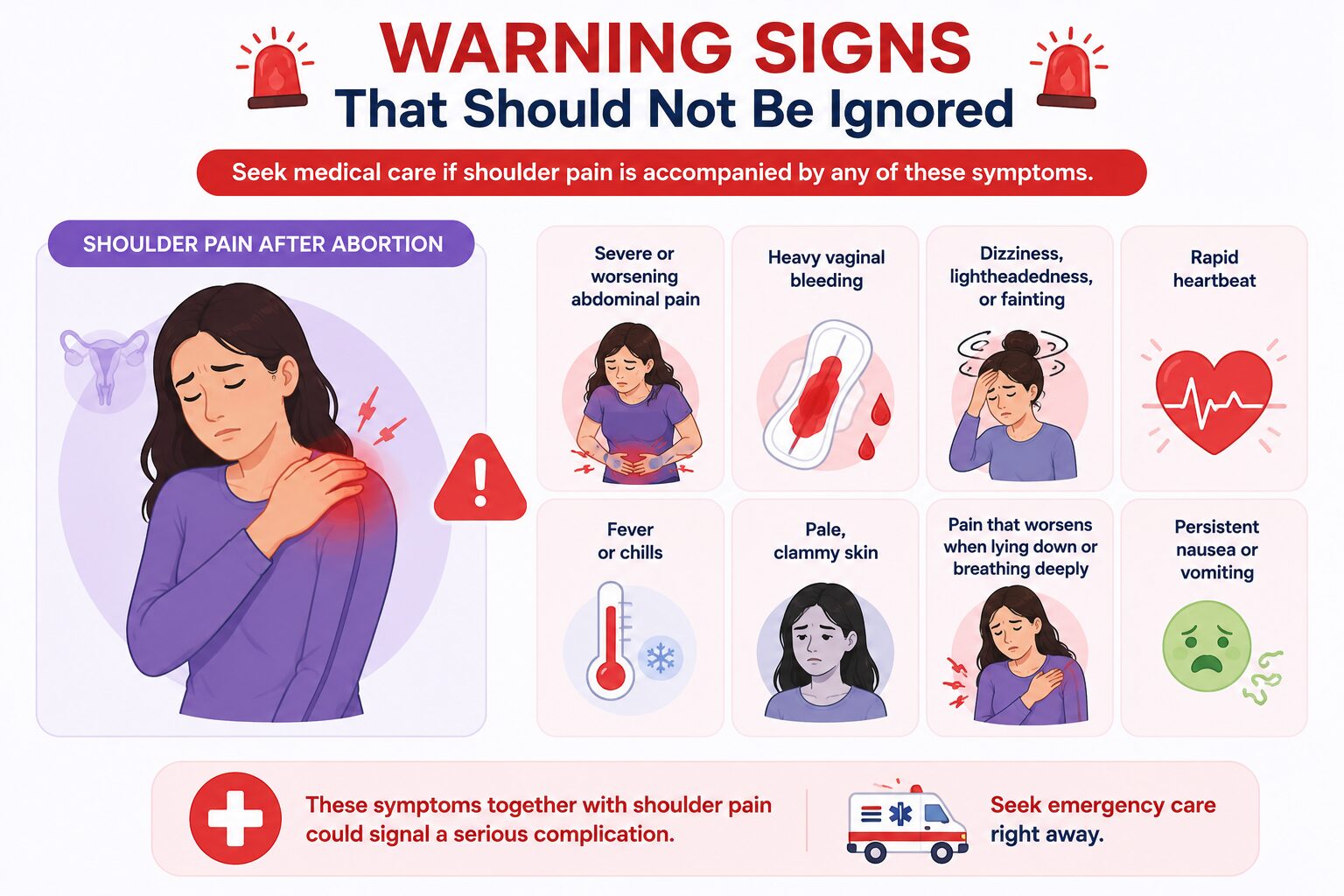
- Severe or worsening abdominal or pelvic pain
- Heavy vaginal bleeding (soaking more than one pad per hour for two or more hours)
- Dizziness, lightheadedness, or fainting
- Rapid heartbeat
- Fever or chills
- Pale, clammy skin
- Pain that worsens when lying down or breathing deeply
- Persistent nausea or vomiting
These combined symptoms can indicate internal bleeding or another complication that requires urgent evaluation, sometimes in an emergency department rather than a routine clinic visit. See our guide on bleeding after the abortion pill for more detail on what bleeding patterns are and aren’t normal during recovery.
When to Seek Emergency Care vs. Routine Follow-Up
Seek emergency care immediately if shoulder pain is accompanied by any of the red-flag symptoms listed above, or if the pain is sudden, severe, or rapidly worsening. Internal bleeding can become life-threatening if untreated, so it’s always safer to be evaluated than to wait and see.
Contact your provider promptly (same day) if you have new shoulder pain without other severe symptoms, especially if it started shortly after your procedure and doesn’t resolve within a short period of rest. Book a confidential appointment with our care team if you are unsure whether your symptoms need evaluation.
Routine follow-up is generally appropriate only if you’ve already been evaluated and cleared for a known, explained cause of mild discomfort, such as temporary gas-related irritation, and your provider has advised monitoring at home.
If you are ever unsure which category applies to you, it’s always appropriate to call your provider’s office or seek urgent care and describe your symptoms — clinical staff are trained to help you make that judgment call.
What Happens During a Medical Evaluation
If you seek care for shoulder pain after an abortion, a provider will typically:
- Review your procedure details and recent symptoms
- Check vital signs, including blood pressure and heart rate, which can indicate internal bleeding
- Perform an abdominal and pelvic examination
- Order imaging, such as an ultrasound, to check for fluid or bleeding in the abdomen
- Run blood tests to assess for infection or blood loss
Being evaluated does not necessarily mean something is seriously wrong — it simply allows a provider to rule out dangerous causes and give you an accurate explanation and treatment plan. Our in-clinic abortion services include follow-up care and support for exactly these situations.
General Aftercare and Monitoring Tips
While this is not a substitute for personalized medical advice, general aftercare after an abortion typically includes:
- Following all discharge instructions provided by your care team
- Tracking bleeding, pain levels, and any new symptoms
- Attending scheduled follow-up appointments
- Avoiding activities your provider has advised against during recovery
- Keeping emergency contact information readily available
For a comprehensive walkthrough of what to expect before, during, and after your procedure, read our abortion experience before, during, and after care guide. For surgical procedures specifically, our second trimester abortion recovery guide covers recovery in more depth. You can also read about abortion pain management strategies and what other physical symptoms like nausea after abortion or anal or rectal pain after abortion can indicate during recovery.
Every recovery is different, and your own care team is the best source for guidance specific to your procedure and health history.
Conclusion
Shoulder pain after an abortion is not something to brush off. While it isn’t always a sign of a serious problem, it can be a form of referred pain connected to internal bleeding or other complications that require prompt attention. Understanding why this symptom occurs — and knowing which accompanying signs signal an emergency — helps you respond quickly and confidently rather than guessing.
If you’re experiencing shoulder pain after an abortion, especially alongside heavy bleeding, severe abdominal pain, dizziness, or fever, don’t wait. Contact your healthcare provider or seek emergency care right away.
Serenity Choice Health is here to support you with clear guidance and compassionate care during your recovery. Our telehealth abortion care includes follow-up consultations so you can reach a provider quickly without leaving home. Our women’s primary care services are also available for ongoing post-abortion support. If you have questions about symptoms after your procedure, visit our abortion pill page for medication abortion recovery information, or reach out to our care team today. Our guide on how to recover emotionally after an abortion is also available as part of your overall recovery support.
FAQ Section
Is shoulder pain normal after an abortion?
Mild, generalized soreness can occur during recovery, but shoulder pain specifically is not a typical or expected symptom. It should be evaluated, especially if it’s new, one-sided, or paired with other symptoms.
How soon after an abortion can complications appear?
Complications can appear within hours to days after a procedure, though timing varies depending on the cause. Any new or worsening symptoms during recovery should be reported to your provider.
What does referred pain feel like?
Referred pain often feels like an ache or sharp discomfort in an area, such as the shoulder, that seems unrelated to the actual source of irritation, which in this case would be inside the abdomen.
Can shoulder pain really mean internal bleeding?
Yes, in some cases shoulder pain can be a sign of internal bleeding irritating the diaphragm, a pattern sometimes called Kehr’s sign. This is why it should never be ignored, particularly with other warning symptoms present.
Should I go to the ER or call my provider first?
If shoulder pain is severe, sudden, or accompanied by heavy bleeding, dizziness, fever, or rapid heartbeat, go to the emergency room immediately. For milder, isolated shoulder discomfort, call your provider promptly to discuss next steps.
Will I need surgery if I have this complication?
Treatment depends entirely on the cause and severity of the complication, which can only be determined through a medical evaluation. Some causes resolve with monitoring, while others may require intervention.

Dr. James Carter is a board-certified physician and lead clinician at Serenity Choice Health, specializing in reproductive health access and medication abortion protocols. With over 20+ years of experience, he combines clinical expertise with patient-centered care to ensure safe, compassionate, and confidential reproductive healthcare.