
Acne isn’t just a teenage concern. Many women continue experiencing breakouts well into their 20s, 30s, and even 40s, often because of hormonal changes. If you’ve noticed acne flare-ups around your menstrual cycle or after starting or changing birth control, you’re not alone.
One common question healthcare providers hear is, “What is the best birth control for acne?” The answer isn’t the same for everyone. Some hormonal contraceptives can help reduce acne by balancing hormone levels, while others may have little effect or even contribute to breakouts in some individuals.
Understanding how different birth control methods affect your skin can help you make a more informed decision with your healthcare provider. In this guide, we’ll explain the relationship between hormones and acne, discuss which contraceptives may help, and review important factors to consider before choosing a birth control method. Our birth control and contraceptive services provide personalized guidance to help you find the right method for your skin and overall health.
Understanding the Link Between Hormones and Acne
Hormonal acne develops when changes in hormone levels increase the production of sebum, the skin’s natural oil. Excess oil can combine with dead skin cells and bacteria, leading to clogged pores, inflammation, and pimples.
Hormones called androgens, including testosterone, play a significant role in this process. Although women naturally produce small amounts of androgens, higher activity or increased sensitivity to these hormones can trigger acne.
Hormonal acne commonly appears:
- Along the jawline
- On the chin
- Around the mouth
- On the neck
- Sometimes on the chest and back
Many women notice these breakouts become worse:
- Before their menstrual period
- During hormonal changes
- After stopping certain birth control methods
- With conditions such as polycystic ovary syndrome (PCOS)
Because hormones influence acne, certain forms of hormonal birth control may also affect the skin.
How Birth Control Can Affect Acne
Hormonal birth control works by changing the body’s natural hormone levels to prevent pregnancy. Depending on the type of contraception, these hormonal changes may also influence oil production in the skin.
For some women, hormonal birth control reduces androgen activity, resulting in:
- Less oil production
- Fewer clogged pores
- Reduced inflammation
- Fewer hormonal breakouts
However, not every contraceptive works the same way. Some methods contain both estrogen and progestin, while others contain only progestin. These hormonal differences can affect the skin differently from one person to another.
That’s why choosing birth control solely for acne treatment without professional guidance isn’t recommended. Read our guide on common birth control side effects to understand the full range of ways different methods can affect your body.
Why Some Birth Control Pills May Help Improve Acne
Combined hormonal contraceptives contain both estrogen and progestin. Estrogen can reduce the effects of androgens by lowering the amount of free testosterone circulating in the body.
As androgen activity decreases, many women experience:
- Reduced oil production
- Fewer inflammatory pimples
- Less frequent hormonal breakouts
- Gradual improvement in skin texture
For this reason, combined hormonal contraceptives are sometimes prescribed as part of a treatment plan for women whose acne is linked to hormonal fluctuations.
It’s important to remember that birth control is not considered the right solution for every type of acne. Your healthcare provider will consider your overall health, medical history, and contraceptive needs before recommending a specific option.
Which Types of Birth Control May Help With Acne?
Not every contraceptive affects acne in the same way. Understanding the differences can help set realistic expectations.
Combined Birth Control Pills
Combined birth control pills are the contraceptive method most commonly associated with acne improvement.
These pills combine estrogen with a form of progestin, helping reduce androgen-related oil production over time.
For women with hormonal acne, combined pills may offer the added benefit of both pregnancy prevention and gradual improvement in acne symptoms.
However, results vary from person to person, and improvements typically take several months rather than occurring immediately.
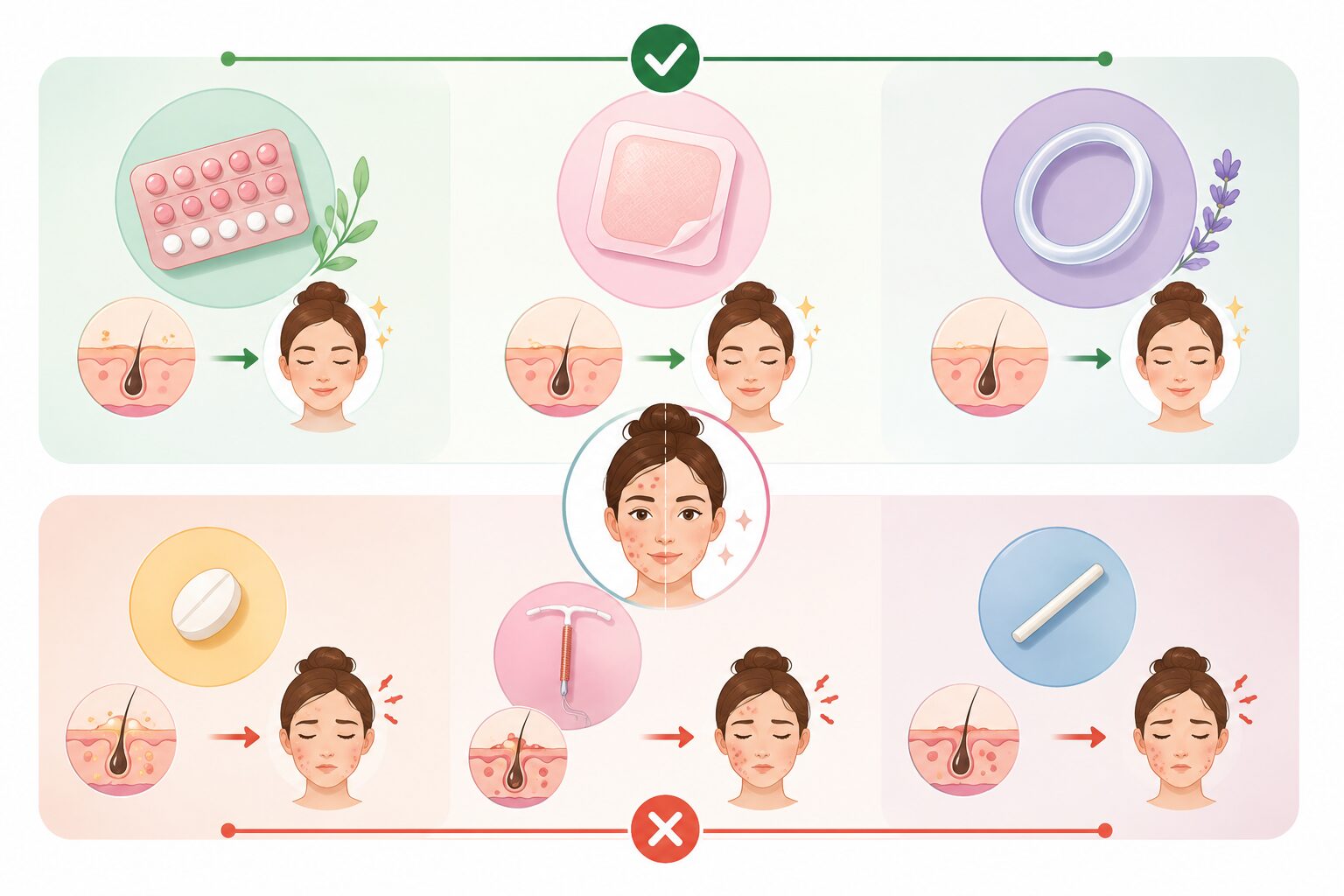
The Birth Control Patch
The contraceptive patch also contains estrogen and progestin.
Because it delivers hormones similar to combined birth control pills, some women may notice improvements in hormonally driven acne, although individual experiences vary.
Your healthcare provider can discuss whether the patch is an appropriate option based on your health history and lifestyle.
The Vaginal Ring
The vaginal ring is another combined hormonal contraceptive that releases estrogen and progestin.
Like combined pills and the patch, it may reduce androgen-related acne in some women by helping stabilize hormone levels.
Although skin improvement isn’t guaranteed, some users report fewer hormonal breakouts after several months of consistent use.
Birth Control Methods That May Not Improve Acne
While some hormonal contraceptives may help reduce acne, others do not have the same effect.
Progestin-Only Pills
Progestin-only pills do not contain estrogen.
Because estrogen plays an important role in lowering androgen activity, these pills may not provide the same acne-related benefits as combined hormonal contraceptives.
Some women notice no change in their skin, while others may experience increased breakouts. Individual responses vary depending on the type of progestin and personal hormone sensitivity.
Hormonal IUDs
Hormonal intrauterine devices (IUDs) release progestin directly into the uterus.
Although the hormone primarily acts locally, some users notice skin changes after insertion.
Many women experience no difference in acne, while others may notice breakouts during the first few months as the body adjusts.
Skin responses differ from person to person, making individualized counseling important before selecting this method.
Birth Control Implant
The contraceptive implant is another progestin-only option.
While it is highly effective for pregnancy prevention, some users report acne as a possible side effect.
This doesn’t happen to everyone, and many people tolerate the implant without significant skin concerns. If acne develops or worsens after insertion, discussing your symptoms with a healthcare provider can help determine the best next steps.
Choosing Birth Control Based on More Than Acne
Although improving acne may be one of your goals, it shouldn’t be the only factor when choosing birth control.
A healthcare provider will also consider:
- Your age
- Personal and family medical history
- Blood pressure
- Smoking status
- Migraine history
- Risk factors for blood clots
- Menstrual symptoms
- Pregnancy plans
- Lifestyle preferences
- Desired duration of contraception
The best birth control for acne is the one that balances effective pregnancy prevention, safety, and your individual health needs rather than focusing on skin improvement alone. If you need birth control quickly, read our guide on what to do if you need birth control quickly for fast, safe options available to you.
How Long Does Birth Control Take to Improve Acne?
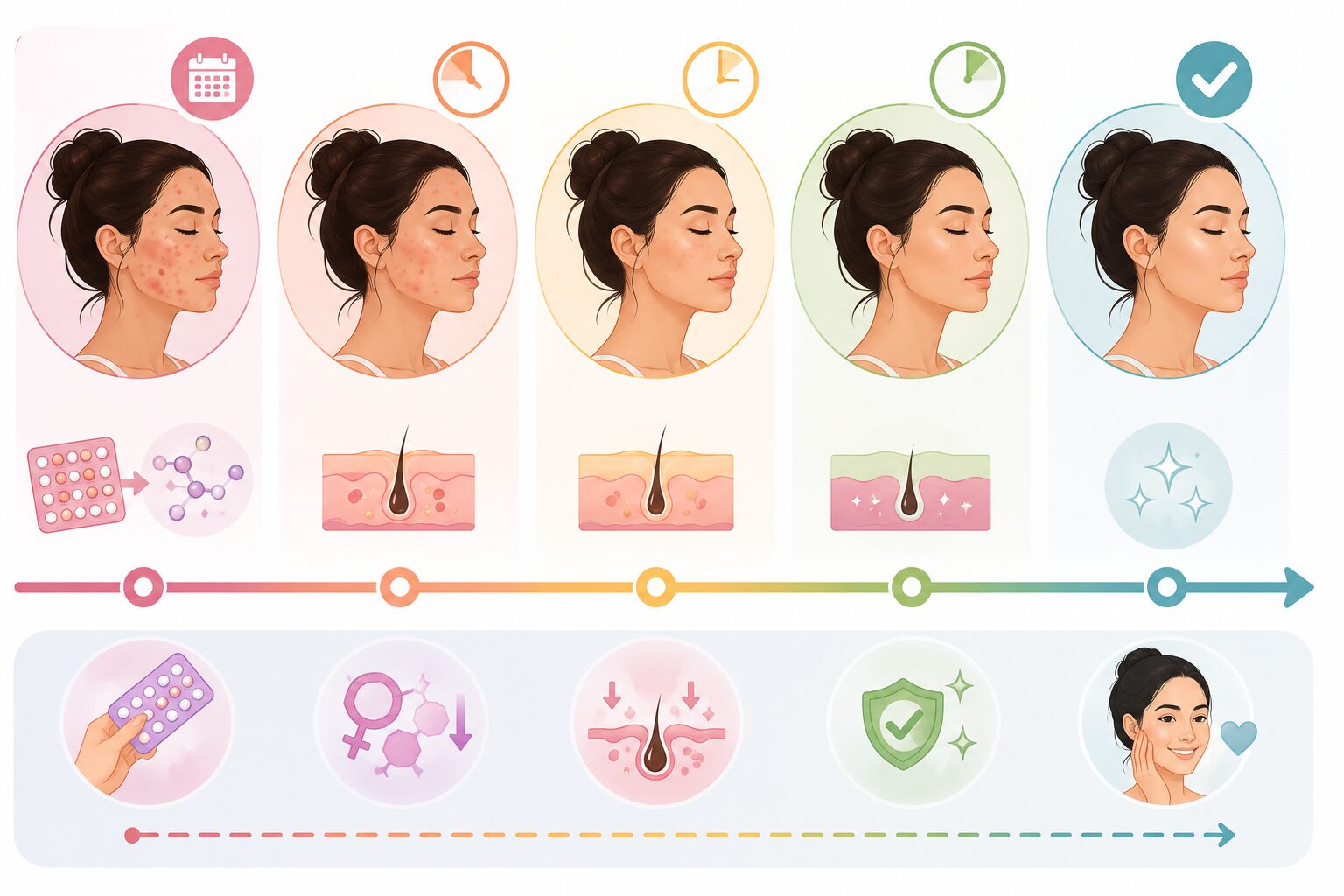
One of the most common misconceptions is that acne will clear up within a few weeks of starting hormonal birth control. In reality, your body needs time to adjust to changing hormone levels.
Most women who experience improvement notice gradual changes over two to six months of consistent use. During the first few weeks, it’s also possible to experience temporary breakouts as your hormones adapt. Read our guide on how birth control can affect your period to understand other hormonal adjustment changes to expect during the first few months.
The timeline varies depending on several factors, including:
- Your hormone levels before starting birth control
- The severity of your acne
- The specific contraceptive method
- Your skin’s natural healing process
- Whether you’re using additional acne treatments
Because improvement takes time, it’s important not to stop or switch birth control without discussing your concerns with your healthcare provider.
Can Birth Control Make Acne Worse?
Yes, in some cases, acne may temporarily worsen after starting or changing a birth control method.
This doesn’t necessarily mean the contraceptive isn’t working. Hormonal fluctuations during the adjustment period can trigger temporary breakouts before hormone levels stabilize.
Certain progestin-only contraceptives may also affect individuals differently. While some women notice little or no change, others may experience an increase in oily skin or acne.
If your acne becomes severe, continues to worsen after several months, or is affecting your quality of life, schedule an appointment with your healthcare provider. They can determine whether another contraceptive method or an additional acne treatment may be more appropriate.
Other Factors That Can Affect Acne
Even if you’re using birth control, hormones are only one piece of the puzzle. Several other factors can influence your skin.
These include:
- Genetics
- Stress
- Sleep quality
- Diet
- Certain medications
- Skincare products
- Underlying hormonal conditions, such as polycystic ovary syndrome (PCOS)
Because acne often has multiple causes, birth control may be only one part of a comprehensive treatment plan.
Depending on your situation, your healthcare provider may also recommend topical medications, prescription treatments, or lifestyle adjustments to help improve your skin.
How to Choose the Best Birth Control for Acne
The best birth control for acne isn’t simply the one that promises clearer skin it’s the one that safely meets your overall healthcare needs.
During your consultation, your provider may discuss:
Your Medical History
Certain health conditions may make some hormonal contraceptives unsuitable. Reviewing your medical history helps identify the safest options for you.
Your Skin Concerns
Your provider will ask about when your acne started, whether breakouts occur around your menstrual cycle, previous acne treatments, and whether you’ve noticed skin changes with past contraceptives. This information helps determine whether your acne is likely to be hormonally influenced.
Your Reproductive Goals
Some women are looking for long-term contraception, while others want a short-term option. Your future pregnancy plans can help determine which contraceptive method best fits your lifestyle.
Your Preferences
Choosing birth control also involves practical considerations, including whether you prefer a daily pill, a weekly patch, a monthly vaginal ring, or a long-acting reversible contraceptive. Finding a method that fits your routine can improve satisfaction and consistent use. Read our guide on finding birth control near you to understand what to look for in a provider and what to expect during a consultation.
When Should You See a Healthcare Provider?
Acne doesn’t always require prescription treatment, but persistent or severe breakouts deserve professional evaluation.
Schedule an appointment if:
- Your acne is painful or cystic
- Over-the-counter products aren’t helping
- Your acne leaves scars or dark spots
- Breakouts suddenly become much worse
- You’re considering hormonal birth control to help manage acne
- You’re experiencing bothersome side effects after starting a contraceptive
Read our guide on when to see a women’s primary care provider for a broader overview of reproductive health situations that always warrant a professional visit.
A healthcare provider can evaluate your symptoms, discuss your contraceptive goals, and recommend options that support both your reproductive health and skin concerns.
Why Personalized Birth Control Counseling Matters
There is no single birth control method that’s best for every woman with acne.
Each person’s hormones, health history, lifestyle, and treatment goals are different. What improves one person’s skin may not have the same effect for someone else.
That’s why personalized counseling is so valuable. Rather than focusing on acne alone, your provider can help you choose a contraceptive that aligns with your overall health while discussing realistic expectations for skin improvement.
An informed decision leads to better long-term satisfaction and a contraceptive plan that works for your unique needs. Your visit is fully confidential — read our guide on protecting your health privacy to understand how your information is kept safe.
Take the Next Step with Serenity Choice Health
If you’re exploring birth control options and wondering which method may be best for your skin and overall health, the experienced team at Serenity Choice Health is here to help.
We provide confidential, patient-centered birth control counseling designed around your individual needs — not a one-size-fits-all approach. During your visit, we’ll discuss your medical history, lifestyle, reproductive goals, and any concerns about acne or hormonal changes so you can make an informed decision.
Whether you’re starting birth control for the first time or considering switching methods, we’re committed to helping you find an option that supports both your reproductive health and your confidence. Our women’s primary care services integrate birth control counseling into comprehensive reproductive healthcare. Learn more about the benefits of telehealth and how virtual consultations make accessing personalized birth control guidance more convenient than ever.
Conclusion
Choosing the best birth control for acne involves more than selecting a contraceptive that’s known to improve skin. While combined hormonal contraceptives may help reduce hormonal acne for some women, results vary based on individual hormone levels, medical history, and the type of birth control used.
Improvement usually takes time, and birth control isn’t the right solution for every type of acne. Working with a qualified healthcare provider can help you understand your options, set realistic expectations, and choose a contraceptive that supports both your skin and your overall health.
If acne is affecting your quality of life or you’re unsure which birth control method is right for you, schedule a confidential consultation with Serenity Choice Health — a personalized consultation is the best place to start.
FAQ Section
Can birth control help clear acne?
Yes. Some combined hormonal contraceptives may help improve hormonally related acne by reducing androgen activity and decreasing excess oil production. Results vary from person to person.
What is the best birth control for hormonal acne?
Combined hormonal birth control methods are generally the contraceptives most commonly associated with improving hormonal acne. Your healthcare provider can recommend the most appropriate option based on your medical history and health needs.
How long does it take for birth control to improve acne?
Many women begin noticing gradual improvement within two to six months of consistent use, although the exact timeline differs for each individual.
Can birth control make acne worse before it gets better?
Yes. Some women experience temporary breakouts while their hormone levels adjust after starting or switching birth control. These changes often improve as the body adapts.
Should I switch birth control because of acne?
If your acne becomes significantly worse or doesn’t improve after several months, talk with your healthcare provider before changing your contraceptive. They can help determine whether another method or additional acne treatment is appropriate.
Is birth control enough to treat acne?
Not always. Acne can have multiple causes, including genetics, stress, skincare habits, and underlying hormonal conditions. Some women benefit from combining birth control with other acne treatments recommended by a healthcare provider.

Dr. James Carter is a board-certified physician and lead clinician at Serenity Choice Health, specializing in reproductive health access and medication abortion protocols. With over 20+ years of experience, he combines clinical expertise with patient-centered care to ensure safe, compassionate, and confidential reproductive healthcare.