

Many people use “STI” and “STD” interchangeably but the distinction actually matters, and understanding it could change how you think about symptoms, testing, and your own sexual health. Millions of people carry sexually transmitted infections without realizing it, simply because many infections produce no symptoms at all.
This guide explains the real difference between an STI and an STD, why healthcare professionals now favor one term over the other, when testing becomes necessary, what symptoms deserve attention, and how to protect yourself and the people you’re intimate with. Understanding this distinction helps people seek testing earlier, reduce transmission risk, and avoid complications that can otherwise go unnoticed for years.
STI vs STD: What Is the Actual Difference?
What Does STI Mean?
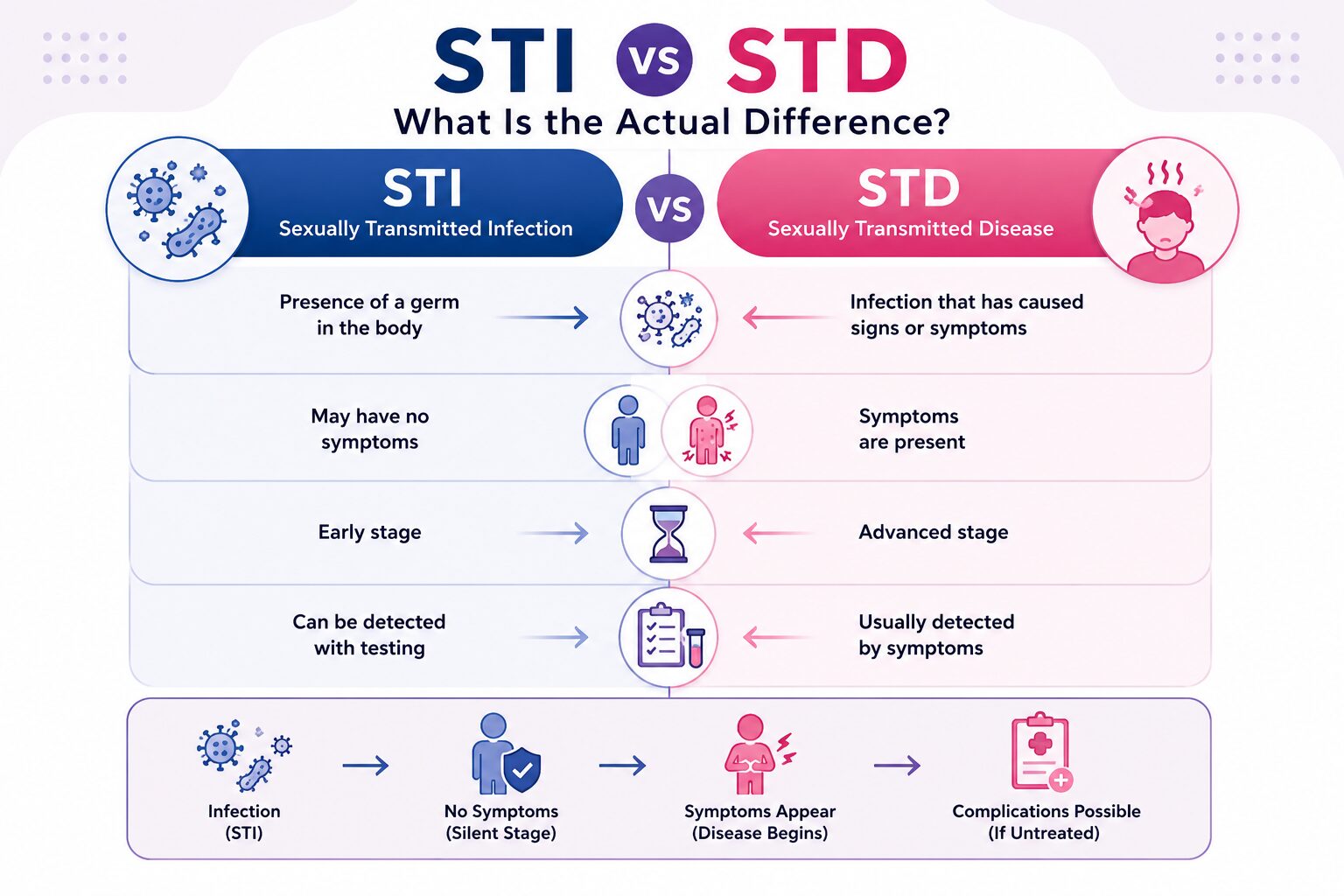
STI stands for sexually transmitted infection. An infection occurs when a virus, bacterium, or parasite enters the body, regardless of whether it produces any noticeable symptoms. Medically speaking, the term “infection” simply describes the presence of a pathogen in the body. This is why a person can have chlamydia, HPV, or herpes and feel completely fine the infection is present, but it has not necessarily caused disease.
What Does STD Mean?
STD stands for sexually transmitted disease. A disease describes the stage at which an infection has progressed to the point of causing symptoms, tissue damage, or other measurable health effects. Not every infection becomes a disease some infections are cleared by the immune system, remain dormant, or are treated before they cause any clinical symptoms at all.
Infection vs Disease Explained in Simple Terms
A useful way to think about this is to compare it to a common cold. Catching the cold virus is the infection. Developing a sore throat, cough, and congestion is the disease that results from that infection. The same logic applies to sexually transmitted infections having HPV is the infection, while the cervical changes or genital warts it can sometimes cause represent the disease stage.
Why Doctors Now Prefer the Term STI
Healthcare professionals increasingly use STI rather than STD for several reasons. Most sexually transmitted infections do not cause visible symptoms, especially in the early stages, making “infection” the more medically accurate term. The shift also reflects an effort to reduce stigma, since the word “disease” can sound more frightening or permanent than “infection,” and emphasizes early detection rather than waiting for symptoms to confirm something is wrong.
Can You Have an STI Without Having an STD?
Yes, and this happens far more often than most people realize.
Why Many STIs Cause No Symptoms
Chlamydia produces no symptoms in roughly 70 percent of women who have it. Gonorrhea, HPV, and even HIV can remain symptom-free for extended periods. The body can carry these infections silently while the person feels entirely healthy, which is exactly why routine screening rather than waiting for symptoms is the recommended approach. In fact, you can have an STI without symptoms for months or even years before anything feels wrong. Our STI and STD testing services are designed to make this kind of proactive, confidential screening straightforward.
How Long Can an STI Go Undetected?
Timelines vary significantly by infection. Chlamydia and gonorrhea can persist for months without symptoms. HPV can remain dormant for years, sometimes decades, before any cellular changes appear. HIV can take up to a decade to progress to AIDS without treatment. Without testing, there is often no way to know an infection is present until it has had time to cause damage.
Health Risks of Untreated Infections
When an infection goes undetected and untreated, it has time to progress toward disease. Chlamydia and gonorrhea left untreated are leading causes of pelvic inflammatory disease, which can cause chronic pelvic pain and significantly reduce fertility. Untreated infections also increase susceptibility to other STIs, including a higher risk of acquiring HIV.
Warning Signs That Should Never Be Ignored
While many infections are silent, some symptoms warrant prompt attention regardless of when they appear. These include unusual discharge, sores or bumps in the genital area, burning during urination, pelvic or abdominal pain, and unexplained rashes. Any of these symptoms should prompt a visit to a healthcare provider rather than a wait-and-see approach.
Common Examples of STIs and STDs
Chlamydia
Chlamydia is a bacterial infection that frequently causes no symptoms, particularly in women. When left untreated, it can progress to pelvic inflammatory disease, a true disease state that can cause lasting damage to the reproductive organs. It is easily treated with antibiotics when caught early.
Gonorrhea
Like chlamydia, gonorrhea often produces no symptoms and is frequently detected only through screening. Left untreated, it can spread to the joints and bloodstream and contribute to infertility, illustrating how a silent infection can eventually become a more serious disease.
HPV
HPV is the most common sexually transmitted infection worldwide. Most HPV infections clear on their own without ever causing disease. However, certain high-risk strains that persist can lead to cervical cell changes and, in some cases, cervical cancer making HPV one of the clearest examples of how an infection can, but does not always, progress into disease.
Herpes
Herpes simplex virus is an infection that can remain dormant in the body for long stretches between outbreaks. The disease component visible sores or blisters comes and goes, while the underlying viral infection remains present in the body indefinitely. This is why herpes can be transmitted even when no symptoms are visible.
HIV and AIDS
HIV and AIDS provide one of the clearest illustrations of the infection-versus-disease distinction. HIV is the infection a virus that attacks the immune system. AIDS is the disease that can develop after years of untreated HIV infection, once the immune system has been severely damaged. With modern treatment, many people living with HIV never progress to AIDS at all, which is precisely why early detection through testing matters so much.
STI vs STD Symptoms: What Should You Watch For?
Symptoms in Men
Men may notice discharge from the penis, burning during urination, testicular pain or swelling, or sores on the genitals. Many infections in men, however, also produce no symptoms whatsoever.
Symptoms in Women
Women may experience unusual vaginal discharge, pelvic pain, bleeding between periods, pain during sex, or burning during urination. As with men, the absence of these symptoms does not rule out infection. If you’re wondering specifically which STIs women should be tested for, our women’s primary care services include comprehensive STI screening as part of routine reproductive health visits.
Symptoms That Affect Any Gender
Sores, blisters, rashes, swollen lymph nodes in the groin, and flu-like symptoms can occur regardless of gender and may indicate several different infections, including herpes, syphilis, or early HIV.
Symptoms That Often Get Mistaken for Other Conditions
STI symptoms frequently overlap with unrelated conditions. Burning during urination can be mistaken for a urinary tract infection. Itching and discharge can be confused with a yeast infection. Skin irritation from sexually transmitted infections is sometimes dismissed as general irritation or an allergic reaction. This overlap is part of why self-diagnosis is unreliable and testing is the only way to know for certain.
When Symptoms Mean You Need Immediate Medical Care
Severe pelvic pain, high fever, widespread sores, or symptoms that worsen rapidly should prompt immediate medical evaluation rather than waiting for a routine appointment. Book a confidential appointment to get evaluated promptly.
STI Testing vs STD Testing Is There a Difference?
Are STI Tests and STD Tests the Same Thing?
Functionally, yes. The tests themselves have not changed only the terminology used to describe them. A test that was once called an “STD test” and one currently called an “STI test” are checking for the same infections using the same methods.
Screening vs Diagnostic Testing
Screening tests are performed on people without symptoms as a preventive measure, typically based on age and risk factors. Diagnostic testing is performed when someone has symptoms that need to be evaluated and identified. Both serve important but slightly different purposes within sexual healthcare.
When Should You Get Tested?
Testing is recommended after starting a relationship with a new partner, following any instance of unprotected sex, when symptoms are present, and as part of routine annual screening for sexually active adults even without symptoms or known exposure.
What Happens During an STI Test?
Testing methods vary depending on the infection being checked. Chlamydia and gonorrhea are typically detected through a urine sample or vaginal/urethral swab. HIV and syphilis require a blood draw. Herpes is diagnosed through a swab of an active sore or, less reliably, through blood testing. If you’ve never been tested before, our first-time guide to what happens during an STI test walks through exactly what to expect. Learn more about the benefits of telehealth and how virtual care can support access to STI testing without an in-person visit.
How Accurate Are STI Tests?
Accuracy depends heavily on timing. Each infection has a window period the time between exposure and when a test can reliably detect it. Testing too early after exposure can produce a false negative, which is why providers often recommend retesting after a few weeks if exposure was recent.
What Happens If an STI Is Left Untreated?
Short-Term Health Risks
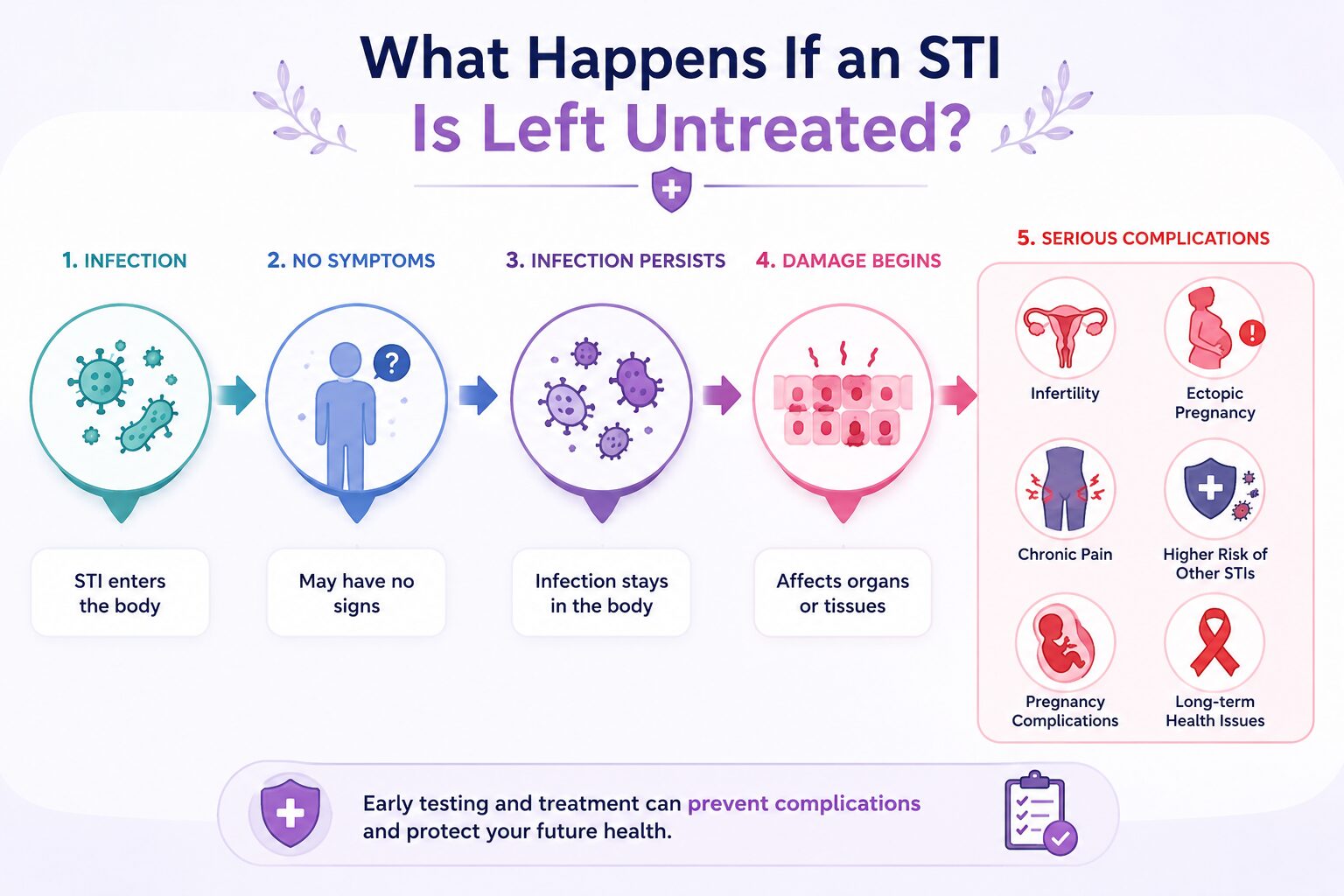
In the near term, untreated infections can cause ongoing discomfort, discharge, and irritation, and can be unknowingly transmitted to partners during this period.
Long-Term Health Complications
Over time, untreated bacterial infections like chlamydia and gonorrhea can lead to pelvic inflammatory disease, chronic pelvic pain, and increased risk of ectopic pregnancy. Untreated syphilis can eventually affect the cardiovascular and nervous systems.
Fertility and Pregnancy Concerns
Pelvic inflammatory disease resulting from untreated chlamydia or gonorrhea is a leading cause of infertility in women. During pregnancy, untreated STIs can be passed to the baby, leading to complications ranging from low birth weight to more serious congenital conditions.
Can Untreated STIs Become Life-Threatening?
In rare but serious cases, yes. Untreated syphilis can eventually damage the heart and brain. Untreated HIV can progress to AIDS, leaving the immune system unable to fight off infections that would otherwise be manageable. Early detection and treatment prevent these outcomes in the vast majority of cases.
Real Patient Scenarios and Outcomes
A person who tests positive for chlamydia early, before symptoms develop, typically completes a short course of antibiotics with no lasting effects. A person who goes years without testing and develops pelvic inflammatory disease may face permanent scarring and fertility challenges the same starting infection, but a very different outcome based on timing.
How to Prevent STIs and STDs
Safe Sex Practices That Actually Work
Consistent condom use significantly reduces transmission risk for most STIs, though it does not eliminate risk entirely for infections spread through skin-to-skin contact, such as herpes and HPV. Limiting the number of sexual partners and discussing testing history with new partners also reduces risk meaningfully.
Vaccines That Help Prevent Certain STIs
The HPV vaccine protects against the high-risk strains most associated with cervical and other cancers and is recommended starting in adolescence, though it can be given up to age 45 in some cases. The hepatitis B vaccine prevents a virus that can be sexually transmitted and is now part of the standard childhood immunization schedule.
How Often Should You Be Tested?
Sexually active individuals under 25 should be tested annually at minimum. Those with multiple partners or other risk factors should consider testing every three to six months. Annual testing is appropriate as a baseline for most sexually active adults regardless of age.
Talking to Partners About Sexual Health
Direct conversations about testing history and STI status before becoming sexually active with a new partner reduce risk and set a foundation of mutual responsibility. This conversation is most effective when approached factually rather than with shame or judgment. Our birth control and contraceptive services can be part of a broader conversation about protecting your sexual health with a new partner.
Common Prevention Mistakes People Make
Common mistakes include assuming a clean appearance means no infection is present, stopping condom use too soon in a new relationship before both partners have been tested, and not realizing that some infections, such as herpes and HPV, can spread through skin contact alone.
When Should You See a Healthcare Provider?
Symptoms That Require Immediate Evaluation
Any new sores, unusual discharge, persistent pelvic pain, or burning during urination should prompt a visit to a healthcare provider rather than self-treatment.
Exposure Without Symptoms
Even without symptoms, a known or suspected exposure such as unprotected sex with a partner of unknown status is reason enough to schedule testing. STI and STD testing is available for exactly this kind of situation, where peace of mind and early detection both matter.
Partner Notification Situations
If a partner informs you of a positive STI diagnosis, testing is recommended even if you feel completely well, since many infections have incubation periods before they become detectable.
Questions to Ask During Your Appointment
Useful questions include which specific infections are being tested for, how soon results will be available, whether retesting will be needed based on timing, and what symptoms should prompt a follow-up visit. Read our guide on protecting your health privacy to understand how your information is kept confidential when seeking sexual health care.
Frequently Asked Questions
Is an STI worse than an STD?
Not necessarily they describe different stages rather than different levels of severity. An STI refers to the presence of infection, while an STD refers to the disease that can result from an untreated or progressed infection. Many STIs never become STDs at all.
Why do doctors say STI instead of STD?
STI is considered more medically accurate because most sexually transmitted infections do not cause noticeable disease symptoms, especially early on. The term also reflects an effort to reduce stigma and emphasize that infections can be present and treatable before any symptoms appear.
Can you have an STI without symptoms?
Yes, and it’s extremely common. Chlamydia, gonorrhea, HPV, and even HIV can all be present in the body for extended periods without producing any noticeable symptoms, which is exactly why routine screening is recommended rather than waiting for warning signs.
Is HIV an STI or an STD?
HIV itself is classified as an STI, since it refers to the virus present in the body. AIDS is the disease that can develop after years of untreated HIV infection, once the immune system has been significantly damaged.
Are STI and STD tests the same thing?
Yes, functionally they are identical. The tests check for the same infections using the same methods; only the terminology describing them has shifted toward “STI” in modern medical and public health language.
How soon after exposure should I get tested?
Timing depends on the specific infection. Chlamydia and gonorrhea are typically detectable within one to two weeks, while HIV testing is most reliable between 18 and 45 days after exposure. For a full breakdown by infection type, see our guide on how soon after exposure to get tested for an STI. A healthcare provider can recommend the right testing window based on your specific exposure.

Dr. James Carter is a board-certified physician and lead clinician at Serenity Choice Health, specializing in reproductive health access and medication abortion protocols. With over 20+ years of experience, he combines clinical expertise with patient-centered care to ensure safe, compassionate, and confidential reproductive healthcare.