
If you are considering a medication abortion or have already taken abortion pills, understanding ectopic pregnancy is important. An ectopic pregnancy develops outside the uterus, most often in a fallopian tube. Because abortion medications are designed to end an intrauterine pregnancy, they do not treat an ectopic pregnancy.
This distinction matters because an ectopic pregnancy can become a medical emergency if it grows and causes internal bleeding. Symptoms such as one-sided abdominal or pelvic pain, dizziness, fainting, shoulder pain, or unusual bleeding need prompt medical attention, particularly when pregnancy has been confirmed or is possible.
If you are unsure whether your pregnancy is located inside the uterus, speak with a qualified healthcare professional before assuming that abortion pills are appropriate for you.
What Is an Ectopic Pregnancy?
An ectopic pregnancy occurs when a fertilized egg implants somewhere outside the main cavity of the uterus. Most ectopic pregnancies develop in a fallopian tube, although implantation can occur in other locations.
An ectopic pregnancy cannot develop normally into a viable pregnancy. More importantly, the pregnancy can continue growing in a location that cannot safely accommodate it.
If the affected fallopian tube ruptures, significant internal bleeding can occur. For this reason, recognizing possible symptoms and obtaining appropriate medical evaluation are important.
An ectopic pregnancy is different from an incomplete abortion or an abortion that has not fully passed pregnancy tissue. The location of the pregnancy is a critical part of determining appropriate care.
Can Abortion Pills Treat an Ectopic Pregnancy?
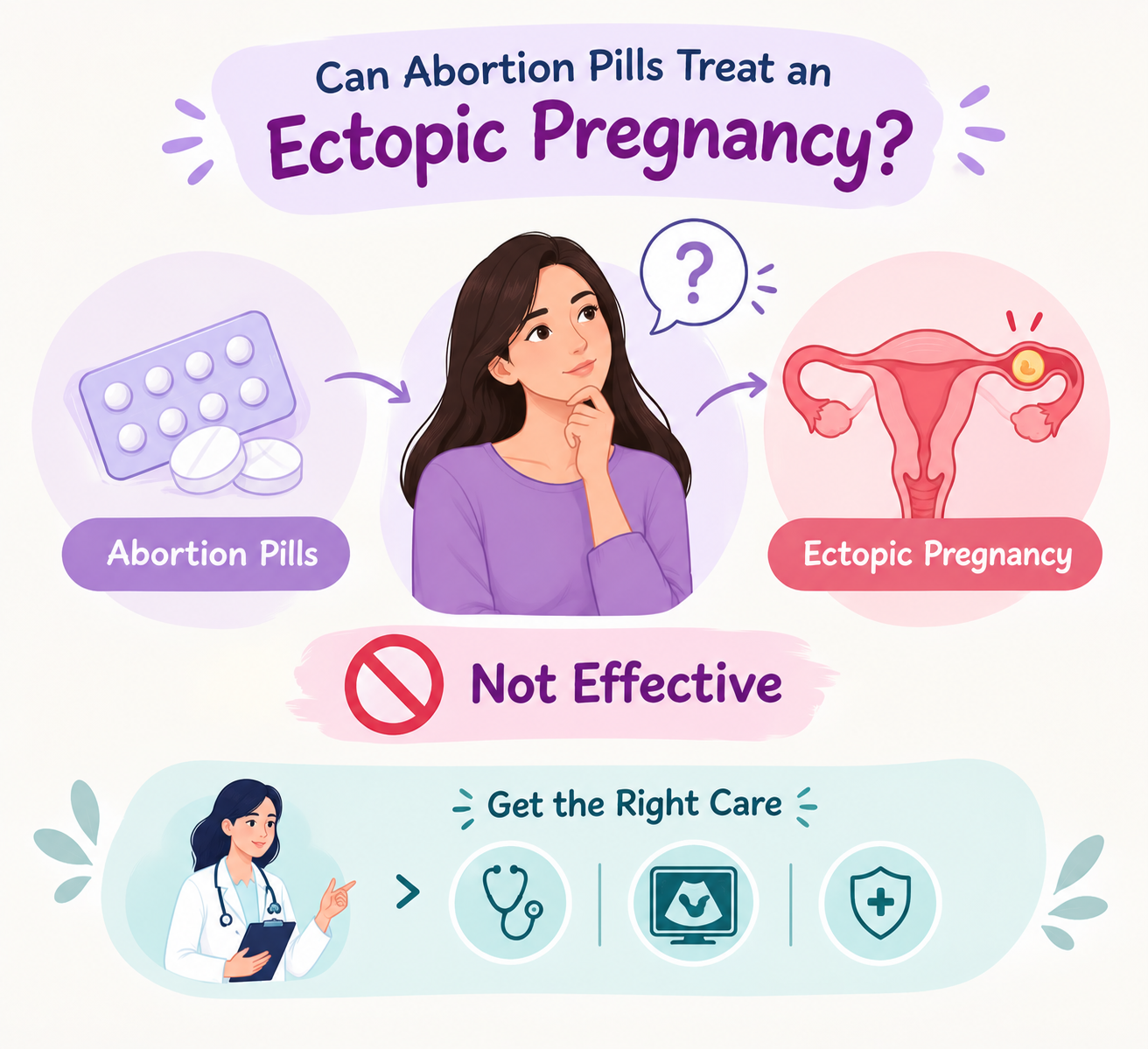
No. Abortion pills do not treat an ectopic pregnancy.
Medication abortion commonly uses mifepristone and misoprostol for an intrauterine pregnancy. These medications work through mechanisms that end an intrauterine pregnancy and cause the uterus to expel pregnancy tissue.
They do not remove or resolve an ectopic pregnancy.
The FDA states that mifepristone used with misoprostol for medical termination is contraindicated when an ectopic pregnancy is confirmed or suspected. WHO clinical guidance likewise states that mifepristone and misoprostol do not terminate an ectopic pregnancy.
If you want to understand how medication abortion works in an intrauterine pregnancy, you can review this guide to how the abortion pill works.
Why Is the Difference So Important?
The most important issue is that an ectopic pregnancy can sometimes cause symptoms that resemble a medication abortion or early pregnancy loss.
For example, bleeding and cramping can occur with several different pregnancy-related conditions. Having bleeding after taking abortion pills does not by itself prove that the pregnancy was safely terminated or that it was located inside the uterus.
In some cases, an ectopic pregnancy may also produce bleeding after abortion medications because the uterine lining can respond to the medications even though the pregnancy is outside the uterus.
That is why symptoms need to be considered in context rather than interpreted as proof that an abortion is complete.
If you have concerns that the medication may not have worked as expected, you can also read about what to do when abortion pills don’t work and how to know if the abortion pill worked.
What Are the Symptoms of an Ectopic Pregnancy?
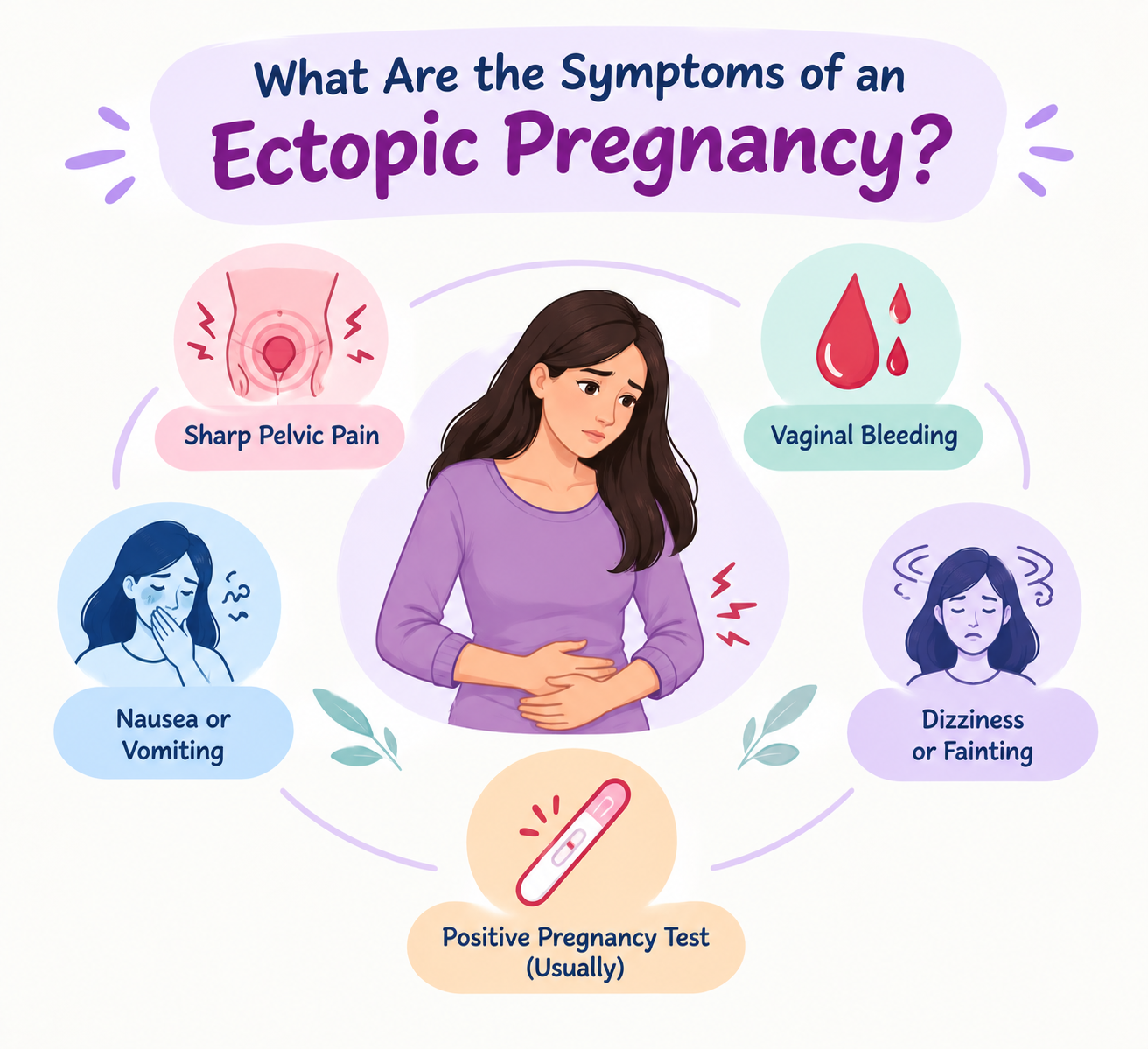
Ectopic pregnancy symptoms can vary. Some people initially have few or no noticeable symptoms, while others develop pain or bleeding early in pregnancy.
Possible symptoms include:
- Vaginal bleeding or spotting
- Pelvic or abdominal pain
- Pain that is stronger on one side
- Shoulder-tip pain
- Dizziness or weakness
- Fainting or feeling close to fainting
- Rectal pressure or discomfort
- Pain that becomes severe or persistent
These symptoms do not automatically mean that you have an ectopic pregnancy. They can occur with other conditions as well.
However, severe or worsening pain, fainting, significant weakness, or symptoms of internal bleeding require urgent medical evaluation.
For more information about a potentially concerning symptom after medication abortion, see this guide to one-sided pain after abortion and this explanation of shoulder pain after abortion.
Can You Have an Ectopic Pregnancy Without Symptoms?
Yes.
An ectopic pregnancy may not cause obvious symptoms in its early stages. Some people discover the condition during an evaluation for an early pregnancy rather than because of severe pain.
This is one reason medical assessment may be important when there is uncertainty about pregnancy location, gestational age, or symptoms.
You should not rely solely on how you feel to determine whether a pregnancy is ectopic.
Can You Have Bleeding With an Ectopic Pregnancy?
Yes.
Vaginal bleeding can occur with an ectopic pregnancy. However, bleeding can also occur during an intrauterine pregnancy, miscarriage, or after medication abortion.
Therefore, bleeding alone cannot determine where a pregnancy is located.
If you have taken abortion pills and are experiencing unexpected symptoms, particularly significant or worsening pain, contact a healthcare professional for appropriate evaluation rather than assuming the bleeding confirms a successful abortion.
You can also review information about bleeding after abortion pills to understand how bleeding can vary after medication abortion.
Can Abortion Pills Cause an Ectopic Pregnancy?
There is no evidence that abortion pills cause an ectopic pregnancy.
An ectopic pregnancy develops because a pregnancy implants outside the uterine cavity. However, abortion medications do not treat an ectopic pregnancy if one is already present.
This distinction is important:
Abortion pills do not cause an ectopic pregnancy, but they also do not treat an existing ectopic pregnancy.
If an ectopic pregnancy is suspected, the appropriate next step is medical evaluation.
Mifepristone and Ectopic Pregnancy
Mifepristone is one of the medications used in a medication abortion regimen.
For an appropriate intrauterine pregnancy, mifepristone blocks progesterone activity, helping prepare the pregnancy for the effects of misoprostol.
However, mifepristone does not treat an ectopic pregnancy.
The FDA specifically identifies confirmed or suspected ectopic pregnancy as a contraindication to the mifepristone–misoprostol regimen for medication abortion.
For general information about mifepristone, see the mifepristone RU-486 guide.
Misoprostol and Ectopic Pregnancy
Misoprostol causes uterine contractions and is commonly used as part of medication abortion.
However, the uterus is not where an ectopic pregnancy is located. As a result, misoprostol does not resolve an ectopic pregnancy.
This is particularly important if someone has little or no bleeding after taking misoprostol. Lack of bleeding can have different explanations, including an unsuccessful medication abortion, and an ectopic pregnancy is one possibility that needs consideration when symptoms or circumstances raise concern.
If you have questions about this situation, see what to know about no bleeding after misoprostol.
How Is an Ectopic Pregnancy Diagnosed?
Healthcare professionals may use several pieces of information when evaluating a possible ectopic pregnancy.
Depending on the circumstances, evaluation can include:
Pregnancy History
A healthcare professional may ask about:
- The date of your last menstrual period
- Previous pregnancy test results
- Pregnancy symptoms
- Previous ectopic pregnancy
- Current abdominal or pelvic pain
- Vaginal bleeding
- Previous reproductive health history
Pregnancy Testing and hCG
Human chorionic gonadotropin, commonly called hCG, can provide useful information about a pregnancy.
A healthcare professional may use quantitative blood hCG testing and repeat testing when appropriate. However, an hCG result by itself does not always establish the location of a pregnancy.
Ultrasound
Ultrasound can help determine whether a pregnancy is visible inside the uterus and whether findings are consistent with an ectopic pregnancy.
Not every early pregnancy can be conclusively located immediately. The timing of the pregnancy and the findings on testing matter.
For more information about diagnostic testing before abortion care, see whether ultrasounds and bloodwork are needed to get an abortion.
What Happens If You Take Abortion Pills Before Knowing You Have an Ectopic Pregnancy?
If you have already taken abortion pills and later become concerned about an ectopic pregnancy, do not assume that bleeding means the pregnancy has been safely resolved.
Contact a healthcare professional and explain:
- When you took each medication
- How far along the pregnancy may be
- Whether you have had bleeding
- Whether you have abdominal or pelvic pain
- Whether the pain is one-sided
- Whether you feel dizzy, weak, or faint
- Whether you have shoulder pain or other concerning symptoms
The clinician can determine whether additional evaluation is appropriate.
If you are experiencing severe symptoms, do not wait for a routine appointment.
When Is Ectopic Pregnancy an Emergency?
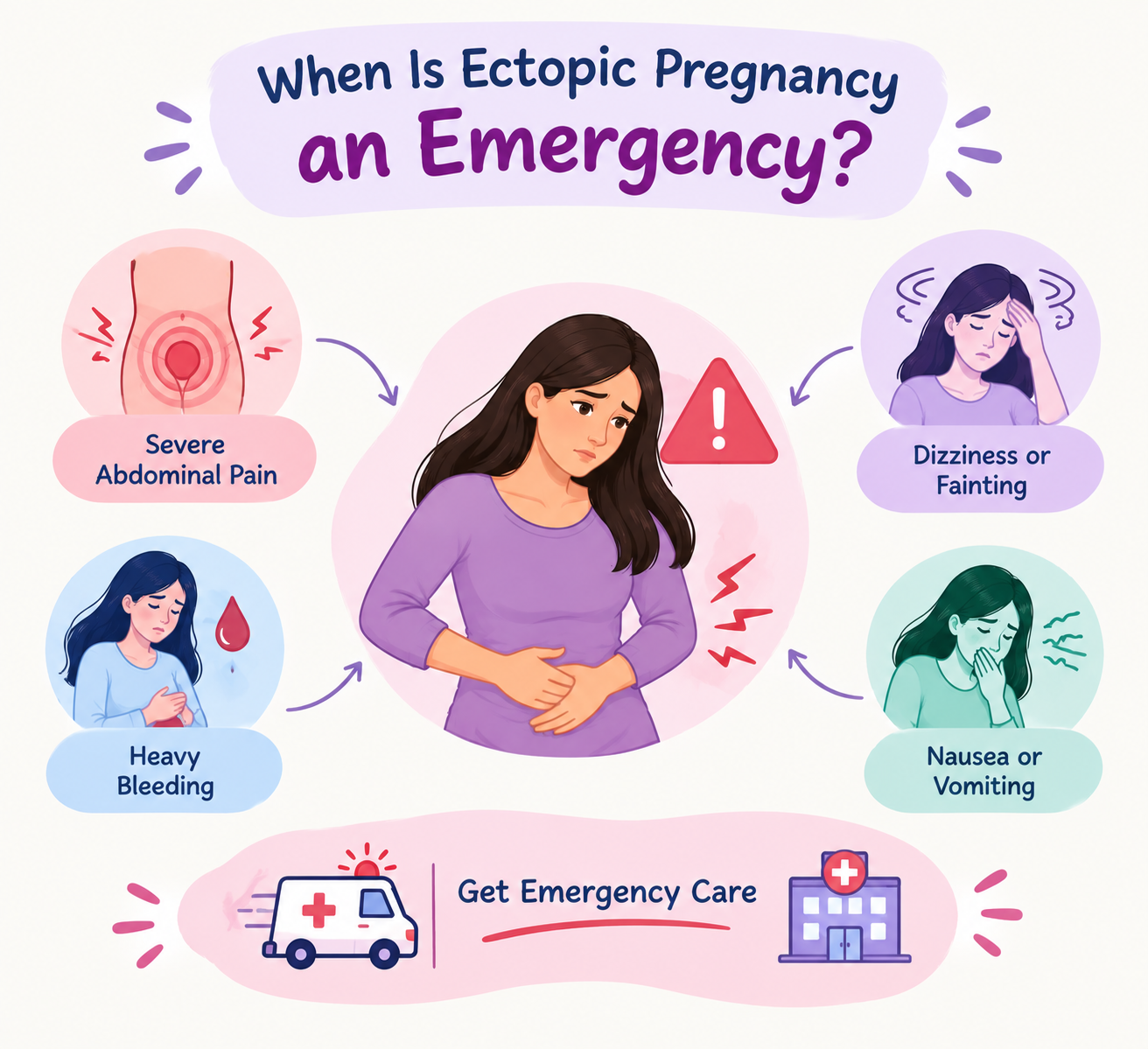
A ruptured ectopic pregnancy can cause internal bleeding and requires emergency treatment.
Seek emergency medical care immediately if you experience symptoms such as:
- Severe or rapidly worsening abdominal or pelvic pain
- Fainting or near-fainting
- Severe dizziness or weakness
- Shoulder-tip pain combined with other concerning symptoms
- Heavy bleeding accompanied by weakness, dizziness, or severe pain
- Severe pain that is concentrated on one side
- A sudden deterioration in how you feel
You should not wait for symptoms to become extreme if a healthcare professional has told you that an ectopic pregnancy is suspected.
For additional guidance about emergency symptoms following medication abortion, see when to go to the ER after abortion pills.
How Is an Ectopic Pregnancy Treated?
Treatment depends on factors such as the location and size of the ectopic pregnancy, pregnancy hormone levels, symptoms, whether rupture has occurred, and the person’s overall medical condition.
Common approaches may include medication specifically used to treat certain ectopic pregnancies or a surgical procedure.
The medication used to treat an ectopic pregnancy is not the same as the standard medication abortion regimen.
When an ectopic pregnancy has ruptured or is causing significant internal bleeding, emergency surgical treatment may be necessary.
Because treatment decisions depend on individual clinical findings, a healthcare professional should determine the appropriate approach.
Ectopic Pregnancy vs. Incomplete Abortion
These conditions are different and require different considerations.
An ectopic pregnancy occurs when a pregnancy develops outside the uterine cavity.
An incomplete abortion occurs when some pregnancy tissue remains after an abortion or pregnancy loss.
Symptoms can overlap. For example, both situations may involve bleeding and abdominal or pelvic discomfort.
That overlap is why symptoms alone should not be used to determine the cause.
For readers concerned about retained pregnancy tissue, see incomplete abortion signs, symptoms, and treatment.
What If the Abortion Pills Do Not Cause Bleeding?
If you take misoprostol and experience no bleeding, contact your healthcare provider for guidance.
No bleeding does not automatically mean that you have an ectopic pregnancy. However, because ectopic pregnancy is not treated by mifepristone or misoprostol, a healthcare professional may need to consider it when evaluating an unsuccessful or uncertain medication abortion.
The WHO clinical handbook notes that absence of bleeding after misoprostol can indicate a failed medical abortion, while ectopic pregnancy is another possibility that may need evaluation.
Do not take additional medication on your own simply because you are worried that the abortion did not work. Follow the instructions provided by your healthcare professional.
What If Pain Continues After Taking Abortion Pills?
Some cramping is expected with medication abortion because misoprostol causes uterine contractions.
However, severe, persistent, or worsening pain needs evaluation.
Particularly concerning features include:
- Severe one-sided pain
- Pain that continues or worsens despite recommended pain relief
- Pain accompanied by dizziness or fainting
- Shoulder-tip pain
- Significant weakness
- Heavy bleeding with concerning symptoms
A healthcare professional can determine whether the symptoms are part of the expected abortion process or require evaluation for another condition, including ectopic pregnancy.
You can read more about severe cramping after abortion pills and abortion pain management.
Can an Ectopic Pregnancy Continue After Taking Abortion Pills?
Yes, an ectopic pregnancy can remain because medication abortion does not terminate a pregnancy located outside the uterus.
This is why ongoing pregnancy symptoms or concerning pain after medication abortion should not automatically be interpreted as a normal recovery issue.
If pregnancy symptoms continue or you are uncertain whether the abortion was successful, follow-up with a healthcare professional can help determine what is happening.
Resources about why pregnancy symptoms can continue after abortion and when to take a pregnancy test after abortion pills can provide additional background.
What Should You Do If You Are Worried About an Ectopic Pregnancy?
If you think you could have an ectopic pregnancy, do not try to determine the diagnosis based only on an online symptom checklist.
Instead:
- Contact a qualified healthcare professional.
- Explain that you are concerned about an ectopic pregnancy.
- Tell them whether you have taken mifepristone or misoprostol.
- Describe any pain, bleeding, dizziness, fainting, or shoulder pain.
- Follow recommendations for pregnancy testing, blood testing, ultrasound, or other evaluation.
- Seek emergency care immediately if severe or concerning symptoms develop.
Prompt assessment is particularly important because a ruptured ectopic pregnancy can cause internal bleeding.
Can Telehealth Help With Concerns About Ectopic Pregnancy?
Telehealth can be useful for discussing symptoms, reviewing pregnancy history, understanding follow-up instructions, and determining whether an in-person evaluation may be needed.
However, telehealth does not replace emergency evaluation when symptoms suggest a possible ruptured ectopic pregnancy.
Depending on the circumstances, an in-person examination, ultrasound, blood testing, or emergency treatment may be necessary.
If you are considering medication abortion, you can learn more about telehealth benefits and whether telehealth abortion is right for you.
How Can Serenity Choice Health Help?
Serenity Choice Health provides reproductive healthcare information and abortion care services designed to help patients understand their options and receive appropriate medical guidance.
If you are considering medication abortion or are concerned about symptoms after taking abortion pills, a qualified healthcare professional can help determine what type of evaluation or follow-up may be appropriate.
For patients seeking abortion care, understanding the difference between an intrauterine pregnancy and an ectopic pregnancy is an important part of making informed healthcare decisions.
If you need abortion care or have questions about your situation, you can explore Serenity Choice Health abortion care services or learn more about accessing abortion care in Illinois.
Key Takeaway
Ectopic pregnancy and medication abortion are not interchangeable medical situations.
Abortion pills are designed to end an intrauterine pregnancy and do not treat an ectopic pregnancy. Bleeding after taking abortion medication does not by itself confirm that the pregnancy was inside the uterus or that the abortion was complete.
If you develop severe or worsening abdominal or pelvic pain, one-sided pain, dizziness, fainting, shoulder pain, or other concerning symptoms, seek prompt medical evaluation.
When there is uncertainty about pregnancy location or the success of an abortion, professional assessment is safer than trying to interpret symptoms alone.
FAQ Section
Can abortion pills treat an ectopic pregnancy?
No. Abortion pills such as mifepristone and misoprostol are used for medication abortion of an intrauterine pregnancy and do not treat an ectopic pregnancy. Suspected or confirmed ectopic pregnancy requires appropriate medical evaluation and treatment.
Can you have bleeding after taking abortion pills if you have an ectopic pregnancy?
Yes. Bleeding can occur even when a pregnancy is ectopic. Therefore, bleeding alone does not prove that the pregnancy was inside the uterus or that the abortion was complete.
What are warning signs of ectopic pregnancy after taking abortion pills?
Severe or worsening abdominal or pelvic pain, particularly one-sided pain, fainting, severe dizziness or weakness, shoulder-tip pain, and concerning bleeding can require urgent evaluation. If these symptoms occur, seek medical care promptly.
What if I have no bleeding after misoprostol?
No bleeding can have several possible explanations and may indicate that the medication abortion has not worked. Ectopic pregnancy may also need to be considered depending on the person’s symptoms and pregnancy history. Contact a healthcare professional rather than taking additional medication without guidance.
Can an ectopic pregnancy be diagnosed with an ultrasound?
Ultrasound can help healthcare professionals determine whether a pregnancy is located inside the uterus and identify findings that may suggest an ectopic pregnancy. Blood testing and pregnancy history may also be used as part of the evaluation.
Is an ectopic pregnancy an emergency?
It can become an emergency if the pregnancy ruptures and causes internal bleeding. Severe or worsening abdominal pain, fainting, significant dizziness or weakness, or other concerning symptoms require urgent medical assessment.

Dr. James Carter is a board-certified physician and lead clinician at Serenity Choice Health, specializing in reproductive health access and medication abortion protocols. With over 20+ years of experience, he combines clinical expertise with patient-centered care to ensure safe, compassionate, and confidential reproductive healthcare.