
Feeling unusually tired after an abortion is common. For most people, this fatigue is temporary and tends to ease within a few days to about a week, though the exact timeline depends on the type of abortion, individual health, and how much physical and emotional energy the process requires.
This article explains why fatigue happens after abortion, what a typical recovery timeline looks like, and which signs may mean something beyond normal tiredness is going on.
Why Does Fatigue Happen After an Abortion?
Fatigue after abortion is rarely caused by just one thing. It is usually the combined result of several physical and emotional factors working together.
Hormonal Changes
Pregnancy involves a significant rise in hormones like progesterone and hCG. When a pregnancy ends, whether through medication abortion or a procedure, hormone levels drop relatively quickly. This hormonal shift can affect energy levels, sleep, and mood, similar to the fatigue some people experience after childbirth or miscarriage.
Blood Loss
Both medication and in-clinic abortion typically involve some bleeding. Even moderate blood loss can contribute to feelings of tiredness or lightheadedness, especially in the first few days.
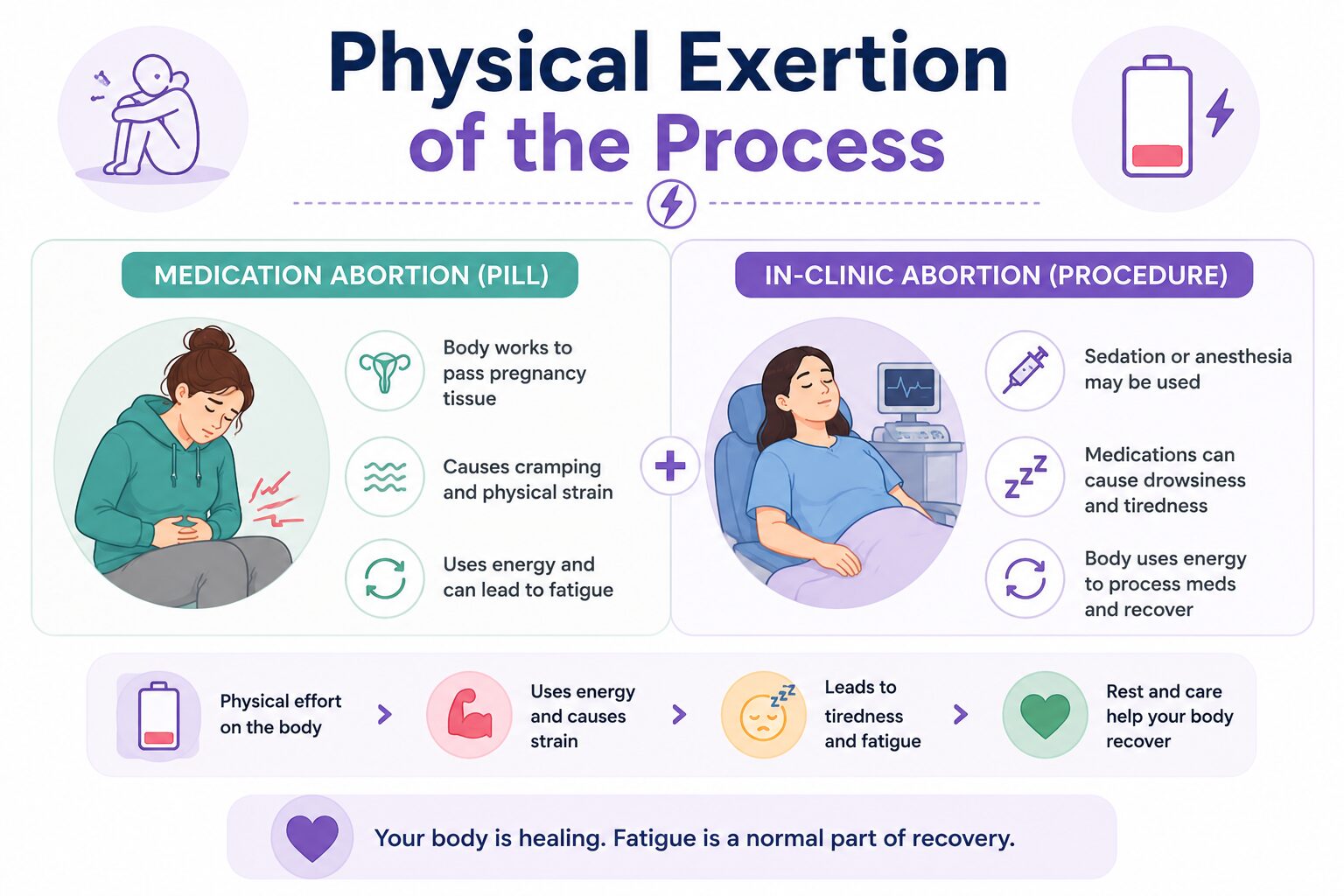
Physical Exertion of the Process
For medication abortion, the body is actively working to pass pregnancy tissue, which involves cramping and physical strain. For in-clinic procedures, anesthesia or sedation, if used, can also leave the body feeling tired as it processes the medication out of your system.
Emotional and Mental Load
Whatever the personal circumstances around the decision, the emotional weight of the experience can be tiring in itself. Stress, anxiety, and emotional processing all require energy, even when they are not physically visible.
Sleep Disruption
Cramping, bleeding, or anxiety can interrupt normal sleep patterns during the days immediately following the abortion. Poor sleep quality directly contributes to daytime fatigue.
Nutritional Intake
Nausea or reduced appetite during recovery can mean lower food and fluid intake for a day or two, which can also contribute to low energy.
Is Fatigue After Abortion Normal?
Yes, in most cases. Mild to moderate tiredness during the days following an abortion is considered part of the typical recovery experience, similar to fatigue after other medical procedures or after early pregnancy loss.
What is often considered normal:
- Feeling more tired than usual for several days
- Needing more rest or sleep than your typical routine
- Low energy that gradually improves day by day
- Fatigue that exists alongside other expected symptoms like cramping or light bleeding
What may not be normal:
- Extreme exhaustion that does not improve at all after a week or two
- Fatigue combined with very heavy bleeding
- Fatigue combined with fever, dizziness, or fainting
- Sudden, severe weakness that comes on quickly
If your fatigue does not fit the expected pattern, contacting your provider is a reasonable next step rather than waiting it out indefinitely.
How Long Does Fatigue After Abortion Usually Last?
There is no single fixed timeline, since recovery varies by individual and by the type of abortion involved. Below is a general overview based on common patterns.
| Type of Abortion | Typical Fatigue Duration | Notes |
| Medication abortion (pill) | A few days to about one week | Often most pronounced in the first 24 to 48 hours |
| In-clinic procedure (first trimester) | A few days | May be shorter if sedation was not used |
| In-clinic procedure (with sedation or anesthesia) | A few days, sometimes slightly longer | Anesthesia can add to initial grogginess |
| Later procedures | Up to one to two weeks in some cases | Recovery time can vary more individually |
These are general patterns, not guarantees. Some people feel back to their normal energy levels within a few days, while others may need closer to one to two weeks, particularly if other factors like poor sleep, stress, or anemia from blood loss are involved.
If fatigue is lingering well beyond two weeks with no improvement, this is a reasonable point to check in with your provider.
A Realistic Look at the Recovery Timeline
It can help to think about fatigue in stages rather than expecting it to disappear all at once.
Days 1 to 2
This is often when fatigue is most noticeable, especially if combined with cramping, bleeding, or, for in-clinic procedures, the lingering effects of sedation. Many people find that resting as much as possible during this window makes a meaningful difference.
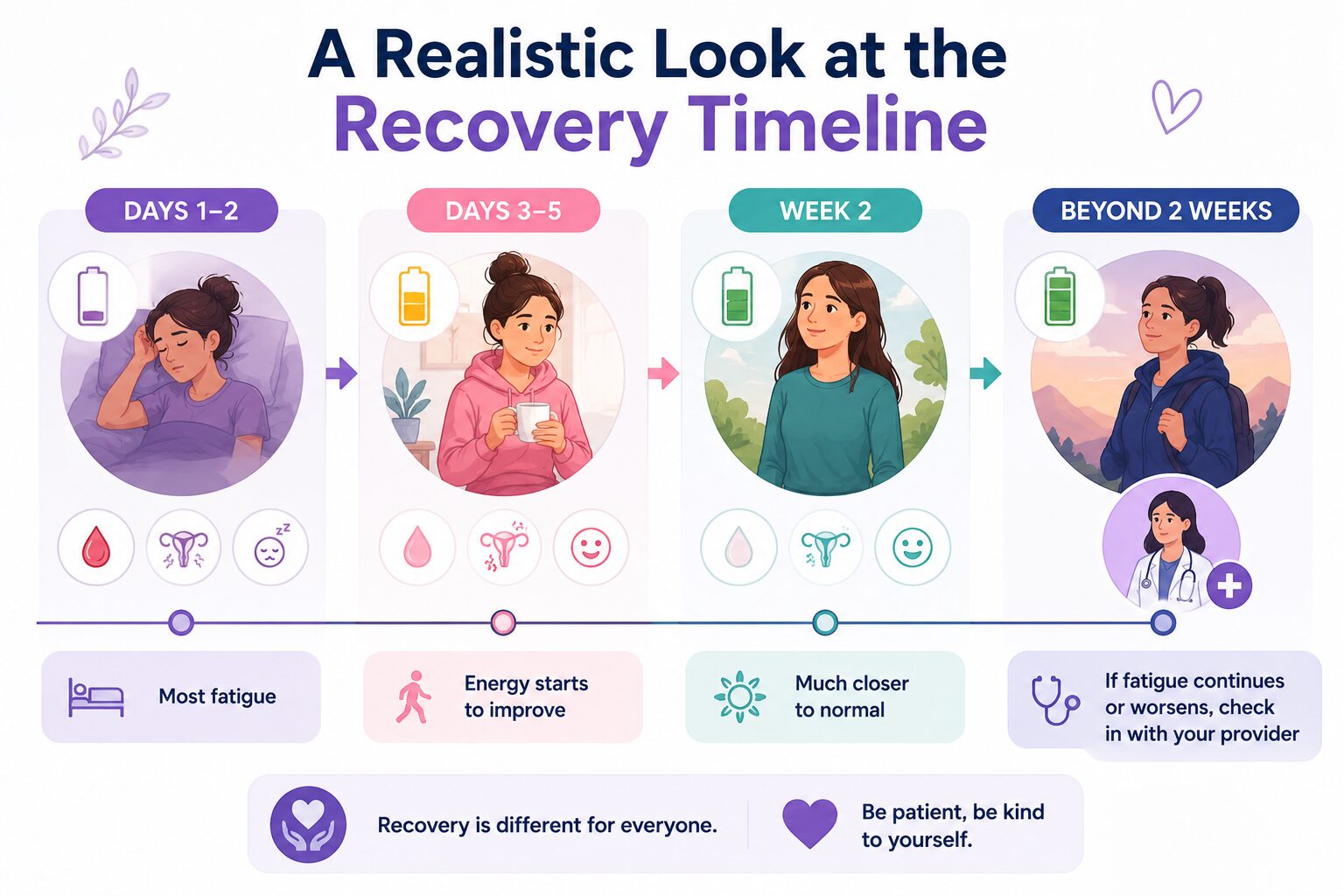
Days 3 to 5
Energy levels often begin to improve gradually. Light activity may feel more manageable, though some people still feel below their usual baseline.
Week 2
For most people, energy levels are noticeably closer to normal by this point, though full emotional and physical recovery can vary.
Beyond Two Weeks
If fatigue has not improved at all by this stage, or if it is worsening rather than easing, this is a signal to speak with your healthcare provider rather than assuming it will resolve on its own.
Practical Ways to Support Your Energy During Recovery
The following are general comfort and self-care measures. Always confirm with your provider what is appropriate for your specific situation.
Prioritize Rest
- Give yourself permission to rest more than usual for the first few days
- Avoid scheduling demanding tasks or commitments immediately after the procedure if possible
Stay Hydrated and Nourished
- Drink water consistently throughout the day
- Eat small, balanced meals, even if appetite is reduced, focusing on foods that are easy to digest
Gentle Movement
- Light walking, once you feel able, can sometimes help circulation and mood, but always follow your provider’s specific activity guidance
- Avoid strenuous exercise until you have been cleared to resume normal activity
Support Your Sleep
- Try to maintain a consistent sleep schedule where possible
- Reduce screen time before bed if anxiety or racing thoughts are affecting sleep
Ask for Support
- Lean on a partner, friend, or family member for practical help with daily tasks during the first few days
- Emotional support can also reduce the mental load that contributes to fatigue
A Simple Recovery Checklist
- Rest more than usual for the first 48 hours
- Stay hydrated throughout the day
- Eat small, manageable meals
- Avoid strenuous activity until cleared by your provider
- Track how your energy changes day by day
- Contact your provider if fatigue is severe or not improving after two weeks
Red Flags: When Fatigue Needs Medical Attention
Most fatigue after abortion is uncomfortable but expected. However, certain signs combined with fatigue should prompt you to contact your provider or seek medical care.
Contact your healthcare provider or seek medical attention if you experience:
- Fatigue combined with very heavy bleeding, such as soaking more than two pads per hour for two hours
- Fatigue combined with dizziness, fainting, or a rapid heartbeat
- Fatigue combined with a fever above 100.4°F (38°C) lasting more than 24 hours
- Sudden, severe weakness that feels different from general tiredness
- Pale skin, shortness of breath, or chest discomfort alongside fatigue, which can sometimes be related to significant blood loss
These combinations may point to complications such as significant blood loss, anemia, or infection, which need timely evaluation. When in doubt, it is safer to contact your provider than to wait.
Common Mistakes to Avoid
- Pushing through normal activities too soon, which can prolong fatigue and slow recovery
- Not eating enough due to nausea or low appetite, which can worsen tiredness
- Ignoring worsening symptoms because fatigue alone is generally expected, when in fact combined symptoms may need attention
- Comparing your recovery to someone else’s, since individual timelines can vary for valid reasons
- Skipping follow-up care, which can help confirm that recovery is progressing as expected
Frequently Asked Questions
Is it normal to feel extremely tired after an abortion?
Yes, mild to moderate fatigue is a common part of recovery after both medication and in-clinic abortion. It is usually related to hormonal changes, blood loss, and the physical and emotional demands of the process.
How many days does fatigue usually last after the abortion pill?
For many people, fatigue is most noticeable in the first 24 to 48 hours and gradually improves over the following days, often resolving within about a week.
Does in-clinic abortion cause more fatigue than the abortion pill?
Not necessarily. Fatigue levels can vary by individual rather than strictly by procedure type, although sedation or anesthesia used during in-clinic procedures can add to initial tiredness.
Can fatigue after abortion be a sign of low iron or anemia?
In some cases, especially with heavier bleeding, blood loss can contribute to low iron levels and increased fatigue. If fatigue is severe or persistent, your provider can check for this.
When should I be worried about fatigue after an abortion?
You should contact your provider if fatigue is combined with heavy bleeding, fever, dizziness, fainting, or if it does not improve at all after about two weeks.
Can stress and emotions make physical fatigue worse after an abortion?
Yes. Emotional stress and poor sleep can intensify physical tiredness, even when there is no underlying medical complication.
Is it okay to go back to work right after an abortion?
This depends on the individual, the type of procedure, and your provider’s specific guidance. Some people feel ready within a day or two, while others need more time. Always follow your provider’s recommendations.
What can I do to help my energy come back faster?
Resting adequately, staying hydrated, eating balanced meals, and avoiding strenuous activity too soon can all support a smoother recovery, though everyone’s timeline is different.
Final Takeaway
Fatigue after an abortion is a common and usually temporary part of recovery, often caused by a combination of hormonal changes, blood loss, physical exertion, and emotional processing. For most people, energy levels improve gradually within a few days to about a week. However, fatigue combined with heavy bleeding, fever, dizziness, or symptoms that do not improve after two weeks should be discussed with a healthcare provider. When in doubt, reach out to your care team rather than assuming it will resolve on its own
Suggested External Sources :
American College of Obstetricians and Gynecologists (ACOG)
https://www.acog.org
World Health Organization (WHO) — Medical Management of Abortion Guidelines
https://www.who.int/publications/i/item/9789241550406
National Institutes of Health (NIH) / MedlinePlus
https://medlineplus.gov
Centers for Disease Control and Prevention (CDC)
https://www.cdc.gov

Dr. James Carter is a board-certified physician and lead clinician at Serenity Choice Health, specializing in reproductive health access and medication abortion protocols. With over 20+ years of experience, he combines clinical expertise with patient-centered care to ensure safe, compassionate, and confidential reproductive healthcare.