
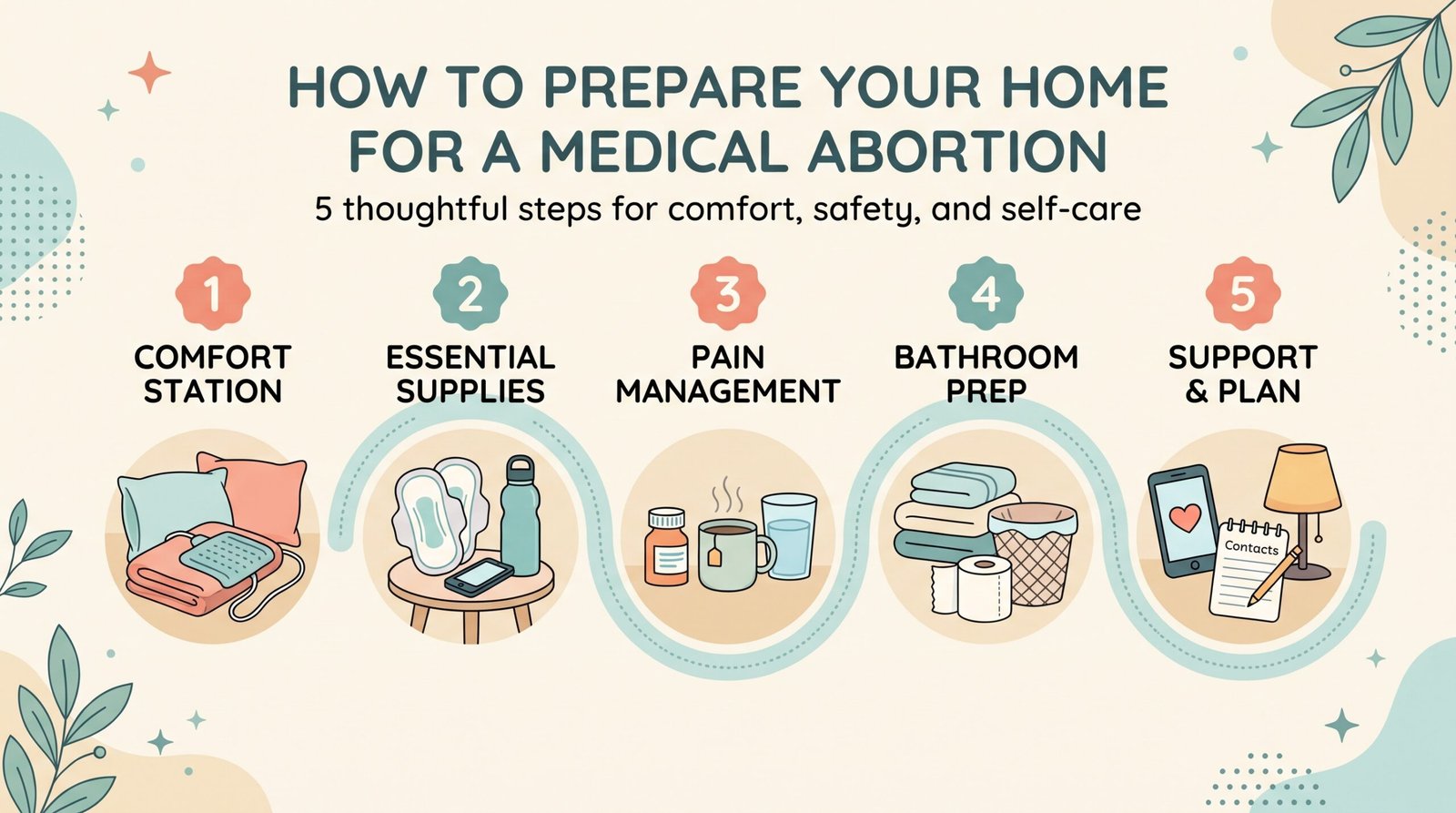
You do not need to create a perfect recovery space or purchase specialized equipment. The priorities are having the supplies you may need within reach, allowing yourself time to rest, protecting your privacy and knowing what to do if you develop concerning symptoms.
Medication abortion commonly involves mifepristone and misoprostol, although treatment regimens and care arrangements can vary. Because cramping, bleeding and other side effects may affect your usual activities, preparing in advance can help you focus on your comfort and follow your healthcare provider’s instructions.
For medication-specific information, consult the FDA-approved mifepristone Medication Guide available through DailyMed.
1. Choose a Comfortable and Private Place to Rest

Start by choosing a part of your home where you can sit or lie down comfortably and use the bathroom easily. A bedroom, living room or another quiet area may work well, depending on your preferences and living arrangements.
After misoprostol, cramping and bleeding can become more intense for a period of time. Nausea, diarrhea, chills and tiredness may also occur. Having a comfortable place to rest can reduce the need to move around looking for supplies when you would rather remain seated.
Before taking your medication, consider:
- Comfortable seating or bedding: Arrange pillows and blankets where you can reach them easily.
- Bathroom access: Choose a location that allows convenient trips to the toilet.
- Privacy: Consider whether you would prefer a quiet room, reduced interruptions or time alone.
- Easy access to supplies: Keep your phone, sanitary pads, water and other essentials nearby.
- A flexible schedule: Avoid planning important errands, demanding household tasks or other commitments during the period when symptoms may be strongest.
You do not need to remain in bed continuously. Rest when you need to and move around as you feel comfortable, following any specific activity instructions provided by your clinician.
For additional guidance, see the NHS guide to recovery after an abortion.
2. Use This Medical Abortion Home Preparation Checklist
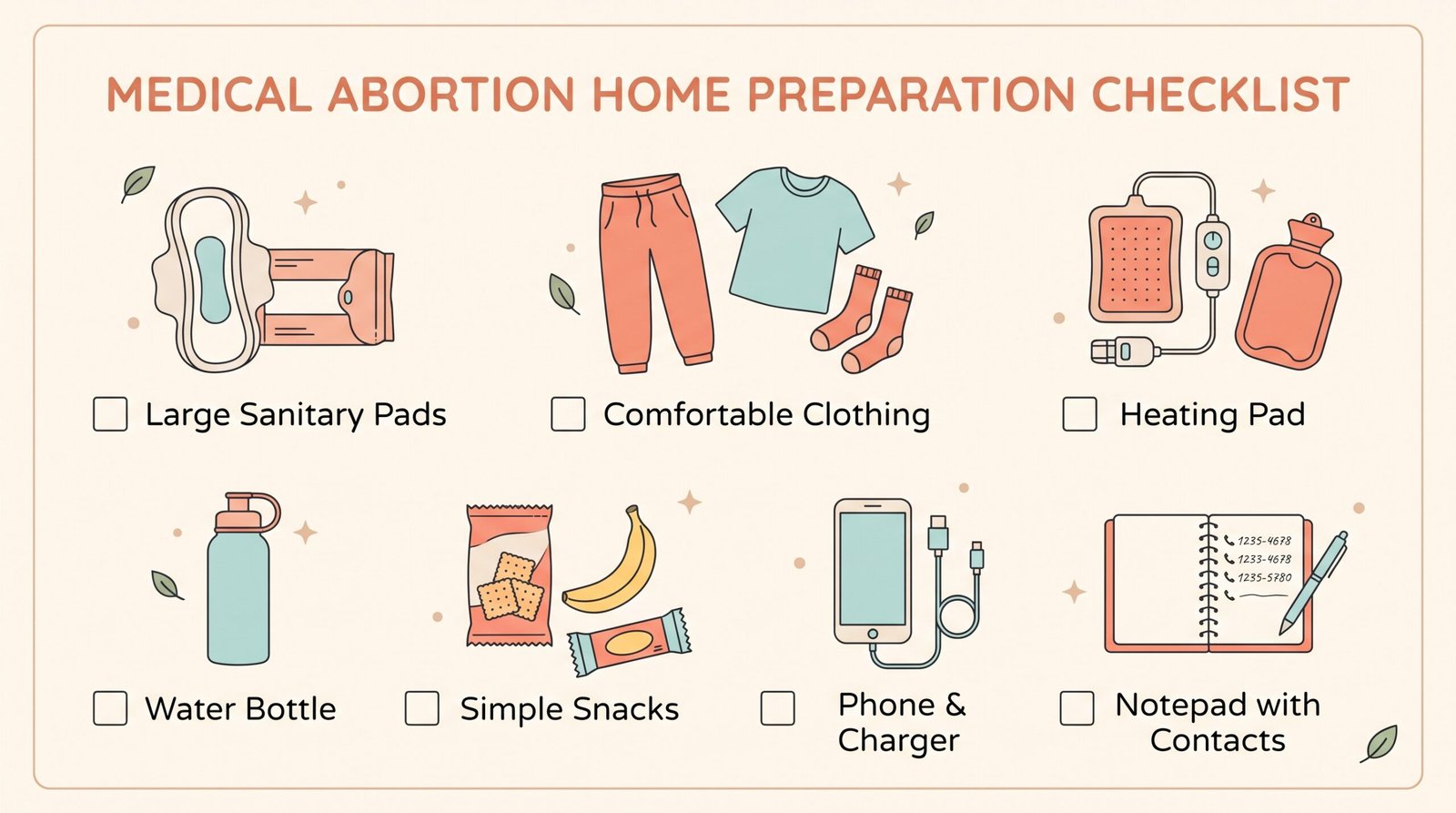
Gathering supplies beforehand can prevent unnecessary trips to the store or interruptions when cramping or bleeding begins.
| Item | Why It May Help |
|---|---|
| Large sanitary pads | Help manage bleeding and make it easier to monitor how much blood you are losing. |
| Comfortable underwear and clothing | Make changing easier and help you remain comfortable. |
| Towels and spare bedding | Provide practical backup if bleeding reaches clothing or bedding. |
| Heating pad or hot-water bottle | May ease abdominal or lower-back cramps when used according to safety instructions. |
| Water and other preferred drinks | Help maintain hydration, especially if you experience nausea, vomiting or diarrhea. |
| Easy-to-prepare food | Gives you convenient options when you do not feel like preparing a full meal. |
| Recommended pain relief | Makes your clinician-approved pain-management plan easier to follow. |
| Prescribed anti-nausea medicine, if applicable | Gives you access to medicine specifically recommended for nausea. |
| Fully charged phone and charger | Allow you to contact your healthcare provider or emergency services. |
| Written treatment instructions | Help you check the prescribed schedule, aftercare guidance and warning signs. |
| Provider contact information | Makes it easier to obtain advice if something does not go as expected. |
This is a practical checklist, not a list of mandatory purchases. Start with the supplies you already have and obtain the items that are appropriate for your circumstances. Clinical aftercare guidance commonly recommends sanitary pads, suitable pain relief and a plan for contacting a healthcare professional.
See the NHS guidance on abortion recovery and aftercare for additional information.
3. Prepare for Cramping and Pain Relief
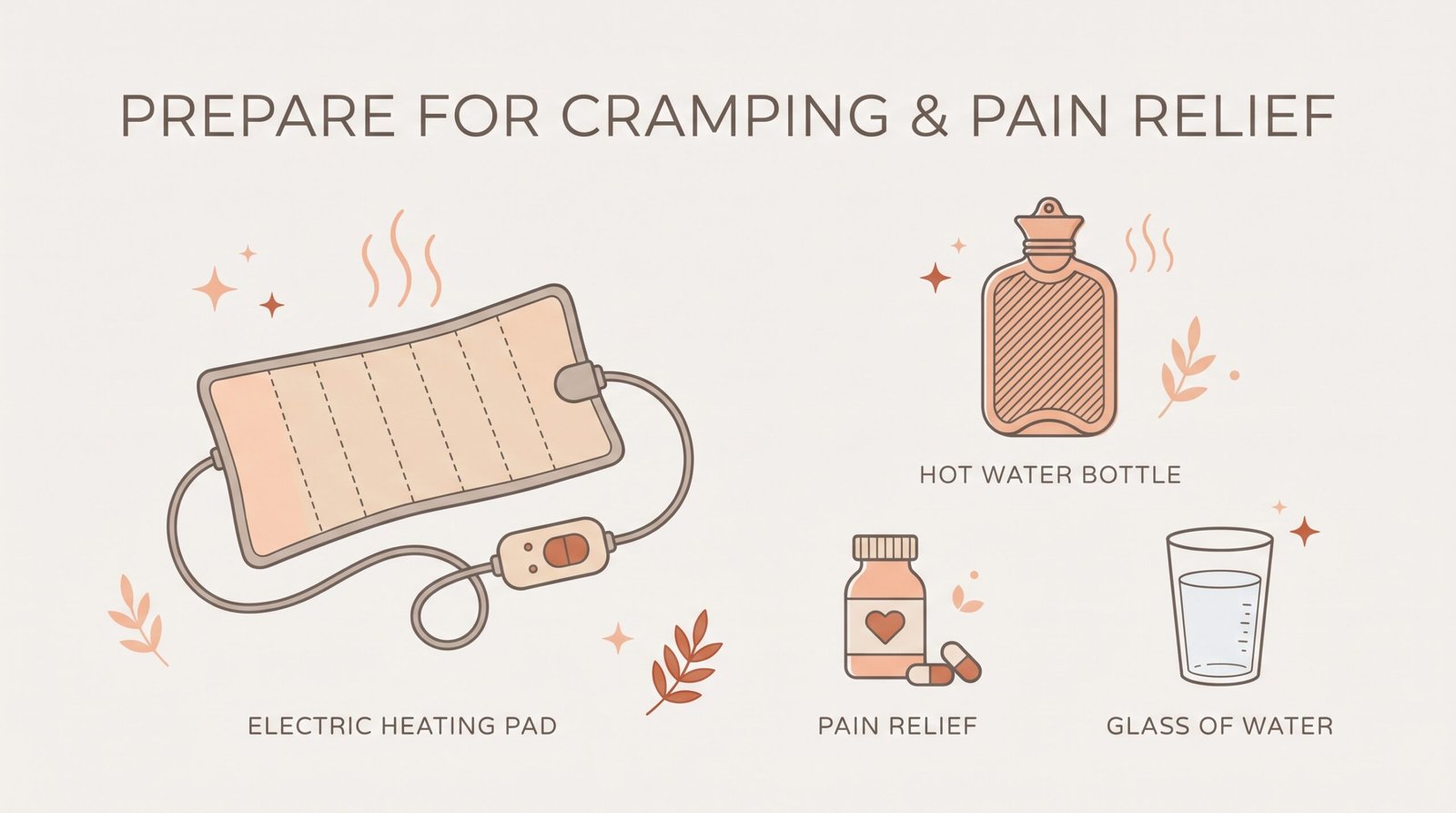
Cramping is an expected part of medication abortion, and some people experience pain that is stronger than their usual menstrual cramps. The intensity and duration vary between individuals.
Before taking your medication, ask your healthcare provider which pain-relief options are appropriate for you and when to use them. Have any recommended medicines ready so you do not need to search for them during stronger cramps.
Ibuprofen or acetaminophen may be options for some patients, depending on their medical history and other medicines. Do not assume that every pain reliever is suitable for you, and follow your clinician’s instructions and the medicine’s labeling. Aspirin may increase bleeding and should not be added to your plan without appropriate medical guidance.
For patient-focused information about pain management and abortion care, consult the American College of Obstetricians and Gynecologists’ abortion care guidance.
Set Up a Simple Comfort Station
Keep your recommended pain relief, drinking water, phone, charger and treatment instructions together in one convenient location. You can also keep a blanket, pillow and anything else that helps you relax nearby.
A heating pad or hot-water bottle may help ease cramps. Follow the product’s safety instructions, avoid excessive heat and protect your skin from burns.
A warm shower or another comfortable resting position may also help. These measures support comfort, but they do not replace medical evaluation if pain is severe, persistent or getting worse.
For more recovery advice, read the NHS guide to what to expect after an abortion.
4. Stock the Bathroom for Bleeding and Other Symptoms
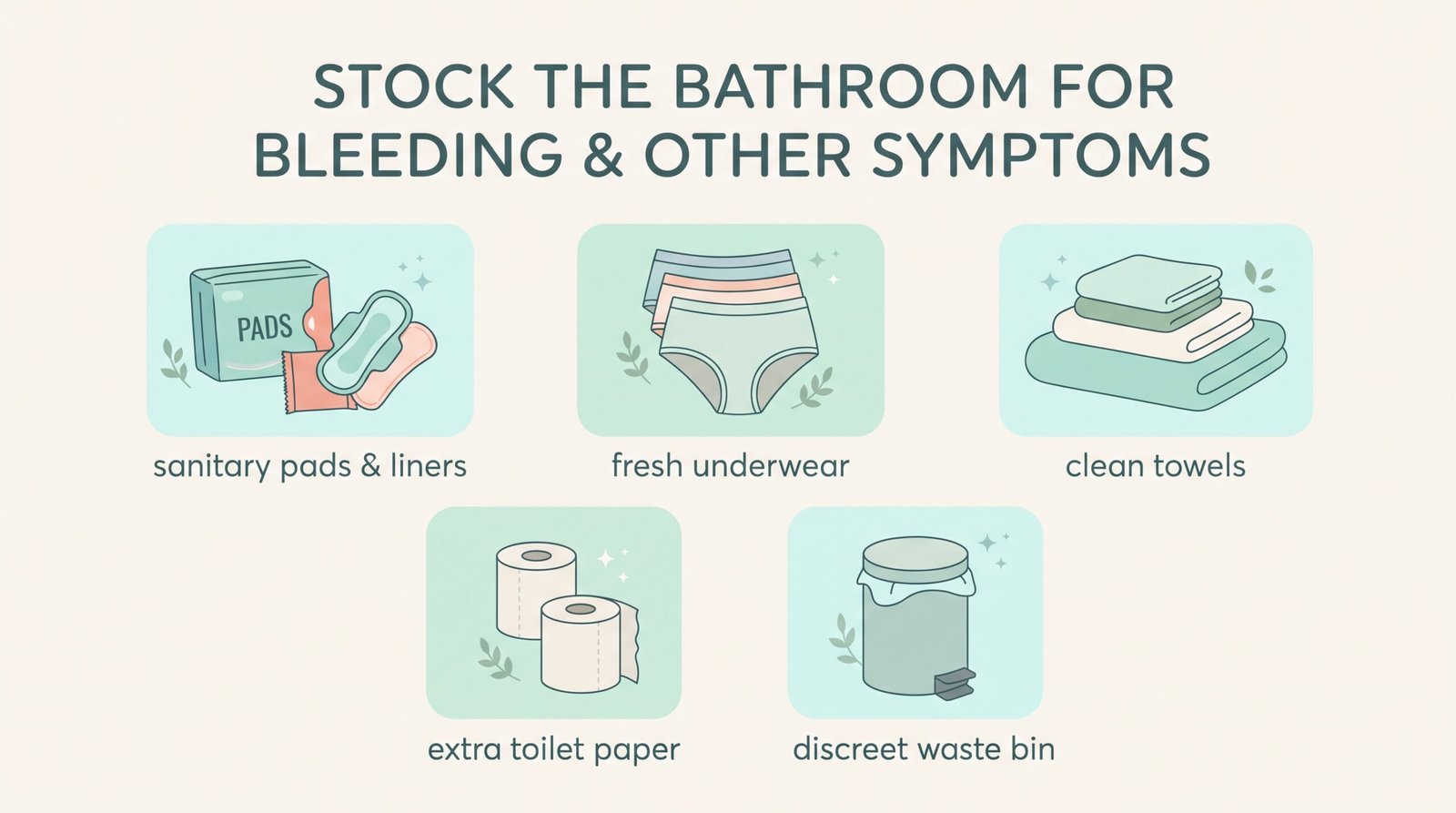
Bleeding and cramping are common during medication abortion. You may pass blood clots, and bleeding can continue after the most intense part of the process has ended. Nausea, vomiting and diarrhea may also occur.
The mifepristone Medication Guide on DailyMed explains expected symptoms and serious warning signs associated with medication abortion.
You can make bathroom visits more comfortable by preparing:
- A supply of large sanitary pads.
- Clean underwear and comfortable clothing.
- Toilet paper and ordinary bathroom necessities.
- A small bag for disposing of used pads and other waste.
- A clean towel and spare bedding, if useful.
Sanitary pads are particularly helpful during the heavier bleeding phase because they make it easier to estimate how much blood you are losing. Follow the monitoring instructions provided by your healthcare professional.
You do not need to create a special bathroom or sterilize your home. Focus on ordinary cleanliness, convenient access and having the items you are likely to need.
If you have questions about normal bathroom use after taking misoprostol, read our guide on whether you can use the toilet normally after inserting misoprostol.
5. Keep Food and Drinks Within Reach

You may find it helpful to have water and a few simple foods available before taking your medication. Choose foods you already tolerate, particularly if you are prone to nausea.
Options might include toast, crackers, fruit, soup or another easy-to-prepare meal. You do not need to prepare an elaborate menu or force yourself to eat when you feel unwell.
Misoprostol can cause gastrointestinal symptoms, including nausea, vomiting and diarrhea. Drinking fluids as tolerated can help you maintain hydration. If vomiting repeatedly prevents you from keeping fluids down, contact a healthcare professional.
For medication-specific information, refer to the mifepristone Medication Guide on DailyMed.
Follow the instructions specific to your prescribed regimen, including any directions about food or drinks around the time you take your medicine.
For more information, see our related guide: Can I Eat After Taking Misoprostol for Abortion?.
6. Make a Plan for Privacy and Emotional Support
Preparing your home involves more than physical supplies. Consider what kind of environment will help you feel comfortable and supported.
Some people prefer privacy and quiet. Others appreciate having a trusted friend, partner or family member available for practical or emotional support. The best arrangement depends on your preferences, circumstances and access to care.
If you choose to involve someone, you could ask them to help with food, household responsibilities, transportation or contacting a healthcare professional if necessary.
If you prefer not to have someone physically present, make sure you still have a reliable way to contact your care team and access emergency medical care. The World Health Organization recognizes that early medical abortion can be self-managed in appropriate circumstances, with access to accurate information and support as part of the care approach. Individual eligibility and local guidance still matter.
For evidence-based recommendations, review the World Health Organization’s guidance on self-management of medical abortion.
Consider these questions beforehand:
- Will I have enough uninterrupted time to rest?
- Can I contact my provider if I am concerned?
- Do I know how I would get urgent medical help if necessary?
- Would having someone available make me feel more comfortable?
- Is my chosen location private and safe for me?
Your plan should support your wellbeing without creating additional pressure.
7. Organize Your Medication Instructions Before You Begin
Do not rely on memory or general online articles for instructions about your specific medication regimen.
Before taking the medicines, make sure you understand the schedule, the prescribed route of administration, the expected symptoms and your follow-up plan. Keep your written instructions accessible throughout the process.
If any part of your instructions is unclear, contact the healthcare professional or service that provided your medication before proceeding.
It is particularly important to discuss relevant medical conditions, existing medicines and concerns about whether the treatment is appropriate for you. The FDA-approved mifepristone Medication Guide identifies medical circumstances and medicines that require particular attention, including certain bleeding disorders, blood thinners, adrenal problems, long-term corticosteroid use and a known ectopic pregnancy. An intrauterine device also needs to be addressed before treatment.
Review the mifepristone Medication Guide on DailyMed and discuss your circumstances with a qualified healthcare professional.
Write Down Your Emergency Contacts
Keep the following information in an accessible place:
- Your abortion provider’s phone number.
- Any after-hours contact information you were given.
- The location and contact details of an appropriate emergency department.
- The medication instructions and your planned follow-up arrangements.
Your phone should be charged, and you should know how to reach medical care if you need it. Do not wait for a routine reply if you are experiencing symptoms that could represent a medical emergency.
8. Understand Expected Symptoms and Warning Signs
Knowing the difference between expected effects and symptoms that need medical attention is one of the most important parts of preparing your home.
Symptoms That Commonly Occur
Depending on your regimen and individual response, you may experience:
- Abdominal cramping and pain.
- Vaginal bleeding and blood clots.
- Nausea or vomiting.
- Diarrhea.
- Chills or temporary feverish feelings.
- Tiredness or dizziness.
These symptoms do not occur in exactly the same way for everyone. Their presence or absence cannot, by itself, confirm whether the abortion is complete.
For information on symptoms and recovery, consult the NHS abortion recovery guidance and the mifepristone Medication Guide on DailyMed.
When to Contact a Healthcare Professional Urgently
The FDA-approved Medication Guide advises patients to contact their healthcare provider promptly for very heavy bleeding, persistent fever or concerning symptoms that continue beyond the expected period. ACOG also identifies severe pain that does not improve, fainting, fever and foul-smelling discharge as warning signs.
Consult the mifepristone Medication Guide and ACOG’s guidance on induced abortion for more information.
| Warning Sign | What to Do |
|---|---|
| Bleeding that soaks through two thick, full-size sanitary pads per hour for two consecutive hours | Contact your provider immediately. If you cannot reach them or feel seriously unwell, seek emergency care. |
| Fever of 100.4°F (38°C) or higher lasting more than four hours | Contact your healthcare provider promptly. |
| Severe abdominal or back pain that does not improve with recommended pain medicine | Seek urgent medical assessment. |
| Fainting, marked weakness or feeling as though you may collapse | Seek urgent medical care. |
| Abdominal pain, vomiting, diarrhea or feeling significantly unwell more than 24 hours after misoprostol | Contact your healthcare provider without delay. |
| Foul-smelling vaginal discharge or other concerning signs of infection | Contact a healthcare professional promptly. |
Do not wait for a particular bleeding threshold if you feel seriously unwell or believe you may be experiencing an emergency. If you cannot reach your provider, follow the FDA-approved Medication Guide’s emergency guidance.
You should also contact your provider if you have no bleeding within the timeframe specified in your instructions. Some aftercare guidance advises contacting the prescribing clinician if no bleeding occurs within 24 hours after misoprostol. Do not take additional medicine simply because bleeding has not started unless your treatment instructions or clinician tell you to do so.
For additional information, consult Planned Parenthood’s explanation of how the abortion pill works.
For more detail, see our dedicated guide on what to do if there is no bleeding after misoprostol.
9. Arrange Your Follow-Up Before Taking the Medication
Preparing for the hours at home is only one part of the process. You should also understand how and when your healthcare provider expects to confirm that the abortion is complete.
Depending on your care plan, follow-up may involve a scheduled appointment, telephone or text check-in, a particular pregnancy test, laboratory testing or another recommended assessment. The appropriate approach varies, so follow the instructions supplied for your treatment rather than choosing a follow-up method from a general article.
See the NHS guide to abortion recovery and follow-up for broader information.
Before beginning, make sure you know:
- When and how to contact your provider after treatment.
- What symptoms should prompt a call.
- Which pregnancy test or follow-up assessment to use.
- When to complete that assessment.
- What to do if symptoms do not develop as expected or you continue to feel pregnant.
Bleeding and cramping can provide information about your experience, but they are not definitive proof of completion. Follow-up matters even when you feel that the process went as expected.
Our guide to signs the abortion pill is working explains why symptoms should be interpreted alongside appropriate follow-up.
10. Give Yourself Time to Rest and Recover
When possible, keep the schedule flexible during the period when cramping and bleeding may be most intense. Preparing a meal, arranging comfortable clothing and handling ordinary chores beforehand may reduce unnecessary effort later.
After the most intense symptoms ease, return to normal activities as you feel able and follow any restrictions given by your healthcare professional. Recovery differs from person to person, and bleeding or spotting may continue for some time.
For more information, see the NHS guidance on recovery after an abortion.
Avoid judging your recovery against someone else’s experience. Contact your provider if your symptoms concern you, pain or bleeding is not improving as expected, you continue to feel pregnant or you are uncertain whether the treatment worked.
A prepared environment should help you rest and seek care when needed, not make you feel that you have to manage every symptom alone.
Final Thoughts
Preparing your home for a medical abortion is mainly about comfort, access and having a clear plan. Gather sanitary pads, appropriate pain relief, water, simple food and your written treatment instructions. Choose a private and comfortable place, keep your phone charged and make sure you know whom to contact if you need medical advice.
Most importantly, learn the warning signs before taking your medication and arrange follow-up according to your provider’s instructions. Good preparation cannot prevent every side effect or complication, but it can help you feel more organized and respond more confidently if something concerns you.
For questions about your individual medication instructions or symptoms, contact your healthcare provider. Seek urgent medical care when symptoms indicate a possible emergency.
Medical Disclaimer: This article is for educational purposes and does not replace individualized medical advice, diagnosis or emergency care. Medication regimens, eligibility and follow-up instructions can vary. Qualified clinical review is required before publication.
MEDICAL SOURCES
1. World Health Organization — WHO Recommendations on Self-Care Interventions: Self-Management of Medical Abortion, 2022 Update
Relevant to self-management of medical abortion, access to information and support, and appropriate care arrangements.
Source: World Health Organization recommendations on self-management of medical abortion
2. DailyMed — Mifepristone Tablets, 200 mg: Medication Guide
Medication-abortion-specific guidance on expected effects, heavy bleeding, persistent fever, concerning symptoms, treatment precautions and follow-up.
Source: Mifepristone Medication Guide on DailyMed
3. American College of Obstetricians and Gynecologists — Abortion Care
Clinical patient guidance on abortion-related effects, pain management and symptoms that warrant contacting a healthcare professional.
Source: ACOG patient guidance on induced abortion
4. NHS — Recovery After an Abortion
Broader recovery guidance covering cramps, bleeding, sanitary pads, pain relief, follow-up and when to seek medical advice. This guidance is not exclusively about home-managed medication abortion.
Source: NHS guidance on recovery after an abortion
5. Planned Parenthood — What Do I Need to Do Before I Take Abortion Pills?
Practical preparation information covering supplies, time to rest, optional support, comfort measures and pain relief.
Source: Planned Parenthood’s guide to preparing for abortion pills

Dr. James Carter is a board-certified physician and lead clinician at Serenity Choice Health, specializing in reproductive health access and medication abortion protocols. With over 20+ years of experience, he combines clinical expertise with patient-centered care to ensure safe, compassionate, and confidential reproductive healthcare.