
If you have an eating disorder and are considering a medication abortion, you may have questions about your physical health, the medications involved, and how to prepare for the process. You may also worry about discussing eating behaviors, changes in weight, or mental health with a healthcare provider.
Having an eating disorder does not automatically mean you cannot have a medication abortion. However, the condition’s severity, current symptoms, nutritional status, hydration, other medical conditions, and medications may affect what care and monitoring you need.
Medication abortion commonly involves mifepristone and misoprostol. These medications cause changes that can include cramping, bleeding, nausea, vomiting, and diarrhea. If you already experience vomiting, dehydration, weakness, or other complications related to an eating disorder, it is particularly important to discuss these concerns with a qualified healthcare professional before treatment.
There is limited direct research specifically examining medication-abortion outcomes among people with eating disorders. Therefore, it is important to distinguish established medication-abortion guidance from medical considerations that may be relevant because of an eating disorder.
This guide explains what to consider, what to tell your provider, and how to approach abortion care in a way that respects your physical health, emotional well-being, and privacy.
Can You Have a Medication Abortion if You Have an Eating Disorder?
In many cases, yes. An eating-disorder diagnosis alone is not listed among the FDA’s contraindications to mifepristone used with misoprostol for medication abortion through 70 days of pregnancy. However, other medical conditions associated with an eating disorder may affect whether this treatment is appropriate for you. <Cite refs={[“turn560904search0″,”turn560904search3”]}/>
Eating disorders include several conditions, such as:
- Anorexia nervosa: Restriction of food intake that can lead to significant nutritional and medical complications.
- Bulimia nervosa: Episodes of binge eating followed by compensatory behaviors, which may include self-induced vomiting or misuse of laxatives.
- Binge-eating disorder: Recurrent episodes of eating unusually large amounts of food accompanied by a sense of loss of control, without regular compensatory behaviors.
- Other specified feeding or eating disorders: Conditions that cause significant distress or health concerns but do not fit every criterion of another diagnosis.
These conditions can affect people at different body sizes. A person’s weight alone does not reliably establish whether they are medically stable or whether they need additional assessment.
The important question is not simply whether you have an eating-disorder diagnosis. It is whether any current symptoms, medical complications, or medications need attention before you begin treatment.
If you are exploring your options, reading how medication abortion works and what the process involves can help you prepare questions for your provider.
How Can an Eating Disorder Affect Medication-Abortion Care?
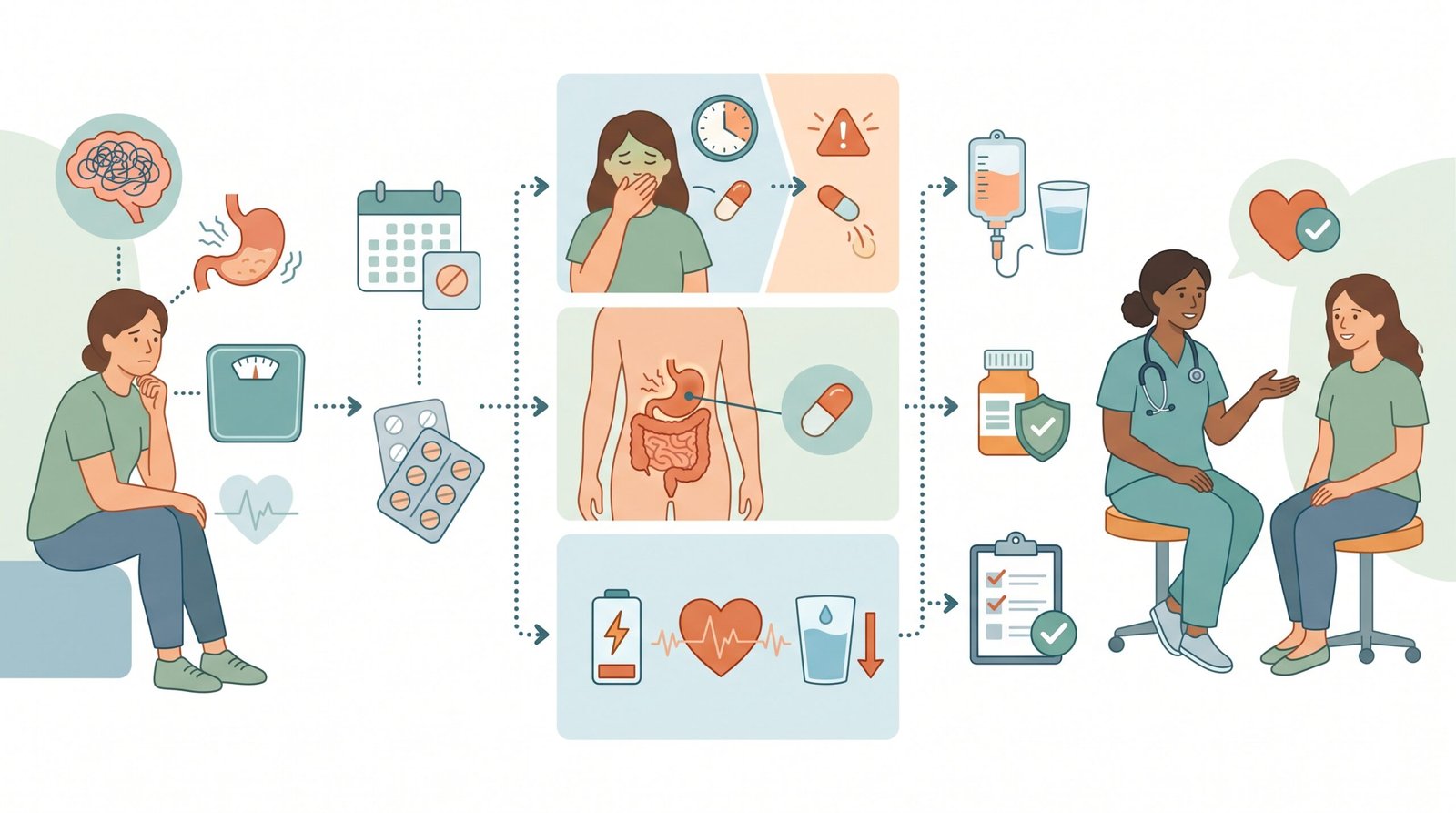
Eating disorders can affect physical health in different ways. Some people have few current physical symptoms, while others may experience dehydration, nutritional deficiencies, electrolyte abnormalities, or cardiovascular complications.
These issues do not necessarily prevent medication abortion, but they can influence the medical assessment and support a person may need.
Dehydration and difficulty keeping fluids down
Repeated vomiting, laxative misuse, or inadequate fluid intake can cause dehydration. During medication abortion, vomiting and diarrhea may also occur as medication side effects.
If you are already dehydrated, additional fluid loss may make you feel worse or require medical assessment. Tell your provider if you have recently been vomiting frequently, cannot keep fluids down, are urinating much less than usual, or feel unusually dizzy or weak.
Electrolyte imbalances
Electrolytes, including potassium and sodium, help regulate important body functions. Significant purging, severe restriction, or dehydration can disturb electrolyte levels.
Serious electrolyte abnormalities can affect heart rhythm and other essential functions. Eating-disorder guidance recognizes severe dehydration, malnutrition, and electrolyte disturbances as reasons for urgent medical evaluation in some circumstances. <Cite refs={[“turn560904search1″,”turn560904search8”]}/>
If you have a history of significant electrolyte abnormalities, fainting, an abnormal heart rhythm, or recent medical treatment for an eating disorder, share this information with your abortion provider.
Your clinician can determine whether you need additional evaluation before treatment.
Malnutrition and physical weakness
Inadequate nutrition can contribute to fatigue, weakness, dizziness, and other health problems. These symptoms may overlap with how someone feels during a medication abortion.
Not everyone with an eating disorder is malnourished, and someone can have serious medical complications at a weight that appears typical or high. A provider should consider your symptoms and medical history rather than relying on appearance or BMI alone.
Nausea, vomiting, and digestive symptoms
Nausea, vomiting, and diarrhea are recognized effects of misoprostol. If you already experience gastrointestinal symptoms related to an eating disorder, it may be harder to tell whether a new symptom is expected or needs attention.
Before treatment, ask your provider what to expect, how to manage symptoms, and what to do if you vomit after taking medication. You can also review what to expect from nausea after an abortion for additional information.
Does an Eating Disorder Make Abortion Pills Less Effective?
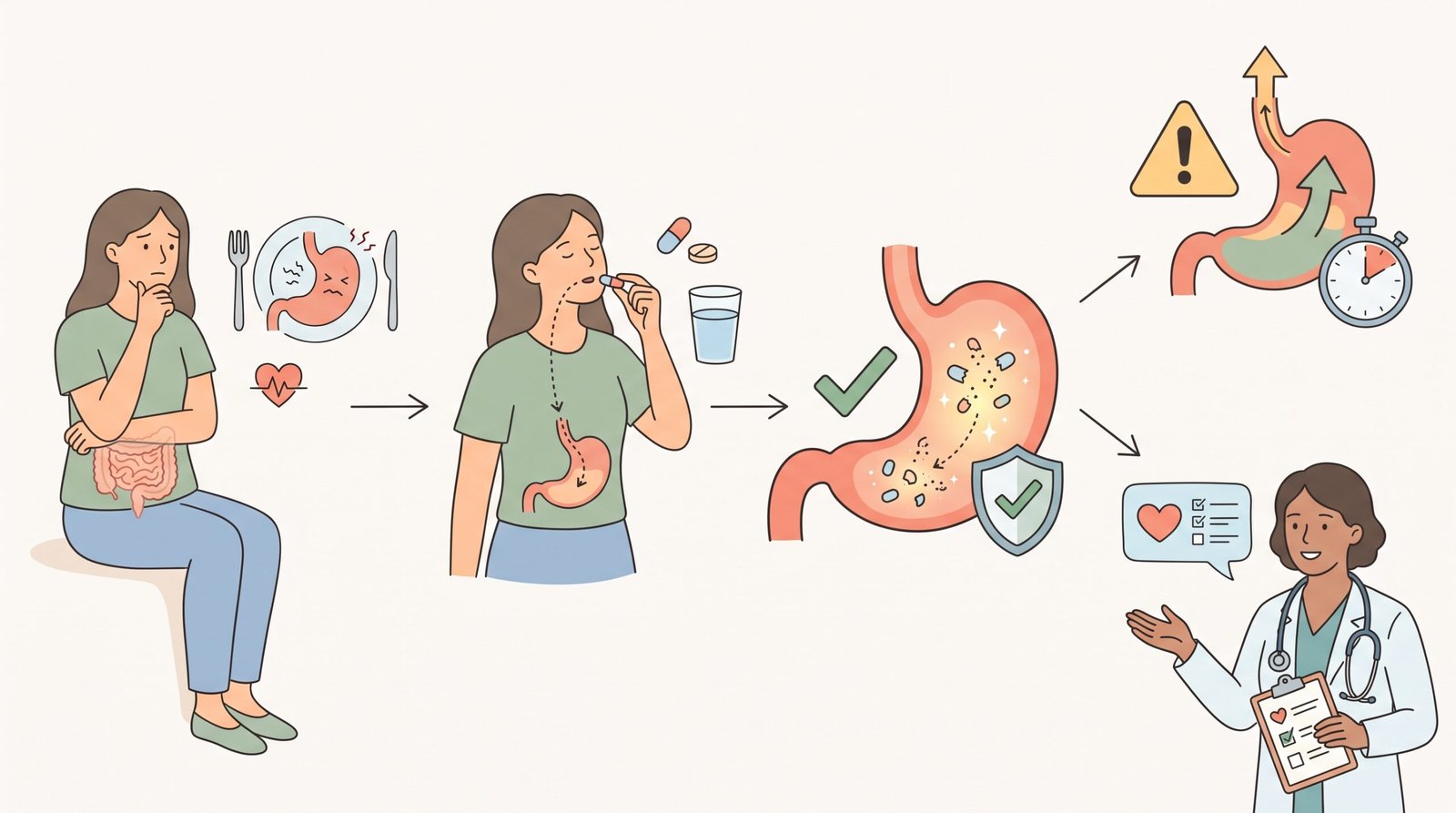
There is not enough direct evidence to conclude that having anorexia, bulimia, binge-eating disorder, or another eating disorder automatically makes medication abortion less effective.
An eating disorder should not be treated as proof that mifepristone or misoprostol will fail. At the same time, the lack of specific research means that clinicians should not make broad claims that every eating-disorder-related circumstance has been studied.
Practical concerns may include whether a person can follow the prescribed instructions, whether vomiting affects a particular dose, and whether other medical conditions or medications need review.
Do not change your medication dose, repeat a dose, or alter the timing based on your eating disorder without guidance from your healthcare provider.
The appropriate plan depends on the specific medications, the circumstances of treatment, and your medical history.
For more information about treatment outcomes, read this guide to abortion pill effectiveness and what can affect the outcome.
What Should You Tell Your Abortion Provider Before Treatment?
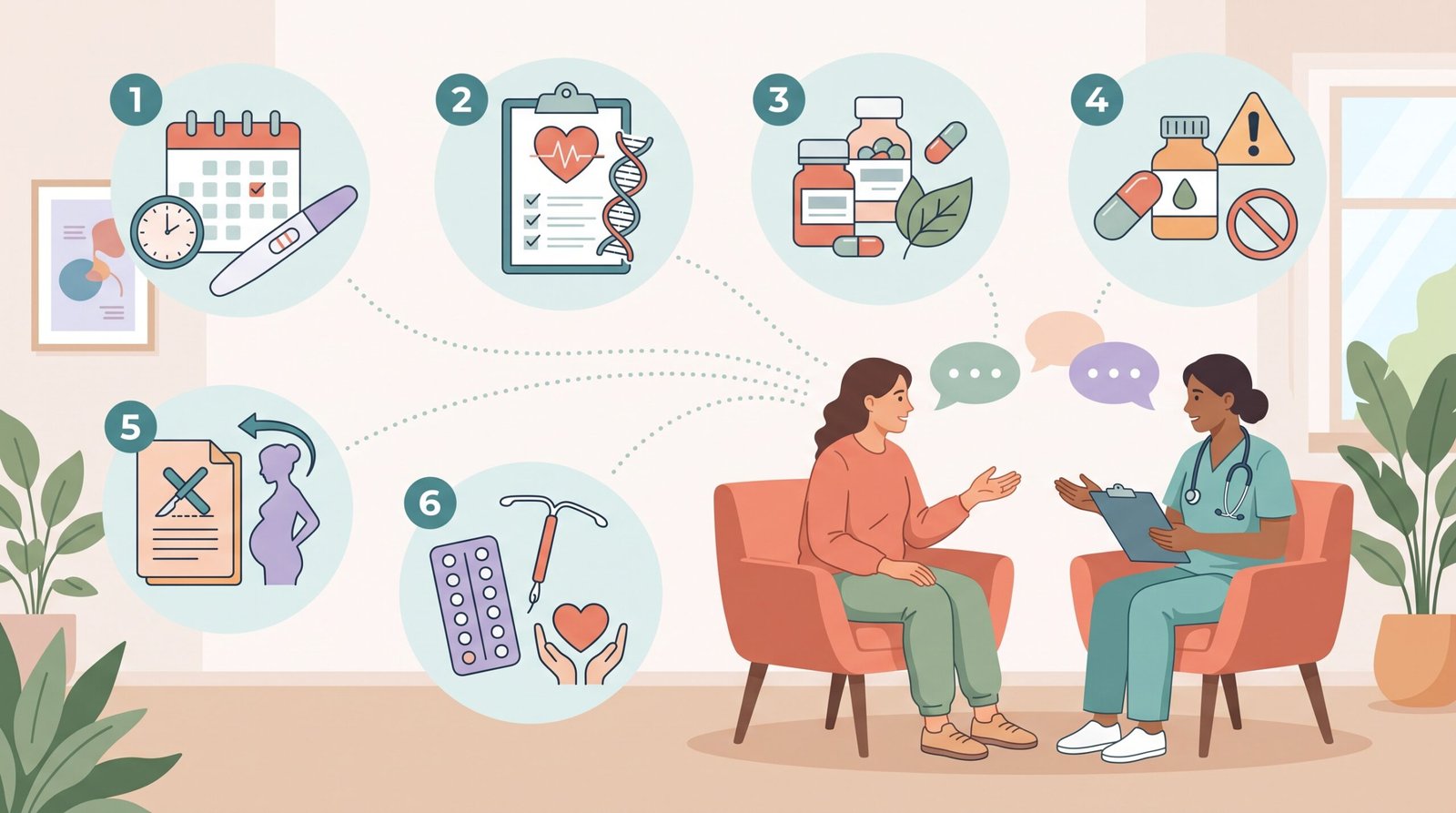
You do not need to explain every personal detail of your eating-disorder history to everyone involved in your care. However, sharing medically relevant information with your clinician can help them assess your safety and plan appropriate support.
Consider discussing the following:
- Whether you have a current or previous eating-disorder diagnosis.
- Any recent vomiting, purging, laxative misuse, or severe food restriction.
- Difficulty eating or drinking enough to stay hydrated.
- Recent fainting, unusual weakness, dizziness, or heart-rhythm problems.
- Previous electrolyte abnormalities, hospitalizations, or medical complications.
- All prescription medicines, over-the-counter drugs, supplements, and other substances you use.
- Any other medical conditions or recent changes in your health.
You can be direct without feeling that you must justify your reproductive decision.
For example, you could say:
“I have a history of an eating disorder, and I want to make sure my current symptoms and medications are considered before I begin medication abortion. Are there any health concerns I should address first?”
A good clinical conversation should focus on your needs, safety, and preferences—not judgment about your body or eating behaviors.
Can Eating-Disorder Medications Interact With Abortion Pills?
Potential interactions depend on the specific medication, dose, and other health conditions involved. It is not possible to determine whether a medication is suitable simply from the fact that it is used to treat an eating disorder.
People may take medications for coexisting depression, anxiety, sleep problems, or other conditions. Some medications can also affect hydration, heart rhythm, or gastrointestinal symptoms, depending on the drug and the individual.
Mifepristone has specific contraindications and medication-interaction considerations. The FDA advises providers to review relevant medical history and the medication labeling before prescribing it. <Cite refs={[“turn560904search0″,”turn560904search3”]}/>
Before treatment:
- Make a list of your prescription and nonprescription medicines.
- Include supplements and any medicines taken only occasionally.
- Tell your provider about recent medication changes.
- Ask whether any medicine needs special consideration.
- Do not stop prescribed psychiatric or eating-disorder medication on your own.
For related information, read what to know about antidepressants and abortion-pill interactions and anxiety medication during medication abortion.
These guides provide additional context, but your own medication list should be reviewed individually.
What If You Vomit After Taking Abortion Pills?
Vomiting can happen during medication abortion, but what you should do depends on which medicine you took, how it was administered, and when the vomiting occurred.
If you vomit after taking mifepristone by mouth, contact your provider for instructions rather than automatically repeating the dose. The same principle applies if you vomit after using misoprostol: do not assume that you need another dose or that the treatment has failed.
Misoprostol may be taken by different routes, including in the cheek pouch or vaginally, depending on the prescribed regimen. The relevance of vomiting can therefore differ according to how the medication was used.
If you have bulimia or another condition involving recurrent vomiting, discuss this before taking the medications. Your provider can explain what to do if vomiting occurs and when additional assessment may be necessary.
You can also read what to know about vomiting after taking the abortion pill.
Seek prompt medical advice if you cannot keep fluids down, have signs of significant dehydration, or develop symptoms that are severe or worsening.
How Can You Prepare for Medication Abortion if You Have an Eating Disorder?
Preparation should address your medical needs without reinforcing harmful eating-disorder behaviors or placing unnecessary pressure on food, weight, or body image.
Discuss hydration and symptom management
Ask your provider how to maintain hydration and what to do if nausea, vomiting, or diarrhea develops. If you already struggle to drink enough fluids, tell them before treatment so they can help you plan appropriately.
Ask about food and medication instructions
Follow the instructions provided for your specific medication regimen. If you are unsure whether to eat before taking medication or how to manage nausea, ask your clinician rather than relying on general online advice.
You do not need to follow a restrictive diet or change your eating patterns to make abortion pills work.
Plan support that feels safe
You may want a trusted person available to help with practical needs, such as obtaining supplies or contacting a healthcare professional. If discussing your eating disorder with family or friends would feel unsafe, consider whether another trusted person or a professional support service would be more appropriate.
Arrange follow-up
Ask how you will confirm that the abortion is complete and whom to contact if you have concerns. Follow-up instructions may involve symptom review, pregnancy testing, blood tests, ultrasound, or another approach depending on your circumstances.
Learn more about how to know whether abortion pills worked.
Can You Have a Telehealth Medication Abortion if You Have an Eating Disorder?
A history of an eating disorder does not automatically rule out telehealth abortion care. However, whether telehealth is appropriate depends on your medical circumstances, the clinician’s assessment, and the care options available where you live.
A telehealth consultation can provide an opportunity to discuss your health history, symptoms, medications, pregnancy timing, and concerns privately. If you have severe dehydration, significant weakness, repeated fainting, or another potentially serious medical problem, you may need an in-person evaluation rather than relying only on a remote appointment.
Your provider can help determine whether your needs can be addressed through telehealth or whether additional assessment is necessary.
For more information, explore the benefits of telehealth healthcare visits and whether telehealth abortion is right for you.
Availability and legal requirements vary by location, so confirm the options offered in your area.
How Can You Protect Your Emotional Well-Being During Abortion Care?
An eating disorder may coexist with anxiety, depression, trauma, body-image distress, or other emotional challenges. An abortion experience can bring a range of feelings, and there is no single emotional response that everyone should expect.
You may feel relieved, anxious, sad, confident, uncertain, or several things at once. Having an eating disorder does not mean that you are unable to make decisions about your reproductive health.
Helpful support may include:
- Asking your provider to explain each step in clear, nonjudgmental language.
- Identifying a trusted person who can support you in the way you prefer.
- Continuing existing mental-health care when appropriate.
- Asking for help if distress makes it difficult to manage daily activities or follow medical instructions.
- Requesting that conversations about weight, food, or body image be handled sensitively.
You can learn more about abortion and mental health considerations and emotional recovery after an abortion.
Emotional support should complement medical care, not replace it when physical symptoms require assessment.
When Should You Seek Medical Help?
It is important to recognize when symptoms may require urgent care, especially if an eating disorder has already affected hydration, nutrition, or cardiovascular health.
Seek urgent medical assessment for symptoms such as:
- Fainting, collapse, confusion, or severe weakness.
- Inability to keep fluids down or signs of significant dehydration.
- Chest pain, shortness of breath, or a racing or irregular heartbeat.
- Severe or worsening abdominal pain, particularly one-sided pain.
- Very heavy bleeding or bleeding accompanied by dizziness or fainting.
- Fever or feeling seriously unwell in a way that concerns you.
After medication abortion, seek emergency care for severe symptoms rather than waiting for a routine follow-up. If you suspect an ectopic pregnancy or experience severe one-sided pain, shoulder pain, or fainting, get urgent medical help. Mifepristone does not treat an ectopic pregnancy. <Cite refs={[“turn560904search0″,”turn560904search3”]}/>
For more detail, see when to go to the emergency room after abortion pills.
How Serenity Choice Health Can Help
Serenity Choice Health provides information and support for people exploring reproductive healthcare options. If you have an eating disorder and are considering medication abortion, you deserve a conversation that takes your medical history seriously while treating you with dignity and respect.
During a healthcare consultation, it is reasonable to ask questions about current symptoms, medications, hydration, follow-up, and whether additional evaluation may be needed before treatment.
You should not have to feel ashamed of an eating-disorder diagnosis or avoid asking questions because you fear judgment. The goal is to understand your circumstances and identify appropriate care.
Contact Serenity Choice Health to ask about available services, consultation options, and the information you should prepare before an appointment.
Key Takeaway
An eating disorder does not automatically make someone ineligible for medication abortion, but current symptoms and related medical complications can matter.
Dehydration, significant electrolyte abnormalities, malnutrition, recurrent vomiting, and other health concerns may warrant medical assessment. Medications and coexisting conditions should also be reviewed before treatment.
Because direct research on medication abortion specifically among people with eating disorders is limited, avoid assuming either that the condition makes abortion pills unsafe or that every situation carries no additional concern.
Share medically relevant information with your provider, follow your prescribed instructions, and seek prompt help for severe or worsening symptoms. You deserve reproductive healthcare that is accurate, compassionate, and respectful of your physical and emotional needs.
FAQ Section
1. Can I take abortion pills if I have anorexia?
Anorexia does not automatically rule out medication abortion. However, severe restriction, dehydration, malnutrition, electrolyte abnormalities, or related medical complications may require assessment before treatment. Discuss your current symptoms and health history with a qualified provider.
2. Does bulimia make abortion pills less effective?
There is insufficient direct research to conclude that bulimia itself makes abortion pills less effective. Recurrent vomiting and dehydration can create additional health concerns, and vomiting after a dose may require specific instructions from your provider.
3. Should I tell my abortion provider about my eating disorder?
Yes. Sharing relevant information about recent vomiting, restriction, purging, fainting, dehydration, medical complications, and medications helps your provider assess your needs. You deserve respectful care without judgment.
4. What should I do if I vomit after taking abortion pills?
Contact your provider for instructions. The recommended response depends on which medication you took, how you took it, and when the vomiting occurred. Do not automatically repeat a dose or change your regimen without medical guidance.
5. Can I have a telehealth abortion if I have an eating disorder?
Possibly. An eating-disorder diagnosis alone does not automatically exclude telehealth care, but your current medical stability, symptoms, and the clinician’s assessment matter. Serious dehydration, fainting, or other urgent symptoms may require in-person evaluation.
6. Can eating-disorder medications interact with abortion pills?
It depends on the specific medicines and your health history. Give your provider a complete list of prescriptions, over-the-counter medicines, and supplements. Do not stop or change prescribed medication without professional guidance.

Dr. James Carter is a board-certified physician and lead clinician at Serenity Choice Health, specializing in reproductive health access and medication abortion protocols. With over 20+ years of experience, he combines clinical expertise with patient-centered care to ensure safe, compassionate, and confidential reproductive healthcare.