
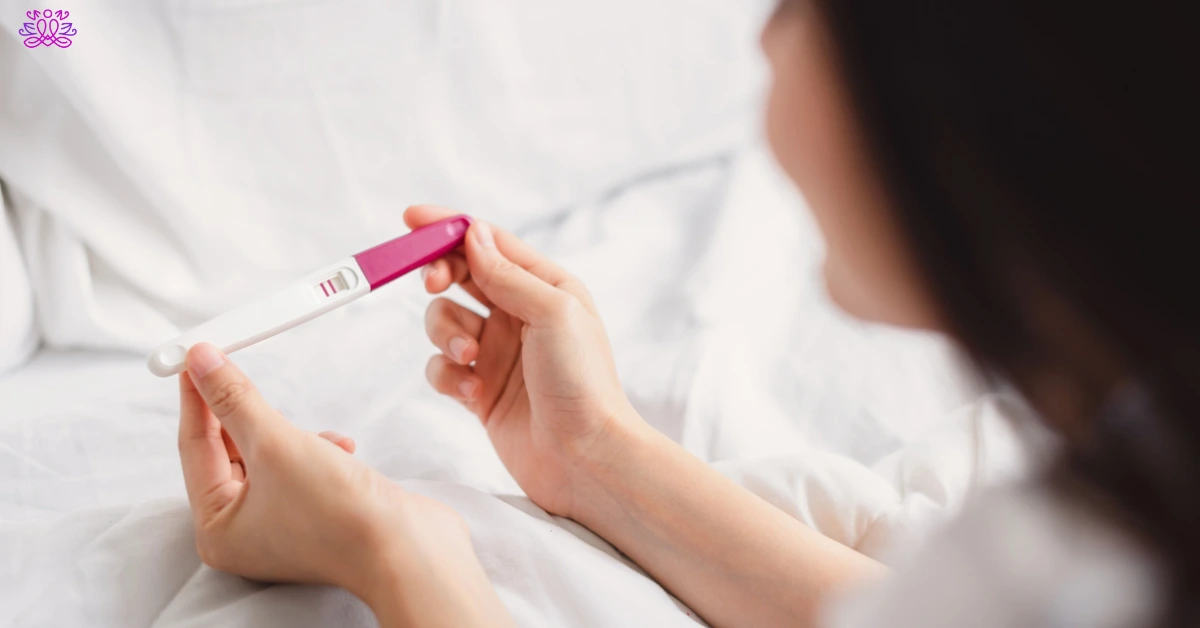
If you recently used abortion pills, knowing when to take a pregnancy test after abortion can prevent unnecessary worry. Testing very soon after an abortion can produce a positive result even when the abortion was successful because the pregnancy hormone human chorionic gonadotropin (hCG) takes time to leave your body.
For most people using an ordinary high-sensitivity home pregnancy test, testing around 4 weeks after the abortion is generally more informative than testing during the first 1–2 weeks. However, even at four weeks, a standard test can occasionally remain positive after a successful medication abortion.
If your abortion provider gave you a special low-sensitivity pregnancy test, follow the timing instructions that came with that test instead. These tests behave differently from standard store-bought pregnancy tests.
Most importantly, one positive home test does not by itself prove that you are still pregnant. The timing of the test, whether the line is changing, your symptoms, and your provider’s follow-up protocol all matter.
When Should You Take a Pregnancy Test After an Abortion?
If you are using a standard home urine pregnancy test, avoid relying on a test taken only a few days after the abortion.
Pregnancy tests detect hCG—not whether a pregnancy is currently continuing. After an abortion, hCG usually falls substantially, but it can remain high enough to trigger a sensitive home pregnancy test for several weeks.
A practical approach is:
- First 1–2 weeks: A standard pregnancy test may easily remain positive and is generally too early to interpret by itself.
- Around 3 weeks: Some tests may still be positive because residual hCG remains.
- Around 4 weeks: A standard test becomes more useful, although some people with completed abortions can still test positive.
- 5 weeks or later: A persistent positive result deserves more attention, particularly if the line remains strong, pregnancy symptoms continue, or you have concerning symptoms.
- 6–7 weeks or later: Contact a healthcare professional if you remain positive rather than continuing to repeatedly test at home.
If your provider gave you specific follow-up instructions, those instructions take priority.
Why Can a Pregnancy Test Stay Positive After an Abortion?
Home pregnancy tests detect hCG, a hormone produced during pregnancy.
After a completed medication abortion, hCG begins dropping rapidly, but it does not disappear immediately.
Research measuring serum hCG after medication abortion has documented a substantial decline during the first several days. However, a highly sensitive urine pregnancy test may still detect small amounts of remaining hormone weeks later.
This distinction is important:
The pregnancy may have ended before the pregnancy test becomes negative.
For a deeper explanation, Serenity Choice Health has a dedicated guide on how long hCG stays after abortion.
How Long Will a Urine Pregnancy Test Stay Positive After Abortion?
There is no single number of days that applies to everyone.
How quickly a pregnancy test turns negative can depend on:
- Your hCG level before the abortion
- How far along the pregnancy was
- The sensitivity of the pregnancy test
- Individual variation in hCG decline
- Whether the abortion was complete
- Whether a new pregnancy has occurred
One study of successful medication abortions found that among people using high-sensitivity home pregnancy tests, positive results occurred in:
- 48% when tested within 20 days
- 26% at 21–27 days
- 19% at 28–34 days
- 8% at 35 days or later
This means a positive standard pregnancy test at four weeks can occur even after a successful abortion.
The trend matters. A persistent or strongly positive test farther into recovery deserves medical follow-up rather than endless home testing.
Pregnancy Test After Abortion Pill: Standard vs Low-Sensitivity Tests
Not every pregnancy test works the same way.
Standard High-Sensitivity Home Pregnancy Test
Most pregnancy tests sold in pharmacies and supermarkets are designed to detect pregnancy as early as possible.
That is useful when trying to identify a new pregnancy, but after an abortion their sensitivity can create confusion because they may continue detecting low residual hCG.
Low-Sensitivity Pregnancy Test
Some abortion services provide a low-sensitivity pregnancy test specifically for post-abortion follow-up.
These tests require a higher concentration of hCG before becoming positive, which can make them more useful for determining whether pregnancy hormone levels have fallen appropriately.
If you received a Check4-hCG test or another special post-abortion test, do not substitute another test or change the testing date without checking the instructions from your provider.
Different tests have different hCG thresholds.
Positive Pregnancy Test 2 Weeks After Abortion
A positive pregnancy test 2 weeks after abortion can occur because significant hCG may still remain in your body.
At this stage, a sensitive urine pregnancy test usually cannot distinguish between:
- Residual hCG after a completed abortion
- An ongoing pregnancy
- Another situation requiring follow-up
A positive test at two weeks therefore should not automatically be interpreted as abortion failure.
Follow your provider’s recommended follow-up plan.
Positive Pregnancy Test 3 Weeks After Abortion
A positive pregnancy test 3 weeks after abortion can also be caused by residual hCG.
Research using high-sensitivity tests has shown that positive results remain relatively common during this period.
If you have a strong positive pregnancy test 3 weeks after abortion, the darkness of the line alone cannot diagnose whether the pregnancy is continuing.
More useful information includes:
- Whether pregnancy symptoms are decreasing
- Whether you experienced the expected bleeding or cramping
- Whether the test remains strongly positive later
- Whether you have pain, dizziness, or other concerning symptoms
- What your provider recommended for follow-up
If you are primarily trying to determine whether the medications worked, see how to know if the abortion pill worked.
Positive Pregnancy Test 4 Weeks After Abortion
A positive pregnancy test 4 weeks after abortion deserves attention, but it still does not automatically mean the abortion failed.
In one study, approximately 19% of people with confirmed successful medication abortions still had a positive high-sensitivity urine pregnancy test 28–34 days after taking mifepristone.
This is why a positive test must be interpreted along with your symptoms and follow-up history.
Serenity Choice Health also has a focused guide on what a positive pregnancy test 4 weeks after abortion may mean.
Contact your provider if:
- Your test remains strongly positive
- Pregnancy symptoms are continuing
- You never experienced expected bleeding after the medications
- You are unsure whether the abortion completed
- You have significant or worsening pain
- The provider specifically instructed you to call for a positive result
Positive Pregnancy Test 5 Weeks After Abortion
By 5 weeks after abortion, fewer people with completed medication abortions remain positive on high-sensitivity tests, although residual hCG is still possible.
A faint positive at this point does not provide enough information to determine the cause.
Possible explanations can include:
- Slowly clearing residual hCG
- An ongoing pregnancy
- A new pregnancy
- Less commonly, another pregnancy-related condition
Because these possibilities cannot reliably be separated by looking at a home test line, contact your healthcare provider if you are still testing positive around five weeks.
For additional information about faint lines, read faint positive pregnancy test after abortion.
Positive Pregnancy Test 6 or 7 Weeks After Abortion
A positive pregnancy test 6 weeks after abortion or 7 weeks after abortion should generally prompt clinical follow-up rather than continued home observation.
At this stage, a healthcare professional may need to determine whether the test reflects:
- Persistent hCG from the earlier pregnancy
- An ongoing pregnancy
- A new pregnancy
- Another condition affecting hCG levels
Ovulation can return before the first post-abortion period, meaning a new pregnancy is possible if you have had sex that could result in pregnancy.
Do not assume that every positive test several weeks after abortion is residual hormone.
What Does a Faint Positive Pregnancy Test After Abortion Mean?
A faint line means the test detected enough hCG to register as positive.
It does not reveal why the hCG is present.
A faint positive could reflect falling residual hCG after a completed abortion, but a home test cannot determine whether the hormone level is falling appropriately.
Also remember that test-line darkness can vary because of:
- Urine concentration
- Time of day
- Test brand
- Test sensitivity
- How long the test developed
For that reason, comparing line darkness from different tests is not a reliable substitute for medical follow-up.
What About a Strong Positive Pregnancy Test After Abortion?
A strong positive pregnancy test 3 or 4 weeks after abortion understandably causes concern.
However, the darkness of a home pregnancy-test line cannot diagnose abortion success or failure.
A persistently strong positive test—especially when combined with continuing pregnancy symptoms—should be discussed with your abortion provider.
Your clinician may recommend:
- Another appropriately timed urine test
- Quantitative blood hCG testing
- Ultrasound
- Clinical assessment
The appropriate follow-up depends on your circumstances.
Can You Still Feel Pregnant After an Abortion?
Some pregnancy symptoms can continue temporarily after an abortion because hormone levels take time to decrease.
Possible lingering symptoms include:
- Breast tenderness
- Fatigue
- Nausea
- Bloating
- Breast fullness
These symptoms should generally improve as hormone levels fall.
If pregnancy symptoms remain strong, return after improving, or become more noticeable, contact your healthcare provider.
For more detail, see why pregnancy symptoms continue after abortion.
Does a Positive Pregnancy Test Mean the Abortion Pill Did Not Work?
Not necessarily.
A positive result soon after a medication abortion commonly reflects remaining hCG rather than an ongoing pregnancy.
This is precisely why testing too early can create unnecessary confusion.
An abortion outcome should be assessed using the testing or follow-up method recommended by your provider—not a single early home pregnancy test.
If you are concerned about an unsuccessful medication abortion, see when abortion pills don’t work for a more focused explanation.
What If You Had Little or No Bleeding After Misoprostol?
Pregnancy testing is only one part of follow-up.
If you had little or no bleeding after misoprostol, contact your abortion provider because the expected response to medication should be reviewed.
Serenity Choice Health explains this situation further in no bleeding after misoprostol.
Do not wait several weeks for a pregnancy-test result if your provider instructed you to contact them sooner when bleeding does not occur.
Blood hCG Test After Abortion
Sometimes a clinician may use a quantitative blood test to measure serum hCG.
Unlike a home pregnancy test, which generally gives a positive or negative result, quantitative blood testing provides a numerical hCG measurement.
A single blood hCG number is often less informative than how the level changes over time.
Clinical studies show that after successful early medication abortion, serum hCG usually falls rapidly. A decline of approximately 80% over 6–7 days from a baseline measurement has been used clinically as evidence supporting successful abortion in appropriate circumstances.
However, this approach requires a baseline hCG value for comparison and professional interpretation.
Do not attempt to diagnose abortion completion using isolated laboratory numbers without clinical guidance.
If you are deciding between testing methods, see at-home pregnancy test vs. blood test after abortion.
Does a Pregnancy Test Detect Mifepristone or Misoprostol?
No.
A pregnancy test detects hCG, not mifepristone or misoprostol.
Therefore, a positive pregnancy test after taking abortion pills does not mean that the test is detecting the medications.
The medications themselves are not what cause the pregnancy-test line to appear.
Negative Pregnancy Test After Abortion
A negative pregnancy test after abortion generally means your urine hCG level has fallen below the detection threshold of that particular test.
If your test is negative and you otherwise feel well, this is generally reassuring.
However, always follow any specific aftercare instructions your provider gave you.
No Period After Abortion but Pregnancy Test Is Negative
Your period does not necessarily return immediately when your pregnancy test becomes negative.
The menstrual cycle takes time to restart after pregnancy ends.
If your pregnancy test is negative but your period has not returned yet, that does not automatically indicate a problem.
See when your period comes back after an abortion for more information.
Contact a healthcare professional if your period remains absent longer than your provider advised, particularly if you have new pregnancy symptoms or have had sex that could result in pregnancy.
Can You Get Pregnant Again Before Your First Period?
Yes. Ovulation can happen before the first menstrual period after an abortion.
That means a later positive pregnancy test is not always from the previous pregnancy.
If you have had sex that could result in pregnancy after your abortion, your clinician may need to consider the possibility of a new pregnancy when interpreting a positive test several weeks later.
When Should You Contact a Healthcare Professional?
Do not rely only on a pregnancy test if you have symptoms that require medical evaluation.
Contact your abortion provider or another healthcare professional if:
- A pregnancy test remains positive at 5 weeks or later
- Your provider’s designated follow-up test is positive
- Tests remain strongly positive instead of becoming negative
- Pregnancy symptoms persist or become stronger
- You had little or no bleeding after using abortion medications
- You are uncertain whether the pregnancy passed
- You may have become pregnant again
- You have new or worsening symptoms
Seek urgent medical attention if you experience concerning symptoms such as:
- Severe or worsening abdominal or pelvic pain
- Significant one-sided pain
- Fainting or severe dizziness
- Shoulder pain together with concerning abdominal symptoms
- Heavy bleeding that meets the emergency threshold given by your clinician
- Fever or feeling seriously unwell
A pregnancy test cannot rule out every complication.
What Is the Best Way to Know Whether the Abortion Pill Worked?
The best method depends on your individual situation and the follow-up plan provided by your abortion service.
Confirmation may involve:
- Your symptoms and recovery pattern
- An appropriately timed home pregnancy test
- A low-sensitivity pregnancy test supplied by your provider
- Serial serum hCG testing
- Ultrasound when clinically indicated
Routine ultrasound is not required after every uncomplicated medication abortion.
If you want a fuller explanation of expected signs, read 7 signs the abortion pill is working.
Conclusion
Knowing when to take a pregnancy test after abortion is important because testing too early can produce a positive result that reflects residual hCG rather than an ongoing pregnancy.
With a standard high-sensitivity home pregnancy test, around four weeks after medication abortion is generally more useful than testing during the first one or two weeks, but even a four-week test can remain positive after a successful abortion.
If your provider supplied a special low-sensitivity test, use it exactly when instructed.
A persistent positive result at five weeks or later, a strongly positive test with continuing pregnancy symptoms, or concerning symptoms should prompt medical follow-up.
If you are unsure how to interpret your test after abortion pills, contact Serenity Choice Health for individualized follow-up guidance based on your timing, symptoms, and abortion method.
Medical note: This page provides general educational information and does not replace individualized medical diagnosis or care.
FAQ Section
When Should I Take a Pregnancy Test After an Abortion?
If you are using a standard high-sensitivity home pregnancy test, testing around four weeks after an abortion is generally more useful than testing during the first one or two weeks because hCG can remain detectable for several weeks. Follow different timing if your abortion provider supplied a special follow-up test.
How Many Days After Taking Abortion Pills Should I Test for Pregnancy?
There is no single number of days appropriate for every test. Ordinary high-sensitivity tests can stay positive for weeks after a successful abortion. If you received a special low-sensitivity test from your provider, follow that test’s instructions.
Is a Positive Pregnancy Test 3 Weeks After Abortion Normal?
It can happen. High-sensitivity pregnancy tests may still detect residual hCG three weeks after a successful medication abortion. A positive result at this stage does not by itself mean the pregnancy is continuing.
Why Is My Pregnancy Test Still Positive 4 Weeks After Abortion?
Residual hCG is one possible explanation. Research found that about 19% of people with successful medication abortions still had positive high-sensitivity urine tests 28–34 days after treatment. Contact your provider if the test remains strongly positive, pregnancy symptoms persist, or you are concerned about the outcome.
When Should I Worry About a Positive Pregnancy Test After Abortion?
A persistent positive result around five weeks or later deserves follow-up, particularly if pregnancy symptoms continue or the test remains strongly positive. Seek urgent medical evaluation for severe one-sided pain, fainting, severe dizziness, shoulder pain with abdominal symptoms, heavy bleeding, fever, or feeling seriously unwell.
Can I Still Be Pregnant After Taking the Abortion Pill?
An ongoing pregnancy is possible but cannot be diagnosed from an early positive home pregnancy test alone because residual hCG can keep tests positive. Your provider may use symptoms, appropriately timed testing, blood hCG measurements, or ultrasound when needed to determine the outcome.
Evidence Reviewed for Medical Accuracy
Raymond, E. G., Anger, H. A., Chong, E., Haskell, S., Grant, M., et al. (2021). “False positive” urine pregnancy test results after successful medication abortion. Contraception. Link
Raymond, E. G., Shochet, T., & Bracken, H. (2018). Low-sensitivity urine pregnancy testing to assess medical abortion outcome: A systematic review. Contraception. Link
Fok, W. K., Lerma, K., Shaw, K. A., & Blumenthal, P. D. (2021). Comparison of two home pregnancy tests for self-confirmation of medication abortion status: A randomized trial. Contraception. Link
Pocius, K. D., Maurer, R., Fortin, J., Goldberg, A. B., & Bartz, D. (2015). Early serum human chorionic gonadotropin (hCG) trends after medication abortion. Contraception, 91(6), 503–506. Link
Pocius, K. D., Bartz, D., Maurer, R., Stenquist, A., Fortin, J., et al. (2017). Serum human chorionic gonadotropin (hCG) trend within the first few days after medical abortion: A prospective study. Contraception. Link
Clark, W., Panton, T., Hann, L., & Gold, M. (2007). Medication abortion employing routine sequential measurements of serum hCG and sonography only when indicated. Contraception. Link
Godfrey, E. M., Anderson, A., Fielding, S. L., Meyn, L., et al. (2007). Clinical utility of urine pregnancy assays to determine medical abortion outcome is limited. Contraception. Link
Choobun, T., & Maneeon, R. (2023). Trend of serum beta-human chorionic gonadotropin levels after medical abortion in the early first trimester of pregnancy. Journal of Obstetrics and Gynaecology Research. Link
Brandell, K., Jar-Allah, T., Reynolds-Wright, J., et al. (2024). Randomized trial of very early medication abortion. New England Journal of Medicine. Link
American College of Obstetricians and Gynecologists. (2020). Medication abortion up to 70 days of gestation: Practice Bulletin No. 225. Obstetrics & Gynecology. Link
