
Spotting between periods can be unexpected and concerning, especially if you’ve recently started using birth control. Many people worry that spotting means something is wrong, that their contraception isn’t working, or that they may be pregnant. Fortunately, spotting between periods birth control users experience is often a normal side effect, particularly during the first few months of use.
Understanding why spotting occurs, what is considered normal, and when medical evaluation is appropriate can help reduce anxiety and support informed healthcare decisions. If you’re still deciding on a method or considering switching, our birth control and contraceptive services page covers your options in full.
What Is Spotting Between Periods?
Spotting refers to light vaginal bleeding that occurs outside your regular menstrual period. Unlike a normal period, spotting usually involves only a few drops of blood and often doesn’t require more than a panty liner.
The color may vary from:
- Light pink
- Bright red
- Brown
- Dark brown
Spotting can happen for several reasons, including hormonal changes, ovulation, pregnancy, certain medical conditions, and the use of hormonal birth control.
Can Birth Control Cause Spotting?
Yes. One of the most common causes of spotting while on birth control is hormonal adjustment. Hormonal contraceptives work by changing the body’s natural hormone levels to prevent pregnancy. During this adjustment period, the lining of the uterus becomes thinner, which can lead to small amounts of unexpected bleeding known as breakthrough bleeding. For many users, this is completely normal and usually improves over time.
Why Does Breakthrough Bleeding Happen?
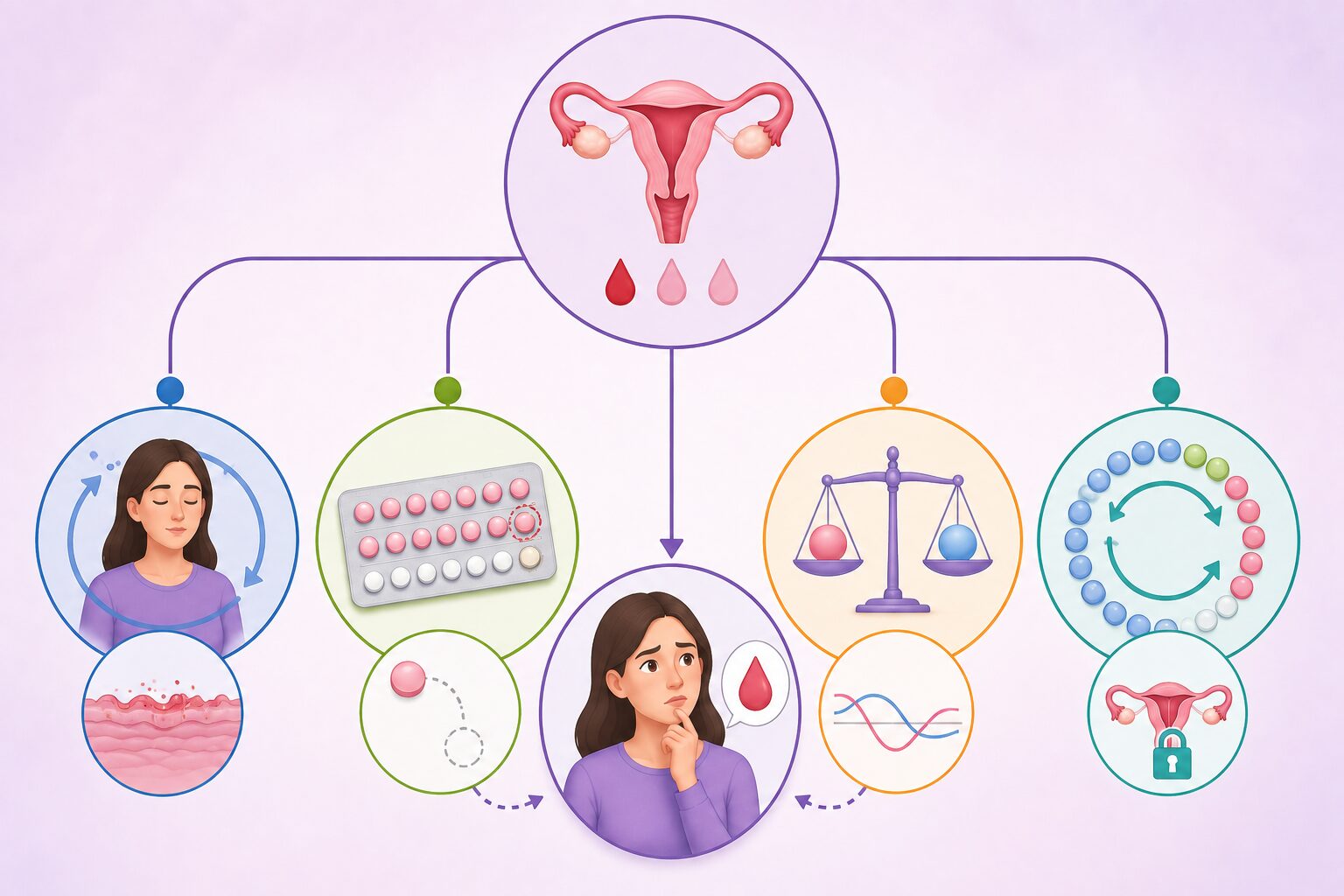
Several factors can contribute to birth control spotting. For a broader look at how hormonal contraception affects bleeding and other aspects of your cycle, our guide on common birth control side effects covers what to expect across different methods.
Your Body Is Adjusting
When starting a new birth control method, hormone levels change rapidly. Your body may need two to three months to adapt. During this time, spotting is especially common.
Missed Birth Control Pills
Taking pills late or missing doses can cause hormone levels to fluctuate, increasing the risk of irregular bleeding. Consistent use helps maintain stable hormone levels.
Low-Dose Hormonal Birth Control
Modern birth control pills often contain lower doses of estrogen than older formulations. While this reduces certain side effects, it may also make breakthrough bleeding more likely in some users.
Continuous Birth Control Use
Some people intentionally skip placebo pills to avoid monthly periods. Although safe for many individuals, continuous use can sometimes increase temporary spotting.
Which Birth Control Methods Can Cause Spotting?
Different contraceptive methods affect bleeding patterns differently.
Birth Control Pills
Spotting on the pill is one of the most common side effects during the first few months. Bleeding often becomes lighter and less frequent as the body adjusts.
Hormonal IUD
A hormonal IUD commonly causes irregular spotting during the first three to six months. Over time, many users experience lighter periods or no periods at all.
Birth Control Implant
The implant is highly effective but may cause unpredictable bleeding patterns. Some users experience occasional spotting, longer periods, very light bleeding, or no periods at all.
Birth Control Injection
The contraceptive injection can also change menstrual bleeding patterns. Spotting may occur initially before periods become lighter or stop altogether.
Vaginal Ring and Patch
Both methods deliver hormones continuously and may cause temporary spotting during the adjustment period, especially when first started.
How Long Does Birth Control Spotting Last?
Most cases of irregular bleeding on birth control improve within two to three months, and sometimes up to six months for IUD users. As hormone levels stabilize, breakthrough bleeding often becomes less frequent. For a fuller picture of how each method affects your cycle over time, see our guide on how birth control can affect your period.
If spotting continues beyond several months or becomes heavier, it’s worth discussing with a healthcare provider.
Factors That Increase the Chance of Spotting
Several factors may make spotting more likely.
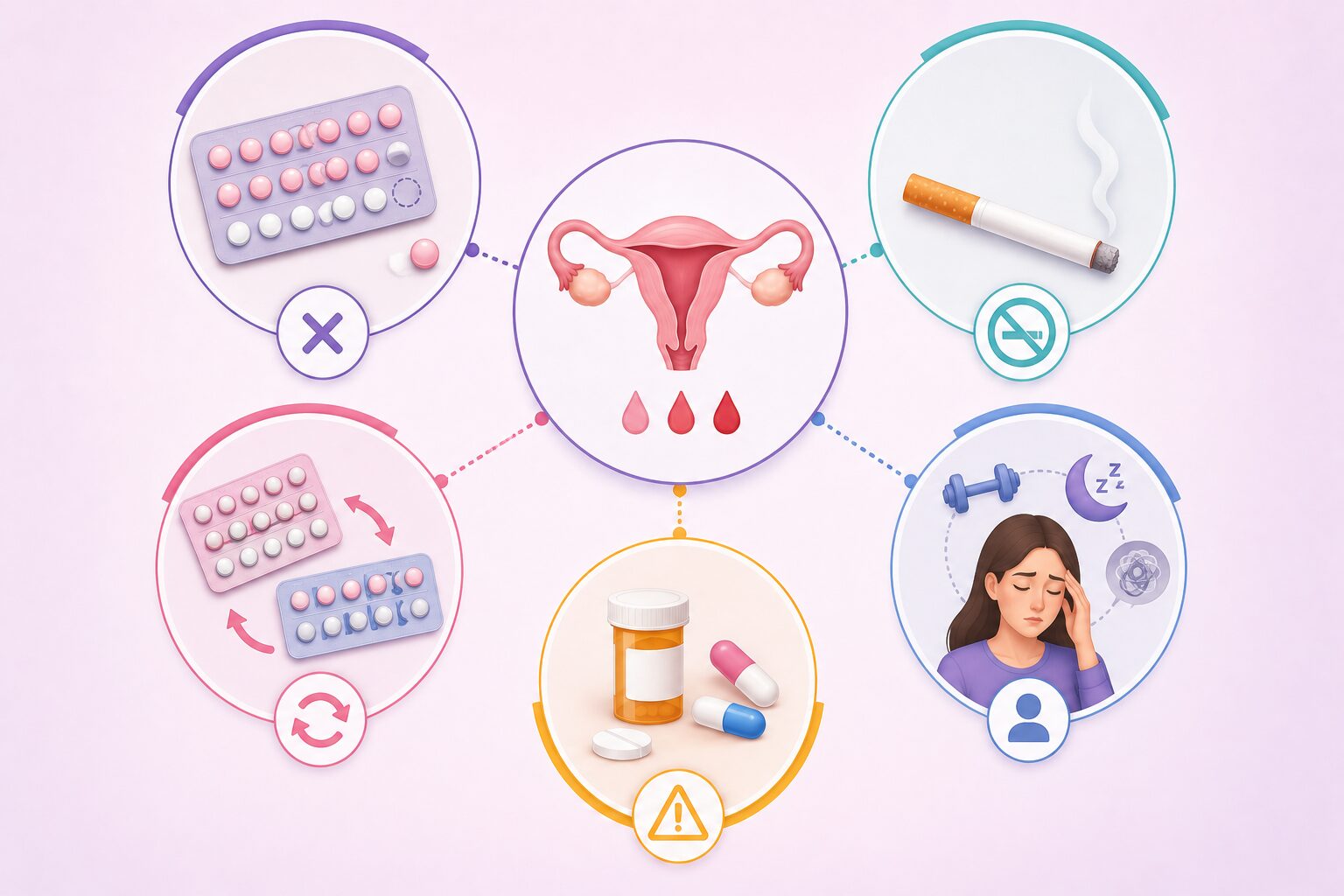
Missing Pills
Even one missed pill can trigger unexpected bleeding.
Smoking
Smoking may interfere with hormone metabolism, increasing the likelihood of breakthrough bleeding.
Starting or Switching Birth Control
Changing hormone formulations requires your body to adjust. Temporary spotting is common during this transition.
Certain Medications
Some medications can interfere with hormonal birth control effectiveness and contribute to spotting. Always inform your healthcare provider about prescription medications, supplements, and herbal products.
Is Spotting a Sign That Birth Control Isn’t Working?
Usually, no. Light spotting does not automatically mean birth control has failed. However, effectiveness depends on taking the method correctly. If pills are missed or taken inconsistently, both spotting and pregnancy risk may increase. If pregnancy is possible, especially after missed pills or unprotected intercourse, taking a pregnancy test may be appropriate.
How to Manage Birth Control Spotting
Most cases require patience while your body adapts. Helpful strategies include:
- Take birth control at the same time every day.
- Avoid skipping doses.
- Track your bleeding pattern.
- Stay hydrated.
- Attend recommended follow-up appointments.
- Avoid stopping birth control without medical advice.
Many people notice improvement within a few menstrual cycles.
When Should You Contact a Healthcare Provider?
Although birth control spotting is often harmless, certain symptoms deserve prompt evaluation. Knowing when to see a women’s primary care provider can help you decide whether your symptoms need a same-day call or a scheduled visit. Seek medical advice if you experience:
- Heavy bleeding that soaks pads every hour
- Severe pelvic pain
- Fever
- Foul-smelling vaginal discharge
- Spotting lasting longer than several months
- Bleeding after intercourse
- Positive pregnancy test while using birth control
- Dizziness or fainting
These symptoms may indicate causes unrelated to birth control that require medical assessment. Our women’s primary care services include evaluation for irregular bleeding as part of routine reproductive health care.
Can Spotting Be Caused by Something Other Than Birth Control?
Yes. While hormonal contraception is a common cause, spotting can also occur due to pregnancy, cervical changes, uterine polyps, hormonal imbalances, thyroid disorders, certain infections, stress, and perimenopause. Some infections, including certain STIs, cause no symptoms beyond irregular bleeding, which is why spotting that doesn’t resolve should be evaluated rather than assumed to be hormonal. Unusual vaginal discharge alongside spotting is another reason to seek testing our guide on vaginal discharge and when to get tested can help you assess what you’re seeing. Our STI and STD testing services are available if infection needs to be ruled out.
Persistent or unexplained bleeding should always be evaluated by a qualified healthcare provider.
Tips for Monitoring Your Symptoms
Keeping a simple record can help identify patterns. Consider tracking:
- Dates of spotting
- Color of bleeding
- Amount of bleeding
- Missed pills
- New medications
- Pelvic pain
- Sexual activity
- Menstrual cycle timing
This information can be valuable during medical appointments.
Key Takeaways
Experiencing spotting between periods birth control users commonly report is often a normal response to hormonal changes. Breakthrough bleeding is especially common after starting a new contraceptive method or switching formulations, and it frequently improves as the body adjusts.
While light spotting is usually not a cause for concern, persistent, heavy, or painful bleeding should be evaluated by a healthcare provider. Understanding what’s expected can help you make informed decisions and avoid unnecessary worry.
If you’re uncertain whether your symptoms are normal, scheduling a medical evaluation is the safest way to receive personalized guidance.
Frequently Asked Questions
Is spotting normal after starting birth control?
Yes. Many people experience light spotting during the first two to three months after starting hormonal birth control.
How long does breakthrough bleeding usually last?
Most cases improve within three months, although hormonal IUD users may experience spotting for up to six months.
Should I stop taking birth control if I’m spotting?
No. Unless instructed by your healthcare provider, continue using your birth control as prescribed. Stopping suddenly may worsen irregular bleeding and reduce contraceptive effectiveness.
Can spotting mean I’m pregnant?
Spotting alone does not necessarily indicate pregnancy. However, if you’ve missed pills, had unprotected sex, or have pregnancy symptoms, consider taking a pregnancy test and contacting your healthcare provider.
Is spotting heavier than a normal period?
No. Spotting is generally much lighter than a menstrual period and often only requires a panty liner.
When is spotting considered an emergency?
Seek immediate medical care if you experience very heavy bleeding, severe abdominal pain, fainting, fever, or signs of pregnancy with significant pain.

Dr. James Carter is a board-certified physician and lead clinician at Serenity Choice Health, specializing in reproductive health access and medication abortion protocols. With over 20+ years of experience, he combines clinical expertise with patient-centered care to ensure safe, compassionate, and confidential reproductive healthcare.