
After abortion bans spread across the United States, one state quietly became a lifeline for thousands of people who had nowhere else to turn. Illinois did not happen upon this role by accident. It built the legal framework, the clinical infrastructure, and the provider network to absorb a level of demand that no one had seen in decades. In 2026, it remains one of the most accessible states in the country for reproductive healthcare and for people in the surrounding region, it may be the only realistic option.
This guide explains why Illinois stands apart, what abortion access actually looks like there, how to navigate the process whether you are a resident or traveling from another state, and what financial and logistical support exists to make care possible.
Why Illinois Became a Safe Haven for Abortion Access
Illinois did not become an abortion access hub by chance. It became one by law. The Illinois Reproductive Health Act, passed in 2019, established abortion as a fundamental right under state law before the overturning of Roe v. Wade made that protection essential rather than symbolic. The Act removed a range of older restrictions, including waiting periods, mandatory counseling requirements, and spousal notification rules, replacing them with a framework that treats abortion as routine reproductive healthcare.
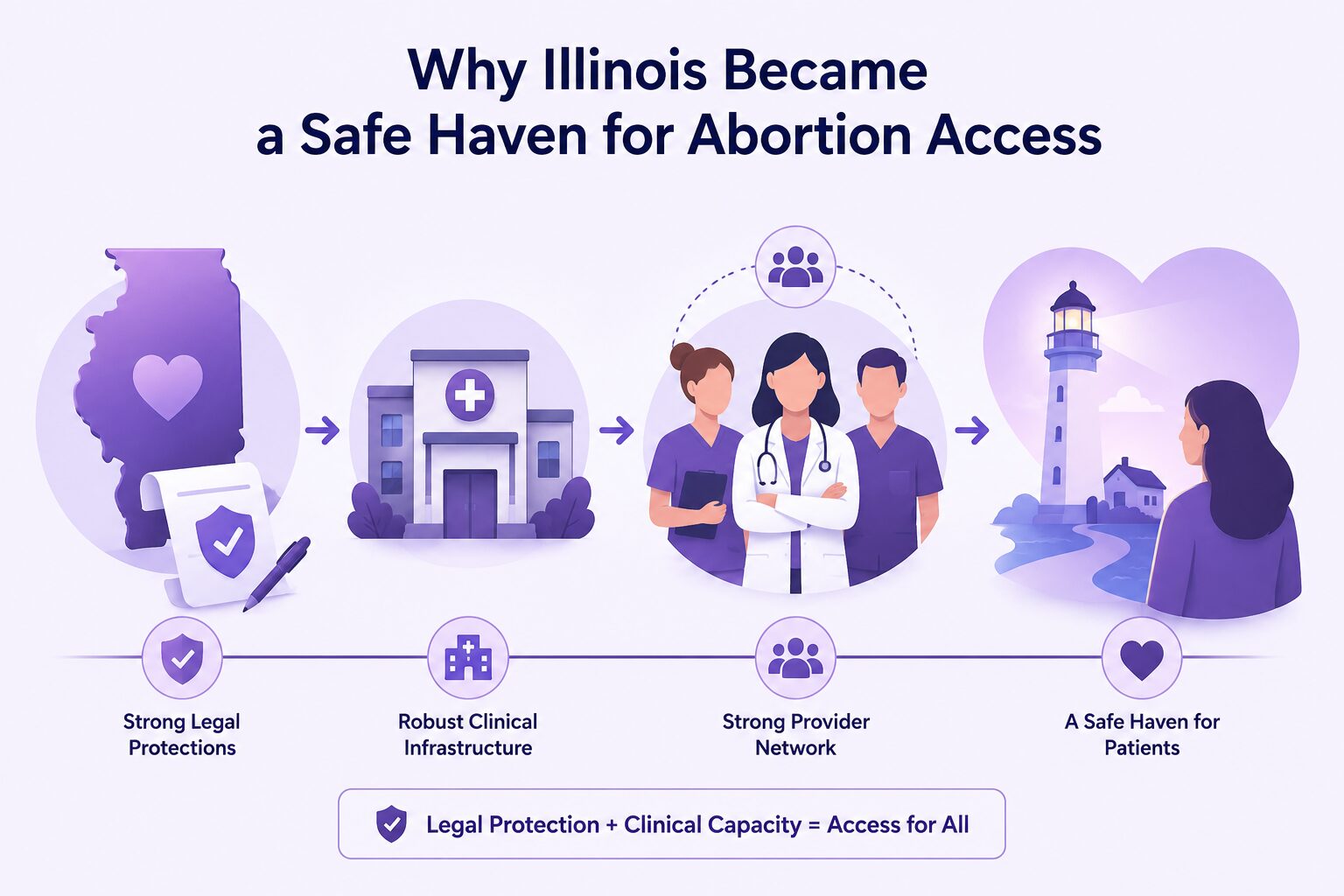
The result is a state where providers operate without the legal uncertainty that has driven clinics to close in neighboring states, where gestational limits are set with reference to fetal viability rather than arbitrary weak thresholds, and where neither patients nor providers face criminal liability. For a full breakdown of what Illinois law actually guarantees, our complete guide to Illinois abortion laws and the Illinois Reproductive Health Act guide cover the legal landscape in detail.
What “abortion access hub” means in practice is that Illinois has both the legal protection and the clinical capacity to serve not just its own residents but people traveling from states where care is no longer available. That dual function serving locals and absorbing regional demand is what distinguishes Illinois from states that have legal protections but limited provider infrastructure.
How the Overturning of Roe v. Wade Changed Everything
When the Supreme Court overturned Roe v. Wade in June 2022, it did not make abortion illegal across the United States. It returned the question to individual states and the result was a patchwork of laws that created dramatically unequal access depending on where a person happened to live.
By 2026, over a dozen states have near-total abortion bans in effect, several others have bans at six weeks of pregnancy before most people know they are pregnant and the Midwest has become one of the most restricted regions in the country. Missouri banned abortion with no exceptions for rape or incest. Indiana enacted a near-total ban. Kentucky followed. Wisconsin’s legal landscape remained in flux for an extended period, leaving providers unable to operate with certainty.
Illinois sits in the center of this restricted geography. It shares borders with six states, several of which now have the strictest abortion laws in the country. The distance between a person in southern Missouri and an Illinois abortion provider may be a two-hour drive but in legal terms, it is the difference between a criminal act and protected healthcare.
Which States Are Driving Patients to Illinois
The geography of abortion restriction maps almost directly onto the geography of abortion travel to Illinois. Patients are traveling from Missouri, Indiana, Kentucky, Wisconsin, Tennessee, and Arkansas states that collectively represent millions of people of reproductive age who no longer have access to abortion care where they live.
The practical challenges these patients face are significant. Traveling for abortion means taking time off work, arranging childcare, covering transportation and sometimes lodging, and navigating a healthcare system in an unfamiliar state often under time pressure, because gestational limits mean that delays translate directly into fewer options.
For people who can access telehealth services, geography becomes less of a barrier. Illinois-licensed providers can prescribe the abortion pill to patients who are located in Illinois and for those who can travel, the state’s clinical capacity means appointments are available without the weeks-long waits that have developed in other abortion-access states.
If you are planning to travel to Illinois for abortion care, our guide on traveling for an abortion covers logistics, what to expect, and how to prepare. For information on the legal question of crossing state lines, our cross-state abortion care guide addresses what is and is not legally permissible.
What Abortion Services Are Available in Illinois
Illinois offers the full range of abortion care, from the earliest weeks of pregnancy through later gestational stages.
Medication abortion commonly called the abortion pill is available up to approximately 10 to 12 weeks of pregnancy. It involves two medications taken in sequence: mifepristone, which stops the pregnancy from developing, and misoprostol, which causes the uterus to contract and expel the pregnancy. This is the most common form of abortion in the United States and can in many cases be managed through telehealth without an in-person visit. Our complete abortion pill guide explains how the process works, what to expect, and how to confirm the abortion was successful.
In-clinic abortion covers surgical procedures including vacuum aspiration (used in the first trimester) and dilation and evacuation (used in the second trimester). These procedures are performed in a clinical setting, typically take under an hour, and allow for anesthesia and direct medical supervision. Our in-clinic abortion services page covers what these procedures involve and what to expect from your visit.
Same-day and next-day appointments are available in Illinois in many cases, particularly for early-term medication abortion via telehealth. For people traveling from restricted states, this appointment availability is one of the most meaningful practical advantages Illinois offers.
How to Get an Abortion in Illinois A Step-by-Step Overview
The process varies depending on whether you are accessing care in person or through telehealth, and whether you are an Illinois resident or traveling from another state.
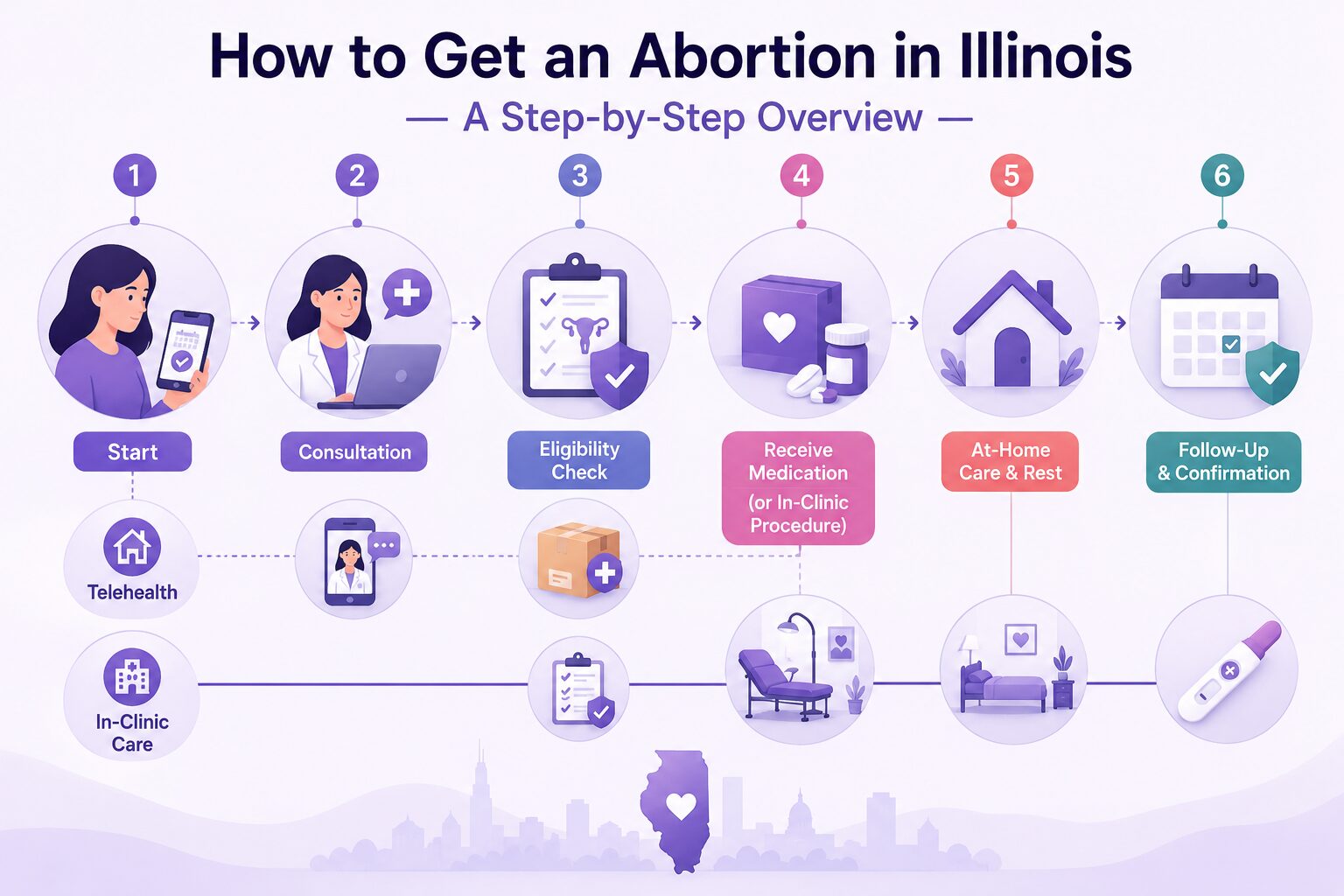
For telehealth medication abortion: The process typically begins with an online consultation with a licensed provider who reviews your medical history, confirms gestational age, and determines eligibility. If eligible, the medications are prescribed and delivered discreetly. You do not need to travel to a clinic. You do not need to provide identification proving Illinois residency in all cases though specific requirements vary by provider. To start this process, you can schedule a confidential consultation with our team.
For in-clinic care: You will need to book an appointment, either online or by phone. For patients traveling from out of state, providers are generally experienced in working with people who are coordinating travel and can advise on timing, what to bring, and what to expect. No specific identification is required to access abortion care in Illinois the state does not mandate residency requirements for patients.
After your procedure or medication abortion, follow-up care typically involves a pregnancy test at four weeks to confirm the abortion is complete. Our guide on when to take a pregnancy test after abortion explains the timing and what your result means. For guidance on confirming the abortion pill worked, see our how to know if the abortion pill worked guide.
Cost of Abortion in Illinois and Financial Assistance
The cost of abortion in Illinois varies depending on the type of procedure, gestational age, and provider. Medication abortion through telehealth is generally the most affordable option. In-clinic procedures in the second trimester involve higher costs that reflect the complexity of the procedure and the level of clinical care involved.
Illinois-based health insurance plans are required to cover abortion services. If you are an Illinois resident with insurance, your plan is likely to cover some or all of the cost. For patients traveling from out of state, coverage depends on your home state insurance policy many plans in states with abortion bans specifically exclude coverage.
For those without coverage or traveling from states with restrictive insurance policies, abortion funds and financial assistance programs exist specifically to fill this gap. Our guides on abortion costs in Illinois, insurance coverage for abortion, and finding abortion financial aid programs in Illinois cover what assistance is available, how to access it, and what to expect from the application process.
Is It Safe to Travel to Illinois for Abortion?
For patients traveling from states with abortion restrictions, the legal safety question is understandably a priority. The short answer is that traveling to Illinois to obtain abortion care is legal. No federal law criminalizes interstate travel for abortion, and Illinois law explicitly protects both patients and providers from legal action related to abortion care provided within the state.
The more practical safety concerns involve privacy specifically, not wanting your medical care documented in ways that could create exposure if you return to a state where abortion is restricted. Illinois providers are bound by standard medical privacy protections. For a thorough understanding of how to protect your privacy when seeking abortion care, our abortion privacy guide covers digital privacy, medical records, and practical steps to limit your data footprint.
Abortion procedures themselves carry a low complication rate. Medication abortion is safe and effective for the vast majority of people who use it at the appropriate gestational stage. In-clinic procedures performed by licensed providers in a regulated environment are among the safest outpatient procedures in medicine.
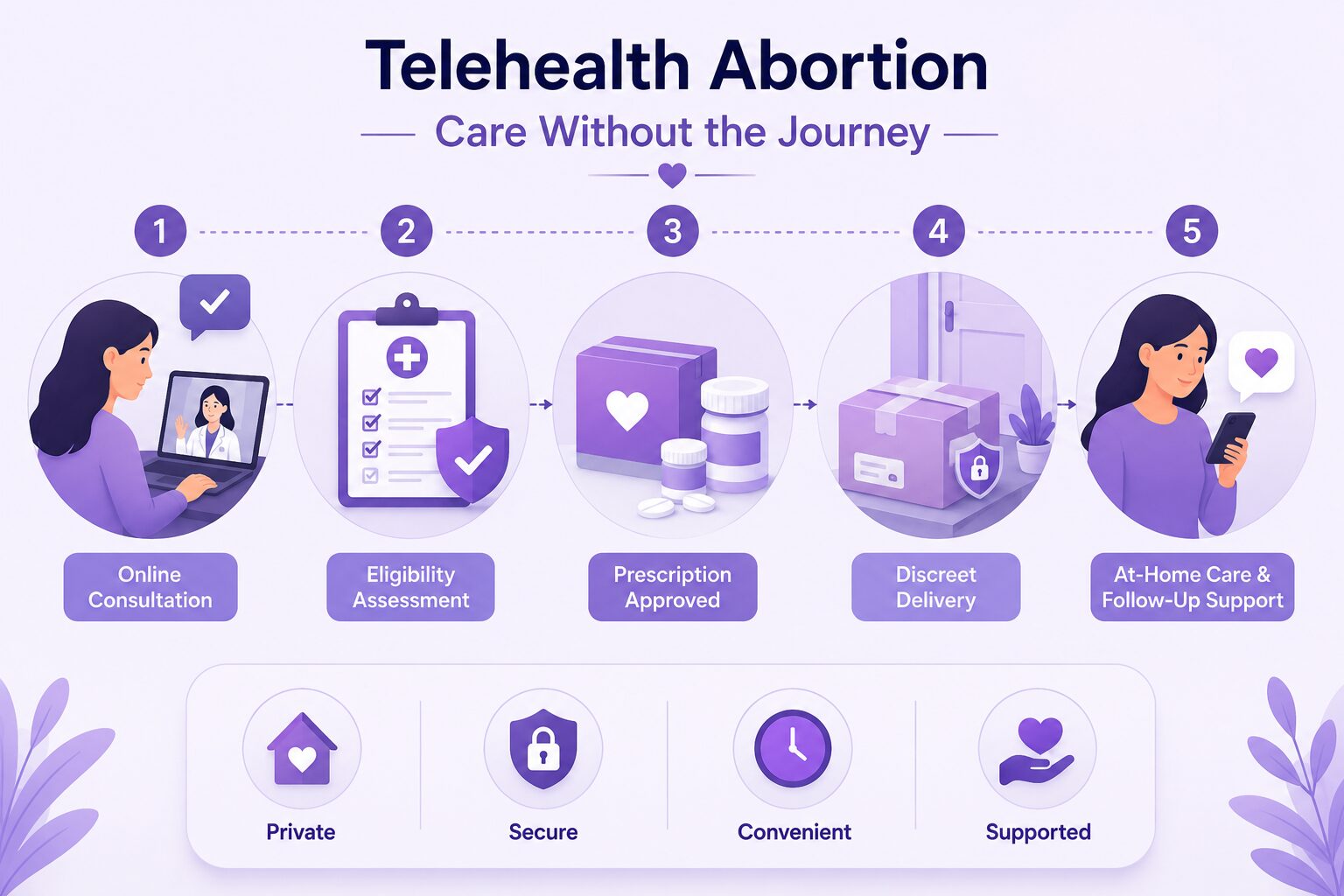
For people in states that border Illinois or who are already located in Illinois, telehealth abortion has significantly expanded access to care. Through a telehealth consultation with an Illinois-licensed provider, eligible patients can receive a prescription for mifepristone and misoprostol without traveling to a clinic. The medications are delivered discreetly, and follow-up care is managed remotely.
Telehealth abortion is currently available for pregnancies up to approximately 10 to 12 weeks, depending on the provider and applicable regulations. It is not appropriate for all patients certain medical histories or circumstances require in-person evaluation. A telehealth consultation determines eligibility before any prescription is issued.
For patients considering this route, our guide on whether telemedicine abortion is legal explains the current legal framework, and our telehealth abortion care page describes how the process works from consultation to delivery. For guidance on obtaining the abortion pill safely and from verified sources, our safe verified abortion pills guide addresses what to look for and what to avoid.
Common Mistakes to Avoid When Seeking Abortion Care
The most consequential mistake people make is waiting. Gestational age matters, it determines which types of care are available, and it affects cost. The earlier you seek care, the more options you have and the simpler the process tends to be.
The second most common mistake is relying on information from sources that are not medically accurate. Crisis pregnancy centers facilities that present themselves as abortion providers but do not offer abortion care are present in Illinois and in surrounding states. They frequently provide medically inaccurate information intended to delay decision-making. Understanding what you are walking into before you make an appointment is important.
Finally, some people attempt to source abortion medications without a provider consultation, either through unverified online sources or cross-border purchases. While the medications themselves are safe when used correctly, using them without appropriate screening, dosing guidance, and follow-up care carries real risk. If the abortion does not complete successfully, knowing what to do next matters, our guides on what happens when abortion pills don’t work and signs the abortion pill worked are important resources for anyone managing a medication abortion.
Conclusion
Illinois has become one of the most important states for abortion access in the United States not because of geography alone but because of a legal and clinical infrastructure built to protect reproductive rights at a time when neighboring states have dismantled them. For people in the Midwest and beyond, it represents a protected space for healthcare that has become unavailable closer to home.
Whether you are an Illinois resident, planning to travel for care, or exploring telehealth options that allow you to access care without traveling, the process is more accessible than many people realize. If you have questions about your specific situation or are ready to move forward, schedule a confidential appointment with our team. We are here to help you navigate this with clarity, privacy, and care.
FAQS
Is it legal to travel from another state to Illinois to get an abortion?
Yes, traveling to Illinois for abortion care is completely legal. No federal law criminalizes interstate travel for abortion, and Illinois law explicitly protects both patients and providers from any legal action related to care provided within the state.
Do I need to be an Illinois resident to access abortion care there?
No. Illinois does not mandate residency requirements for patients. You do not need to provide identification proving Illinois residency, though specific requirements may vary by provider.
What types of abortion services are available in Illinois?
Illinois offers the full range of care medication abortion (the abortion pill) up to approximately 10–12 weeks, and in-clinic procedures including vacuum aspiration (first trimester) and dilation and evacuation (second trimester). Telehealth options are also available for eligible patients.
How much does abortion cost in Illinois, and is financial help available?
Costs vary by procedure type and gestational age, with telehealth medication abortion being the most affordable. Illinois residents with insurance are likely covered. For uninsured patients or out-of-state travelers, abortion funds and financial assistance programs are available to help bridge the gap.
Can I get an abortion in Illinois without visiting a clinic?
Yes, through telehealth. Illinois-licensed providers can conduct online consultations and prescribe the abortion pill for eligible patients, with medications delivered discreetly and no clinic visit required. This option is available for pregnancies up to approximately 10–12 weeks.
How do I know if my medication abortion was successful
A pregnancy test taken four weeks after the procedure is the standard way to confirm the abortion is complete. Providers also offer remote follow-up care to guide patients through this step.

Dr. James Carter is a board-certified physician and lead clinician at Serenity Choice Health, specializing in reproductive health access and medication abortion protocols. With over 20+ years of experience, he combines clinical expertise with patient-centered care to ensure safe, compassionate, and confidential reproductive healthcare.