
Experiencing vaginal itching burning odor can be uncomfortable, frustrating, and sometimes alarming. While these symptoms are often caused by common conditions that can be treated effectively, they can also signal an infection or another health issue that requires medical attention.
Many people hesitate to seek care because they feel embarrassed or assume the symptoms will go away on their own. However, recognizing when symptoms are mild and temporary versus when they need professional evaluation can help prevent complications and lead to faster relief.
This guide explains the most common causes, warning signs to watch for, and when it’s time to schedule a medical evaluation.
Understanding Vaginal Itching, Burning, and Odor
The vagina naturally contains healthy bacteria and maintains a balanced environment that protects against infections. When this balance changes, symptoms such as itching, burning, unusual discharge, or odor may develop.
These symptoms may appear individually or together and can range from mild irritation to severe discomfort.
You may notice:
- Persistent itching
- Burning during urination
- Burning after intercourse
- Unpleasant vaginal odor
- Increased discharge
- Changes in discharge color or consistency
- Redness or swelling
- Vaginal soreness
Although some mild irritation resolves on its own, persistent or worsening symptoms deserve medical evaluation. Read our guide on when to see a women’s primary care provider to understand what symptoms and situations always warrant a visit.
Common Causes of Vaginal Itching, Burning or Odor
Yeast Infection
A yeast infection is one of the most common reasons for vaginal itching and burning.
Typical symptoms include:
- Intense itching
- Redness
- Thick white discharge
- Burning sensation
- Irritation around the vulva
Yeast infections often occur after antibiotics, hormonal changes, pregnancy, or uncontrolled diabetes.
Bacterial Vaginosis (BV)
Bacterial vaginosis develops when the normal balance of vaginal bacteria changes.
Common symptoms include:
- Thin gray or white discharge
- Fishy odor, especially after sex
- Mild burning
- Vaginal irritation
Unlike yeast infections, BV often causes odor without severe itching.
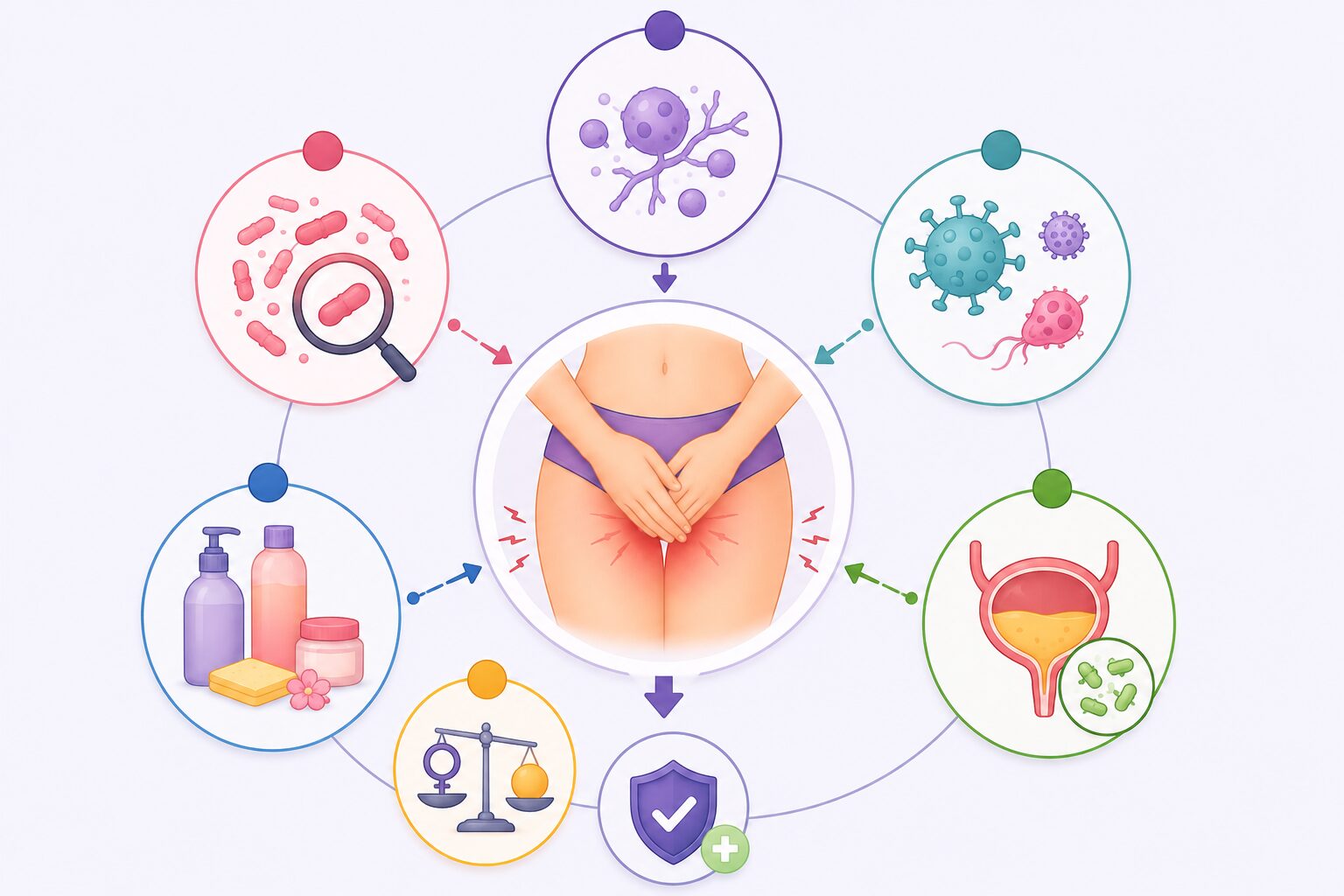
Sexually Transmitted Infections (STIs)
Several sexually transmitted infections can cause:
- Burning
- Irritation
- Unusual discharge
- Pelvic discomfort
- Vaginal odor
Examples include chlamydia, gonorrhea, and trichomoniasis. Some STIs produce very mild symptoms or no symptoms at all — read our guide on whether you can have an STI without symptoms to understand why this makes regular testing so important. Our STI and STD testing services are available for anyone who needs prompt, confidential screening. For a full breakdown of which infections sexually active women should be screened for, see our guide on which STIs women should be tested for.
Contact Irritation or Allergic Reactions
Not every case of vaginal discomfort is caused by infection.
Common irritants include:
- Scented soaps
- Bubble baths
- Laundry detergents
- Feminine sprays
- Scented pads
- Tight synthetic underwear
Removing the irritant often improves symptoms.
Hormonal Changes
Lower estrogen levels can make vaginal tissues thinner and drier, increasing irritation and burning.
This commonly occurs:
- During menopause
- After childbirth
- While breastfeeding
- With certain medications
Urinary Tract Infection (UTI)
Although UTIs affect the urinary tract rather than the vagina, burning during urination may be mistaken for vaginal burning. Read our guide on burning when you pee and whether it’s a UTI or STI to understand how to tell the two apart. A healthcare provider can determine whether symptoms are coming from the urinary tract or the vagina.
When Should You Get Checked?
While some irritation improves within a day or two, certain symptoms should never be ignored.
Schedule a healthcare visit if you experience:
Symptoms That Last More Than a Few Days
Persistent symptoms often indicate an underlying issue that needs treatment.
Strong or Unusual Vaginal Odor
A noticeable fishy, foul, or unpleasant odor is commonly associated with bacterial vaginosis or another infection.
Burning That Becomes Worse
Increasing pain or burning may suggest an infection requiring prescription treatment.
Abnormal Vaginal Discharge
Seek evaluation if discharge becomes green, yellow, gray, bloody (outside your period), thick and clumpy, or excessively heavy. Read our full guide on vaginal discharge and when you should get tested for a complete breakdown of what different discharge changes can indicate.
Severe Itching
Persistent itching that disrupts sleep or daily activities should be assessed by a healthcare provider.
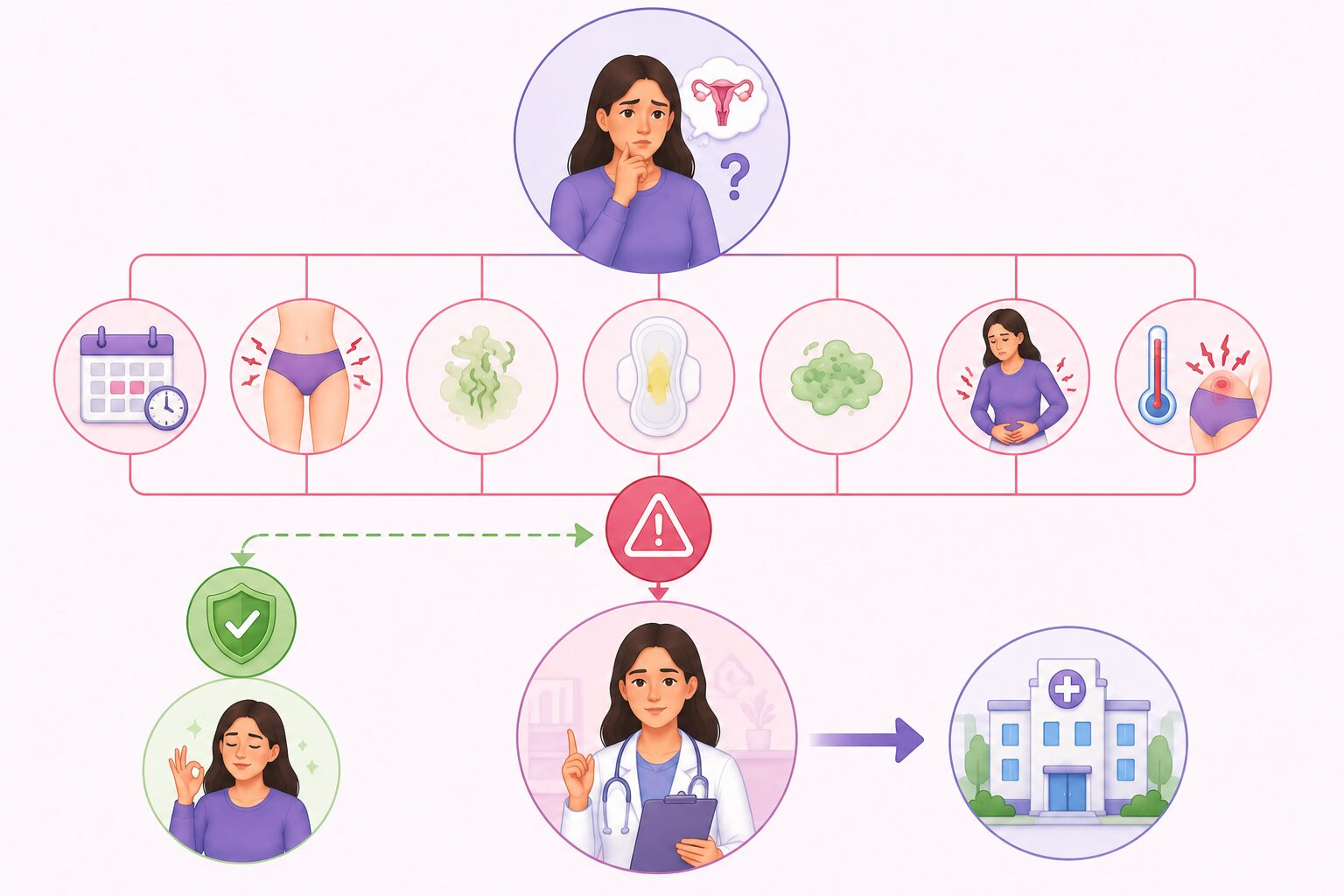
Pain During Sex
Pain accompanied by burning or odor may indicate infection, inflammation, or another condition that requires diagnosis. Read our guide on pain during sex for a full explanation of common causes and when to seek evaluation.
Fever or Pelvic Pain
These symptoms may indicate a more serious infection requiring prompt medical care.
Symptoms That Need Immediate Medical Attention
Seek urgent medical evaluation if vaginal symptoms occur alongside:
- High fever
- Severe pelvic pain
- Heavy bleeding
- Fainting
- Pregnancy with severe symptoms
- Rapidly worsening pain
- Painful sores or ulcers
- Significant swelling
Prompt treatment can help prevent complications.
What to Expect During a Medical Evaluation
Many people delay care because they worry the examination will be uncomfortable. A healthcare visit is generally straightforward and may include:
Medical History
Your provider may ask about your symptoms, when symptoms began, sexual history, menstrual cycle, medications, recent antibiotic use, and personal care products.
Physical Examination
Depending on your symptoms, a pelvic examination may be recommended.
Laboratory Testing
Your provider may collect samples to check for yeast infection, bacterial vaginosis, STIs, and other vaginal infections. Read our guide on what happens during an STI test so you know exactly what to expect if screening is part of your evaluation. Urine testing may also be performed if urinary symptoms are present.
Treatment Depends on the Cause
Treatment is based on an accurate diagnosis rather than symptoms alone.
Yeast Infection
May be treated with antifungal medication.
Bacterial Vaginosis
Usually requires prescription antibiotics.
STIs
Treatment depends on the specific infection and may include antibiotics or other medications. Sexual partners may also require treatment.
Contact Irritation
Avoiding irritating products and allowing tissues to heal is often sufficient.
Because different conditions can cause similar symptoms, self-diagnosis may delay appropriate treatment.
Avoid Self-Treating Without Knowing the Cause
Many over-the-counter products claim to relieve vaginal symptoms, but using the wrong treatment can worsen irritation or delay diagnosis.
For example:
- Treating BV with antifungal medication usually won’t help
- Treating yeast symptoms when an STI is present may postpone appropriate care
- Repeated use of medicated creams without evaluation can mask underlying problems
If symptoms are recurrent or do not improve after treatment, follow up with a healthcare provider.
Tips to Help Maintain Vaginal Health
While not every condition can be prevented, healthy habits may lower the risk of irritation and infection.
Helpful practices include:
- Wear breathable cotton underwear
- Avoid scented intimate products
- Change out of wet clothing promptly
- Wipe from front to back after using the bathroom
- Practice safer sex
- Avoid douching
- Stay hydrated
- Schedule routine reproductive health visits
Read our guide on how often women should get STI testing to build a routine screening schedule that fits your lifestyle and risk level. Simple daily habits help maintain the vagina’s natural protective balance.
Don’t Ignore Persistent Symptoms
Many causes of vaginal itching burning odor are easily treatable when diagnosed early. Waiting too long can prolong discomfort and, in some cases, allow infections to worsen.
If symptoms persist, recur frequently, or are accompanied by pain, unusual discharge, fever, or bleeding, scheduling a medical evaluation is the safest next step. An accurate diagnosis ensures you receive the treatment that best matches the underlying cause. Book a confidential appointment with our care team to get evaluated promptly.
Early care not only provides relief but also supports long-term vaginal and reproductive health.
Conclusion
Vaginal itching, burning, or odor can result from several different conditions, ranging from mild irritation to infections that require medical treatment. Because many causes produce similar symptoms, professional evaluation is often the most reliable way to determine what’s happening and begin appropriate care.
If you’re experiencing persistent discomfort, abnormal discharge, or symptoms that interfere with daily life, don’t ignore them. Our women’s primary care services can identify the cause, recommend effective treatment, and help you restore your comfort and confidence.
FAQ Section
Is vaginal odor always caused by an infection?
No. Normal vaginal odor varies throughout the menstrual cycle. However, a strong fishy or foul smell, especially with discharge or irritation, should be evaluated.
Can vaginal itching occur without an infection?
Yes. Allergic reactions, dry skin, eczema, hormonal changes, and irritation from soaps or detergents can all cause itching.
How long should I wait before seeing a healthcare provider?
If symptoms last more than a few days, worsen, recur frequently, or are accompanied by unusual discharge, fever, pelvic pain, or bleeding, schedule a medical evaluation.
Should I use over-the-counter yeast infection medication first?
Only if you’re confident you’ve had a diagnosed yeast infection before and your symptoms are the same. If you’re unsure of the cause or symptoms are severe, seek medical advice before treating yourself.
Can sexually transmitted infections cause burning and odor?
Yes. Some STIs can cause burning, discharge, odor, irritation, or pelvic pain. Testing is important if an STI is possible.
What can I do to reduce irritation while waiting for my appointment?
Avoid scented products, wear breathable cotton underwear, keep the area clean and dry, avoid douching, and refrain from sexual activity if symptoms are painful or worsening until you’ve been evaluated.

Dr. James Carter is a board-certified physician and lead clinician at Serenity Choice Health, specializing in reproductive health access and medication abortion protocols. With over 20+ years of experience, he combines clinical expertise with patient-centered care to ensure safe, compassionate, and confidential reproductive healthcare.