
Searching for birth control near me often means you want more than a list of contraception methods. You may be trying to understand which option fits your health, lifestyle, relationship, future plans, and personal preferences.
With so many choices available, it can be difficult to know where to begin. Some methods require daily attention, while others work for months or years. Some contain hormones, while others do not. Some methods can help prevent pregnancy while condoms can also help reduce the risk of sexually transmitted infections (STIs).
The right choice is not necessarily the same for everyone. A healthcare professional can help you compare your options and make an informed decision based on your individual needs. The Centers for Disease Control and Prevention emphasizes that contraceptive decisions should be voluntary and informed, with factors such as effectiveness, safety, accessibility, side effects, reversibility, and ease of use considered together. Our birth control and contraceptive services provide personalized guidance through every step of that decision.
What Can You Expect From Birth Control Services Near You?
When you search for birth control options near me, you may find clinics and healthcare providers offering different types of reproductive and contraceptive care.
Depending on the provider, a birth control consultation may include:
- A discussion about your pregnancy-prevention goals
- Review of your health history and medications
- Discussion of your menstrual cycle and preferences
- Review of hormonal and non-hormonal options
- Information about possible benefits, risks, and side effects
- Guidance about how to start, use, change, or discontinue a method
- Prescription services when appropriate
- Placement or removal of certain contraceptive methods when offered by the provider
- Discussion of STI prevention when relevant
The purpose of a consultation is not to pressure you into a particular method. It is to help you understand your choices so you can make a decision that feels appropriate for your situation. Learn more about the benefits of telehealth and how virtual consultations make accessing birth control guidance more convenient than ever.
Understanding Your Main Birth Control Options
There is no single method that is best for every person. Different forms of birth control vary in how they work, how long they last, how often they require attention, and whether they contain hormones.
Intrauterine Devices (IUDs)
An IUD is a small device placed inside the uterus by a healthcare professional. There are hormonal and non-hormonal IUD options.
Hormonal IUDs release a form of progestin, while the copper IUD does not contain hormones. Depending on the specific device, IUDs can provide long-term contraception for several years. The CDC lists IUDs among the most effective reversible contraceptive options.
An IUD may appeal to someone who:
- Wants long-term pregnancy prevention
- Does not want to remember a daily pill
- Wants a reversible option
- Is interested in a hormonal or non-hormonal choice, depending on the device
An IUD requires placement by a trained healthcare professional. During a consultation, you can ask questions about the insertion process, expected changes, possible side effects, and removal. Read our guide on common birth control side effects to understand what to expect when starting any new method.
Birth Control Implant
The birth control implant is a small device placed under the skin of the upper arm. It releases a progestin hormone and provides long-acting contraception.
This option may be appealing if you want:
- A highly effective method
- Long-term contraception
- A method that does not require daily attention
- A reversible option
Like any method, the implant may not be right for everyone. A healthcare provider can review your medical history and discuss whether it fits your needs.
Birth Control Pills, Patch, and Vaginal Ring
Several hormonal methods require regular use or replacement.
Birth Control Pills
Birth control pills are taken on a regular schedule. Depending on the type, pills may contain estrogen and progestin or progestin alone. The pill may be convenient for someone who is comfortable maintaining a consistent routine. However, forgetting doses can make consistent use more difficult.
Birth Control Patch
The patch delivers hormones through the skin and is changed according to a regular schedule. Some people prefer the patch because it does not require taking a pill every day.
Vaginal Ring
The vaginal ring is placed in the vagina and releases hormones. Depending on the specific product and instructions, it is used on a scheduled basis.
The pill, patch, and ring can all be discussed during a birth control consultation to determine whether one fits your preferences and health needs. Read our guide on how birth control can affect your period to understand what menstrual changes are normal with hormonal methods.
Birth Control Injection
The birth control injection is a hormonal method administered at regular intervals. It may be an option for someone who wants to avoid taking a daily pill but does not necessarily want a long-term device such as an IUD or implant. A healthcare provider can explain the recommended schedule, potential side effects, and other considerations before you decide.
Condoms and Other Barrier Methods
Barrier methods work by helping prevent sperm from reaching an egg. Condoms are also important because they can help reduce the risk of HIV and other STIs. Most other forms of birth control do not protect against STIs. Read our guide on the difference between an STI and an STD to understand what condoms help protect against and why STI prevention is a separate consideration from pregnancy prevention.
Condoms can be used alone or together with another birth control method. For many people, combining condoms with another contraceptive option provides pregnancy prevention while also supporting STI risk reduction.
Fertility Awareness-Based Methods
Fertility awareness-based methods involve tracking certain signs of the menstrual cycle to identify times when pregnancy may be more likely. These methods require consistent tracking and a clear understanding of how the chosen method works. Their effectiveness can vary depending on the specific approach and how consistently it is followed. A healthcare professional can help you understand whether this type of method fits your goals and expectations.
Permanent Birth Control
Some people are certain that they do not want to become pregnant in the future and may consider permanent contraception. Because these procedures are intended to be permanent, discussing your long-term goals carefully with a qualified healthcare professional is important before making a decision.
How to Choose the Right Birth Control Method for You
The best birth control method for you depends on more than effectiveness alone. A method that is highly effective but difficult for you to use consistently may not be the best practical choice for your lifestyle.
How Often Do You Want to Think About Birth Control?
Some people prefer a method they can use daily or on a regular schedule. Others want an option that requires little ongoing attention.
For example:
- Daily routines may work well with certain pills
- Scheduled changes may suit some people who prefer a patch or ring
- Long-acting methods may be preferred by people who want less frequent maintenance
- Condoms may be used when needed
Your preferred level of involvement is a legitimate part of the decision.
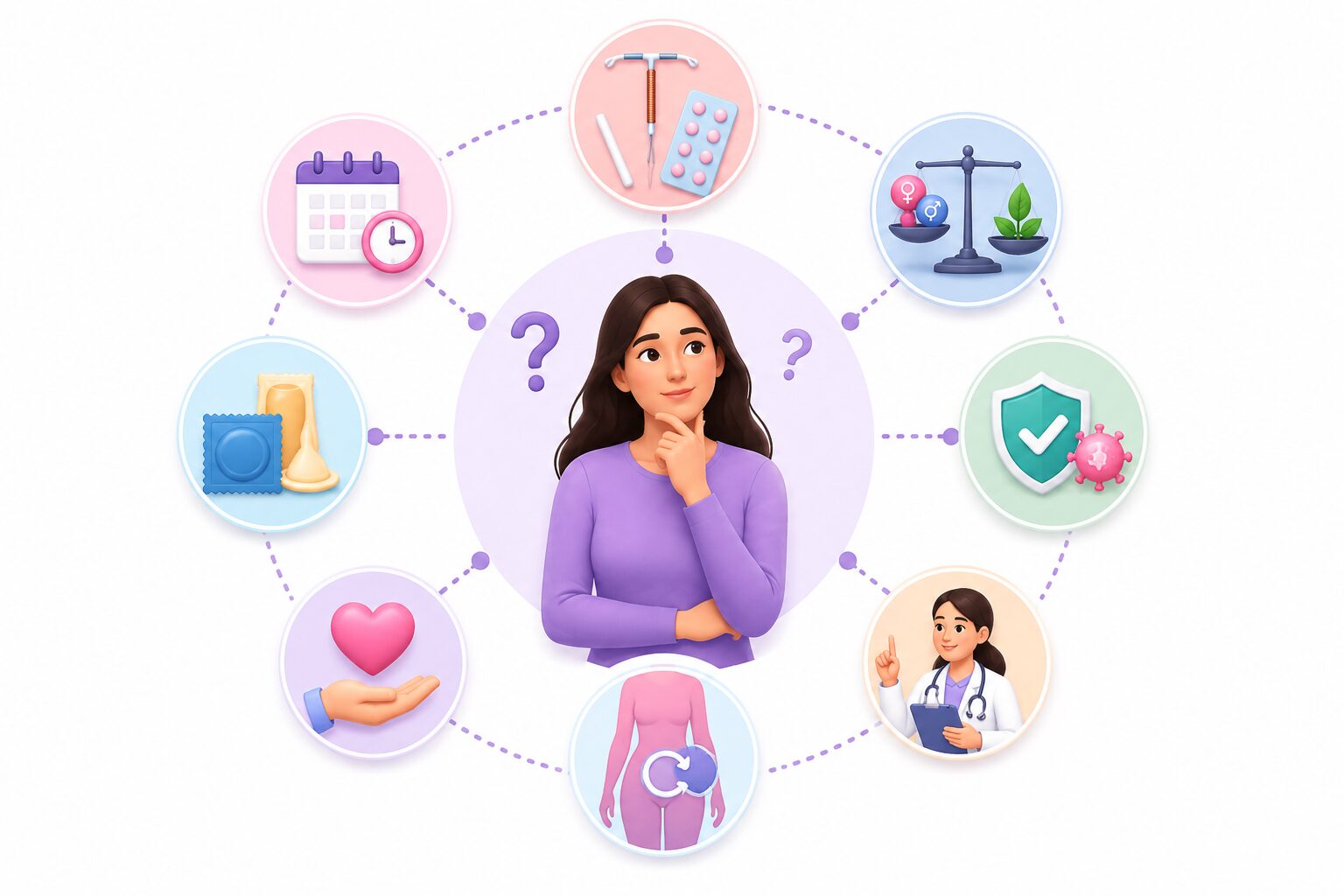
Do You Want Hormonal or Non-Hormonal Birth Control?
Some people prefer hormonal contraception, while others want to avoid hormones. Hormonal methods include options such as certain pills, patches, rings, injections, implants, and hormonal IUDs. Non-hormonal options include the copper IUD, condoms, and certain other barrier or fertility awareness-based methods. A healthcare provider can help you compare the available choices based on your health history and personal preferences.
How Important Is Long-Term Pregnancy Prevention?
If you want to prevent pregnancy for an extended period without remembering contraception every day, long-acting reversible contraception may be worth discussing. IUDs and implants are examples of long-acting reversible options. They can provide ongoing contraception and can be removed when pregnancy prevention is no longer desired.
Do You Need STI Protection?
If you may be exposed to STIs, contraception and STI prevention should be considered separately. Most birth control methods do not protect against STIs. Condoms can help reduce the risk of HIV and certain other STIs, so your healthcare provider may recommend discussing condom use even if you choose another primary method of pregnancy prevention. Our STI and STD testing services are available alongside your contraception consultation so you can address both reproductive health needs in one place. Read our guide on how often women should get STI testing to build a routine screening schedule alongside your contraception plan.
Are There Health Factors to Consider?
Your health history can influence which birth control methods are appropriate for you. During a consultation, a provider may consider factors such as current medications, medical history, personal preferences, menstrual concerns, pregnancy plans, previous experiences with birth control, and whether you have experienced side effects with a method in the past. This is one reason personalized guidance can be helpful when searching for a birth control clinic near me.
Hormonal vs. Non-Hormonal Birth Control: Which Is Better?
Neither category is automatically better for everyone.
Hormonal Birth Control
Hormonal methods use hormones to help prevent pregnancy. Depending on the method, they may be taken, applied, inserted, or administered on a schedule. Some people prefer hormonal methods because of their convenience or because a particular method fits their lifestyle well.
Non-Hormonal Birth Control
Non-hormonal options avoid the use of contraceptive hormones. Examples include the copper IUD and condoms. Some people specifically search for non-hormonal birth control near me because they want to discuss alternatives to hormonal contraception.
The most appropriate choice depends on your individual situation. A consultation can help you compare the advantages and considerations of both categories rather than relying on general advice from friends or online sources. Your visit is fully confidential read our guide on protecting your health privacy to understand how your information is kept safe.
What Happens During a Birth Control Consultation?
If you are nervous about making an appointment, knowing what to expect may help.
1. You Discuss Your Goals
Your provider may ask what you want from birth control. For example, you may want to prevent pregnancy for the short term, avoid pregnancy for several years, avoid hormones, use a method that requires little maintenance, change a method that is causing concerns, or understand your options before becoming sexually active.
2. Your Health History Is Reviewed
Your provider may ask about your general health, medications, allergies, and relevant medical history. Answering questions honestly helps the provider give you safer and more personalized guidance.
3. Your Options Are Explained
You can ask questions about how different methods work, how they are used, how long they last, and what side effects or limitations may occur. The goal is to help you understand the differences between your options.

4. You Make a Shared Decision
After discussing the available choices, you and your healthcare provider can decide which option best aligns with your preferences and health needs. You should feel comfortable asking questions and discussing concerns. If you are unsure, you do not always have to make a final decision immediately.
5. Follow-Up May Be Discussed
Some methods may require follow-up care, monitoring, replacement, or removal. Your provider can explain what to expect and when to contact the office with concerns.
Questions to Ask When Looking for Birth Control Near You
When comparing a birth control clinic near me or healthcare provider, consider asking:
- What birth control methods do you offer?
- Which options are hormonal and which are non-hormonal?
- Which methods require daily or regular attention?
- Which methods are long-acting and reversible?
- What side effects should I know about?
- Will I need a prescription?
- Do I need an examination before starting a method?
- How quickly can I start?
- What happens if I want to stop or change the method?
- How can I protect myself from STIs?
You can also ask about appointment availability, follow-up care, and the provider’s approach to contraceptive counseling.
When Should You Seek Professional Birth Control Guidance?
You may benefit from a birth control consultation if:
- You are starting contraception for the first time
- Your current method is difficult to use consistently
- You are experiencing concerns or side effects
- You want to switch to a different method
- You want a long-term contraceptive option
- You want to avoid hormonal birth control
- You are unsure which method is right for you
- Your health history or medications have changed
- You want to discuss emergency contraception after a contraceptive failure
Read our guide on when to see a women’s primary care provider for a broader overview of reproductive health situations that warrant a professional consultation.
Emergency contraception is different from ongoing birth control. It is intended to reduce the chance of pregnancy after unprotected sex or contraceptive failure and works best when used promptly. If you have already had unprotected sex, read our guide on unplanned pregnancy and your options to understand your full range of choices, and our guide on how pregnant am I to understand timing and next steps. Options include emergency contraception pills and, in appropriate circumstances, a copper IUD.
Find Personalized Birth Control Guidance at Serenity Choice Health
Finding birth control near me should not mean choosing a method based on a search result alone.
The right contraception can depend on your health, lifestyle, pregnancy plans, preferences, and comfort with different methods. At Serenity Choice Health, a personalized consultation can help you understand your options and make an informed decision about your reproductive health. Our women’s primary care services integrate birth control counseling into comprehensive reproductive healthcare so you can manage all your needs in one place.
If you are unsure which birth control option is right for you, schedule a consultation with Serenity Choice Health to discuss your needs and available choices.
FAQ Section
What is the best birth control method for me?
There is no single best method for everyone. The right option depends on factors such as your health history, pregnancy-prevention goals, lifestyle, preferences, desired duration, and whether you want hormonal or non-hormonal contraception.
Where can I find birth control near me?
You can search for local women’s healthcare providers, reproductive health clinics, and family planning services that offer contraceptive consultations. When choosing a provider, check which birth control methods and services are available.
Which birth control methods are most effective?
Long-acting reversible contraceptive methods, including IUDs and implants, are among the most effective reversible birth control options. However, the best method for you should also be practical, acceptable, and medically appropriate for your individual needs.
Does birth control protect against STIs?
Most birth control methods do not protect against STIs. Condoms can help reduce the risk of HIV and other STIs, so STI prevention should be considered separately from pregnancy prevention.
Can I change my birth control method if it is not right for me?
In many cases, you can discuss changing or discontinuing a contraceptive method with a healthcare professional. If you are experiencing concerns, side effects, or difficulty using your current method, schedule a consultation to discuss alternatives.
Do I need an examination to get birth control?
The requirements can vary depending on the specific method. A healthcare provider can explain what evaluation, testing, prescription, placement, or follow-up may be appropriate for the option you are considering.

Dr. James Carter is a board-certified physician and lead clinician at Serenity Choice Health, specializing in reproductive health access and medication abortion protocols. With over 20+ years of experience, he combines clinical expertise with patient-centered care to ensure safe, compassionate, and confidential reproductive healthcare.