
After an abortion, bleeding and cramping are expected parts of recovery. But sometimes pregnancy tissue does not completely leave the uterus. This is commonly described as retained tissue after abortion or retained products of conception.
Having continued bleeding or cramping does not automatically mean tissue remains. Recovery can vary, and some bleeding may continue for days or weeks after an abortion. However, persistent or worsening symptoms can require medical evaluation.
Knowing the possible signs of retained tissue can help you understand what may be happening and when to contact a healthcare professional.
What Is Retained Tissue After an Abortion?
Retained tissue means that some pregnancy-related tissue remains inside the uterus after an abortion or pregnancy loss.
It may occur after either a medication abortion or a procedure. The condition is sometimes called retained products of conception (RPOC) or may be discussed as part of an incomplete abortion.
Not every person with retained tissue will have the same symptoms. Some people may have continued bleeding or cramping, while others may have few symptoms initially.
An uncomplicated abortion does not routinely require an in-person follow-up visit for everyone. However, follow-up evaluation may be appropriate when symptoms continue or there are concerns about incomplete abortion, infection, ongoing pregnancy, or another complication.
What Causes Retained Tissue After Abortion?
Retained tissue occurs when the uterus does not completely expel pregnancy tissue.
It can be associated with:
- Medication abortion that does not completely empty the uterus
- An incomplete abortion
- Pregnancy loss or miscarriage
- Retained placental or pregnancy tissue after a later pregnancy ends
- Tissue remaining after a surgical procedure
The presence of bleeding alone cannot confirm that tissue has been retained. A healthcare professional may need to review your symptoms, pregnancy history, examination findings, and sometimes testing before determining what is happening.
What Are the Symptoms of Retained Tissue After Abortion?
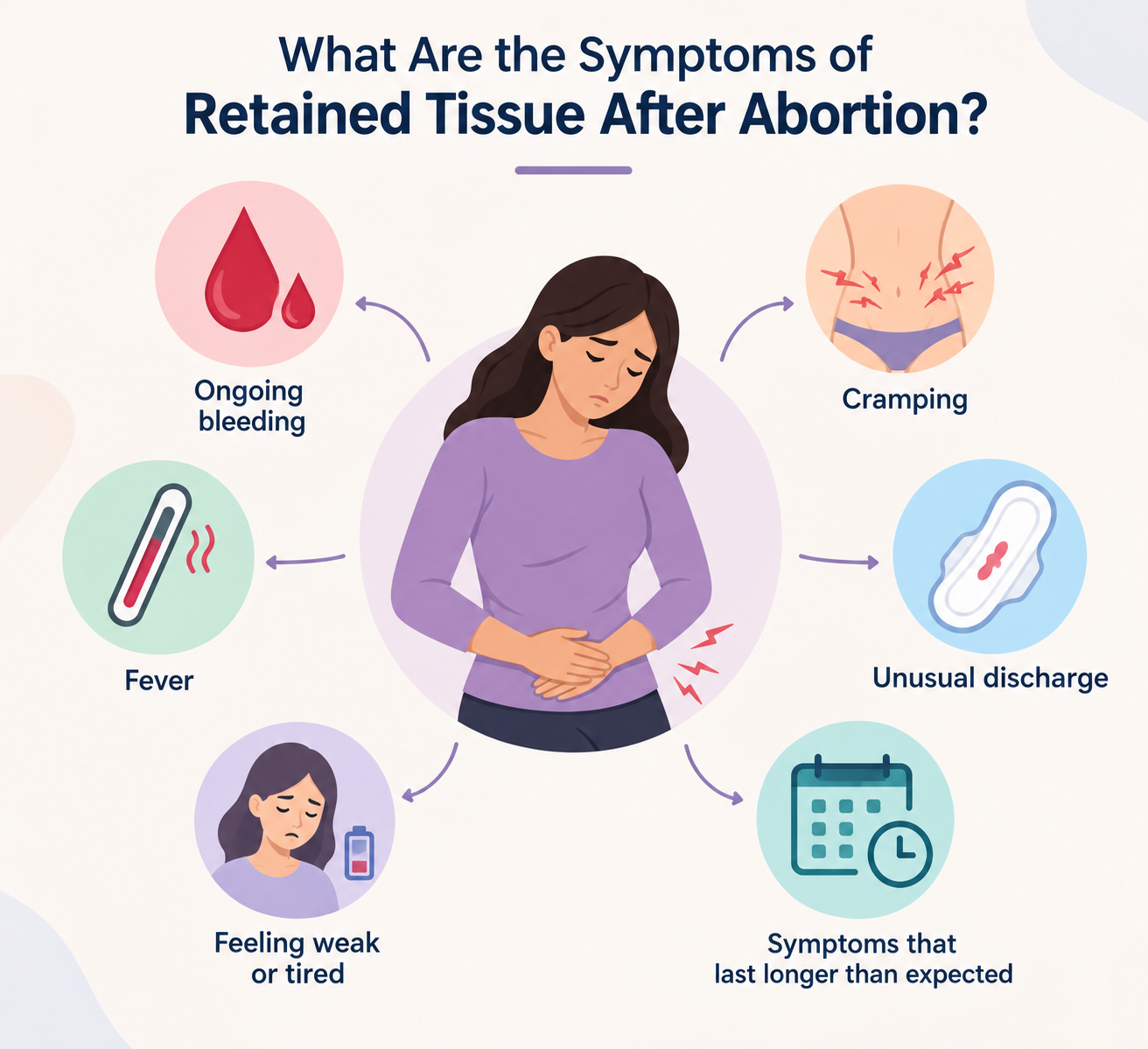
Possible symptoms include:
Prolonged or Increasing Vaginal Bleeding
Bleeding after an abortion can normally continue for some time. However, bleeding that becomes heavier, does not improve as expected, or is accompanied by weakness, dizziness, or significant pain should be evaluated.
Retained tissue can contribute to continued or heavy bleeding.
Persistent or Worsening Pelvic Pain
Cramping is common after an abortion, particularly during the early part of recovery.
Pain that remains severe, becomes worse rather than better, or is not adequately relieved should not simply be assumed to be normal recovery.
Fever or Chills
Fever, chills, feeling significantly unwell, or other symptoms of infection can require prompt medical assessment.
WHO identifies fever or chills, foul-smelling discharge, abdominal or pelvic pain, prolonged bleeding or spotting, and uterine tenderness among possible signs associated with post-abortion infection.
Foul-Smelling Vaginal Discharge
An unusual or offensive vaginal odor, particularly when combined with pelvic pain or fever, can be a warning sign of infection.
Pregnancy Symptoms That Continue
Some pregnancy symptoms may take time to disappear after an abortion because pregnancy hormones do not immediately return to pre-pregnancy levels.
However, continued pregnancy symptoms or a persistently positive pregnancy test may warrant follow-up to determine whether the abortion was complete or whether another condition is present.
What Is Normal After an Abortion?
Understanding normal recovery can make it easier to recognize symptoms that deserve attention.
After an abortion, it is common to experience:
- Vaginal bleeding or spotting
- Cramping
- Temporary nausea or digestive symptoms
- Tiredness
- Breast tenderness
- Emotional changes
Bleeding can last for several weeks after a medical or surgical abortion, although the amount should generally decrease over time.
For a more detailed explanation of expected recovery, review this guide to recovery after an abortion week by week.
The important distinction is the direction of your symptoms. Symptoms that gradually improve are generally different from symptoms that become increasingly severe or are accompanied by signs of infection or significant blood loss.
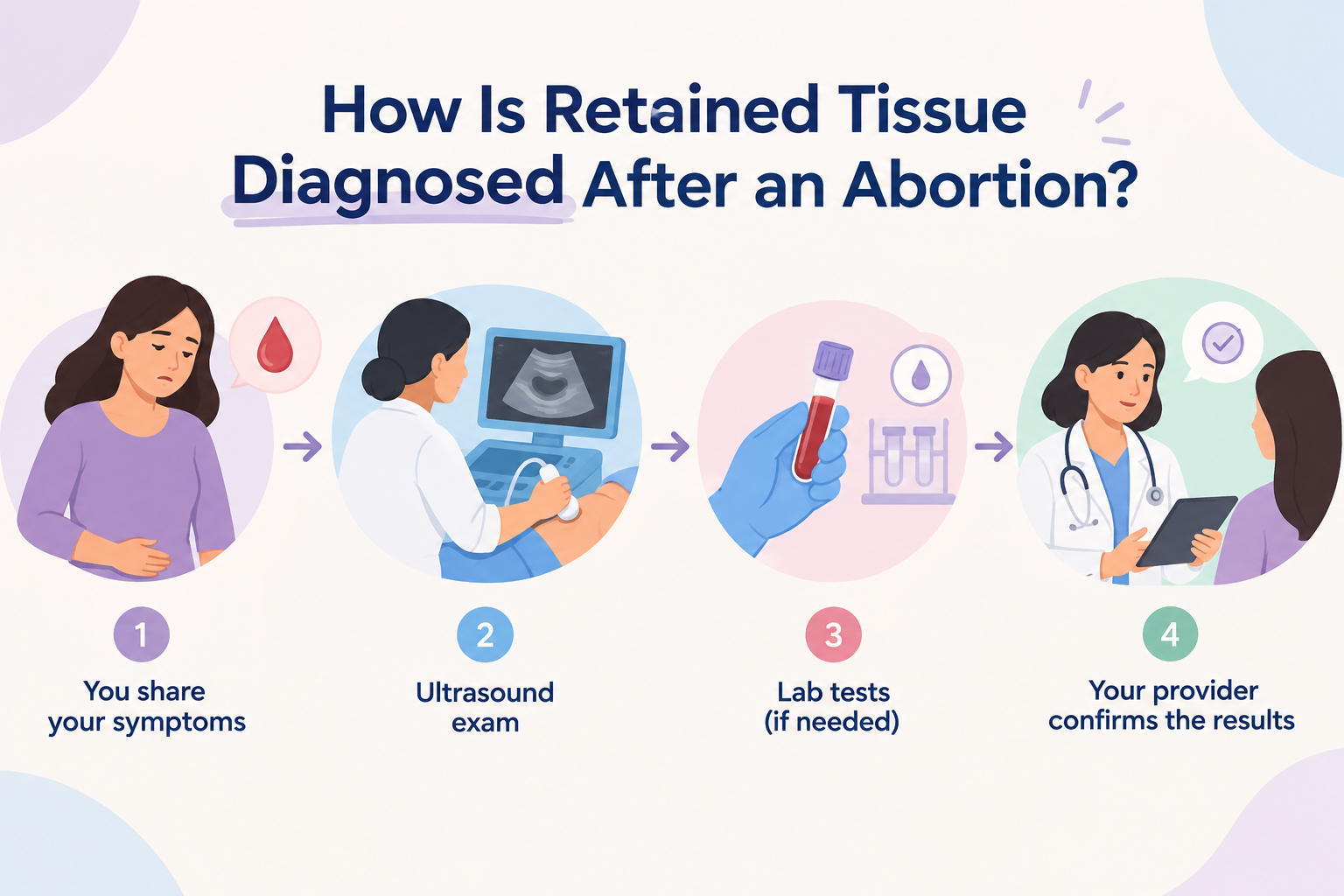
How Do You Know If Tissue Is Still in the Uterus?
Symptoms alone cannot reliably confirm retained tissue.
A healthcare professional may consider:
- Your symptoms and how they have changed
- The timing of the abortion
- The type of abortion performed
- A physical examination when appropriate
- Pregnancy testing
- Blood testing in selected situations
- Ultrasound when clinically indicated
Ultrasound can sometimes help evaluate the uterus, but its findings must be interpreted in context. WHO specifically notes that ultrasound appearances can correlate poorly with retained products after abortion, so an ultrasound finding by itself does not necessarily establish that treatment is required.
If you are unsure whether your abortion was complete, you can learn more about how to confirm whether an abortion pill worked.
Can Retained Tissue Happen After Abortion Pills?
Yes. An incomplete abortion is a recognized possible complication of abortion, including medication abortion.
However, having bleeding, cramping, or passing clots after abortion pills does not automatically mean tissue has been retained.
Medication abortion normally causes uterine contractions and bleeding as pregnancy tissue leaves the uterus. If the process is incomplete, additional evaluation may be needed.
If you are concerned that the abortion pills did not completely work, see the information on what to do when abortion pills don’t work.
You can also review guidance about incomplete abortion signs, symptoms, and treatment for a more focused explanation.
What Happens If Retained Tissue Is Suspected?
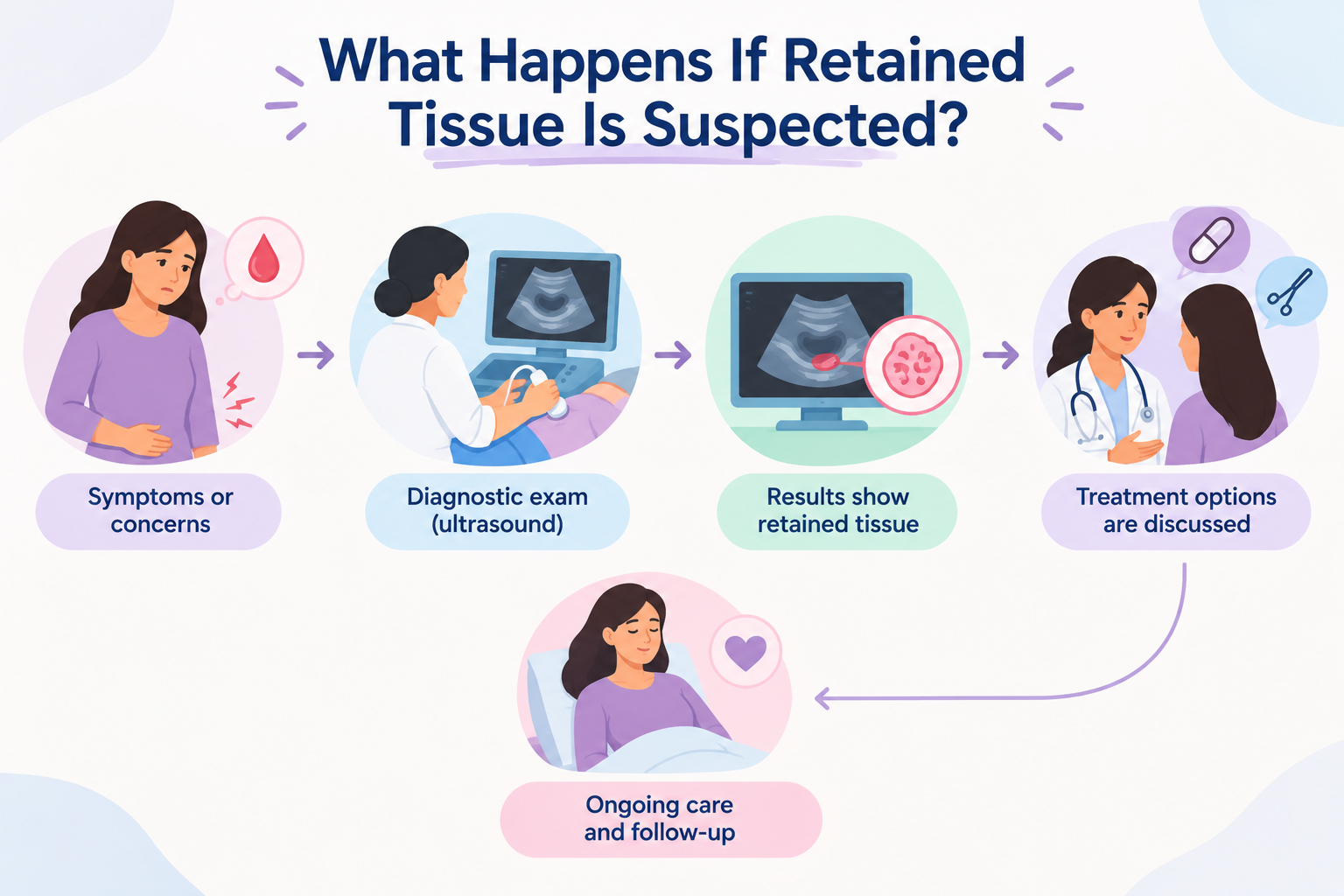
The next step depends on your symptoms, examination findings, how much tissue may remain, whether there is infection or significant bleeding, and your overall clinical situation.
Possible approaches can include:
Observation
In some situations, a healthcare professional may recommend monitoring because remaining tissue can pass naturally.
This approach is not appropriate for everyone. Heavy bleeding, infection, significant pain, or other concerning findings may require active treatment.
Medication
Medication may sometimes be used to help the uterus expel remaining tissue. The specific approach depends on the circumstances and should be determined by a qualified healthcare professional.
Uterine Aspiration or Other Procedure
If tissue does not pass, or if there is significant bleeding, infection, or another clinical concern, a procedure may be recommended to remove remaining tissue.
WHO guidance states that treatment should be based on the clinical situation and that vacuum aspiration is used when uterine evacuation is required in relevant circumstances.
The fact that a procedure may be discussed does not mean every person with suspected retained tissue needs surgery.
Can Retained Tissue Go Away on Its Own?
Sometimes remaining pregnancy tissue can pass without a procedure.
Whether waiting is appropriate depends on factors such as symptoms, bleeding, infection risk, and clinical findings. Some people may be monitored, while others need medication or a procedure.
A healthcare professional can help determine which approach is appropriate rather than relying on bleeding alone as evidence that everything has passed.
When Is Retained Tissue After Abortion an Emergency?
Seek urgent medical care if you experience symptoms such as:
- Very heavy or rapidly increasing bleeding
- Severe or worsening abdominal or pelvic pain
- Fainting or feeling close to fainting
- Significant dizziness or weakness
- Fever or feeling seriously unwell
- Foul-smelling vaginal discharge together with pain or fever
- Symptoms suggesting substantial blood loss
WHO’s clinical handbook emphasizes prompt evaluation of significant post-abortion complications, including hemorrhage and suspected infection.
If you believe you may be experiencing an emergency, seek emergency medical care rather than waiting for an outpatient appointment.
For additional information, see the guide on when to go to the ER after abortion pills.
How Is Retained Tissue Treated?
Treatment is individualized.
A healthcare professional may recommend observation, medication, or uterine evacuation depending on the situation.
Treatment decisions can depend on:
- Amount and pattern of bleeding
- Severity of pain
- Evidence of infection
- Pregnancy-related findings
- Whether tissue appears to remain
- Your overall health and stability
- Your preferences when more than one medically appropriate option exists
If an infection is associated with retained tissue, treatment may require both management of the infection and removal of the retained tissue when clinically indicated. WHO notes that clinically unstable patients with infection and suspected retained tissue should receive appropriate treatment without unnecessary delay.
What Happens After Treatment?
After treatment, your healthcare team may provide instructions about bleeding, pain, warning signs, and follow-up.
Depending on the circumstances, follow-up may involve:
- Monitoring symptoms
- A pregnancy test
- Blood testing
- Ultrasound or another examination when clinically indicated
- Reviewing whether bleeding and pain are improving
WHO states that routine follow-up is not necessary after every uncomplicated abortion, but an optional follow-up visit can be offered when there are medical concerns or other reasons for additional support.
What If You Are Still Bleeding After an Abortion?
Bleeding alone does not prove that retained tissue is present.
After an abortion, bleeding can continue for several weeks and should generally become lighter over time. NHS guidance recommends seeking medical advice when pain or bleeding is not improving within a few days, when pregnancy symptoms continue, or when there are signs of infection.
If you are specifically concerned about bleeding after medication abortion, review what to know about bleeding after the abortion pill.
What If You Have No Bleeding After Misoprostol?
Very little or no bleeding after completing a medication-abortion regimen can be a reason to contact your abortion provider for guidance.
It does not automatically prove that the abortion failed or that retained tissue is present. Other possibilities need to be considered, including an ongoing pregnancy or ectopic pregnancy.
For more information, see what to do when there is no bleeding after misoprostol.
If there is severe pain, fainting, significant dizziness, or other emergency symptoms, seek urgent medical evaluation.
How Is Retained Tissue Different From an Ectopic Pregnancy?
Retained tissue and ectopic pregnancy are different conditions.
Retained tissue involves pregnancy-related tissue remaining inside the uterus after a pregnancy ends.
An ectopic pregnancy occurs when a pregnancy develops outside the uterus. Abortion pills do not treat an ectopic pregnancy, which requires appropriate medical evaluation and treatment.
Symptoms can overlap, so severe or unusual pain after an abortion should not automatically be attributed to retained tissue.
If you are concerned about this possibility, review ectopic pregnancy and abortion pills.
When Should You Contact Your Abortion Provider?
Contact your healthcare provider if:
- Bleeding is not improving as expected
- Pain persists or becomes worse
- You develop fever or chills
- You notice unusual or foul-smelling discharge
- Pregnancy symptoms continue
- You are uncertain whether the abortion was complete
- A pregnancy test remains positive when your provider expected it to become negative
- You simply feel that something is not right
You do not need to determine the cause yourself before asking for medical advice.
A provider can review your symptoms and determine whether monitoring, testing, or treatment is appropriate.
How Serenity Choice Health Can Help
Serenity Choice Health can provide information and healthcare support for people who have questions or concerns following abortion care.
If you are experiencing persistent bleeding, pelvic pain, or other symptoms after an abortion, a healthcare professional can help determine whether your symptoms are consistent with expected recovery or require further evaluation.
You can also learn more about what is included in Serenity Choice Health abortion care and why patients choose Serenity Choice Health.
If you have symptoms that could indicate an emergency, do not delay emergency medical care while waiting for a routine appointment.
Key Takeaway
Retained tissue after abortion means pregnancy-related tissue remains in the uterus after the pregnancy has ended. Possible signs include persistent or increasing bleeding, ongoing pelvic pain, fever, foul-smelling discharge, or other symptoms that do not follow an expected recovery pattern.
At the same time, bleeding and cramping can be normal after an abortion, so symptoms alone cannot confirm retained tissue.
When symptoms persist, worsen, or raise concern, medical evaluation can help determine what is happening and whether observation, medication, or a procedure is appropriate. Emergency symptoms such as severe pain, heavy bleeding, fainting, or significant weakness require urgent medical attention.
FAQ Section
What are the signs of retained tissue after abortion?
Possible signs include prolonged or increasing bleeding, persistent or worsening pelvic pain, fever or chills, foul-smelling discharge, or symptoms suggesting that the abortion may not have been complete. These symptoms can have other causes, so evaluation may be necessary.
Can retained tissue after abortion pass naturally?
Sometimes remaining pregnancy tissue can pass naturally. Whether waiting is appropriate depends on symptoms and clinical findings. Heavy bleeding, infection, severe pain, or other concerning symptoms may require active treatment.
Does retained tissue always require surgery?
No. Management can include observation, medication, or a procedure depending on the individual’s symptoms and clinical situation. A healthcare professional can determine which options are appropriate.
How is retained tissue diagnosed after an abortion?
Evaluation may include a review of symptoms, examination, pregnancy testing, blood testing, or ultrasound when appropriate. Ultrasound findings must be interpreted in context and do not by themselves always establish that retained tissue requires treatment.
How long can bleeding continue after an abortion?
Bleeding can continue for several weeks after an abortion, particularly after a medication abortion. The pattern and amount should be considered along with other symptoms. Bleeding that becomes heavier or is accompanied by severe pain, weakness, dizziness, or infection symptoms should be evaluated.
When should I seek emergency care after an abortion?
Seek urgent medical care for severe or worsening pain, very heavy bleeding, fainting or near-fainting, significant dizziness or weakness, or symptoms suggesting a serious infection or blood loss.

Dr. James Carter is a board-certified physician and lead clinician at Serenity Choice Health, specializing in reproductive health access and medication abortion protocols. With over 20+ years of experience, he combines clinical expertise with patient-centered care to ensure safe, compassionate, and confidential reproductive healthcare.