

The short answer is yes. While condoms significantly lower the risk of many sexually transmitted infections, they cannot provide complete protection in every situation. Understanding how condoms work and their limitations can help you make informed decisions about your sexual health.
Condoms are one of the most effective tools for reducing the spread of sexually transmitted infections (STIs), but many people still wonder: Can you get an STI while using condoms? If you’re not entirely sure what distinguishes an STI from an STD or how these terms are used, our guide on the difference between an STI and an STD is a helpful starting point.
At Serenity Choice Health, we believe accurate information empowers people to protect themselves and their partners through safer sex practices and regular STI testing.
Can You Get an STI While Using Condoms?
Yes.
Using a condom greatly reduces the chance of contracting many STIs, but it does not eliminate the risk entirely. Condoms work by creating a barrier that prevents the exchange of bodily fluids during vaginal, anal, and oral sex. This makes them highly effective against infections that spread primarily through semen, vaginal fluids, rectal fluids, or blood.
However, some infections spread through skin-to-skin contact, which means they can infect areas not covered by a condom. The key takeaway is that condoms reduce risk they do not guarantee complete protection.
How Do Condoms Help Prevent STIs?
When used correctly every time you have sex, condoms help by:
- Blocking the exchange of bodily fluids
- Reducing direct contact with infected tissues
- Lowering exposure to bacteria and viruses
- Decreasing the overall likelihood of STI transmission
Both external (male) condoms and internal (female) condoms offer protection when used properly. Consistent and correct use is just as important as using a condom at all.
Which STIs Are Condoms Most Effective Against?
Condoms provide strong protection against infections primarily spread through bodily fluids.
Chlamydia
Chlamydia spreads through vaginal, anal, and oral sex. Proper condom use significantly lowers the chance of transmission.
Gonorrhea
Condoms are highly effective at reducing gonorrhea transmission during penetrative sex.
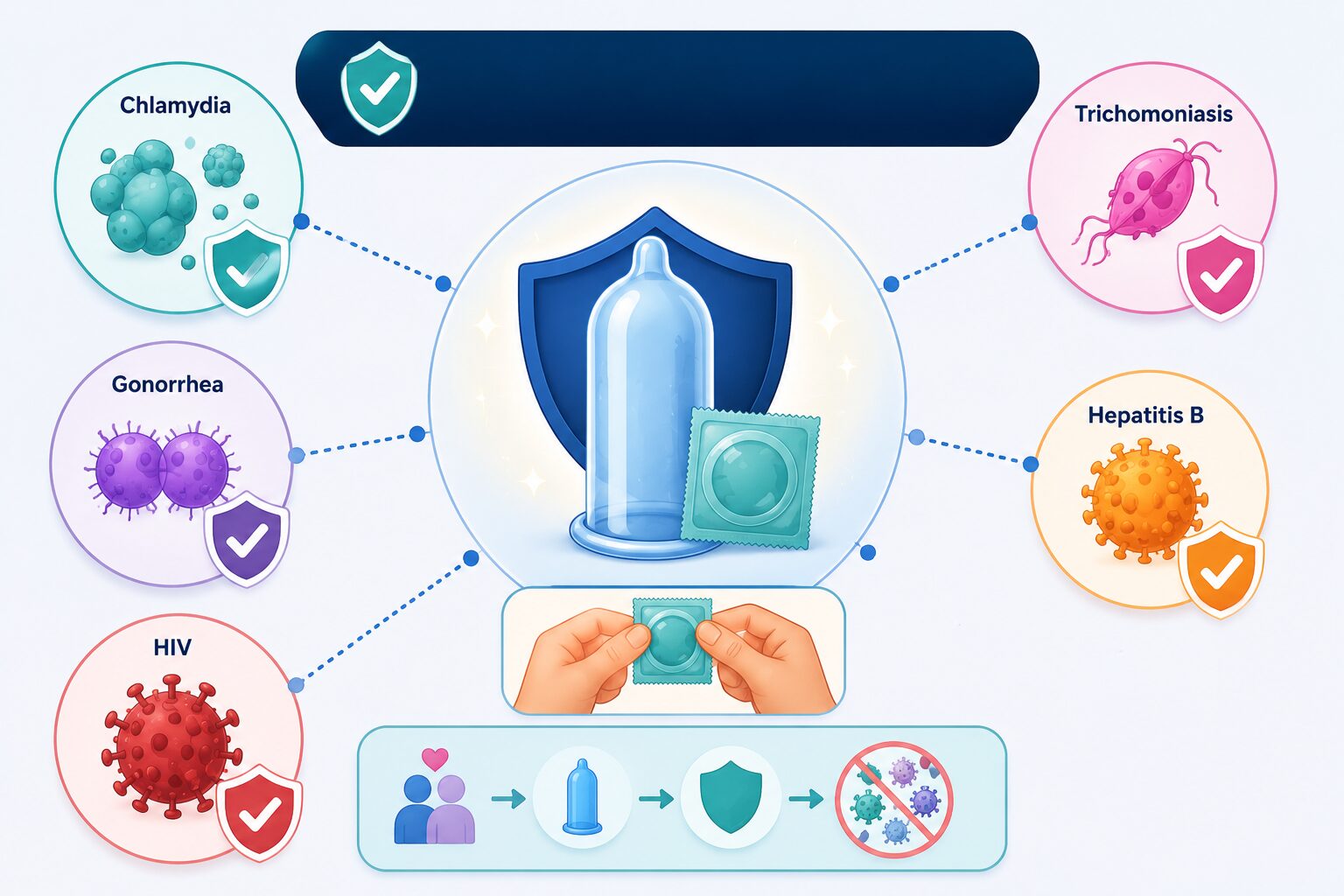
HIV
Correct condom use dramatically reduces the risk of HIV transmission by preventing exposure to infected bodily fluids.
Trichomoniasis
Barrier protection lowers the likelihood of spreading this common parasitic infection.
Hepatitis B
Because Hepatitis B can spread through blood and sexual fluids, condoms reduce the risk during sexual activity.
Which STIs Can Still Spread Despite Condom Use?
Some infections spread through skin-to-skin contact rather than bodily fluids.
Human Papillomavirus (HPV)
HPV may infect skin around the genitals that a condom does not fully cover.
Genital Herpes (HSV)
Herpes sores can appear on areas outside the protected region, allowing transmission through skin contact.
Syphilis
Syphilis sores may develop anywhere in the genital or surrounding area. If these sores are not covered, transmission remains possible.
Molluscum Contagiosum
This viral skin infection can spread through direct skin contact, even during condom use.
Although condoms reduce the likelihood of transmission, they cannot completely eliminate exposure to uncovered skin.
Why Isn’t Condom Protection 100%?
Several factors influence how well condoms work.
Incorrect Use
Putting the condom on too late or removing it too early leaves opportunities for exposure.
Condom Breakage
Expired, damaged, or improperly stored condoms are more likely to tear.
Condom Slippage
Using the wrong size or incorrect application increases the chance of slipping during intercourse.
Skin-to-Skin Contact
Condoms only cover part of the genital area. Infections affecting nearby skin can still spread.
Oral Sex
Using condoms or dental dams during oral sex also helps reduce STI risk, yet many people skip barrier protection during oral sexual activity.
How to Use Condoms Correctly
Using condoms properly makes a significant difference in reducing STI risk. Best practices include:
- Use a new condom every time you have sex.
- Check the expiration date.
- Open the package carefully.
- Put the condom on before any genital contact.
- Use water-based or silicone-based lubricants with latex condoms.
- Hold the base during withdrawal.
- Dispose of condoms after one use.
Avoid reusing condoms or using two condoms together, as this may increase friction and the risk of tearing.
Additional Ways to Reduce Your STI Risk
Condoms work best as part of a broader sexual health strategy. You can further reduce your risk by:
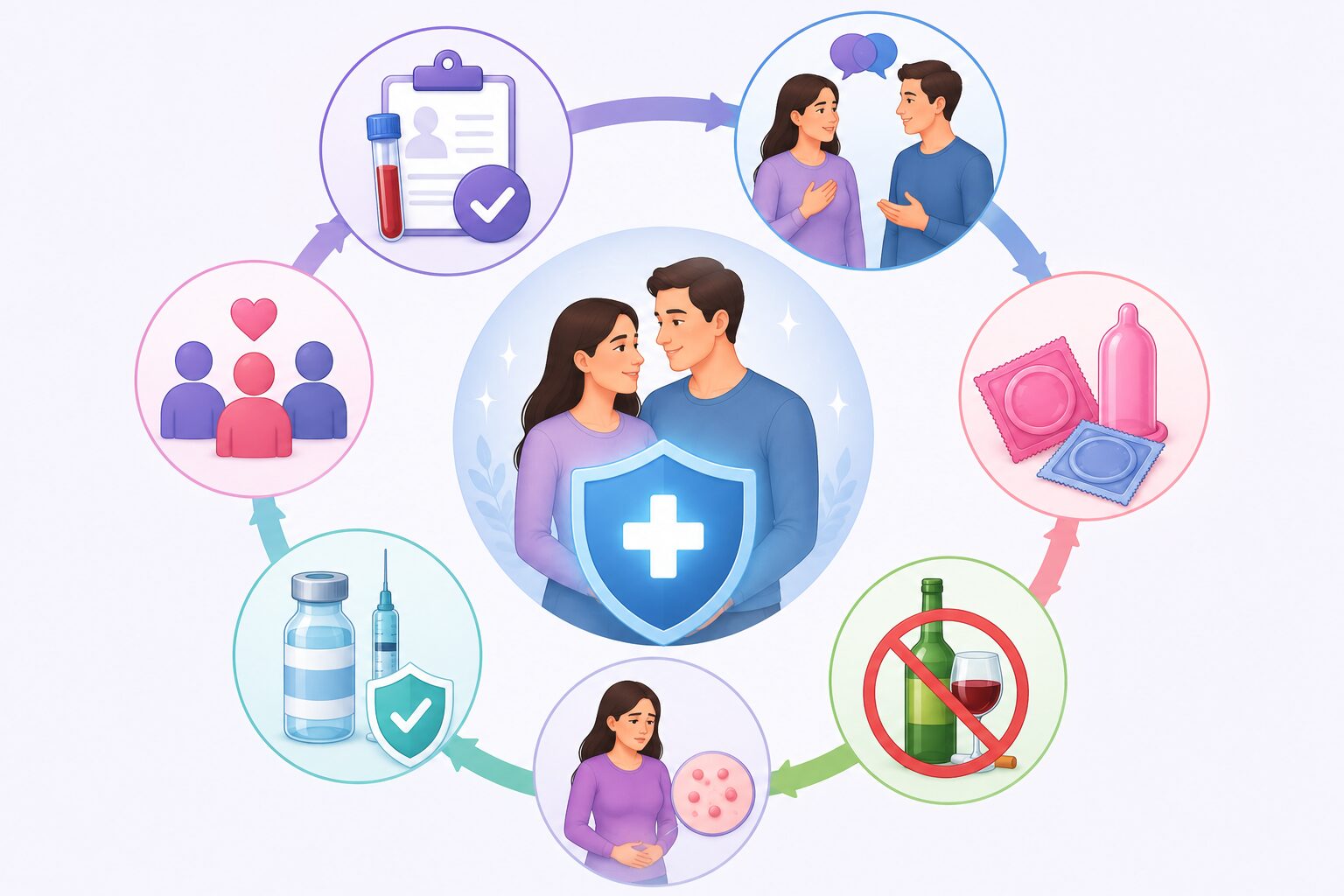
Getting regular STI screenings. Our guides on which STIs women should be tested for and how often women should get STI testing give clear recommendations based on age and risk level.
- Limiting sexual partners when appropriate.
- Having honest conversations about sexual health with partners.
- Receiving recommended vaccines, such as HPV and Hepatitis B vaccines.
- Avoiding sexual activity when symptoms like sores, unusual discharge, or pain are present.
- Combining prevention methods provides greater protection than relying on a single strategy.
Should You Get Tested After Protected Sex?
Many people assume testing isn’t necessary if a condom was used. However, STI testing is still recommended if:
- You have symptoms.
- A condom broke or slipped.
Your partner tests positive for an STI our guide on what to do when your partner tests positive for an STI walks through the recommended steps.
- You have a new sexual partner.
- You have multiple partners.
- You’re due for routine sexual health screening.
Many STIs cause no symptoms, especially in their early stages, which is why regular testing remains the only reliable way to know your status. If you’re unsure how long to wait before testing after a specific encounter, our guide on how soon after exposure to get tested for an STI breaks down the window periods for each common infection. Our STI and STD testing services are available for anyone who wants prompt, confidential results.
When Should You See a Healthcare Provider?
Schedule an STI evaluation if you experience any of the following:
Burning during urination our guide on whether it’s a UTI or an STI can help you identify the likely cause before your appointment.
Genital sores or blisters
Unusual vaginal or penile discharge, or unexplained genital itching see our guide on vaginal itching, burning, or odor and when to get checked for a full breakdown of what these symptoms can indicate.
Pelvic pain or testicular pain
Pain during sex our guide on pain during sex: common causes and when to see a provider covers infections alongside other causes.
A partner informs you they tested positive
Our women’s primary care services include confidential STI evaluation and follow-up care as part of routine reproductive health visits. Early diagnosis allows for prompt treatment and helps reduce the risk of complications and transmission.
The Bottom Line
So, can you get an STI while using condoms? Yes but your risk is generally much lower compared to having sex without protection. Condoms remain one of the best methods for reducing STI transmission when used consistently and correctly. However, they are not foolproof, particularly against infections spread through skin-to-skin contact.
If you have concerns about a recent sexual encounter, are experiencing symptoms, or simply want peace of mind, regular STI testing is an important part of protecting your health. Serenity Choice Health offers confidential, compassionate STI testing and sexual health services to help you make informed decisions and receive appropriate care.
Ready to take charge of your sexual health? Book a confidential appointment with Serenity Choice Health to schedule STI testing and receive personalized care from experienced healthcare professionals.
Frequently Asked Questions
Can you still get an STI if you used a condom?
Yes. Condoms significantly reduce the risk of many STIs but cannot completely prevent infections spread through uncovered skin, such as HPV and herpes.
Are condoms 100% effective against STIs?
No. When used correctly, condoms are highly effective, but no prevention method offers complete protection against every sexually transmitted infection.
Which STI is most likely to spread despite condom use?
Skin-to-skin infections such as HPV, genital herpes, and syphilis may still spread if infected skin is not covered by the condom.
Should I get tested if I had protected sex?
Yes, especially if you have symptoms, a condom broke, your partner has an STI, or you’re due for routine screening.
Do condoms prevent chlamydia and gonorrhea?
Yes. Condoms are highly effective at reducing the transmission of chlamydia and gonorrhea when used consistently and correctly.
Can oral sex spread STIs even with condoms?
Yes. While condoms reduce the risk during oral sex, infections can still spread if barrier protection isn’t used consistently or if infected skin remains exposed.

Dr. James Carter is a board-certified physician and lead clinician at Serenity Choice Health, specializing in reproductive health access and medication abortion protocols. With over 20+ years of experience, he combines clinical expertise with patient-centered care to ensure safe, compassionate, and confidential reproductive healthcare.