

Not having health insurance shouldn’t prevent you from accessing reliable birth control. Whether you’re between insurance plans, uninsured, or paying out of pocket, there are still many ways to receive safe, effective contraception at a price that fits your budget.
If you’re searching for birth control without insurance, you probably have questions about cost, where to go, and which method offers the best value. Fortunately, there are affordable options ranging from birth control pills to long-acting reversible contraceptives, and many healthcare providers offer flexible payment options or low-cost family planning services. Our birth control and contraceptive services are available to patients with and without insurance, with personalized guidance on every option.
This guide explains your choices, what you can expect to pay, and how to find affordable reproductive healthcare.
Can You Get Birth Control Without Insurance?
Yes.
You do not need health insurance to receive birth control. Many healthcare providers, women’s health clinics, and telehealth services offer contraception on a self-pay basis.
Depending on your chosen method, you may need:
- A medical consultation
- A prescription
- A pharmacy visit
- An in-office procedure for long-acting methods
Even without insurance, there are numerous ways to reduce costs and receive quality reproductive healthcare. For more context on how insurance and healthcare costs intersect for reproductive services, read our guide on whether insurance covers abortion many of the same principles apply to contraception coverage.
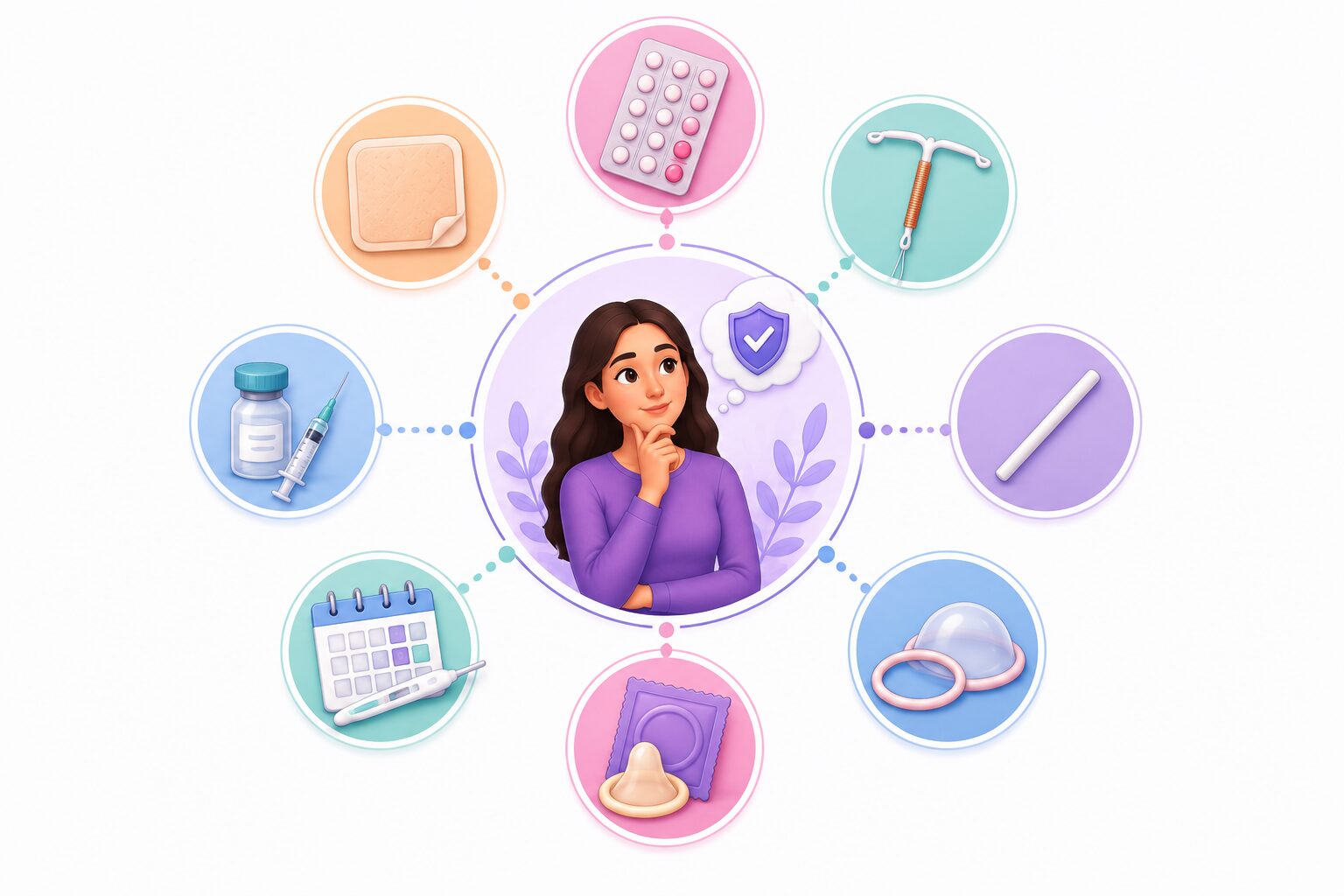
Birth Control Options Available Without Insurance
There are several contraceptive methods available for people paying out of pocket.
Birth Control Pills
Birth control pills are among the most commonly used contraceptive methods.
Benefits include:
- Easy to start
- Highly effective when taken correctly
- Can help regulate menstrual cycles
- Available through many healthcare providers and telehealth services
Because there are many generic versions, birth control pills are often one of the most affordable prescription options. Read our guide on how birth control can affect your period to understand what menstrual changes are normal when starting a new hormonal method.
Birth Control Patch
The contraceptive patch delivers hormones through the skin and is changed weekly. It may be a good option for individuals who prefer not to take a daily pill.
Vaginal Ring
The vaginal ring is inserted monthly and provides continuous pregnancy prevention throughout the month. Some people appreciate the convenience of only needing to remember it once each month.
Birth Control Shot
The birth control injection is administered approximately every three months. It offers longer-lasting protection without requiring daily attention.
Birth Control Implant
A contraceptive implant is placed under the skin of the upper arm by a healthcare provider.
Benefits include:
- Long-term protection
- Very high effectiveness
- No daily maintenance
Although the upfront cost is higher without insurance, it can become cost-effective over several years.
Intrauterine Devices (IUDs)
Hormonal and copper IUDs provide some of the longest-lasting reversible contraception available.
Advantages include:
- Protection for several years
- Very high effectiveness
- Minimal ongoing maintenance
Like implants, the initial cost may be higher, but long-term expenses are often lower when spread over the lifespan of the device.
Condoms
Condoms are available without a prescription at pharmacies and many retail stores. In addition to pregnancy prevention, condoms also reduce the risk of many sexually transmitted infections, making them an important option for many individuals. Read our guide on the difference between an STI and an STD to understand what condoms help protect against and why STI prevention is a separate consideration from pregnancy prevention.
How Much Does Birth Control Cost Without Insurance?
The cost varies depending on the method, healthcare provider, and pharmacy.
Generally:
Lower Upfront Cost:
- Birth control pills
- Condoms
- Contraceptive patch
- Vaginal ring
Higher Upfront Cost:
- IUD
- Birth control implant
Although long-acting methods usually cost more initially, they often become less expensive over time because they provide protection for several years without monthly prescription costs.
Your total cost may include:
- Medical consultation
- Prescription
- Pharmacy fees
- Device insertion (if applicable)
- Follow-up appointments
Ask your healthcare provider for an estimate before beginning treatment.
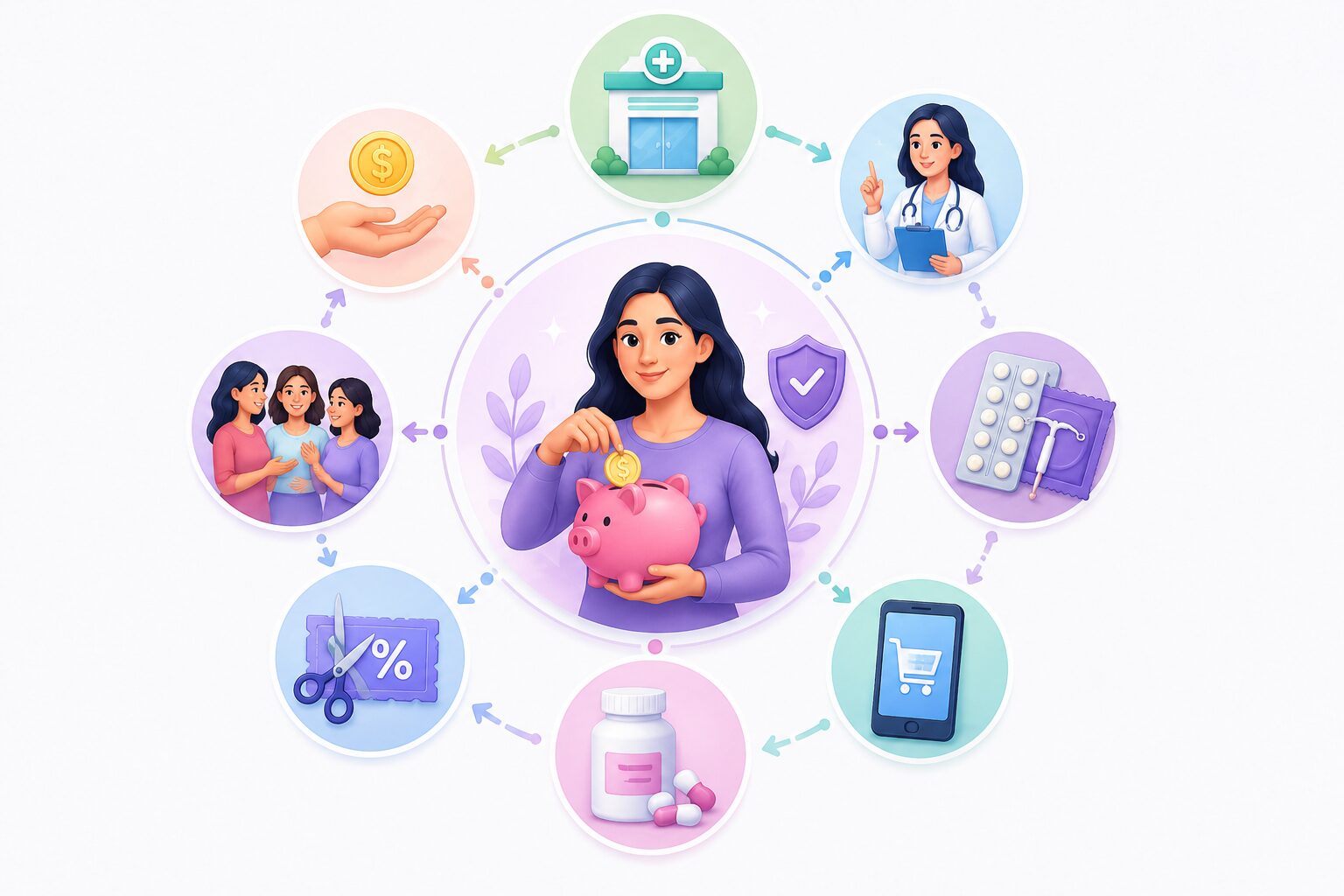
Ways to Reduce Birth Control Costs
Even if you’re paying out of pocket, there are several strategies that may help lower your expenses.
Choose Generic Medications
Many generic birth control pills provide the same effectiveness as brand-name products at a significantly lower cost.
Use Telehealth Services
Telehealth appointments may reduce transportation costs and offer convenient access to birth control prescriptions from home. Learn more about the benefits of telehealth and how virtual care makes accessing affordable birth control consultations easier than ever.
Many providers can evaluate your medical history, discuss options, and send prescriptions directly to your preferred pharmacy.
Visit Women’s Health Clinics
Many reproductive health clinics offer:
- Affordable self-pay pricing
- Family planning services
- Sliding-scale payment options
- Financial assistance programs for eligible patients
Read our guide on finding birth control near you to understand what to look for in a provider and what questions to ask about self-pay pricing.
Compare Pharmacy Prices
Prescription prices may vary between pharmacies, so comparing costs can help you find more affordable options.
Ask About Payment Options
Some clinics offer installment plans or self-pay discounts for patients without insurance.
Is Telehealth a Good Option for Birth Control?
For many people, yes.
Telehealth has made contraception more accessible than ever before.
During a virtual appointment, a healthcare provider can:
- Review your medical history
- Discuss your health goals
- Recommend suitable birth control methods
- Answer questions about side effects
- Send prescriptions electronically
However, methods such as IUDs and implants still require an in-person visit for placement.
How to Choose the Right Birth Control Without Insurance
The most affordable option isn’t always the best option.
When choosing birth control, consider:
Your Budget
Think about both immediate costs and long-term expenses. If you need birth control quickly, read our guide on what to do if you need birth control quickly for fast, affordable options available to you.
Your Lifestyle
Ask yourself:
- Will you remember a daily pill?
- Would you prefer a method that lasts months or years?
- Do you want a hormone-free option?
Medical History
Certain health conditions may make some contraceptive methods more appropriate than others. Read our guide on common birth control side effects to understand how different methods affect the body before you decide. If acne is a concern, our guide on the best birth control for acne explains which hormonal methods may help.
A qualified healthcare provider can help determine which option is safest for you.
Family Planning Goals
Consider whether you’re looking for short-term contraception or a long-term method that requires little maintenance.
When Should You See a Healthcare Provider?
A healthcare provider can help you:
- Compare birth control methods
- Understand possible side effects
- Review your medical history
- Choose the safest contraception
- Discuss future pregnancy plans
- Answer questions about switching methods
Read our guide on when to see a women’s primary care provider for a broader overview of reproductive health situations that always warrant a professional visit.
Seeking professional guidance helps ensure your chosen method fits both your health needs and your lifestyle.
Affordable Birth Control Is Within Reach
Lack of insurance doesn’t mean you have to go without reliable contraception.
From affordable birth control pills and condoms to long-acting methods like IUDs and implants, there are options for nearly every budget and lifestyle. Telehealth services, self-pay clinics, and family planning providers have expanded access to reproductive healthcare, making it easier than ever to receive personalized care.
At Serenity Choice Health, we provide compassionate, confidential reproductive healthcare with personalized birth control counseling. Your visit is fully confidential read our guide on protecting your health privacy to understand how your information is kept safe. Whether you’re interested in short-term contraception or a long-lasting solution, our experienced healthcare team can help you explore affordable options that fit your health goals and budget. Our women’s primary care services integrate birth control counseling into comprehensive reproductive healthcare.
Contact Serenity Choice Health today to schedule a consultation and learn more about your birth control choices.
FAQ Section
Can I get birth control without insurance?
Yes. Many healthcare providers, women’s health clinics, and telehealth services offer birth control for patients paying out of pocket.
What is the cheapest birth control without insurance?
Generic birth control pills and condoms are often among the most affordable options. Your total cost depends on the method, provider, and pharmacy.
Can telehealth prescribe birth control?
Yes. Many licensed healthcare providers offer virtual consultations and can prescribe birth control pills, patches, or rings when medically appropriate.
Are IUDs worth the cost without insurance?
Although IUDs have higher upfront costs, they provide long-term pregnancy prevention for several years, making them cost-effective for many people over time.
Do I need an annual exam to get birth control?
Requirements vary depending on the method and your health history. Your healthcare provider can explain whether an examination is recommended before starting contraception.
How do I know which birth control method is right for me?
A healthcare provider can review your medical history, lifestyle, reproductive goals, and personal preferences to recommend the safest and most appropriate contraceptive option.

Dr. James Carter is a board-certified physician and lead clinician at Serenity Choice Health, specializing in reproductive health access and medication abortion protocols. With over 20+ years of experience, he combines clinical expertise with patient-centered care to ensure safe, compassionate, and confidential reproductive healthcare.