
If you have an adrenal disorder, your medical history is especially important to discuss before taking mifepristone for a medication abortion.
Mifepristone is used with misoprostol to end an intrauterine pregnancy through 70 days of gestation under the FDA-approved regimen. While mifepristone primarily works by blocking progesterone, it also has activity at glucocorticoid receptors. This matters because the body’s adrenal glands produce cortisol, and some people rely on corticosteroid medicines when their adrenal glands cannot provide enough of these hormones.
Current FDA information states that people with problems involving the adrenal glands, including chronic adrenal failure, should not take mifepristone with misoprostol for medical termination of pregnancy. The current labeling also lists concurrent long-term corticosteroid therapy as a contraindication because of the risk of acute adrenal insufficiency.
This is why an adrenal condition should never be left off your medical history when you are discussing medication abortion.
Why Do Adrenal Disorders Matter Before Taking Mifepristone?
Your adrenal glands sit above your kidneys and produce several hormones, including cortisol.
Cortisol helps the body respond to physical stress and plays an important role in maintaining blood pressure, blood glucose, metabolism, and other functions.
Some people have adrenal conditions that reduce their body’s ability to produce adequate cortisol. Others receive corticosteroid medicines for medical conditions, and long-term treatment can affect the body’s normal adrenal response.
Mifepristone has antiglucocorticoid activity. In simple terms, it can interfere with the action of glucocorticoids. That is why the medication’s effect on the adrenal system is particularly important for people who have adrenal insufficiency or depend on corticosteroid treatment.
The concern is not simply that mifepristone is another medicine added to a medication list. It is related to how mifepristone can affect glucocorticoid activity.
Can You Take Mifepristone if You Have Chronic Adrenal Failure?
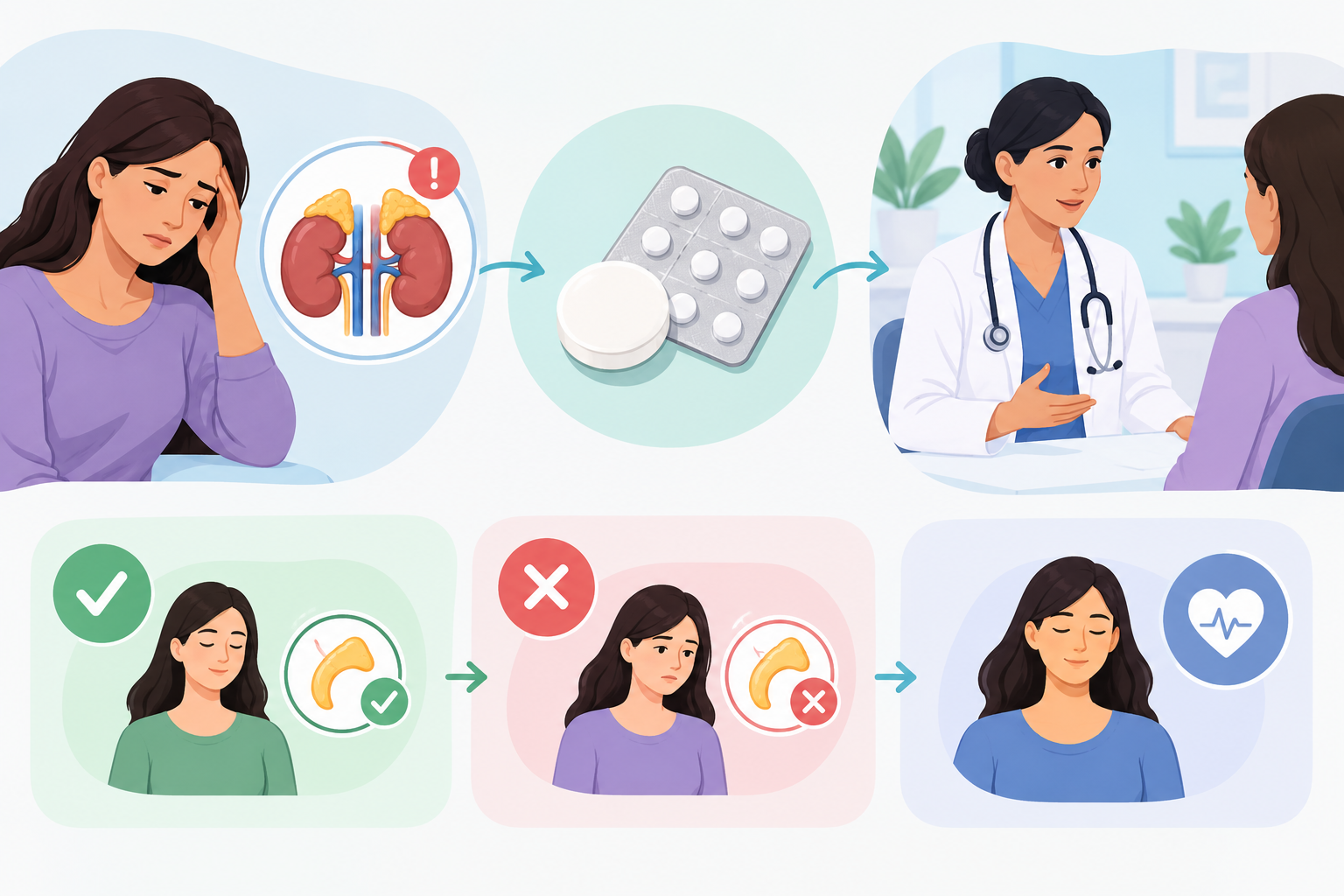
For the FDA-approved medication-abortion regimen, chronic adrenal failure is a contraindication.
The FDA states that people with problems involving the adrenal glands should not take mifepristone with misoprostol for medical termination of pregnancy. Current mifepristone labeling specifically identifies chronic adrenal failure because of the risk of acute adrenal insufficiency.
This means someone with a known adrenal disorder should disclose the condition before being prescribed mifepristone.
Do not try to determine eligibility by comparing your symptoms with an online list. The exact diagnosis, medications, treatment history, and current medical status need to be reviewed by an appropriate healthcare professional.
How Does Mifepristone Affect the Adrenal System?
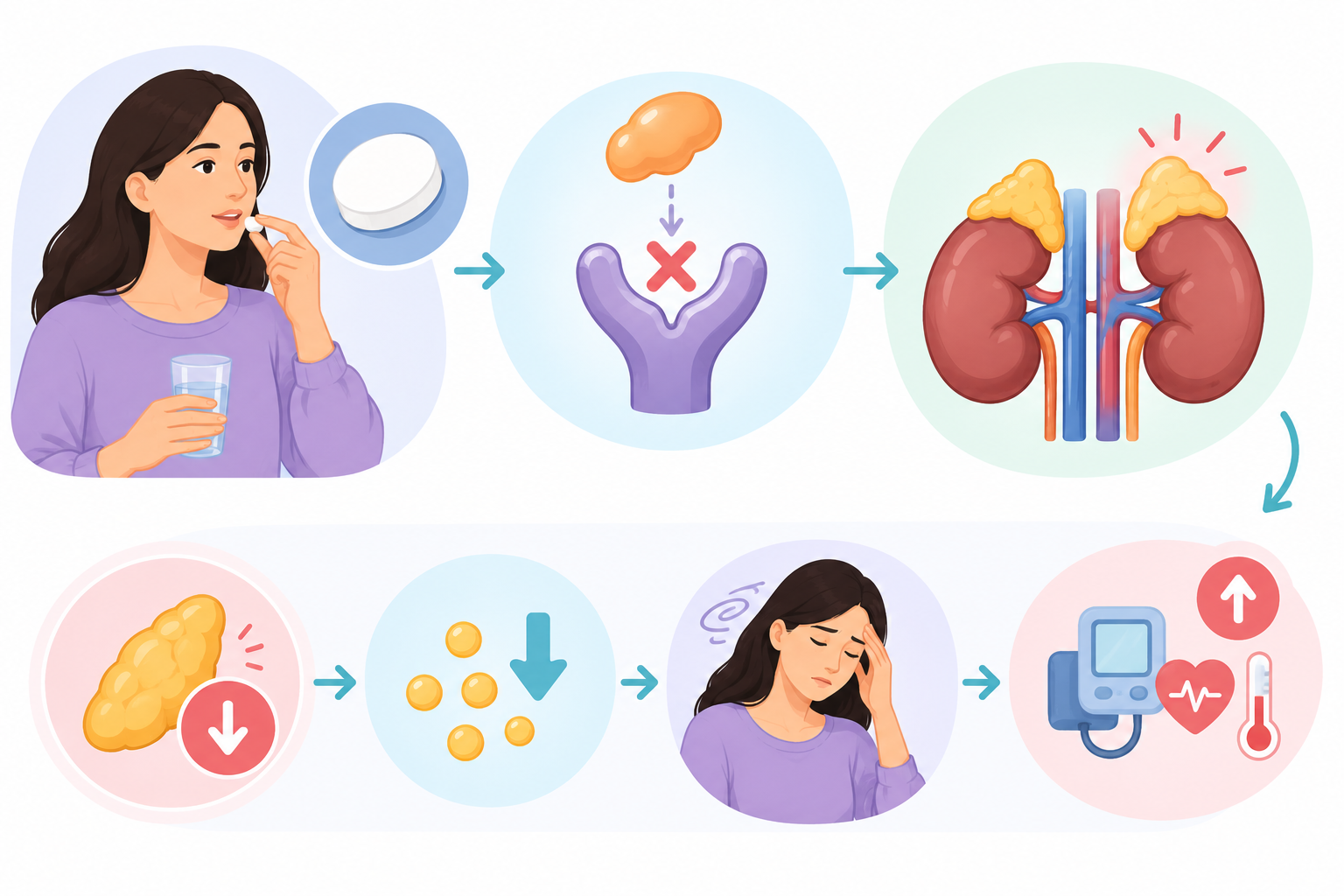
Mifepristone blocks progesterone receptors, which is central to its role in medication abortion.
However, it also blocks glucocorticoid receptors. Glucocorticoids include cortisol and corticosteroid medicines that act through these receptors.
For most people, this additional pharmacologic activity may not be the main issue they think about when researching medication abortion. But for someone with chronic adrenal failure or someone dependent on long-term corticosteroid therapy, it becomes an important safety consideration.
Current prescribing information lists both chronic adrenal failure and concurrent long-term corticosteroid therapy as contraindications for the mifepristone–misoprostol medication-abortion regimen.
That is why your medical history matters before treatment begins.
What Is the Connection Between Adrenal Insufficiency and Cortisol?
Adrenal insufficiency occurs when the body does not produce enough cortisol to meet its needs.
Cortisol is particularly important during physical stress. The body normally increases cortisol availability when it is dealing with illness, injury, or other significant stressors.
Someone with adrenal insufficiency may therefore need prescribed glucocorticoid replacement.
If mifepristone blocks glucocorticoid receptors, the issue is not necessarily that the body suddenly stops producing cortisol. Instead, the medication can interfere with the biological effects of glucocorticoids.
That distinction is important because a normal or elevated blood cortisol level does not necessarily rule out the effects of mifepristone’s glucocorticoid-receptor blockade. Mifepristone labeling for other indications describes this receptor-level effect and the resulting risk of adrenal insufficiency.
For someone with an existing adrenal disorder, this is a reason for careful medical evaluation before treatment.
What If You Take Hydrocortisone for Adrenal Insufficiency?
Hydrocortisone is commonly used as glucocorticoid replacement in people who cannot produce enough cortisol.
If you take hydrocortisone because of adrenal insufficiency, tell your abortion provider before taking mifepristone.
Do not skip, reduce, or discontinue your replacement medication on your own.
Your steroid replacement may be medically necessary, and changing it without professional guidance can create a separate safety problem. The FDA-approved mifepristone labeling specifically identifies chronic adrenal failure as a contraindication for the medication-abortion regimen.
If you take hydrocortisone, your provider should know:
- The exact medication
- Your dose
- How often you take it
- Why you take it
- Whether you take additional steroids during illness or physical stress
- Whether you have ever experienced an adrenal crisis
- Whether your dose has recently changed
This information can help the healthcare team understand your medical history accurately.
What About Prednisone or Other Corticosteroids?
Prednisone, prednisolone, dexamethasone, hydrocortisone, and other corticosteroids can have glucocorticoid effects.
The important issue is not simply whether you have ever taken one of these medicines. Current labeling specifically identifies concurrent long-term corticosteroid therapy as a contraindication for the mifepristone–misoprostol regimen.
If you currently take a corticosteroid, tell the provider:
- The name of the medicine
- The dose
- How often you take it
- How long you have taken it
- Whether you are currently tapering it
- Why it was prescribed
A short course taken in the past is not automatically the same as ongoing long-term corticosteroid therapy. Your provider should determine the significance of your specific treatment rather than relying on a general internet rule.
Should You Stop Your Steroid Before Taking Mifepristone?
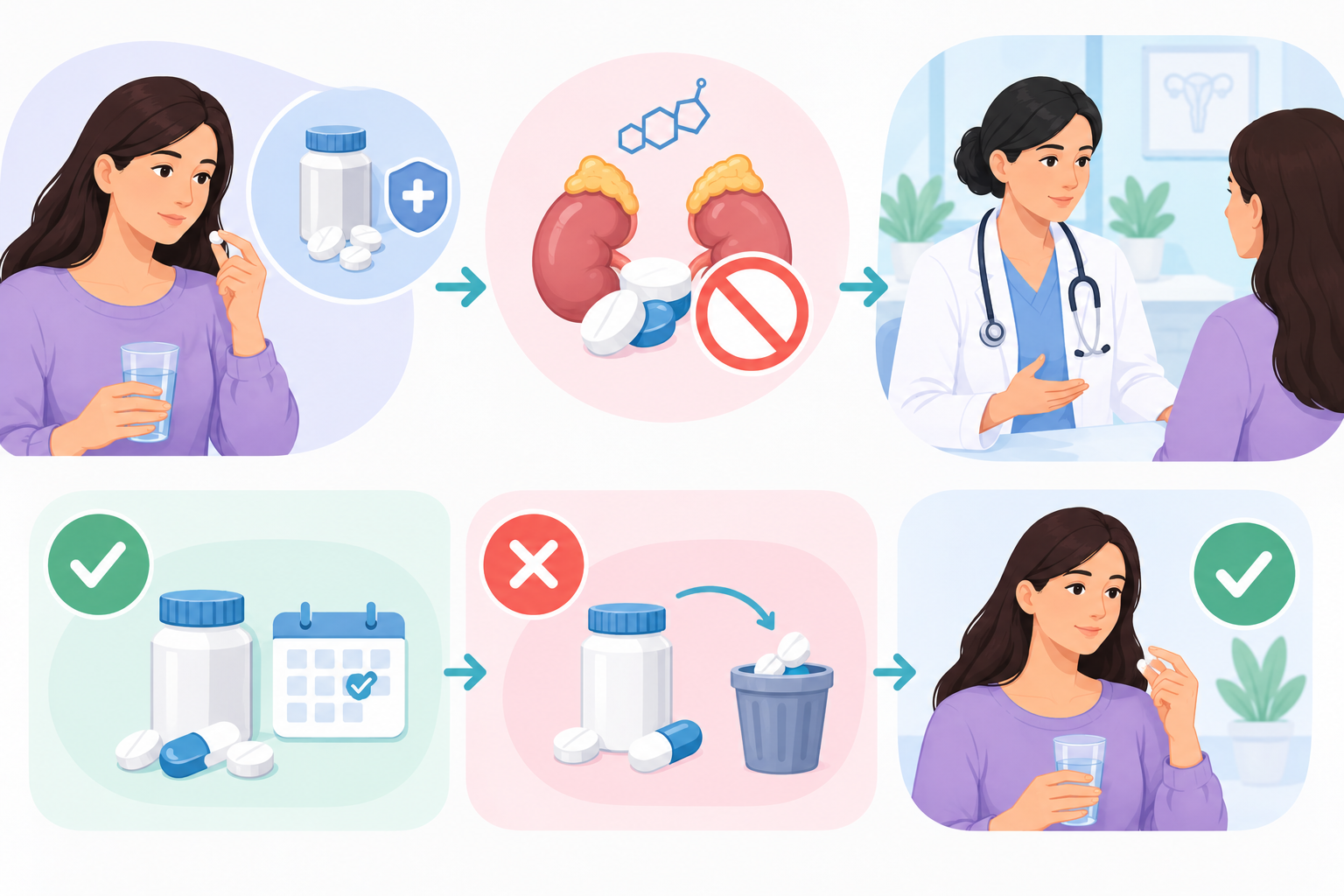
Do not stop a prescribed corticosteroid on your own.
This is especially important for people who have used glucocorticoids for a prolonged period or rely on them as hormone replacement.
Long-term corticosteroid treatment can suppress the body’s normal adrenal response. Depending on the medication, dose, duration, and individual circumstances, discontinuation may need to be gradual and medically supervised.
Therefore, the answer is not to simply stop your steroid so that you can take mifepristone.
Instead, tell your healthcare provider about the medication before treatment is considered.
The provider can determine what the adrenal condition and current medication mean for your care.
Which Adrenal Conditions Should You Tell Your Provider About?
Tell your provider about any diagnosed adrenal disorder or condition affecting adrenal hormone production.
This may include:
- Chronic adrenal insufficiency
- Primary adrenal insufficiency
- Secondary adrenal insufficiency
- Adrenal failure
- A history of adrenal crisis
- Conditions requiring long-term steroid replacement
- Previous testing or treatment for impaired adrenal function
You should also mention relevant endocrine treatment even if you are not sure whether the diagnosis affects medication abortion.
It is better to provide complete information and allow the healthcare professional to determine its relevance.
What Should You Tell Your Abortion Provider?
Your provider needs more than the name of your adrenal condition.
A useful medical history should include:
Your Diagnosis
Tell the provider the exact name of your adrenal condition if you know it.
Your Current Medications
List all corticosteroids and other prescription medicines you take.
Your Steroid Dose
Include the strength and daily or scheduled amount.
Your Treatment History
Explain how long you have needed steroid replacement or other corticosteroid therapy.
Your Adrenal Crisis History
If you have ever experienced an adrenal crisis or required emergency steroid treatment, make sure the provider knows.
Recent Medication Changes
Tell the provider if your steroid dose was recently increased, decreased, stopped, or restarted.
This information can help the healthcare professional identify whether the mifepristone regimen is appropriate.
For broader preparation questions, you can also review questions to discuss before taking abortion pills.
Why Is a Complete Medical History So Important?
Medication abortion is not appropriate for every medical situation.
Before prescribing mifepristone, a healthcare professional needs to consider factors that can change the safety or appropriateness of treatment.
The FDA specifically identifies chronic adrenal failure and current long-term corticosteroid therapy among the situations in which mifepristone should not be used for medical termination of pregnancy.
That means an accurate medical history is not just paperwork.
It helps the provider identify contraindications before medication is taken.
If you are unsure about whether a condition in your medical history is relevant, disclose it rather than leaving it out.
What If You Already Took Mifepristone?
If you already took mifepristone and then realized that you have an adrenal disorder or use long-term corticosteroid therapy, contact a healthcare professional promptly.
Tell them:
- When you took mifepristone
- The dose
- Your adrenal diagnosis
- Your current steroid medication
- Your steroid dose
- When you last took the steroid
- Any symptoms you are experiencing
Do not make an independent decision to stop essential steroid treatment.
Because chronic adrenal failure and long-term corticosteroid therapy are specifically identified in current mifepristone labeling, this situation deserves direct medical assessment rather than online self-management.
If you develop severe or rapidly worsening symptoms, seek urgent medical care.
What Symptoms Could Require Urgent Attention?
People with adrenal insufficiency may have symptoms such as significant weakness, nausea, vomiting, low blood pressure, dizziness, or other concerning symptoms when cortisol needs are not adequately met.
Mifepristone’s glucocorticoid-receptor activity is clinically important because adrenal insufficiency can occur when glucocorticoid effects are inadequate. Current mifepristone labeling for its glucocorticoid-receptor effects describes symptoms including weakness, nausea, increased fatigue, hypotension, and hypoglycemia as concerning signs of adrenal insufficiency.
If you have severe weakness, fainting, significant confusion, severe vomiting, difficulty staying awake, or another serious or rapidly worsening symptom, seek emergency medical attention.
Do not wait for a routine appointment if you believe you may be experiencing a serious medical problem.
Can Telehealth Providers Review Adrenal Disorders?
A telehealth abortion consultation may include questions about your medical conditions and medications when telehealth is appropriate.
However, complete disclosure is essential.
If you have adrenal insufficiency, adrenal failure, or take long-term corticosteroids, tell the provider before taking mifepristone.
A telehealth appointment should not be treated as a reason to leave out complex medical history. Your provider needs accurate information to determine whether medication abortion is appropriate.
You can learn more about telehealth abortion care and its potential benefits.
How Can You Prepare for a Medication-Abortion Consultation?
If you have an adrenal disorder, prepare a current medication list before your appointment.
Include:
- Your adrenal diagnosis
- Current steroid medications
- Steroid doses
- Other prescription medications
- Over-the-counter medicines
- Supplements
- Recent medication changes
- Previous adrenal crises
- Relevant hospitalizations
- Your most recent instructions from your endocrinologist or other treating clinician
If possible, keep your medication bottles or an up-to-date medication list available during the consultation.
This can reduce confusion and help the healthcare professional understand your situation accurately.
For general information about the medication-abortion process, see a complete explanation of medication abortion.
How Does This Differ From Other Mifepristone Medication Concerns?
Mifepristone has several important contraindications and medication-related considerations.
Adrenal disorders are particularly important because mifepristone has glucocorticoid-receptor activity in addition to its progesterone-receptor effects.
This makes the issue different from simply asking whether another medication changes how quickly mifepristone is metabolized.
The current FDA information specifically identifies adrenal-gland problems and long-term corticosteroid treatment as reasons not to use mifepristone with misoprostol for medical termination of pregnancy.
If you are researching medication interactions more broadly, Serenity Choice Health also provides information about abortion pills and seizure medications, antidepressants and abortion pills, and anxiety medications with abortion pills.
How Serenity Choice Health Can Help
Serenity Choice Health can help patients understand medication-abortion information and prepare questions for a healthcare consultation.
If you have an adrenal disorder or take corticosteroids, make your medical history part of the conversation before taking mifepristone.
A provider needs to know about conditions such as chronic adrenal failure and medications such as long-term corticosteroid therapy because these factors can affect whether the FDA-approved mifepristone regimen is appropriate.
The goal is not to make a treatment decision based on an online checklist. It is to make sure your healthcare professional has the information needed to evaluate your individual situation safely.
For information about mifepristone itself, you can also review a detailed guide to mifepristone.
Key Takeaway
Mifepristone and adrenal disorders require careful medical review because mifepristone has glucocorticoid-receptor activity.
For the FDA-approved medication-abortion regimen, chronic adrenal failure and concurrent long-term corticosteroid therapy are listed as contraindications because of the risk of acute adrenal insufficiency.
If you have an adrenal disorder, take steroid replacement, or use long-term corticosteroids, tell your healthcare provider before taking mifepristone.
Most importantly, do not stop prescribed steroid medication on your own. Your adrenal treatment may be essential, and changing it without medical guidance can create its own serious risks.
A complete medical history allows your healthcare team to determine the safest and most appropriate next step.
FAQ Section
Can I take mifepristone if I have adrenal insufficiency?
Chronic adrenal failure is listed as a contraindication to the FDA-approved mifepristone–misoprostol regimen for medication abortion. Tell your healthcare provider about any adrenal disorder before treatment.
Can mifepristone affect cortisol?
Yes. Mifepristone has glucocorticoid-receptor antagonistic activity, meaning it can interfere with the biological effects of glucocorticoids. This is particularly important in people with adrenal insufficiency or those dependent on corticosteroid treatment.
Can I take mifepristone if I take hydrocortisone?
If hydrocortisone is being used as steroid replacement for adrenal insufficiency, tell your healthcare provider before taking mifepristone. Chronic adrenal failure is a listed contraindication for the medication-abortion regimen.
Should I stop my steroid before taking mifepristone?
No. Do not stop prescribed steroid treatment on your own. Tell your healthcare provider about the medication so your adrenal condition and treatment can be properly evaluated.
What if I already took mifepristone and have adrenal insufficiency?
Contact a healthcare professional promptly and explain your adrenal diagnosis, medications, doses, and when you took mifepristone. Do not independently stop essential steroid treatment.
Does long-term prednisone use matter before mifepristone?
Yes. Current long-term corticosteroid therapy is listed as a contraindication to the FDA-approved mifepristone–misoprostol medication-abortion regimen. Tell your provider if you currently take prednisone or another corticosteroid long term.

Dr. James Carter is a board-certified physician and lead clinician at Serenity Choice Health, specializing in reproductive health access and medication abortion protocols. With over 20+ years of experience, he combines clinical expertise with patient-centered care to ensure safe, compassionate, and confidential reproductive healthcare.