
Missing a period while using birth control can be alarming. Many people immediately wonder if they’re pregnant, while others worry that something is wrong with their health.
The good news is that a missed period on birth control is often a normal side effect, especially with hormonal contraceptives. However, it’s still important to understand why it happens, recognize situations where pregnancy is possible, and know when it’s appropriate to speak with a healthcare provider.
This guide explains the most common reasons for a missed period on birth control, when you should take a pregnancy test, and when medical advice is recommended.
Is It Normal to Miss a Period on Birth Control?
Yes. Depending on the type of birth control you’re using, missing a period can be completely normal.
Hormonal birth control works by changing hormone levels that regulate ovulation and the uterine lining. These hormonal changes can make periods:
- Lighter
- Shorter
- Less frequent
- Irregular
- Stop altogether
For many users, especially after several months of consistent use, little or no monthly bleeding is an expected effect rather than a sign of a problem.
How Different Birth Control Methods Affect Your Period
Different contraceptive methods affect menstrual bleeding differently.
Birth Control Pills
Combination pills often produce a predictable monthly withdrawal bleed during placebo pills. However, some users experience lighter bleeding or occasionally skip a period.
Progestin-only pills may cause more irregular bleeding patterns, including missed periods.
Hormonal IUD
Many people notice lighter periods over time.
After several months, some stop having periods completely because the uterine lining becomes very thin.
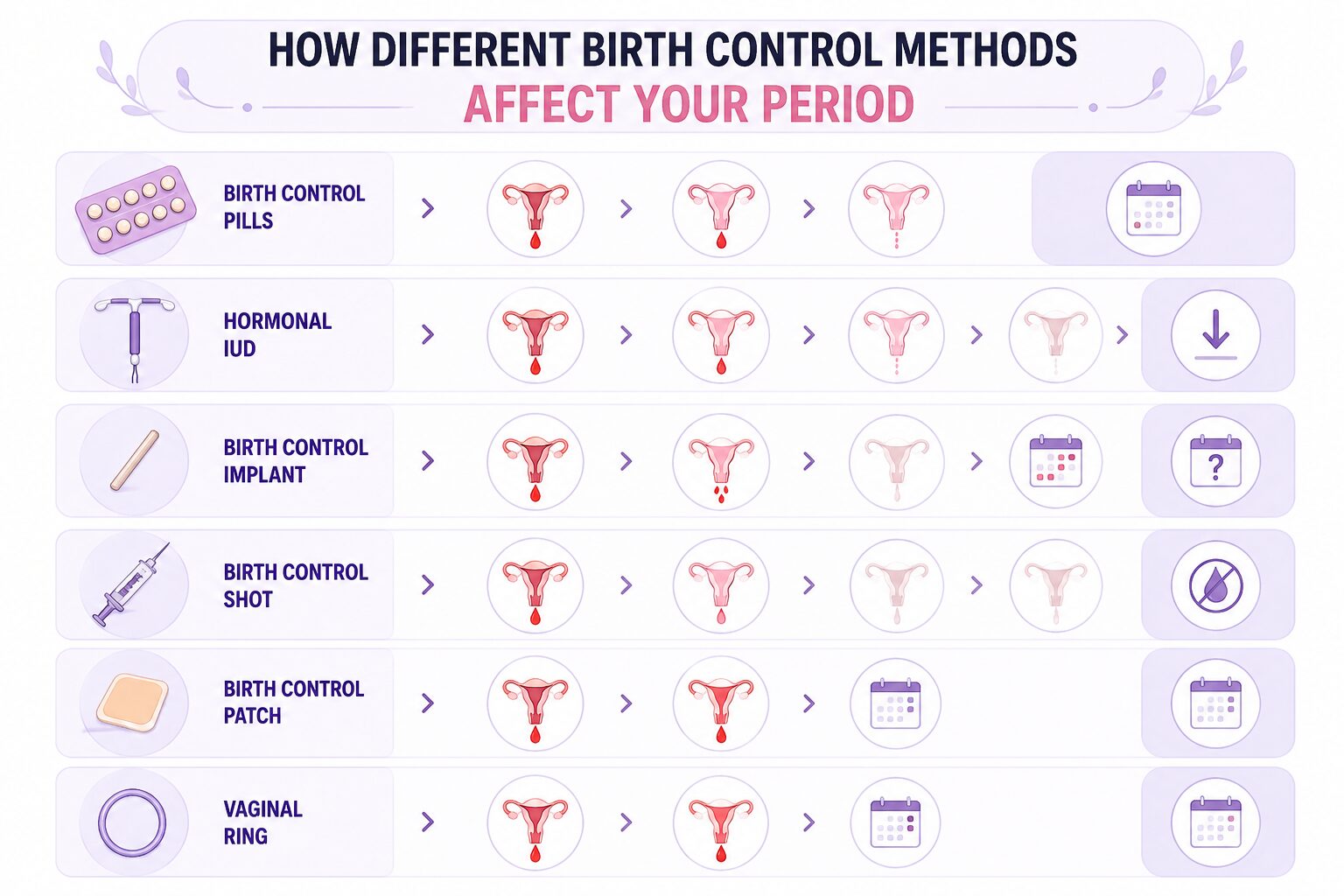
Birth Control Implant
The implant commonly changes menstrual patterns.
Some users have:
- No periods
- Irregular spotting
- Longer intervals between periods
All of these can be normal.
Birth Control Shot
The birth control shot is one of the methods most likely to stop monthly periods.
After about a year of use, many users experience no menstrual bleeding at all.
Birth Control Patch and Vaginal Ring
These methods generally create scheduled withdrawal bleeding, but occasional missed periods may still occur, particularly if used continuously.
Common Reasons for a Missed Period on Birth Control
Several factors besides pregnancy can explain why your period didn’t occur.
Hormonal Changes
Birth control intentionally changes hormone levels. A thinner uterine lining means there may be very little tissue to shed each month, resulting in a very light or absent period. Learn more about common birth control side effects that may explain changes in your cycle.
Consistent Birth Control Use
Ironically, taking your birth control exactly as directed may increase the likelihood of lighter or absent periods because hormone levels remain stable.
Stress
Physical or emotional stress can influence hormones involved in the menstrual cycle, even while using birth control.
Major life events, illness, or poor sleep may contribute to changes in bleeding patterns.
Weight Changes
Significant weight loss, weight gain, or intense exercise can affect hormone balance and menstrual cycles.
Starting a New Birth Control Method
Irregular bleeding and missed periods are common during the first few months after beginning hormonal contraception.
The body often needs time to adjust.
Missed or Late Pills
If birth control pills are missed or taken inconsistently, hormone levels may fluctuate. This can increase the risk of pregnancy and also affect your bleeding schedule. If you’re unsure how far along you might be, it is always best to consult your provider.
Could You Be Pregnant?
Although birth control is highly effective when used correctly, no contraceptive method is 100% effective.
Pregnancy becomes more likely if:
- Pills were missed
- Pills were taken much later than scheduled
- Vomiting or severe diarrhea occurred shortly after taking a pill
- Certain medications reduced contraceptive effectiveness
- Your contraceptive method wasn’t used correctly
If you’ve had unprotected sex or believe your birth control may not have worked as intended, consider taking a pregnancy test.
When Should You Take a Pregnancy Test?
If you miss your expected period while using birth control, a home pregnancy test may be appropriate if:
- You’ve missed one or more active pills.
- Your withdrawal bleed doesn’t occur as expected.
- You’ve had unprotected sex after contraceptive errors.
- You’re experiencing pregnancy symptoms such as persistent nausea, breast tenderness, or unusual fatigue.
For the most reliable result, follow the instructions provided with the test and test after your missed period or as directed on the package.
If the result is negative but your period does not return or symptoms continue, repeat the test after a few days or contact your healthcare provider for guidance.
When Should You Contact a Healthcare Provider?
While missed periods are often harmless, you should seek medical advice if:
- You have a positive pregnancy test.
- You’ve missed two or more expected periods unexpectedly.
- You have severe abdominal or pelvic pain.
- You experience unusually heavy bleeding.
- You have persistent dizziness or fainting.
- You’re unsure whether your birth control has been effective.
- Your bleeding pattern changes suddenly after months of regular cycles.
A healthcare provider can determine whether your symptoms are related to your contraceptive method, pregnancy, or another medical condition.
What Should You Do If You Miss a Period?
If you miss a period while using birth control:
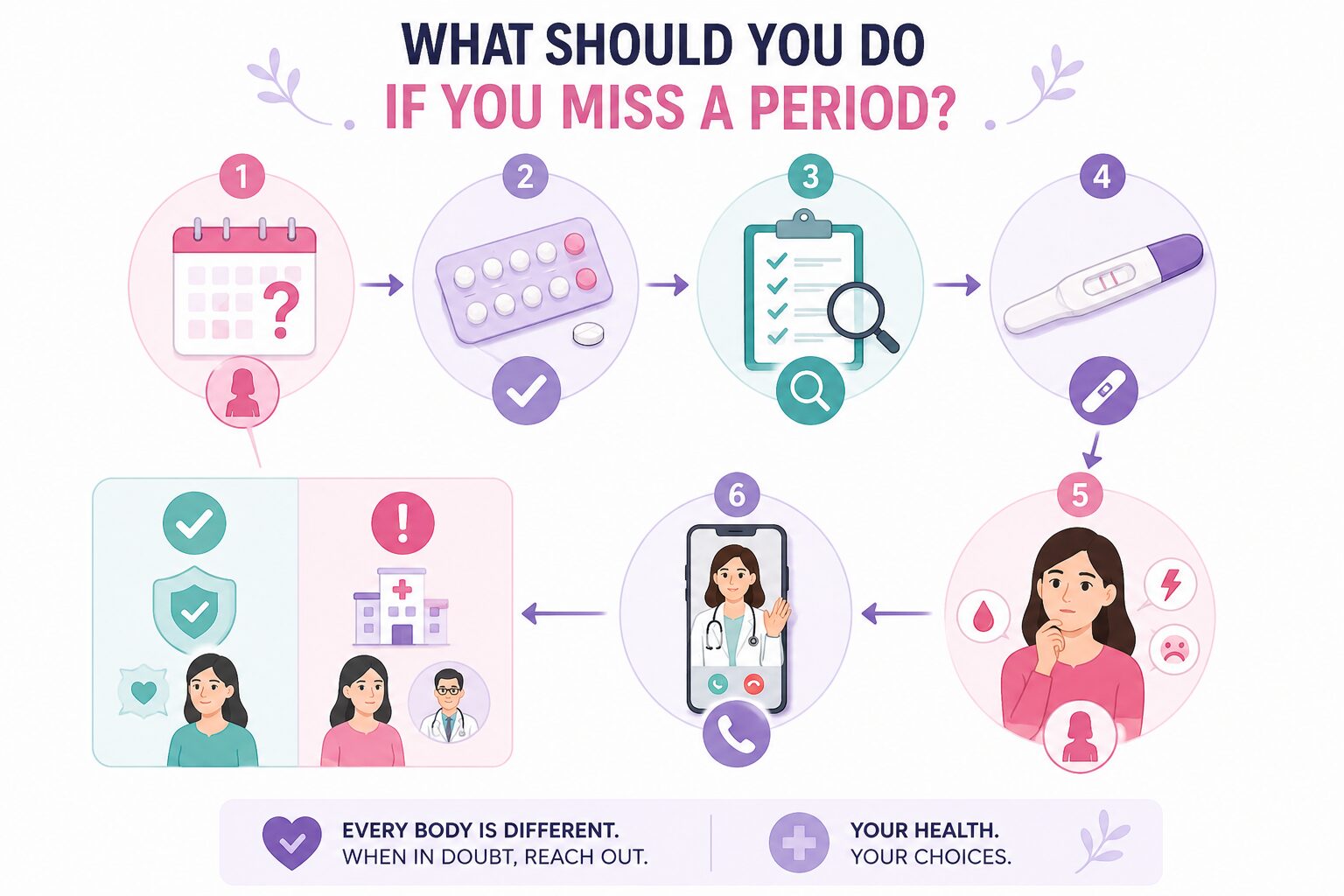
Continue taking your birth control as prescribed
Do not stop your contraceptive unless your healthcare provider advises you to do so.
Review your recent birth control use
Think about whether you’ve missed pills, taken pills late, or experienced vomiting or severe diarrhea that could have affected effectiveness.
Take a pregnancy test if appropriate
Testing can help rule out pregnancy if there’s any uncertainty. If you need support understanding your options, learn about your pregnancy options before making any decisions.
Monitor your symptoms
Keep track of any changes in bleeding, pain, or other symptoms that may help your healthcare provider assess the situation.
Contact your healthcare provider if you’re concerned
Medical advice is especially important if symptoms are unusual, persistent, or accompanied by severe pain or a positive pregnancy test. Our in-clinic abortion services and care team are available to support you through any concerns.
Can Birth Control Stop Your Period Completely?
Yes.
Several hormonal contraceptive methods can eventually stop menstrual bleeding altogether.
For many people, this is a safe and expected effect of hormonal suppression of the uterine lining rather than a sign that blood is “building up” inside the body.
If you’re unsure whether the absence of periods is expected with your specific contraceptive, discuss it with your healthcare provider.
Conclusion
Experiencing a missed period on birth control is often normal and can be an expected effect of hormonal contraception. Many birth control methods naturally reduce or even stop monthly bleeding over time.
However, it’s still important to consider whether your birth control has been used correctly and whether pregnancy is a possibility. Taking a pregnancy test when appropriate and seeking medical advice for persistent or concerning symptoms can help provide reassurance and ensure you receive the right care.
If you’re ever unsure about changes in your menstrual cycle while using birth control, don’t hesitate to contact a qualified healthcare provider.
FAQ Section
Is it normal to miss a period while on birth control?
Yes. Many hormonal birth control methods can make periods lighter, less frequent, or stop them altogether. Read more about common birth control side effects to better understand what to expect.
Can I be pregnant if I missed my period on birth control?
It’s possible, although uncommon, when birth control is used correctly. If you’ve missed pills or used your contraceptive incorrectly, take a pregnancy test. You can also learn about your options if you receive a positive result.
Should I stop taking my birth control if I miss a period?
No. Continue using your birth control as directed unless your healthcare provider tells you otherwise.
How accurate is a pregnancy test while using birth control?
Birth control hormones do not affect pregnancy test results. Home pregnancy tests remain accurate when used according to the instructions.
When should I worry about a missed period?
Contact a healthcare provider if you have a positive pregnancy test, severe pain, heavy bleeding, or repeated missed periods that aren’t expected for your contraceptive method.
Can stress cause a missed period even if I’m on birth control?
Stress can influence hormone levels and may contribute to changes in bleeding patterns, although birth control itself is often the primary reason for missed periods.

Dr. James Carter is a board-certified physician and lead clinician at Serenity Choice Health, specializing in reproductive health access and medication abortion protocols. With over 20+ years of experience, he combines clinical expertise with patient-centered care to ensure safe, compassionate, and confidential reproductive healthcare.