

Finding out that your partner has tested positive for a sexually transmitted infection (STI) can be unsettling. Whether the news comes from a long-term partner, someone you’ve recently started dating, or a previous sexual partner, it’s normal to have questions about what it means for your own health. Many people immediately wonder whether they have also been infected, whether they need treatment right away, or how quickly they should schedule STI testing.
The good news is that a partner’s positive STI test does not automatically mean that you have an STI. However, it does mean that you may have been exposed, and taking prompt, informed action is important. Many sexually transmitted infections can be diagnosed accurately through testing, and many are treatable with medication. Early evaluation can also help prevent complications and reduce the risk of unknowingly passing an infection to someone else.
One of the biggest challenges after learning about a possible STI exposure is dealing with uncertainty. Some infections cause noticeable symptoms, while others may remain completely silent for weeks, months, or even longer. If you’re not familiar with how these terms are used, our guide on the difference between an STI and an STD provides helpful background. Because you cannot rely on symptoms alone, medical evaluation is often the most reliable way to understand your health status.
This guide explains what you should do if your partner tested positive for an STI, how exposure affects your risk, when testing is recommended, and why speaking with a healthcare provider is one of the most important steps you can take.
What Does It Mean If Your Partner Tested Positive for an STI?
Hearing that a partner has received an STI diagnosis can trigger many emotions, including fear, confusion, anger, or guilt. Before jumping to conclusions, it’s important to understand what a positive test actually means.
A positive STI test confirms that your partner has been diagnosed with a sexually transmitted infection through laboratory testing or clinical evaluation. However, it does not automatically reveal when the infection was acquired. Some STIs can remain undetected for long periods because they cause few or no symptoms. As a result, a positive diagnosis does not necessarily indicate recent transmission or infidelity within a relationship. Determining when an infection was acquired is often impossible without additional medical information.
More importantly, your partner’s diagnosis means there is a possibility that you were exposed if you had sexual contact before the infection was identified or treated. Exposure simply means there was an opportunity for transmission it does not confirm that transmission actually occurred.
The likelihood of transmission depends on several factors, including:
The specific STI involved.
The type of sexual contact.
Whether condoms or other barrier methods were used consistently.
Whether either partner had already received treatment.
The amount of time since the exposure occurred.
Because each sexually transmitted infection behaves differently, healthcare providers evaluate every situation individually rather than assuming every exposed partner has become infected. Instead of focusing on assumptions, the priority should be understanding your own risk and arranging appropriate testing or follow-up care if recommended.
Does Your Partner’s Positive Test Mean You Have an STI?
One of the most common misconceptions is that if one partner has an STI, the other partner must have it as well. While this is understandable, the reality is more complex.
Transmission does not occur every time two people have sexual contact. Some infections spread more easily than others, and several factors influence whether transmission takes place. This means it is entirely possible for one partner to test positive while the other tests negative.
At the same time, it is equally important not to assume you are infection-free simply because you feel healthy. Many sexually transmitted infections are known as asymptomatic infections, meaning they may produce few or no noticeable symptoms. Someone can carry and transmit an STI without realizing they have it.
For example, infections such as chlamydia, gonorrhea, human papillomavirus (HPV), and certain cases of herpes may not cause obvious symptoms immediately. Some people only discover an infection during routine screening or after a partner informs them of a positive diagnosis.
Because symptoms are not a reliable indicator of infection, healthcare providers generally recommend appropriate STI testing after a confirmed exposure, even if you feel completely well.
It’s also important to remember that different STIs have different incubation periods. In some cases, testing immediately after exposure may not provide accurate results because the infection may not yet be detectable. Your healthcare provider can recommend the most appropriate timing based on the specific STI involved and your recent sexual history.
What Should You Do Immediately After Learning About an STI Exposure?
Although hearing about an STI diagnosis can feel overwhelming, responding calmly and taking practical steps can help protect your health. Rather than making assumptions or searching for conflicting advice online, focus on gathering accurate information and arranging appropriate medical care.
Stay Calm and Gather Information
Your first reaction may be panic, but remember that many sexually transmitted infections are either curable or effectively managed with treatment. A positive diagnosis in your partner does not automatically determine your own health status. If possible, ask your partner what infection they were diagnosed with and whether they have started treatment. This information helps your healthcare provider determine the most appropriate testing recommendations for you.
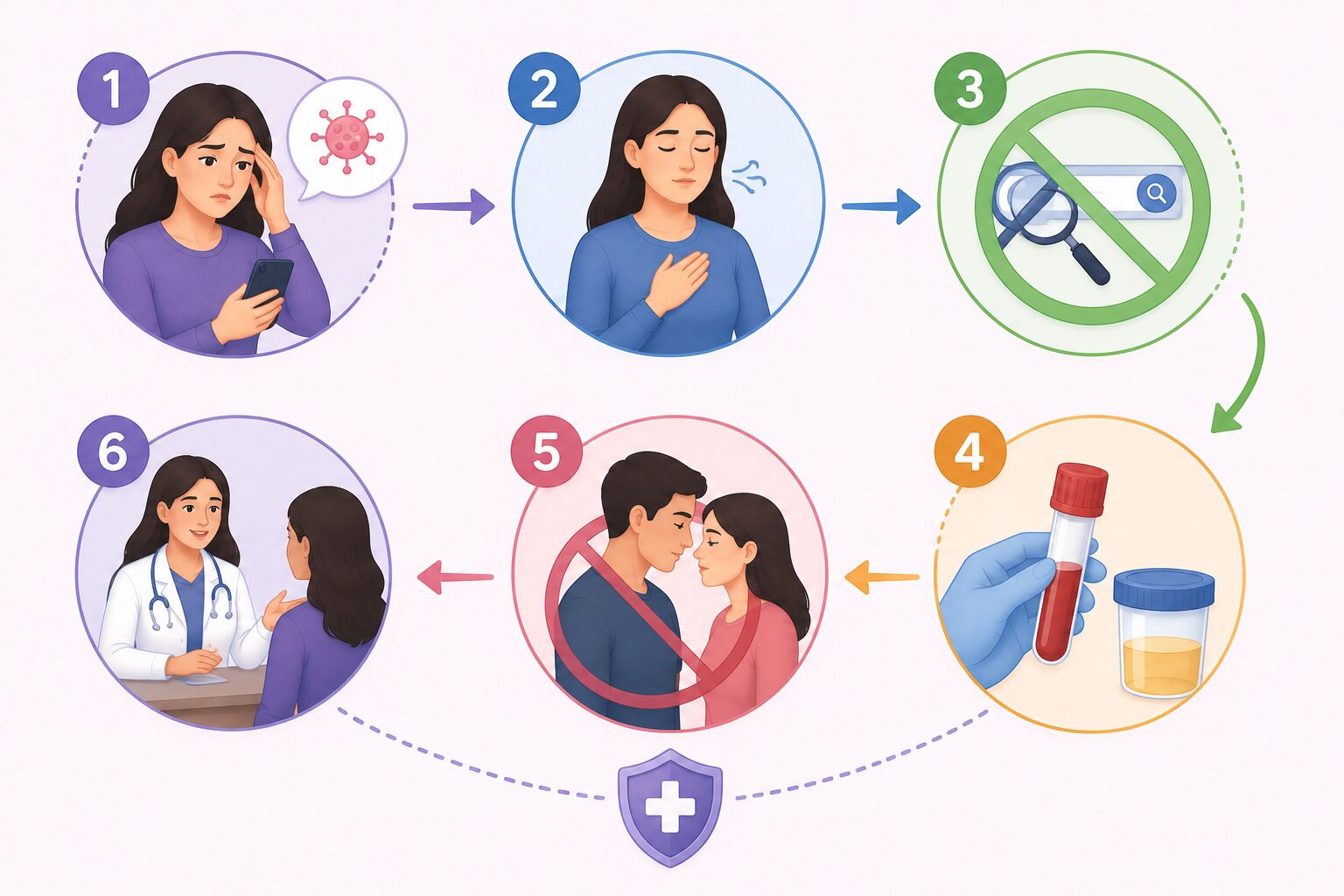
Avoid Self-Diagnosing
Trying to determine whether you have an STI based solely on symptoms or the absence of symptoms can be misleading. Some infections cause pain, discharge, sores, or burning during urination, while others remain silent for extended periods. Likewise, searching online for photographs or comparing your symptoms to those of other people rarely provides reliable answers. Laboratory testing remains the most accurate way to determine whether an infection is present.
Schedule STI Testing
One of the most important steps after potential exposure is arranging an appointment with a healthcare provider or sexual health clinic. Our STI and STD testing services are available for anyone who has had a known or suspected exposure and wants prompt, confidential evaluation. If you’re unsure what the process involves, our first-time guide to what happens during an STI test walks through each step so you know what to expect. It also helps to know when to see a women’s primary care provider versus when urgent care or an STI clinic is more appropriate — a known exposure is generally a clear reason to make an appointment.
Avoid Sexual Activity Until You Know More
Although every situation is different, many healthcare providers recommend avoiding sexual contact until you have been evaluated and understand your health status. This precaution helps reduce the possibility of transmitting an infection to another partner if you have been infected but do not yet know it. If sexual activity does occur before testing or treatment is complete, using condoms or other barrier methods may help reduce but not eliminate the risk of transmission for many sexually transmitted infections.
When Should You Get Tested After STI Exposure?
One of the most frequent questions people ask is, “Should I get tested immediately?” The answer depends on several factors, including the type of STI involved and when the potential exposure occurred. Our guide on how soon after exposure to get tested for an STI explains the window periods for each common infection in detail, so you can understand the right timing for accurate results.
After an STI enters the body, there is often a period before laboratory tests can reliably detect the infection. This is sometimes referred to as the window period. During this time, a person may have an infection even though initial test results appear negative. For this reason, your healthcare provider may recommend testing immediately in some situations, delaying testing for a specific period in others, or repeating certain tests if exposure was very recent.
If your partner informs you that they have tested positive, do not delay contacting a healthcare provider simply because you feel well. Early medical advice can help determine the most appropriate testing schedule and reduce uncertainty while ensuring that any necessary treatment is provided promptly.
Should You Avoid Sex Until You’re Tested?
One of the first practical questions people ask after learning about a possible STI exposure is whether they should continue having sex. In most cases, healthcare providers recommend avoiding sexual activity until you have been evaluated and understand your STI status. This precaution helps protect both you and your partner while reducing the risk of unknowingly transmitting an infection.
Many sexually transmitted infections can be passed to others even when symptoms are mild or completely absent. Because of this, feeling healthy does not necessarily mean there is no risk of transmission. Waiting until you have received appropriate medical advice and, when necessary, completed treatment is often the safest approach.
If your healthcare provider advises abstaining from sex until testing or treatment is complete, it is important to follow those recommendations carefully. Resuming sexual activity too soon may increase the likelihood of passing an infection back and forth between partners or exposing someone who has not yet been infected.
In some situations, your provider may recommend that both partners receive evaluation or treatment before sexual activity resumes. This coordinated approach helps reduce the chance of reinfection and supports successful treatment for everyone involved.
Why Temporary Abstinence Can Be Important
Although avoiding sex for a short period may feel inconvenient, it serves several important purposes:
It helps prevent the spread of infection to current or future partners.
It reduces the possibility of reinfection between partners.
It gives prescribed medications time to work effectively when treatment is needed.
It allows healthcare providers to confirm that appropriate testing and follow-up have been completed.
Rather than viewing this recommendation as a punishment, think of it as a temporary step that protects everyone’s health.
What If You Don’t Have Any Symptoms?
A common misconception is that sexually transmitted infections always cause noticeable symptoms. In reality, many STIs produce few or no symptoms, especially during the early stages of infection. This is one of the reasons routine screening and timely testing are so important after a known exposure. Our dedicated guide on having an STI without symptoms explains in detail how this happens and why it matters for your health decisions.
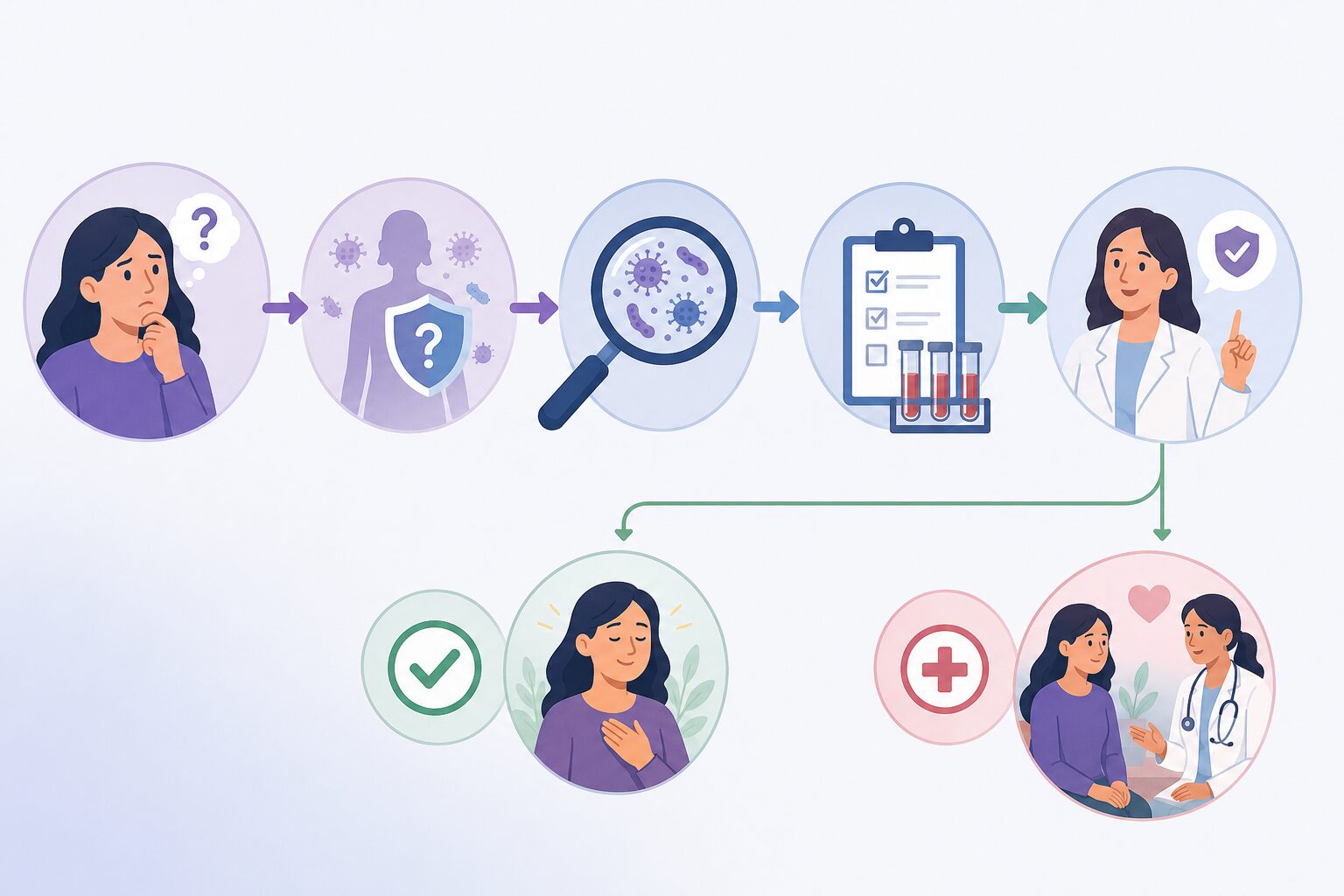
Someone who feels completely healthy can still carry an STI and unknowingly transmit it to others. For example, infections such as chlamydia and gonorrhea frequently occur without obvious symptoms, particularly in women, while human papillomavirus (HPV) and herpes may remain unnoticed for extended periods depending on the individual and the type of infection.
Because symptoms are not always present, relying on how you feel can create a false sense of security. Waiting until symptoms develop may delay diagnosis and treatment, increasing the risk of complications for certain infections.
Even if you have no symptoms, it is still important to:
Inform your healthcare provider about the exposure.
Follow recommended STI testing.
Monitor for any new symptoms.
Follow instructions regarding follow-up testing if needed.
Early detection often makes treatment more straightforward and can help prevent long-term health problems associated with untreated infections.
Talking to Your Healthcare Provider
Discussing sexual health can feel uncomfortable, but healthcare providers are trained to have these conversations professionally and without judgment. Their primary goal is to help protect your health, identify any infections that may require treatment, and answer your questions with evidence-based guidance. Our women’s primary care services include confidential STI evaluation and follow-up care as part of routine reproductive health visits.
During your appointment, your provider may ask about:
The date of your most recent sexual contact.
Whether the exposure involved vaginal, oral, or anal sex.
Whether condoms or other barrier methods were used.
The STI your partner was diagnosed with, if known.
Whether you currently have any symptoms.
Any previous history of STIs or recent testing.
Answering these questions honestly helps your provider determine which tests are appropriate and whether additional follow-up or treatment should be considered.
What Testing May Involve
Depending on the suspected infection, testing may include a urine sample, blood tests, swabs from affected areas such as the throat, cervix, vagina, urethra, or rectum, or a physical examination if sores, rashes, or other symptoms are present. Not everyone requires every test — the type of testing recommended depends on your symptoms, sexual practices, medical history, and the specific STI involved. If you notice any unusual vaginal discharge in the lead-up to your appointment, our guide on vaginal discharge and when to get tested can help you describe what you’re seeing accurately to your provider.
If you are unsure about anything during your appointment, do not hesitate to ask questions. Understanding your diagnosis, treatment options, and follow-up plan can make the experience much less stressful.
What If You Test Positive?
Receiving a positive STI test result can be emotionally difficult, but it is important to remember that many sexually transmitted infections are treatable, and several are curable. A positive result is not a reflection of your character or personal hygiene it is simply a medical diagnosis that deserves appropriate care. The treatment you receive depends entirely on the type of infection identified.
Bacterial STIs
Several bacterial infections, including chlamydia, gonorrhea, and syphilis, can often be treated with antibiotics when diagnosed appropriately. Completing the full course of prescribed medication and attending any recommended follow-up appointments are important parts of treatment.
Viral STIs
Some viral infections, such as herpes or HIV, cannot currently be cured, but effective treatments are available that help manage symptoms, reduce complications, and lower the risk of transmission. Your healthcare provider will discuss treatment options based on your individual diagnosis.
Why Follow-Up Matters
Testing positive is only one step in the treatment process. Depending on the infection, your provider may recommend:
Completing all prescribed medication.
Returning for repeat testing.
Informing recent sexual partners.
Avoiding sexual activity until treatment is complete.
Scheduling routine follow-up care.
Following these recommendations helps reduce the risk of ongoing infection or reinfection and supports your long-term health.
The Importance of Honest Communication With Your Partner
A positive STI diagnosis can place strain on any relationship, but open and respectful communication is one of the most important steps toward protecting everyone’s health. If your partner informed you about their diagnosis, remember that sharing this information allows you to seek testing and treatment promptly. While these conversations may be uncomfortable, they demonstrate responsibility and concern for each other’s well-being.
When discussing the situation:
Focus on facts rather than assumptions.
Avoid assigning blame before all medical information is available.
Encourage each other to follow healthcare providers’ recommendations.
Discuss testing and treatment openly.
Wait until your healthcare provider says it is appropriate before resuming sexual activity.
It is also worth remembering that many STIs can remain undetected for months or even years. A recent diagnosis does not necessarily indicate when the infection was acquired, making it important to avoid jumping to conclusions about the source of the infection.
How to Protect Yourself Moving Forward
Whether your test results are positive or negative, the experience provides an opportunity to think about long-term sexual health. Preventive care is one of the most effective ways to reduce the risk of future infections.
Healthy habits include:
Attending routine STI screenings when recommended our guides on which STIs women should be tested for and how often women should get STI testing provide clear guidance on building a screening routine.
Using condoms or other barrier methods consistently and correctly.
Limiting exposure by discussing sexual health with new partners.
Staying up to date with recommended vaccinations, such as HPV and hepatitis B, when appropriate.
Seeking medical evaluation promptly if you notice unusual symptoms or believe you have been exposed to an STI.
Developing these habits can help support your overall sexual health while reducing the likelihood of future complications.
Conclusion
Learning that your partner tested positive for an STI can be overwhelming, but it is important to remember that a positive diagnosis does not automatically mean you have the same infection. It does, however, mean that you should take the situation seriously and seek appropriate medical guidance.
The best course of action is to remain calm, avoid making assumptions based on symptoms alone, and schedule STI testing according to your healthcare provider’s recommendations. Depending on the specific infection and your circumstances, your provider may recommend testing, preventive treatment, or follow-up care to ensure your health is protected.
Many sexually transmitted infections can be successfully treated, and others can be effectively managed with ongoing medical care. Early diagnosis remains one of the most important factors in reducing complications and preventing further transmission.
If you believe you have been exposed to an STI, don’t wait for symptoms to appear. Book an appointment with our care team as soon as possible. Prompt testing and professional guidance can help you protect your health, receive appropriate treatment if needed, and reduce the risk of passing an infection to others.
Frequently Asked Questions
My partner tested positive for an STI. Does that mean I definitely have one?
No. A partner’s positive test means you may have been exposed, but it does not confirm that transmission occurred. The only reliable way to know your status is through appropriate STI testing recommended by your healthcare provider.
How soon should I get tested after my partner is diagnosed?
The ideal timing depends on the specific STI and when your last sexual contact occurred. Some infections can be detected soon after exposure, while others may require testing after a certain window period. Your healthcare provider can recommend the most appropriate schedule.
Should I avoid sex until I receive my test results?
In many situations, yes. Avoiding sexual activity until you have been evaluated and, if necessary, completed treatment helps reduce the risk of spreading an infection or becoming reinjected.
Can I have an STI without any symptoms?
Yes. Many sexually transmitted infections cause no symptoms, particularly during the early stages. This is why testing is recommended after a known exposure, even if you feel completely healthy.
What happens if both my partner and I test positive?
Your healthcare provider will recommend treatment based on the specific infection. In many cases, both partners should follow the prescribed treatment plan and avoid sexual activity until treatment is complete and it is safe to resume.
Can I test negative even if my partner tested positive?
Yes. Transmission does not occur in every exposure, and many factors influence whether an infection spreads. However, appropriate testing is still recommended because symptoms alone cannot determine whether an infection is present.

Dr. James Carter is a board-certified physician and lead clinician at Serenity Choice Health, specializing in reproductive health access and medication abortion protocols. With over 20+ years of experience, he combines clinical expertise with patient-centered care to ensure safe, compassionate, and confidential reproductive healthcare.